Melissa Harjo-Moffer, Interview, Part One


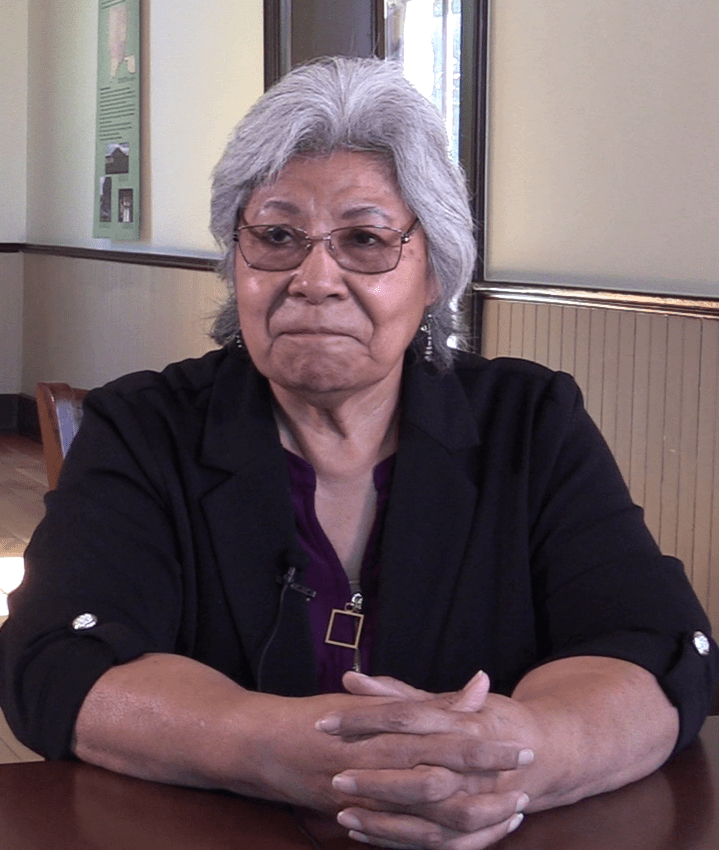
Image Metadata
|
Created: Wednesday, May 10, 2023 - 13:30 |
||
Summary:
An interview with Muscogee (Creek) Nation Melissa Harjo-Moffer.Description:
An interview with Muscogee (Creek) Nation citizen Melissa Harjo-Hoffer. A downloadable transcript may be found by link: Melissa Harjo-Hoffer, Part one. This interview has been indexed through the Louie B. Nunn Center for Oral History Center’s Oral History Metadata Synchronizer system at the University of Kentucky. For an indexed copy of the video, please follow the external link found in the bar on the right of this page.
Transcription:
The Muscogee (Creek) Nation
Historic and Cultural Preservation Department Oral History Program
“A Twenty-First Century Pandemic in Indian Country: The Resilience of the Muscogee (Creek) Nation Against Covid-19”
As Remembered by: Mrs. Melissa Harjo-Moffer
Interview by: Ms. Midge Dellinger
Date: June 22, 2021
Transcription: The Audio Transcription Company
Edited by: Ms. Midge Dellinger
MIDGE DELLINGER: This is Midge Dellinger, oral historian for the Muscogee Nation. Today is June 22, 2021 and I am at the Muscogee Nation Council House located in Downtown Okmulgee, Oklahoma interviewing Muscogee citizen Mrs. Melissa Moffer Harjo. I am performing this interview on behalf of the Muscogee Nation Historic and Cultural Preservation department for the oral history project titled, “A Twenty-First Century Pandemic in Indian Country: The Resilience of the Muscogee (Creek) Nation Against COVID-19.”
Mrs. Moffer-Harjo, thank you so much for being here today and participating today in this project. We’re going to start this interview out by talking a little bit about your personal life and your background. So, start with what is your tribal town and clan?
MELISSA HARJO-MOFFER: My tribal town is Quassarte and my clan is Bird. So, [00:01:00] if asked in the traditional language, I would say, vmetvlwvt Koasati tos. Vmvlikvt fuswvlket os.
DELLINGER: Thank you for that. And I just want to say if there are other moments where you would like to speak in the Muscogee language, please feel free to do that. And what is your current place of residence?
HARJO-MOFFER: My current place is in Okfuskee County. I have to say that, although I get my mail from Wetumka. I live in Okfuskee County, but I get my mail from Wetumka. So, my address says Wetumka. I don’t know why it’s like that, but it’s like that.
1
DELLINGER: And how long have you lived there?
HARJO-MOFFER: I’ve lived there since I was married. I got married in ’07 to David Brent Harjo-Moffer, and he passed away February 2020. So, I’m still living on his property. And he [00:02:00] has 160 acres out there. So, I live in a rural area and my driveway is a mile-and-a-half from the main road. So, I always tell my family I live in the sticks. (laughter)
DELLINGER: Yes, you do.
HARJO-MOFFER: A wooded area behind me and my neighbors are about a mile away to the south and the east and the west.
DELLINGER: But you’ve always lived out—well, not always, let me reword that. You grew up in the country.
HARJO-MOFFER: Right.
DELLINGER: So, where were you born and where did you grow up?
HARJO-MOFFER: I grew up—well, I was born in Hughes County, about eight miles east of Wetumka on my grandfather’s allotted land. My dad’s father lived there and a
2
house was built there. So, my grandmother—my father’s mother—was still living there. So, we lived with her. And we were out there most of the time. And sometime in the, I want to say ’60s, [00:03:00] she was moved into town by her older son. And so, my dad and the family lived out there. I only had about three sisters at that time. And then, later on, I had some brothers. But I spent most of my time on my grandfather’s allotted land. The only thing left there now is the cemetery. So, I enjoyed being there. And the majority of the time, when moved around, we always lived in a rural area—in the country. I didn’t know what it was like to live in town until I grew up to be an adult. But I grew up in a rural area.
I was born northwest of Wetumka on—a man named Wadie Thomas—my grandmother was married to him. I was born there in a rural area. And in years—I’m going to say maybe almost fifteen years later, we moved [00:04:00] there. I saw that house when I was a little girl, because we used to walk to town. So, just north of that main road that went through there, maybe a mile away, Wadie lived there, and so did my grandmother. So, my mother was living with her at the time, so we would walk—and I remember seeing that house. Little did I know—about fifteen years later, we was going to be living in that same house. So, when people ask me where I was born, I point to the north and say, “Maybe about half a mile away. I was born there” [laughter].
DELLINGER: And can you please share a little about your parents and grandparents? Their names and what they did.
3
HARJO-MOFFER: Okay. My parent’s names was Thomas Deere Harjo—I say Deere because that’s the name he was using when he met my mother. And my mother’s name is Mary Jane Harjo. My dad’s real name, we found out [00:05:00] in the ’60s, that he was a Harjo. So, my mother actually kept the maiden name. And most of us, the older ones, were given that last name, Deere, because we didn’t know that his real name was Harjo. So, later on, our birth certificates were changed to Harjo. And then, my grandparents on my dad’s side—it was just my grandmother—but my dad’s father was named Yahola Harjo. So, he passed before I was born. And then, his wife was Lena—Lena Jack—Lena Jack Harjo. And then, my mother’s side, her mother was Rosie—Rosie Harjo. She, too, married a Harjo. Her husband was named Johnny—Johnny Harjo. So, my mother and my grandmother both kept their maiden names. Prior to my grandfather, [00:06:00] Johnny, his father was Connuggy—he was Connuggy Harjo. And I found a picture of him. Now, Yahola, my father’s father, he was Yahola Harjo from the same area, Wetumka. And so, was Connuggy, from the same area. So, most of my family was from Wetumka.
So, I made a big circle. I got married, moved away, I lived in Ada for a long time. So, when I married again in ’07, my husband and I both came back to Wetumka, because my husband, David, was born in Wetumka, also. And I come to find out he was Harjo originally, so he changed his name to mine, Harjo-Moffer. That Harjo just tends to stay in the family, which is okay with me.
DELLINGER: And I know you have children. Can you talk a little bit about your children?
4
HARJO-MOFFER: I have three children—well, they’re adults now. My son, [00:07:00] he’s fifty now, and his father is the last name Yargee. So, his father is Lymon Yargee. And he has—my son has two sisters. My two daughters, Jennifer Yargee—Jennifer Ann Yargee, and then, Helena. So, my son’s name is Christopher—Christopher Yargee. And my youngest daughter is Helena Marie. Their father was full-blood. He was from Quassarte, also. And I, being from the Quassarte tribal town, my children became traditional full-bloods, because back in the day, when children had parents from the same tribal town, they were considered full-bloods. There’s not many today that are like that. So, I [00:08:00] tell my children, “You’re all about the last of the traditional full-bloods.” And their father was full-blood. And I have about maybe a sixteenth Seminole, but I’m about three-quarters or more Creek—Muscogee (Creek)—Quassarte. So, my children are almost the full-blood Quassarte that’s left. And I told them to be proud of that. “You’re the last of the originals.” But he was from the cat clan, and I’m from the bird clan. So, as long as we weren’t the same clan, we could be married.
Now, his parents were—his mother was Quassarte and his father was Tvkvpvtce. They were both fluent in the language, so was my parents. So, my children were around fluent-speaking Muscogee people. So, my son [00:09:00] was around his grandparents, both sides. And he knew more of the language at the age of two, and he could respond. But after he was five, we moved away and I got a divorce. So, my children weren’t around that language hardly anymore, although they were around my father. My father was the kind that really wanted a grandson to be with him. So, we kind of had a fight over the grandson. He wanted—my son—he wanted to keep my son and I wouldn’t let him. But again, my dad was fluent, and he would have been able to teach him more of the
5
language. My father didn’t speak English, but my mother did. She was sent to a boarding school, too. So, she could speak English. And on their father’s side, the father spoke English, but the mother didn’t. So, it was kind of vice versa. But either way, he would have [00:10:00] learned the language from both sides if we had stayed in Wetumka, or around Wetumka. But that wasn’t to be, I guess.
But I raised my children, most of them, in—most of the time, we moved around and we lived in Ada since the early ’80s, and that’s where they grew up. We lived among the Chickasaws. And I worked down there. But my kids, they are mostly Muscogee (Creek). My son is a veteran of the Navy. So, he went in right after he graduated high school. He was eighteen—he turned eighteen that July. And then, my daughter, my youngest one, she was seventeen and she left for the Air Force as soon as she graduated.
DELLINGER: [00:11:00] Now, do your children—do they speak any of the Muscogee language at all today?
HARJO-MOFFER: They do a little bit. My son knows more, since he was the oldest. They—my son participates at the ceremonial ground, and so does my grandson. My older daughter’s oldest son. She has three boys, but he’s the oldest, and he participates. He camps out there and this past weekend they had their dance. So, he was out there. I told—
DELLINGER: What ceremonial ground is that?
6
HARJO-MOFFER: It’s Alabama. Back in the day it was called Alabama-Quassarte, because it was mixed—those two tribal towns were together a lot, even back in history. So, they were—they still have the ground—that’s one of the oldest grounds that’s there. I remember as a child, we lived on my grandfather’s land. The ceremonial ground was just to the east of [00:12:00] us, maybe about half a mile. So, we used to go up there on certain days. And Sundays we’d go up there. My dad would play ball, and my mother would, too. So, that wasn’t too far from us. My grandmother camped there and my—the children’s father, my ex-husband, his family camped there, too. So, they were a part of the same ceremonial ground. Now, my children participate there, too.
DELLINGER: Okay. When you say your parents played ball, what kind of ball are you referring to?
HARJO-MOFFER: Oh, we played traditional stick ball. The social game involved the women and the men. The women couldn’t touch the sticks—the sticks that the men used. We call it “tokonhe.” They couldn’t touch those. And it’s forbidden for women to touch them. But the men, on certain seasons—just before the season [00:13:00] closes for the dances, the men have a traditional men’s game. So, my dad used to play. Of course, he played in both the social game and the men’s game, too. And you know, years after we— after the fire was moved from there, we could hear them playing. Late evenings, we could hear them whooping and hollering.
7
DELLINGER: Wow, that’s really neat. Yeah. I don’t know if you told me this yet, or not, what—your dad worked outside of the home, right?
HARJO-MOFFER: Yeah. My dad couldn’t speak English, but he worked for the farmers—ranchers. He was good with animals, he could build fences, and it was just nature, I guess. He knew those things. So, if he was taught how to do something, he could do it. My mother used to say that he used to drive a tractor disking [00:14:00] the land for the farmer. And sometimes, he’d be up late at night saying he could hear the humming sound of the tractor in the distance, because he’s working late at night. And then there’s times different white farmers and ranchers got to know him, they would come up to the house and ask if he would come and help them. Whether it was bailing the hay, hauling the hay, or taking care of the animals. So, there’s times that he travelled with the farmer if he was taking a load of hay to Texas. So, my father didn’t hardly get out of the state, but when he did, he talked about it for a long time. He got to go to Denison, Texas, and boy that was like another world.
DELLINGER: Yeah. And so, your mom was a homemaker. She was at home with you kids. [00:15:00] How many kids? How many siblings?
HARJO-MOFFER: There were seven of us. My mother was a homemaker, but every now and then, she would help my dad. One time, I remember he needed a driver because they had to haul hay. So, he used my brothers. And when I was with my husband, he used him. So, as many men as he could in the family, he used to haul hay. So, I don’t know if
8
you ever known how people haul hay. I mean, you’ve got to life those big bails—square bails—and throw them up. And I know some of my—some of the men got pretty muscly during that. That was their exercise. But they needed a driver. So, my mother did the driving. She drove real slow out there on the field, and while they’re loading all the hay, that’s what she did. And every now and then, he needed help in building fence, so she’d go and help him, even if it was just to hold a pole or whatever. [00:16:00] He did all the rest of the hard work. So, she helped him. And I remember a long time ago, there was a picture of my mother standing next to my dad—he was sitting on a tractor—and someone took a picture of them. And I thought, “Well, how neat?” But of course, all those pictures are gone because their house burned when I was about thirteen, fourteen years old. The house burned down. So, there went all the pictures.
DELLINGER: And I was going to give you an opportunity here, I know you have several grand and great-grandchildren. Can you share with us how many?
HARJO-MOFFER: I have, like I said, three children, and each of them have children. I have to back up a little bit to tell you, when I was a child, my mother had seven kids, and my dad had been married before and he had three. So, there were so many of us in the home—we always had a small home, small house. And everybody had to [00:17:00] work. We always had a garden to make sure everybody got fed. And I used to look around me and think, “Oh my, when I grow up, I’m not going to have this many kids. I don’t want no kids like this. If I have any kids, it must be one or two.” I didn’t really look at having three, but I end up having three. And I told my grandmother that one time. I
9
said, “When I get to the point of having kids, I don’t want a lot of kids. This is too many.” Of course, I’m number six of ten kids. And I had to help take care of the little ones. I didn’t really like that. I mean, I wanted to be me and do my little thing, but we didn’t have a lot.
So, we grew up poor, we didn’t have electricity, and we didn’t have running water, and we didn’t have heat like we have today. So, every day was like a work day. Get up, haul water, you help with the wood, and the house got really hot because we had to use the wood stove to cook. So, [00:18:00] most of the time, we ate outside. And we spent most of our time outside in the summertime, because it’s just too hot inside. We had no fans for the window, no anything to keep us cool. But we’d go swimming down at the creek, or we’d find something else to do to stay out of the house. But anyway, and then, when the little ones came—I have two younger sisters and two younger brothers, so I had to help take care of them. And so, by the time I’m fifteen, fourteen, or sixteen I’m tired. And I think back and I say to myself, “I helped raise these kids. I don’t want to do that.” So, I told my grandmother that, “I don’t want this many kids that my mom had.” My grandmother laughed at me and said, “You’re going to have a lot of kids.” “No, I’m not.” Well, my grandmother passed when I had my last child. My grandmother passed at the first of the month and my daughter was born at the end of the month. And [00:19:00] I thought, “Grandma, I’m going to have three kids. I said that’s all I wanted.”
But, as years went on, my children started having children. My oldest—my son, he had six children. Five girls and one boy. His oldest was a boy. So, my second child, older daughter, she has one girl and three boys. And then, my youngest one, her oldest is a girl, and she has boys. And she had three boys, and she didn’t have kids for a long time.
10
I thought that was it. Three grandsons and a granddaughter. But then, ten years later, she has three more. And her youngest is a girl. So, my youngest daughter’s got two sets of kids. She’s got seven. And I look back and I’m thinking, “Maybe Grandma was right.” [00:02:00] Seventeen grandchildren. But now, those grandchildren are having babies now, especially my son. He’s a grandfather of thirteen grandkids. And then, my daughters, they each have four grandchildren. My older daughter has three granddaughters and a grandson. And my youngest daughter has three grandsons and one granddaughter. So, that’s a lot—that’s what, twenty-one?
DELLINGER: Twenty-one great-grandkids. That’s a big family.
HARJO-MOFFER: If Grandma was alive today, she’d be laughing at me. “See, I told you, you was going to have a lot of kids.”
DELLINGER: Yes, yes. I want to ask you if you would just touch briefly—we’ve talked about your early education, and I know you attended multiple schools throughout your early education. And I wanted to give you an opportunity [00:21:00] just to share a little bit about that time of your life.
HARJO-MOFFER: Like I said, both of my parents spoke the language. That was the first language I learned. And that was common back then, because almost all families back in Hughes County, or south of I-40, they all spoke the language. And when we started school, I was really scared because I knew that I was going to be among white
11
kids that spoke language. And I was really afraid because my dad—I was dad’s girl, I’d guess you call it. I remember people saying, “Daddy’s little girl.” Well, out of all the ten kids, I was his little girl. And he told me I was going to go to school. And I remember just going certain places, you’d see these white kids, and those white kids would be just talking and talking. I had no idea what they were saying, but I knew [00:22:00] then, when I started school, I was going to be among more of those kids. And I thought, “Oh, that’s going to be scary.” Because I had no idea what they were saying.
So, I went to school the first day, and as I got off the bus and walked in. The teacher was standing in the hallway a little ways down the hall from the main lobby, and she was waving at me. I had no idea what to do. The little white kids were running by, they were all talking in English. And she waved at me to come with her. So, she showed me where to sit. And I went to sit and later on, the kids—the bell rang and the kids came in and they were sitting in their—I guess they knew where to sit. Anyway, I sat there and I heard all this gibberish, I guess they call it English. I had no idea what they were saying. And my first day, I mean, I was so scared. My knees were just shaking. And I [00:23:00] walked in there and she was kind enough to show me where to go. I sat there—you can just picture a little full-blood, skinny little girl with medium length hair. It wasn’t really long and I had bangs. And I’m sitting there, kids all around me speaking, and the teacher would tell them to be quiet, and so they all got quiet. I had no idea what she was saying, but I remember we had to stand up and say the Pledge of Allegiance to the flag. I found out later that’s what they were doing. So, I looked around and everybody’s got their hand over their heart, and I’m thinking, “What are they doing?” And I just looked. Everybody was looking at the flag and I didn’t know what the flag was. So, everybody’s standing
12
there. And they’re saying whatever they’re saying, and then she told us to sit down. So, I watched everybody do—so, I’d do what they were doing, so I sat down. And then, she— whatever she said, [00:24:00] the kids did whatever it was she was telling them. And I remember a time when she would sit up front and have chairs in a circle. And she would go up there and the kids seemed to know who was supposed to go up there. I didn’t move, because I didn’t know what to do. I just sat there.
And she gave me some papers, coloring sheets, and my mother told me I had to have some Crayolas. And so, I took them and she—the teacher gave me a piece of paper that had a picture on it. She said I could color. She was showing me pointing the Crayolas to the paper. “Well, okay, I could do that.” And everything was—hand motion. So, I remember finishing that paper and I walk up to the desk—well, I stood up and I got her attention and I held a Crayola up and I held the paper up. And she was pointing to her desk. So, I go over there and I pick it up and she goes [00:25:00] like this. So, I walked back to my desk and I color and I look around and all the other kids are doing—they’re finding something to do while she’s talking—I guess it was a reading session for those kids. So, they were over there reading. And that first day of school, I can just remember like yesterday. When the bell, I guess, went off, it was recess. But I didn’t know at the time recess. I was ready to go home. I thought it was time to go home. So, I packed my stuff and I was going to leave.
And there was this little, what they call Mulatto—I don’t know what they call them today. She was—I think her father was white and her mother was Black. So, she was in-between. Her hair was really, what do you call it? Frizzy like a Black person, but her skin was really light, and her eyes were kind of—they weren’t brown. There was
13
another color, kind of greyish. [00:26:00] She could understand both English and Mvskoke. She was my translator. And she would interpret for me and my sister what the teacher said. So, when she saw that I was getting ready to go out she says—she stopped us and said—she started telling us what we’re supposed to do. “We’re going outside to play.” “Oh,” so we put our stuff back and we go outside. And I see all these kids running out and they’re playing and going to the teeter-totters, to the swings, and we didn’t know what to do. But the one thing I asked that little girl to help me with was, “Show me where the restroom is.” I said, “We’ve got to have a restroom and I want to know where we go to eat.” And she showed me that, too. She said, “There will be a bell to tell us when it’s time to eat.” So, I depended on that little girl to help me out.
DELLINGER: Do you remember her name?
HARJO-MOFFER: No, [00:27:00] I was asking my sister that the other day. She cannot remember her name. I knew where they lived. But her father—I don’t know what his real name was, but everybody used to call him “Old Man Terry.” He was a big Black guy. And so, the mother must have been white, if he was Black. But anyway, her mother was light-skinned. He had property southeast of Wetumka, and I remember going up there. My dad wanted to cut wood on his land and the guy said, “Yeah.” So, my dad would go up there and we’d cut wood. He had another man to help him. And I remember going up there and her mother came out—and she came out, too—and the old man had a pair of mules. He had like a buckboard wagon, so when he went to town, we’d see him on the highway [00:28:00] going home, or going to town. And I never could remember her
14
name. I know her last name was Terry, but I don’t know what her first name was. My sister and I, we used her as an interpreter for us in school. But I’ve forgotten how long we went there. It wasn’t really long.
Because one day, we went home—well, we went home and there was a shiny new-looking car sitting out there. Anytime we saw that, we knew it was a white person. Because most Indians didn’t have anything that nice. We were all poor. So, she left—so, anytime someone like that came to the house, we would always stay outside. So, we would never stay in—besides, we couldn’t understand English anyway. But next thing we know, my sisters and I—well, one of my sisters was gone for a while, we didn’t really know where she was. [00:29:00] And come to find out, she was at the boarding school. That’s why we didn’t see her. So, I have two older full sisters—two full sisters—so, the second sister and I was going to go, my mother told us. We was going to go to the boarding school. And I’m thinking—and I was scared then. And my mother assured us that we’d be fine. We’d be fine. And she said we didn’t have to take any clothes; they would provide everything for us. So, here I am six years old, and she told us that the bus was going to come down and pick us up. So, we had to meet them at the post office. So, she took us to town and we just had what we—clean clothes, that’s all we had on. And they took us.
And I was so scared. But my older sister that was with us was telling us that we couldn’t speak our language. She said they were going to teach us the White Man’s language, [00:30:00] “stecate opunvkv,” she says. And she says, “If they catch you talking in stecate opunvkv , they’ll whip you. Or they’ll do something worse than that.” I was so scared. We got up there and there was other kids there, too. And there were
15
different tribes. I remember the Seminole tribe from Florida, and some of the Cherokees. And they were like us, they couldn’t speak English. And it seemed kind of funny now, when I think back on it, “Why were they speaking to us in English? We had no idea what they were saying.” And my sister had to kind of translate, whisper to us what she was saying. And I thought, “That’s kind of”—it didn’t make any sense. Why speak to us in English when we couldn’t understand a word? And my sister was telling us that she was saying that she was going to be “our” mother while we’re there. And I’m thinking, “How could she be [00:31:00] our mother when she don’t speak the language?”
But anyway, they were really strict about speaking in the language. They told us we had to learn English and if we were ever caught speaking our native language, then we would be punished. I was so afraid. I learned the words real quick. We had to learn how to say “Yes, ma’am, no ma’am.” And I remember when one little girl said the wrong thing, I guess—I don’t know what she said—but the woman, the matron, turned around and slapped her right in front of everybody. Slapped her mouth. And then, another time, another girl got pushed really hard, she fell on the ground—on the floor. And she was just—I mean, I—my mother never treated us that way. But [00:32:00] here were strangers that was going to teach us the language—and that’s what she kept saying. I kept hearing the word “English” a lot. So, I remember my friend saying she got whipped with a rubber hose. I don’t know what was done. But I remember my sister, too—there’s times I didn’t see my sister around. She said she got in trouble, because she got caught speaking Mvskoke, and she had to clean the restroom. She had to scrub the shower with a toothbrush. But anyway, it was really difficult during that time.
16
But I remember the first day we got there, they made us take showers. And of course, afterwards, they checked us. They checked our hair, made sure we were clean, and then we had to put underwear on and stand in line. And everybody was done that way. So, we all had to [00:33:00] stand in line. Sometimes it’s cold, just shivering. And she told us that we needed to follow her in the basement. So, here we are all little Indian kids in our panties, and we had to follow her to the basement. I didn’t know at the time that we were going to—we were being lined up to receive our clothes. So, we were going to wear government-issued clothes. So, I remember seeing on TV, years later, how the military were treated. They all were in their underwear—the men, but they’re grown men in line in their underwear receiving these clothes. Well, that’s the way we were, but we were just children. And so, they gave us our clothes to wear, socks, shoes. And then, later, we had to go back and get [00:34:00] our sheets, our pillowcases, bedspread, pillows, whatever. And they taught us how to make our bed, too. I know grown men are taught how to make their bed in the military. But we were just children. So, we were taught how to make our bed. And if our bed wasn’t made right, they would tear it up for us, tell us to do it again. And we’re just children. And sometimes, if we didn’t do it right—if she didn’t get to inspect our bed, when we’d come back from school—and school was right there on campus—when we’d come back from lunch time, our bed would be torn apart. But they taught us how to make our bed, how to fold our clothes, where they went. They taught us how to hang our clothes up, where are shoes are supposed to be, everything like that. And here [00:35:00] we’re just children, you know.
But as time went on, you know, we got kind of used to it. We learned English at the same time. And they forced us to learn to do things, but they also forced us to
17
participate with others. They wanted us to learn how to ride bikes. That was part of our leisure time, I guess. I never learned how to ride a bike. I got a lot of bruises on my knees, the skinned-up heels, and everything else, but I never learned to ride that bike. And they wanted us to learn how to skate. So, again, I never learned how to skate [laughter]. I don’t know if it was because I was rebelling, or I just didn’t want to, but ask me to climb a tree, I could climb a tree. But we learned how to do, you know, things like that. Like I said, I didn’t learn how. [00:36:00] They also wanted us to participate in sports. I learned how to be—we played softball—first stop?
DELLINGER: Short stop?
HARJO-MOFFER: Yeah, short stop. That’s what it was. I was that a lot. At first, I couldn’t figure out, “Why are you choosing me for this?” Well, I found out, years later, they said I was good in that position. “Oh, okay.” To me, I didn’t like it. I just did it because they told me to. But yeah, after 1961 or two, maybe three, we had a visitor up there. In the years prior to that, it was really strict. We learned English forcefully—we learned. And when we went home, though, we couldn’t speak English. My grandmother forbid that. So, we got to go home in the summer and in the holidays—during the holidays—[00:37:00] Christmas. So, one time, she heard us speaking English and she’d come right out and said, “That’s not to be spoken here.” She said, “you are stecate and Epofvnkv made you estecate.” “You can’t change color, you are who you are, you speak it.” And she said, “A white man can’t change your color either. He can’t make you speak another language, but you are who you are. You speak it.” So, she meant well. And I
18
thought it was kind of stupid for us to even speak English anyway, because she couldn’t understand. She was all Mvskoke—Quassarte. So, whenever we were sent home for the holidays or summer, it was like that lizard that changes colors. We were white there, and
when we go home, we go back to being who were in the beginning. So, what we learned in school—[00:38:00] the way they taught us—in school, they wanted us to look at them when they spoke to us. Well, we didn’t do that at home. That was disrespectful. So, anytime Grandma talked, we never looked at her. Any time our parents talked; we didn’t look at them. And so—and there was other things, too, that the school taught us. But we knew that once we go home, we had to go back to being who we were and what we learned at home. We had to become Mvskoke all over again. And that was the good part, because there were so many rules and so many things that we were not to do in the school. And here, when we went home, everything was just more relaxed. And so—but we did learn a lot in boarding school. We did learn. I have to say that much.
But like in the mid ’60s, or early ’60s, when they—when Robert Kennedy [00:39:00] visited the school, it changed. So, now we were allowed to speak our language, we were allowed to do things that we weren’t able to do before. But at the same time, they had a lot of kids come to that school. Those that spoke English were allowed to come. And a lot of them were light-skinned. And I didn’t know what to think. But before the year was up, I found out that we had more thieves. So, about that time, too, we were allowed to bring our clothes, after the changes were made. A lot of the clothes we had were stolen. We didn’t—we were taught not to steal, even at home, and then it was really strict if someone stole, in the beginning, when I went to school there.
19
Nobody was to steal anything. But now, everything just kind of like went—everyone was like crazy, I [00:40:00] guess. Because there were fights—kids were fighting each other. Some of the bigger boys were fighting against the principal or the dorm—I guess you call them matrons. There was a lot of things not going right. And I know some kids that went
to school there, I had heard they went up against the supervisor of the dormitory—the men. And the next thing we know, we didn’t see the guy no more. Nobody—they said he didn’t go home either. I always wondered, “Did the guy die or what happened?” And it was really kind of strange, but nobody was talking. But again, after the early ’60s, there was a lot of changes. And some of the kids—girls were pregnant, they were sent home. All of that wasn’t allowed in the beginning. [00:41:00] And I’m thinking—I didn’t understand. I didn’t understand.
But I went there, to that school, until like the first semester of the eighth grade. And after that, my sister wanted to go somewhere else. So, we all agreed we was going to go to Jones Academy. So, we went to Jones Academy in Hartshorne. And we were there about a semester. My brother got sick and my parents didn’t know about it. So, my sister wrote to them. Come to find out, he had pneumonia and he wasn’t hospitalized. He just— she said he wasn’t getting the medicine he needed or he wasn’t looked after. So, my parents came up there and checked on him. My mother was very upset. And she kind of told the employees off. So, she was taking him home and took all of us home. So, we all had to go home. So, [00:42:00] by that time, my little brothers were going to school there, and they were only like first, second grade. And here we were in the eighth grade. So, we left Jones Academy—we didn’t have any choice. Our parents came and just got all of us.
20
So, the majority of us were there. I think there was like six of us there. My little sister was still at home. So, that was our experience at Jones Academy. We never went back. And then, later, she said—my mother said we’ll go to Sequoyah. So, in the ninth grade, I went to Sequoyah. And I was there until like the tenth grade. I just did the—I was there for a very short time in the tenth grade. By that time, I had met my future husband. And being at Sequoyah and at Seneca was a different experience, because at Seneca Indian School—that was the name of the first school I [00:43:00] went to—after the ’60s—or somewhere mid ’60s—we were given foster parents. Instead of giving us government-issued clothes, they signed us up for foster parents. So, people were donating to that school and they would pick a child and send money to that child. So, by the time I was in the, I think, fourth or fifth grade—or third grade—maybe fourth grade—I was getting money—I didn’t really see the money, but it went into an account in my name and the supervisor would take me to town if I needed anything. She’d ask me if I needed anything. Sometimes I needed shoes for a dance, or shoes for Sunday school, or maybe a new dress. So, she would take me. And so, we relied on that because our parents couldn’t send anything. [00:44:00] They didn’t have any money. We were too poor. And so, that went on until we left the school. But when we got to Sequoyah, we just had the bare essentials, I’d guess you’d say. Two or three changes of clothes. And we had to wash constantly. And we didn’t have new shoes. We didn’t have the things that we had at the other school. So, we didn’t know what to do. And my sister said, “I can’t keep on like this.” She said, “I don’t have enough clothes.” And my mother said she tried to ask the Bureau for more money so she could get us clothes, and it wasn’t happening fast enough, because, you know, girls are girls, and we need a little bit more you know, than just two
21
or three changes of clothes. So, she decided she was going to call her boyfriend—because she had a boyfriend at that time, Jared. And he came up—but he also brought my future husband, my boyfriend. And they took us out of school. I didn’t really know what to do at that time because we didn’t have enough clothes. And being a teenager now, I’m thinking, “What are we going to do for clothes?” We were just too poor. We didn’t have foster parents that would provide the clothes. Whereas, the other school—Seneca Indian School—we were able to have clothes.
So, anyway, I dropped out of school and eventually got married—the Indian way, as you call it. But I asked my husband if I could go back to school. He didn’t want me to. He was a traditional guy. But at the same time, he didn’t believe in a white man’s way. And I kept trying to tell him, “We’re going to have to live in a white man’s way in order to survive.” I said, “Whether we like [00:46:00] it or not, that’s the way it is.” But he didn’t want me to finish school. So, we got together, I had my son—and by the time I had my third child, things weren’t working out. So, I decided to raise my kids by myself. So, we got a divorce. And after that I started school. I went to school in Tulsa. By that time, we were living in Tulsa. And I went to Tulsa School and I got my GED. And by that time, I had help from the DHS—they called it welfare or something, back then. But I got help with my children and the school. So, I went back and got my GED. And then, they wanted me to go on to school—a training school of some kind. So, I went to business school. I took clerical. So, that was [00:47:00] 1975. And so, in ’76, I was going to school and in May—I’m thinking May—I got my GED, and then I went on to business school. So, I finished out about December. And then, I wanted to work. So, I had to go look for a job, but I didn’t have training. So, I had to have job training. So, there was an
22
Indian program going on up there. It was called Tulsa Indian Youth Center and it was mainly for youths. And it was run by a Seminole guy—Seminole Creek guy. And he said I could work for him. He couldn’t pay me, but I told him I was doing it for training— work experience. So, I might have worked there anywhere from four to six months. And then I started looking for a job and I found a job, [00:48:00] and I started working.
But backing up to my school, just before I went to Sequoyah—no, after Sequoyah, I went to the local school in Wetumka. And I wanted to try to finish school there. And that was before I really got with my husband. One more attempt to try and go to school. And everything we had learned at the boarding school, the local school would not accept it. They would not give us credit for it. So, that’s one of the reasons I dropped out. We had to take—they put me back one year, so I had to do ninth grade again. And they told me that we had to take Home Ec. Well, in Home Ec—we already made dresses in the boarding school, we already made different items in the boarding school. And here in the [00:49:00] public school, the children were just learning how to use a sewing machine. Here we had already done that in the fourth grade. So, the thing about boarding school was, they train you more advanced than the local schools. I don’t know if it was because it was a government school, or what. But we learned a lot more there and the classes we took was far more advanced than the local school. So, I flunked out at Wetumka, because they wouldn’t give me credit for what I’ve already learned in the boarding school. So, I felt like, “I do this, I don’t do that,” either way, I just couldn’t win. So, I dropped out.
So, after I got with my husband, had three kids, and then our divorce—after my divorce is when I decided to go back to school. So, I did. So, I got my GED, I went to a
23
training school, I went to [00:50:00] work. And I went to work for about two years at an insurance company. And since I was new in the workforce, I didn’t know that I was self employed. And I thought, “Hmm”—by that time, everyone’s filing taxes and my sister and them are getting money back. And I’m thinking, “How come I’m not getting any money back?” That’s when I realized I was self-employed. I didn’t know that. So, I quit that job and started looking for another. So, I got another job and I worked there for a while. And so, years later, again, I went to school. I went to college then. And then, later on, I went to another college. I went to Ada in the ’80s—ECU. In the late ’80s, I went to Oklahoma City Community College. And then, again, [00:51:00] I felt like I needed to learn more, because over the years, the computer was the thing. So, I went to the last school at Wright Business School. And also, at the community college in Oklahoma City, I learned computers. I learned to use the computer. And I knew I had to stay up with the times if I was going to keep working. So, I did.
In 1980, I got remarried to my second husband. And that’s when I went to school at ECU. We moved there. And I wanted to finish. Things happened, so I didn’t get to. And then, I was married for about eleven years, I think, with him. But things didn’t work out, either. But I was still trying to go to school in-between all of this. So, I went to ECU, because that’s where I was living. And then, I went to Oklahoma [00:52:00] City and I went to school there. And then, I—after my divorce from him, I went to Wright Business School. So, again, I was trying to keep up with the times. So, I learned the computer, and also learned to work as a receptionist in a health environment, like a clinic, or a dental place, or hospital. So, later on, I got a job at Carl Albert Indian Hospital, after my—after I finished that school. So, I was really thankful. But working in Tulsa was kind of short.
24
But after I moved back to Holdenville, before I got married to my second husband, I worked as a cashier. I learned how to use the machine. And it was all new to me and I thought, “Hey, I can do this.” And so, when I went to school, I wanted to do other things. I wanted to learn different things. Since I’m [00:53:00] in the working environment, and I’m going to have to support myself, I wanted to learn all that I could learn. But at the same time, every school I went to, I was taking an English course, whether it be vocabulary, grammar, reading, whatever. I wanted to learn more. So, I figured I’m going to be in the workforce for a long time, I’ll just keep learning English, since I was forced to learn it. And the last school I went to was at the Muscogee College here in Okmulgee. I took Native Studies. I learned a lot there, too. But over the years, the schools that I went to was a learning process, especially in English.
And I learned to read a lot. Before we went to boarding school, and after we went to boarding school—before, we didn’t have books at the home. We couldn’t read anyway. The only [00:54:00] book we ever brought was a little beginner’s book that the teacher let us take home to try to learn to read. I remember that, when my brothers brought theirs home. But after we learned to read and came home in the summertime from the boarding school, we had to sneak around and read. We had to find books. I remember my dad used to go to the landfill and look for old tires for the car. So, while he’s looking for tires, we were looking for books. And we’d hide them in the car so we could take them home and read them. And then, we would sneak off in the woods with those books so we could read them. Now that we know how to read in English, you know, we were doing that. And one time he caught us, and he told my mother about it, and my mother said, “Well, they’re learning English, they’ve got to read. They’ve got to
25
learn.” So, he let us. He let us have them. And sometimes he would watch us read—we would read it silently, and he’d say to us, “What does it say?” [00:55:00] And we’d look at him, and we would hesitate, “Does he really want to know or is he just saying that?” Sometimes we would tell him what we were reading. And then, when my brothers brought home their readers—their first grade reading book—we would help them read. And he’d listen to us. And he’d say, “What does that say?” He'd look at the picture. It was a Dick and Jane book and he’d say—I would tell—I was helping my brother read and I said, “See Dick run, see Spot run.” And my dad said—he would ask, “What’d you say?” He would ask me in the language. I told him that, [Muscogee Language]. He’d laugh. He said, “We could see it just in the picture” [laughter]. I said, “But you have to read it.” And we’d just laugh. I was translating what it said and he just thought that was so funny.
But it did come in handy when we learned English [00:56:00] that—for him, because he had letters come in and he’d want us to read it and say, “What does this say?” He got—well, he never really got very many letters, but every now and then someone would write to him. And my mother was doing all the reading for him—translating. But in this case, he had always wanted us to read them. He thought that was really neat. And we read it—and it’s just like these little documents. You can read it in English, but you have to translate it into Mvskoke. And I thought that was neat. But the school really helped us in a lot of ways. And the schools that I went to, everything that I learned, I tried to use it. So, when I went to Wright Business School in Oklahoma City, I worked in the hospital, because that’s what I went to school for. And so, when I went to the first business school, as a clerk/typist, I went to [00:57:00] school to be that. I mean, I went to
26
work to be that—to do that. So, all-in-all, it was an experience being a traditional Muscogee citizen, being fluent in the language, and being forced to learn English. And I just thought, “Well, I’m forced to learn English, so might as well go to school some more.” So, that’s why I went to more schools. And it has helped me a lot.
And I’ve also worked in different jobs. The more English I learned, the more jobs I could get that helped me. I was not able to converse with the white man, whether in a hospital setting, or in a—I worked in a courthouse before. So, I got to learn—I learned a lot from the people there at the courthouse. And I also worked in a land office, also. [00:58:00] So, I learned a lot about land. So, everything that I learned over the years, I used in my work today.
DELLINGER: Which is? What is your occupation today?
HARJO-MOFFER: I’m an archivist. My title is Archives and Records Technician. So, I’m able to read the old documents that the Muscogee people wrote. When they had meetings at the council house, they had to write it down in Mvskoke in order to tell the Muscogee people what took place at the meetings. And I’m able to read those, now. And also, I’m able to translate. Some of the names back east, since we came from the east, we have a lot of rivers, creeks, and other places in the [00:59:00] Mvskoke language. Just lately, I was helping one of the archaeologists with the name of a swamp, and he had asked me some time back what it meant. And I thought it was in Hitchiti language, because I don’t know Hitchiti. But over time, I found out that it was in Mvskoke. It means, “shaking waters.” And the way they pronounced it is different from what I would
27
say. I mean I would say, Okefonoke. But they say it differently. Of course, I’m Muscogee, so I say it the way it’s spoken. But it means “shaking waters” and I was telling him that. And he was really grateful that I found that out. I said—some of the words are not familiar with me, but there’s always a part in that word that’s very sounding or familiar in another [01:00:00] word. That “fonoke” part, I said that ending was something I had heard in another phrase meaning “to shake, or to rattle,” or something. So, I said, “I had to look it up.” So, I told him it meant “shaking waters.” But again, everything that I know or my first language, it all is helpful in today in my work today. Everything that I learned. If I didn’t learn English, I wouldn’t do what I’m doing today. If I didn’t go to school and learned some of the things, like the land descriptions, I wouldn’t be able to use that today. I have taught others how to read it. We have a map, so, I have to tell them where it is, what it is, and so that’s been really helpful in that area.
DELLIGNER: [01:01:00] What year did you start working for the Muscogee Nation Historic and Cultural Preservation department?
HARJO-MOFFER: I started working for the Muscogee Nation in 19—oh, I’m sorry, it was 2000—2004. I was working for Kialegee—I think it was in ’01, ’02, somewhere around there—and after the election, they had got a new chief, and he’s got new people coming in. I was told there was an opening for the Cultural Preservation office up here in Okmulgee. So, I applied. And the man that helped me was Thomas Yahola. He’s from Wetumka. And the Kialegee office was in Wetumka. So, I applied and I got the job. But with Kialegee tribal town, I wore many hats. And one of them was the [01:02:00] Tribal
28
Historic Preservation office. I had to travel to Alabama, to Georgia, and sometimes I drove out there and I had to meet with people. Lots of times, it was because I knew the language. There were certain areas out there that had the Mvskoke word or—they would ask me a cultural question, and when I first went out there, it was really—I was just really in question. I think, “Why? Why do you have this?” I mean, it was Muscogee people, but then again, it goes back to history. The settlers took over, but the name was still there. And I thought, “How unusual.” Especially in Alabama. If they wanted our people to leave that place so bad, [01:03:00] why did they not change the names? You know? Eufaula’s there, Koweta’s there, Tvkvpvtce is there. I mean, I guess I just look at it a little bit differently.
But anyway, that’s—I worked for them and I—when Joyce interviewed me, she remembered me being out there. So, she knew that I was familiar with her job, because I was having to do almost the same thing that she did. But hers was more extensive. Mine wasn’t that extensive. But anyway, she hired me March of 2004. So, I worked there for about almost four years. In ’08, I remarried again, and that was my fourth time married, and I quit, because he said we was going to travel. Well, after two years of not travelling, I decided to come back to work. But [01:04:00] my position was already taken. So, there was a position open for the language—in childcare as a language instructor. So, I got the job and I worked there for about four years. And then, when there was an opening with the Historic Cultural Preservation department, I reapplied and I got the job back. So, I worked there for a couple years. And things didn’t seem to go right, especially with the manager and some not getting along. I don’t think I wanted that stress, so I quit. And then, the new manager was put in by the time I quit, and then I was out of work for about
29
a year, and then I—the manager told me that my position was open again. So, I went back to work. So, I’ve been there since [01:05:00] then. I’ve been there over four years now. I look back and I think, “Well, I finally made it over four years” [laughs].
DELLINGER: Well, you’ve been there—I think you’ve been there ten years total.
HARJO-MOFFER: Yeah, yeah, that’s what I was thinking. Ten years total. And a lot of the things that was happening there, or what we had there, have changed. So, since I’ve been doing genealogy there, and doing some of the things the other librarians do—I used to hold cultural workshops, and beading, and weaving, and drum making, and so forth. She kind of does the same thing. But they were new at genealogy, so I had to kind of show them how to do that. And then, also like in land descriptions. I had to kind of teach them how to do that. So, I, you know, kind of helped them, and then tried to learn—tried to teach them what I knew when I first started.
When I first started there, there was only [01:06:00] like five people—five employees in that department. Well, today, there’s I think close to nineteen. There’s several of us now. But every day is a new day for me with learning. Some people say, “I go to the same job every day over and over.” Well, to me, a new day—every day is a new day. You learn different things. You may be at the same job, same building, same desk, same computer, but something different happens every day. A phone call, new people, or whatever.
30
DELLINGER: The way I look at it is you’re getting paid to learn about your history, to learn about your own history and heritage. And what can be better than that?
HARJO-MOFFER: Right. So, when I first started in ’04, I was really amazed. We didn’t have that many books. But what I did read, it amazed me. And I’m thinking, “This is the white man’s history of us. [01:07:00] He recorded this of us.” And like Swanton and Bartram, what they saw, they wrote it down. Especially Bartram, because he was there in the southeast in the 1700s, before the Revolutionary War. I’m thinking, “He saw this?” And then, like, Gatlin, he wrote about us, but he painted pictures of all the tribes he ran into. His ain’t the best paintings, but it shows what he saw. And I thought, “Hey, you know, I have to thank these white people for writing about us and painting pictures of us, or drawing pictures of us.” So, without that, we wouldn’t have any history, because all of our stories are oral. Nothing written. [01:08:00] And besides, nobody knew how to write. But I taught myself how to read and write the language back in the ’80s, because I was asked to teach the native language in the local school at Holdenville, back in the ’80s. And that was about the time I got married to my second husband.
So, it was really interesting, over the years, that I had several jobs and I always was looking for that particular job. I remember when I worked in a manufacturing place, I was putting tie rod ends together. That was heavy, but I could do it. Every job I ever had, I thought, “I can do it, I can do it.” I even did—what do you call that? Stuffing envelopes and mailing them out. I did that. That was too easy. Every job was like a challenge to me. [01:09:00] “Can I do it?” I’m full-blood, I learned English—I was forced to learn English—I’m going to learn how to do this and I can do it. So, I remember
31
when I worked in another manufacturing place, and we made butter bowls. We had to wear the mask, and the hair covering, and the gown, and make sure everything was sanitized, you know. And while I’m there, putting the plastic on this, and work on the— mold this plastic into a bowl, I’m thinking to myself, “I’m going to school and I’m doing this.” And then, I ended up working at Solo, they made plastic cups, in Ada. And I would look at that, too. And I guess somebody else was watching me. And they said, “Melissa, when the job opening comes up in the office, you’re going there. You don’t belong out here with these others.” I said, “Why?” He said, “You’re too intelligent for this.” And I said, “Well, I just want to see if I can do it.”
So, the one [01:10:00] machine made the plates, and they said they couldn’t get anyone to really keep up with it, because the machine will make the plates and there’s about three or four little sections where the plates come out. And you had to pick them up and count fifteen and put them on the conveyer belt. Well, if you didn’t hurry and get them out, the machine will crush them. So, the operator of that machine would take them out and put them in a box on the floor. So, she had boxes and boxes that weren’t counted out and packaged and so forth. So, I was on another machine watching them. I’d stand around—some of the machines were slow, so I’d look around thinking, “Okay, I can do this, I can do this.” And one day, I asked my supervisor, “Can I go over to that machine?” She said, “Well, nobody can do that. It’s too fast, we don’t have fast workers.” [01:11:00] I said, “I still want to try.” So, she said, “Okay.” So, I went over there like the next day and I said, “I want to work on this machine,” and I asked the operator, “What do you need me to do?” She said, “You can package them.” Okay. She said, “Make sure there’s fifteen in a stack.” All right. So, they come on down the conveyer belt and I count fifteen,
32
put them in a package, and tie them and put them in a box. Just stand there a few minutes, here comes another one. Put them in a—and that was too slow. And I looked around the machine and I’m thinking, “Why can’t she do it faster than that?”
Then one day, the next day, I asked the operator, I said, “Can I work the front?” She looked at me, “Can you do this?” “Well, sure I can do it.” She looked at me, “Sure.” So, I said, “Just make sure you got somebody at the end.” “Well, we usually have two people,” she said. Okay. I knew I could do it. So, I got the big stack of plates about this big, and I had it in my hand and I count [01:12:00] fifteen. Fifteen and I put it on the— fifteen. And they start crowding, and the girls in the back started hollering at the operator, “Hey, slow down, slow down.” She was counting them, too, to see if I counted fifteen. And she says later, “You’re the second person to ever do this.” So, to me that was like, “I can do it.”
So, I worked there for a while. So, when the opening came up to—a position in the office, I took it. I became the inspector—controller, I guess. And make sure all the plastic was the right tensity to be a cup. Because some of them were really brittle at the bottom. So, I had to test all of the material that they made. And some just cracked, and some didn’t—I had to go around there—so, I was a boss then—telling them to cut it off, because it was so loud in there. Cut it off. [01:13:00] And they didn’t like to see me. And they said, “You’re just too perfect. You want this just right.” And I went—you know. Well, I couldn’t get people to do what I said. And I thought, “Well, I’ll let that go. You know.” So, I ended up working another place, and this was making sutures—different sizes for doctors—for surgery. And again, that was kind of easy. We had to use a microscope—especially when we did the sutures for the eyes, the really tiny needles. And
33
we had to use this vice and it squeezed that thread to the needle. So, we had to do that. And I worked that for a while until—I was married to my second husband. He got into trouble, so, I had to quit and attend to that personal [01:14:00] business. I was kind of
disappointed, but I was in my younger age and I wanted to learn all that I could learn. So, from working in a hospital to—well, working in a manufacturing place, and then working for the hospital, and then finally working for the tribe, I thought to myself later, “All these years that I’ve been wondering, ‘What can I do?’ I found out what I can do.” What I had is what I work with, my language, my history, the culture, the traditions. All of that all comes together in my job.
DELLINGER: Right, right.
HARJO-MOFFER: It’s really something.
END OF INTERVIEW
34
Historic and Cultural Preservation Department Oral History Program
“A Twenty-First Century Pandemic in Indian Country: The Resilience of the Muscogee (Creek) Nation Against Covid-19”
As Remembered by: Mrs. Melissa Harjo-Moffer
Interview by: Ms. Midge Dellinger
Date: June 22, 2021
Transcription: The Audio Transcription Company
Edited by: Ms. Midge Dellinger
MIDGE DELLINGER: This is Midge Dellinger, oral historian for the Muscogee Nation. Today is June 22, 2021 and I am at the Muscogee Nation Council House located in Downtown Okmulgee, Oklahoma interviewing Muscogee citizen Mrs. Melissa Moffer Harjo. I am performing this interview on behalf of the Muscogee Nation Historic and Cultural Preservation department for the oral history project titled, “A Twenty-First Century Pandemic in Indian Country: The Resilience of the Muscogee (Creek) Nation Against COVID-19.”
Mrs. Moffer-Harjo, thank you so much for being here today and participating today in this project. We’re going to start this interview out by talking a little bit about your personal life and your background. So, start with what is your tribal town and clan?
MELISSA HARJO-MOFFER: My tribal town is Quassarte and my clan is Bird. So, [00:01:00] if asked in the traditional language, I would say, vmetvlwvt Koasati tos. Vmvlikvt fuswvlket os.
DELLINGER: Thank you for that. And I just want to say if there are other moments where you would like to speak in the Muscogee language, please feel free to do that. And what is your current place of residence?
HARJO-MOFFER: My current place is in Okfuskee County. I have to say that, although I get my mail from Wetumka. I live in Okfuskee County, but I get my mail from Wetumka. So, my address says Wetumka. I don’t know why it’s like that, but it’s like that.
1
DELLINGER: And how long have you lived there?
HARJO-MOFFER: I’ve lived there since I was married. I got married in ’07 to David Brent Harjo-Moffer, and he passed away February 2020. So, I’m still living on his property. And he [00:02:00] has 160 acres out there. So, I live in a rural area and my driveway is a mile-and-a-half from the main road. So, I always tell my family I live in the sticks. (laughter)
DELLINGER: Yes, you do.
HARJO-MOFFER: A wooded area behind me and my neighbors are about a mile away to the south and the east and the west.
DELLINGER: But you’ve always lived out—well, not always, let me reword that. You grew up in the country.
HARJO-MOFFER: Right.
DELLINGER: So, where were you born and where did you grow up?
HARJO-MOFFER: I grew up—well, I was born in Hughes County, about eight miles east of Wetumka on my grandfather’s allotted land. My dad’s father lived there and a
2
house was built there. So, my grandmother—my father’s mother—was still living there. So, we lived with her. And we were out there most of the time. And sometime in the, I want to say ’60s, [00:03:00] she was moved into town by her older son. And so, my dad and the family lived out there. I only had about three sisters at that time. And then, later on, I had some brothers. But I spent most of my time on my grandfather’s allotted land. The only thing left there now is the cemetery. So, I enjoyed being there. And the majority of the time, when moved around, we always lived in a rural area—in the country. I didn’t know what it was like to live in town until I grew up to be an adult. But I grew up in a rural area.
I was born northwest of Wetumka on—a man named Wadie Thomas—my grandmother was married to him. I was born there in a rural area. And in years—I’m going to say maybe almost fifteen years later, we moved [00:04:00] there. I saw that house when I was a little girl, because we used to walk to town. So, just north of that main road that went through there, maybe a mile away, Wadie lived there, and so did my grandmother. So, my mother was living with her at the time, so we would walk—and I remember seeing that house. Little did I know—about fifteen years later, we was going to be living in that same house. So, when people ask me where I was born, I point to the north and say, “Maybe about half a mile away. I was born there” [laughter].
DELLINGER: And can you please share a little about your parents and grandparents? Their names and what they did.
3
HARJO-MOFFER: Okay. My parent’s names was Thomas Deere Harjo—I say Deere because that’s the name he was using when he met my mother. And my mother’s name is Mary Jane Harjo. My dad’s real name, we found out [00:05:00] in the ’60s, that he was a Harjo. So, my mother actually kept the maiden name. And most of us, the older ones, were given that last name, Deere, because we didn’t know that his real name was Harjo. So, later on, our birth certificates were changed to Harjo. And then, my grandparents on my dad’s side—it was just my grandmother—but my dad’s father was named Yahola Harjo. So, he passed before I was born. And then, his wife was Lena—Lena Jack—Lena Jack Harjo. And then, my mother’s side, her mother was Rosie—Rosie Harjo. She, too, married a Harjo. Her husband was named Johnny—Johnny Harjo. So, my mother and my grandmother both kept their maiden names. Prior to my grandfather, [00:06:00] Johnny, his father was Connuggy—he was Connuggy Harjo. And I found a picture of him. Now, Yahola, my father’s father, he was Yahola Harjo from the same area, Wetumka. And so, was Connuggy, from the same area. So, most of my family was from Wetumka.
So, I made a big circle. I got married, moved away, I lived in Ada for a long time. So, when I married again in ’07, my husband and I both came back to Wetumka, because my husband, David, was born in Wetumka, also. And I come to find out he was Harjo originally, so he changed his name to mine, Harjo-Moffer. That Harjo just tends to stay in the family, which is okay with me.
DELLINGER: And I know you have children. Can you talk a little bit about your children?
4
HARJO-MOFFER: I have three children—well, they’re adults now. My son, [00:07:00] he’s fifty now, and his father is the last name Yargee. So, his father is Lymon Yargee. And he has—my son has two sisters. My two daughters, Jennifer Yargee—Jennifer Ann Yargee, and then, Helena. So, my son’s name is Christopher—Christopher Yargee. And my youngest daughter is Helena Marie. Their father was full-blood. He was from Quassarte, also. And I, being from the Quassarte tribal town, my children became traditional full-bloods, because back in the day, when children had parents from the same tribal town, they were considered full-bloods. There’s not many today that are like that. So, I [00:08:00] tell my children, “You’re all about the last of the traditional full-bloods.” And their father was full-blood. And I have about maybe a sixteenth Seminole, but I’m about three-quarters or more Creek—Muscogee (Creek)—Quassarte. So, my children are almost the full-blood Quassarte that’s left. And I told them to be proud of that. “You’re the last of the originals.” But he was from the cat clan, and I’m from the bird clan. So, as long as we weren’t the same clan, we could be married.
Now, his parents were—his mother was Quassarte and his father was Tvkvpvtce. They were both fluent in the language, so was my parents. So, my children were around fluent-speaking Muscogee people. So, my son [00:09:00] was around his grandparents, both sides. And he knew more of the language at the age of two, and he could respond. But after he was five, we moved away and I got a divorce. So, my children weren’t around that language hardly anymore, although they were around my father. My father was the kind that really wanted a grandson to be with him. So, we kind of had a fight over the grandson. He wanted—my son—he wanted to keep my son and I wouldn’t let him. But again, my dad was fluent, and he would have been able to teach him more of the
5
language. My father didn’t speak English, but my mother did. She was sent to a boarding school, too. So, she could speak English. And on their father’s side, the father spoke English, but the mother didn’t. So, it was kind of vice versa. But either way, he would have [00:10:00] learned the language from both sides if we had stayed in Wetumka, or around Wetumka. But that wasn’t to be, I guess.
But I raised my children, most of them, in—most of the time, we moved around and we lived in Ada since the early ’80s, and that’s where they grew up. We lived among the Chickasaws. And I worked down there. But my kids, they are mostly Muscogee (Creek). My son is a veteran of the Navy. So, he went in right after he graduated high school. He was eighteen—he turned eighteen that July. And then, my daughter, my youngest one, she was seventeen and she left for the Air Force as soon as she graduated.
DELLINGER: [00:11:00] Now, do your children—do they speak any of the Muscogee language at all today?
HARJO-MOFFER: They do a little bit. My son knows more, since he was the oldest. They—my son participates at the ceremonial ground, and so does my grandson. My older daughter’s oldest son. She has three boys, but he’s the oldest, and he participates. He camps out there and this past weekend they had their dance. So, he was out there. I told—
DELLINGER: What ceremonial ground is that?
6
HARJO-MOFFER: It’s Alabama. Back in the day it was called Alabama-Quassarte, because it was mixed—those two tribal towns were together a lot, even back in history. So, they were—they still have the ground—that’s one of the oldest grounds that’s there. I remember as a child, we lived on my grandfather’s land. The ceremonial ground was just to the east of [00:12:00] us, maybe about half a mile. So, we used to go up there on certain days. And Sundays we’d go up there. My dad would play ball, and my mother would, too. So, that wasn’t too far from us. My grandmother camped there and my—the children’s father, my ex-husband, his family camped there, too. So, they were a part of the same ceremonial ground. Now, my children participate there, too.
DELLINGER: Okay. When you say your parents played ball, what kind of ball are you referring to?
HARJO-MOFFER: Oh, we played traditional stick ball. The social game involved the women and the men. The women couldn’t touch the sticks—the sticks that the men used. We call it “tokonhe.” They couldn’t touch those. And it’s forbidden for women to touch them. But the men, on certain seasons—just before the season [00:13:00] closes for the dances, the men have a traditional men’s game. So, my dad used to play. Of course, he played in both the social game and the men’s game, too. And you know, years after we— after the fire was moved from there, we could hear them playing. Late evenings, we could hear them whooping and hollering.
7
DELLINGER: Wow, that’s really neat. Yeah. I don’t know if you told me this yet, or not, what—your dad worked outside of the home, right?
HARJO-MOFFER: Yeah. My dad couldn’t speak English, but he worked for the farmers—ranchers. He was good with animals, he could build fences, and it was just nature, I guess. He knew those things. So, if he was taught how to do something, he could do it. My mother used to say that he used to drive a tractor disking [00:14:00] the land for the farmer. And sometimes, he’d be up late at night saying he could hear the humming sound of the tractor in the distance, because he’s working late at night. And then there’s times different white farmers and ranchers got to know him, they would come up to the house and ask if he would come and help them. Whether it was bailing the hay, hauling the hay, or taking care of the animals. So, there’s times that he travelled with the farmer if he was taking a load of hay to Texas. So, my father didn’t hardly get out of the state, but when he did, he talked about it for a long time. He got to go to Denison, Texas, and boy that was like another world.
DELLINGER: Yeah. And so, your mom was a homemaker. She was at home with you kids. [00:15:00] How many kids? How many siblings?
HARJO-MOFFER: There were seven of us. My mother was a homemaker, but every now and then, she would help my dad. One time, I remember he needed a driver because they had to haul hay. So, he used my brothers. And when I was with my husband, he used him. So, as many men as he could in the family, he used to haul hay. So, I don’t know if
8
you ever known how people haul hay. I mean, you’ve got to life those big bails—square bails—and throw them up. And I know some of my—some of the men got pretty muscly during that. That was their exercise. But they needed a driver. So, my mother did the driving. She drove real slow out there on the field, and while they’re loading all the hay, that’s what she did. And every now and then, he needed help in building fence, so she’d go and help him, even if it was just to hold a pole or whatever. [00:16:00] He did all the rest of the hard work. So, she helped him. And I remember a long time ago, there was a picture of my mother standing next to my dad—he was sitting on a tractor—and someone took a picture of them. And I thought, “Well, how neat?” But of course, all those pictures are gone because their house burned when I was about thirteen, fourteen years old. The house burned down. So, there went all the pictures.
DELLINGER: And I was going to give you an opportunity here, I know you have several grand and great-grandchildren. Can you share with us how many?
HARJO-MOFFER: I have, like I said, three children, and each of them have children. I have to back up a little bit to tell you, when I was a child, my mother had seven kids, and my dad had been married before and he had three. So, there were so many of us in the home—we always had a small home, small house. And everybody had to [00:17:00] work. We always had a garden to make sure everybody got fed. And I used to look around me and think, “Oh my, when I grow up, I’m not going to have this many kids. I don’t want no kids like this. If I have any kids, it must be one or two.” I didn’t really look at having three, but I end up having three. And I told my grandmother that one time. I
9
said, “When I get to the point of having kids, I don’t want a lot of kids. This is too many.” Of course, I’m number six of ten kids. And I had to help take care of the little ones. I didn’t really like that. I mean, I wanted to be me and do my little thing, but we didn’t have a lot.
So, we grew up poor, we didn’t have electricity, and we didn’t have running water, and we didn’t have heat like we have today. So, every day was like a work day. Get up, haul water, you help with the wood, and the house got really hot because we had to use the wood stove to cook. So, [00:18:00] most of the time, we ate outside. And we spent most of our time outside in the summertime, because it’s just too hot inside. We had no fans for the window, no anything to keep us cool. But we’d go swimming down at the creek, or we’d find something else to do to stay out of the house. But anyway, and then, when the little ones came—I have two younger sisters and two younger brothers, so I had to help take care of them. And so, by the time I’m fifteen, fourteen, or sixteen I’m tired. And I think back and I say to myself, “I helped raise these kids. I don’t want to do that.” So, I told my grandmother that, “I don’t want this many kids that my mom had.” My grandmother laughed at me and said, “You’re going to have a lot of kids.” “No, I’m not.” Well, my grandmother passed when I had my last child. My grandmother passed at the first of the month and my daughter was born at the end of the month. And [00:19:00] I thought, “Grandma, I’m going to have three kids. I said that’s all I wanted.”
But, as years went on, my children started having children. My oldest—my son, he had six children. Five girls and one boy. His oldest was a boy. So, my second child, older daughter, she has one girl and three boys. And then, my youngest one, her oldest is a girl, and she has boys. And she had three boys, and she didn’t have kids for a long time.
10
I thought that was it. Three grandsons and a granddaughter. But then, ten years later, she has three more. And her youngest is a girl. So, my youngest daughter’s got two sets of kids. She’s got seven. And I look back and I’m thinking, “Maybe Grandma was right.” [00:02:00] Seventeen grandchildren. But now, those grandchildren are having babies now, especially my son. He’s a grandfather of thirteen grandkids. And then, my daughters, they each have four grandchildren. My older daughter has three granddaughters and a grandson. And my youngest daughter has three grandsons and one granddaughter. So, that’s a lot—that’s what, twenty-one?
DELLINGER: Twenty-one great-grandkids. That’s a big family.
HARJO-MOFFER: If Grandma was alive today, she’d be laughing at me. “See, I told you, you was going to have a lot of kids.”
DELLINGER: Yes, yes. I want to ask you if you would just touch briefly—we’ve talked about your early education, and I know you attended multiple schools throughout your early education. And I wanted to give you an opportunity [00:21:00] just to share a little bit about that time of your life.
HARJO-MOFFER: Like I said, both of my parents spoke the language. That was the first language I learned. And that was common back then, because almost all families back in Hughes County, or south of I-40, they all spoke the language. And when we started school, I was really scared because I knew that I was going to be among white
11
kids that spoke language. And I was really afraid because my dad—I was dad’s girl, I’d guess you call it. I remember people saying, “Daddy’s little girl.” Well, out of all the ten kids, I was his little girl. And he told me I was going to go to school. And I remember just going certain places, you’d see these white kids, and those white kids would be just talking and talking. I had no idea what they were saying, but I knew [00:22:00] then, when I started school, I was going to be among more of those kids. And I thought, “Oh, that’s going to be scary.” Because I had no idea what they were saying.
So, I went to school the first day, and as I got off the bus and walked in. The teacher was standing in the hallway a little ways down the hall from the main lobby, and she was waving at me. I had no idea what to do. The little white kids were running by, they were all talking in English. And she waved at me to come with her. So, she showed me where to sit. And I went to sit and later on, the kids—the bell rang and the kids came in and they were sitting in their—I guess they knew where to sit. Anyway, I sat there and I heard all this gibberish, I guess they call it English. I had no idea what they were saying. And my first day, I mean, I was so scared. My knees were just shaking. And I [00:23:00] walked in there and she was kind enough to show me where to go. I sat there—you can just picture a little full-blood, skinny little girl with medium length hair. It wasn’t really long and I had bangs. And I’m sitting there, kids all around me speaking, and the teacher would tell them to be quiet, and so they all got quiet. I had no idea what she was saying, but I remember we had to stand up and say the Pledge of Allegiance to the flag. I found out later that’s what they were doing. So, I looked around and everybody’s got their hand over their heart, and I’m thinking, “What are they doing?” And I just looked. Everybody was looking at the flag and I didn’t know what the flag was. So, everybody’s standing
12
there. And they’re saying whatever they’re saying, and then she told us to sit down. So, I watched everybody do—so, I’d do what they were doing, so I sat down. And then, she— whatever she said, [00:24:00] the kids did whatever it was she was telling them. And I remember a time when she would sit up front and have chairs in a circle. And she would go up there and the kids seemed to know who was supposed to go up there. I didn’t move, because I didn’t know what to do. I just sat there.
And she gave me some papers, coloring sheets, and my mother told me I had to have some Crayolas. And so, I took them and she—the teacher gave me a piece of paper that had a picture on it. She said I could color. She was showing me pointing the Crayolas to the paper. “Well, okay, I could do that.” And everything was—hand motion. So, I remember finishing that paper and I walk up to the desk—well, I stood up and I got her attention and I held a Crayola up and I held the paper up. And she was pointing to her desk. So, I go over there and I pick it up and she goes [00:25:00] like this. So, I walked back to my desk and I color and I look around and all the other kids are doing—they’re finding something to do while she’s talking—I guess it was a reading session for those kids. So, they were over there reading. And that first day of school, I can just remember like yesterday. When the bell, I guess, went off, it was recess. But I didn’t know at the time recess. I was ready to go home. I thought it was time to go home. So, I packed my stuff and I was going to leave.
And there was this little, what they call Mulatto—I don’t know what they call them today. She was—I think her father was white and her mother was Black. So, she was in-between. Her hair was really, what do you call it? Frizzy like a Black person, but her skin was really light, and her eyes were kind of—they weren’t brown. There was
13
another color, kind of greyish. [00:26:00] She could understand both English and Mvskoke. She was my translator. And she would interpret for me and my sister what the teacher said. So, when she saw that I was getting ready to go out she says—she stopped us and said—she started telling us what we’re supposed to do. “We’re going outside to play.” “Oh,” so we put our stuff back and we go outside. And I see all these kids running out and they’re playing and going to the teeter-totters, to the swings, and we didn’t know what to do. But the one thing I asked that little girl to help me with was, “Show me where the restroom is.” I said, “We’ve got to have a restroom and I want to know where we go to eat.” And she showed me that, too. She said, “There will be a bell to tell us when it’s time to eat.” So, I depended on that little girl to help me out.
DELLINGER: Do you remember her name?
HARJO-MOFFER: No, [00:27:00] I was asking my sister that the other day. She cannot remember her name. I knew where they lived. But her father—I don’t know what his real name was, but everybody used to call him “Old Man Terry.” He was a big Black guy. And so, the mother must have been white, if he was Black. But anyway, her mother was light-skinned. He had property southeast of Wetumka, and I remember going up there. My dad wanted to cut wood on his land and the guy said, “Yeah.” So, my dad would go up there and we’d cut wood. He had another man to help him. And I remember going up there and her mother came out—and she came out, too—and the old man had a pair of mules. He had like a buckboard wagon, so when he went to town, we’d see him on the highway [00:28:00] going home, or going to town. And I never could remember her
14
name. I know her last name was Terry, but I don’t know what her first name was. My sister and I, we used her as an interpreter for us in school. But I’ve forgotten how long we went there. It wasn’t really long.
Because one day, we went home—well, we went home and there was a shiny new-looking car sitting out there. Anytime we saw that, we knew it was a white person. Because most Indians didn’t have anything that nice. We were all poor. So, she left—so, anytime someone like that came to the house, we would always stay outside. So, we would never stay in—besides, we couldn’t understand English anyway. But next thing we know, my sisters and I—well, one of my sisters was gone for a while, we didn’t really know where she was. [00:29:00] And come to find out, she was at the boarding school. That’s why we didn’t see her. So, I have two older full sisters—two full sisters—so, the second sister and I was going to go, my mother told us. We was going to go to the boarding school. And I’m thinking—and I was scared then. And my mother assured us that we’d be fine. We’d be fine. And she said we didn’t have to take any clothes; they would provide everything for us. So, here I am six years old, and she told us that the bus was going to come down and pick us up. So, we had to meet them at the post office. So, she took us to town and we just had what we—clean clothes, that’s all we had on. And they took us.
And I was so scared. But my older sister that was with us was telling us that we couldn’t speak our language. She said they were going to teach us the White Man’s language, [00:30:00] “stecate opunvkv,” she says. And she says, “If they catch you talking in stecate opunvkv , they’ll whip you. Or they’ll do something worse than that.” I was so scared. We got up there and there was other kids there, too. And there were
15
different tribes. I remember the Seminole tribe from Florida, and some of the Cherokees. And they were like us, they couldn’t speak English. And it seemed kind of funny now, when I think back on it, “Why were they speaking to us in English? We had no idea what they were saying.” And my sister had to kind of translate, whisper to us what she was saying. And I thought, “That’s kind of”—it didn’t make any sense. Why speak to us in English when we couldn’t understand a word? And my sister was telling us that she was saying that she was going to be “our” mother while we’re there. And I’m thinking, “How could she be [00:31:00] our mother when she don’t speak the language?”
But anyway, they were really strict about speaking in the language. They told us we had to learn English and if we were ever caught speaking our native language, then we would be punished. I was so afraid. I learned the words real quick. We had to learn how to say “Yes, ma’am, no ma’am.” And I remember when one little girl said the wrong thing, I guess—I don’t know what she said—but the woman, the matron, turned around and slapped her right in front of everybody. Slapped her mouth. And then, another time, another girl got pushed really hard, she fell on the ground—on the floor. And she was just—I mean, I—my mother never treated us that way. But [00:32:00] here were strangers that was going to teach us the language—and that’s what she kept saying. I kept hearing the word “English” a lot. So, I remember my friend saying she got whipped with a rubber hose. I don’t know what was done. But I remember my sister, too—there’s times I didn’t see my sister around. She said she got in trouble, because she got caught speaking Mvskoke, and she had to clean the restroom. She had to scrub the shower with a toothbrush. But anyway, it was really difficult during that time.
16
But I remember the first day we got there, they made us take showers. And of course, afterwards, they checked us. They checked our hair, made sure we were clean, and then we had to put underwear on and stand in line. And everybody was done that way. So, we all had to [00:33:00] stand in line. Sometimes it’s cold, just shivering. And she told us that we needed to follow her in the basement. So, here we are all little Indian kids in our panties, and we had to follow her to the basement. I didn’t know at the time that we were going to—we were being lined up to receive our clothes. So, we were going to wear government-issued clothes. So, I remember seeing on TV, years later, how the military were treated. They all were in their underwear—the men, but they’re grown men in line in their underwear receiving these clothes. Well, that’s the way we were, but we were just children. And so, they gave us our clothes to wear, socks, shoes. And then, later, we had to go back and get [00:34:00] our sheets, our pillowcases, bedspread, pillows, whatever. And they taught us how to make our bed, too. I know grown men are taught how to make their bed in the military. But we were just children. So, we were taught how to make our bed. And if our bed wasn’t made right, they would tear it up for us, tell us to do it again. And we’re just children. And sometimes, if we didn’t do it right—if she didn’t get to inspect our bed, when we’d come back from school—and school was right there on campus—when we’d come back from lunch time, our bed would be torn apart. But they taught us how to make our bed, how to fold our clothes, where they went. They taught us how to hang our clothes up, where are shoes are supposed to be, everything like that. And here [00:35:00] we’re just children, you know.
But as time went on, you know, we got kind of used to it. We learned English at the same time. And they forced us to learn to do things, but they also forced us to
17
participate with others. They wanted us to learn how to ride bikes. That was part of our leisure time, I guess. I never learned how to ride a bike. I got a lot of bruises on my knees, the skinned-up heels, and everything else, but I never learned to ride that bike. And they wanted us to learn how to skate. So, again, I never learned how to skate [laughter]. I don’t know if it was because I was rebelling, or I just didn’t want to, but ask me to climb a tree, I could climb a tree. But we learned how to do, you know, things like that. Like I said, I didn’t learn how. [00:36:00] They also wanted us to participate in sports. I learned how to be—we played softball—first stop?
DELLINGER: Short stop?
HARJO-MOFFER: Yeah, short stop. That’s what it was. I was that a lot. At first, I couldn’t figure out, “Why are you choosing me for this?” Well, I found out, years later, they said I was good in that position. “Oh, okay.” To me, I didn’t like it. I just did it because they told me to. But yeah, after 1961 or two, maybe three, we had a visitor up there. In the years prior to that, it was really strict. We learned English forcefully—we learned. And when we went home, though, we couldn’t speak English. My grandmother forbid that. So, we got to go home in the summer and in the holidays—during the holidays—[00:37:00] Christmas. So, one time, she heard us speaking English and she’d come right out and said, “That’s not to be spoken here.” She said, “you are stecate and Epofvnkv made you estecate.” “You can’t change color, you are who you are, you speak it.” And she said, “A white man can’t change your color either. He can’t make you speak another language, but you are who you are. You speak it.” So, she meant well. And I
18
thought it was kind of stupid for us to even speak English anyway, because she couldn’t understand. She was all Mvskoke—Quassarte. So, whenever we were sent home for the holidays or summer, it was like that lizard that changes colors. We were white there, and
when we go home, we go back to being who were in the beginning. So, what we learned in school—[00:38:00] the way they taught us—in school, they wanted us to look at them when they spoke to us. Well, we didn’t do that at home. That was disrespectful. So, anytime Grandma talked, we never looked at her. Any time our parents talked; we didn’t look at them. And so—and there was other things, too, that the school taught us. But we knew that once we go home, we had to go back to being who we were and what we learned at home. We had to become Mvskoke all over again. And that was the good part, because there were so many rules and so many things that we were not to do in the school. And here, when we went home, everything was just more relaxed. And so—but we did learn a lot in boarding school. We did learn. I have to say that much.
But like in the mid ’60s, or early ’60s, when they—when Robert Kennedy [00:39:00] visited the school, it changed. So, now we were allowed to speak our language, we were allowed to do things that we weren’t able to do before. But at the same time, they had a lot of kids come to that school. Those that spoke English were allowed to come. And a lot of them were light-skinned. And I didn’t know what to think. But before the year was up, I found out that we had more thieves. So, about that time, too, we were allowed to bring our clothes, after the changes were made. A lot of the clothes we had were stolen. We didn’t—we were taught not to steal, even at home, and then it was really strict if someone stole, in the beginning, when I went to school there.
19
Nobody was to steal anything. But now, everything just kind of like went—everyone was like crazy, I [00:40:00] guess. Because there were fights—kids were fighting each other. Some of the bigger boys were fighting against the principal or the dorm—I guess you call them matrons. There was a lot of things not going right. And I know some kids that went
to school there, I had heard they went up against the supervisor of the dormitory—the men. And the next thing we know, we didn’t see the guy no more. Nobody—they said he didn’t go home either. I always wondered, “Did the guy die or what happened?” And it was really kind of strange, but nobody was talking. But again, after the early ’60s, there was a lot of changes. And some of the kids—girls were pregnant, they were sent home. All of that wasn’t allowed in the beginning. [00:41:00] And I’m thinking—I didn’t understand. I didn’t understand.
But I went there, to that school, until like the first semester of the eighth grade. And after that, my sister wanted to go somewhere else. So, we all agreed we was going to go to Jones Academy. So, we went to Jones Academy in Hartshorne. And we were there about a semester. My brother got sick and my parents didn’t know about it. So, my sister wrote to them. Come to find out, he had pneumonia and he wasn’t hospitalized. He just— she said he wasn’t getting the medicine he needed or he wasn’t looked after. So, my parents came up there and checked on him. My mother was very upset. And she kind of told the employees off. So, she was taking him home and took all of us home. So, we all had to go home. So, [00:42:00] by that time, my little brothers were going to school there, and they were only like first, second grade. And here we were in the eighth grade. So, we left Jones Academy—we didn’t have any choice. Our parents came and just got all of us.
20
So, the majority of us were there. I think there was like six of us there. My little sister was still at home. So, that was our experience at Jones Academy. We never went back. And then, later, she said—my mother said we’ll go to Sequoyah. So, in the ninth grade, I went to Sequoyah. And I was there until like the tenth grade. I just did the—I was there for a very short time in the tenth grade. By that time, I had met my future husband. And being at Sequoyah and at Seneca was a different experience, because at Seneca Indian School—that was the name of the first school I [00:43:00] went to—after the ’60s—or somewhere mid ’60s—we were given foster parents. Instead of giving us government-issued clothes, they signed us up for foster parents. So, people were donating to that school and they would pick a child and send money to that child. So, by the time I was in the, I think, fourth or fifth grade—or third grade—maybe fourth grade—I was getting money—I didn’t really see the money, but it went into an account in my name and the supervisor would take me to town if I needed anything. She’d ask me if I needed anything. Sometimes I needed shoes for a dance, or shoes for Sunday school, or maybe a new dress. So, she would take me. And so, we relied on that because our parents couldn’t send anything. [00:44:00] They didn’t have any money. We were too poor. And so, that went on until we left the school. But when we got to Sequoyah, we just had the bare essentials, I’d guess you’d say. Two or three changes of clothes. And we had to wash constantly. And we didn’t have new shoes. We didn’t have the things that we had at the other school. So, we didn’t know what to do. And my sister said, “I can’t keep on like this.” She said, “I don’t have enough clothes.” And my mother said she tried to ask the Bureau for more money so she could get us clothes, and it wasn’t happening fast enough, because, you know, girls are girls, and we need a little bit more you know, than just two
21
or three changes of clothes. So, she decided she was going to call her boyfriend—because she had a boyfriend at that time, Jared. And he came up—but he also brought my future husband, my boyfriend. And they took us out of school. I didn’t really know what to do at that time because we didn’t have enough clothes. And being a teenager now, I’m thinking, “What are we going to do for clothes?” We were just too poor. We didn’t have foster parents that would provide the clothes. Whereas, the other school—Seneca Indian School—we were able to have clothes.
So, anyway, I dropped out of school and eventually got married—the Indian way, as you call it. But I asked my husband if I could go back to school. He didn’t want me to. He was a traditional guy. But at the same time, he didn’t believe in a white man’s way. And I kept trying to tell him, “We’re going to have to live in a white man’s way in order to survive.” I said, “Whether we like [00:46:00] it or not, that’s the way it is.” But he didn’t want me to finish school. So, we got together, I had my son—and by the time I had my third child, things weren’t working out. So, I decided to raise my kids by myself. So, we got a divorce. And after that I started school. I went to school in Tulsa. By that time, we were living in Tulsa. And I went to Tulsa School and I got my GED. And by that time, I had help from the DHS—they called it welfare or something, back then. But I got help with my children and the school. So, I went back and got my GED. And then, they wanted me to go on to school—a training school of some kind. So, I went to business school. I took clerical. So, that was [00:47:00] 1975. And so, in ’76, I was going to school and in May—I’m thinking May—I got my GED, and then I went on to business school. So, I finished out about December. And then, I wanted to work. So, I had to go look for a job, but I didn’t have training. So, I had to have job training. So, there was an
22
Indian program going on up there. It was called Tulsa Indian Youth Center and it was mainly for youths. And it was run by a Seminole guy—Seminole Creek guy. And he said I could work for him. He couldn’t pay me, but I told him I was doing it for training— work experience. So, I might have worked there anywhere from four to six months. And then I started looking for a job and I found a job, [00:48:00] and I started working.
But backing up to my school, just before I went to Sequoyah—no, after Sequoyah, I went to the local school in Wetumka. And I wanted to try to finish school there. And that was before I really got with my husband. One more attempt to try and go to school. And everything we had learned at the boarding school, the local school would not accept it. They would not give us credit for it. So, that’s one of the reasons I dropped out. We had to take—they put me back one year, so I had to do ninth grade again. And they told me that we had to take Home Ec. Well, in Home Ec—we already made dresses in the boarding school, we already made different items in the boarding school. And here in the [00:49:00] public school, the children were just learning how to use a sewing machine. Here we had already done that in the fourth grade. So, the thing about boarding school was, they train you more advanced than the local schools. I don’t know if it was because it was a government school, or what. But we learned a lot more there and the classes we took was far more advanced than the local school. So, I flunked out at Wetumka, because they wouldn’t give me credit for what I’ve already learned in the boarding school. So, I felt like, “I do this, I don’t do that,” either way, I just couldn’t win. So, I dropped out.
So, after I got with my husband, had three kids, and then our divorce—after my divorce is when I decided to go back to school. So, I did. So, I got my GED, I went to a
23
training school, I went to [00:50:00] work. And I went to work for about two years at an insurance company. And since I was new in the workforce, I didn’t know that I was self employed. And I thought, “Hmm”—by that time, everyone’s filing taxes and my sister and them are getting money back. And I’m thinking, “How come I’m not getting any money back?” That’s when I realized I was self-employed. I didn’t know that. So, I quit that job and started looking for another. So, I got another job and I worked there for a while. And so, years later, again, I went to school. I went to college then. And then, later on, I went to another college. I went to Ada in the ’80s—ECU. In the late ’80s, I went to Oklahoma City Community College. And then, again, [00:51:00] I felt like I needed to learn more, because over the years, the computer was the thing. So, I went to the last school at Wright Business School. And also, at the community college in Oklahoma City, I learned computers. I learned to use the computer. And I knew I had to stay up with the times if I was going to keep working. So, I did.
In 1980, I got remarried to my second husband. And that’s when I went to school at ECU. We moved there. And I wanted to finish. Things happened, so I didn’t get to. And then, I was married for about eleven years, I think, with him. But things didn’t work out, either. But I was still trying to go to school in-between all of this. So, I went to ECU, because that’s where I was living. And then, I went to Oklahoma [00:52:00] City and I went to school there. And then, I—after my divorce from him, I went to Wright Business School. So, again, I was trying to keep up with the times. So, I learned the computer, and also learned to work as a receptionist in a health environment, like a clinic, or a dental place, or hospital. So, later on, I got a job at Carl Albert Indian Hospital, after my—after I finished that school. So, I was really thankful. But working in Tulsa was kind of short.
24
But after I moved back to Holdenville, before I got married to my second husband, I worked as a cashier. I learned how to use the machine. And it was all new to me and I thought, “Hey, I can do this.” And so, when I went to school, I wanted to do other things. I wanted to learn different things. Since I’m [00:53:00] in the working environment, and I’m going to have to support myself, I wanted to learn all that I could learn. But at the same time, every school I went to, I was taking an English course, whether it be vocabulary, grammar, reading, whatever. I wanted to learn more. So, I figured I’m going to be in the workforce for a long time, I’ll just keep learning English, since I was forced to learn it. And the last school I went to was at the Muscogee College here in Okmulgee. I took Native Studies. I learned a lot there, too. But over the years, the schools that I went to was a learning process, especially in English.
And I learned to read a lot. Before we went to boarding school, and after we went to boarding school—before, we didn’t have books at the home. We couldn’t read anyway. The only [00:54:00] book we ever brought was a little beginner’s book that the teacher let us take home to try to learn to read. I remember that, when my brothers brought theirs home. But after we learned to read and came home in the summertime from the boarding school, we had to sneak around and read. We had to find books. I remember my dad used to go to the landfill and look for old tires for the car. So, while he’s looking for tires, we were looking for books. And we’d hide them in the car so we could take them home and read them. And then, we would sneak off in the woods with those books so we could read them. Now that we know how to read in English, you know, we were doing that. And one time he caught us, and he told my mother about it, and my mother said, “Well, they’re learning English, they’ve got to read. They’ve got to
25
learn.” So, he let us. He let us have them. And sometimes he would watch us read—we would read it silently, and he’d say to us, “What does it say?” [00:55:00] And we’d look at him, and we would hesitate, “Does he really want to know or is he just saying that?” Sometimes we would tell him what we were reading. And then, when my brothers brought home their readers—their first grade reading book—we would help them read. And he’d listen to us. And he’d say, “What does that say?” He'd look at the picture. It was a Dick and Jane book and he’d say—I would tell—I was helping my brother read and I said, “See Dick run, see Spot run.” And my dad said—he would ask, “What’d you say?” He would ask me in the language. I told him that, [Muscogee Language]. He’d laugh. He said, “We could see it just in the picture” [laughter]. I said, “But you have to read it.” And we’d just laugh. I was translating what it said and he just thought that was so funny.
But it did come in handy when we learned English [00:56:00] that—for him, because he had letters come in and he’d want us to read it and say, “What does this say?” He got—well, he never really got very many letters, but every now and then someone would write to him. And my mother was doing all the reading for him—translating. But in this case, he had always wanted us to read them. He thought that was really neat. And we read it—and it’s just like these little documents. You can read it in English, but you have to translate it into Mvskoke. And I thought that was neat. But the school really helped us in a lot of ways. And the schools that I went to, everything that I learned, I tried to use it. So, when I went to Wright Business School in Oklahoma City, I worked in the hospital, because that’s what I went to school for. And so, when I went to the first business school, as a clerk/typist, I went to [00:57:00] school to be that. I mean, I went to
26
work to be that—to do that. So, all-in-all, it was an experience being a traditional Muscogee citizen, being fluent in the language, and being forced to learn English. And I just thought, “Well, I’m forced to learn English, so might as well go to school some more.” So, that’s why I went to more schools. And it has helped me a lot.
And I’ve also worked in different jobs. The more English I learned, the more jobs I could get that helped me. I was not able to converse with the white man, whether in a hospital setting, or in a—I worked in a courthouse before. So, I got to learn—I learned a lot from the people there at the courthouse. And I also worked in a land office, also. [00:58:00] So, I learned a lot about land. So, everything that I learned over the years, I used in my work today.
DELLINGER: Which is? What is your occupation today?
HARJO-MOFFER: I’m an archivist. My title is Archives and Records Technician. So, I’m able to read the old documents that the Muscogee people wrote. When they had meetings at the council house, they had to write it down in Mvskoke in order to tell the Muscogee people what took place at the meetings. And I’m able to read those, now. And also, I’m able to translate. Some of the names back east, since we came from the east, we have a lot of rivers, creeks, and other places in the [00:59:00] Mvskoke language. Just lately, I was helping one of the archaeologists with the name of a swamp, and he had asked me some time back what it meant. And I thought it was in Hitchiti language, because I don’t know Hitchiti. But over time, I found out that it was in Mvskoke. It means, “shaking waters.” And the way they pronounced it is different from what I would
27
say. I mean I would say, Okefonoke. But they say it differently. Of course, I’m Muscogee, so I say it the way it’s spoken. But it means “shaking waters” and I was telling him that. And he was really grateful that I found that out. I said—some of the words are not familiar with me, but there’s always a part in that word that’s very sounding or familiar in another [01:00:00] word. That “fonoke” part, I said that ending was something I had heard in another phrase meaning “to shake, or to rattle,” or something. So, I said, “I had to look it up.” So, I told him it meant “shaking waters.” But again, everything that I know or my first language, it all is helpful in today in my work today. Everything that I learned. If I didn’t learn English, I wouldn’t do what I’m doing today. If I didn’t go to school and learned some of the things, like the land descriptions, I wouldn’t be able to use that today. I have taught others how to read it. We have a map, so, I have to tell them where it is, what it is, and so that’s been really helpful in that area.
DELLIGNER: [01:01:00] What year did you start working for the Muscogee Nation Historic and Cultural Preservation department?
HARJO-MOFFER: I started working for the Muscogee Nation in 19—oh, I’m sorry, it was 2000—2004. I was working for Kialegee—I think it was in ’01, ’02, somewhere around there—and after the election, they had got a new chief, and he’s got new people coming in. I was told there was an opening for the Cultural Preservation office up here in Okmulgee. So, I applied. And the man that helped me was Thomas Yahola. He’s from Wetumka. And the Kialegee office was in Wetumka. So, I applied and I got the job. But with Kialegee tribal town, I wore many hats. And one of them was the [01:02:00] Tribal
28
Historic Preservation office. I had to travel to Alabama, to Georgia, and sometimes I drove out there and I had to meet with people. Lots of times, it was because I knew the language. There were certain areas out there that had the Mvskoke word or—they would ask me a cultural question, and when I first went out there, it was really—I was just really in question. I think, “Why? Why do you have this?” I mean, it was Muscogee people, but then again, it goes back to history. The settlers took over, but the name was still there. And I thought, “How unusual.” Especially in Alabama. If they wanted our people to leave that place so bad, [01:03:00] why did they not change the names? You know? Eufaula’s there, Koweta’s there, Tvkvpvtce is there. I mean, I guess I just look at it a little bit differently.
But anyway, that’s—I worked for them and I—when Joyce interviewed me, she remembered me being out there. So, she knew that I was familiar with her job, because I was having to do almost the same thing that she did. But hers was more extensive. Mine wasn’t that extensive. But anyway, she hired me March of 2004. So, I worked there for about almost four years. In ’08, I remarried again, and that was my fourth time married, and I quit, because he said we was going to travel. Well, after two years of not travelling, I decided to come back to work. But [01:04:00] my position was already taken. So, there was a position open for the language—in childcare as a language instructor. So, I got the job and I worked there for about four years. And then, when there was an opening with the Historic Cultural Preservation department, I reapplied and I got the job back. So, I worked there for a couple years. And things didn’t seem to go right, especially with the manager and some not getting along. I don’t think I wanted that stress, so I quit. And then, the new manager was put in by the time I quit, and then I was out of work for about
29
a year, and then I—the manager told me that my position was open again. So, I went back to work. So, I’ve been there since [01:05:00] then. I’ve been there over four years now. I look back and I think, “Well, I finally made it over four years” [laughs].
DELLINGER: Well, you’ve been there—I think you’ve been there ten years total.
HARJO-MOFFER: Yeah, yeah, that’s what I was thinking. Ten years total. And a lot of the things that was happening there, or what we had there, have changed. So, since I’ve been doing genealogy there, and doing some of the things the other librarians do—I used to hold cultural workshops, and beading, and weaving, and drum making, and so forth. She kind of does the same thing. But they were new at genealogy, so I had to kind of show them how to do that. And then, also like in land descriptions. I had to kind of teach them how to do that. So, I, you know, kind of helped them, and then tried to learn—tried to teach them what I knew when I first started.
When I first started there, there was only [01:06:00] like five people—five employees in that department. Well, today, there’s I think close to nineteen. There’s several of us now. But every day is a new day for me with learning. Some people say, “I go to the same job every day over and over.” Well, to me, a new day—every day is a new day. You learn different things. You may be at the same job, same building, same desk, same computer, but something different happens every day. A phone call, new people, or whatever.
30
DELLINGER: The way I look at it is you’re getting paid to learn about your history, to learn about your own history and heritage. And what can be better than that?
HARJO-MOFFER: Right. So, when I first started in ’04, I was really amazed. We didn’t have that many books. But what I did read, it amazed me. And I’m thinking, “This is the white man’s history of us. [01:07:00] He recorded this of us.” And like Swanton and Bartram, what they saw, they wrote it down. Especially Bartram, because he was there in the southeast in the 1700s, before the Revolutionary War. I’m thinking, “He saw this?” And then, like, Gatlin, he wrote about us, but he painted pictures of all the tribes he ran into. His ain’t the best paintings, but it shows what he saw. And I thought, “Hey, you know, I have to thank these white people for writing about us and painting pictures of us, or drawing pictures of us.” So, without that, we wouldn’t have any history, because all of our stories are oral. Nothing written. [01:08:00] And besides, nobody knew how to write. But I taught myself how to read and write the language back in the ’80s, because I was asked to teach the native language in the local school at Holdenville, back in the ’80s. And that was about the time I got married to my second husband.
So, it was really interesting, over the years, that I had several jobs and I always was looking for that particular job. I remember when I worked in a manufacturing place, I was putting tie rod ends together. That was heavy, but I could do it. Every job I ever had, I thought, “I can do it, I can do it.” I even did—what do you call that? Stuffing envelopes and mailing them out. I did that. That was too easy. Every job was like a challenge to me. [01:09:00] “Can I do it?” I’m full-blood, I learned English—I was forced to learn English—I’m going to learn how to do this and I can do it. So, I remember
31
when I worked in another manufacturing place, and we made butter bowls. We had to wear the mask, and the hair covering, and the gown, and make sure everything was sanitized, you know. And while I’m there, putting the plastic on this, and work on the— mold this plastic into a bowl, I’m thinking to myself, “I’m going to school and I’m doing this.” And then, I ended up working at Solo, they made plastic cups, in Ada. And I would look at that, too. And I guess somebody else was watching me. And they said, “Melissa, when the job opening comes up in the office, you’re going there. You don’t belong out here with these others.” I said, “Why?” He said, “You’re too intelligent for this.” And I said, “Well, I just want to see if I can do it.”
So, the one [01:10:00] machine made the plates, and they said they couldn’t get anyone to really keep up with it, because the machine will make the plates and there’s about three or four little sections where the plates come out. And you had to pick them up and count fifteen and put them on the conveyer belt. Well, if you didn’t hurry and get them out, the machine will crush them. So, the operator of that machine would take them out and put them in a box on the floor. So, she had boxes and boxes that weren’t counted out and packaged and so forth. So, I was on another machine watching them. I’d stand around—some of the machines were slow, so I’d look around thinking, “Okay, I can do this, I can do this.” And one day, I asked my supervisor, “Can I go over to that machine?” She said, “Well, nobody can do that. It’s too fast, we don’t have fast workers.” [01:11:00] I said, “I still want to try.” So, she said, “Okay.” So, I went over there like the next day and I said, “I want to work on this machine,” and I asked the operator, “What do you need me to do?” She said, “You can package them.” Okay. She said, “Make sure there’s fifteen in a stack.” All right. So, they come on down the conveyer belt and I count fifteen,
32
put them in a package, and tie them and put them in a box. Just stand there a few minutes, here comes another one. Put them in a—and that was too slow. And I looked around the machine and I’m thinking, “Why can’t she do it faster than that?”
Then one day, the next day, I asked the operator, I said, “Can I work the front?” She looked at me, “Can you do this?” “Well, sure I can do it.” She looked at me, “Sure.” So, I said, “Just make sure you got somebody at the end.” “Well, we usually have two people,” she said. Okay. I knew I could do it. So, I got the big stack of plates about this big, and I had it in my hand and I count [01:12:00] fifteen. Fifteen and I put it on the— fifteen. And they start crowding, and the girls in the back started hollering at the operator, “Hey, slow down, slow down.” She was counting them, too, to see if I counted fifteen. And she says later, “You’re the second person to ever do this.” So, to me that was like, “I can do it.”
So, I worked there for a while. So, when the opening came up to—a position in the office, I took it. I became the inspector—controller, I guess. And make sure all the plastic was the right tensity to be a cup. Because some of them were really brittle at the bottom. So, I had to test all of the material that they made. And some just cracked, and some didn’t—I had to go around there—so, I was a boss then—telling them to cut it off, because it was so loud in there. Cut it off. [01:13:00] And they didn’t like to see me. And they said, “You’re just too perfect. You want this just right.” And I went—you know. Well, I couldn’t get people to do what I said. And I thought, “Well, I’ll let that go. You know.” So, I ended up working another place, and this was making sutures—different sizes for doctors—for surgery. And again, that was kind of easy. We had to use a microscope—especially when we did the sutures for the eyes, the really tiny needles. And
33
we had to use this vice and it squeezed that thread to the needle. So, we had to do that. And I worked that for a while until—I was married to my second husband. He got into trouble, so, I had to quit and attend to that personal [01:14:00] business. I was kind of
disappointed, but I was in my younger age and I wanted to learn all that I could learn. So, from working in a hospital to—well, working in a manufacturing place, and then working for the hospital, and then finally working for the tribe, I thought to myself later, “All these years that I’ve been wondering, ‘What can I do?’ I found out what I can do.” What I had is what I work with, my language, my history, the culture, the traditions. All of that all comes together in my job.
DELLINGER: Right, right.
HARJO-MOFFER: It’s really something.
END OF INTERVIEW
34
Community:
Category:
Collections:
Original Date Description:
June 22, 2021Original Date:
2021 June 22ndContributor:
Rights:
All rights reserved by the Muscogee (Creek) NationLicensing Options:

Attribution-NonCommercial-NoDerivatives 4.0 International (CC BY-NC-ND 4.0)
Source:
Muscogee (Creek) Nation Library and ArchivesExternal Links:
Identifier:
2021MCN.05.06Type:
Format: