Melissa Harjo-Moffer, Interview, Part Two


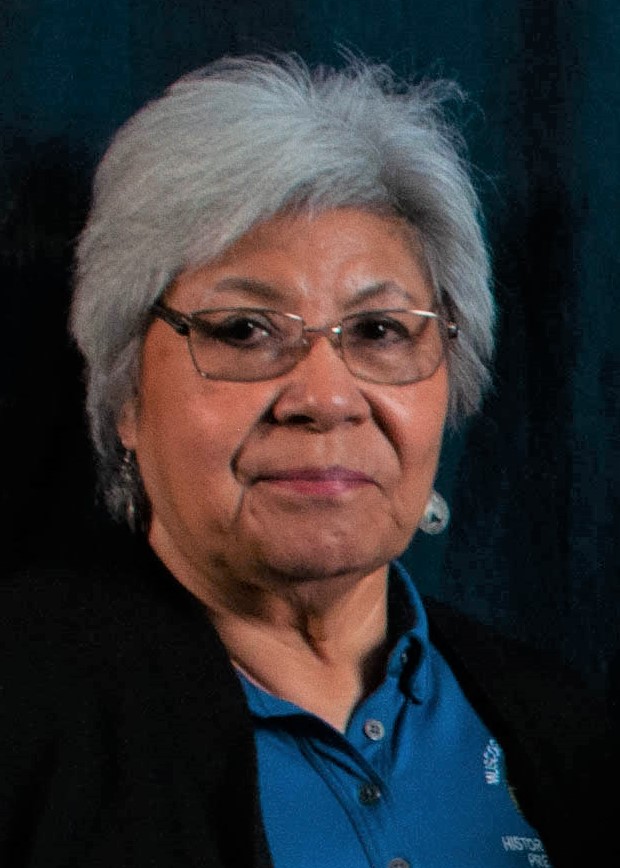
Image Metadata
|
Created: Thursday, November 4, 2021 - 12:15 |
||
Summary:
An interview with Muscogee (Creek) Nation citizen Melissa Harjo-Moffer, Part two.Description:
An interview with Muscogee (Creek) Nation Melissa Harjo-Moffer. A downloadable transcript may be found by link: Harjo_Moffer Part Two. This interview has been indexed through the Louie B. Nunn Center for Oral History Center’s Oral History Metadata Synchronizer system at the University of Kentucky. For an indexed copy of the video, please follow the external link found in the bar on the right of this page.
Transcription:
The Muscogee (Creek) Nation
Historic and Cultural Preservation Department Oral History Program
“A Twenty-First Century Pandemic in Indian Country: The Resilience of the Muscogee (Creek) Nation Against Covid-19”
As Remembered by: Mrs. Melissa Harjo-Moffer
Interview by: Ms. Midge Dellinger
Date: June 29, 2021
Transcription: The Audio Transcription Company
Edited by: Ms. Midge Dellinger
MIDGE DELLINGER: This is Midge Dellinger, oral historian for the Muscogee Nation. Today is June 29, 2021 and I am at the Muscogee Nation Council House located in downtown Okmulgee, Oklahoma, continuing my interview with Muscogee citizen, Mrs. Melissa Moffer-Harjo. I am performing this interview on behalf of the Muscogee Nation Historic and Cultural Preservation department for the oral history project titled, “A Twenty-First Century Pandemic in Indian Country: The Resilience of the Muscogee (Creek) Nation Against COVID-19.” So, Mrs. Moffer-Harjo, we’re going to jump right in here to some questions that concern your experiences with the COVID-19 pandemic. We’re now one year—over one year—into the COVID-19 pandemic. Do you remember where you were and how you first heard about the Coronavirus?
HARJO-MOFFER: [00:01:00] Yes. I first heard about it on the news that it was in China and the city—I forget the name of the city in China—was quarantined. Nobody could leave, nobody could enter. But at the time, I was still caring for my late-husband, who had cancer. And we were just finishing up his treatments. I told him what I heard on the news and he didn’t say anything. And that was like December, when I heard it. And he had just completed his treatments, and we went to see the doctor, and he did a body scan on my husband and said that he was clear of the cancer, which was really good news. Anyway, [00:02:00] I didn’t think much more of the virus, I just hoped that it didn’t come here to the US. Life seemed to kind of continue like it was before my husband got cancer. So, he was happy. But later on, toward the end of December, he was starting to feel kind of sick. And I asked him if he wanted to see the doctor, and he said, “No.” And so, we went into the new-year, and again, he complained, again he did not want to see the
1
doctor. So, he tried to believe that it was only something he ate. So, we [00:03:00] continued. And he wanted to go to the casinos, because he said, “I may never get to do this again,” which was kind of something he wouldn’t really say. And then, toward the end of January, I took him to the doctor. And it was like the twenty-eight or twenty-ninth, and the doctor told him that his cancer had come back. This time it had spread. And so, I didn’t know what to do except take him home and he had to live out his rotten life at home, he said. But at the same time, on the news, I kept hearing about the virus. And I started taking him to the doctor more often, when he was feeling really bad. I didn’t really know what to do.
[00:04:00] Toward the first of February, I went on ahead and tried to spend more time with him. So, did his son. His son had hesitated when he first was diagnosed, but now his son wanted to come down to the house and help with him. We had hospice coming in—hospice nurses and so forth. But it was unusual for his son to want to come and I let him for about two days. And toward the middle of the month, I decided to take him in, because he said he was in more pain and his stomach was swelling. And so, I take him in and he—I took him to the Veteran’s Hospital in Oklahoma City. So, all this time, I’m busy with my husband, the virus has already entered into the US, and the news is talking about people getting sick and so [00:05:00] forth. But I’m busy with my husband. So, I take him—I don’t work, because I’m tending to him. I don’t know how much time he has, and I took him on the—I think it was the fourteenth—no, the fifteenth of February to the hospital. And I couldn’t bring him back, because he was really in pain. So, they drained his stomach, because his stomach was really swollen. And they drained him, and then they kept him. I told him that I would prefer him to stay in the hospital, because we
2
lived so far out in the rural area, I wouldn’t be able to load him up, or whatever. So—I was by myself with him. So, anyway, he stayed. So, from the fifteenth, sixteenth, seventeenth, the nineteenth—which is a Wednesday—he passed away on that day. But the news was still talking about the virus. [00:06:00] And after he passed, and after I put him away, that was like toward the end of February.
I went back to work the first Monday of March, and I worked two weeks when we were notified that the elders need to go home. So, I was sixty-seven at that time—sixty seven years old. My husband was seventy-seven. So, I was considered an elder, so I went home. And I did whatever I needed to do after my husband passed. My children come to stay with me, but the pandemic was still—was ongoing now. So, everybody was told— most of the elders were told to stay home. So, I did and I had to take care of the [00:07:00] place. My husband’s property, which is 160 acres. And it was like an acre and a half where the house sits. So, I was busy doing that. And I tried to—well, my family came over, so they helped me cut the lawn, and straighten the house, and redo the house, and so forth. And I was collecting my husband’s things. And I told my sisters and them that I was sent home because the pandemic is really ongoing now. And well, that was like March and into April. I stayed home. We were told to mask and maybe just be isolated. And so, I did. And then, April came, May came, and June we were told to come back to work. So, June I worked. And we all had to [00:08:00] wear masks, and we to kind of stay isolated—we were separated from our—the rooms was rearranged—our desk was rearranged. So, we couldn’t sit too close to each other in our work area.
So, at the end of March, I said—no, this was June. So, we worked all of June and then we were sent home again. The last Friday of June we were sent home. So, I was
3
home July. I was home and worried about my kids. One of my daughters called and told me my son was sick. And my granddaughter was with me, and she told me she had taken her uncle to the doctor, because he was sick at one time. And then, later, he got sick again and the other granddaughter took [00:09:00] him in. And I know the hospitals were saying that you need to be tested first. But in this case, my son, he was really sick. They said he was—he couldn’t hardly breathe, and he was coughing a lot, and so forth. And so, I called and told my granddaughter to call the ambulance or just take him into the ER. So, she said she would. Then I got word later that he was diagnosed with the COVID and he was in the hospital. And I kind of—I didn’t know what was going on. I had a great grandson with me, so I couldn’t take him with me to see. And besides, they were—the hospitals were already closing down. People were not allowed in there. But I got a phone call from my youngest daughter and she told me to call the doctor at the hospital where my son was. I did and I [00:10:00] gave them my number, and so forth, told them who I was, and then a day or so later—or the next day, they call me and said they were going to have to take him to Tulsa. He was severely sick—severely ill with the virus and he needed to be on a machine that they had. So, from the Ada Chickasaw Medical Center, they took him to Hillcrest Heart Hospital. And he stayed there on the COVID floor, they said. So, he was in intensive care for quite some time.
I called every day. My daughter called. And he seemed stable, they said. Since I’d never had the virus and I’ve never known anyone to have a virus, I didn’t know what they really meant. Two—no, [00:11:00] three weeks later, I think, I got to see him. And he was on the ECMO machine, which was really, really something I’d never seen. And it was attached to his groin area. The doctor told me that that would give his lungs a break
4
and the heart would keep him going. So, again, he was there, and I finally got to see him, like I said, about three weeks later. And he didn’t know that I was there. So, I spent about three or four days going to see him from Wetumka to Tulsa. And there’s times I’d be on my way and the nurse would call and say, “Is anyone in his family coming?” They said, “He’s not doing so well.” So, I’d get there and they were telling me how bad he was getting or what was [00:12:00] happening. And that happened about three or four times. And after a while, he seemed to get better and he seemed to get bad again. So, from July—I was there in August—I think August 10, somewhere around there—but he was diagnosed July 17 and sent to the Heart Hospital in Tulsa on the twentieth, I think it was. Twentieth or twenty-first. And so, I was going up there almost every day, except for the first three weeks, because they said he couldn’t have any visitors. So, when I did start seeing him, he didn’t seem to be progressing much. But the doctor said he was. I couldn’t tell, but the doctor said he was.
And then, somewhere in the latter part of August, [00:13:00] they were trying to do therapy, make him sit up and make him try to, I guess, bring him out of the sedation. And so, that went on. But each time I’ve seen him, he was more aware. He would tell me visions, what he heard at night, and he didn’t like sleeping at night. So, he stayed awake. And that’s what the nurses told me; he was having trouble sleeping. And I found out later that happens to COVID patients. They don’t sleep at night. So, from July all through September, all through October—October 21, they told me—the doctor said that he was doing a lot better, because he was doing more therapy, he was more—he was standing [00:14:00] more, and he was able to sit up at times. But it wasn’t until September that he could really fully try to walk. But he walked a few steps, but he did get around in the
5
wheelchair. So, I could see he was very—he was progressing. So, sometime in mid August, they took him off the ECMO machine, so he was doing better. But again, he was doing a lot better. He was showing me pictures—the nurses would take pictures of him where he’s doing better. And for a while there, he wasn’t able to speak, because he had that trachea in his throat. He had all kinds of lines—I guess tubes on him—breathing tube, his artificial food tube, and the monitors from the heart monitors, the—[00:15:00] whatever they might have been, they were just on him. And so, by the end of September, he didn’t have all that on him. He was able to speak. I remember a time when he’d try to speak, he had the trachea in his throat, so he could speak, and he tried to write, he couldn’t write. And he was kind of frustrated because he couldn’t talk to me. But by the end of September, he was doing a lot better—a whole lot better.
So, they transferred him to the rehab, I think it was mid-September. And then, October, they sent him to a rehab place in Collinsville. So, he stayed there and I got to visit him one time, because every time I wanted to visit, I’d call up there and they would say there was a COVID outbreak among the employees, and my son was separated [00:16:00] and put in another section to keep him from that. So, there, he recovered more. He was talking by the time they sent him there, so he didn’t have all tubes. So, this time, he was just rehab. So, I got to visit him, like I said, one time. So, he sent to me a video of him walking, which was very, very good. And so now, he was talking, walking with a cane, I could see he was really recovering. So, he stayed there from October until January. And on the twenty-ninth of January, he was released and he was able to talk, but he was still on oxygen. So, I had to make sure he had oxygen on his way home. And then, the oxygen company brought the concentrator—[00:17:00] a big box on wheels that he
6
had to have in his room, especially at night. He had to use that so he could sleep better. He still had the cough, but not as much. And so, that was from July—I mean, January 29. And so, he was home—still home February, March, April, May—now it’s June. Today, June 29, makes five months since he’s been home. Let’s see, February, March, April, May, June. Yeah, five months.
And today, he is with his daughters. He has five daughters, so he is with two of them, spending time with him, since they didn’t really get to see him all last year. So, he’s spending time with his grandchildren. He has five daughters, but he’s visiting two, and they have about three daughters—[00:18:00] three children each. So, my son has several grandsons. And altogether, he has about thirteen grandchildren. So, I’m sure he’s very happy. But in the time that he was sick, the doctors was asking him what he felt when he slowly came out of it, when he was able to talk. And he said he was not depressed, because most of the other patients that had COVID were depressed. And he had a roommate that was a very elderly man. He was very depressed and the doctors were saying, even the—I guess you call them like counselors—regarding his psychiatric people, I guess, were saying that he would have been a good [00:19:00] advocate for those people that are suffering. And so, he has come a long ways. And he went to see a lung doctor about a week or two ago, and that lung doctor says he is a miracle. A walking miracle, because he was the first patient he’s seen that actually survived the COIVD and the ECMO machine. So, my son is very, very grateful. I am, too.
DELLINGER: Yes.
7
HARJO-MOFFER: So, he said that in one of his visions he was visited by a spiritual being asking him if he was willing to take the challenge. And my son told him, “Yes.” [00:20:00] “Are you sure?” He said, “Yes.” He knows what the challenge is, but I don’t know. But he said he had visions where they were helping him, and a female were helping him, because in the visions he would sit down and he would be paralyzed. He couldn’t speak, he couldn’t move, he just was paralyzed. And the two would come and pick him up and take him wherever he needed to go. He said that happened twice, and each time, it was the same ones that came to help him. And he was really grateful. And when he come out of it, he woke up and the doctor’s right there beside him. He’s looking at his monitors and making sure his—whatever the doctor does. And he said, he looked toward the end of the bed and there was one of those spiritual beings standing on his bed. [00:21:00] And my son said he wanted—he raised his arm and point at him and say, “I saw you.” They say he couldn’t speak. But he believes that is what kept him going. He didn’t feel any depression, he said. He didn’t feel anything like he was abandoned or— because half the time, he didn’t know when I was there. But again, the doctors think that he would have been a good advocate for those that were suffering from COVID-19. So, he's done really good. So, I believe he’ll continue to do even better. Every now and then, he kind of goes backwards. He gets sick, because he does things that he shouldn’t have done, like being outside, getting wet—especially [00:22:00] when it’s raining and weather’s kind of damp. But he’s over that. He’s learned not to do certain things now. He's not able to do the things that he used to do. He was an autobody tech, and he’ll never be able to do that again, because he don’t have the strength to do those things. But he
8
hopes one day he’ll be able to do that. So, he’s strong and I think he will continue to do better.
DELLINGER: Well, that’s an amazing story. It makes me emotional listening to it. I appreciate you sharing that and I know that anyone who listens to this oral history interview is going to appreciate it, as well. I want to go back, though, to—just for a minute—when your husband was ill [00:23:00] and you were taking care of him. It sounds like, from what you’ve already shared that with him, and his passing, did you not have to go through what you went through with your son, and what so many people in this world went through not being able to be with your husband at the end of his life? Or even have a proper funeral for him? Were you able to do this things with him?
HARJO-MOFFER: Yes, I was able to do that with him, because when he got sick and when he was diagnosed, he said, “I think this is it. I won’t be able to live any longer.” But the thing that got me after—he was diagnosed from this—a body scan. The doctor says, “You’re clear of the cancer.” I was really happy. But [00:24:00] just before Christmas, I think it was—and after the news that he recovered, he says, all of a sudden—during all this time that I was with him, I was the one having to pay bills, and use his card—his debit card—and pay the bills. He left it to me. And I did that. So, I had his checkbook, I had his debit card, I had different things regarding his money. Then—but after he was diagnosed—well, after the body scan, he says, “I want to be as I was.” Now, I’m a believer—in my spirituality, what you say is what you get. He said that. And when I heard that, I thought, “You shouldn’t be saying that.” Well, [00:25:00] he got what he
9
had. It came back. And I was really surprised, because I just got through talking to the doctor, and he says that he’s clear. No more cancer. He got that. I thought, “You shouldn’t have said that.” Because he said, “I want what I had.” And he got it. But I started preparing for his service. He wanted to be cremated—he told me that specifically. He wanted to be cremated and he didn’t want a lot of—a big funeral, he didn’t want that. He didn’t want a lot of people coming. He didn’t want—he said, “Cremate me, put me out there by my grandpa,” and I did. And what the funeral home did, though, was to do a video. [00:26:00] And so, I have that video.
I knew my husband when—we were only married twelve years. And he was in his sixties when I met him. And he was already retired and he—I didn’t know him before then. I’ve seen some pictures of him in his fifties, forties, but not when he was younger. And I’ve seen a picture of his high school picture—one of his relatives sent it to me. And then, I’ve seen a picture of him when he was in the military. He was in the Navy. And I was really surprised. But I used those pictures to do a video and to show it during the service—the memorial services. So, I got all that done. And I was kind of hesitant to contact his children during that time, but they [00:27:00] knew—I later did. I told them where I was going to have the memorial service. But his son never showed up. His daughters are from out of state. One is in Tennessee; one is in North Carolina. But they didn’t come for the services. Neither did his son. But his relatives did. His—I guess you call them in-laws—or his mother’s side of the family. His mother was non-Native, but his father was half-Muscogee. And he was a quarter. But they came and they enjoyed it, seeing pictures of him when he was young. And everything was done what he wanted.
10
And it was good. So, I felt kind of at peace, put him to rest, and then, all of a sudden, the pandemic hit.
And I kind of started [00:28:00] over again, taking care of my son. And you know, what is really kind of eerie is that my husband was diagnosed on the seventeenth of July 2019. He was diagnosed with cancer. Well, a year later, July seventeenth, my son was diagnosed with COVID-19.
DELLINGER: Wow.
HARJO-MOFFER: I thought that was kind of eerie. Yeah. But again, my son has come through, maybe because he has a stronger spirit. I don’t know. My husband, on the other hand, wasn’t like that. He would kind of—he was a skeptic of the spirits and the spirit world. And I tried to talk to him while he was sick about that and he didn’t believe me. And I always told him, I said, “The soul never dies. So, [00:29:00] how you live determines where you go.” And I was telling him a story that someone told me what happened to him, his experience, and what happened, he ended up in the dark side. And it was kind of scary, but I believe that, because to me, I believe the soul has to go somewhere. But anyway, he didn’t believe me. And I still pray for him, at times, but again, everything—he was laid to rest—or I’d say he was cremated. And I almost kept the ashes—I almost kept his ashes, because I chose pretty urn, and it had the military colors on it. I almost decided not to bury it, but I did, because that’s what he wanted.
So, I did that and everything was okay, went back to work, and then we were sent home. And we were all for—like I said, we were sent home in [00:30:00] March, so
11
April, May, and the first part of June we come back. And then, I was—I worked for the whole month of June, and then July my son was diagnosed with COVID.
DELLINGER: So, when you were sent home—which we were all sent home to shelter in place—is that something that you were able to do? Did you stay at home? And if so, how did you keep in contact with your other kids and grandkids?
HARJO-MOFFER: My kids, they would call me to see if I was okay. My sister would call and ask me if I need help. Sure, I needed help. Grass was growing, and I wanted puppies, because the dogs that we had, they too passed. But I had to keep on. So, I got my grandsons [00:31:00] and my daughter and some others to come out and try to help me with the lawn. I had bought a—we had bought a lawnmower months before. So, they helped me cut grass. I stayed busy. And I wanted to redo the house, because my husband was an antique collector. So, we had antiques all over the house. And he had one big shelf which I wanted to use to put dishes in, but he put all his antiques in there. So, I was going to redo the whole house, change curtains, clean the windows, and everything. And put in a shelf that I thought we needed—he didn’t think so. So, I took the one big cabinet out and gave it to my daughter, and I brought in another one. And then, we never had a dining table, and so, I went out and bought a dining table. So, I was kind of rearranging the house. But my family came out with me to help me. And so, I stayed busy almost all that time from [00:32:00] March, most of April, May, and in June we went back to work. And I had to do some things, so I had to call on my sister to help me. Like my vehicle needed to be inspected, or something. I can’t remember what. I got a recall card in the
12
mail. So, she had to drive my truck and have somebody else follow her, and so forth, while I was working. And so, I had things going on until July, when I got the call about my son. So, it was a busy time for me, though. And I’m glad it kept me busy.
DELLINGER: Right. Yeah, you had a lot on your mind by that point—by last summer. HARJO-MOFFER: I feel like I lost two years, you know.
DELLINGER: Right. [00:33:00] Can you share just a little bit about what—especially last year—and of course, we’re still in the pandemic. The virus isn’t gone now. So, we’re still dealing with it. But can you share just a little bit about what were your safety measures, your safety protocols that you used at home, or like when you had to leave your home? How did you keep yourself safe?
HARJO-MOFFER: Well, you know, when I thought about the pandemic, I thought to myself, at home, when I was a kid, we were always taught to wash your hands. Taught to wash your face as soon as you get up, because in the Muscogee traditional way, we were always told that something comes around you when you’re asleep. So, what society was saying to do, wash your hands, this, that, this, that. We had already been practicing it. I always [00:34:00] had wipes in my truck. I always had sprays in the house. So, when my husband was sick, I had to buy more of that. And then, the hospitals gave us more of that. We had more wipes, more sanitation stuff, everything. So, when the pandemic happened, I was almost kind of prepared for it already. But again, I was always prepared.
13
You know, the thing the Muscogee people—traditional full-bloods, I’d say—had this thing about the non-Natives, the stehvtke people. We were always told that they were dirty and they carried disease. So, when I started working outside the home, I had to live away from home, I was always buying things to keep us clean. If we had a visitor, a non Native, I wiped down the [00:35:00] house. My mother did, too, when somebody came to the house. If they ate with us, she’d use a little bit of bleach in the water. We just had that instilled in our mind that non-Natives were dirty. And I guess, they’re thinking back to De Soto’s time, when he came and spread all the disease. We lost half our people. So, again, it was the same thing. And so, I was kind of prepared.
But we wore a mask when we went out, but we didn’t—my family alone didn’t do that too much. We already had been practicing what society was now telling people to do. We never did stand close to each other when we talked and we didn’t [00:36:00] do what most of society does, I’ll just put it that way. When we talked to each other, we are maybe two or three feet apart. We never stand too close. I see on TV sometimes, in the movies, where people talk right in their face, and I figure, “They might be sputtering right in their face, or spitting in their face.” (laughs) But those are the kind of things we were taught not to do growing up. So, our people were—my family was more or less kind of prepared already for this. And we always washed our hands and we always tried to stay clean. So, when they came over though, we were family. So, we didn’t wear masks among ourselves. But we did when we had to go out of town. Like, go into Walmart, or get gas, and stuff like that. And this one store I go to in Okemah, to get gas, they always had a sanitizer [00:37:00] hooked to the little thing by the trashcan. And I always used it. This was before the pandemic. I always used it. So, when I went there to do that, there
14
wasn’t any in there. All this time there was and now there isn’t. But I always carried something with me, so I always used that. So, I clean my steering wheel, clean my hands, and so forth, like that. But yeah, we were kind of prepared for it.
DELLINGER: Talking about having to go to Walmart, or go to a store, what was that like? I know what that was like living in a large city, when the pandemic first hit, and trying to find things in the store that you needed. What was that like living out in a rural area?
HARJO-MOFFER: (laughs) Oh, I had to laugh, because we needed bread—the essentials—we need bread, and butter, and milk, and coffee—especially bread. I could have made it, but I wanted to make sandwiches because my family comes out to help [00:38:00] me. We go into stores and there’s no bread. And my sister texts and says, “There’s no bread. There’s no water.” Oh my gosh. But for some odd reason, as soon as we were sent home—I guess it was in the month of April—I told my sister, I said, “Would you go with me? I’m going to go shopping.” So, we went shopping for water— for the very things that I was looking for now. I had paper—I always had paper towels. When my husband was alive, he always bought the biggest package of paper towels and toilet tissue. And the biggest of everything. So, I already had it. And the thing came out where—saying something about toilet paper. And I’m thinking, “What does the toilet paper have to do with the virus?” Even to this day I don’t know. But people were buying [00:39:00] it. And so, when we went to the store there was no toilet paper. So, there’s no milk, no toilet paper, no bread, and one of the stores I got the last butter. I wanted the
15
biggest, largest bowl of butter, but I just got whatever I found. And I was really amazed, because I actually had these things, but it was just the little things I needed. Because I had filled my freezer up with meat, and we had all kinds of cereal, oatmeal, and I even had powdered milk. So, I don’t really know why I was out and about. But I wore a mask. And I guess I was just curious to see what was left in the stores.
And there were signs up that said, “One loaf of bread per person.” And I thought, “Jeez, I got all kinds of flour, I should make my own.” But later on, we did. We always liked homemade food, so I cooked up [00:40:00] biscuits or frybread. So, we didn’t really have—we didn’t really—were in need, I should say, of food. And where I lived, there’s an abundance of deer, and rabbit, and squirrel, and you name it. So, we didn’t really need that. My grandson actually went out and shot a rabbit. He says, “Grandma, here's some.” And he even got deer meat. “Here, in case we really need it.” So, we still have it. So, I would just have to say to my grandson, “Go out and hunt,” and there we’d be.
DELLINGER: That’s great. Now, how did your—you’ve got some siblings. How did your siblings do? Did you have to like check in on them quite a bit and make sure they were sheltering in place, and that they had things that they needed?
HARJO-MOFFER: Well, I didn’t really [00:41:00] do that, because they were checking on me, since I’m by myself now. They were wondering how I’m doing and they’d say, “Anything you need, we’ll come out and help you.” And I tell them, “Well, my grass is growing, I need help. And I needed this and I needed that.” And so, they came out. I needed puppies because I want big, large dogs. Well, that didn’t work out too well. But I
16
still have puppies today. They’re half grown. And I needed just help around the house. Reorganized the house, take out antiques and all that stuff. So, they spent some time with me. Sometimes, they stayed overnight.
Now, my sister would come out and help me clean the house. She’d vacuum the floor while I’m in the kitchen. And my house needed a lot of cleaning, because when my husband was living, he didn’t want me to do that. So, I didn’t. I mean, I would clean the restrooms, clean off stuff. But he’d say, “Let me do it.” So, I did. But the majority of the time, [00:42:00] I did my part. So, the bedroom and little things like that. But my—I always considered my husband kind of a junky person. He had antiques in the house, and stuff on the front porch. And so, I took time to do that and they helped me. So, I just stayed busy. And they really were concerned about me, so I just let them come over and stay the night with me.
DELLINGER: That’s all right.
HARJO-MOFFER: Yeah.
DELLINGER: I want to ask you, from your knowledge, what do you think has been the toll of illness and death in the Muscogee Nation because of the pandemic? So, the nation as a whole.
HARJO-MOFFER: Well, my sister and I were talking about that. She said, “What do you think of this?” I said, “We’ve lost a lot of people.” She said, “Yeah.” And I was
17
thinking about the medicine men. [00:43:00] And you know, as a spiritual person, I think that what we sow, we reap. And this virus wasn’t an accidental thing to me. I remember reading in a book of this—she was a medium. Some people called her psychic. But back in ’13—2013, 2012, somewhere around there, her book, A Prophecy, she had wrote in that book that there was a virus that was going affect the whole world in 2020. I didn’t think too much when I read that, because back in 2012, 2010, or whatever, that was a long ways away. Because I didn’t know what was going to happen in 2020. And nobody really thinks that far. [00:44:00] But somebody put that on Facebook, that page of that book. And I say to myself, “Oh, yeah, I remember that.” I used to read her books. I still have a lot of her books. And she kind of reminds me of that one back in the ’60s, Dixie— whatever her name was.
But as a whole, of the Muscogee people, you know, I didn’t really know what to think, except that what my grandparents and my dad used to say, that “If we don’t walk right in the eyes of the spirit, we’re going to pay.” And I compared it to the Black Plague back in the 1500s in Europe. The only survivors were the spiritual people, because they believed in a higher power. [00:45:00] Those are the ones that survived. And I still wonder about that today. And the doctors asked me if I had caught the COVID virus when my son was in the hospital. I said, “No.” And others asked me that, because I was with my son. Of course, they’re thinking that if he had it, I got it. And I said, “No. No.” And my granddaughter got it because she took him to the hospital. And then, my other daughter had taken him to Walmart the day or so before, and she got it. They were mild symptoms, but they were in bed for about a week. But I didn’t get it. And believing what my ancestors said, I think that’s true. If that happened back in 1500s in Europe, why
18
couldn’t it happen here? Maybe the spiritual people are the ones that’s going to survive. And I thought about the medicine people, what were their thinking? [00:46:00] Only the high power knows our deepest secrets. Maybe there’s something they did they shouldn’t have done, or maybe they didn’t amend their ways. I don’t know. But, you know, that
was my thinking.
And so, everyone that got sick—maybe I shouldn’t say this—but everybody that got sick, maybe there was something hidden in their life that they should have corrected. And not everybody thinks like me, of course. But to me, if you do something bad, you need to make amends and make it right, because you never know. I remember a time when my grandmother used to tell us, “You’re being watched.” I used to wonder, “Being watched?” In my readings of spirituality, I hear that we do have a guardian angel. We have someone watching us all the time. That our life journey is recorded somewhere. Everything we’ve done. [00:47:00] She used to say, “You better watch you say, watch what you do, because you’re being watched.” And so, I thought, “Well, that’s true. In some ways, the experiences I’ve had, it is true.” Because sometimes I’m going to do something, it’s like a tap on the shoulder saying not to do it. I go, “Oh, well, okay.” So, there is some truth to that, in my belief, because in a way, life is not just all games and play, you know. It’s not like that. We have to—we have challenges. Everyone has. So, with the belief of our people, those that have hidden secrets, I think they need to make amends or try to live right. So, that’s my theory. Again, [00:48:00] nobody else thinks like me. I wish there’s more, but you know.
19
DELLINGER: So, do you have any thoughts about what has been the impact of COVID on Muscogee traditional practices?
HARJO-MOFFER: Well, on the Muscogee people, I think those that go to the ceremonial grounds, those that still carry on the tradition, they need to be—my thinking is that, to be more—take things serious. The things that we used to have as sacred is not as sacred anymore. I can see that. I visited a ceremonial ground a month or two ago and it’s not like it used to be when I was growing up. Because I grew up at the ceremonial grounds. And nothing is really sacred anymore. [00:49:00] It has changed. And some of our mekkos have passed away with the COVID. And I didn’t know that one in particular—I had seen him like two months before. And next thing you know, he’s gone. They said he caught the COVID. But that was fast. I don’t know why. But again, I knew that mekko, and I knew some of the things he’d done, and I don’t know, I think he should have made amends with people. But again, that’s my own theory. My own thinking. And I think that the whole—it changed a lot of things. So, maybe it will make these people think and try to make them be better—be a better person. And [00:50:00] respect people and respect the traditional ways, and make them—maybe it’s a wake-up call for a lot of people. I’ll just put it that way. Maybe it is a wake-up call.
DELLINGER: Yeah, I think that can be one way to look at it. Well, I’m going to ask you this question, and maybe you’ve already touched on this, but I’ll ask this question anyway. I was just wondering if our traditional Muscogee people have had a different mindset or approach to how they have dealt with the pandemic.
20
HARJO-MOFFER: I heard from my grandson—he goes and participates in the grounds, and he was told that he didn’t have to wear a mask. He was told that as long as he [00:51:00] touched medicine, he would never catch it. He told me that. And I told him, I said, “That’s not true.” He says, “Why?” I said, “The sacredness of the grounds is not there anymore.” I said, “You need to wear a mask when you’re out and about. You need to wear a mask when you’re out there talking to anyone.” I said, “You don’t what they’re carrying, you don’t know what they’re thinking. Without the sacredness of the grounds, you’ll catch it, or you’ll be sick.” I said, “Back in the day”—I’m going to say twenty, thirty, forty, fifty years ago, maybe sixty years ago—that might have been true. Because back in the day, people considered that as a holy ground. You did not get mad at someone. You left all your [00:52:00] grudges and whatever at home. And they used to remind us of that before we left. Our father and mother used to tell us that. “When you go, this is holy, this is sacred. You don’t do the things and think bad of other people when you go to this. It’s very sacred.” But they said it in Muscogee. So, we knew that. But now, in the last twenty years, the sacredness is not there. So, I told my grandson, “Wear a mask. Wear a mask.” The younger generation is more involved in society’s way of living. The new technology, the phones, and so forth. Even their—they’re kind of brainwashed. So, I told him, I said, “There’s some things you can listen to and adhere to it. But there’s some that [00:53:00] that’s a no-no,” I said. “So, if they tell you you’re never going to catch COVID,” I said, “don’t believe that, because you might.” Because things have changed with our traditional people. The younger generation has—their mindset is different from the ones back in the ’60s, ’70s, before then—’50s. I said, “The elders
21
knew more of our ways. And I can see even the changes in today’s activities at the ceremonial grounds.
Back in the day, women weren’t scratched. Today, I see it on their arms, I see it on their legs, I see them children. And that’s not to be. Because that didn’t happen when I was a kid. I’m a female and I never had scratches. I touched medicine; I didn’t have scratches. My mother, my grandmother, none of the women had scratches. But today, they do that to them. So, I can see that. And women were considered very [00:54:00] respectful. You didn’t—women didn’t wear tattoos. Women are supposed to be clean and women are very respected in—highly respected at the grounds. But today, it’s not so. So, there’s a lot of changes today. And I’m not surprised when I heard the mekko passed, or the medicine men passed. So, I wasn’t really surprised. Everything has changed.
DELLINGER: Okay. All right, I’m going to shift gears here a little bit. I’m going to ask you how do you think Muscogee Nation leadership has performed throughout the pandemic?
HARJO-MOFFER: I think the leadership of our people has been really good. I mean, I’ve known Chief Hill for quite some time. And although there’s others that oppose his decisions, I think he’s made good choices. [00:55:00] And I know he’s had to think before he made those. And I think that without their leadership, things wouldn’t have been run as smooth. And so, I have high respects for Chief Hill and Del Beaver. So, I’ve been on trips with them, and I’ve spoke to them one-on-one, on ordinary things, you know. We’ve held conversations. They both know I’m a traditional, I’m a speaker, I can
22
read and write, he knows that. They both know that. So, I am one of them old-fashioned Muscogee women.
DELLINGER: Right. What about the Muscogee Nation Health Department? How do you think they have performed, thinking back to last year when they started their testing, maybe how they have cared for our citizens who have become ill by the virus? And then, also, with their vaccination process. How do you think they’ve done?
HARJO-MOFFER: [00:56:00] I can’t really say, because I didn’t come around them—I didn’t see them—I guess they did fine. I mean, I wasn’t nowhere around. Since I live south. None of my family got that vaccination. I, myself—when I was a child, I didn’t get vaccinated until I was in boarding school. But we didn’t—and to me, we had our own healers at home. My grandmother was one and I had relatives that was—they took care of us. We had a fever, we had anything ailing us from earache, to stomachache, whatever— to fever. And so, if I got a shot—like one year, I got the flu shot vaccination. I [00:57:00] caught the flu really bad. It’s a wonder I didn’t get hospitalized. I had never had the flu before, until I got the flu shot. And the same way with pneumonia shot. Just because I was getting up there in age, the nurse says, “You need a pneumonia shot.” I said, “I’ve never had it before.” Well, she gave it to me anyway. And boy, did I get pneumonia. I was sick—again, I wasn’t hospitalized. I was close to it. And I thought, “Well, I’ve never had these things.” I never had mumps, I never had measles, I never had chicken pox, I never had any of those things. So, they give me this vaccination for something I’ve never had, and I got it. I was deathly sick. And I thought I needed to go to the hospital, but I
23
never was put in the hospital. So, I stayed home and I had to just suffer it through. And my brother made some medicine—[00:58:00] Indian medicine with herbs and different things—and I slowly came out of it. Without that, I don’t think I would have made it.
So, whatever they did here, I guess it’s good. But I wasn’t around to see it. I just heard it. I heard about it. But being a traditional person, and healing—I felt like, if this was done when I was a child and I survived, well if I can do it again when I’m an adult, I’ll still survive. So, it’s kind of like I’m—what do you call it? Hand-in-hand, mind thinking, you know? So, again, I’m the kind that says, “What you say is what you get.” So, if I wanted it, I probably would have got it. (laughter)
DELLINGER: I’m glad you didn’t say it. Do you have any thoughts or opinions about how the state of Oklahoma and the federal government [00:59:00] performed in handling the COVID pandemic from both thinking about it from a health and an economic perspective? Any thoughts about how they did?
HARJO-MOFFER: I think they did good, because there’s a lot of my family and others that didn’t have jobs, because some of their businesses closed up. I remember a friend saying they didn’t have a job anymore. But when the government was going to send us money, that really was helpful, really. And in my case, since I didn’t get really anything from my husband, that helped me out a lot. Because when I was taking care of him, I didn’t really have anything. And then, when I end up—I was trying to work when I could, but by the time he passed, I was way behind on my bills. So, when that came along, that helped me. It helped me a lot. And then, when I had to travel to see my son,
24
that was even better, when I travelled. I used that [01:00:00] money for expenses. Sometimes, I had to get a room and stay overnight. And I didn’t want to stay in the hospital, because they have very uncomfortable beds. And so, the stimulus they sent out helped a lot. And the news of the people that were getting pandemic—mandated about wearing masks, which I thought was good, because over the years that I’ve seen people do things. And I’m really an observer. I stand back and I watch people. And things that I was taught, I think that shouldn’t be. But again, I just think that what the government did and what the health people were trying to do with the vaccine. And I always wondered, “How come they didn’t work that fast?” Maybe they didn’t have the people [01:01:00] to do that when smallpox was out. Because that was another epidemic way back in early 1900s that killed a lot of our people. But again, maybe they didn’t have those kind of people to find a vaccine.
DELLINGER: Right. All right, with this next question, we’re thinking about our future generations of Muscogee who may—I hope not—but may find themselves trying to survive something like what we’ve been going through here with this Coronavirus pandemic. So, given that, what words of wisdom can you share about living with and surviving such a catastrophic event as what we’ve been going through?
HARJO-MOFFER: Well, for the younger generation, they need to be taught their traditional values. [01:02:00] How to treat people, how to be respectful in every way, and to have a clear mind. I know a lot of young people, they are drugs, and alcoholics, and so forth. And all of that needs to be put aside and think of your life. What it’s going to be
25
when you get older. And also, to stay clean. Clean body—in the body, mind, and soul, because I think that if people live dirty, they end up with all this. And this makes me think about De Soto and his men when they came. They were in the full armor and you never knew when they bathed. And here, they left all these diseases behind when they left. And people were getting sick. [01:03:00] But our people, the younger generation, just stay clean in body, mind, and soul, to help them to survive the future years. To become adults, to be able to survive whatever may be coming. You never know. But I feel like that if everyone really stood back and looked at what happened now, it could happen again. And again, the elders used to say, “Things are coming. Things that we never knew would even happen to us.” And nobody knew or even thought, twenty years ago, that there was going to be an epidemic. [01:04:00] But again, just try to stay clean in body, mind, and soul.
My grandmother used to say, “Don’t think bad of people, because it might happen to you.” And she used to say, “If you can’t say nothing nice about anyone, don’t say anything at all, because it might come back on you.” They always said that. It’ll come back on you. So, if a person was handicapped in a wheelchair or something, don’t think bad of them, it might happen to you. I remember my husband; he was really a skeptic. He would say stuff. I said, “Don’t say that, it might happen to you.” Because one time he saw an old guy barely getting around. And I don’t know his words exactly, but he said, “Old guy, you should just stay home.” Well, he ended up like that. Old—he could barely get around because he lost a lot of weight when he was sick, when he had cancer. And [01:05:00] he fell several times. So, again, keep your mind clear and try to treat people as if—like you want to be treated. Just have that real clear mind. And I think if everybody
26
did that, and get along with people, I think the world would be a better place to live in, you know?
DELLINGER: Yes. Yeah. All right, well, thank you for those words. We’re going to wrap things up. And so, in closing, I want to give you an opportunity if there’s anything else that you would like to say or share about the COVID-19 pandemic and your experiences with it.
HARJO-MOFFER: No, I think I’ve said all that I can remember and all I thought to say. Mvto.
DELLINGER: Yes, mvto. Thank you so much, again, for taking time out of your workday [01:06:00] to participate in this project. And I know sitting here listening to you, I have learned so much from you. And appreciate your words. They’re meaningful, they’re important, and I know that anyone who watches this interview is going to find it to be just as amazing as I have and will learn so much from it. So, mvto.
HARJO-MOFFER: You’re welcome.
END OF INTERVIEW
27
Historic and Cultural Preservation Department Oral History Program
“A Twenty-First Century Pandemic in Indian Country: The Resilience of the Muscogee (Creek) Nation Against Covid-19”
As Remembered by: Mrs. Melissa Harjo-Moffer
Interview by: Ms. Midge Dellinger
Date: June 29, 2021
Transcription: The Audio Transcription Company
Edited by: Ms. Midge Dellinger
MIDGE DELLINGER: This is Midge Dellinger, oral historian for the Muscogee Nation. Today is June 29, 2021 and I am at the Muscogee Nation Council House located in downtown Okmulgee, Oklahoma, continuing my interview with Muscogee citizen, Mrs. Melissa Moffer-Harjo. I am performing this interview on behalf of the Muscogee Nation Historic and Cultural Preservation department for the oral history project titled, “A Twenty-First Century Pandemic in Indian Country: The Resilience of the Muscogee (Creek) Nation Against COVID-19.” So, Mrs. Moffer-Harjo, we’re going to jump right in here to some questions that concern your experiences with the COVID-19 pandemic. We’re now one year—over one year—into the COVID-19 pandemic. Do you remember where you were and how you first heard about the Coronavirus?
HARJO-MOFFER: [00:01:00] Yes. I first heard about it on the news that it was in China and the city—I forget the name of the city in China—was quarantined. Nobody could leave, nobody could enter. But at the time, I was still caring for my late-husband, who had cancer. And we were just finishing up his treatments. I told him what I heard on the news and he didn’t say anything. And that was like December, when I heard it. And he had just completed his treatments, and we went to see the doctor, and he did a body scan on my husband and said that he was clear of the cancer, which was really good news. Anyway, [00:02:00] I didn’t think much more of the virus, I just hoped that it didn’t come here to the US. Life seemed to kind of continue like it was before my husband got cancer. So, he was happy. But later on, toward the end of December, he was starting to feel kind of sick. And I asked him if he wanted to see the doctor, and he said, “No.” And so, we went into the new-year, and again, he complained, again he did not want to see the
1
doctor. So, he tried to believe that it was only something he ate. So, we [00:03:00] continued. And he wanted to go to the casinos, because he said, “I may never get to do this again,” which was kind of something he wouldn’t really say. And then, toward the end of January, I took him to the doctor. And it was like the twenty-eight or twenty-ninth, and the doctor told him that his cancer had come back. This time it had spread. And so, I didn’t know what to do except take him home and he had to live out his rotten life at home, he said. But at the same time, on the news, I kept hearing about the virus. And I started taking him to the doctor more often, when he was feeling really bad. I didn’t really know what to do.
[00:04:00] Toward the first of February, I went on ahead and tried to spend more time with him. So, did his son. His son had hesitated when he first was diagnosed, but now his son wanted to come down to the house and help with him. We had hospice coming in—hospice nurses and so forth. But it was unusual for his son to want to come and I let him for about two days. And toward the middle of the month, I decided to take him in, because he said he was in more pain and his stomach was swelling. And so, I take him in and he—I took him to the Veteran’s Hospital in Oklahoma City. So, all this time, I’m busy with my husband, the virus has already entered into the US, and the news is talking about people getting sick and so [00:05:00] forth. But I’m busy with my husband. So, I take him—I don’t work, because I’m tending to him. I don’t know how much time he has, and I took him on the—I think it was the fourteenth—no, the fifteenth of February to the hospital. And I couldn’t bring him back, because he was really in pain. So, they drained his stomach, because his stomach was really swollen. And they drained him, and then they kept him. I told him that I would prefer him to stay in the hospital, because we
2
lived so far out in the rural area, I wouldn’t be able to load him up, or whatever. So—I was by myself with him. So, anyway, he stayed. So, from the fifteenth, sixteenth, seventeenth, the nineteenth—which is a Wednesday—he passed away on that day. But the news was still talking about the virus. [00:06:00] And after he passed, and after I put him away, that was like toward the end of February.
I went back to work the first Monday of March, and I worked two weeks when we were notified that the elders need to go home. So, I was sixty-seven at that time—sixty seven years old. My husband was seventy-seven. So, I was considered an elder, so I went home. And I did whatever I needed to do after my husband passed. My children come to stay with me, but the pandemic was still—was ongoing now. So, everybody was told— most of the elders were told to stay home. So, I did and I had to take care of the [00:07:00] place. My husband’s property, which is 160 acres. And it was like an acre and a half where the house sits. So, I was busy doing that. And I tried to—well, my family came over, so they helped me cut the lawn, and straighten the house, and redo the house, and so forth. And I was collecting my husband’s things. And I told my sisters and them that I was sent home because the pandemic is really ongoing now. And well, that was like March and into April. I stayed home. We were told to mask and maybe just be isolated. And so, I did. And then, April came, May came, and June we were told to come back to work. So, June I worked. And we all had to [00:08:00] wear masks, and we to kind of stay isolated—we were separated from our—the rooms was rearranged—our desk was rearranged. So, we couldn’t sit too close to each other in our work area.
So, at the end of March, I said—no, this was June. So, we worked all of June and then we were sent home again. The last Friday of June we were sent home. So, I was
3
home July. I was home and worried about my kids. One of my daughters called and told me my son was sick. And my granddaughter was with me, and she told me she had taken her uncle to the doctor, because he was sick at one time. And then, later, he got sick again and the other granddaughter took [00:09:00] him in. And I know the hospitals were saying that you need to be tested first. But in this case, my son, he was really sick. They said he was—he couldn’t hardly breathe, and he was coughing a lot, and so forth. And so, I called and told my granddaughter to call the ambulance or just take him into the ER. So, she said she would. Then I got word later that he was diagnosed with the COVID and he was in the hospital. And I kind of—I didn’t know what was going on. I had a great grandson with me, so I couldn’t take him with me to see. And besides, they were—the hospitals were already closing down. People were not allowed in there. But I got a phone call from my youngest daughter and she told me to call the doctor at the hospital where my son was. I did and I [00:10:00] gave them my number, and so forth, told them who I was, and then a day or so later—or the next day, they call me and said they were going to have to take him to Tulsa. He was severely sick—severely ill with the virus and he needed to be on a machine that they had. So, from the Ada Chickasaw Medical Center, they took him to Hillcrest Heart Hospital. And he stayed there on the COVID floor, they said. So, he was in intensive care for quite some time.
I called every day. My daughter called. And he seemed stable, they said. Since I’d never had the virus and I’ve never known anyone to have a virus, I didn’t know what they really meant. Two—no, [00:11:00] three weeks later, I think, I got to see him. And he was on the ECMO machine, which was really, really something I’d never seen. And it was attached to his groin area. The doctor told me that that would give his lungs a break
4
and the heart would keep him going. So, again, he was there, and I finally got to see him, like I said, about three weeks later. And he didn’t know that I was there. So, I spent about three or four days going to see him from Wetumka to Tulsa. And there’s times I’d be on my way and the nurse would call and say, “Is anyone in his family coming?” They said, “He’s not doing so well.” So, I’d get there and they were telling me how bad he was getting or what was [00:12:00] happening. And that happened about three or four times. And after a while, he seemed to get better and he seemed to get bad again. So, from July—I was there in August—I think August 10, somewhere around there—but he was diagnosed July 17 and sent to the Heart Hospital in Tulsa on the twentieth, I think it was. Twentieth or twenty-first. And so, I was going up there almost every day, except for the first three weeks, because they said he couldn’t have any visitors. So, when I did start seeing him, he didn’t seem to be progressing much. But the doctor said he was. I couldn’t tell, but the doctor said he was.
And then, somewhere in the latter part of August, [00:13:00] they were trying to do therapy, make him sit up and make him try to, I guess, bring him out of the sedation. And so, that went on. But each time I’ve seen him, he was more aware. He would tell me visions, what he heard at night, and he didn’t like sleeping at night. So, he stayed awake. And that’s what the nurses told me; he was having trouble sleeping. And I found out later that happens to COVID patients. They don’t sleep at night. So, from July all through September, all through October—October 21, they told me—the doctor said that he was doing a lot better, because he was doing more therapy, he was more—he was standing [00:14:00] more, and he was able to sit up at times. But it wasn’t until September that he could really fully try to walk. But he walked a few steps, but he did get around in the
5
wheelchair. So, I could see he was very—he was progressing. So, sometime in mid August, they took him off the ECMO machine, so he was doing better. But again, he was doing a lot better. He was showing me pictures—the nurses would take pictures of him where he’s doing better. And for a while there, he wasn’t able to speak, because he had that trachea in his throat. He had all kinds of lines—I guess tubes on him—breathing tube, his artificial food tube, and the monitors from the heart monitors, the—[00:15:00] whatever they might have been, they were just on him. And so, by the end of September, he didn’t have all that on him. He was able to speak. I remember a time when he’d try to speak, he had the trachea in his throat, so he could speak, and he tried to write, he couldn’t write. And he was kind of frustrated because he couldn’t talk to me. But by the end of September, he was doing a lot better—a whole lot better.
So, they transferred him to the rehab, I think it was mid-September. And then, October, they sent him to a rehab place in Collinsville. So, he stayed there and I got to visit him one time, because every time I wanted to visit, I’d call up there and they would say there was a COVID outbreak among the employees, and my son was separated [00:16:00] and put in another section to keep him from that. So, there, he recovered more. He was talking by the time they sent him there, so he didn’t have all tubes. So, this time, he was just rehab. So, I got to visit him, like I said, one time. So, he sent to me a video of him walking, which was very, very good. And so now, he was talking, walking with a cane, I could see he was really recovering. So, he stayed there from October until January. And on the twenty-ninth of January, he was released and he was able to talk, but he was still on oxygen. So, I had to make sure he had oxygen on his way home. And then, the oxygen company brought the concentrator—[00:17:00] a big box on wheels that he
6
had to have in his room, especially at night. He had to use that so he could sleep better. He still had the cough, but not as much. And so, that was from July—I mean, January 29. And so, he was home—still home February, March, April, May—now it’s June. Today, June 29, makes five months since he’s been home. Let’s see, February, March, April, May, June. Yeah, five months.
And today, he is with his daughters. He has five daughters, so he is with two of them, spending time with him, since they didn’t really get to see him all last year. So, he’s spending time with his grandchildren. He has five daughters, but he’s visiting two, and they have about three daughters—[00:18:00] three children each. So, my son has several grandsons. And altogether, he has about thirteen grandchildren. So, I’m sure he’s very happy. But in the time that he was sick, the doctors was asking him what he felt when he slowly came out of it, when he was able to talk. And he said he was not depressed, because most of the other patients that had COVID were depressed. And he had a roommate that was a very elderly man. He was very depressed and the doctors were saying, even the—I guess you call them like counselors—regarding his psychiatric people, I guess, were saying that he would have been a good [00:19:00] advocate for those people that are suffering. And so, he has come a long ways. And he went to see a lung doctor about a week or two ago, and that lung doctor says he is a miracle. A walking miracle, because he was the first patient he’s seen that actually survived the COIVD and the ECMO machine. So, my son is very, very grateful. I am, too.
DELLINGER: Yes.
7
HARJO-MOFFER: So, he said that in one of his visions he was visited by a spiritual being asking him if he was willing to take the challenge. And my son told him, “Yes.” [00:20:00] “Are you sure?” He said, “Yes.” He knows what the challenge is, but I don’t know. But he said he had visions where they were helping him, and a female were helping him, because in the visions he would sit down and he would be paralyzed. He couldn’t speak, he couldn’t move, he just was paralyzed. And the two would come and pick him up and take him wherever he needed to go. He said that happened twice, and each time, it was the same ones that came to help him. And he was really grateful. And when he come out of it, he woke up and the doctor’s right there beside him. He’s looking at his monitors and making sure his—whatever the doctor does. And he said, he looked toward the end of the bed and there was one of those spiritual beings standing on his bed. [00:21:00] And my son said he wanted—he raised his arm and point at him and say, “I saw you.” They say he couldn’t speak. But he believes that is what kept him going. He didn’t feel any depression, he said. He didn’t feel anything like he was abandoned or— because half the time, he didn’t know when I was there. But again, the doctors think that he would have been a good advocate for those that were suffering from COVID-19. So, he's done really good. So, I believe he’ll continue to do even better. Every now and then, he kind of goes backwards. He gets sick, because he does things that he shouldn’t have done, like being outside, getting wet—especially [00:22:00] when it’s raining and weather’s kind of damp. But he’s over that. He’s learned not to do certain things now. He's not able to do the things that he used to do. He was an autobody tech, and he’ll never be able to do that again, because he don’t have the strength to do those things. But he
8
hopes one day he’ll be able to do that. So, he’s strong and I think he will continue to do better.
DELLINGER: Well, that’s an amazing story. It makes me emotional listening to it. I appreciate you sharing that and I know that anyone who listens to this oral history interview is going to appreciate it, as well. I want to go back, though, to—just for a minute—when your husband was ill [00:23:00] and you were taking care of him. It sounds like, from what you’ve already shared that with him, and his passing, did you not have to go through what you went through with your son, and what so many people in this world went through not being able to be with your husband at the end of his life? Or even have a proper funeral for him? Were you able to do this things with him?
HARJO-MOFFER: Yes, I was able to do that with him, because when he got sick and when he was diagnosed, he said, “I think this is it. I won’t be able to live any longer.” But the thing that got me after—he was diagnosed from this—a body scan. The doctor says, “You’re clear of the cancer.” I was really happy. But [00:24:00] just before Christmas, I think it was—and after the news that he recovered, he says, all of a sudden—during all this time that I was with him, I was the one having to pay bills, and use his card—his debit card—and pay the bills. He left it to me. And I did that. So, I had his checkbook, I had his debit card, I had different things regarding his money. Then—but after he was diagnosed—well, after the body scan, he says, “I want to be as I was.” Now, I’m a believer—in my spirituality, what you say is what you get. He said that. And when I heard that, I thought, “You shouldn’t be saying that.” Well, [00:25:00] he got what he
9
had. It came back. And I was really surprised, because I just got through talking to the doctor, and he says that he’s clear. No more cancer. He got that. I thought, “You shouldn’t have said that.” Because he said, “I want what I had.” And he got it. But I started preparing for his service. He wanted to be cremated—he told me that specifically. He wanted to be cremated and he didn’t want a lot of—a big funeral, he didn’t want that. He didn’t want a lot of people coming. He didn’t want—he said, “Cremate me, put me out there by my grandpa,” and I did. And what the funeral home did, though, was to do a video. [00:26:00] And so, I have that video.
I knew my husband when—we were only married twelve years. And he was in his sixties when I met him. And he was already retired and he—I didn’t know him before then. I’ve seen some pictures of him in his fifties, forties, but not when he was younger. And I’ve seen a picture of his high school picture—one of his relatives sent it to me. And then, I’ve seen a picture of him when he was in the military. He was in the Navy. And I was really surprised. But I used those pictures to do a video and to show it during the service—the memorial services. So, I got all that done. And I was kind of hesitant to contact his children during that time, but they [00:27:00] knew—I later did. I told them where I was going to have the memorial service. But his son never showed up. His daughters are from out of state. One is in Tennessee; one is in North Carolina. But they didn’t come for the services. Neither did his son. But his relatives did. His—I guess you call them in-laws—or his mother’s side of the family. His mother was non-Native, but his father was half-Muscogee. And he was a quarter. But they came and they enjoyed it, seeing pictures of him when he was young. And everything was done what he wanted.
10
And it was good. So, I felt kind of at peace, put him to rest, and then, all of a sudden, the pandemic hit.
And I kind of started [00:28:00] over again, taking care of my son. And you know, what is really kind of eerie is that my husband was diagnosed on the seventeenth of July 2019. He was diagnosed with cancer. Well, a year later, July seventeenth, my son was diagnosed with COVID-19.
DELLINGER: Wow.
HARJO-MOFFER: I thought that was kind of eerie. Yeah. But again, my son has come through, maybe because he has a stronger spirit. I don’t know. My husband, on the other hand, wasn’t like that. He would kind of—he was a skeptic of the spirits and the spirit world. And I tried to talk to him while he was sick about that and he didn’t believe me. And I always told him, I said, “The soul never dies. So, [00:29:00] how you live determines where you go.” And I was telling him a story that someone told me what happened to him, his experience, and what happened, he ended up in the dark side. And it was kind of scary, but I believe that, because to me, I believe the soul has to go somewhere. But anyway, he didn’t believe me. And I still pray for him, at times, but again, everything—he was laid to rest—or I’d say he was cremated. And I almost kept the ashes—I almost kept his ashes, because I chose pretty urn, and it had the military colors on it. I almost decided not to bury it, but I did, because that’s what he wanted.
So, I did that and everything was okay, went back to work, and then we were sent home. And we were all for—like I said, we were sent home in [00:30:00] March, so
11
April, May, and the first part of June we come back. And then, I was—I worked for the whole month of June, and then July my son was diagnosed with COVID.
DELLINGER: So, when you were sent home—which we were all sent home to shelter in place—is that something that you were able to do? Did you stay at home? And if so, how did you keep in contact with your other kids and grandkids?
HARJO-MOFFER: My kids, they would call me to see if I was okay. My sister would call and ask me if I need help. Sure, I needed help. Grass was growing, and I wanted puppies, because the dogs that we had, they too passed. But I had to keep on. So, I got my grandsons [00:31:00] and my daughter and some others to come out and try to help me with the lawn. I had bought a—we had bought a lawnmower months before. So, they helped me cut grass. I stayed busy. And I wanted to redo the house, because my husband was an antique collector. So, we had antiques all over the house. And he had one big shelf which I wanted to use to put dishes in, but he put all his antiques in there. So, I was going to redo the whole house, change curtains, clean the windows, and everything. And put in a shelf that I thought we needed—he didn’t think so. So, I took the one big cabinet out and gave it to my daughter, and I brought in another one. And then, we never had a dining table, and so, I went out and bought a dining table. So, I was kind of rearranging the house. But my family came out with me to help me. And so, I stayed busy almost all that time from [00:32:00] March, most of April, May, and in June we went back to work. And I had to do some things, so I had to call on my sister to help me. Like my vehicle needed to be inspected, or something. I can’t remember what. I got a recall card in the
12
mail. So, she had to drive my truck and have somebody else follow her, and so forth, while I was working. And so, I had things going on until July, when I got the call about my son. So, it was a busy time for me, though. And I’m glad it kept me busy.
DELLINGER: Right. Yeah, you had a lot on your mind by that point—by last summer. HARJO-MOFFER: I feel like I lost two years, you know.
DELLINGER: Right. [00:33:00] Can you share just a little bit about what—especially last year—and of course, we’re still in the pandemic. The virus isn’t gone now. So, we’re still dealing with it. But can you share just a little bit about what were your safety measures, your safety protocols that you used at home, or like when you had to leave your home? How did you keep yourself safe?
HARJO-MOFFER: Well, you know, when I thought about the pandemic, I thought to myself, at home, when I was a kid, we were always taught to wash your hands. Taught to wash your face as soon as you get up, because in the Muscogee traditional way, we were always told that something comes around you when you’re asleep. So, what society was saying to do, wash your hands, this, that, this, that. We had already been practicing it. I always [00:34:00] had wipes in my truck. I always had sprays in the house. So, when my husband was sick, I had to buy more of that. And then, the hospitals gave us more of that. We had more wipes, more sanitation stuff, everything. So, when the pandemic happened, I was almost kind of prepared for it already. But again, I was always prepared.
13
You know, the thing the Muscogee people—traditional full-bloods, I’d say—had this thing about the non-Natives, the stehvtke people. We were always told that they were dirty and they carried disease. So, when I started working outside the home, I had to live away from home, I was always buying things to keep us clean. If we had a visitor, a non Native, I wiped down the [00:35:00] house. My mother did, too, when somebody came to the house. If they ate with us, she’d use a little bit of bleach in the water. We just had that instilled in our mind that non-Natives were dirty. And I guess, they’re thinking back to De Soto’s time, when he came and spread all the disease. We lost half our people. So, again, it was the same thing. And so, I was kind of prepared.
But we wore a mask when we went out, but we didn’t—my family alone didn’t do that too much. We already had been practicing what society was now telling people to do. We never did stand close to each other when we talked and we didn’t [00:36:00] do what most of society does, I’ll just put it that way. When we talked to each other, we are maybe two or three feet apart. We never stand too close. I see on TV sometimes, in the movies, where people talk right in their face, and I figure, “They might be sputtering right in their face, or spitting in their face.” (laughs) But those are the kind of things we were taught not to do growing up. So, our people were—my family was more or less kind of prepared already for this. And we always washed our hands and we always tried to stay clean. So, when they came over though, we were family. So, we didn’t wear masks among ourselves. But we did when we had to go out of town. Like, go into Walmart, or get gas, and stuff like that. And this one store I go to in Okemah, to get gas, they always had a sanitizer [00:37:00] hooked to the little thing by the trashcan. And I always used it. This was before the pandemic. I always used it. So, when I went there to do that, there
14
wasn’t any in there. All this time there was and now there isn’t. But I always carried something with me, so I always used that. So, I clean my steering wheel, clean my hands, and so forth, like that. But yeah, we were kind of prepared for it.
DELLINGER: Talking about having to go to Walmart, or go to a store, what was that like? I know what that was like living in a large city, when the pandemic first hit, and trying to find things in the store that you needed. What was that like living out in a rural area?
HARJO-MOFFER: (laughs) Oh, I had to laugh, because we needed bread—the essentials—we need bread, and butter, and milk, and coffee—especially bread. I could have made it, but I wanted to make sandwiches because my family comes out to help [00:38:00] me. We go into stores and there’s no bread. And my sister texts and says, “There’s no bread. There’s no water.” Oh my gosh. But for some odd reason, as soon as we were sent home—I guess it was in the month of April—I told my sister, I said, “Would you go with me? I’m going to go shopping.” So, we went shopping for water— for the very things that I was looking for now. I had paper—I always had paper towels. When my husband was alive, he always bought the biggest package of paper towels and toilet tissue. And the biggest of everything. So, I already had it. And the thing came out where—saying something about toilet paper. And I’m thinking, “What does the toilet paper have to do with the virus?” Even to this day I don’t know. But people were buying [00:39:00] it. And so, when we went to the store there was no toilet paper. So, there’s no milk, no toilet paper, no bread, and one of the stores I got the last butter. I wanted the
15
biggest, largest bowl of butter, but I just got whatever I found. And I was really amazed, because I actually had these things, but it was just the little things I needed. Because I had filled my freezer up with meat, and we had all kinds of cereal, oatmeal, and I even had powdered milk. So, I don’t really know why I was out and about. But I wore a mask. And I guess I was just curious to see what was left in the stores.
And there were signs up that said, “One loaf of bread per person.” And I thought, “Jeez, I got all kinds of flour, I should make my own.” But later on, we did. We always liked homemade food, so I cooked up [00:40:00] biscuits or frybread. So, we didn’t really have—we didn’t really—were in need, I should say, of food. And where I lived, there’s an abundance of deer, and rabbit, and squirrel, and you name it. So, we didn’t really need that. My grandson actually went out and shot a rabbit. He says, “Grandma, here's some.” And he even got deer meat. “Here, in case we really need it.” So, we still have it. So, I would just have to say to my grandson, “Go out and hunt,” and there we’d be.
DELLINGER: That’s great. Now, how did your—you’ve got some siblings. How did your siblings do? Did you have to like check in on them quite a bit and make sure they were sheltering in place, and that they had things that they needed?
HARJO-MOFFER: Well, I didn’t really [00:41:00] do that, because they were checking on me, since I’m by myself now. They were wondering how I’m doing and they’d say, “Anything you need, we’ll come out and help you.” And I tell them, “Well, my grass is growing, I need help. And I needed this and I needed that.” And so, they came out. I needed puppies because I want big, large dogs. Well, that didn’t work out too well. But I
16
still have puppies today. They’re half grown. And I needed just help around the house. Reorganized the house, take out antiques and all that stuff. So, they spent some time with me. Sometimes, they stayed overnight.
Now, my sister would come out and help me clean the house. She’d vacuum the floor while I’m in the kitchen. And my house needed a lot of cleaning, because when my husband was living, he didn’t want me to do that. So, I didn’t. I mean, I would clean the restrooms, clean off stuff. But he’d say, “Let me do it.” So, I did. But the majority of the time, [00:42:00] I did my part. So, the bedroom and little things like that. But my—I always considered my husband kind of a junky person. He had antiques in the house, and stuff on the front porch. And so, I took time to do that and they helped me. So, I just stayed busy. And they really were concerned about me, so I just let them come over and stay the night with me.
DELLINGER: That’s all right.
HARJO-MOFFER: Yeah.
DELLINGER: I want to ask you, from your knowledge, what do you think has been the toll of illness and death in the Muscogee Nation because of the pandemic? So, the nation as a whole.
HARJO-MOFFER: Well, my sister and I were talking about that. She said, “What do you think of this?” I said, “We’ve lost a lot of people.” She said, “Yeah.” And I was
17
thinking about the medicine men. [00:43:00] And you know, as a spiritual person, I think that what we sow, we reap. And this virus wasn’t an accidental thing to me. I remember reading in a book of this—she was a medium. Some people called her psychic. But back in ’13—2013, 2012, somewhere around there, her book, A Prophecy, she had wrote in that book that there was a virus that was going affect the whole world in 2020. I didn’t think too much when I read that, because back in 2012, 2010, or whatever, that was a long ways away. Because I didn’t know what was going to happen in 2020. And nobody really thinks that far. [00:44:00] But somebody put that on Facebook, that page of that book. And I say to myself, “Oh, yeah, I remember that.” I used to read her books. I still have a lot of her books. And she kind of reminds me of that one back in the ’60s, Dixie— whatever her name was.
But as a whole, of the Muscogee people, you know, I didn’t really know what to think, except that what my grandparents and my dad used to say, that “If we don’t walk right in the eyes of the spirit, we’re going to pay.” And I compared it to the Black Plague back in the 1500s in Europe. The only survivors were the spiritual people, because they believed in a higher power. [00:45:00] Those are the ones that survived. And I still wonder about that today. And the doctors asked me if I had caught the COVID virus when my son was in the hospital. I said, “No.” And others asked me that, because I was with my son. Of course, they’re thinking that if he had it, I got it. And I said, “No. No.” And my granddaughter got it because she took him to the hospital. And then, my other daughter had taken him to Walmart the day or so before, and she got it. They were mild symptoms, but they were in bed for about a week. But I didn’t get it. And believing what my ancestors said, I think that’s true. If that happened back in 1500s in Europe, why
18
couldn’t it happen here? Maybe the spiritual people are the ones that’s going to survive. And I thought about the medicine people, what were their thinking? [00:46:00] Only the high power knows our deepest secrets. Maybe there’s something they did they shouldn’t have done, or maybe they didn’t amend their ways. I don’t know. But, you know, that
was my thinking.
And so, everyone that got sick—maybe I shouldn’t say this—but everybody that got sick, maybe there was something hidden in their life that they should have corrected. And not everybody thinks like me, of course. But to me, if you do something bad, you need to make amends and make it right, because you never know. I remember a time when my grandmother used to tell us, “You’re being watched.” I used to wonder, “Being watched?” In my readings of spirituality, I hear that we do have a guardian angel. We have someone watching us all the time. That our life journey is recorded somewhere. Everything we’ve done. [00:47:00] She used to say, “You better watch you say, watch what you do, because you’re being watched.” And so, I thought, “Well, that’s true. In some ways, the experiences I’ve had, it is true.” Because sometimes I’m going to do something, it’s like a tap on the shoulder saying not to do it. I go, “Oh, well, okay.” So, there is some truth to that, in my belief, because in a way, life is not just all games and play, you know. It’s not like that. We have to—we have challenges. Everyone has. So, with the belief of our people, those that have hidden secrets, I think they need to make amends or try to live right. So, that’s my theory. Again, [00:48:00] nobody else thinks like me. I wish there’s more, but you know.
19
DELLINGER: So, do you have any thoughts about what has been the impact of COVID on Muscogee traditional practices?
HARJO-MOFFER: Well, on the Muscogee people, I think those that go to the ceremonial grounds, those that still carry on the tradition, they need to be—my thinking is that, to be more—take things serious. The things that we used to have as sacred is not as sacred anymore. I can see that. I visited a ceremonial ground a month or two ago and it’s not like it used to be when I was growing up. Because I grew up at the ceremonial grounds. And nothing is really sacred anymore. [00:49:00] It has changed. And some of our mekkos have passed away with the COVID. And I didn’t know that one in particular—I had seen him like two months before. And next thing you know, he’s gone. They said he caught the COVID. But that was fast. I don’t know why. But again, I knew that mekko, and I knew some of the things he’d done, and I don’t know, I think he should have made amends with people. But again, that’s my own theory. My own thinking. And I think that the whole—it changed a lot of things. So, maybe it will make these people think and try to make them be better—be a better person. And [00:50:00] respect people and respect the traditional ways, and make them—maybe it’s a wake-up call for a lot of people. I’ll just put it that way. Maybe it is a wake-up call.
DELLINGER: Yeah, I think that can be one way to look at it. Well, I’m going to ask you this question, and maybe you’ve already touched on this, but I’ll ask this question anyway. I was just wondering if our traditional Muscogee people have had a different mindset or approach to how they have dealt with the pandemic.
20
HARJO-MOFFER: I heard from my grandson—he goes and participates in the grounds, and he was told that he didn’t have to wear a mask. He was told that as long as he [00:51:00] touched medicine, he would never catch it. He told me that. And I told him, I said, “That’s not true.” He says, “Why?” I said, “The sacredness of the grounds is not there anymore.” I said, “You need to wear a mask when you’re out and about. You need to wear a mask when you’re out there talking to anyone.” I said, “You don’t what they’re carrying, you don’t know what they’re thinking. Without the sacredness of the grounds, you’ll catch it, or you’ll be sick.” I said, “Back in the day”—I’m going to say twenty, thirty, forty, fifty years ago, maybe sixty years ago—that might have been true. Because back in the day, people considered that as a holy ground. You did not get mad at someone. You left all your [00:52:00] grudges and whatever at home. And they used to remind us of that before we left. Our father and mother used to tell us that. “When you go, this is holy, this is sacred. You don’t do the things and think bad of other people when you go to this. It’s very sacred.” But they said it in Muscogee. So, we knew that. But now, in the last twenty years, the sacredness is not there. So, I told my grandson, “Wear a mask. Wear a mask.” The younger generation is more involved in society’s way of living. The new technology, the phones, and so forth. Even their—they’re kind of brainwashed. So, I told him, I said, “There’s some things you can listen to and adhere to it. But there’s some that [00:53:00] that’s a no-no,” I said. “So, if they tell you you’re never going to catch COVID,” I said, “don’t believe that, because you might.” Because things have changed with our traditional people. The younger generation has—their mindset is different from the ones back in the ’60s, ’70s, before then—’50s. I said, “The elders
21
knew more of our ways. And I can see even the changes in today’s activities at the ceremonial grounds.
Back in the day, women weren’t scratched. Today, I see it on their arms, I see it on their legs, I see them children. And that’s not to be. Because that didn’t happen when I was a kid. I’m a female and I never had scratches. I touched medicine; I didn’t have scratches. My mother, my grandmother, none of the women had scratches. But today, they do that to them. So, I can see that. And women were considered very [00:54:00] respectful. You didn’t—women didn’t wear tattoos. Women are supposed to be clean and women are very respected in—highly respected at the grounds. But today, it’s not so. So, there’s a lot of changes today. And I’m not surprised when I heard the mekko passed, or the medicine men passed. So, I wasn’t really surprised. Everything has changed.
DELLINGER: Okay. All right, I’m going to shift gears here a little bit. I’m going to ask you how do you think Muscogee Nation leadership has performed throughout the pandemic?
HARJO-MOFFER: I think the leadership of our people has been really good. I mean, I’ve known Chief Hill for quite some time. And although there’s others that oppose his decisions, I think he’s made good choices. [00:55:00] And I know he’s had to think before he made those. And I think that without their leadership, things wouldn’t have been run as smooth. And so, I have high respects for Chief Hill and Del Beaver. So, I’ve been on trips with them, and I’ve spoke to them one-on-one, on ordinary things, you know. We’ve held conversations. They both know I’m a traditional, I’m a speaker, I can
22
read and write, he knows that. They both know that. So, I am one of them old-fashioned Muscogee women.
DELLINGER: Right. What about the Muscogee Nation Health Department? How do you think they have performed, thinking back to last year when they started their testing, maybe how they have cared for our citizens who have become ill by the virus? And then, also, with their vaccination process. How do you think they’ve done?
HARJO-MOFFER: [00:56:00] I can’t really say, because I didn’t come around them—I didn’t see them—I guess they did fine. I mean, I wasn’t nowhere around. Since I live south. None of my family got that vaccination. I, myself—when I was a child, I didn’t get vaccinated until I was in boarding school. But we didn’t—and to me, we had our own healers at home. My grandmother was one and I had relatives that was—they took care of us. We had a fever, we had anything ailing us from earache, to stomachache, whatever— to fever. And so, if I got a shot—like one year, I got the flu shot vaccination. I [00:57:00] caught the flu really bad. It’s a wonder I didn’t get hospitalized. I had never had the flu before, until I got the flu shot. And the same way with pneumonia shot. Just because I was getting up there in age, the nurse says, “You need a pneumonia shot.” I said, “I’ve never had it before.” Well, she gave it to me anyway. And boy, did I get pneumonia. I was sick—again, I wasn’t hospitalized. I was close to it. And I thought, “Well, I’ve never had these things.” I never had mumps, I never had measles, I never had chicken pox, I never had any of those things. So, they give me this vaccination for something I’ve never had, and I got it. I was deathly sick. And I thought I needed to go to the hospital, but I
23
never was put in the hospital. So, I stayed home and I had to just suffer it through. And my brother made some medicine—[00:58:00] Indian medicine with herbs and different things—and I slowly came out of it. Without that, I don’t think I would have made it.
So, whatever they did here, I guess it’s good. But I wasn’t around to see it. I just heard it. I heard about it. But being a traditional person, and healing—I felt like, if this was done when I was a child and I survived, well if I can do it again when I’m an adult, I’ll still survive. So, it’s kind of like I’m—what do you call it? Hand-in-hand, mind thinking, you know? So, again, I’m the kind that says, “What you say is what you get.” So, if I wanted it, I probably would have got it. (laughter)
DELLINGER: I’m glad you didn’t say it. Do you have any thoughts or opinions about how the state of Oklahoma and the federal government [00:59:00] performed in handling the COVID pandemic from both thinking about it from a health and an economic perspective? Any thoughts about how they did?
HARJO-MOFFER: I think they did good, because there’s a lot of my family and others that didn’t have jobs, because some of their businesses closed up. I remember a friend saying they didn’t have a job anymore. But when the government was going to send us money, that really was helpful, really. And in my case, since I didn’t get really anything from my husband, that helped me out a lot. Because when I was taking care of him, I didn’t really have anything. And then, when I end up—I was trying to work when I could, but by the time he passed, I was way behind on my bills. So, when that came along, that helped me. It helped me a lot. And then, when I had to travel to see my son,
24
that was even better, when I travelled. I used that [01:00:00] money for expenses. Sometimes, I had to get a room and stay overnight. And I didn’t want to stay in the hospital, because they have very uncomfortable beds. And so, the stimulus they sent out helped a lot. And the news of the people that were getting pandemic—mandated about wearing masks, which I thought was good, because over the years that I’ve seen people do things. And I’m really an observer. I stand back and I watch people. And things that I was taught, I think that shouldn’t be. But again, I just think that what the government did and what the health people were trying to do with the vaccine. And I always wondered, “How come they didn’t work that fast?” Maybe they didn’t have the people [01:01:00] to do that when smallpox was out. Because that was another epidemic way back in early 1900s that killed a lot of our people. But again, maybe they didn’t have those kind of people to find a vaccine.
DELLINGER: Right. All right, with this next question, we’re thinking about our future generations of Muscogee who may—I hope not—but may find themselves trying to survive something like what we’ve been going through here with this Coronavirus pandemic. So, given that, what words of wisdom can you share about living with and surviving such a catastrophic event as what we’ve been going through?
HARJO-MOFFER: Well, for the younger generation, they need to be taught their traditional values. [01:02:00] How to treat people, how to be respectful in every way, and to have a clear mind. I know a lot of young people, they are drugs, and alcoholics, and so forth. And all of that needs to be put aside and think of your life. What it’s going to be
25
when you get older. And also, to stay clean. Clean body—in the body, mind, and soul, because I think that if people live dirty, they end up with all this. And this makes me think about De Soto and his men when they came. They were in the full armor and you never knew when they bathed. And here, they left all these diseases behind when they left. And people were getting sick. [01:03:00] But our people, the younger generation, just stay clean in body, mind, and soul, to help them to survive the future years. To become adults, to be able to survive whatever may be coming. You never know. But I feel like that if everyone really stood back and looked at what happened now, it could happen again. And again, the elders used to say, “Things are coming. Things that we never knew would even happen to us.” And nobody knew or even thought, twenty years ago, that there was going to be an epidemic. [01:04:00] But again, just try to stay clean in body, mind, and soul.
My grandmother used to say, “Don’t think bad of people, because it might happen to you.” And she used to say, “If you can’t say nothing nice about anyone, don’t say anything at all, because it might come back on you.” They always said that. It’ll come back on you. So, if a person was handicapped in a wheelchair or something, don’t think bad of them, it might happen to you. I remember my husband; he was really a skeptic. He would say stuff. I said, “Don’t say that, it might happen to you.” Because one time he saw an old guy barely getting around. And I don’t know his words exactly, but he said, “Old guy, you should just stay home.” Well, he ended up like that. Old—he could barely get around because he lost a lot of weight when he was sick, when he had cancer. And [01:05:00] he fell several times. So, again, keep your mind clear and try to treat people as if—like you want to be treated. Just have that real clear mind. And I think if everybody
26
did that, and get along with people, I think the world would be a better place to live in, you know?
DELLINGER: Yes. Yeah. All right, well, thank you for those words. We’re going to wrap things up. And so, in closing, I want to give you an opportunity if there’s anything else that you would like to say or share about the COVID-19 pandemic and your experiences with it.
HARJO-MOFFER: No, I think I’ve said all that I can remember and all I thought to say. Mvto.
DELLINGER: Yes, mvto. Thank you so much, again, for taking time out of your workday [01:06:00] to participate in this project. And I know sitting here listening to you, I have learned so much from you. And appreciate your words. They’re meaningful, they’re important, and I know that anyone who watches this interview is going to find it to be just as amazing as I have and will learn so much from it. So, mvto.
HARJO-MOFFER: You’re welcome.
END OF INTERVIEW
27
Community:
Category:
Collections:
Original Date Description:
June 29, 2021Original Date:
2021 June 29thContributor:
Rights:
All rights reserved by the Muscogee (Creek) Nation. Licensing Options:

Attribution-NonCommercial-NoDerivatives 4.0 International (CC BY-NC-ND 4.0)
Source:
Muscogee (Creek) Nation Library and ArchivesExternal Links:
Identifier:
2021MCN.05.006bType:
Format: