Sara Barnett-Nsakashalo, Interview


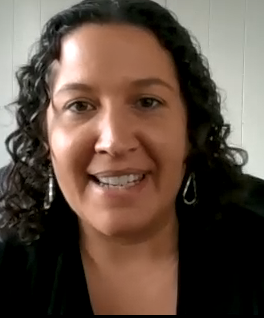
Image Metadata
|
Created: Tuesday, May 9, 2023 - 10:30 |
||
Summary:
An interview with Muscogee (Creek) Nation citizen Sara Barnett-Nsakashalo.Description:
An interview with Muscogee (Creek) Nation citizen Sara Barnett-Nsakashalo. A downloadable transcript may be found by link: Sara Barnett-Nsakashalo. This interview has been indexed through the Louie B. Nunn Center for Oral History Center's Oral History Metadata Synchronizer system at the University of Kentucky. For an indexed copy of the video, please follow the external link found in the bar on the right of this page.
Transcription:
The Muscogee (Creek) Nation
Historic and Cultural Preservation Department Oral History Program
“A Twenty-First Century Pandemic in Indian Country: The Resilience of the Muscogee (Creek) Nation Against Covid-19”
As Remembered by: Mrs. Sara Barnett-Nsakashalo Interview by: Ms. Midge Dellinger
Date: December 7, 2021
Transcription: The Audio Transcription Company
Edited by: Ms. Midge Dellinger
MIDGE DELLINGER: This is Midge Dellinger, Oral Historian for the Muscogee Nation. Today is December 7, 2021. I am at my home in Tulsa, Oklahoma interviewing Muscogee Citizen, Miss Sara Barnett, who is also at her home in Tahlequah, Oklahoma. This interview is being performed on behalf of the Muscogee Nation Historic and Cultural Preservation Department, for the oral history project titled “A Twenty-First Century Pandemic in Indian Country: The Resilience of the Muscogee (Creek) Nation against COVID-19.”
Miss Barnett, thank you so much for taking time out of your, I know, very busy day to participate in this project. And what we’re going to do is, we’re going to start the interview by finding out a little bit about yourself. I’m going to ask some questions [00:01:00] about your personal background and life. And so, let’s start out with the question, where you were born and where did you grow up?
SARA BARNETT-NSAKASHALO: Well, the long answer of that is I was born in Tulsa, but at that time, my family resided in Wainwright, which was right in-between Wainwright and Boynton, actually. We lived in a very, very rural area. And I don’t use that term very loosely. So, populations of those towns are less than 500. I think now, less than 200. So, not much more than a convenience store in either one of those towns. And so, I lived there until I was ten years old. And then, at that time, we moved just about fifteen miles down the road to the town of Haskell, Oklahoma, which is where my dad’s family had grown up and was from. And so, we moved there [00:02:00] and I graduated high school from Haskell. And then, moved to Tahlequah to come to college.
1
DELLINGER: Do you know your tribal town and clan?
BARNETT-NSAKASHALO: I do not. So, unfortunately, I grew up not in a traditional Muscogee home. My great-grandfather and grandfather were products of the boarding school. And unfortunately, the boarding schools were effective in removing us from our culture and our language. Though my dad does talk about—and his siblings—talk about hearing both Muscogee and Yuchi spoken in the home, they weren’t taught any part of that language. And we didn’t grow up going to stomp grounds. I didn’t even know that part of my Muscogee identity existed until I came to college. And I think we talked about in our initial meeting [00:03:00] about how I really had to come to terms with that, and my identity, and the frustration and sort of grieving process that I went through, knowing that I really—I wasn’t far from stomp grounds. I wasn’t far from that part of my culture, but I never really knew that it existed until I came here and began to be exposed to that side of our history and life.
DELLINGER: Well, thank you for sharing that. Now, I want you to talk a little bit about your parents and grandparents, if you would like to. So, who are your parents and what were their occupations?
BARNETT-NSAKASHALO: So, my mom is Patricia—Spradling was her maiden name. She’s a Rollins now. She is an enrolled Cherokee citizen, but didn’t grow up, again, sort of immersed or involved in Cherokee culture. [00:04:00] And she grew up right there in the Boynton area and was one of four children—three from her own father and mother—
2
sharing parents. And so, she grew up there and then stayed there after she and my father got married at a pretty young age. As I mentioned, my dad—his name is Benny George Barnett, and that’s where I get my Muscogee lineage from. He grew up there in Haskell.
He, I believe, has seven siblings, and mostly brothers, two sisters—and they grew up right just on the allotment land that our family had there in Haskell. And then, most of them stayed pretty close to Haskell as they grew up.
But my mom was I guess a homemaker. So, she got married and had kids and just stayed at home with us, until she and my dad divorced when I was about seven. And then, [00:05:00] she started doing some work—mostly self-employed. She was a seamstress. She worked with a used car business and would reupholster vehicles—the interior of vehicles, boats, and all kinds of things. So, she’s very talented in that regard. And then, my dad is a third-generation pipe liner. So, they are all union—a pipe liner’s union—798. So, you see those car tags on all of my family—stickers everywhere. And that is really what our life had revolved around, in his family. And it sort of was raised in the way of— he was raised in the way of, “If you didn’t become a pipe liner, then what were you doing?” Like you weren’t—that was the measure of success was that you follow this sort of track. And he had a very long career. He started when he was fifteen and just retired after he turned sixty-five. And so, [00:06:00] he—but that also meant that he spent a lot of time away from the home. Those jobs require you to be gone for months at a time, and not much time to visit home. So, part of what led to, I think, my parents getting divorced was my mom was staying home with the kids and he was out working when he could get those jobs.
3
So, my mom now works for the US Post Office and she has, for I believe, about eight years. And so, she’s found her niche in being able to help people and just put a smile on their face and generate some income for herself, as she’s now single and supporting herself. And as I mentioned, my dad is remarried and he is now retired and still resides there in Haskell.
DELLINGER: What about siblings? Do you have any siblings?
BARNETT-NSAKASHALO: Yeah, so, I have three siblings. My oldest sister, her name is Katie. [00:07:00] And she—they all live right near Haskell still. And so, she’s five years older than me. My older brother is Benache Barnett, and he is named after my grandfather, actually. And so, he’s the third. Benache Barnett the Third. And again, lives in Haskell. He’s about two-and-a-half years older than me. And then, my little brother, his name is Jerome, and he is two-and-a-half years younger than me. And he resides in the Beggs area. So, he’s moved a little bit, but not very far away from those—from where we grew up, I guess.
DELLINGER: Miss Barnett, can you spell Benache for me?
BARNETT-NSAKASHALO: It’s B-E-N-A-C-H-E.
DELLINGER: Okay, thank you.
4
BARNETT-NSAKASHALO: And I’m not sure we pronounce it correctly. Like, as a more traditional Creek person would. But that’s how we grew up saying that name and that’s how it’s pronounced in our family. [00:08:00] But yeah, funny story, because I think names are interesting. My dad’s name is Benny George—he was supposed to be named after his father who was Benache Barnett, Jr. But the story is that my grandmother was mad at my grandfather when my dad was born. And so, she named him Benny George instead of Benache. (laughter) So, it sort of interrupted that lineage, the naming, but my brother picked it back up and passed it on to his son.
DELLINGER: That is a good story. That’s a good family story. Okay, now, I want to ask you, where did life take you—you graduated from Haskell High School, and where did life take you after your high school graduation?
BARNETT-NSAKASHALO: Well, I am a first-generation college student. I mentioned my dad’s family all became pipe liners and the wives just travelled [00:09:00] with the pipe-lining husbands. And my mom’s was—her mom was also a stay-at-home mom, and so, that’s kind of what she knew to do. I always did well in school and I could attribute that to a couple of different things. So, I grew up hearing things like, “Oh, you’re smart, you should go to college.” And I didn’t really know what that meant, but I just knew that I didn’t want to be living in poverty my whole life. Like, I wanted a better life and to be able to do more things than what I’d grown up being able to do. And to help provide for my family. And so, college is that ticket, right? That we’re kind of told, “You go to college, you’re going to make good money and have this better life.” And so, I ended up
5
coming here to NSU in Tahlequah—Northeastern State University, for those that may not be familiar. It was about an hour away from my hometown. [00:10:00] And so, not too far to get away from family, because I am very connected to my siblings, and was living with my sister when I graduated high school. And she had young children that I was trying to help her care for, and just be a good auntie. And so, I felt comfortable with being within driving distance from them, so I could get back if they needed me for anything.
We had also spent a lot of time, when I was a kid and teenager, camping and just staying out at the Illinois River. And so, Tahlequah was kind of like already a second home, though I had never come to the college campus before. And so, I ended up coming here, I got settled in as a student, and began working in the scholarship office for a Cherokee woman. Shortly after she had hired me, there at the scholarship office, she got a sort of promotion, or moved over to another position at the Center for Tribal Studies [00:11:00] on campus. Which is an office that I describe now as a central hub of support for native students. And so, she quickly asked me if I would like a job working for her in this office. And so, I did. I took her up on it. And then, that’s when my experience really took off. Before that, I was like, “I’m going to class, I’m working, and that’s all that I’m doing.” And trying to balance home responsibilities. But being involved—or working at the Center for Tribal Studies helped me get involved in the native student life on campus, because that was the work that we were doing. And so, I got involved in AISES— American Indian Science and Engineering Society. I travelled all over the country going to conferences and things. And so, that was a really sort of life-changing experience to get to see that, but also to get to meet other native students from all over the country. And
6
on top of having that experience, [00:12:00] travelling and this professional world of conference attending and things that come with it—networking. And so, I really attribute where I went after my undergrad to those experiences, and really opening my eyes to the opportunities that awaited me, because before that it was nothing more than a bachelor’s degree. It was like, “Okay, I’m going to get this degree,” and I didn’t really know about anything past that. I knew that we have lawyers, I knew that we have doctors, and I knew that that required a lot more education than a bachelor’s degree, but I didn’t really know how graduate school might fit into my career path. And so, those—that experience in working at the Center really helped me to see that.
And then, I mentioned when I got to college is when I learned about my Muscogee culture. And the director of the Center of Tribal Studies at that time was Phyllis Fife. And [00:13:00] Phyllis and the other boss who hired me, Jan Grogan, they became what I call my Tahlequah moms. And they really took care of me. It’s hard to sometimes to think about these things and how much people mean to you. But they really were. There’s no way I would have survived college without them. And anytime something came up, my car would break down, or all of the troubles that come along with being a poor college student, they were right there to help me and give me a hug and encourage me. And they really pushed me to go beyond what I thought I could do and not be comfortable with like, “Okay, I got this college thing, I can get this degree and then just go to work or whatever.” They were not going to stand for that. And while they were doing that, they were also—Phyllis helped [00:14:00] me understand more about my Muscogee heritage, and language, and provided opportunities for me to meet other Muscogee students. But also, her family really just adopted me in and they treat me like
7
I’m her daughter, too. So, it was—I don’t think my experience would have been the same had I not been sort of taken into this family and really been able to see and understand the history of our people, and the boarding schools, and how that impacted how we live as Muscogee people, as Indigenous people. And why our grandparents made the decisions that they made. And so, I eventually came to terms with my grandfather’s decision not to pass down the Muscogee culture and language to my [00:15:00] dad. And now, as a parent, I understand, we only do what we think is best for our kids and we want our kids to have a better life. And there’s no guidebook to tell us how to do that. And I just had to come to peace with the fact that I think that he made a decision that he thought was best for them.
And I said, one time, to another elder, that my grandfather was ashamed to be native. And that’s how I sort of saw it and that’s how it was explained to me. And in some regard, when I would talk to my dad about the experience. And that elder stopped me like mid-sentence and he said, “He wasn’t ashamed, he was afraid. And he was afraid of what would happen to your dad and to his uncles, to his children, if people knew that they were Indian. Because that’s the time that he grew up in and the experience that he had.” And so, that really took me aback, and that was the turning point of when I stopped being angry and just started trying to [00:16:00] understand. And then, realized that, “Okay, this happened, and I can’t be angry, but I need to—for my own self, I need to learn what I can and recover what I can about our culture and our language, so that I can teach my daughter, and she can carry that on. And we can do our part in terms of this cultural and language preservation. I don’t think for a minute that we’ll ever get back— that I will ever get back what was taken from us. But I can do a small part, right? And for
8
me, knowing some is better than not knowing anything. And just kind of letting it go. I don’t feel good about that. I don’t—the more I learn about my culture and language, the more I feel like I’m myself, if that makes sense. That I really just—yeah, that I just—I feel like I’m becoming my whole self the more and more that I take in. It’s just like, [00:17:00] my education does that, too. That I’m self-actualization, I guess. But there’s something different about when I learn a new Muscogee word or learn something new or connect with a Muscogee elder and hear some stories from them.
DELLINGER: That’s fantastic. Will you mention again the two ladies’ names?
BARNETT-NSAKASHALO: Phyllis Fife and Jan Grogan. So, Phyllis Fife is the Muscogee woman and Jan Grogan—I believe her maiden name was Grasshopper, and she’s Cherokee. She’s from this area—the Tahlequah area.
DELLINGER: Now, do you still have these two ladies in your life?
BARNETT-NSAKASHALO: I do. My daughter is actually good friends with Jan’s granddaughter. They’re in the same grade. And so, we often see each other at school events and things. I’m probably more [00:18:00] connected with Phyllis—and part of that is Jan ended up leaving the last probably year or two that I was working at the Center for Tribal Studies, while I was in graduate school. And Phyllis and I really bonded a little more closely. I don’t know if it was because of that Muscogee connection, or—she also took me under her wing and taught me the art of grant writing. And so, that meant that we
9
spent a lot of long hours together working on projects, and just working very closely with one another. Our office plans and hosts an annual symposium on the American Indian here on the NSU campus. And so, I just—I enjoyed that part of it. And this whole—the planning process, in addition to the grant-writing, and again, that provided an opportunity for me to work very closely with Phyllis. And I think that that contributed to our relationship being a little bit [00:19:00] closer. And I spend time with her outside of work hours, and things like that. So, she’s a grandma to my daughter. And so, we see each other pretty often.
DELLINGER: Okay. Tell me about your family and family life there in Tahlequah.
BARNETT-NSAKASHALO: So, I’m married. My first husband and I divorced—his family was from Belize. And so, he’s not a US citizen. But so, my daughter is Hispanic— Belizean—and American Indian. And of course, we have that white settler part of us, too, that for whatever reason I often don’t mention. And then, we have—my husband—my current husband, he’s my second husband, his name is Benjamin Nsakashalo—so, I’ll spell that for you, just so you have it for the record. But his last name is [00:20:00] N-S A-K-A-S-H-A-L-O. He’s actually from Zambia. And so, he’s of the Bemba Tribe, because they do have tribal groups there, as well. And I met him not in Zambia, but in Oklahoma City. And so, we’ve been together for about six years and married for three. And he moved here and we reside here in Tahlequah. So, it’s the three of us, my daughter, and him, and myself. She goes to school here at the middle school. He works in the car industry, he works in finance in Muskogee, which is about thirty minutes from us.
10
And so, we have a—I would say, what I imagined was like an ideal sort of home life in most ways. I say most ways, only because his job requires him to work long hours many nights. And so, he doesn’t get home until eight or nine, sometimes later. [00:21:00] Ideally, I would like to have more time in the evening together. But in terms of just the safety, the comfort, a healthy relationship, and being together as a family, I think this is what I always dreamed of as a kid. And my daughter, of course, has a life that I don’t think I ever could imagine for her. We—because of my education and my ability to move up the career ladder—and I guess we’re middle-class, is what I would classify us as. And so, we’re able to travel. She’s been to five or six different countries, has a passport, and that’s something that I never dreamed I’d be able to do. And so, those are just the moments or the parts of our life that I cherish, is being able to have those experiences together. That—and it’s everyday [00:22:00] things, too. But just being able to make those memories and provide her that sort of exposure, so that she doesn’t grow up with those blinders on that I had, I think is really important. And my husband is also very much—has the same mentality, I guess, in terms of wanting—he’s taking her on as his own daughter. And is really a tremendous father figure for her, which I’m also grateful that she has that in her every-day life. And so, he wants the very same, to provide a better life than what we both had, for her, and even for each other, in terms of what we saw with our parents. And so, I really couldn’t ask for anything better.
And so, we work and go to school. I’m a full-time doctoral student right now. So, that requires a lot of support and understanding from both he and my daughter. But we do [00:23:00] try to find time on the weekends—Sundays are our family day. And so, we might—when it’s cold, we’ll go out and go to Tulsa, or just go do something fun as a
11
family. And then, when the summertime—that time is spent swimming, normally. So, we’re all big water people. And so, Tahlequah is a great place for that. But we also have a pool at the house that we bought last year. And so, this last summer has just pretty much been hanging out at the pool or having family over and just enjoying that time together. So, I think that we push each other, we encourage each other, and I love that about the family unit that we have together.
DELLINGER: Okay. Well, that all sounds fantastic. I want you to talk a little bit about [00:24:00] your job, your job title there at Northeastern State University, and what your responsibilities are there to the university and to the students.
BARNETT-NSAKASHALO: Sure. So, I mentioned I worked at the Center for Tribal Studies, and that’s where I found my Tahlequah moms, as a student. So, I came back—in 2014, Phyllis retired and they had an interim director in this position at the Center for a year, and then they opened up the position. And so, at that time, I was teaching at Sequoyah High School, which is an American Indian high school here ran by Cherokee Nation. And I was loving my job as a college prep teacher at Sequoyah, loving those summers off, it was really great. Great fit. But when this position came open—I always say myself as coming—at some point I would come back home to the Center and be the director. I thought it would be more of a close to retirement [00:25:00] gig, rather than mid-career sort of change. But I knew that the—whoever got in this position would probably stay for a long time. And so, I thought, “I’m just going to put in my application and see what happens.” And lo and behold, I was selected as the director. And so, in 20—
12
that was in 2015. So, the summer of 2015, I came back home to the Center for Tribal Studies as the director.
I mentioned that our office is really—I describe it as a central hub of support for native students. When I meet students, I tell them, “When you’re not sure where to go, or who to ask, come to us.” And I really see most of our work as advocacy work and resource gathering. So, kind of like a social worker in some regard, because we’re not only connecting students to resources that they have available on campus, but also to the community, as well. So, helping students get signed up for commodities, when they need to do that, or other—[00:26:00] daycare resources. All those things. We’re trying to get them connected to the resources that they need, because we realize that they’re not just students and don’t just come here and only have to worry about their studies. Our students typically have many responsibilities, whether it’s with their family—extended family or their own family as parents—and so, we just try to make sure we have as many resources as we can internally for them. But that we have those connections and relationships with others outside of that.
I mentioned the grant writing piece, and that has been a skill that as proven to be worth more than my master’s degree, I’d say. But it really allows me to bring in resources to develop new programs and pilot those programs here on campus. And use research to develop those things. But to really expand the [00:27:00] programming that we have. And so, a lot of times, I develop these larger programs that I think of, “Okay, what are the things that I had as a student at NSU? What are the things that our students need now?” And try to figure out the best way to holistically serve our students. And so, a lot of the day-to-day stuff is sort of—can be crisis management at the end of a semester, like right
13
now, where they’re stressed about their grades or being able to pass a class, or being able to get enrolled for next semester. And then, at the beginning of a semester, and like the Fall, it’s really about making connections with new students and trying to get them plugged into the student organizations, and make sure that they do feel connected to campus. Because we know that that sense of belonging and community is important to their success outside of the classroom. So, really just taking in whatever the students throw at me [00:28:00] from day-to-day. Or working with our other staff members. So, I’d say, that probably sums it up.
Of course, working at a university and being an administrator, I can’t tell you the number of committees that I serve on. I’m grateful that they want a native voice on those committees, I just wish it didn’t just have to be me (laughs) on all of those things all of the time. I think they’re beginning to understand that, and so, I try to get other staff plugged into those things, as well, to take some that workload off of me. But just in that committee work, there’s some that—it’s just a matter of making sure that when we’re making decisions or policy changes that everyone at the table understands the needs of our American Indian students and how these decisions are going to impact our students. And that’s the piece that the students don’t see. And I don’t think they should see. They don’t need to know all of the ins and outs of what decisions are [00:29:00] happening with administration. I just—as a mom, I guess, I’m just there to protect them in some ways and advocate for them. And so, I do love my job. I love watching the students grow and develop as leaders, as just individuals, and native scholars. So, I am known for trying to push that sort of label onto them, because I feel like the sooner that they can identify as a native scholar—which to me, if they’re a native student, they’re here, they’re engaging
14
in academics, they’re a scholar. Like, it doesn’t matter what your major is, or what kind of grades you’re getting. You’re a scholar, because you’re here studying to get that degree. I feel like that helps remove that—separate them from that imposter syndrome that most of us have coming in from first-gen families, and just sometimes feeling like you’re in a space that’s not made for you. [00:30:00] I want them to claim it and stake it as their own in hopes that that will help them be more successful. Remove one of those internal barriers to their success and focus on getting through that difficult class, or getting those resources that are there for everyone, but sometimes we don’t want to take advantage of because we don’t want to admit that we need help, when everybody needs help at some point in time. So, yeah, I think that’s a pretty good description of the work that we do.
I mean, I think in terms of activities, we have academic resources, we help coordinate those, we try to provide leadership development opportunities, we help students locate and apply for scholarships and internships. So, we’re always trying to network and find those connections and opportunities, and help our students get information that will maybe help them be more competitive in those processes. And then, [00:31:00] we do cultural activities throughout the year. And of course, there’s some major events that we do, like Indigenous Peoples Day, American Indian Heritage Month events, we have an indigenous leadership summit, and then the Annual Symposium on the American Indian is a week-long conference and that’s free and open to the public. All of our events, essentially, are free and open to the public. And so, those all take up a lot of time. I think my—other than the symposium, my favorite event that we host is the annual American Indian graduation convocation. And that’s a special ceremony that we
15
host. We’ve not been able to do that the last two years, because of COVID, but—I guess the last year—but I really enjoy that ceremony because it provides a more intimate opportunity for the family to celebrate with their graduate. Because we dress in our [00:32:00] academic regalia, administration and faculty participate in that, we have some speakers—like a student speaker—but they each walk across the stage and they receive a stole that’s only for American Indian graduates. And so—I mean, we’ve had instances where a graduate’s two-year-old runs up on stage and she gets to take the picture with the president and provost while she’s holding her daughter. So, those are things that you can’t do in a traditional commencement ceremony. But we can do that for our students. And of course, we have a drum group that sings. And so, the music for the processional, and there’s honor songs that happen for our graduates. Those are all nice touches, too. But for me, it’s really helping them feel more connected in that celebration of that graduate, and not feeling so disconnected when you’re down on the floor of the [00:33:00] event center and there’s a thousand people in the gym, it’s hard to find your family. And so, I remember what that was like and I just cherish the ability to provide something a little bit more for our graduates. So, I’d say that’s probably the most favorite thing that we do.
DELLINGER: Listen, I’m just going to say this, as an indigenous graduate of NSU, I’ve experienced some of these things that you’ve just shared and I would just like to say mvto for the work that you and your department does. It is very, very important work, and the services that you provide to the indigenous citizens there, so thank you for that.
16
BARNETT-NSAKASHALO: I appreciate that.
DELLINGER: Now, you mentioned very briefly, just a few minutes ago, the fact that you’re in school, and I’d like you to share a little bit about that. [00:34:00] What you’re focused on and what your end goal is with this educational pursuit.
BARNETT-NSAKASHALO: Yeah. So, my—there was a big gap between master’s and going back to school for my Doctorate. But I knew that it was something that I wanted to do once I learned about graduate school, and met Phyllis who also has her doctorate in education. It was that moment where you see someone and you’re like, “Okay, I want to be that person, or I want what that person has accomplished.” That’s my role model, right? So, I actually applied for a PhD program at Oklahoma State right after I finished my master’s program, but I didn’t get in. And I was kind of bitter about that for a while. It was like, “Okay, I didn’t get in. I tried not to internalize that too much, but I’m just going to move on with my career.” I got married and I started my family—I had my daughter—and so, I just sort of put it to the back of my mind, but it was always [00:35:00] there. Like, “I still want to do this.” And then, in 2019, I really started thinking seriously about it. Like, “Okay, I need to start exploring some programs, because I want this, it’s time for me to do this. My daughter’s old enough that she can make a sandwich if she needs to make a sandwich,” you know, a few other things. So, I didn’t feel like we were making as big of a sacrifice as a family at that point. And so, I started exploring different programs and was really looking at leadership and policy type programs, which is what I originally looked at. And then, I came across this program in
17
Adult and Lifelong Learning at the University of Arkansas. And it’s an EDD program, and it’s mostly online, but they do have Saturday classes. And so, the structure of the program was really appealing to me as a working professional and mom, to know that I wouldn’t be driving to Fayetteville late at night during the week and having to find someone to [00:36:00] sit with my daughter. Saturdays are a little bit more manageable.
But the curriculum was really appealing as well, more so, in that it’s Adult and Lifelong Learning, but it is a very diverse program in terms of the people that come through this degree program. And so, it focuses on leadership, management, program planning and evaluation, of course the curriculum development, that adult learning piece is there, as well. But it really seemed to fit with my ultimate goals—career goals—of what I think I want to do, which I think I’d like to maybe teach full-time as a faculty member for a few years. I’d love to learn more about the HLC accreditation process. But my ultimate goal is to be an administrator. And I would love to become the next president of college in Muscogee Nation. So, that’s what I’m trying to [00:37:00] refine my resume to get the experience that I need. So, on top of that, taking a Muscogee language course. They just offered it online, they opened it up to non-employees. And so, I’ve signed up for that. So, in addition to the academic piece and experience in teaching at the college level, and administration, and things like accreditation, I think that those things will help prepare me perhaps to take on that role. So, maybe a VP of diversity, or similar position, in-between that.
But I’m teaching—I’ve taught University Strategies, a freshmen orientation course, for I guess about nine or ten semesters at this point. And I love teaching that class. The class I have now is just for American Indian students, so that is really fun to
18
get to know those freshmen coming in. But this semester, I started teaching adjunct for the graduate [00:38:00] program in the Indigenous Leadership program. And so, I’m teaching Foundations of American Indian Education and Leadership. And so, I really enjoy that. And that’s why I think that my next step might be to just teach full-time, a little bit more flexible schedule. So, that is a little bit more appealing. But also, just that experience of being in the classroom with individuals, and would love that to be in this program that I’m teaching for now, or something similar, where I can add that sort of indigenous perspective to different topics and things. And help expose others, even non natives, to that.
So, I am two years into my doctorate program and will start dissertation seminar in January, so it has been a blur, I guess. I wouldn’t know how else to describe it. [00:39:00] But we started—our cohort started in January of 2020. So, we all know—I mean, we’re here to talk about COVID. And so, three months after I started that doctoral program is when COVID hit. And there were seventeen of us in our cohort, and there are still seventeen of us today. And so, we talk about this sometimes as a group. Like, did COVID provide us with the time that we needed so that we could focus more on our studies? Like, we didn’t have all—it removed a lot of distractions and competing responsibilities in terms of being out, and activities, and doing things. But because we’re all still here—so, did it help us maintain that retention of all of us? But there’s one other person of color in those seventeen people. So, I oftentimes do find myself as this voice, or providing this perspective [00:40:00] that is—nobody else ever really thinks about things that way, or understands the history. And people come from health, from IT, form HR, people come from education. All these different backgrounds are in this cohort of
19
seventeen. There’s, like I said, one other person of color and she worked in the paper industry. And so, very corporate. And I think she actually works in like finance or something. And so—and she’s African-American. And so, sometimes, we have similar views and sometimes we don’t. Like, we see things very differently.
But what I appreciate is: A) my colleagues’ openness to hearing what I have to share, or sometimes even asking me what my perspective is. But my professors have— though they’re not indigenous—have been very supportive, too, of me trying to incorporate something American Indian into all of [00:41:00] my projects. Like, that’s my motivation. That’s my passion. And so, anytime a paper, or final project, or even smaller things can be connected to American Indian students in higher ed, then I do that. And they’re very supportive of that. And even my dissertation, I hope, will be focused on Muscogee (Creek) Nation scholarship recipients and trying to identify predictors of success for those students. And hopefully that will be the start of future research projects that I will be able to carry out once I finish my degree. But I couldn’t have asked for a better program, in terms of both the structure and the support.
I kind of hooked my best friend into doing the program with me. We were both looking at programs and so, I showed it to her, and I’m like, “Hey, this person is in criminal justice, like you. You could really connect with this [00:42:00] faculty member.” And so, luckily, she applied and got in. So, I have had that sort of partner to help me through the late nights, to help me through getting through those tough assignments and Quant classes. But that’s also been very helpful in making it thus far in the program.
So, I’m excited to be able to move into that dissertation phase. It kind of just seems like I snapped my fingers, in some respects, and ended up here. And then, in other
20
times, it’s like, “Oh my God, I can’t believe we’re just like drudging our way through these classes.” Just one by one—or two by two, because we take two at a time. So, it definitely has required the support of not only my husband and daughter, but also my
extended family. When—the weekend before classes started in August, I was like, “Okay, guys, I’m leaving. [00:43:00] It might be December before you see me again.” And so, I finally made it down there to see my mom—it was her birthday yesterday, and so, on Sunday, we went to see her. And that’s the first time I had went to Haskell, which is just an hour away. But that was the first time I had been there since that weekend in August. And so—but they are very understanding, as much as they can understand what I’m going through, and responsibility. So, they don’t give me a hard time or anything. They just are happy to see me whenever I do show up. So, that’s good, too.
DELLINGER: All right. Wow, well, that’s fantastic, these goals that you have set for yourself. And I wish you luck with all of this as you continue on with it. And I just want to say at this point of the interview, thank you so much for sharing with us these things about [00:44:00] yourself and your personal life and background. And I think what we’re going to do now is we are going to transition the interview into our COVID section. And I’m going to ask you some questions about your experiences with this ongoing COVID Pandemic. And so, I’m going to take you back to 2020—and we’re almost two years now into this pandemic, but do you remember when, in 2020, you first heard about COVID 19, and how did you first hear about it?
21
BARNETT-NSAKASHALO: I do remember because it was that first week of March—I don’t remember the exact date—when people were talking about it. And saying, it was coming into Oklahoma at that point—or getting close to us, I guess. [00:45:00] And I was kind of naïve, I guess, in the beginning to think that, “Oh, it’s maybe it’s just like these other flu viruses that”—I didn’t expect it to be the pandemic that it was, you know? I thought it would be something that could be controlled and eradicated pretty quickly—or at least, controlled to the level that we could go about our day-to-day business like we had in every other flu epidemic that we had seen in my lifetime.
And then, it was—I think it was like March 11 or 13—so, it was right before Spring Break, and I remember it very clearly, because we had a grant program focused on indigenous agriculture, and it was going to provide a residential training program that would take place over Spring Break. And so, that Saturday, we were supposed to have these thirty people come to this campsite [00:46:00] out on Lake Tenkiller, and we were going to be very much in close quarters, and very much sharing things. It’s two bathrooms, thirty people, you know. So, it was going to—we were going to rough it for that week. But we were going to do it together and we were going to learn all of this amazing indigenous agriculture practices, and the participants were going to get their permaculture certification as a product—as a result of that. And my mom was coming to the program, as well as some other people that I knew. And so, we were just really excited about this chance to get into nature and be there for the week. And then, that Friday is when it really started getting close. And we had meetings with the instructors for the class, and they’re like, “It’s getting bad. We don’t know if we should do this or not.” But I wasn’t really getting much guidance from the institution, because they, I
22
think, were just not prepared at that point to make a decision either. And so, [00:47:00] it was very much of, “Do what you think is best.” And so, Friday, we ended up cancelling that residential program. And of course, had to make all kinds of adjustments and find places to send food that had been purchased that was perishable. And let participants know. And we had an instructor that was already in Denver on a layover, at that time. And so, we had to get him rerouted back to Oregon. And so, it was very fast and furious to try to get that done.
And then, of course, Spring Break—then, I didn’t expect to have one that year. But it was very much of like sitting and watching the news, trying to figure out what’s going on and what we need to do. And not freak out and try to stay calm and collected. And so—because I have my daughter with me, and we know that they feed off of our energy. And so, [00:48:00] was just trying to really monitor things and understand what was going on. And I guess that next Friday of Spring Break is when the institution decided to go on a work from home status.
And so, I was chair of staff council, which is like our—in terms of shared governance, that’s our organization, or our group, that represents all of the full-time staff. And so, in that role, at that time, I’m also trying to navigate and to help our staff members that are feeling frustrated and concerned, and wanting to have answers, and nobody had any answers. So, we’re trying to also be that sort of go-between in terms of administration and try to keep people calm and make them just be as comfortable as possible. But it was very disruptive, in terms of our day-to-day [00:49:00] life. But, at that time, I feel like I, in the beginning, was just managing things for other people and
23
trying to help mitigate the impact on them. Versus really coping with it myself, and what it—what I was feeling at that time.
DELLINGER: Yeah. So, in those early days of the pandemic, was there anything in particular that you can remember that made you realize the severity of the virus for yourself, and others?
BARNETT-NSAKASHALO: I mean, I think the sheer numbers of how many people were getting infected. My uncle actually—my mom’s brother—passed away in February of that year. And when he went to the hospital, he—I think he had had like a heart attack, but then he developed pneumonia, and that’s why he was diagnosed with pneumonia, put him on the ventilator, and then he didn’t survive that. [00:50:00] And now looking back, I wonder if he could have had COVID, and that’s what sort of tipped him over the edge. My dad had mentioned at that funeral that he had been real sick with respiratory issues, and my dad has not been a smoker, it’s not something I would say is a common thing for him to have that sort of intense respiratory issue or infection. And I wondered—started to wonder, too, did my dad have COVID back before they put a label on it here? And so, I think just thinking about those personal connections with people that may have been impacted.
And then, of course, being restricted in this work for home status right after Spring Break, when I started to see the disruption in our supply chain and with our food, with basic supplies. Because [00:51:00] everybody bought up all the toilet paper. It was like the most random things that people sometimes just—like disappeared off the shelves.
24
And really being worried when I go to the grocery store and there’s nothing there. There’s no meat, there’s no toilet paper. There’s so many things empty, it really did feel like an apocalypse type of movie like you see. And I didn’t see people necessarily fighting over things, and I think people in our community were very good about sharing things, like, “Well, do you need anything?” And maybe even some bartering at times. Like, “Well, I have this, do you have that?” And within our own friend networks of doing that. But I think that, in the beginning, it was those basic necessities of, “We don’t have these things, what are we going to do?” And we’re so used to all of these [00:52:00] conveniences that—and I had a friend—another mentor who had told me earlier on—well before March, I guess—that this thing was coming.
He had just thought—I don’t know where he got his information, but he was like, “This thing is coming, you need three-months-worth of food in your house. You need to do that now. And I don’t want to scare you, but I’m telling people that I love you need to do this.” And I was like—because there’s all these conspiracy theories and things. And so, I was like, “Well, maybe not three months, but I am going to stock my freezer, and I am going to get some canned goods, because I, in my middle-class life, have come to appreciate fresh veggies and not canned veggies that we used to eat from commodities.” So, I don’t keep very many canned goods. So, I did buy some extra things just to have them, just in case. And so, I had a little bit of a cushion there, but I really—when we started to have to dip into those things, I thought, [00:53:00] “Oh my gosh, what if I underestimated this thing? What if we do run out of food? What are we going to do?” And worried about my family members, as well, who I knew weren’t prepared, nor did
25
they have the financial ability to pay some of the higher prices for things that people were charging.
DELLINGER: When—again, we’re going back to the beginning of the pandemic, 2020—when you started—you know, we all started hearing these words, “lockdown” and “shelter in place” as safety measures that were being reenacted by local and state governments. When you first started hearing these words, do you remember how these words made you feel?
BARNETT-NSAKASHALO: I’d say that if I were being with myself, I was terrified. But I don’t think I acknowledged that. [00:54:00] Even now, trying to think about what that was like, I think I have always been the strong one, in terms of my family, and trying to—“Okay, you’re not sure what to do, then Sara will tell you what to do” kind of thing. And I think I just tried to like, “Okay, what’s the plan? How are we going to get through this?” But those words that you just mentioned, I mean, they are kind of like triggering at this point, because it made me feel like those are things that you hear when your country’s at war, or something. That would be the only thing I could compare it to, because we had never been through this sort of a pandemic before. And so, that’s all—I could think back to 9/11, when the skies were clear. Like, it was so weird to not see planes [00:55:00] flying and just to feel like you could be attacked at any moment. And so, I think that that would be the only thing that I could compare that to.
I’m not—I don’t think it was terribly hard to just stay at home. You know, like to not go out and do things. I mean, though I was a very busy person, I do know that that
26
slowing life down to almost a stop really allowed me to cope with some grief and things that I had been pushing down and able to ignore, because I was so busy with things. Like, you just don’t deal with things. I had had a couple of—a miscarriage and two—at that point, just one ectopic pregnancy, or tubal pregnancy. And so, my husband and I were trying to move through that [00:56:00] and heal from that. But I really wasn’t healing. And so, I began to experience extreme anxiety, and I couldn’t sleep at night. I would just wake up and my mind would be racing, and all—I had never had anxiety before. Especially not to that level. And luckily, I had started counseling in January, because I knew that I just wasn’t able to cope with this on my own. And so, I think that helped. But man, I remember, March was really—that was really tough to, A) be trying to help other people as much as I can, but also to try to deal with these things that I’m experiencing, both physically and mentally. And luckily, I guess, that because I had this network of friends and even coworkers, that we were really honest with each other, and we did daily Zoom check-ins for work. And so, [00:57:00] if we met for two hours, that was fine, because the first hour might be just us being honest and real about how we were feeling. And I think that that was helpful to be able to have at least that outlet and shared experience with others.
DELLINGER: Yeah. So, yes, it does sound like you had a lot going on at the time pandemic hit. And then, you have this young daughter at home. Can you share a little bit about how, especially in the beginning, you engaged with her and talked to her about what was happening?
27
BARNETT-NSAKASHALO: Yeah, that—of course, that’s going to make a little bit emotional, so you’ll have to bear with me. But I tried not to watch the news when she was awake. And I tried to—we did have conversations about, “Okay, this is [00:58:00] what’s happening, and this is—we don’t really know much about what this COVID thing is. But we need to be careful. And these are the things that we have to do to be careful.” And of course, the first few weeks it was okay. Like, she was fine. It was just like an extended Spring Break, and we’re just hanging out at the house. Occasionally she’d be like, “Can we go skating? Or can we go do this?” And I’d just have to say, “No, because that’s not safe.” When everything was closed, that was easy to say. But when things started opening back up, that became more difficult to have that conversation with her about, “I know you want to see your friends, I know you want to do these things. But what we can’t—we can’t risk getting sick ourselves, and we don’t want”—even Thanksgiving that year. If you go into the Fall, not being able to have Thanksgiving with my family is something that—that was the first year that I didn’t [00:59:00] spend it with my siblings. And so, even trying to help her understand that we can’t go see Grandma because we don’t want to make Grandma sick. And we might be okay, but other people might not be so lucky. And just trying to have that as a conversation with her. And I let her see my emotions. Like, I got upset and choked down the tears like I am now. But I— and I think that’s important for her to see that, to know that I don’t have all the answers, and I don’t—this is why we’re doing what we’re doing and just try to have those conversations. And she’s a very easy child to please, and I think that she was never defiant or got [01:00:00] upset. She did take it in and tried to understand this is—“Okay, this is the situation.” And so, it was not very—I didn’t have to rationalize too much with
28
her. I just, you know, told her this is the situation and she was pretty understanding of that.
DELLINGER: And what age was she, again, when the pandemic started?
BARNETT-NSAKASHALO: So, she’s thirteen now. She would have been eleven, and then she turned twelve in September of 2020. Yeah.
DELLINGER: Will you talk a little bit about what was your plan of action—so again, we’re going back to prior to vaccines—what was your plan of action to stay safe from the virus, both at home, and then when you and your family left the house?
BARNETT-NSAKASHALO: Yeah. [01:01:00] So, we worked from home for about eight weeks. So, at the end of May, our institution had us report back to the office. At that time, we still weren’t seeing students, because students were either—either the spring semester was over, and so it was just summer students, which are typically online anyway. So, we weren’t taking any in-person appointments. So, it was basically, you come in the office and you lock the door. And so, you’re physically in your office and we can meet via Zoom. So, there’s very limited sort of contact. Again, still finishing up my staff council role, that was not the case for all individuals on campus. And so, I was very lucky that our office is in a separate building on campus—or a little bit off campus, actually. And so, there were two other people and a graduate assistant that I’m working with. So, that minimized my contact with people and made me feel much safer. Versus
29
someone who might be in a [01:02:00] larger building and have cubicles or something. And so, we, of course, wore masks. We had hand sanitizer everywhere. I was very diligent about disinfecting things. Whether it was at work, or at home. And so, I kept that like bowl of bleach water, because there was no Lysol wipes or anything. And just bought some cheap rags. And every day would wipe down everything that we touch. So, doorknobs, locks, light switches, the refrigerator handles, and stove, and phones. All those things. So, we would just kind of do like a little daily disinfectant thing at home and at the office.
And then, when we went out, we did wear masks. I did mostly grocery pick-up. And so, I had already been doing that to some extent. But if I had to wait three extra days to get the grocery pick-up, then I would wait [01:03:00] the three extra days. Whereas, now, I would just go buy the things that I need to buy. And so, there was some talk about the surface—the virus living on the surface of things. And there was like a video about disinfecting your groceries, even, whenever you bring them in. And so, I did that, too. Like, we would bring the groceries in after the pick-up, and then I would wipe down everything. And of course, wash my hands frequently through all of that. But really, trying to take whatever measures that were within my control to try to stay safe in that. Primarily, it revolved around disinfecting things that we touch and wearing masks when we would go out. But very limited going out piece of that.
DELLINGER: Okay. Prior to the vaccines, did you [01:04:00] have to help others outside of your home? So, other family members or community members, maybe elders—were there others that you had to help protect from the virus?
30
BARNETT-NSAKASHALO: I did make offers. And so, Phyllis was one that I was—she and I had been in communication, of course, and she was really worried as an elder about that—how the virus might affect her. And so, I made offers to go to the store for her. Her
daughter was staying with her at the time. And so, she was able to do those things. So, I didn’t ever have to actually do those things, but definitely extended that offer. When we had students or staff members that were sick, there were a few times where I did drop food off at their door, because they did catch COVID. And so, just making sure that people [01:05:00] did have those necessities. But more oftentimes than not, they were okay. That’s what we did, right? We just extend that offer of, “Do you need anything? Is there anything I can do?” I also use essential oils in lieu of medicine, whenever I can— western medicine. And so, I had stocked up on a couple of oils that were good for respiratory care. And so, took some of those oils over to people when I dropped off food. Or maybe it was just the oils to help them just with their breathing, being able to I guess mitigate some of those symptoms that they were having. And so, I probably did that—as well as, I’d say, there’s some stress and anxiety treatments with essential oils. And so, there was a lot of that going around, too. And just sharing those things to try to help people cope the best way [01:06:00] that we could.
DELLINGER: That’s fantastic. Now, one of the questions I was going to ask you, and you already touched on this a little bit, because I wanted to ask how the pandemic has impacted your work at NSU. Was there ever a time—because you said that—it sounds
31
like NSU shut things down pretty quickly. And then, you said you came back—I believe that would have been sometime in May?
BARNETT-NSAKASHALO: Yeah.
DELLINGER: And you got through the summer semester with students predominantly online. And then, in the Fall then—that would be Fall of 2020—did NSU bring everybody back full-on, in-person?
BARNETT-NSAKASHALO: The Fall was an online semester. So, I believe students could live in the dorms, but classes were just all online. And [01:07:00] I think the Spring of 2021, maybe, is when we started to do more hybrid, 60/40 split—60 percent online. And so, I guess August—maybe it was July 1—I think it was July 1 when our doors opened. We had been here working and our offices were never closed, whether we working from home, or in our offices behind locked doors. July 1 is when the doors opened and people could visit in-person. And if I had worked in an office that had had high traffic, that probably would have been a little bit more impactful. But because we have a sort of close-knit community, and it’s just a few students that come in and out, not like advising, for instance, where they see hundreds of students over the course of a few weeks right before enrollment. [01:08:00] So, if I had been in that situation, I would have been perhaps more afraid, in terms of being exposed. But our students were really good about wearing masks and things when they did come.
32
I think from just doing my day-to-day work, that was difficult. Of how do we provide cultural activities in a virtual environment? We have—excuse me—students that are scattered all across the state, and how do we engage them? And they’re in these rural communities where they don’t have the bandwidth to have a Zoom conversation like we’re having right now, where you can see people, right? And so, trying to provide services—and I’d say, from the Spring through the Fall semester, it was really more like a crisis response of just checking in. And sometimes not even asking about school. It was just like, “How are you? How are your family? Is everybody healthy?” That kind of thing. [01:09:00] And so, it was—because we had all of those online students, it was—it felt a little bit safer, though it was difficult to figure out, “What are the things that are important that we continue to do?” Or that we just focus on, “Okay, survival. We’re here. We don’t need to do any of this programming. We just need to get through the semester academically, and physically, and emotionally.”
DELLINGER: From your perspective, engaged and working with younger people at the university, what did you observe to be their initial response to COVID?
BARNETT-NSAKASHALO: I think for the most part, people were just scared. And I think that administration—like, [01:10:00] I think that they made the best decisions that they could, thinking about the students from our communities, that taking classes at home is not a good environment for a lot of our students, and not one that would support their learning. So, wanting the campus to be open as much as possible, to allow them to be successful and to continue enrolling. So, I think that administration had that in mind from
33
their perspective, and then, the staff members that are here day-to-day, they don’t always think in those sort of higher-level terms. And so, there was a lot of frustration. And even now, I feel like, at times, we have all this emotion, frustration, grief, all these things that we don’t really have an outlet to put them on, because they’re—because how can you be mad at a pandemic? You can’t yell at the pandemic, you can’t—(laughs) you know. And we’ve lost so much. So, I think that, at times, administration even took the [01:11:00] brunt of that, of that’s an outlet. Like, “I can just be mad at my boss for making me do this.” When in reality, I think the emotions were much deeper than that. But I think most people were just scared and frustrated, and since August of 2020, people just want this damn thing to be over. They just want to turn the page and like, “Okay, I’m over it.” We didn’t see a lot of—or, I didn’t hear a lot of the rhetoric about “COVID isn’t real,” and these government conspiracy theories. I’m sure we have people like that on campus, but we didn’t see a lot of that for the most part. Especially within my network. It was people being frustrated because they felt like they were being forced into an unsafe sort of situation, in terms of possible exposures, by having to physically be here [01:12:00] and have face-to-face contact with students.
DELLINGER: So, again, from your perspective, do you think that COVID has been responsible for hindering or derailing indigenous students’ pursuits of higher education? I mean, has there been any sort of dropout rate?
BARNETT-NSAKASHALO: Definitely we’ve seen our enrollment decrease, our retention decrease. And just talking with students—we have students who have lost
34
several close family members within a close timeframe. And then, they’re trying to deal with that grief while trying to also do well in online classes, when maybe that’s not the best way for them to learn. The financial stresses that have come along with limited incomes or [01:13:00] changes in incomes, as well as increasing prices of things, have created another level of stress, in terms of that. Because we’ve always had students who’ve struggled to pay their campus bill or something, to be able to enroll. But there’s just not—I mean, this unprecedented level, I’d say, of students with that financial hold, but also students just not doing well in their classes. And now, running in—and now we’ve gone through academic probation, and now we’re facing academic and financial aid suspension, and those have very serious consequences in terms of—they’re just not able to continue their enrollment here at NSU anymore.
And so, I—in the beginning, that first semester in the Spring of 2020, we went to a pass/fail system across the state. Where students—all of your classes were pass/fail. [01:14:00] That was very helpful for our students. But they didn’t continue that past that semester and I kind of feel like there should be some more flexibility in that, in—because it’s still here, and no matter if we continue to—like, we’re getting back to life, as normal as possible. But it’s still very much impacting our communities, and us as individuals. But there’s just no leeway when it comes to their grades. And we are seeing a lot more of those academic difficulties, as well.
DELLINGER: All right. I’m sorry to hear those things. I’m going to shift gears here a little bit and I’d like to know, what is your knowledge—your personal knowledge and
35
understanding about the COVID-19 virus, including—if you can—where it came from and its effect on the human body if [01:15:00] contracted?
BARNETT-NSAKASHALO: So, I know that it was originally found in China and there’s some story about it being traced back to a bat, and somebody eating that, and then contracting it themselves. I don’t know the accuracy of that information. I guess, I’m not so focused on where it came from, but the fact that this thing is here. This virus is very much here all around us. I know that the things have changed, in terms of like, in the beginning it was, “This can live on the surface for like multiple days. And so, somebody sick can touch it and then you touch it, and then you can be—contract the virus.” I know that some of that, with additional research, has shifted and it’s not the same story, I guess, that [01:16:00] we thought in the beginning. In terms of impacting the body, I just know from—mostly from stories of people that—I mean, of course, it impacts your ability to breath, your respiratory system. It weakens your lungs. Some people that I know that contracted the virus are still seeing after effects of that, of limited lung capacity. And then, I also know that there are others that don’t have the same symptoms. That maybe just have a runny nose, or a headache, or feel really fatigued. Those are all symptoms that—some people can have all of the symptoms and be very seriously ill, while others can only have—may only experience a few of those symptoms. And I think that’s part of what makes it so crazy. But also, what makes it difficult to enforce any sort of safety measures, because somebody who [01:17:00] had it and it wasn’t that bad, including our government officials, think that, “Oh, this is nothing, it’s just like a cold.” But not knowing that it can impact other people in other very different and more serious ways.
36
So, of course, spreading through saliva—mucus droplets that you might contract if you sneeze, or cough, or those things touch—or are on other surfaces. People shaking hands. So, that’s probably—was one of the hardest things to break, is like you want to shake somebody’s hand, but then, you know that you can’t do that—you shouldn’t do that right now. I’m seeing more people do that now, but that was like—even a fist bump or an elbow bump people weren’t—in my circles, we weren’t even doing that just to try to avoid any personal contact and possible contraction.
[01:18:00] So, I know that the treatment for the virus has also evolved. And a lot of—like vitamin C, zinc, I know was used for people to—or vitamin D maybe it was—to treat symptoms. And then, I think for a while, they were using one of those rapid antibiotics—the Z-Pak—azithromycin—which I happen to be allergic to, so that was a little bit alarming when they started thinking—saying that, “Oh, this is the treatment.” But I’m like, “But I can’t have that treatment, so what if I get it?” And so, yeah, I think that everything—I really take what I hear and read with a grain of salt, in some respects, to know that what they’re saying today is not likely what they’ll be saying a month from now, or a year from now. That we are [01:19:00] just every day learning more and more about the virus, and how it’s contracted and spread, and how to best treat it. So, it’s like you have to deal with that—be able to cope with that ambiguity and uncertainty. And that’s probably what I’ve learned most through this pandemic, is to cope with uncertainty, and not be able to plan ahead for things.
DELLINGER: So, neither yourself, nor your daughter, or your husband have had COVID?
37
BARNETT-NSAKASHALO: No. We’ve been really lucky in that regard. We had a scare a few—I guess a month ago—in September of this year—September 2021—where my daughter was exposed at school, and she was symptomatic. And so, we just went into immediate quarantine and had tests. But I kind of think we had the regular flu, because that’s what it felt like to me. And then, it just sort of circled its way around the house, but we all kept testing negative for COVID. So, [01:20:00] that was good. I’ve had my nieces and their spouses have had COVID. They had very mild symptoms, luckily, were never hospitalized. I mentioned that in February of 2020, my dad was really sick with respiratory issues. So, I’m almost certain that’s probably what he had. But luckily, he’s been healthy through this whole time. So, I am very grateful that my family hasn’t experience what so many people I know have, and lost so many family members, and old and young alike.
DELLINGER: Have you been vaccinated against COVID-19?
BARNETT-NSAKASHALO: I have. So, I got my first—I guess I got both doses in March. The first part of March in 2021. And then, the second dose at the [01:21:00] end of that month. It was a little bit difficult to make that decision, not that I didn’t want to be safe—and I do take the regular flu vaccine every year—but just knowing that—or feeling like that this—reading about, “Oh, it’s been developed so fast, and not knowing what long-term side effects may be.” Just wondering if it’s safe. I didn’t really have any of those conspiracy theories, in terms of, they’re inserting a chip in me, or whatever, for the
38
government to track me. The government can track me with my cellphone as much as they want. So, I mean, that’s more info than they probably need. And so, it was more of like the health effects and possible impacts of it. Ultimately, I decided that I—that the potential benefits—the benefits outweighed the potential negative consequences.
[01:22:00] And it was really about my mom, and not wanting her to—because my whole family—my brothers and my mom, they are all smokers. And so, I was really, really worried about them catching COVID, because they already have weakened lungs, because they’ve been smoking. And so—but my mom especially. And she doesn’t eat the way I’d like her to eat. She’s like—I wouldn’t say malnourished, but she just doesn’t take the time to eat. And so, she’ll just snack here and there. So, I—even that, I just felt like she was running her body pretty ragged. And so, I decided that if I ever contracted the virus, hopefully I wouldn’t be in bad shape. That I’m healthy enough to be able to fight it off. But if I had ever given it to someone that I loved, and they weren’t so lucky, I wouldn’t be able to forgive [01:23:00] myself. And this vaccine offered the only protection that we have to try to keep from doing that.
DELLINGER: What vaccine did you receive?
BARNETT-NSAKASHALO: Pfizer. I had—
DELLINGER: Okay. Did you have any side effects?
39
BARNETT-NSAKASHALO: Yeah, so, I didn’t have any of the normal side effects, like feeling feverish, or fatigue, or any of that. But my hair fell out. So, I lost hair. So, I could do this and just have like a handful of hair. And that started about a week after the first dose. And then, by the time—two weeks later, when it was time for the second dose, it had kind of lightened up. Because I was getting really worried for a moment. Like, “I’m going to be bald by the time”—and I hadn’t really—I was thinking, “Could this be from the vaccine? Or is this like”—because I have a thyroid condition, so is this related to that? You know, like, “What’s happening?” And then, so it kind of [01:24:00] lightened up, and then I got a second dose a week later, same thing. Like just started losing hair by the handfuls. And it also—like, I have a weird scalp issue now. Like, it’s not dandruff, it’s not dry scalp, but it has similar sort of symptoms, I guess. And I went through several different regular shampoos for dandruff and dry scalp, but it ended up being a prescription medicine that helped kind of calm things down. And then, now it’s relatively—it’s back to normal. I have this one shampoo that I use now and use that kind of periodically. But just to kind of make sure that it stays that way. But that was really strange to have that experience. And I’ve talked to people and nobody else that I’ve met, thus far, has had that experience. Though, people have talked about hair loss when they had [01:25:00] COVID. So, I think that that’s kind of interesting. But yeah, very minimal side effects, though that one was pretty scary just because I don’t want to be bald.
DELLINGER: You know, I have a Native American friend who—as you just mentioned, she experienced—she did get COVID and she did experience hair loss from the virus itself. Have you been boostered?
40
BARNETT-NSAKASHALO: I’ve not. And part of it is because of that experience. And I’ve been kind of watching things and I’m still careful when I go out. And if I’m in close proximity with people, then I will wear a mask. I don’t wear a mask all the time. Sometimes I feel like I should, but I—[01:26:00] Yeah, I’m just kind of like watching things and it might come to the point if we get back up to those levels where I would go ahead and get a booster. But also, just try to listen in to what the health professionals are saying. But don’t—I even talked to a nurse about it, and my experience with the first two shots, and she actually said, “Yeah, you might just want to hold off. If you don’t have any underlying conditions, just hold off and see what happens.” And so, I took comfort, I guess, and that was the answer that I wanted to hear. I don’t want to have to go through that again. So, perhaps that was it.
My daughter’s been vaccinated. So, right before when school started back up this semester, we went ahead and got her vaccinated. But my husband has not been vaccinated. He has a very different experience with western medicine, coming from [01:27:00] Zambia. They don’t have the same healthcare system that we have. They depend more on traditional medicines. And so, he’s not used to going to the doctor. He’s only been to the doctor one time in the six years that I’ve known him. And that was a very extreme sort of situation where we thought he might have appendicitis. It was like, “You’ve got to go. You can’t just fight through that.” But—and he still gives me a hard time because it wasn’t appendicitis. He’s like, “You made me go get an IV and all this.” So, he and I have talked about it, but he just says that there’s something—he just doesn’t feel right about getting it. And that’s all I can get out of him, in terms of his reasoning.
41
But he just doesn’t feel like that’s what he should inside. And so, I respect that decision. His grandfather [01:28:00] lived in Zambia, and he passed away—gosh, with in the last year. And when that happened—because his grandfather did catch COVID, and he was
ninety-four. But he was very much like a father to my husband. And so, he started to question himself at that point in time, if COVID takes his grandpa, maybe he should get the vaccine. But then, his grandfather passed and he quickly resorted back to, “I just don’t feel good about it.” So, I let it be.
My sister is vaccinated and my little brother, his kids and his wife are vaccinated. And so, he has three boys that are about my daughter’s age—teenagers—young teenagers—and then the youngest I think is like nine. [01:29:00] So, they were the last ones to get vaccinated, but nobody else in my family is comfortable with the vaccine, including my mom. And they’re not people who go get flu vaccines every year. So, I can understand why they’d be a little bit more skittish about it. But my sister, I think, did for the same reasons that I did of “I don’t want to catch it and give it to our mom.” But we haven’t convinced my mom to get the vaccine just yet. So…
DELLINGER: Is that difficult for you? Is that something you struggle with?
BARNETT-NSAKASHALO: Yeah, definitely, because my mom works at the post office, and she’s a janitor. And she actually works at two different locations. So, when I think about her day-to-day work and the people that she’s exposed to—the number of people that come in and out of a post [01:30:00] office—and she is the person cleaning the surfaces, and taking out the trash, and touching all of the mail. And all of those things
42
that I find to be the most disturbing, in terms of, “Okay, I need my hand sanitizer after I touch them.” She does that all day every day and she might not think twice about touching that thing, or cleaning that thing, and touching her nose, or smoking a cigarette. Her hands are at her mouth all the time. And it is scary for me to think about that. And when she was wearing a mask, I was a little bit—I felt a little bit better about it, but then I’m like, is she cleaning her mask? Is she touching her mask with her hands on the inside and then just putting it back on her face? And so, I’m like, giving her some thieves essential oils. Like, everything I can to try to help her help mitigate [01:31:00] that. But it's very, very difficult to—I try not to think about it, actually, because it does give me some anxiety. And just—she’s a religious person, I’d say, or spiritual person, and “God’s going to take care of me,” and so, I just have to like also trust that He will protect her. And then, try to encourage her to just be careful.
DELLINGER: Do you have any knowledge of what has been the toll of illness and death where you are in the Tahlequah area and in the Cherokee Nation?
BARNETT-NSAKASHALO: You know, I don’t know any numbers off hand. I could probably like Google and find them really quickly. But [01:32:00] I was grateful that they made the vaccine available to speakers in the beginning, because we’ve done so much in language revitalization, both here in Cherokee Nation, but also with Muscogee Nation, which I’m sure you’re familiar. But—and I don’t have any—I know that we have the highest vaccination rates, but I don’t know about the numbers that we’ve lost. I do know that many people in my circles of friends, of coworkers, have lost several people in their
43
family. And that includes some of their knowledge keepers and language speakers within their own families. And the impact of those losses can feel tenfold when you lose someone. Not that anybody is more valuable than someone else, but [01:33:00] you’re losing so much more than a person. And I know that our communities are feeling that void.
DELLINGER: Well, listen, Miss Barnett, we’re going to wind this interview down. I’ve got a couple more questions for you and then we’ll finish up here. And so, with this next question, I want you to be thinking about future generations of Muscogee—and we’ll say
other indigenous peoples, as well—who may find themselves trying to survive a global health and economic crisis, such as our current COVID-19 Pandemic. What words of advice or wisdom do you have for them about living with and surviving such a catastrophic event?
BARNETT-NSAKASHALO: Wow, that’s really kind of difficult, to kind of think of one thing [01:34:00] that we might share. Like if somebody were to watch this a hundred years from now. I don’t know what society might be like for that individual that I might be giving advice to. I know that our world was so hyper focused on productivity, like “What are you accomplishing?” And that was extremely difficult when we moved into this work from home status, when we were coping with all of these things around us that have to do with COVID. And so, I think what I would say, if you’re living in a society where that is the sort of measure of your worth, is how much you’re producing, that just to be forgiving of yourself. And that your expectations of yourself in a global pandemic
44
should not equal the expectations for yourself [01:35:00] pre-pandemic. Or even post pandemic. I think that that caused so much mental angst amongst our people, and myself, that if you could just let go of that in the beginning, that would save you a lot of emotional distress. Is just to be forgiving and to not measure your success, or even—I want to say well-being on the same level that you would before. Don’t punish yourself for not being the same person, or being able to do the same things that you would do prior to a pandemic.
DELLINGER: Wow, that was a fantastic answer. Thank you for that. Now, is there anything else? Maybe I have forgotten something that’s important to you that you would like to share about your experiences [01:36:00] here over the course of the last two years?
BARNETT-NSAKASHALO: Oh, jeez, I think that this—it’s unfortunate that this pandemic—this virus has been so highly politicized. That it has caused so much division within our society. And had it not been taken into that sort of political realm, I feel like we could have maybe got a handle on it and saved some lives in the beginning. I—it’s frustrating when things like that happen. And of course, we had this presidential—US presidential election in the midst of all this, and that made that situation worse. I think that we need to—[01:37:00] it has shed light on the fact that we need to be conscious consumers of information and check the facts before we share information, particularly through social media. There are some lessons I think we may have learned as a result of the pandemic, as a society. Mental health awareness has seemed to—we’re reducing the stigma associated with mental health and seeking mental health assistance through
45
counseling, or whatever. So, I try to see some positive things. But that polarization has really taken our country to a different level, and not in a positive way, I’d say. So, I think that this has created a lot more issues that, if it were just a health condition, it wouldn’t have happened through this [01:38:00] politicization of the pandemic.
I’m hopeful that we’ll continue to see the treatments improve and the survival rates for those that do contract the virus—I don’t think that it’s going away, I think that it’s here, just like the flu. And that we are finding ways to cope with it and trying to get back to normal, I guess, in some ways. But also, again, trying to take away what are the positive things? And I think, for me, letting go of control and planning so far ahead, being more flexible. Those are things that I’ve learned as a result of this. Being able to deal with uncertainty. It was an important lesson, again, perhaps what may have helped me survive my doctoral program this far. But (laughs) [01:39:00] yeah, I just—I don’t know if that answers your question or not, but just thinking about reflecting on this whole experience, there are some lessons learned, I guess. But also, so many things that we’ve lost, people that we’ve lost, that we won’t get back. And experiences that we missed out on because of, I would say, inaction by people in power that we could have avoided. Did that answer your question?
DELLINGER: Yes, no, this was your opportunity to say and share whatever was on your mind and in your heart. So, that was fantastic. And we will wrap things up now. Again, thank you so much taking the time to participate in this project. Absolutely, [01:40:00] your experiences, your thoughts, your words are so important and so mvto. And continue to take care and be safe.
46
BARNETT-NSAKASHALO: Enkv. Thank you, Midge, for the invitation. DELLINGER: Absolutely.
END OF INTERVIEW
47
Historic and Cultural Preservation Department Oral History Program
“A Twenty-First Century Pandemic in Indian Country: The Resilience of the Muscogee (Creek) Nation Against Covid-19”
As Remembered by: Mrs. Sara Barnett-Nsakashalo Interview by: Ms. Midge Dellinger
Date: December 7, 2021
Transcription: The Audio Transcription Company
Edited by: Ms. Midge Dellinger
MIDGE DELLINGER: This is Midge Dellinger, Oral Historian for the Muscogee Nation. Today is December 7, 2021. I am at my home in Tulsa, Oklahoma interviewing Muscogee Citizen, Miss Sara Barnett, who is also at her home in Tahlequah, Oklahoma. This interview is being performed on behalf of the Muscogee Nation Historic and Cultural Preservation Department, for the oral history project titled “A Twenty-First Century Pandemic in Indian Country: The Resilience of the Muscogee (Creek) Nation against COVID-19.”
Miss Barnett, thank you so much for taking time out of your, I know, very busy day to participate in this project. And what we’re going to do is, we’re going to start the interview by finding out a little bit about yourself. I’m going to ask some questions [00:01:00] about your personal background and life. And so, let’s start out with the question, where you were born and where did you grow up?
SARA BARNETT-NSAKASHALO: Well, the long answer of that is I was born in Tulsa, but at that time, my family resided in Wainwright, which was right in-between Wainwright and Boynton, actually. We lived in a very, very rural area. And I don’t use that term very loosely. So, populations of those towns are less than 500. I think now, less than 200. So, not much more than a convenience store in either one of those towns. And so, I lived there until I was ten years old. And then, at that time, we moved just about fifteen miles down the road to the town of Haskell, Oklahoma, which is where my dad’s family had grown up and was from. And so, we moved there [00:02:00] and I graduated high school from Haskell. And then, moved to Tahlequah to come to college.
1
DELLINGER: Do you know your tribal town and clan?
BARNETT-NSAKASHALO: I do not. So, unfortunately, I grew up not in a traditional Muscogee home. My great-grandfather and grandfather were products of the boarding school. And unfortunately, the boarding schools were effective in removing us from our culture and our language. Though my dad does talk about—and his siblings—talk about hearing both Muscogee and Yuchi spoken in the home, they weren’t taught any part of that language. And we didn’t grow up going to stomp grounds. I didn’t even know that part of my Muscogee identity existed until I came to college. And I think we talked about in our initial meeting [00:03:00] about how I really had to come to terms with that, and my identity, and the frustration and sort of grieving process that I went through, knowing that I really—I wasn’t far from stomp grounds. I wasn’t far from that part of my culture, but I never really knew that it existed until I came here and began to be exposed to that side of our history and life.
DELLINGER: Well, thank you for sharing that. Now, I want you to talk a little bit about your parents and grandparents, if you would like to. So, who are your parents and what were their occupations?
BARNETT-NSAKASHALO: So, my mom is Patricia—Spradling was her maiden name. She’s a Rollins now. She is an enrolled Cherokee citizen, but didn’t grow up, again, sort of immersed or involved in Cherokee culture. [00:04:00] And she grew up right there in the Boynton area and was one of four children—three from her own father and mother—
2
sharing parents. And so, she grew up there and then stayed there after she and my father got married at a pretty young age. As I mentioned, my dad—his name is Benny George Barnett, and that’s where I get my Muscogee lineage from. He grew up there in Haskell.
He, I believe, has seven siblings, and mostly brothers, two sisters—and they grew up right just on the allotment land that our family had there in Haskell. And then, most of them stayed pretty close to Haskell as they grew up.
But my mom was I guess a homemaker. So, she got married and had kids and just stayed at home with us, until she and my dad divorced when I was about seven. And then, [00:05:00] she started doing some work—mostly self-employed. She was a seamstress. She worked with a used car business and would reupholster vehicles—the interior of vehicles, boats, and all kinds of things. So, she’s very talented in that regard. And then, my dad is a third-generation pipe liner. So, they are all union—a pipe liner’s union—798. So, you see those car tags on all of my family—stickers everywhere. And that is really what our life had revolved around, in his family. And it sort of was raised in the way of— he was raised in the way of, “If you didn’t become a pipe liner, then what were you doing?” Like you weren’t—that was the measure of success was that you follow this sort of track. And he had a very long career. He started when he was fifteen and just retired after he turned sixty-five. And so, [00:06:00] he—but that also meant that he spent a lot of time away from the home. Those jobs require you to be gone for months at a time, and not much time to visit home. So, part of what led to, I think, my parents getting divorced was my mom was staying home with the kids and he was out working when he could get those jobs.
3
So, my mom now works for the US Post Office and she has, for I believe, about eight years. And so, she’s found her niche in being able to help people and just put a smile on their face and generate some income for herself, as she’s now single and supporting herself. And as I mentioned, my dad is remarried and he is now retired and still resides there in Haskell.
DELLINGER: What about siblings? Do you have any siblings?
BARNETT-NSAKASHALO: Yeah, so, I have three siblings. My oldest sister, her name is Katie. [00:07:00] And she—they all live right near Haskell still. And so, she’s five years older than me. My older brother is Benache Barnett, and he is named after my grandfather, actually. And so, he’s the third. Benache Barnett the Third. And again, lives in Haskell. He’s about two-and-a-half years older than me. And then, my little brother, his name is Jerome, and he is two-and-a-half years younger than me. And he resides in the Beggs area. So, he’s moved a little bit, but not very far away from those—from where we grew up, I guess.
DELLINGER: Miss Barnett, can you spell Benache for me?
BARNETT-NSAKASHALO: It’s B-E-N-A-C-H-E.
DELLINGER: Okay, thank you.
4
BARNETT-NSAKASHALO: And I’m not sure we pronounce it correctly. Like, as a more traditional Creek person would. But that’s how we grew up saying that name and that’s how it’s pronounced in our family. [00:08:00] But yeah, funny story, because I think names are interesting. My dad’s name is Benny George—he was supposed to be named after his father who was Benache Barnett, Jr. But the story is that my grandmother was mad at my grandfather when my dad was born. And so, she named him Benny George instead of Benache. (laughter) So, it sort of interrupted that lineage, the naming, but my brother picked it back up and passed it on to his son.
DELLINGER: That is a good story. That’s a good family story. Okay, now, I want to ask you, where did life take you—you graduated from Haskell High School, and where did life take you after your high school graduation?
BARNETT-NSAKASHALO: Well, I am a first-generation college student. I mentioned my dad’s family all became pipe liners and the wives just travelled [00:09:00] with the pipe-lining husbands. And my mom’s was—her mom was also a stay-at-home mom, and so, that’s kind of what she knew to do. I always did well in school and I could attribute that to a couple of different things. So, I grew up hearing things like, “Oh, you’re smart, you should go to college.” And I didn’t really know what that meant, but I just knew that I didn’t want to be living in poverty my whole life. Like, I wanted a better life and to be able to do more things than what I’d grown up being able to do. And to help provide for my family. And so, college is that ticket, right? That we’re kind of told, “You go to college, you’re going to make good money and have this better life.” And so, I ended up
5
coming here to NSU in Tahlequah—Northeastern State University, for those that may not be familiar. It was about an hour away from my hometown. [00:10:00] And so, not too far to get away from family, because I am very connected to my siblings, and was living with my sister when I graduated high school. And she had young children that I was trying to help her care for, and just be a good auntie. And so, I felt comfortable with being within driving distance from them, so I could get back if they needed me for anything.
We had also spent a lot of time, when I was a kid and teenager, camping and just staying out at the Illinois River. And so, Tahlequah was kind of like already a second home, though I had never come to the college campus before. And so, I ended up coming here, I got settled in as a student, and began working in the scholarship office for a Cherokee woman. Shortly after she had hired me, there at the scholarship office, she got a sort of promotion, or moved over to another position at the Center for Tribal Studies [00:11:00] on campus. Which is an office that I describe now as a central hub of support for native students. And so, she quickly asked me if I would like a job working for her in this office. And so, I did. I took her up on it. And then, that’s when my experience really took off. Before that, I was like, “I’m going to class, I’m working, and that’s all that I’m doing.” And trying to balance home responsibilities. But being involved—or working at the Center for Tribal Studies helped me get involved in the native student life on campus, because that was the work that we were doing. And so, I got involved in AISES— American Indian Science and Engineering Society. I travelled all over the country going to conferences and things. And so, that was a really sort of life-changing experience to get to see that, but also to get to meet other native students from all over the country. And
6
on top of having that experience, [00:12:00] travelling and this professional world of conference attending and things that come with it—networking. And so, I really attribute where I went after my undergrad to those experiences, and really opening my eyes to the opportunities that awaited me, because before that it was nothing more than a bachelor’s degree. It was like, “Okay, I’m going to get this degree,” and I didn’t really know about anything past that. I knew that we have lawyers, I knew that we have doctors, and I knew that that required a lot more education than a bachelor’s degree, but I didn’t really know how graduate school might fit into my career path. And so, those—that experience in working at the Center really helped me to see that.
And then, I mentioned when I got to college is when I learned about my Muscogee culture. And the director of the Center of Tribal Studies at that time was Phyllis Fife. And [00:13:00] Phyllis and the other boss who hired me, Jan Grogan, they became what I call my Tahlequah moms. And they really took care of me. It’s hard to sometimes to think about these things and how much people mean to you. But they really were. There’s no way I would have survived college without them. And anytime something came up, my car would break down, or all of the troubles that come along with being a poor college student, they were right there to help me and give me a hug and encourage me. And they really pushed me to go beyond what I thought I could do and not be comfortable with like, “Okay, I got this college thing, I can get this degree and then just go to work or whatever.” They were not going to stand for that. And while they were doing that, they were also—Phyllis helped [00:14:00] me understand more about my Muscogee heritage, and language, and provided opportunities for me to meet other Muscogee students. But also, her family really just adopted me in and they treat me like
7
I’m her daughter, too. So, it was—I don’t think my experience would have been the same had I not been sort of taken into this family and really been able to see and understand the history of our people, and the boarding schools, and how that impacted how we live as Muscogee people, as Indigenous people. And why our grandparents made the decisions that they made. And so, I eventually came to terms with my grandfather’s decision not to pass down the Muscogee culture and language to my [00:15:00] dad. And now, as a parent, I understand, we only do what we think is best for our kids and we want our kids to have a better life. And there’s no guidebook to tell us how to do that. And I just had to come to peace with the fact that I think that he made a decision that he thought was best for them.
And I said, one time, to another elder, that my grandfather was ashamed to be native. And that’s how I sort of saw it and that’s how it was explained to me. And in some regard, when I would talk to my dad about the experience. And that elder stopped me like mid-sentence and he said, “He wasn’t ashamed, he was afraid. And he was afraid of what would happen to your dad and to his uncles, to his children, if people knew that they were Indian. Because that’s the time that he grew up in and the experience that he had.” And so, that really took me aback, and that was the turning point of when I stopped being angry and just started trying to [00:16:00] understand. And then, realized that, “Okay, this happened, and I can’t be angry, but I need to—for my own self, I need to learn what I can and recover what I can about our culture and our language, so that I can teach my daughter, and she can carry that on. And we can do our part in terms of this cultural and language preservation. I don’t think for a minute that we’ll ever get back— that I will ever get back what was taken from us. But I can do a small part, right? And for
8
me, knowing some is better than not knowing anything. And just kind of letting it go. I don’t feel good about that. I don’t—the more I learn about my culture and language, the more I feel like I’m myself, if that makes sense. That I really just—yeah, that I just—I feel like I’m becoming my whole self the more and more that I take in. It’s just like, [00:17:00] my education does that, too. That I’m self-actualization, I guess. But there’s something different about when I learn a new Muscogee word or learn something new or connect with a Muscogee elder and hear some stories from them.
DELLINGER: That’s fantastic. Will you mention again the two ladies’ names?
BARNETT-NSAKASHALO: Phyllis Fife and Jan Grogan. So, Phyllis Fife is the Muscogee woman and Jan Grogan—I believe her maiden name was Grasshopper, and she’s Cherokee. She’s from this area—the Tahlequah area.
DELLINGER: Now, do you still have these two ladies in your life?
BARNETT-NSAKASHALO: I do. My daughter is actually good friends with Jan’s granddaughter. They’re in the same grade. And so, we often see each other at school events and things. I’m probably more [00:18:00] connected with Phyllis—and part of that is Jan ended up leaving the last probably year or two that I was working at the Center for Tribal Studies, while I was in graduate school. And Phyllis and I really bonded a little more closely. I don’t know if it was because of that Muscogee connection, or—she also took me under her wing and taught me the art of grant writing. And so, that meant that we
9
spent a lot of long hours together working on projects, and just working very closely with one another. Our office plans and hosts an annual symposium on the American Indian here on the NSU campus. And so, I just—I enjoyed that part of it. And this whole—the planning process, in addition to the grant-writing, and again, that provided an opportunity for me to work very closely with Phyllis. And I think that that contributed to our relationship being a little bit [00:19:00] closer. And I spend time with her outside of work hours, and things like that. So, she’s a grandma to my daughter. And so, we see each other pretty often.
DELLINGER: Okay. Tell me about your family and family life there in Tahlequah.
BARNETT-NSAKASHALO: So, I’m married. My first husband and I divorced—his family was from Belize. And so, he’s not a US citizen. But so, my daughter is Hispanic— Belizean—and American Indian. And of course, we have that white settler part of us, too, that for whatever reason I often don’t mention. And then, we have—my husband—my current husband, he’s my second husband, his name is Benjamin Nsakashalo—so, I’ll spell that for you, just so you have it for the record. But his last name is [00:20:00] N-S A-K-A-S-H-A-L-O. He’s actually from Zambia. And so, he’s of the Bemba Tribe, because they do have tribal groups there, as well. And I met him not in Zambia, but in Oklahoma City. And so, we’ve been together for about six years and married for three. And he moved here and we reside here in Tahlequah. So, it’s the three of us, my daughter, and him, and myself. She goes to school here at the middle school. He works in the car industry, he works in finance in Muskogee, which is about thirty minutes from us.
10
And so, we have a—I would say, what I imagined was like an ideal sort of home life in most ways. I say most ways, only because his job requires him to work long hours many nights. And so, he doesn’t get home until eight or nine, sometimes later. [00:21:00] Ideally, I would like to have more time in the evening together. But in terms of just the safety, the comfort, a healthy relationship, and being together as a family, I think this is what I always dreamed of as a kid. And my daughter, of course, has a life that I don’t think I ever could imagine for her. We—because of my education and my ability to move up the career ladder—and I guess we’re middle-class, is what I would classify us as. And so, we’re able to travel. She’s been to five or six different countries, has a passport, and that’s something that I never dreamed I’d be able to do. And so, those are just the moments or the parts of our life that I cherish, is being able to have those experiences together. That—and it’s everyday [00:22:00] things, too. But just being able to make those memories and provide her that sort of exposure, so that she doesn’t grow up with those blinders on that I had, I think is really important. And my husband is also very much—has the same mentality, I guess, in terms of wanting—he’s taking her on as his own daughter. And is really a tremendous father figure for her, which I’m also grateful that she has that in her every-day life. And so, he wants the very same, to provide a better life than what we both had, for her, and even for each other, in terms of what we saw with our parents. And so, I really couldn’t ask for anything better.
And so, we work and go to school. I’m a full-time doctoral student right now. So, that requires a lot of support and understanding from both he and my daughter. But we do [00:23:00] try to find time on the weekends—Sundays are our family day. And so, we might—when it’s cold, we’ll go out and go to Tulsa, or just go do something fun as a
11
family. And then, when the summertime—that time is spent swimming, normally. So, we’re all big water people. And so, Tahlequah is a great place for that. But we also have a pool at the house that we bought last year. And so, this last summer has just pretty much been hanging out at the pool or having family over and just enjoying that time together. So, I think that we push each other, we encourage each other, and I love that about the family unit that we have together.
DELLINGER: Okay. Well, that all sounds fantastic. I want you to talk a little bit about [00:24:00] your job, your job title there at Northeastern State University, and what your responsibilities are there to the university and to the students.
BARNETT-NSAKASHALO: Sure. So, I mentioned I worked at the Center for Tribal Studies, and that’s where I found my Tahlequah moms, as a student. So, I came back—in 2014, Phyllis retired and they had an interim director in this position at the Center for a year, and then they opened up the position. And so, at that time, I was teaching at Sequoyah High School, which is an American Indian high school here ran by Cherokee Nation. And I was loving my job as a college prep teacher at Sequoyah, loving those summers off, it was really great. Great fit. But when this position came open—I always say myself as coming—at some point I would come back home to the Center and be the director. I thought it would be more of a close to retirement [00:25:00] gig, rather than mid-career sort of change. But I knew that the—whoever got in this position would probably stay for a long time. And so, I thought, “I’m just going to put in my application and see what happens.” And lo and behold, I was selected as the director. And so, in 20—
12
that was in 2015. So, the summer of 2015, I came back home to the Center for Tribal Studies as the director.
I mentioned that our office is really—I describe it as a central hub of support for native students. When I meet students, I tell them, “When you’re not sure where to go, or who to ask, come to us.” And I really see most of our work as advocacy work and resource gathering. So, kind of like a social worker in some regard, because we’re not only connecting students to resources that they have available on campus, but also to the community, as well. So, helping students get signed up for commodities, when they need to do that, or other—[00:26:00] daycare resources. All those things. We’re trying to get them connected to the resources that they need, because we realize that they’re not just students and don’t just come here and only have to worry about their studies. Our students typically have many responsibilities, whether it’s with their family—extended family or their own family as parents—and so, we just try to make sure we have as many resources as we can internally for them. But that we have those connections and relationships with others outside of that.
I mentioned the grant writing piece, and that has been a skill that as proven to be worth more than my master’s degree, I’d say. But it really allows me to bring in resources to develop new programs and pilot those programs here on campus. And use research to develop those things. But to really expand the [00:27:00] programming that we have. And so, a lot of times, I develop these larger programs that I think of, “Okay, what are the things that I had as a student at NSU? What are the things that our students need now?” And try to figure out the best way to holistically serve our students. And so, a lot of the day-to-day stuff is sort of—can be crisis management at the end of a semester, like right
13
now, where they’re stressed about their grades or being able to pass a class, or being able to get enrolled for next semester. And then, at the beginning of a semester, and like the Fall, it’s really about making connections with new students and trying to get them plugged into the student organizations, and make sure that they do feel connected to campus. Because we know that that sense of belonging and community is important to their success outside of the classroom. So, really just taking in whatever the students throw at me [00:28:00] from day-to-day. Or working with our other staff members. So, I’d say, that probably sums it up.
Of course, working at a university and being an administrator, I can’t tell you the number of committees that I serve on. I’m grateful that they want a native voice on those committees, I just wish it didn’t just have to be me (laughs) on all of those things all of the time. I think they’re beginning to understand that, and so, I try to get other staff plugged into those things, as well, to take some that workload off of me. But just in that committee work, there’s some that—it’s just a matter of making sure that when we’re making decisions or policy changes that everyone at the table understands the needs of our American Indian students and how these decisions are going to impact our students. And that’s the piece that the students don’t see. And I don’t think they should see. They don’t need to know all of the ins and outs of what decisions are [00:29:00] happening with administration. I just—as a mom, I guess, I’m just there to protect them in some ways and advocate for them. And so, I do love my job. I love watching the students grow and develop as leaders, as just individuals, and native scholars. So, I am known for trying to push that sort of label onto them, because I feel like the sooner that they can identify as a native scholar—which to me, if they’re a native student, they’re here, they’re engaging
14
in academics, they’re a scholar. Like, it doesn’t matter what your major is, or what kind of grades you’re getting. You’re a scholar, because you’re here studying to get that degree. I feel like that helps remove that—separate them from that imposter syndrome that most of us have coming in from first-gen families, and just sometimes feeling like you’re in a space that’s not made for you. [00:30:00] I want them to claim it and stake it as their own in hopes that that will help them be more successful. Remove one of those internal barriers to their success and focus on getting through that difficult class, or getting those resources that are there for everyone, but sometimes we don’t want to take advantage of because we don’t want to admit that we need help, when everybody needs help at some point in time. So, yeah, I think that’s a pretty good description of the work that we do.
I mean, I think in terms of activities, we have academic resources, we help coordinate those, we try to provide leadership development opportunities, we help students locate and apply for scholarships and internships. So, we’re always trying to network and find those connections and opportunities, and help our students get information that will maybe help them be more competitive in those processes. And then, [00:31:00] we do cultural activities throughout the year. And of course, there’s some major events that we do, like Indigenous Peoples Day, American Indian Heritage Month events, we have an indigenous leadership summit, and then the Annual Symposium on the American Indian is a week-long conference and that’s free and open to the public. All of our events, essentially, are free and open to the public. And so, those all take up a lot of time. I think my—other than the symposium, my favorite event that we host is the annual American Indian graduation convocation. And that’s a special ceremony that we
15
host. We’ve not been able to do that the last two years, because of COVID, but—I guess the last year—but I really enjoy that ceremony because it provides a more intimate opportunity for the family to celebrate with their graduate. Because we dress in our [00:32:00] academic regalia, administration and faculty participate in that, we have some speakers—like a student speaker—but they each walk across the stage and they receive a stole that’s only for American Indian graduates. And so—I mean, we’ve had instances where a graduate’s two-year-old runs up on stage and she gets to take the picture with the president and provost while she’s holding her daughter. So, those are things that you can’t do in a traditional commencement ceremony. But we can do that for our students. And of course, we have a drum group that sings. And so, the music for the processional, and there’s honor songs that happen for our graduates. Those are all nice touches, too. But for me, it’s really helping them feel more connected in that celebration of that graduate, and not feeling so disconnected when you’re down on the floor of the [00:33:00] event center and there’s a thousand people in the gym, it’s hard to find your family. And so, I remember what that was like and I just cherish the ability to provide something a little bit more for our graduates. So, I’d say that’s probably the most favorite thing that we do.
DELLINGER: Listen, I’m just going to say this, as an indigenous graduate of NSU, I’ve experienced some of these things that you’ve just shared and I would just like to say mvto for the work that you and your department does. It is very, very important work, and the services that you provide to the indigenous citizens there, so thank you for that.
16
BARNETT-NSAKASHALO: I appreciate that.
DELLINGER: Now, you mentioned very briefly, just a few minutes ago, the fact that you’re in school, and I’d like you to share a little bit about that. [00:34:00] What you’re focused on and what your end goal is with this educational pursuit.
BARNETT-NSAKASHALO: Yeah. So, my—there was a big gap between master’s and going back to school for my Doctorate. But I knew that it was something that I wanted to do once I learned about graduate school, and met Phyllis who also has her doctorate in education. It was that moment where you see someone and you’re like, “Okay, I want to be that person, or I want what that person has accomplished.” That’s my role model, right? So, I actually applied for a PhD program at Oklahoma State right after I finished my master’s program, but I didn’t get in. And I was kind of bitter about that for a while. It was like, “Okay, I didn’t get in. I tried not to internalize that too much, but I’m just going to move on with my career.” I got married and I started my family—I had my daughter—and so, I just sort of put it to the back of my mind, but it was always [00:35:00] there. Like, “I still want to do this.” And then, in 2019, I really started thinking seriously about it. Like, “Okay, I need to start exploring some programs, because I want this, it’s time for me to do this. My daughter’s old enough that she can make a sandwich if she needs to make a sandwich,” you know, a few other things. So, I didn’t feel like we were making as big of a sacrifice as a family at that point. And so, I started exploring different programs and was really looking at leadership and policy type programs, which is what I originally looked at. And then, I came across this program in
17
Adult and Lifelong Learning at the University of Arkansas. And it’s an EDD program, and it’s mostly online, but they do have Saturday classes. And so, the structure of the program was really appealing to me as a working professional and mom, to know that I wouldn’t be driving to Fayetteville late at night during the week and having to find someone to [00:36:00] sit with my daughter. Saturdays are a little bit more manageable.
But the curriculum was really appealing as well, more so, in that it’s Adult and Lifelong Learning, but it is a very diverse program in terms of the people that come through this degree program. And so, it focuses on leadership, management, program planning and evaluation, of course the curriculum development, that adult learning piece is there, as well. But it really seemed to fit with my ultimate goals—career goals—of what I think I want to do, which I think I’d like to maybe teach full-time as a faculty member for a few years. I’d love to learn more about the HLC accreditation process. But my ultimate goal is to be an administrator. And I would love to become the next president of college in Muscogee Nation. So, that’s what I’m trying to [00:37:00] refine my resume to get the experience that I need. So, on top of that, taking a Muscogee language course. They just offered it online, they opened it up to non-employees. And so, I’ve signed up for that. So, in addition to the academic piece and experience in teaching at the college level, and administration, and things like accreditation, I think that those things will help prepare me perhaps to take on that role. So, maybe a VP of diversity, or similar position, in-between that.
But I’m teaching—I’ve taught University Strategies, a freshmen orientation course, for I guess about nine or ten semesters at this point. And I love teaching that class. The class I have now is just for American Indian students, so that is really fun to
18
get to know those freshmen coming in. But this semester, I started teaching adjunct for the graduate [00:38:00] program in the Indigenous Leadership program. And so, I’m teaching Foundations of American Indian Education and Leadership. And so, I really enjoy that. And that’s why I think that my next step might be to just teach full-time, a little bit more flexible schedule. So, that is a little bit more appealing. But also, just that experience of being in the classroom with individuals, and would love that to be in this program that I’m teaching for now, or something similar, where I can add that sort of indigenous perspective to different topics and things. And help expose others, even non natives, to that.
So, I am two years into my doctorate program and will start dissertation seminar in January, so it has been a blur, I guess. I wouldn’t know how else to describe it. [00:39:00] But we started—our cohort started in January of 2020. So, we all know—I mean, we’re here to talk about COVID. And so, three months after I started that doctoral program is when COVID hit. And there were seventeen of us in our cohort, and there are still seventeen of us today. And so, we talk about this sometimes as a group. Like, did COVID provide us with the time that we needed so that we could focus more on our studies? Like, we didn’t have all—it removed a lot of distractions and competing responsibilities in terms of being out, and activities, and doing things. But because we’re all still here—so, did it help us maintain that retention of all of us? But there’s one other person of color in those seventeen people. So, I oftentimes do find myself as this voice, or providing this perspective [00:40:00] that is—nobody else ever really thinks about things that way, or understands the history. And people come from health, from IT, form HR, people come from education. All these different backgrounds are in this cohort of
19
seventeen. There’s, like I said, one other person of color and she worked in the paper industry. And so, very corporate. And I think she actually works in like finance or something. And so—and she’s African-American. And so, sometimes, we have similar views and sometimes we don’t. Like, we see things very differently.
But what I appreciate is: A) my colleagues’ openness to hearing what I have to share, or sometimes even asking me what my perspective is. But my professors have— though they’re not indigenous—have been very supportive, too, of me trying to incorporate something American Indian into all of [00:41:00] my projects. Like, that’s my motivation. That’s my passion. And so, anytime a paper, or final project, or even smaller things can be connected to American Indian students in higher ed, then I do that. And they’re very supportive of that. And even my dissertation, I hope, will be focused on Muscogee (Creek) Nation scholarship recipients and trying to identify predictors of success for those students. And hopefully that will be the start of future research projects that I will be able to carry out once I finish my degree. But I couldn’t have asked for a better program, in terms of both the structure and the support.
I kind of hooked my best friend into doing the program with me. We were both looking at programs and so, I showed it to her, and I’m like, “Hey, this person is in criminal justice, like you. You could really connect with this [00:42:00] faculty member.” And so, luckily, she applied and got in. So, I have had that sort of partner to help me through the late nights, to help me through getting through those tough assignments and Quant classes. But that’s also been very helpful in making it thus far in the program.
So, I’m excited to be able to move into that dissertation phase. It kind of just seems like I snapped my fingers, in some respects, and ended up here. And then, in other
20
times, it’s like, “Oh my God, I can’t believe we’re just like drudging our way through these classes.” Just one by one—or two by two, because we take two at a time. So, it definitely has required the support of not only my husband and daughter, but also my
extended family. When—the weekend before classes started in August, I was like, “Okay, guys, I’m leaving. [00:43:00] It might be December before you see me again.” And so, I finally made it down there to see my mom—it was her birthday yesterday, and so, on Sunday, we went to see her. And that’s the first time I had went to Haskell, which is just an hour away. But that was the first time I had been there since that weekend in August. And so—but they are very understanding, as much as they can understand what I’m going through, and responsibility. So, they don’t give me a hard time or anything. They just are happy to see me whenever I do show up. So, that’s good, too.
DELLINGER: All right. Wow, well, that’s fantastic, these goals that you have set for yourself. And I wish you luck with all of this as you continue on with it. And I just want to say at this point of the interview, thank you so much for sharing with us these things about [00:44:00] yourself and your personal life and background. And I think what we’re going to do now is we are going to transition the interview into our COVID section. And I’m going to ask you some questions about your experiences with this ongoing COVID Pandemic. And so, I’m going to take you back to 2020—and we’re almost two years now into this pandemic, but do you remember when, in 2020, you first heard about COVID 19, and how did you first hear about it?
21
BARNETT-NSAKASHALO: I do remember because it was that first week of March—I don’t remember the exact date—when people were talking about it. And saying, it was coming into Oklahoma at that point—or getting close to us, I guess. [00:45:00] And I was kind of naïve, I guess, in the beginning to think that, “Oh, it’s maybe it’s just like these other flu viruses that”—I didn’t expect it to be the pandemic that it was, you know? I thought it would be something that could be controlled and eradicated pretty quickly—or at least, controlled to the level that we could go about our day-to-day business like we had in every other flu epidemic that we had seen in my lifetime.
And then, it was—I think it was like March 11 or 13—so, it was right before Spring Break, and I remember it very clearly, because we had a grant program focused on indigenous agriculture, and it was going to provide a residential training program that would take place over Spring Break. And so, that Saturday, we were supposed to have these thirty people come to this campsite [00:46:00] out on Lake Tenkiller, and we were going to be very much in close quarters, and very much sharing things. It’s two bathrooms, thirty people, you know. So, it was going to—we were going to rough it for that week. But we were going to do it together and we were going to learn all of this amazing indigenous agriculture practices, and the participants were going to get their permaculture certification as a product—as a result of that. And my mom was coming to the program, as well as some other people that I knew. And so, we were just really excited about this chance to get into nature and be there for the week. And then, that Friday is when it really started getting close. And we had meetings with the instructors for the class, and they’re like, “It’s getting bad. We don’t know if we should do this or not.” But I wasn’t really getting much guidance from the institution, because they, I
22
think, were just not prepared at that point to make a decision either. And so, [00:47:00] it was very much of, “Do what you think is best.” And so, Friday, we ended up cancelling that residential program. And of course, had to make all kinds of adjustments and find places to send food that had been purchased that was perishable. And let participants know. And we had an instructor that was already in Denver on a layover, at that time. And so, we had to get him rerouted back to Oregon. And so, it was very fast and furious to try to get that done.
And then, of course, Spring Break—then, I didn’t expect to have one that year. But it was very much of like sitting and watching the news, trying to figure out what’s going on and what we need to do. And not freak out and try to stay calm and collected. And so—because I have my daughter with me, and we know that they feed off of our energy. And so, [00:48:00] was just trying to really monitor things and understand what was going on. And I guess that next Friday of Spring Break is when the institution decided to go on a work from home status.
And so, I was chair of staff council, which is like our—in terms of shared governance, that’s our organization, or our group, that represents all of the full-time staff. And so, in that role, at that time, I’m also trying to navigate and to help our staff members that are feeling frustrated and concerned, and wanting to have answers, and nobody had any answers. So, we’re trying to also be that sort of go-between in terms of administration and try to keep people calm and make them just be as comfortable as possible. But it was very disruptive, in terms of our day-to-day [00:49:00] life. But, at that time, I feel like I, in the beginning, was just managing things for other people and
23
trying to help mitigate the impact on them. Versus really coping with it myself, and what it—what I was feeling at that time.
DELLINGER: Yeah. So, in those early days of the pandemic, was there anything in particular that you can remember that made you realize the severity of the virus for yourself, and others?
BARNETT-NSAKASHALO: I mean, I think the sheer numbers of how many people were getting infected. My uncle actually—my mom’s brother—passed away in February of that year. And when he went to the hospital, he—I think he had had like a heart attack, but then he developed pneumonia, and that’s why he was diagnosed with pneumonia, put him on the ventilator, and then he didn’t survive that. [00:50:00] And now looking back, I wonder if he could have had COVID, and that’s what sort of tipped him over the edge. My dad had mentioned at that funeral that he had been real sick with respiratory issues, and my dad has not been a smoker, it’s not something I would say is a common thing for him to have that sort of intense respiratory issue or infection. And I wondered—started to wonder, too, did my dad have COVID back before they put a label on it here? And so, I think just thinking about those personal connections with people that may have been impacted.
And then, of course, being restricted in this work for home status right after Spring Break, when I started to see the disruption in our supply chain and with our food, with basic supplies. Because [00:51:00] everybody bought up all the toilet paper. It was like the most random things that people sometimes just—like disappeared off the shelves.
24
And really being worried when I go to the grocery store and there’s nothing there. There’s no meat, there’s no toilet paper. There’s so many things empty, it really did feel like an apocalypse type of movie like you see. And I didn’t see people necessarily fighting over things, and I think people in our community were very good about sharing things, like, “Well, do you need anything?” And maybe even some bartering at times. Like, “Well, I have this, do you have that?” And within our own friend networks of doing that. But I think that, in the beginning, it was those basic necessities of, “We don’t have these things, what are we going to do?” And we’re so used to all of these [00:52:00] conveniences that—and I had a friend—another mentor who had told me earlier on—well before March, I guess—that this thing was coming.
He had just thought—I don’t know where he got his information, but he was like, “This thing is coming, you need three-months-worth of food in your house. You need to do that now. And I don’t want to scare you, but I’m telling people that I love you need to do this.” And I was like—because there’s all these conspiracy theories and things. And so, I was like, “Well, maybe not three months, but I am going to stock my freezer, and I am going to get some canned goods, because I, in my middle-class life, have come to appreciate fresh veggies and not canned veggies that we used to eat from commodities.” So, I don’t keep very many canned goods. So, I did buy some extra things just to have them, just in case. And so, I had a little bit of a cushion there, but I really—when we started to have to dip into those things, I thought, [00:53:00] “Oh my gosh, what if I underestimated this thing? What if we do run out of food? What are we going to do?” And worried about my family members, as well, who I knew weren’t prepared, nor did
25
they have the financial ability to pay some of the higher prices for things that people were charging.
DELLINGER: When—again, we’re going back to the beginning of the pandemic, 2020—when you started—you know, we all started hearing these words, “lockdown” and “shelter in place” as safety measures that were being reenacted by local and state governments. When you first started hearing these words, do you remember how these words made you feel?
BARNETT-NSAKASHALO: I’d say that if I were being with myself, I was terrified. But I don’t think I acknowledged that. [00:54:00] Even now, trying to think about what that was like, I think I have always been the strong one, in terms of my family, and trying to—“Okay, you’re not sure what to do, then Sara will tell you what to do” kind of thing. And I think I just tried to like, “Okay, what’s the plan? How are we going to get through this?” But those words that you just mentioned, I mean, they are kind of like triggering at this point, because it made me feel like those are things that you hear when your country’s at war, or something. That would be the only thing I could compare it to, because we had never been through this sort of a pandemic before. And so, that’s all—I could think back to 9/11, when the skies were clear. Like, it was so weird to not see planes [00:55:00] flying and just to feel like you could be attacked at any moment. And so, I think that that would be the only thing that I could compare that to.
I’m not—I don’t think it was terribly hard to just stay at home. You know, like to not go out and do things. I mean, though I was a very busy person, I do know that that
26
slowing life down to almost a stop really allowed me to cope with some grief and things that I had been pushing down and able to ignore, because I was so busy with things. Like, you just don’t deal with things. I had had a couple of—a miscarriage and two—at that point, just one ectopic pregnancy, or tubal pregnancy. And so, my husband and I were trying to move through that [00:56:00] and heal from that. But I really wasn’t healing. And so, I began to experience extreme anxiety, and I couldn’t sleep at night. I would just wake up and my mind would be racing, and all—I had never had anxiety before. Especially not to that level. And luckily, I had started counseling in January, because I knew that I just wasn’t able to cope with this on my own. And so, I think that helped. But man, I remember, March was really—that was really tough to, A) be trying to help other people as much as I can, but also to try to deal with these things that I’m experiencing, both physically and mentally. And luckily, I guess, that because I had this network of friends and even coworkers, that we were really honest with each other, and we did daily Zoom check-ins for work. And so, [00:57:00] if we met for two hours, that was fine, because the first hour might be just us being honest and real about how we were feeling. And I think that that was helpful to be able to have at least that outlet and shared experience with others.
DELLINGER: Yeah. So, yes, it does sound like you had a lot going on at the time pandemic hit. And then, you have this young daughter at home. Can you share a little bit about how, especially in the beginning, you engaged with her and talked to her about what was happening?
27
BARNETT-NSAKASHALO: Yeah, that—of course, that’s going to make a little bit emotional, so you’ll have to bear with me. But I tried not to watch the news when she was awake. And I tried to—we did have conversations about, “Okay, this is [00:58:00] what’s happening, and this is—we don’t really know much about what this COVID thing is. But we need to be careful. And these are the things that we have to do to be careful.” And of course, the first few weeks it was okay. Like, she was fine. It was just like an extended Spring Break, and we’re just hanging out at the house. Occasionally she’d be like, “Can we go skating? Or can we go do this?” And I’d just have to say, “No, because that’s not safe.” When everything was closed, that was easy to say. But when things started opening back up, that became more difficult to have that conversation with her about, “I know you want to see your friends, I know you want to do these things. But what we can’t—we can’t risk getting sick ourselves, and we don’t want”—even Thanksgiving that year. If you go into the Fall, not being able to have Thanksgiving with my family is something that—that was the first year that I didn’t [00:59:00] spend it with my siblings. And so, even trying to help her understand that we can’t go see Grandma because we don’t want to make Grandma sick. And we might be okay, but other people might not be so lucky. And just trying to have that as a conversation with her. And I let her see my emotions. Like, I got upset and choked down the tears like I am now. But I— and I think that’s important for her to see that, to know that I don’t have all the answers, and I don’t—this is why we’re doing what we’re doing and just try to have those conversations. And she’s a very easy child to please, and I think that she was never defiant or got [01:00:00] upset. She did take it in and tried to understand this is—“Okay, this is the situation.” And so, it was not very—I didn’t have to rationalize too much with
28
her. I just, you know, told her this is the situation and she was pretty understanding of that.
DELLINGER: And what age was she, again, when the pandemic started?
BARNETT-NSAKASHALO: So, she’s thirteen now. She would have been eleven, and then she turned twelve in September of 2020. Yeah.
DELLINGER: Will you talk a little bit about what was your plan of action—so again, we’re going back to prior to vaccines—what was your plan of action to stay safe from the virus, both at home, and then when you and your family left the house?
BARNETT-NSAKASHALO: Yeah. [01:01:00] So, we worked from home for about eight weeks. So, at the end of May, our institution had us report back to the office. At that time, we still weren’t seeing students, because students were either—either the spring semester was over, and so it was just summer students, which are typically online anyway. So, we weren’t taking any in-person appointments. So, it was basically, you come in the office and you lock the door. And so, you’re physically in your office and we can meet via Zoom. So, there’s very limited sort of contact. Again, still finishing up my staff council role, that was not the case for all individuals on campus. And so, I was very lucky that our office is in a separate building on campus—or a little bit off campus, actually. And so, there were two other people and a graduate assistant that I’m working with. So, that minimized my contact with people and made me feel much safer. Versus
29
someone who might be in a [01:02:00] larger building and have cubicles or something. And so, we, of course, wore masks. We had hand sanitizer everywhere. I was very diligent about disinfecting things. Whether it was at work, or at home. And so, I kept that like bowl of bleach water, because there was no Lysol wipes or anything. And just bought some cheap rags. And every day would wipe down everything that we touch. So, doorknobs, locks, light switches, the refrigerator handles, and stove, and phones. All those things. So, we would just kind of do like a little daily disinfectant thing at home and at the office.
And then, when we went out, we did wear masks. I did mostly grocery pick-up. And so, I had already been doing that to some extent. But if I had to wait three extra days to get the grocery pick-up, then I would wait [01:03:00] the three extra days. Whereas, now, I would just go buy the things that I need to buy. And so, there was some talk about the surface—the virus living on the surface of things. And there was like a video about disinfecting your groceries, even, whenever you bring them in. And so, I did that, too. Like, we would bring the groceries in after the pick-up, and then I would wipe down everything. And of course, wash my hands frequently through all of that. But really, trying to take whatever measures that were within my control to try to stay safe in that. Primarily, it revolved around disinfecting things that we touch and wearing masks when we would go out. But very limited going out piece of that.
DELLINGER: Okay. Prior to the vaccines, did you [01:04:00] have to help others outside of your home? So, other family members or community members, maybe elders—were there others that you had to help protect from the virus?
30
BARNETT-NSAKASHALO: I did make offers. And so, Phyllis was one that I was—she and I had been in communication, of course, and she was really worried as an elder about that—how the virus might affect her. And so, I made offers to go to the store for her. Her
daughter was staying with her at the time. And so, she was able to do those things. So, I didn’t ever have to actually do those things, but definitely extended that offer. When we had students or staff members that were sick, there were a few times where I did drop food off at their door, because they did catch COVID. And so, just making sure that people [01:05:00] did have those necessities. But more oftentimes than not, they were okay. That’s what we did, right? We just extend that offer of, “Do you need anything? Is there anything I can do?” I also use essential oils in lieu of medicine, whenever I can— western medicine. And so, I had stocked up on a couple of oils that were good for respiratory care. And so, took some of those oils over to people when I dropped off food. Or maybe it was just the oils to help them just with their breathing, being able to I guess mitigate some of those symptoms that they were having. And so, I probably did that—as well as, I’d say, there’s some stress and anxiety treatments with essential oils. And so, there was a lot of that going around, too. And just sharing those things to try to help people cope the best way [01:06:00] that we could.
DELLINGER: That’s fantastic. Now, one of the questions I was going to ask you, and you already touched on this a little bit, because I wanted to ask how the pandemic has impacted your work at NSU. Was there ever a time—because you said that—it sounds
31
like NSU shut things down pretty quickly. And then, you said you came back—I believe that would have been sometime in May?
BARNETT-NSAKASHALO: Yeah.
DELLINGER: And you got through the summer semester with students predominantly online. And then, in the Fall then—that would be Fall of 2020—did NSU bring everybody back full-on, in-person?
BARNETT-NSAKASHALO: The Fall was an online semester. So, I believe students could live in the dorms, but classes were just all online. And [01:07:00] I think the Spring of 2021, maybe, is when we started to do more hybrid, 60/40 split—60 percent online. And so, I guess August—maybe it was July 1—I think it was July 1 when our doors opened. We had been here working and our offices were never closed, whether we working from home, or in our offices behind locked doors. July 1 is when the doors opened and people could visit in-person. And if I had worked in an office that had had high traffic, that probably would have been a little bit more impactful. But because we have a sort of close-knit community, and it’s just a few students that come in and out, not like advising, for instance, where they see hundreds of students over the course of a few weeks right before enrollment. [01:08:00] So, if I had been in that situation, I would have been perhaps more afraid, in terms of being exposed. But our students were really good about wearing masks and things when they did come.
32
I think from just doing my day-to-day work, that was difficult. Of how do we provide cultural activities in a virtual environment? We have—excuse me—students that are scattered all across the state, and how do we engage them? And they’re in these rural communities where they don’t have the bandwidth to have a Zoom conversation like we’re having right now, where you can see people, right? And so, trying to provide services—and I’d say, from the Spring through the Fall semester, it was really more like a crisis response of just checking in. And sometimes not even asking about school. It was just like, “How are you? How are your family? Is everybody healthy?” That kind of thing. [01:09:00] And so, it was—because we had all of those online students, it was—it felt a little bit safer, though it was difficult to figure out, “What are the things that are important that we continue to do?” Or that we just focus on, “Okay, survival. We’re here. We don’t need to do any of this programming. We just need to get through the semester academically, and physically, and emotionally.”
DELLINGER: From your perspective, engaged and working with younger people at the university, what did you observe to be their initial response to COVID?
BARNETT-NSAKASHALO: I think for the most part, people were just scared. And I think that administration—like, [01:10:00] I think that they made the best decisions that they could, thinking about the students from our communities, that taking classes at home is not a good environment for a lot of our students, and not one that would support their learning. So, wanting the campus to be open as much as possible, to allow them to be successful and to continue enrolling. So, I think that administration had that in mind from
33
their perspective, and then, the staff members that are here day-to-day, they don’t always think in those sort of higher-level terms. And so, there was a lot of frustration. And even now, I feel like, at times, we have all this emotion, frustration, grief, all these things that we don’t really have an outlet to put them on, because they’re—because how can you be mad at a pandemic? You can’t yell at the pandemic, you can’t—(laughs) you know. And we’ve lost so much. So, I think that, at times, administration even took the [01:11:00] brunt of that, of that’s an outlet. Like, “I can just be mad at my boss for making me do this.” When in reality, I think the emotions were much deeper than that. But I think most people were just scared and frustrated, and since August of 2020, people just want this damn thing to be over. They just want to turn the page and like, “Okay, I’m over it.” We didn’t see a lot of—or, I didn’t hear a lot of the rhetoric about “COVID isn’t real,” and these government conspiracy theories. I’m sure we have people like that on campus, but we didn’t see a lot of that for the most part. Especially within my network. It was people being frustrated because they felt like they were being forced into an unsafe sort of situation, in terms of possible exposures, by having to physically be here [01:12:00] and have face-to-face contact with students.
DELLINGER: So, again, from your perspective, do you think that COVID has been responsible for hindering or derailing indigenous students’ pursuits of higher education? I mean, has there been any sort of dropout rate?
BARNETT-NSAKASHALO: Definitely we’ve seen our enrollment decrease, our retention decrease. And just talking with students—we have students who have lost
34
several close family members within a close timeframe. And then, they’re trying to deal with that grief while trying to also do well in online classes, when maybe that’s not the best way for them to learn. The financial stresses that have come along with limited incomes or [01:13:00] changes in incomes, as well as increasing prices of things, have created another level of stress, in terms of that. Because we’ve always had students who’ve struggled to pay their campus bill or something, to be able to enroll. But there’s just not—I mean, this unprecedented level, I’d say, of students with that financial hold, but also students just not doing well in their classes. And now, running in—and now we’ve gone through academic probation, and now we’re facing academic and financial aid suspension, and those have very serious consequences in terms of—they’re just not able to continue their enrollment here at NSU anymore.
And so, I—in the beginning, that first semester in the Spring of 2020, we went to a pass/fail system across the state. Where students—all of your classes were pass/fail. [01:14:00] That was very helpful for our students. But they didn’t continue that past that semester and I kind of feel like there should be some more flexibility in that, in—because it’s still here, and no matter if we continue to—like, we’re getting back to life, as normal as possible. But it’s still very much impacting our communities, and us as individuals. But there’s just no leeway when it comes to their grades. And we are seeing a lot more of those academic difficulties, as well.
DELLINGER: All right. I’m sorry to hear those things. I’m going to shift gears here a little bit and I’d like to know, what is your knowledge—your personal knowledge and
35
understanding about the COVID-19 virus, including—if you can—where it came from and its effect on the human body if [01:15:00] contracted?
BARNETT-NSAKASHALO: So, I know that it was originally found in China and there’s some story about it being traced back to a bat, and somebody eating that, and then contracting it themselves. I don’t know the accuracy of that information. I guess, I’m not so focused on where it came from, but the fact that this thing is here. This virus is very much here all around us. I know that the things have changed, in terms of like, in the beginning it was, “This can live on the surface for like multiple days. And so, somebody sick can touch it and then you touch it, and then you can be—contract the virus.” I know that some of that, with additional research, has shifted and it’s not the same story, I guess, that [01:16:00] we thought in the beginning. In terms of impacting the body, I just know from—mostly from stories of people that—I mean, of course, it impacts your ability to breath, your respiratory system. It weakens your lungs. Some people that I know that contracted the virus are still seeing after effects of that, of limited lung capacity. And then, I also know that there are others that don’t have the same symptoms. That maybe just have a runny nose, or a headache, or feel really fatigued. Those are all symptoms that—some people can have all of the symptoms and be very seriously ill, while others can only have—may only experience a few of those symptoms. And I think that’s part of what makes it so crazy. But also, what makes it difficult to enforce any sort of safety measures, because somebody who [01:17:00] had it and it wasn’t that bad, including our government officials, think that, “Oh, this is nothing, it’s just like a cold.” But not knowing that it can impact other people in other very different and more serious ways.
36
So, of course, spreading through saliva—mucus droplets that you might contract if you sneeze, or cough, or those things touch—or are on other surfaces. People shaking hands. So, that’s probably—was one of the hardest things to break, is like you want to shake somebody’s hand, but then, you know that you can’t do that—you shouldn’t do that right now. I’m seeing more people do that now, but that was like—even a fist bump or an elbow bump people weren’t—in my circles, we weren’t even doing that just to try to avoid any personal contact and possible contraction.
[01:18:00] So, I know that the treatment for the virus has also evolved. And a lot of—like vitamin C, zinc, I know was used for people to—or vitamin D maybe it was—to treat symptoms. And then, I think for a while, they were using one of those rapid antibiotics—the Z-Pak—azithromycin—which I happen to be allergic to, so that was a little bit alarming when they started thinking—saying that, “Oh, this is the treatment.” But I’m like, “But I can’t have that treatment, so what if I get it?” And so, yeah, I think that everything—I really take what I hear and read with a grain of salt, in some respects, to know that what they’re saying today is not likely what they’ll be saying a month from now, or a year from now. That we are [01:19:00] just every day learning more and more about the virus, and how it’s contracted and spread, and how to best treat it. So, it’s like you have to deal with that—be able to cope with that ambiguity and uncertainty. And that’s probably what I’ve learned most through this pandemic, is to cope with uncertainty, and not be able to plan ahead for things.
DELLINGER: So, neither yourself, nor your daughter, or your husband have had COVID?
37
BARNETT-NSAKASHALO: No. We’ve been really lucky in that regard. We had a scare a few—I guess a month ago—in September of this year—September 2021—where my daughter was exposed at school, and she was symptomatic. And so, we just went into immediate quarantine and had tests. But I kind of think we had the regular flu, because that’s what it felt like to me. And then, it just sort of circled its way around the house, but we all kept testing negative for COVID. So, [01:20:00] that was good. I’ve had my nieces and their spouses have had COVID. They had very mild symptoms, luckily, were never hospitalized. I mentioned that in February of 2020, my dad was really sick with respiratory issues. So, I’m almost certain that’s probably what he had. But luckily, he’s been healthy through this whole time. So, I am very grateful that my family hasn’t experience what so many people I know have, and lost so many family members, and old and young alike.
DELLINGER: Have you been vaccinated against COVID-19?
BARNETT-NSAKASHALO: I have. So, I got my first—I guess I got both doses in March. The first part of March in 2021. And then, the second dose at the [01:21:00] end of that month. It was a little bit difficult to make that decision, not that I didn’t want to be safe—and I do take the regular flu vaccine every year—but just knowing that—or feeling like that this—reading about, “Oh, it’s been developed so fast, and not knowing what long-term side effects may be.” Just wondering if it’s safe. I didn’t really have any of those conspiracy theories, in terms of, they’re inserting a chip in me, or whatever, for the
38
government to track me. The government can track me with my cellphone as much as they want. So, I mean, that’s more info than they probably need. And so, it was more of like the health effects and possible impacts of it. Ultimately, I decided that I—that the potential benefits—the benefits outweighed the potential negative consequences.
[01:22:00] And it was really about my mom, and not wanting her to—because my whole family—my brothers and my mom, they are all smokers. And so, I was really, really worried about them catching COVID, because they already have weakened lungs, because they’ve been smoking. And so—but my mom especially. And she doesn’t eat the way I’d like her to eat. She’s like—I wouldn’t say malnourished, but she just doesn’t take the time to eat. And so, she’ll just snack here and there. So, I—even that, I just felt like she was running her body pretty ragged. And so, I decided that if I ever contracted the virus, hopefully I wouldn’t be in bad shape. That I’m healthy enough to be able to fight it off. But if I had ever given it to someone that I loved, and they weren’t so lucky, I wouldn’t be able to forgive [01:23:00] myself. And this vaccine offered the only protection that we have to try to keep from doing that.
DELLINGER: What vaccine did you receive?
BARNETT-NSAKASHALO: Pfizer. I had—
DELLINGER: Okay. Did you have any side effects?
39
BARNETT-NSAKASHALO: Yeah, so, I didn’t have any of the normal side effects, like feeling feverish, or fatigue, or any of that. But my hair fell out. So, I lost hair. So, I could do this and just have like a handful of hair. And that started about a week after the first dose. And then, by the time—two weeks later, when it was time for the second dose, it had kind of lightened up. Because I was getting really worried for a moment. Like, “I’m going to be bald by the time”—and I hadn’t really—I was thinking, “Could this be from the vaccine? Or is this like”—because I have a thyroid condition, so is this related to that? You know, like, “What’s happening?” And then, so it kind of [01:24:00] lightened up, and then I got a second dose a week later, same thing. Like just started losing hair by the handfuls. And it also—like, I have a weird scalp issue now. Like, it’s not dandruff, it’s not dry scalp, but it has similar sort of symptoms, I guess. And I went through several different regular shampoos for dandruff and dry scalp, but it ended up being a prescription medicine that helped kind of calm things down. And then, now it’s relatively—it’s back to normal. I have this one shampoo that I use now and use that kind of periodically. But just to kind of make sure that it stays that way. But that was really strange to have that experience. And I’ve talked to people and nobody else that I’ve met, thus far, has had that experience. Though, people have talked about hair loss when they had [01:25:00] COVID. So, I think that that’s kind of interesting. But yeah, very minimal side effects, though that one was pretty scary just because I don’t want to be bald.
DELLINGER: You know, I have a Native American friend who—as you just mentioned, she experienced—she did get COVID and she did experience hair loss from the virus itself. Have you been boostered?
40
BARNETT-NSAKASHALO: I’ve not. And part of it is because of that experience. And I’ve been kind of watching things and I’m still careful when I go out. And if I’m in close proximity with people, then I will wear a mask. I don’t wear a mask all the time. Sometimes I feel like I should, but I—[01:26:00] Yeah, I’m just kind of like watching things and it might come to the point if we get back up to those levels where I would go ahead and get a booster. But also, just try to listen in to what the health professionals are saying. But don’t—I even talked to a nurse about it, and my experience with the first two shots, and she actually said, “Yeah, you might just want to hold off. If you don’t have any underlying conditions, just hold off and see what happens.” And so, I took comfort, I guess, and that was the answer that I wanted to hear. I don’t want to have to go through that again. So, perhaps that was it.
My daughter’s been vaccinated. So, right before when school started back up this semester, we went ahead and got her vaccinated. But my husband has not been vaccinated. He has a very different experience with western medicine, coming from [01:27:00] Zambia. They don’t have the same healthcare system that we have. They depend more on traditional medicines. And so, he’s not used to going to the doctor. He’s only been to the doctor one time in the six years that I’ve known him. And that was a very extreme sort of situation where we thought he might have appendicitis. It was like, “You’ve got to go. You can’t just fight through that.” But—and he still gives me a hard time because it wasn’t appendicitis. He’s like, “You made me go get an IV and all this.” So, he and I have talked about it, but he just says that there’s something—he just doesn’t feel right about getting it. And that’s all I can get out of him, in terms of his reasoning.
41
But he just doesn’t feel like that’s what he should inside. And so, I respect that decision. His grandfather [01:28:00] lived in Zambia, and he passed away—gosh, with in the last year. And when that happened—because his grandfather did catch COVID, and he was
ninety-four. But he was very much like a father to my husband. And so, he started to question himself at that point in time, if COVID takes his grandpa, maybe he should get the vaccine. But then, his grandfather passed and he quickly resorted back to, “I just don’t feel good about it.” So, I let it be.
My sister is vaccinated and my little brother, his kids and his wife are vaccinated. And so, he has three boys that are about my daughter’s age—teenagers—young teenagers—and then the youngest I think is like nine. [01:29:00] So, they were the last ones to get vaccinated, but nobody else in my family is comfortable with the vaccine, including my mom. And they’re not people who go get flu vaccines every year. So, I can understand why they’d be a little bit more skittish about it. But my sister, I think, did for the same reasons that I did of “I don’t want to catch it and give it to our mom.” But we haven’t convinced my mom to get the vaccine just yet. So…
DELLINGER: Is that difficult for you? Is that something you struggle with?
BARNETT-NSAKASHALO: Yeah, definitely, because my mom works at the post office, and she’s a janitor. And she actually works at two different locations. So, when I think about her day-to-day work and the people that she’s exposed to—the number of people that come in and out of a post [01:30:00] office—and she is the person cleaning the surfaces, and taking out the trash, and touching all of the mail. And all of those things
42
that I find to be the most disturbing, in terms of, “Okay, I need my hand sanitizer after I touch them.” She does that all day every day and she might not think twice about touching that thing, or cleaning that thing, and touching her nose, or smoking a cigarette. Her hands are at her mouth all the time. And it is scary for me to think about that. And when she was wearing a mask, I was a little bit—I felt a little bit better about it, but then I’m like, is she cleaning her mask? Is she touching her mask with her hands on the inside and then just putting it back on her face? And so, I’m like, giving her some thieves essential oils. Like, everything I can to try to help her help mitigate [01:31:00] that. But it's very, very difficult to—I try not to think about it, actually, because it does give me some anxiety. And just—she’s a religious person, I’d say, or spiritual person, and “God’s going to take care of me,” and so, I just have to like also trust that He will protect her. And then, try to encourage her to just be careful.
DELLINGER: Do you have any knowledge of what has been the toll of illness and death where you are in the Tahlequah area and in the Cherokee Nation?
BARNETT-NSAKASHALO: You know, I don’t know any numbers off hand. I could probably like Google and find them really quickly. But [01:32:00] I was grateful that they made the vaccine available to speakers in the beginning, because we’ve done so much in language revitalization, both here in Cherokee Nation, but also with Muscogee Nation, which I’m sure you’re familiar. But—and I don’t have any—I know that we have the highest vaccination rates, but I don’t know about the numbers that we’ve lost. I do know that many people in my circles of friends, of coworkers, have lost several people in their
43
family. And that includes some of their knowledge keepers and language speakers within their own families. And the impact of those losses can feel tenfold when you lose someone. Not that anybody is more valuable than someone else, but [01:33:00] you’re losing so much more than a person. And I know that our communities are feeling that void.
DELLINGER: Well, listen, Miss Barnett, we’re going to wind this interview down. I’ve got a couple more questions for you and then we’ll finish up here. And so, with this next question, I want you to be thinking about future generations of Muscogee—and we’ll say
other indigenous peoples, as well—who may find themselves trying to survive a global health and economic crisis, such as our current COVID-19 Pandemic. What words of advice or wisdom do you have for them about living with and surviving such a catastrophic event?
BARNETT-NSAKASHALO: Wow, that’s really kind of difficult, to kind of think of one thing [01:34:00] that we might share. Like if somebody were to watch this a hundred years from now. I don’t know what society might be like for that individual that I might be giving advice to. I know that our world was so hyper focused on productivity, like “What are you accomplishing?” And that was extremely difficult when we moved into this work from home status, when we were coping with all of these things around us that have to do with COVID. And so, I think what I would say, if you’re living in a society where that is the sort of measure of your worth, is how much you’re producing, that just to be forgiving of yourself. And that your expectations of yourself in a global pandemic
44
should not equal the expectations for yourself [01:35:00] pre-pandemic. Or even post pandemic. I think that that caused so much mental angst amongst our people, and myself, that if you could just let go of that in the beginning, that would save you a lot of emotional distress. Is just to be forgiving and to not measure your success, or even—I want to say well-being on the same level that you would before. Don’t punish yourself for not being the same person, or being able to do the same things that you would do prior to a pandemic.
DELLINGER: Wow, that was a fantastic answer. Thank you for that. Now, is there anything else? Maybe I have forgotten something that’s important to you that you would like to share about your experiences [01:36:00] here over the course of the last two years?
BARNETT-NSAKASHALO: Oh, jeez, I think that this—it’s unfortunate that this pandemic—this virus has been so highly politicized. That it has caused so much division within our society. And had it not been taken into that sort of political realm, I feel like we could have maybe got a handle on it and saved some lives in the beginning. I—it’s frustrating when things like that happen. And of course, we had this presidential—US presidential election in the midst of all this, and that made that situation worse. I think that we need to—[01:37:00] it has shed light on the fact that we need to be conscious consumers of information and check the facts before we share information, particularly through social media. There are some lessons I think we may have learned as a result of the pandemic, as a society. Mental health awareness has seemed to—we’re reducing the stigma associated with mental health and seeking mental health assistance through
45
counseling, or whatever. So, I try to see some positive things. But that polarization has really taken our country to a different level, and not in a positive way, I’d say. So, I think that this has created a lot more issues that, if it were just a health condition, it wouldn’t have happened through this [01:38:00] politicization of the pandemic.
I’m hopeful that we’ll continue to see the treatments improve and the survival rates for those that do contract the virus—I don’t think that it’s going away, I think that it’s here, just like the flu. And that we are finding ways to cope with it and trying to get back to normal, I guess, in some ways. But also, again, trying to take away what are the positive things? And I think, for me, letting go of control and planning so far ahead, being more flexible. Those are things that I’ve learned as a result of this. Being able to deal with uncertainty. It was an important lesson, again, perhaps what may have helped me survive my doctoral program this far. But (laughs) [01:39:00] yeah, I just—I don’t know if that answers your question or not, but just thinking about reflecting on this whole experience, there are some lessons learned, I guess. But also, so many things that we’ve lost, people that we’ve lost, that we won’t get back. And experiences that we missed out on because of, I would say, inaction by people in power that we could have avoided. Did that answer your question?
DELLINGER: Yes, no, this was your opportunity to say and share whatever was on your mind and in your heart. So, that was fantastic. And we will wrap things up now. Again, thank you so much taking the time to participate in this project. Absolutely, [01:40:00] your experiences, your thoughts, your words are so important and so mvto. And continue to take care and be safe.
46
BARNETT-NSAKASHALO: Enkv. Thank you, Midge, for the invitation. DELLINGER: Absolutely.
END OF INTERVIEW
47
Community:
Category:
Collections:
Original Date Description:
December 7, 2021Original Date:
2021 December 7thContributor:
Language:
EnglishRights:
All rights retained by the Muscogee (Creek) Nation. Licensing Options:

Attribution-NonCommercial-NoDerivatives 4.0 International (CC BY-NC-ND 4.0)
Source:
Muscogee (Creek) Nation Library and ArchivesExternal Links:
Identifier:
2021MCN.13.001Type:
Format: