
Mark Watashe, Interview


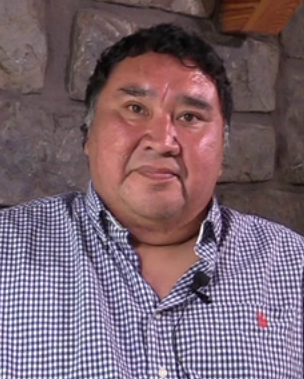
Image Metadata
|
Created: Sunday, May 21, 2023 - 13:15 |
||
Summary:
An interview with Muscogee (Creek) Nation citizen Mark Watashe.Description:
An interview with Muscogee (Creek) Nation citizen Mark Watashe. A downloadable transcript may be found by link: Mark Watashe. This interview has been indexed through the Louie B. Nunn Center for Oral History Center’s Oral History Metadata Synchronizer system at the University of Kentucky. For an indexed copy of the video, please follow the external link found in the bar on the right of this page.
Transcription:
The Muscogee (Creek) Nation
Historic and Cultural Preservation Department Oral History Program
“A Twenty-First Century Pandemic in Indian Country: The Resilience of the Muscogee (Creek) Nation Against Covid-19”
As Remembered by: Mr. Mark Watashe
Interview by: Ms. Midge Dellinger
Date: May 10, 2022
Transcription: The Audio Transcription Company
Edited by: Ms. Midge Dellinger
MIDGE DELLINGER: This is Midge Dellinger, oral historian for the Muscogee (Creek) Nation. Today is May 10, 2022, and I am in Okmulgee, Oklahoma interviewing Muscogee citizen, Mr. Mark Watashe. I’m performing this interview on behalf of the Muscogee (Creek) Nation Historic and Cultural Preservation Department for the oral history project titled “The Twenty-First Century Pandemic in Indian Country: The Resilience of the Muscogee (Creek) Nation Against COVID-19.”
Mr. Watashe, thank you so much for being here with me today and taking time out of your day to do this interview. We’re going to begin with some questions about your personal life and background. And so, I’d like to start with what is your clan and tribal town?
MARK WATASHE: Tribal town is Duck Creek; my clan is Deer.
DELLINGER: And Mr. Watashe, where were you born?
WATASHE: I was born in Tulsa, Oklahoma.
DELLINGER: Now, is that where your folks were living at the [00:01:00] time of your birth?
WATASHE: No, Sapulpa.
DELLINGER: And where’d you grow up?
1
WATASHE: Sapulpa, Oklahoma, Mounds area.
DELLINGER: Now, who are your parents? If you will, will you share their names and just talk a little bit about each one of them?
WATASHE: Joe Edward Watashe, he was raised in Kellyville. My mother is Maxine Sims Watashe. My father was Creek. My dad is still living at the time. He will be eighty eight in July. My mother’s deceased. She passed at the age of seventy-nine, and she was Yuchi.
DELLINGER: Now, what did your dad do for a living? What was his occupation?
WATASHE: He was a Deputy Sheriff for Okmulgee Creek County back in the late sixties and retired from Rogers Galvanizing in Tulsa, [00:02:00] Oklahoma. And my mother worked for Creek Nation for about thirty-two years in different departments, from Manpower to GSA services.
DELLINGER: Let’s talk about your grandparents a little bit, now. Who are your grandparents and if you would just talk a little bit about them?
2
WATASHE: I didn’t know both my grandfathers. They were deceased when I was born. But Wally Watashe and Lucinda Brady Watashe was my grandparents on my dad’s side. Then, my mother’s side was Maxie Sims, Sowena Long Sims.
DELLINGER: Tell me a little bit about life growing up as you remember it in Sapulpa, [00:03:00] Oklahoma.
WATASHE: I was raised with my grandmother. Well, not raised, but we lived with my grandmother for a period of time until we got her Indian home built. I was raised on coal, oil lamps, well water, outhouse, and I thought we were pretty well rich, but according to the world we were in a poverty level but we were always happy, had something to eat. And I did my schooling at Mounds, first through twelfth grade where I graduated, until we moved to our Indian home across the street on family land.
DELLINGER: And going back to your high school days, were there any activities, school activities or athletics that you were involved in?
WATASHE: Yes. We were a small school, [00:04:00] 2A. I played basketball, baseball, and football, from junior high to high school.
DELLINGER: Now, Mr. Watashe, growing up there in Sapulpa with your parents and your grandmothers, were you around family members who spoke the language? Did you get to experience that as a child growing up?
3
WATASHE: Yes, we attended Pickett Chapel, Indian Methodist Church and my grandmother always spoke Yuchi all the time. And my grandmother on my father’s side spoke Creek as their first language.
DELLINGER: Right. And so, did you get to go through a process of them trying to teach you either one of those languages?
WATASHE: Yes. [00:05:00] I understand it fairly well when somebody is speaking it, I know what they’re meaning, especially the Yuchi language. As far as speaking it, I do have a little bit of knowledge in that area.
DELLINGER: Yeah, that’s great that you still have some understanding of the Yuchi language. That’s a language that is, I guess I’ll say, has been in trouble in past years as far as going away, as Yuchi elders are passing away, so that’s great. Okay, so you graduated from Mounds High School and then where did life take you immediately after high school?
WATASHE: Well, I did some liberal art classes at TJC in Tulsa, Tulsa Junior College, and I [00:06:00] worked in the private sector as an electrician, Local Five Eighty-Four, IBW, I did my apprenticeship and got my journeyman’s license and I graduated from Okmulgee Tech in industrial electrical technology, an associate’s degree, and went to work at Aerospace Firm in Tulsa, Oklahoma, two different ones, Limco Airepair and Southwest United Industries, where I gained a lot of knowledge in the aerospace field,
4
and continued my education at Tulsa Tech, in different degrees. I accomplished an associate degree, also, from WTI Institute, which is an air condition, heating, air class.
DELLINGER: So, what made you decide to [00:07:00] become an electrician?
WATASHE: You just took the Vo-Tech class when I was in high school and family members were lining for PSO and OG&E, and I just had a knack that I wanted to be an electrician.
DELLINGER: And then at some point in your career, you ventured out on your own and had your own business. Will you talk a little bit about that?
WATASHE: Yes, I ran my business for over twenty-five years on the side, also. And I did a lot of work for the tribe back in the early nineties, and off and on throughout about fifteen years for different chiefs with the Creek Nation. And I’ve been on their team in the facilities group, and the environmental service group, [00:08:00] and housing. I’ve worked for the tribe in later years.
DELLINGER: And you’ve also shared with me during our previous conversation that you did some work that involved companies in Israel and China?
WATASHE: Yes, when I worked for Limco and Southwest United Industries, we shipped different parts and I did their testing on different planes and Bell helicopters that
5
were shipped overseas, and I was able to troubleshoot some of those equipments that we were sending over and repair and had opportunities that I did take at the time to go overseas to follow that up. But when they came to Tulsa hubs, I was able to work on them and send them out.
DELLINGER: All right. So, you’re from Sapulpa and you lived most of your life in Sapulpa. [00:09:00] How many years now have you been in Okmulgee?
WATASHE: I married Anita Lowe about three and a half years ago and have been in Okmulgee for about that length.
DELLINGER: And if you would, go ahead and talk a little bit more about your life here in Okmulgee.
WATASHE: Well, right now, I’m disabled because of back problems, but I pursue reading up on different aspects of keeping my license. I keep my license up to date and go through the health system here and day-to-day check in on family and friends in Sapulpa, and going through the appointments that I need to, daily, and active in the Northeast District OMIC, [00:10:00] I’m a trustee there along with Pickett and helping my wife’s church out.
DELLINGER: And what is OMIC?
6
WATASHE: Oklahoma Indian Missionary Conference.
DELLINGER: Okay. And share a little bit about your wife, Anita, if you would.
WATASHE: I’ve known her since I was growing up. I graduated with her sister, and her and my sister’s been friends for years, many years. Worked together. And their father was our pastor at Pickett for eight years. And we finally got more acquainted in later years, could have been sooner, I guess, but better later than never, I guess. But I enjoy being around her, with her. We do things together. And we’ve known each other for several years and it’s pretty [00:11:00] much a bond that really that just comes together.
DELLINGER: That’s fantastic. And what’s Anita’s occupation?
WATASHE: She’s a supervisor clerk for Food Distribution. She’s been there for thirty three years.
DELLINGER: Wow. Yeah, that’s pretty amazing.
WATASHE: She’s worked for every chief since the beginning, and still on the job, today. DELLINGER: So, she’s been there since they created the Food Distribution department. WATASHE: Yes, since they created the Food Distribution Department.
7
DELLINGER: Mr. Watashe, are there any special interests or hobbies that you engage with?
WATASHE: Yes. I used to play basketball, fast pitch softball, bowl, until I got [00:12:00] my disability going, but I try to stay active as much as I can, but my back won’t let me. Like I say, I work, do troubleshooting on the side for churches and friends and family that I know to help them through the rough spots if I can help them in any kind of way.
DELLINGER: That’s nice. Yeah, that’s great that you’re still able to do those things. I’d like for you, if you would, to talk a little bit more about Pickett Chapel and the relationship or your family’s connection to that church.
WATASHE: I was raised in church, baptized there, we just lived across the road so I guess that’s why I attended it, I guess, for so long. Then, I had moved away to Okmulgee, I guess, for [00:13:00] the college dorm area, then different jobs take me different places where I relocated. But I’m back there and I’ve met a lot of pastors throughout the years and I try to upkeep the church, right now, doing as much as I can do as a trustee member. I’ve known the pastor there now for several years. We’ve worked together before in the private sector. And that’s the only church that I’ve been around. My wife’s church I attend, to take her back home to Yeager, Wewoka, and I try to help out there when I can, in troubleshooting their electrical work they might need on the side, as long as it’s not too
8
massive or anything like that where I have to do a lot of climbing or anything like that, mostly just troubleshooting or tell them what they need [00:14:00] to be done.
DELLINGER: And your wife’s church, Wewoka, that place has some extra significance to it because that’s where you were married, correct?
WATASHE: Yes, we were married there, at my wife’s church.
DELLINGER: Do you know how old Pickett Chapel is?
WATASHE: No, not off hand but I know that it’s been in the twenties, I’m pretty sure, I think the twenties.
DELLINGER: So, you and your wife both have your separate family churches. Oh, I wanted to ask, now, what denominations are these two churches?
WATASHE: Methodist. They’re both Methodist, in the Oklahoma Missionary Indian Conference.
DELLINGER: So, how do you decide, like, Sunday is coming up, and how do you how do you decide whose church that you’re going to go to on that Sunday?
9
WATASHE: Well, [00:15:00] usually, if there’s nothing like Mother’s Day or something, we attend both, back and forth as much as possible. I know the past couple Sundays we’ve been at her church because of revival and Mother’s Day, et cetera, Forth Sunday. And we try to make Pickett Fourth Sunday in time, if it rains too bad, or something of that nature, we always attend Pickett. We’re just back and forth.
DELLINGER: Mr. Watashe, I just realized, I did not ask you, do you have any siblings? WATASHE: No. Oh, yes, I do. [laughs] I’m sorry. I have a sister, Selena Elaine Watashe. DELLINGER: And now, where is she located?
WATASHE: She lives at Sapulpa, at the home place. She has her house there. And I have two half-sisters, Lisa Watashe, [00:16:00] and Donna Kay Watashe, and I have a half brother, Joe Hawk Watashe.
DELLINGER: Okay. And are all these folks still all located in Sapulpa there?
WATASHE: Yes. My brother and sister, half brother and sister, lives in Tulsa and my other half-sister lives in Sapulpa.
DELLINGER: Okay. Well, I think what we’re going to do now is go ahead and transition our questions here into some questions that concern your experiences with the COVID-19
10
pandemic. Here in the United States, we are now in year three of having COVID-19 in existence, but when in 2020 do you remember first hearing about the COVID-19 virus and how did you first hear about [00:17:00] the virus?
WATASHE: Well, I knew it was on the news back in January or February of that year. There was no serum at the time, or infusion they were giving, so it was going widespread. And I know that we were watching the news and Oklahoma started out at fatalities in the twenties and thirties, and started rising up, and the emergency rooms and hospital beds were getting full, and it was gradually making its way to our area.
DELLINGER: Right. And so, at this time that you’re talking about, from where were you gathering your information about the virus?
WATASHE: Well, my wife would bring the news back from work, and we were watching the news, usually Channel 6 or Channel 23 [00:18:00] were keeping updates on it.
DELLINGER: In the beginning of 2020 when you first started hearing about the virus, what were your first thoughts about it? Were you concerned or not about it making its way into Oklahoma and the Muscogee Nation?
11
WATASHE: Yes, because I have family members and people at the tribe out here was getting it pretty well, and they were preparing to, I guess, meet it head-on as much as possible.
DELLINGER: Do you remember what some of those initial conversations were that you had with family, with Anita and other members of your family and friends, too?
WATASHE: Well, we were taking the precautions of the mask, and washing the hands as much as possible. And we were limited of where [00:19:00] we’re going, and I told my wife I would be the one to go out to get the food and everything and try to take as much precautions as I could, keeping distance. I know we didn’t go to movies or any sporting events, because of the epidemic breakout.
DELLINGER: Right. So, when local and state governments began these lockdowns and shelter in place orders, how did hearing these words make you feel?
WATASHE: Well, concerned. In the back of my mind, I knew sooner or later that it was going to hit in our area and affect us, possibly. And people were saying if you go out much, you’d eventually get it. But in some instances, it didn’t really matter if you went out or not.
DELLINGER: Yeah. And so, [00:20:00] again in 2020, when the virus began here in this country, and of course, it just was snowballing throughout the country, what made you
12
realize, was there any particular thing that you experienced personally or even saw on the news that made you realize the severity of the virus?
WATASHE: Well, the mortality rate was really climbing. And the world news was saying that it was in the East, it was heading this way, and in the North, it was coming into Oklahoma and the news kept an update on a lot of the hospitalizations and areas that were hit pretty hard, starting to get hit pretty hard.
DELLINGER: And you’ve touched on this, with my next question, you’ve already touched on this briefly, but so in 2020 and even in 2021, [00:21:00] how did COVID change life for you?
WATASHE: After or before I got it?
DELLINGER: Just after the virus and the pandemic came here into Oklahoma and the Muscogee (Creek) Nation.
WATASHE: Well, financially, when it was going on, like I say, it was limited to where we could go, but after it had passed, we were able to go out more and enjoy different things. I know that the food and water and everything was scarce when the pandemic was out, and everybody was buying Lysol off the shelves before we could get it, and the food supply, and medication was more abundant, and you could [00:22:00] go in and see the doctor where before you couldn’t, unless you were real bad. Even hospitalization
13
procedures were shut down because of the pandemic, but they opened up more where you can go to the dentist and go for your doctor’s appointments and your healthcare procedures.
DELLINGER: So, Mr. Watashe, did you and Anita actually have experiences where you went to the store to get something and you literally couldn’t because it wasn’t on the shelf?
WATASHE: Yes. Several times. Bread, water, Lysol, dog food, meat, eggs. DELLINGER: And did your family in Sapulpa experience those same things? WATASHE: Yes, more or less the same thing.
DELLINGER: What was that like? How did that make you feel?
WATASHE: Well, it was more or less the [00:23:00] saying, first come first serve. But then, they started putting limits on what you could buy which really didn’t help much because if you weren’t in line there at the time you wouldn’t have got it. But your basic needs were gone, as far as food wise, because of the pandemic, you had to either eat something else or do it from scratch.
DELLINGER: Did you and Anita actually change your, maybe, shopping routines?
14
WATASHE: Oh, yes. Yes. We were pretty much homebound because of that, and we had to make do with what we could get. Even the restaurants were shut down where you couldn’t order food or get food. And if you did go out, you were opening yourself up to catching the [00:24:00] virus. It was like a two-edged sword.
DELLINGER: Now the virus was in this country about a year before the vaccines rolled out. During that period of time, and even today, maybe, what was your plan of action to stay safe from the virus, both at home and when you left the house? Did you have some
type of safety measures and routines that you did at home and then when you left your home?
WATASHE: Well, wearing a mask was number one issue, having mask available that was another thing that was running low, masks. Hand sanitizers we kept in the car, but I could say I was about the only one that would go out, and I wanted to go out to get the food or whatever we needed. And like I said, I always took precautions when I came in the car to use my hand sanitizer, [00:25:00] wore my mask as much as I could.
DELLINGER: I’d like for you to share what is your knowledge about COVID-19 if someone is to contract it, I’d like for you to share your knowledge about what this virus can do to the human body.
15
WATASHE: Well, from having it and people that I know have had it, I know it’s a virus that affects your lungs, or your weakest point of your body system, like diabetes, or heart issues, it seems to focus in on a weakness that you may not even know of. But I was told it affects your lungs, causing pneumonia, high temperature, coughing, [00:26:00] feeling fatigue, just wearing your body down.
DELLINGER: So, Mr. Watashe, when did you become sick with COVID?
WATASHE: Yes, I remember it well. It was on a Friday. I think my wife had a temperature, and Creek Nation was giving swabs to see if you contracted it. So, we thought we’d better both go. So, they swabbed her and swabbed me, and we were waiting for the results to come back, and she got hers in an hour and she was positive. Then, I waited like about four or five hours, and I called twice, and I was negative. Then, she developed in about twenty-four hours, [00:27:00] her taste and smell had dissipated and she started getting a temperature. And I was okay, then, Sunday, I started feeling kind of bad with a temperature, and I went in to my Primary and I had caught it Monday. So, I tested positive Monday. And the doctor had given me antibiotics and steroids to take for a week. And my wife, during this process, she was not doing too bad, wasn’t eating much, then her taste and smell was still gone. And then, in about eight days, I started coughing real bad and they said, “Well, don’t go in the hospital or anything until you can’t breathe.” I could breathe, but I’ve been gagging quite a bit and I was spitting up blood and [00:28:00] I was running a 105 temperature at night, which Tylenol, I thought all those years didn’t do much, but it did knock the fever down. But I went back to my
16
primary and he gave me another dose of the steroids and virus medication, and a nebulizer, different kinds of steroids and that, and it seemed to help. Like I say, that’s when we didn’t have infusion or any shots to ward it off. Then, when we got that, they were developing that at the time, but it was ninety days after you had the virus and tested negative before you could start your shots. But I was taken to the ER and I had a choice to either stay or go but I knew they were going to put [00:29:00] a ventilator on me, because I guess that’s what they were doing, so I thought if I got any worse I would come back. But they had prescribed some stuff for me that didn’t really work. I forget the name of it, but it was real popular back then that they were using, but different doctors were saying, “Well, that’s good if you had it three months before you had the virus.” So, it was just kind of a hit and miss. But the primary doctor I used really did treat it well and had a good record of treating the virus.
DELLINGER: So, it sounds to me like you got sick in 2020.
WATASHE: Yes.
DELLINGER: Okay. Wow. So, you were not well for, what, at least ten or twelve days, maybe?
WATASHE: Yes. Well, twenty-one, [00:30:00] because they said my body was weak and that’s when they didn’t have a conclusion of when the virus was out of you. They thought when your temperature broke, it was like seventy-two hours, or two days without
17
medication that you were okay, but since I was eight days into it and I had caught the pneumonia, they were extending it to twenty-one days. I know it was around the holidays. And it was just before Thanksgiving that I was gradually getting over it, and I didn’t want to be around my family or her family because they were elderly and had immune disorders, both of us. But I knew that she was better than I was at the time. But she had lost her taste and smell for nine months before it returned.
DELLINGER: Wow. Now, [00:31:00] because it sounds like you were the sicker of the two of you, was she able to help you, take care of you, do anything for you, or were you both—
WATASHE: Yes, we helped each other, and like I say, mostly, I didn’t move much. I’d go outside and breathe some air; they say move around. You hear a lot of things, a lot of treatments that people used that worked for them but not other people. And I was trying
to keep abroad of everything that could help us. But she was good except for the taste and smell, but I had a cough. After I got rid of the virus, I had a bad cough for about a month. And then, that dissipated. I had COVID pneumonia in both lungs. And they said, “Well, once your lungs are scarred with the COVID, it remains.” But later on, I’ve got an X-ray, [00:32:00] then I had just a few spots in my lungs.
DELLINGER: So, when you realized that you were COVID positive and you knew at that time you were already feeling bad, starting to feel bad, what was that like? What went through your head in that moment when you got that positive test result?
18
WATASHE: Well, when my wife got it, she was pretty well upset and I tried to comfort her as much as I could, because like I said, nobody knew. People were thinking fatal, pretty much, if you had any health problems. And I knew I just got off a heart ablation a couple months before I caught COVID. And they put me on dialysis and I was in kidney failure and my [00:33:00] body was septic. Then I got healed of that. I was in the hospital ten days. And a couple months later, I contracted COVID. Like I said, there was no serum or anything back then, you just had to ride it out the best way possible with the vitamins, the vitamin D, the vitamin A, the zinc, the magnesium, vitamin C that was more or less, everybody had that. But I stayed with that and elderberry juice and seemed to go through it. But in the back of my mind when I saw my primary doctor and he said, “Well, you’re positive,” and I said, “Well, what’s my chances?” And he was real positive with it. He said he’s seen worse. But when [00:34:00] I went back to him several months later, I said, “Did you see anybody worse?” And he said, “Well, not really.” [laughs] But I know that I was just real drained. I’ve been tired and been sick before, but this was a different kind where it was just rock bottom, period, that you just didn’t have no energy or nothing, mentally and physically. But I remember it was cold back then. I think we were shut-in, because the weather that was going on, the snow, and we had to be quarantined because at the time somebody at church had the virus, and we were quarantined a week, then we took the test, and she was feeling ill that day, that’s the reason she had took the test, also. [00:35:00] And we were quarantined two weeks after, then I was prolonged, and she had went back to work. But then, I think a day or two, then it snowed real bad, so
19
we were back in the house for another week. So, it was just a hit and miss thing. And we were quarantined in the house, off and on, for a little over two months.
DELLINGER: Now, at this time, are you in complete recovery or do you still have some issues?
WATASHE: Yes, I notice that my memory loss is kind of—I don’t know if it just remains or just from the virus, you hear different things. But pretty much, I was a little forgetful at times. The coughing, breathing issue [00:36:00] is resolved. I know I feel tired. I give out easier than I used to. But I’ve asked different people and they have breathing problems, still. I know my wife, her taste and smell comes and goes, once in a while. So, I guess more or less, I’m not for sure, but it could be COVID-related. But it’s been well over a year, so I think we’re heading in the right direction. But like I say, the prolonged forgetfulness and the tiredness, I kind of contribute it to that. In both her and me.
DELLINGER: I wanted to ask you, too, so which of our Muscogee (Creek) Nation medical facilities---where were you getting treatment and care?
WATASHE: Well, [00:37:00] at the Okmulgee Hospital. That’s where I went to the ER, and the testing they had there at the facility, that’s where we got our testing done, and follow-ups with the primary.
20
DELLINGER: Okay. I think you did mention that you’ve had other people in your life get sick with COVID. Can you share some of those experiences of other folks?
WATASHE: Well, different relatives and friends, and my wife’s coworkers and stuff that had it, some of them weren’t so lucky to make it through. Some of them I thought were healthy, that they were healthier than me or her, didn’t make it. Like I said, at a later date, we thought it was just people with diabetes, [00:38:00] or young or old that got it, and it just was open to everybody, whether you had health issues, I’ve known people with cancer and on dialysis survive it, get it twice, where a young person with no health issues passed. So, I consider ourselves blessed, fortunate, that we were able to ride it through. But the mental aspect and your spirituality worked for us.
DELLINGER: So, Mr. Watashe, at this time, are you vaccinated against COVID-19? WATASHE: Yes, I’ve had all three. I’ve had the two vaccines and a booster. DELLINGER: And do you remember what specific vaccine you received? WATASHE: The Moderna.
DELLINGER: And what were your side effects during any of those shots?
21
WATASHE: All three shots made [00:39:00] me sick. [laughs] Especially the last one, the booster. I was achy, feverish, and tired for about a little over twenty-four hours. I took Tylenol to get me through the fever. I had thought I caught it again because of the symptoms, but I knew that, hopefully, I wasn’t. So, that’s what I relied on to get through that. They told me, “Well, it might make you sick,” but I was pretty ill on the first two, and especially the last one, the booster.
DELLINGER: Why was it important for you to be vaccinated?
WATASHE: Well, I needed to go out and look after other people, my family members and friends, and be able to be mobile to get food and everything, and didn’t want to catch it again, or spread it to [00:40:00] anybody.
DELLINGER: What has been the impact of COVID-19, especially—we’re going back to 2020—on your church and church members?
WATASHE: Well, I know Pickett, most of the church members got it, and they survived it, being of their health issues and age, people in their nineties, and I know other churches had lost several members due to the virus.
DELLINGER: After COVID came along, and especially after folks started becoming ill, did the church ever shut down, or did they ever initiate any type of special safety measures there at the church?
22
WATASHE: Yes. All the Indian Missionary Conference were [00:41:00] told to use hand sanitizers, and I think the Creek Nation donated several masks and hand sanitizers throughout the tribe, and churches, and ceremonial grounds. It was a mandate. I know the churches had shut down for three to four weeks, different churches, to combat the illness that was spreading throughout the state.
DELLINGER: What impact, if any, has COVID and the pandemic had—and again, this is from your observations—has COVID and the pandemic had on people’s spirituality?
WATASHE: Well, it’s what you believe in to rely on to get through anything that affects the body and soul, I believe, and healing prayers to get through the [00:42:00] virus and to help your family out.
DELLINGER: Mr. Watashe, how do you think Muscogee (Creek) Nation leadership has performed throughout the pandemic?
WATASHE: I think the Health Administration did a real good job at looking after people with the mask and hand sanitizers, and having the opportunity to test several people, even non-native people to keep a lid on the pandemic from spreading. A lot of information given out, a lot of the latest, I guess, techniques that were going on in the world was administrated through the tribes. And I know when the infusion came around and the
23
boosters and everything, [00:43:00] Creek Nation was leading the way on getting that to their citizens.
DELLINGER: And so, how do you think that the Muscogee (Creek) Nation has done throughout the pandemic, and again, especially at the beginning of the pandemic, compared to the State of Oklahoma?
WATASHE: Well, like I said, they were a leading edge on getting people vaccinated and tested, even non-natives. They were opening up to everybody before the state to keep the rolls down. I don’t know that much about the numbers, but just what I see on TV and what I know in living here, going by the hospital, that there was a lot of big turnouts, and they were opening up to keep the virus under control. And during the pandemic I know that the Food Distribution was still opening to get people their food, [00:44:00] and the CHR program, and everything, was able to take people to the doctor, keeping that roll up was instrumental in helping our native citizens.
DELLINGER: So, here in Oklahoma, at this time, and of course, here in the Muscogee (Creek) Nation, we’ve been in this COVID lull for at least two or three months now, but what are your thoughts about COVID-19 ever completely going away?
WATASHE: Well, not having a degree in that area, or keeping up with it much, but I think it is going down, but it’s still out there, and still killing people today. It kind of makes you wonder if we—I know they were talking about another booster, whatever,
24
which I would take if they offer that again. [00:45:00] But I don’t know the severity of where or how it was actually made or distributed to get in the body or whatever. I mean, if it came from biological, or a bat, or whatever they are saying it came from, but I know it’s still out there, and it always mutates itself. I know of three or four mutations already that has mutated in the last year-and-a-half. And that shows it to be pretty aggressive. So, as long as they can keep an eye on it and keep the numbers down, the flu’s still around, and the common cold, they’ve never cured it, but they can treat it, so as long as there’s treatment available, I feel pretty confident in that area.
DELLINGER: At this time, here in May of 2022, [00:46:00] are you engaging in a life that is more similar to what your life was like before the start of the COVID pandemic?
WATASHE: Yes, yes, we are. We’re going out more and going shopping and to a concert every once in a while, and taking in sports activity, and meeting with the community, and able to enjoy in family functions.
DELLINGER: What, if any, safety measures are you sticking to now in your daily life?
WATASHE: Well, if I know anybody that’s coughing or might be contracted to the virus that I kind of wear a mask or stay away from them or limit my [00:47:00] exposure to large crowds that I’m not familiar with. If I feel like, well, I just use my hand sanitizer more than I used to, I’ll put it that way.
25
DELLINGER: All right, Mr. Watashe, we are down to our last couple of questions. For future generations of Muscogee who may find themselves and dealing with a global health and economic crisis such as the COVID-19 pandemic, what words of advice can you share with them about surviving such a catastrophic event?
WATASHE: I’d say stay abreast of your healthcare system, get the information needed, and follow through with what they recommend. A lot of people don’t believe in listening to different people or whatnot, but you’ve [00:48:00] got to make a choice sometime, either right or wrong, and follow through with it, stick to it, take your vaccines. I know that you hear different things on what’s in the vaccine or whatever, but you just have to weigh it out. You can’t tell people what to do but you can do it yourself if you feel obligated to do that, and it’s not only you you’re saving, you’re saving other people.
DELLINGER: Okay. I actually am going to throw another question in here because I just thought of something that goes back to something you said earlier and I thought, “Oh, I want to ask him about that.” I want to ask you about elderberry juice. And you’re the second person that I’ve interviewed who has mentioned elderberry. And is that an herb that you’ve used throughout your lifetime?
WATASHE: [00:49:00] Yes. Well, like I say, before we caught the virus, we were using elderberry juice. And we’ve heard good things about it for different ailments, even for animals. And we were using that and taking our vitamins. And like I said, I don’t know what really got us through. I know spirituality was the main one, but as far as materials
26
here on Earth that I would say it could have been vitamins, could have been the elderberry juice, it could be just we were able to fight it off. But like I say, I remember we done that before we even caught the virus, so maybe it did. I’m not saying it works for everybody, but we did use it. It’s good for your kidneys and your organs, blood pressure, [00:50:00] et cetera. It's multi-use. But then again, we did a lot of vitamins, the vitamin C, the zinc, magnesium, et cetera.
DELLINGER: Okay, thank you for sharing that. Well, in closing, I want to ask you is there anything else that you would like to say or share about COVID-19, your experiences with it, if maybe I have left something out that’s important to you, is there anything else you’d like to say here today?
WATASHE: Well, I know that the virus is real and that I’m blessed in our family members and different ones that survived it and that didn’t get it, but we’ve lost good people that have passed on due to that, [00:51:00] whether you know them or not, eventually you know somebody that was their relative or something, and you feel for them. By having it in the beginning when there was no cure, more or less to say, well, treatment for it, I can relate to that. I know the thing of hospital stays, and when they tell you, you have it, there’s nothing they can do, and you just rely on your spirituality and your body to fight it off. I feel for people that have lost loved ones, and like I say, just keep abreast of what’s going on, take note, and be safe.
27
DELLINGER: All right, Mr. Watashe, thank you so much for those words. And again, mvto, thank you for being here with me today and doing this interview. [00:52:00] And you continue to take care and stay safe.
WATASHE: And I’d like to say mvto to Hesaketvmese for overseeing everybody and be healthy and mvto.
DELLINGER: Very good.
END OF INTERVIEW
28
Historic and Cultural Preservation Department Oral History Program
“A Twenty-First Century Pandemic in Indian Country: The Resilience of the Muscogee (Creek) Nation Against Covid-19”
As Remembered by: Mr. Mark Watashe
Interview by: Ms. Midge Dellinger
Date: May 10, 2022
Transcription: The Audio Transcription Company
Edited by: Ms. Midge Dellinger
MIDGE DELLINGER: This is Midge Dellinger, oral historian for the Muscogee (Creek) Nation. Today is May 10, 2022, and I am in Okmulgee, Oklahoma interviewing Muscogee citizen, Mr. Mark Watashe. I’m performing this interview on behalf of the Muscogee (Creek) Nation Historic and Cultural Preservation Department for the oral history project titled “The Twenty-First Century Pandemic in Indian Country: The Resilience of the Muscogee (Creek) Nation Against COVID-19.”
Mr. Watashe, thank you so much for being here with me today and taking time out of your day to do this interview. We’re going to begin with some questions about your personal life and background. And so, I’d like to start with what is your clan and tribal town?
MARK WATASHE: Tribal town is Duck Creek; my clan is Deer.
DELLINGER: And Mr. Watashe, where were you born?
WATASHE: I was born in Tulsa, Oklahoma.
DELLINGER: Now, is that where your folks were living at the [00:01:00] time of your birth?
WATASHE: No, Sapulpa.
DELLINGER: And where’d you grow up?
1
WATASHE: Sapulpa, Oklahoma, Mounds area.
DELLINGER: Now, who are your parents? If you will, will you share their names and just talk a little bit about each one of them?
WATASHE: Joe Edward Watashe, he was raised in Kellyville. My mother is Maxine Sims Watashe. My father was Creek. My dad is still living at the time. He will be eighty eight in July. My mother’s deceased. She passed at the age of seventy-nine, and she was Yuchi.
DELLINGER: Now, what did your dad do for a living? What was his occupation?
WATASHE: He was a Deputy Sheriff for Okmulgee Creek County back in the late sixties and retired from Rogers Galvanizing in Tulsa, [00:02:00] Oklahoma. And my mother worked for Creek Nation for about thirty-two years in different departments, from Manpower to GSA services.
DELLINGER: Let’s talk about your grandparents a little bit, now. Who are your grandparents and if you would just talk a little bit about them?
2
WATASHE: I didn’t know both my grandfathers. They were deceased when I was born. But Wally Watashe and Lucinda Brady Watashe was my grandparents on my dad’s side. Then, my mother’s side was Maxie Sims, Sowena Long Sims.
DELLINGER: Tell me a little bit about life growing up as you remember it in Sapulpa, [00:03:00] Oklahoma.
WATASHE: I was raised with my grandmother. Well, not raised, but we lived with my grandmother for a period of time until we got her Indian home built. I was raised on coal, oil lamps, well water, outhouse, and I thought we were pretty well rich, but according to the world we were in a poverty level but we were always happy, had something to eat. And I did my schooling at Mounds, first through twelfth grade where I graduated, until we moved to our Indian home across the street on family land.
DELLINGER: And going back to your high school days, were there any activities, school activities or athletics that you were involved in?
WATASHE: Yes. We were a small school, [00:04:00] 2A. I played basketball, baseball, and football, from junior high to high school.
DELLINGER: Now, Mr. Watashe, growing up there in Sapulpa with your parents and your grandmothers, were you around family members who spoke the language? Did you get to experience that as a child growing up?
3
WATASHE: Yes, we attended Pickett Chapel, Indian Methodist Church and my grandmother always spoke Yuchi all the time. And my grandmother on my father’s side spoke Creek as their first language.
DELLINGER: Right. And so, did you get to go through a process of them trying to teach you either one of those languages?
WATASHE: Yes. [00:05:00] I understand it fairly well when somebody is speaking it, I know what they’re meaning, especially the Yuchi language. As far as speaking it, I do have a little bit of knowledge in that area.
DELLINGER: Yeah, that’s great that you still have some understanding of the Yuchi language. That’s a language that is, I guess I’ll say, has been in trouble in past years as far as going away, as Yuchi elders are passing away, so that’s great. Okay, so you graduated from Mounds High School and then where did life take you immediately after high school?
WATASHE: Well, I did some liberal art classes at TJC in Tulsa, Tulsa Junior College, and I [00:06:00] worked in the private sector as an electrician, Local Five Eighty-Four, IBW, I did my apprenticeship and got my journeyman’s license and I graduated from Okmulgee Tech in industrial electrical technology, an associate’s degree, and went to work at Aerospace Firm in Tulsa, Oklahoma, two different ones, Limco Airepair and Southwest United Industries, where I gained a lot of knowledge in the aerospace field,
4
and continued my education at Tulsa Tech, in different degrees. I accomplished an associate degree, also, from WTI Institute, which is an air condition, heating, air class.
DELLINGER: So, what made you decide to [00:07:00] become an electrician?
WATASHE: You just took the Vo-Tech class when I was in high school and family members were lining for PSO and OG&E, and I just had a knack that I wanted to be an electrician.
DELLINGER: And then at some point in your career, you ventured out on your own and had your own business. Will you talk a little bit about that?
WATASHE: Yes, I ran my business for over twenty-five years on the side, also. And I did a lot of work for the tribe back in the early nineties, and off and on throughout about fifteen years for different chiefs with the Creek Nation. And I’ve been on their team in the facilities group, and the environmental service group, [00:08:00] and housing. I’ve worked for the tribe in later years.
DELLINGER: And you’ve also shared with me during our previous conversation that you did some work that involved companies in Israel and China?
WATASHE: Yes, when I worked for Limco and Southwest United Industries, we shipped different parts and I did their testing on different planes and Bell helicopters that
5
were shipped overseas, and I was able to troubleshoot some of those equipments that we were sending over and repair and had opportunities that I did take at the time to go overseas to follow that up. But when they came to Tulsa hubs, I was able to work on them and send them out.
DELLINGER: All right. So, you’re from Sapulpa and you lived most of your life in Sapulpa. [00:09:00] How many years now have you been in Okmulgee?
WATASHE: I married Anita Lowe about three and a half years ago and have been in Okmulgee for about that length.
DELLINGER: And if you would, go ahead and talk a little bit more about your life here in Okmulgee.
WATASHE: Well, right now, I’m disabled because of back problems, but I pursue reading up on different aspects of keeping my license. I keep my license up to date and go through the health system here and day-to-day check in on family and friends in Sapulpa, and going through the appointments that I need to, daily, and active in the Northeast District OMIC, [00:10:00] I’m a trustee there along with Pickett and helping my wife’s church out.
DELLINGER: And what is OMIC?
6
WATASHE: Oklahoma Indian Missionary Conference.
DELLINGER: Okay. And share a little bit about your wife, Anita, if you would.
WATASHE: I’ve known her since I was growing up. I graduated with her sister, and her and my sister’s been friends for years, many years. Worked together. And their father was our pastor at Pickett for eight years. And we finally got more acquainted in later years, could have been sooner, I guess, but better later than never, I guess. But I enjoy being around her, with her. We do things together. And we’ve known each other for several years and it’s pretty [00:11:00] much a bond that really that just comes together.
DELLINGER: That’s fantastic. And what’s Anita’s occupation?
WATASHE: She’s a supervisor clerk for Food Distribution. She’s been there for thirty three years.
DELLINGER: Wow. Yeah, that’s pretty amazing.
WATASHE: She’s worked for every chief since the beginning, and still on the job, today. DELLINGER: So, she’s been there since they created the Food Distribution department. WATASHE: Yes, since they created the Food Distribution Department.
7
DELLINGER: Mr. Watashe, are there any special interests or hobbies that you engage with?
WATASHE: Yes. I used to play basketball, fast pitch softball, bowl, until I got [00:12:00] my disability going, but I try to stay active as much as I can, but my back won’t let me. Like I say, I work, do troubleshooting on the side for churches and friends and family that I know to help them through the rough spots if I can help them in any kind of way.
DELLINGER: That’s nice. Yeah, that’s great that you’re still able to do those things. I’d like for you, if you would, to talk a little bit more about Pickett Chapel and the relationship or your family’s connection to that church.
WATASHE: I was raised in church, baptized there, we just lived across the road so I guess that’s why I attended it, I guess, for so long. Then, I had moved away to Okmulgee, I guess, for [00:13:00] the college dorm area, then different jobs take me different places where I relocated. But I’m back there and I’ve met a lot of pastors throughout the years and I try to upkeep the church, right now, doing as much as I can do as a trustee member. I’ve known the pastor there now for several years. We’ve worked together before in the private sector. And that’s the only church that I’ve been around. My wife’s church I attend, to take her back home to Yeager, Wewoka, and I try to help out there when I can, in troubleshooting their electrical work they might need on the side, as long as it’s not too
8
massive or anything like that where I have to do a lot of climbing or anything like that, mostly just troubleshooting or tell them what they need [00:14:00] to be done.
DELLINGER: And your wife’s church, Wewoka, that place has some extra significance to it because that’s where you were married, correct?
WATASHE: Yes, we were married there, at my wife’s church.
DELLINGER: Do you know how old Pickett Chapel is?
WATASHE: No, not off hand but I know that it’s been in the twenties, I’m pretty sure, I think the twenties.
DELLINGER: So, you and your wife both have your separate family churches. Oh, I wanted to ask, now, what denominations are these two churches?
WATASHE: Methodist. They’re both Methodist, in the Oklahoma Missionary Indian Conference.
DELLINGER: So, how do you decide, like, Sunday is coming up, and how do you how do you decide whose church that you’re going to go to on that Sunday?
9
WATASHE: Well, [00:15:00] usually, if there’s nothing like Mother’s Day or something, we attend both, back and forth as much as possible. I know the past couple Sundays we’ve been at her church because of revival and Mother’s Day, et cetera, Forth Sunday. And we try to make Pickett Fourth Sunday in time, if it rains too bad, or something of that nature, we always attend Pickett. We’re just back and forth.
DELLINGER: Mr. Watashe, I just realized, I did not ask you, do you have any siblings? WATASHE: No. Oh, yes, I do. [laughs] I’m sorry. I have a sister, Selena Elaine Watashe. DELLINGER: And now, where is she located?
WATASHE: She lives at Sapulpa, at the home place. She has her house there. And I have two half-sisters, Lisa Watashe, [00:16:00] and Donna Kay Watashe, and I have a half brother, Joe Hawk Watashe.
DELLINGER: Okay. And are all these folks still all located in Sapulpa there?
WATASHE: Yes. My brother and sister, half brother and sister, lives in Tulsa and my other half-sister lives in Sapulpa.
DELLINGER: Okay. Well, I think what we’re going to do now is go ahead and transition our questions here into some questions that concern your experiences with the COVID-19
10
pandemic. Here in the United States, we are now in year three of having COVID-19 in existence, but when in 2020 do you remember first hearing about the COVID-19 virus and how did you first hear about [00:17:00] the virus?
WATASHE: Well, I knew it was on the news back in January or February of that year. There was no serum at the time, or infusion they were giving, so it was going widespread. And I know that we were watching the news and Oklahoma started out at fatalities in the twenties and thirties, and started rising up, and the emergency rooms and hospital beds were getting full, and it was gradually making its way to our area.
DELLINGER: Right. And so, at this time that you’re talking about, from where were you gathering your information about the virus?
WATASHE: Well, my wife would bring the news back from work, and we were watching the news, usually Channel 6 or Channel 23 [00:18:00] were keeping updates on it.
DELLINGER: In the beginning of 2020 when you first started hearing about the virus, what were your first thoughts about it? Were you concerned or not about it making its way into Oklahoma and the Muscogee Nation?
11
WATASHE: Yes, because I have family members and people at the tribe out here was getting it pretty well, and they were preparing to, I guess, meet it head-on as much as possible.
DELLINGER: Do you remember what some of those initial conversations were that you had with family, with Anita and other members of your family and friends, too?
WATASHE: Well, we were taking the precautions of the mask, and washing the hands as much as possible. And we were limited of where [00:19:00] we’re going, and I told my wife I would be the one to go out to get the food and everything and try to take as much precautions as I could, keeping distance. I know we didn’t go to movies or any sporting events, because of the epidemic breakout.
DELLINGER: Right. So, when local and state governments began these lockdowns and shelter in place orders, how did hearing these words make you feel?
WATASHE: Well, concerned. In the back of my mind, I knew sooner or later that it was going to hit in our area and affect us, possibly. And people were saying if you go out much, you’d eventually get it. But in some instances, it didn’t really matter if you went out or not.
DELLINGER: Yeah. And so, [00:20:00] again in 2020, when the virus began here in this country, and of course, it just was snowballing throughout the country, what made you
12
realize, was there any particular thing that you experienced personally or even saw on the news that made you realize the severity of the virus?
WATASHE: Well, the mortality rate was really climbing. And the world news was saying that it was in the East, it was heading this way, and in the North, it was coming into Oklahoma and the news kept an update on a lot of the hospitalizations and areas that were hit pretty hard, starting to get hit pretty hard.
DELLINGER: And you’ve touched on this, with my next question, you’ve already touched on this briefly, but so in 2020 and even in 2021, [00:21:00] how did COVID change life for you?
WATASHE: After or before I got it?
DELLINGER: Just after the virus and the pandemic came here into Oklahoma and the Muscogee (Creek) Nation.
WATASHE: Well, financially, when it was going on, like I say, it was limited to where we could go, but after it had passed, we were able to go out more and enjoy different things. I know that the food and water and everything was scarce when the pandemic was out, and everybody was buying Lysol off the shelves before we could get it, and the food supply, and medication was more abundant, and you could [00:22:00] go in and see the doctor where before you couldn’t, unless you were real bad. Even hospitalization
13
procedures were shut down because of the pandemic, but they opened up more where you can go to the dentist and go for your doctor’s appointments and your healthcare procedures.
DELLINGER: So, Mr. Watashe, did you and Anita actually have experiences where you went to the store to get something and you literally couldn’t because it wasn’t on the shelf?
WATASHE: Yes. Several times. Bread, water, Lysol, dog food, meat, eggs. DELLINGER: And did your family in Sapulpa experience those same things? WATASHE: Yes, more or less the same thing.
DELLINGER: What was that like? How did that make you feel?
WATASHE: Well, it was more or less the [00:23:00] saying, first come first serve. But then, they started putting limits on what you could buy which really didn’t help much because if you weren’t in line there at the time you wouldn’t have got it. But your basic needs were gone, as far as food wise, because of the pandemic, you had to either eat something else or do it from scratch.
DELLINGER: Did you and Anita actually change your, maybe, shopping routines?
14
WATASHE: Oh, yes. Yes. We were pretty much homebound because of that, and we had to make do with what we could get. Even the restaurants were shut down where you couldn’t order food or get food. And if you did go out, you were opening yourself up to catching the [00:24:00] virus. It was like a two-edged sword.
DELLINGER: Now the virus was in this country about a year before the vaccines rolled out. During that period of time, and even today, maybe, what was your plan of action to stay safe from the virus, both at home and when you left the house? Did you have some
type of safety measures and routines that you did at home and then when you left your home?
WATASHE: Well, wearing a mask was number one issue, having mask available that was another thing that was running low, masks. Hand sanitizers we kept in the car, but I could say I was about the only one that would go out, and I wanted to go out to get the food or whatever we needed. And like I said, I always took precautions when I came in the car to use my hand sanitizer, [00:25:00] wore my mask as much as I could.
DELLINGER: I’d like for you to share what is your knowledge about COVID-19 if someone is to contract it, I’d like for you to share your knowledge about what this virus can do to the human body.
15
WATASHE: Well, from having it and people that I know have had it, I know it’s a virus that affects your lungs, or your weakest point of your body system, like diabetes, or heart issues, it seems to focus in on a weakness that you may not even know of. But I was told it affects your lungs, causing pneumonia, high temperature, coughing, [00:26:00] feeling fatigue, just wearing your body down.
DELLINGER: So, Mr. Watashe, when did you become sick with COVID?
WATASHE: Yes, I remember it well. It was on a Friday. I think my wife had a temperature, and Creek Nation was giving swabs to see if you contracted it. So, we thought we’d better both go. So, they swabbed her and swabbed me, and we were waiting for the results to come back, and she got hers in an hour and she was positive. Then, I waited like about four or five hours, and I called twice, and I was negative. Then, she developed in about twenty-four hours, [00:27:00] her taste and smell had dissipated and she started getting a temperature. And I was okay, then, Sunday, I started feeling kind of bad with a temperature, and I went in to my Primary and I had caught it Monday. So, I tested positive Monday. And the doctor had given me antibiotics and steroids to take for a week. And my wife, during this process, she was not doing too bad, wasn’t eating much, then her taste and smell was still gone. And then, in about eight days, I started coughing real bad and they said, “Well, don’t go in the hospital or anything until you can’t breathe.” I could breathe, but I’ve been gagging quite a bit and I was spitting up blood and [00:28:00] I was running a 105 temperature at night, which Tylenol, I thought all those years didn’t do much, but it did knock the fever down. But I went back to my
16
primary and he gave me another dose of the steroids and virus medication, and a nebulizer, different kinds of steroids and that, and it seemed to help. Like I say, that’s when we didn’t have infusion or any shots to ward it off. Then, when we got that, they were developing that at the time, but it was ninety days after you had the virus and tested negative before you could start your shots. But I was taken to the ER and I had a choice to either stay or go but I knew they were going to put [00:29:00] a ventilator on me, because I guess that’s what they were doing, so I thought if I got any worse I would come back. But they had prescribed some stuff for me that didn’t really work. I forget the name of it, but it was real popular back then that they were using, but different doctors were saying, “Well, that’s good if you had it three months before you had the virus.” So, it was just kind of a hit and miss. But the primary doctor I used really did treat it well and had a good record of treating the virus.
DELLINGER: So, it sounds to me like you got sick in 2020.
WATASHE: Yes.
DELLINGER: Okay. Wow. So, you were not well for, what, at least ten or twelve days, maybe?
WATASHE: Yes. Well, twenty-one, [00:30:00] because they said my body was weak and that’s when they didn’t have a conclusion of when the virus was out of you. They thought when your temperature broke, it was like seventy-two hours, or two days without
17
medication that you were okay, but since I was eight days into it and I had caught the pneumonia, they were extending it to twenty-one days. I know it was around the holidays. And it was just before Thanksgiving that I was gradually getting over it, and I didn’t want to be around my family or her family because they were elderly and had immune disorders, both of us. But I knew that she was better than I was at the time. But she had lost her taste and smell for nine months before it returned.
DELLINGER: Wow. Now, [00:31:00] because it sounds like you were the sicker of the two of you, was she able to help you, take care of you, do anything for you, or were you both—
WATASHE: Yes, we helped each other, and like I say, mostly, I didn’t move much. I’d go outside and breathe some air; they say move around. You hear a lot of things, a lot of treatments that people used that worked for them but not other people. And I was trying
to keep abroad of everything that could help us. But she was good except for the taste and smell, but I had a cough. After I got rid of the virus, I had a bad cough for about a month. And then, that dissipated. I had COVID pneumonia in both lungs. And they said, “Well, once your lungs are scarred with the COVID, it remains.” But later on, I’ve got an X-ray, [00:32:00] then I had just a few spots in my lungs.
DELLINGER: So, when you realized that you were COVID positive and you knew at that time you were already feeling bad, starting to feel bad, what was that like? What went through your head in that moment when you got that positive test result?
18
WATASHE: Well, when my wife got it, she was pretty well upset and I tried to comfort her as much as I could, because like I said, nobody knew. People were thinking fatal, pretty much, if you had any health problems. And I knew I just got off a heart ablation a couple months before I caught COVID. And they put me on dialysis and I was in kidney failure and my [00:33:00] body was septic. Then I got healed of that. I was in the hospital ten days. And a couple months later, I contracted COVID. Like I said, there was no serum or anything back then, you just had to ride it out the best way possible with the vitamins, the vitamin D, the vitamin A, the zinc, the magnesium, vitamin C that was more or less, everybody had that. But I stayed with that and elderberry juice and seemed to go through it. But in the back of my mind when I saw my primary doctor and he said, “Well, you’re positive,” and I said, “Well, what’s my chances?” And he was real positive with it. He said he’s seen worse. But when [00:34:00] I went back to him several months later, I said, “Did you see anybody worse?” And he said, “Well, not really.” [laughs] But I know that I was just real drained. I’ve been tired and been sick before, but this was a different kind where it was just rock bottom, period, that you just didn’t have no energy or nothing, mentally and physically. But I remember it was cold back then. I think we were shut-in, because the weather that was going on, the snow, and we had to be quarantined because at the time somebody at church had the virus, and we were quarantined a week, then we took the test, and she was feeling ill that day, that’s the reason she had took the test, also. [00:35:00] And we were quarantined two weeks after, then I was prolonged, and she had went back to work. But then, I think a day or two, then it snowed real bad, so
19
we were back in the house for another week. So, it was just a hit and miss thing. And we were quarantined in the house, off and on, for a little over two months.
DELLINGER: Now, at this time, are you in complete recovery or do you still have some issues?
WATASHE: Yes, I notice that my memory loss is kind of—I don’t know if it just remains or just from the virus, you hear different things. But pretty much, I was a little forgetful at times. The coughing, breathing issue [00:36:00] is resolved. I know I feel tired. I give out easier than I used to. But I’ve asked different people and they have breathing problems, still. I know my wife, her taste and smell comes and goes, once in a while. So, I guess more or less, I’m not for sure, but it could be COVID-related. But it’s been well over a year, so I think we’re heading in the right direction. But like I say, the prolonged forgetfulness and the tiredness, I kind of contribute it to that. In both her and me.
DELLINGER: I wanted to ask you, too, so which of our Muscogee (Creek) Nation medical facilities---where were you getting treatment and care?
WATASHE: Well, [00:37:00] at the Okmulgee Hospital. That’s where I went to the ER, and the testing they had there at the facility, that’s where we got our testing done, and follow-ups with the primary.
20
DELLINGER: Okay. I think you did mention that you’ve had other people in your life get sick with COVID. Can you share some of those experiences of other folks?
WATASHE: Well, different relatives and friends, and my wife’s coworkers and stuff that had it, some of them weren’t so lucky to make it through. Some of them I thought were healthy, that they were healthier than me or her, didn’t make it. Like I said, at a later date, we thought it was just people with diabetes, [00:38:00] or young or old that got it, and it just was open to everybody, whether you had health issues, I’ve known people with cancer and on dialysis survive it, get it twice, where a young person with no health issues passed. So, I consider ourselves blessed, fortunate, that we were able to ride it through. But the mental aspect and your spirituality worked for us.
DELLINGER: So, Mr. Watashe, at this time, are you vaccinated against COVID-19? WATASHE: Yes, I’ve had all three. I’ve had the two vaccines and a booster. DELLINGER: And do you remember what specific vaccine you received? WATASHE: The Moderna.
DELLINGER: And what were your side effects during any of those shots?
21
WATASHE: All three shots made [00:39:00] me sick. [laughs] Especially the last one, the booster. I was achy, feverish, and tired for about a little over twenty-four hours. I took Tylenol to get me through the fever. I had thought I caught it again because of the symptoms, but I knew that, hopefully, I wasn’t. So, that’s what I relied on to get through that. They told me, “Well, it might make you sick,” but I was pretty ill on the first two, and especially the last one, the booster.
DELLINGER: Why was it important for you to be vaccinated?
WATASHE: Well, I needed to go out and look after other people, my family members and friends, and be able to be mobile to get food and everything, and didn’t want to catch it again, or spread it to [00:40:00] anybody.
DELLINGER: What has been the impact of COVID-19, especially—we’re going back to 2020—on your church and church members?
WATASHE: Well, I know Pickett, most of the church members got it, and they survived it, being of their health issues and age, people in their nineties, and I know other churches had lost several members due to the virus.
DELLINGER: After COVID came along, and especially after folks started becoming ill, did the church ever shut down, or did they ever initiate any type of special safety measures there at the church?
22
WATASHE: Yes. All the Indian Missionary Conference were [00:41:00] told to use hand sanitizers, and I think the Creek Nation donated several masks and hand sanitizers throughout the tribe, and churches, and ceremonial grounds. It was a mandate. I know the churches had shut down for three to four weeks, different churches, to combat the illness that was spreading throughout the state.
DELLINGER: What impact, if any, has COVID and the pandemic had—and again, this is from your observations—has COVID and the pandemic had on people’s spirituality?
WATASHE: Well, it’s what you believe in to rely on to get through anything that affects the body and soul, I believe, and healing prayers to get through the [00:42:00] virus and to help your family out.
DELLINGER: Mr. Watashe, how do you think Muscogee (Creek) Nation leadership has performed throughout the pandemic?
WATASHE: I think the Health Administration did a real good job at looking after people with the mask and hand sanitizers, and having the opportunity to test several people, even non-native people to keep a lid on the pandemic from spreading. A lot of information given out, a lot of the latest, I guess, techniques that were going on in the world was administrated through the tribes. And I know when the infusion came around and the
23
boosters and everything, [00:43:00] Creek Nation was leading the way on getting that to their citizens.
DELLINGER: And so, how do you think that the Muscogee (Creek) Nation has done throughout the pandemic, and again, especially at the beginning of the pandemic, compared to the State of Oklahoma?
WATASHE: Well, like I said, they were a leading edge on getting people vaccinated and tested, even non-natives. They were opening up to everybody before the state to keep the rolls down. I don’t know that much about the numbers, but just what I see on TV and what I know in living here, going by the hospital, that there was a lot of big turnouts, and they were opening up to keep the virus under control. And during the pandemic I know that the Food Distribution was still opening to get people their food, [00:44:00] and the CHR program, and everything, was able to take people to the doctor, keeping that roll up was instrumental in helping our native citizens.
DELLINGER: So, here in Oklahoma, at this time, and of course, here in the Muscogee (Creek) Nation, we’ve been in this COVID lull for at least two or three months now, but what are your thoughts about COVID-19 ever completely going away?
WATASHE: Well, not having a degree in that area, or keeping up with it much, but I think it is going down, but it’s still out there, and still killing people today. It kind of makes you wonder if we—I know they were talking about another booster, whatever,
24
which I would take if they offer that again. [00:45:00] But I don’t know the severity of where or how it was actually made or distributed to get in the body or whatever. I mean, if it came from biological, or a bat, or whatever they are saying it came from, but I know it’s still out there, and it always mutates itself. I know of three or four mutations already that has mutated in the last year-and-a-half. And that shows it to be pretty aggressive. So, as long as they can keep an eye on it and keep the numbers down, the flu’s still around, and the common cold, they’ve never cured it, but they can treat it, so as long as there’s treatment available, I feel pretty confident in that area.
DELLINGER: At this time, here in May of 2022, [00:46:00] are you engaging in a life that is more similar to what your life was like before the start of the COVID pandemic?
WATASHE: Yes, yes, we are. We’re going out more and going shopping and to a concert every once in a while, and taking in sports activity, and meeting with the community, and able to enjoy in family functions.
DELLINGER: What, if any, safety measures are you sticking to now in your daily life?
WATASHE: Well, if I know anybody that’s coughing or might be contracted to the virus that I kind of wear a mask or stay away from them or limit my [00:47:00] exposure to large crowds that I’m not familiar with. If I feel like, well, I just use my hand sanitizer more than I used to, I’ll put it that way.
25
DELLINGER: All right, Mr. Watashe, we are down to our last couple of questions. For future generations of Muscogee who may find themselves and dealing with a global health and economic crisis such as the COVID-19 pandemic, what words of advice can you share with them about surviving such a catastrophic event?
WATASHE: I’d say stay abreast of your healthcare system, get the information needed, and follow through with what they recommend. A lot of people don’t believe in listening to different people or whatnot, but you’ve [00:48:00] got to make a choice sometime, either right or wrong, and follow through with it, stick to it, take your vaccines. I know that you hear different things on what’s in the vaccine or whatever, but you just have to weigh it out. You can’t tell people what to do but you can do it yourself if you feel obligated to do that, and it’s not only you you’re saving, you’re saving other people.
DELLINGER: Okay. I actually am going to throw another question in here because I just thought of something that goes back to something you said earlier and I thought, “Oh, I want to ask him about that.” I want to ask you about elderberry juice. And you’re the second person that I’ve interviewed who has mentioned elderberry. And is that an herb that you’ve used throughout your lifetime?
WATASHE: [00:49:00] Yes. Well, like I say, before we caught the virus, we were using elderberry juice. And we’ve heard good things about it for different ailments, even for animals. And we were using that and taking our vitamins. And like I said, I don’t know what really got us through. I know spirituality was the main one, but as far as materials
26
here on Earth that I would say it could have been vitamins, could have been the elderberry juice, it could be just we were able to fight it off. But like I say, I remember we done that before we even caught the virus, so maybe it did. I’m not saying it works for everybody, but we did use it. It’s good for your kidneys and your organs, blood pressure, [00:50:00] et cetera. It's multi-use. But then again, we did a lot of vitamins, the vitamin C, the zinc, magnesium, et cetera.
DELLINGER: Okay, thank you for sharing that. Well, in closing, I want to ask you is there anything else that you would like to say or share about COVID-19, your experiences with it, if maybe I have left something out that’s important to you, is there anything else you’d like to say here today?
WATASHE: Well, I know that the virus is real and that I’m blessed in our family members and different ones that survived it and that didn’t get it, but we’ve lost good people that have passed on due to that, [00:51:00] whether you know them or not, eventually you know somebody that was their relative or something, and you feel for them. By having it in the beginning when there was no cure, more or less to say, well, treatment for it, I can relate to that. I know the thing of hospital stays, and when they tell you, you have it, there’s nothing they can do, and you just rely on your spirituality and your body to fight it off. I feel for people that have lost loved ones, and like I say, just keep abreast of what’s going on, take note, and be safe.
27
DELLINGER: All right, Mr. Watashe, thank you so much for those words. And again, mvto, thank you for being here with me today and doing this interview. [00:52:00] And you continue to take care and stay safe.
WATASHE: And I’d like to say mvto to Hesaketvmese for overseeing everybody and be healthy and mvto.
DELLINGER: Very good.
END OF INTERVIEW
28
Related Content:
Digital Heritage
Community
Mvskoke (Creek) Nation CitizensCategory
Moving ImagesSummary
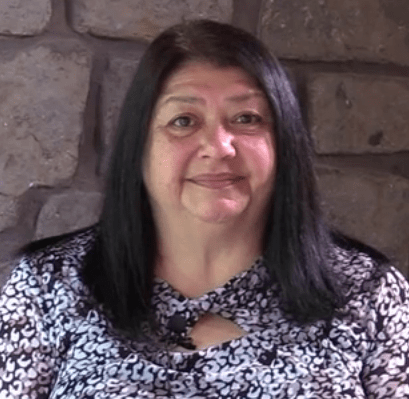
An interview with Muscogee (Creek) Nation citizen Anita Watashe. 
Community:
Category:
Collections:
Original Date Description:
May 10, 2022 Original Date:
2022 May 10thContributor:
Language:
EnglishRights:
All rights retained by the Muscogee (Creek) Nation. Licensing Options:

Attribution-NonCommercial-NoDerivatives 4.0 International (CC BY-NC-ND 4.0)
Source:
Muscogee (Creek) Nation Library and ArchivesExternal Links:
Identifier:
2022MCN.07.001Type:
Format: