
RaeLynn Butler, Interview


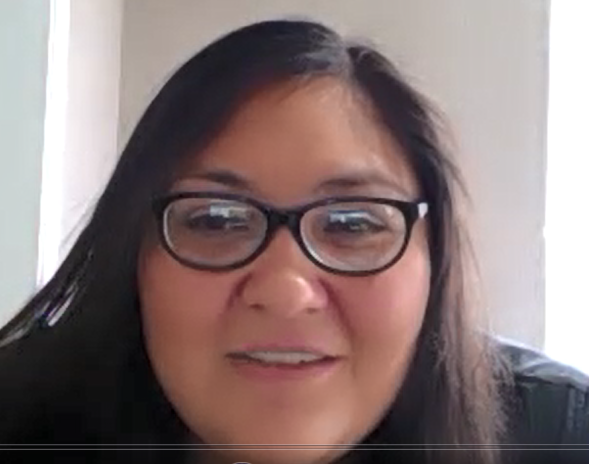
Image Metadata
|
Created: Monday, May 23, 2022 - 06:00 |
||
Summary:
An interview with Muscogee (Creek) Nation citizen Ms. RaeLynn Butler.Description:
An interview with Muscogee (Creek) Nation citizen RaeLynn Butler. A downloadable transcript may be found by link: RaeLynn Butler. This interview has been indexed through the Louie B. Nunn Center for Oral History Center’s Oral History Metadata Synchronizer system at the University of Kentucky. For an indexed copy of the video, please follow the external link found in the bar on the right of this page.
Transcription:
MIDGE DELLINGER: This is Midge Dellinger, oral historian for the Muscogee Creek Nation. Today is April 17, 2021. I am at my home in Tulsa, Oklahoma interviewing Muscogee citizen, Miss RaeLynn Butler, who is also at her home in Tulsa, Oklahoma. This interview is being performed remotely due to the ongoing COVID-19 pandemic. I am performing this interview on behalf of the Muscogee (Creek) Nation Historic and Cultural Preservation Department for the oral history project titled the "Twenty-First Century Pandemic in Indian Country: The Resilience of the Muscogee (Creek) Nation Against COVID-19."
Miss Butler, I want to start by asking you some questions that pertain to your personal life and background, and we'll start with, what is your tribal town and clan?
RAELYNN BUTLER: My name is RaeLynn Butler. I'm Raccoon clan, and I'm from Peach Ground Ceremonial Ground, also known as Pvkanv Tvlvhasse (Pecan Tullahassee), tribal town.
DELLINGER: And where were you born, and where did you grow up?
BUTLER: I was born in Tulsa, Oklahoma, and have family all across the Muscogee reservation. Most of my family is from Hanna, Oklahoma, which is in McIntosh County, and is in the most southern part of our reservation, almost to the Canadian River at our Southern border with the Choctaw Nation. Hanna is a very small community, but there are many Creek citizens that come--and families that come from that area, and I'm proud of our family coming out of Hanna, which I think today only has about 130 people that live there. But there is a lot of history there for not just tribal towns, but there are now churches, and very traditional people live in Hanna.
DELLINGER: Okay. And tell me about your family. Who are your parents, and what are their occupations?
BUTLER: My parents are Pamela Butler is my mother, and Roger Butler is my dad. And my mother is non-Native, she's from Kansas, and had met my dad in Tulsa in the eighties. And my dad is full-blood Creek, and he was born in Claremore, Oklahoma at the Indian hospital there, and he currently--his occupation is, he works for the Bureau of Indian Affairs, the Seminole Region, doing realty type of work and assessment of lands for environmental purposes. And my mother, she has been working in her position as a customer service representative for a fabric company, going on twenty-two years.
DELLINGER: And what about siblings?
BUTLER: I have several siblings. I have a half-brother, his name's Colton Butler, and I have three stepsisters and brothers, Shannon and Gannon Brown, they're twins; and Tia Brown, an older stepsister. And they all have kids, so I have several nieces and nephews, probably ten altogether.
DELLINGER: Wow. Where did you graduate from high school?
BUTLER: I grew up in the Tulsa public school system, and then in sixth grade switched over to Union School District in Tulsa. And I graduated from Union High School in 2003. Not a fan of their Redskins as their mascot, you know, even when I was a student there, it was something that was very disrespectful, and oftentimes was targeted in class to ask, "What is your opinion?" You know, it's just a tough situation then, but it's good news, you know, since then they have decided to change the mascot. So in 2020, we've had some great progress in those kind of issues.
DELLINGER: That's great. Miss Butler, I know you have multiple degrees that you have earned from various institutions of higher education. Tell me about these accomplishments.
BUTLER: I attended Haskell Indian Nations University in Lawrence, Kansas, it's a tribal college. And I went there from 2004 to 2009, and I got an associate of science degree there, and also a bachelor of science in Environmental Science degree there. You know, Haskell is such a wonderful place and great opportunity for all Natives across the country to pursue higher education. You know, the year that I went to Haskell is the same year that the college in Muscogee Nation opened, so it's kind of strange; I wish I would have--you know, if I would have been a year later, I probably wouldn't have ever went to Haskell, I just would have went to the college in Muscogee Nation, and maybe stayed closer to home. But, you know, it was through Haskell and opportunities through higher education that I got to ride on a plane for the first time, I got to see most of the country, and had opportunities to do internships and to pursue a master's degree, so through Haskell, was able to make connections at Purdue University, and decided to apply, and got accepted there. So I went from Kansas to Indiana, and got a Master of Science degree in Agriculture. I studied in Botany and Plant Pathology there at Purdue University, and I graduated in 2012. So it was--people have said before, "So you went--you're from Oklahoma, you went to school in Kansas, then you went to Indiana? It doesn't sound very exciting." You know, it was a twelve-hour drive from West Lafayette to home, to Tulsa, and I didn't even have a car. When I was in Indiana, it was a really tough time to be that far away from my family and home, and to just rely on public transportation, and to be in a predominantly white institution. I mean, there were less than three thousand minorities in a forty thousand plus school. So it was definitely an experience that still is painful to think about it sometimes, but I am thankful and grateful that I got to learn, kind of break out of my shell, become a better public speaker and get the skills needed to come back and help our tribe.
DELLINGER: That's a great story. And you did get through it; you met the challenges, so that's fantastic. So what did you do, where did your journey take you after graduation from your master's degree?
BUTLER: Well, you know, a lot of my classmates, or people in my cohort, went on to become scientists for agricultural chemical companies; you know, folks that make Roundup and all these other kind of things like that. They call that industry. I wasn't interested in going into industry, I was more interested in doing extension type work where you're working with local communities and farmers and growers, and try to help them solve problems that they have and face. And they have a program called Indian Country Extension that you can work with Native farmers and things like that. You know, the hardest part was to try to find a job that didn't really exist, to come back and work for your tribe. You have these skills, and so I ended up going into teaching, because I knew--I mean, that was one of the jobs I could qualify for now, was to become an adjunct professor.
So I did decide to go into that. I worked at Haskell Indian Nations University for a year as a grant coordinator for a program that worked to help--it was called the H.E.R.S. Program, and it was Haskell Environmental Research Studies Program that partnered with the University of Kansas. Their goal was to get more Native students to go and get hired, pursue higher education beyond a bachelor's degree in Sciences and STEM work. So I did that for a year, helping as a mentor to students and getting them ready to take GRE's and prepare for applications to graduate school, and conducting research in their home communities, and trying to really bridge that traditional, ecological knowledge with Western Science. So that was something that was great, but again, it was a grant-funded project, and the grant ended. So at that point, I considered going back to school, but I also decided to come back to Oklahoma. You know, I had been gone about eight years, and I had seen an opportunity to work at the Tulsa Community College in Oklahoma. And so I came home and I became an adjunct professor, teaching Biology at Tulsa Community College, Southeastern campus, which is located over off of 169 and Eighty-First Street in South Tulsa. So I taught Introductory to Biology for majors and Biology for non-majors, and I did that for two years, even through the summer school. So I would teach in the spring, fall, summer. Sometimes I'd have three classes, sometimes I would just have one. Being an adjunct, you don't really have a guaranteed schedule each semester. So as fun it was to teach and to be able to see what it was like, it was definitely--I was keeping my eye open at jobs at the Nation, at Creek Nation to see if and when, how I could get in, and where I could help.
And so in 2015, I applied to be a librarian at the tribe in the National Library and Archives, and just my experiences being a professor and then going to graduate school, if there's anything I did know how to do, it was to research in a library. So even though I wasn't formally taught, I definitely knew I could help organize and educate myself on any kind of programs that would help. I had also did a summer internship, a summer youth appointment in that department, the Cultural Preservation Department, when I was younger. So it was really neat to see the same people still working there that helped train me as a young one. But then now, I think that that really helped me get the job also, is because I did know a little bit about the library to begin with. So I started in the library, and happened to be during an administration change that after 2016 came and a lot of things changed across the Nation. So I ended up being promoted to the manager of the department pretty quickly. My role has changed a lot, but I've been the manager now going on five years, but been working at the tribe for six years.
DELLINGER: So in your role as a manager for the Historic and Culture Preservation Department, can you talk just a little bit about what your responsibilities are with that position?
BUTLER: Sure. As, the manager, we have several--I oversee all the programs we have in our department. And we have several programs. When people think of cultural preservation, I think that maybe they don't realize all the details or things that that could entail, you know, because I think people are excited about your culture and preserving our language and our history. So we have programs dedicated to those kind of activities. So the first one would be the National Library and Archives, where we have over four thousand items in our collection and materials that are used to help citizens and staff and employees find out research and history on the Creek tribe. Our goal is to find and purchase and collect anything that ever talks about Creek people and our tribe and our history books that have been written, so that we have that information available. And even if it's not accurate, you know, we're trying to collect everything so that we can be the keepers of that information, you know, for the tribe.
And so do that, we have archives, we have special collections of items in there. We also have a cemetery restoration, or cemetery cleanup program, where we call it Cemetery Preservation Program, where citizens can apply to get help cleaning up family cemeteries, even assistance for funerals, emergency assistance to clean up our cemeteries, and also get them fenced, if they'd like. So there are a lot of issues with the old cemeteries being abandoned or being lost due to encroaching of adjacent lands, or just all different kinds of situations. But the majority of our Creek cemeteries are on private lands and the families don't own the land anymore. So they only have ingress and egress to visit during appropriate hours, so we oftentimes are working with landowners to just get access to clean up the cemeteries and stuff. So I help oversee that program. We also have a Division of Archaeology and our Tribal Historic Preservation, THPO Office, and we stay very busy with trying to do surveys for when the tribe is going to build a new clinic or a new facility, any kind of new buildings, we do archaeological surveys to make sure that we're not going to impact any kind of sites or any kind of archaeological materials that could be present, before we build.
But also we review projects to make sure that federal funded projects, or federal agencies who are building things are not impacting cultural resources, archaeological resources in the ground. And so we have developed a cultural database for the tribe that gives a footprint, an idea of everywhere the tribe has been over a thousand years in time, and areas that are important for us to consider and protect, documenting all tribal town sites, old battlefield sites, trails, mound sites, and cemeteries, sacred places, burials--there is just a whole host of types of resources that we're aware of, and those happen in twelve states, so we're reviewing projects in twelve states, and this is something that is under federal laws. So when you think of culture preservation, you don't think of the government necessarily, but they have laws in place, the National Historic Preservation Act basically says that you have to take into account what kind of impact your project would have on cultural resources, and that provides consultation to tribal nations. So we are constantly consulting with federal agencies and different people building things, just to make sure that we're protecting the cultural resources there and identifying them, and seeing if they're eligible for the national register. So those activities take a lot of time. We have seven staff in our department dedicated just to doing those type of reviews.
But we also have NAGPRA; NAGPRA is the Native American Graves Protection and Repatriation Act. It turned thirty years old in 2020. And it is the law that gives tribes the right to repatriate items that are in museums and at universities that have been sitting there, not just items, but ancestors, you know. We know of institutions that have over seven thousand Native American ancestors sitting in boxes on shelves, and the archaeologists and the universities say that they're not affiliated to anybody, but they're coming out of the ground of Alabama, and they're coming out of these tribal town sites, and they're coming from occupations all along the Chattahoochee River and the Coosa River, Tallapoosa--all of these places that were so important and were the life blood of our people before we were removed. So we work with these institutions and with these museums to try and get those ancestors back home and reburied in the Southeast. So we have been doing that work.
All of those things fall under cultural preservation, so as a manager, we make sure that we have people completing and handling those tasks, but also if anybody has issues, you know, my day-to-day tasks are really related to projects that are abnormal that have adverse effects that don't have a simple black and white answer. And unfortunately, that happens quite a bit. We're constantly in situations that we've never thought we'd ever been in before, so there is no rule book on how to move on, and it really takes a lot of discussion and time meeting with staff to come up with a good game plan, and to try to think through some of these culturally-sensitive things related to death and cemeteries and burials, you know. That's why we have traditional cultural advisors and people that are connected to tradition to help guide us, and help us make good decisions on how to handle some of these things.
DELLINGER: Miss Butler, thank you for that very in-depth explanation of your work, and the challenges that you face. It's significant work, so thank you for that. Okay, so Miss Butler, when you're not at work dealing with these many challenges that you face, how do you enjoy your time when you're not at work? What are your interests and hobbies, if you have any hobbies?
BUTLER: When I'm not at work, I really enjoy being with my family. When I come home, I like to hang out with my family and my cats. But then also, I spend a lot of time with my Peach Ground family, and participate in our traditional ways there at the ceremonial ground. So I would say between that--those are the main things that occupy my time when I'm not working, and those are the things I enjoy, is to spend time with my family, my mom, my dad.
DELLINGER: Okay. You just touched briefly on what was going to be my next question. I was going to ask you, what are your Muscogee community activities and engagements?
BUTLER: Well, I really love all things Muscogee. I like to stay up to date on reading the newspaper, and attending council meetings, and listening to all kinds of--or I guess diving into what's happening at the Nation. You know, I think that we live in a nation inside of a nation. So it's really hard sometimes to know what's happening at the tribe when we don't have three stations of news like everyone else does that talks about what's happening. That's something that I really enjoy.
But I also like--one of my favorite things to do is to attend Creek singings, and gospel singings with my aunts. It's sad that they have passed; I always felt like they would take me, or I get to tag along with them. But I have a lot of recordings of some of those Creek singings. We used to have the Third Thursday Creek Singing Group, is what they called them. And they would meet at the Elderly Nutrition in Okmulgee the third Thursday of every month, and have a potluck and come together and sing. Folks like Sam Proctor and my aunt, Sharon Neal. And then there was another founder that helped start that group. You know, again, that was one of my favorite activities, the more I got to see a lot of folks and hear some good music.
But today I would say that a lot of my experiences with the tribe, or with the Nation are through my job. But in my free time, I would say that participating in the ceremonial ground is something that would be probably the most deepest connection, I think, to the community, because it's--ceremonial ground is different from the tribe, and it's different from the--it's hard to explain. But one thing that comes to mind that my dad has always said--and this is nothing against the Nation--but tribal town, we don't need Creek Nation. We never have needed Creek Nation. We'll exist without Creek Nation. But Creek Nation needs us, you know? I never really understood that until just recently, but it is true, you know? If for some reason we were to lose all tribal citizenship or even assistance from the government, some people wouldn't be Creek anymore. But we would still be. Our tribal town would continue.
DELLINGER:
BUTLER: We never needed funding or money or a formal government to keep us meeting and coming together, and carrying out our Creek religion, so I would say that connections to the ceremonial grounds and ties to tribal town are probably my closest or most personal connections to the community.
DELLINGER: Can you share in any more detail about your family's history with your ceremonial ground?
BUTLER: Sure. My family has been caretakers of Peach Ground Ceremonial Ground for over a hundred years, you know, and my grandpa was the chief of the ground for twenty-three years. My great grandpa served as a medicine man, not just for our ground, but for other grounds at a certain time, too. I had another great uncle that was a medicine man for another ground, and several family members that were head ladies or had leadership roles at the ground. Because of that, we have always grew up around that and knew the importance and seen the dedication that it takes to be caretakers, to carry out the religion, the culture. There are roles there that exist way before we were alive. We try to keep them going, and then they all came through oral traditions and living experience of how to do these things, or what needs to be done to take care of these important, sacred places.
So and it is a big commitment. I think people think that, Oh, I've been to a stomp dance before, or I go to stomp dance every weekend, or something like that, as being traditional. And it is, to a certain extent. But it's different when you have a role or a leadership.
DELLINGER: Um-hm.
BUTLER: Your time and commitments and personal life are impacted by those decisions, to be clean, to be pure, to live a healthy life, sober life, to spend every weekend as similar as if you were a pastor at a church, or you had a job at a church that you had to show up. So it is--but we do it out of love and out of respect for all the ones who came before us, for the people who carried our fire from Alabama, all the way to Hanna. You know, we're and I don't mean to be emotional, it just--it's amazing to think about how far we've come, and that we're still here, because Hanna is such a small community. There is no gas station, there is no store, and to know that we still have people that are carrying out these important things, or it's very important and very meaningful. And it makes me happy and proud, you know? I think emotional, just because we have lost so much life, this year, even at our ground. So we're all being tested right now to endure and to continue on and step up, and take the places, try to fill the spaces that our elders had. And it's not easy. I think that's why I get a little emotional talking about it, because our ground has never moved, once we got here. And one of the ways you can tell is that we have an ash pile. Every year, green corn, we have to clean the ashes of the sacred fire. And they put them in a pile. And our ash pile is six feet tall, you know? And every time I look at that, I think about how hard it would have been, even to keep that alive after so many obstacles. Today we don't have electricity at our ground. We do have water, but back then they didn't have water. I mean, just hauling water would have been so much physical, and take so much time and energy just to get water for each camp. So today, it's hard without electricity to do all your cooking and things. But that's the way it's always been done. Even just thinking three or four generations before me, how much harder that was.
But today it's hard, because we have so much outside influences, and we have so many luxuries in our daily lives that when you do go to the ceremonial ground, it's to be away from those luxuries, and it's intended to make you--test you and to make you sacrifice, to make you stronger, and to go without, too fast, and to stay awake. There's so many teachings there that make you a better person, stronger person, respecting your elders. And unfortunately, people don't want to give up luxuries sometimes to go and learn those lessons. And that's where we're lucky that we still have people teaching those lessons, and people willing to learn them. I think at times, I know it feels like an obligation in my family. But there are many who've chosen not to. I mean, you always have your choice, but I think you also come to a certain time in your life where you realize that if you don't do it, or you don't step up, that these things are going to be lost. And you don't want that weight on your shoulders. So it is hard to get people to commit to doing some of these things. But I'm proud of my tribal town, I'm proud of my family, my Peach Ground family. Everybody--it takes a lot to carry out these practices and ways. I'm just so thankful that we have people that still show up and are willing to help and do that.
DELLINGER: Thank you for that, Miss Butlers. Your emotions are definitely warranted and appreciated. I will say, as a non-traditional--I was not raised in a traditional home, I have a lot of respect for traditional people and the ceremonial grounds, and those positions that they do maintain. And your father's words are very profound. And they will definitely--I will carry those words. I will remember your father's words.
What I'd like to do now is, transition into some questions that focus on, about the pandemic, and your personal experiences and thoughts and knowledge about COVID-19 and this pandemic that we've been in now for over a year. And I'm going to start by asking you, do you remember where you were the first time that you heard about COVID-19? How do you remember hearing about it?
BUTLER: You know the first time I heard about the coronavirus was on the news. I remember it probably around Christmastime, or even into the new year, 2020, in January, hearing about it on the news, and how quickly this was spreading in Wuhan, China, and concerns there. But at that time, never even thinking what was going to happen in America, or in Oklahoma, or even to the Creek Nation. It was on my radar, and I was paying attention, but I did not ever think, just from learning about it happening in China that things would get the way that they were.
DELLINGER: Yeah, so when you first heard about it, like, what were your thoughts about it? Were you concerned? Were you not concerned? Were you thinking, Oh, that's not going to make it to Oklahoma and Muscogee (Creek) Nation? What were your thoughts?
BUTLER: Yeah, I definitely thought that we weren't going to be impacted, for some reason, you know? But then the more the news spread and how this was spreading, and understanding that we are a global economy, that people are constantly traveling all over. You know, as they talked a little bit more about how it was spread and that it was through close contact, or even airborne, it became a huge challenge, I think, for the world to understand how do we slow the spread. But I also, I think, was under the impression that it just came from some kind of meat market or something that spread, and that I guess I just didn't really think that many things--people were traveling from China to America so much for it to come here. So at the time, yeah, I didn't think it was going to make it and be as bad as it was anywhere else.
DELLINGER: Right.
BUTLER: I thought they could isolate it.
DELLINGER: Yeah. If you can remember, what were some of the initial conversations that you had with family members and friends about the pandemic?
BUTLER: Some of the first conversations were just, what are we going to do, you know? But even at that point, it was not until--I remember we were at a conference at the Gilcrease Museum, and it was an archaeological conference there. And I remember after leaving there, I had got an email that the Osage Nation had closed down, or had cancelled the To-Bridge-A-Gap meeting that was coming up at the end of March 2020. And I remember thinking, oh, wow, this is really--that was the first cancellation I had heard of. Then I think it was the next day that the NBA, the Thunder game here in Oklahoma, there was something that happened; a couple of players weren't feeling good and had tested positive, and they just shut down the whole NBA season. And after that, even at the Creek Nation, discussions started happening about closing. And so it really, I think, hit me, and the reality, all within a couple of weeks, that this was coming, this was here, and it was panic and fear and being very scared, because you just didn't know what you could do other than isolate. It seemed such a scary situation, and the numbers were just--so many deaths, you know, reporting on the news every day. I think that even just the news, watching the news became so stressful and caused anxiety and fear. I think everybody in the whole world who had to live through the pandemic needs a year on the beach, because this has been such a stressful time for everybody. I can't see how anyone has gone unimpacted by this.
DELLINGER: Yeah. I want to ask you now, what is your knowledge and understanding about the COVID-19 virus, including, if you can--you've talked about where it came from, how it spread and the physical impact it has on the body if you contract the virus. What's your understanding of those things?
BUTLER: My understanding is that it is airborne, and it can enter your body through your nose or mouth, but that this virus needs a live host. Once you're exposed, it can start to cause certain symptoms of no taste, no smell, respiratory breathing issues that can lead to pneumonia, and all kinds of crazy side effects. It was impacting people so dramatically and differently across the country, and there was so much unknown, that there's a huge list of symptoms and commonalities between some people, but then many people had really weird symptoms to it, but that social distancing, keeping six feet apart, wearing a mask, you know, those were the things that helped keep you protected if you had to leave your home. But, you know, my understanding of it is also that--and again, this is just from reading the news, and actually, I had COVID-19 and have overcome those things. But even with my own symptoms and things, doing a lot of research--because it feels like a death sentence once you've been told you're positive, because of everything you've seen on the news. And I was really scared to think, could this be--could I die in a week? And some of the research coming out now saying that most people who will become severely ill from COVID, it happens in the first 20 days of catching it. So as you go through quarantine and you go through trying to keep track of your symptoms and things like that, you know, it just feels like the longest days and weeks trying to know that you're going to be okay. But then we have people who have lingering and long COVID haulers that are still having these kind of fatigue and experiencing brain fogginess and body aches and symptoms well beyond exposure, you know, six months down the line, or people recovering from their experiences that had indirect effects that caused other health issues. Yeah, my understanding is that it's highly contagious, and is most likely spread through the air. When they said not to touch your face and stuff, that's good, because you were putting the virus from your hands into your body. But if it's airborne, just simply breathing in the wrong place could be what causes you to get it. And because it's invisible, I think it makes it the most--the hardest part about it.
DELLINGER: Yeah, that's the scariest part about it. So at the beginning of the pandemic last year, in 2020, of course there were lockdowns and shelter-in-place safety measures that were enacted by local governments and state governments. I'm curious, when that happened, how did you spend your time? I wonder, with that "shelter-in-place" safety measure going on, did you continue to work?
BUTLER: Yes. So we worked into the office as normal, up until around March 20th of 2020, when the Nation, and as we were listening to guidance from the CDC, basically saying that people that are 65 and older are at higher risk because they have weakened immune systems and have a harder time fighting off the virus. Also, people are higher risk that have certain health conditions that can impact respiratory, so asthma, even diabetes was considered high risk, if you were diabetic. And there are several other, I guess, illnesses that make you more prone, or would make it harder for you to recover from coronavirus. So the Nation had decided that anyone who was at risk, we need to keep them at home. And we weren't even worried about maintaining work at this point; it was just, we need people to shelter in place. So those who were not high risk could continue to work or try to telework. We had, in our department, eleven people that were high risk out of eighteen staff, and all of those people went home. And the great thing is that the Creek Nation continued to pay everybody during the shelter-in-place, so from March until about June, so for about three months, that took place. But those that were not high risk were tasked to do teleworking or rotating in the office, and we also had put up barriers and stuff like that in the office, to help separate folks. About June, we tried to bring the high-risk staff back, but within a month later, we went back to full telework and more sheltering-in-place. So we did that all the way until March 15th of 2021. So only recently, we got to reunite with some of our staff that we hadn't seen in over a year since the first shelter-in-place, or the first declaration of emergency by the Nation became effective.
So for me, sheltering in place was staying at home and trying to have good internet to answer emails, and to try to work off of laptop and documents. You know, I think quickly realized the need to digitize everything, and how important, or how hard it was to work from home when everything you had was in an office. But other than that, it was great that the Nation allowed everyone to try to work from home and do what we could without risking our lives by traveling in or making us come in and being around people. So sheltering in place had been, I think, very successful at the beginning.
But it also seems like we were taking precautions, but the virus hadn't hit us yet. It really wasn't in our communities enough yet. And it was good to shelter in place, but as soon as some of the restrictions were uplifted and holidays hit, you know, it really hit the Creek Nation hard in November and December of 2020, I think is when I noticed a lot of cases and knew a lot of people. I think it was only in the summer, even by May of 2020, people or communities became more impacted. Even at that point, I remember having conversations with friends and families to say that, well, I know someone who has it now. Or now, and then it got to the point where, I know someone who has died now. And then it gets to a point that, now I have a family member that has died. You know, just as the year grew and the pandemic grew, your exposure and the people you knew increased. I think we're now at a point where I can say I don't know anybody who has it right now, that we're going back to moving in the right direction.
DELLINGER: When the pandemic did first hit and when everybody went into the shelter-in-place, how did you continue to communicate with your family and friends? How did you keep in touch with them and make sure that they were staying safe?
BUTLER: Yeah, the most we communicated was through text messages and through phone. It really shut down every opportunity to meet in person; it just wasn't safe. But I think through Zoom and through platforms like that, that was our main form of communication, just to handle business. But in personal communications, for sure, was through cell phone, social media, trying to connect through that way.
DELLINGER: What have been some of the routines that you quickly adopted to be there at home, and even when you had to leave your home, because we all had to leave our home, we've all had to leave our home at some point to go grocery shopping, or something. What have been--what's been your routine with that, your safety measures?
BUTLER: Yes, and for me and my mother, we made sure we had our mask and gloves and hand sanitizer. Those were the three things that we didn't leave the house without. We were very careful when we went to the grocery stores and things like that. Even when you're getting gas and you're going in anywhere, you know, always making sure to wash your hands and to take care of things. I think some of the craziest things we were doing was handling the mail; we were really scared to touch the mail at the time. People were on the news--or I don't know why we got in our head that the mail could have coronavirus on it. So we would collect it in a Walmart sack, but then leave it alone and not touch it for a couple of more days, and then even spray it with Lysol, and then even wear gloves to open it up. And just washing your hands so much to where they're dry and you need lotion. I mean, but for the most part, even coming home after being in the public, to wash our clothes and to take time to make sure we didn't bring any outside germs or exposure into our home, you know? I think we even had a fear that, what if our cats got it, that animals can get it, you know? What if our upstairs neighbor at the time, living in an apartment, what if they had it? How did the air vents--you know, how are we protected? What if their air is coming into our air? You know there was just so much fear and worry in our home, trying to understand how to keep us safe. But those are some of the main protocols we implemented, was trying to limit our exposure, and to make sure that we were staying clean. But really, also, keeping my mom home. My mom will be seventy this year, and is part of the high-risk population that we want to protect. So I think for her, it was hard for her to stay at home. She wanted to get out, and it just wasn't safe.
DELLINGER: Yeah. I want to go back to something that you touched on a few minutes ago. You had mentioned that you did go through COVID. If you're comfortable with it, I'd like to hear more about that, and and also, if you've had any family members or friends who have contracted COVID, and maybe what their experiences were.
BUTLER: Sure. You know, it was really shocking when I tested positive for COVID. You know, I had, through just working, there was--it was June of 2020 when we kind of came back into work, rotating. And as we did that, we had staff that would test positive. And if you were around anybody that had tested positive, then you had to quarantine and also be tested. So I had received two tests already just from work exposures in previous months, and each time was lucky that they were negative. But I still had to go through the quarantine process for fourteen days each time. So I knew what it was like to have to do that, and how it was scary to think, well, I was negative today, but what about a week and a half, and getting tested again. Oftentimes it got to a point where it was, like, okay, I'm good. Everything that we're doing has been working, we haven't got it in my home life. And then after Thanksgiving of 2020, even then it was just my family, my home here that had cooked dinner. It was no outsiders in our home. But it was a few days after that that I had an uncle that came by to visit. And when he came in, we didn't even think about to put our masks on. And it was one of the first times we had an outsider come into our home and visit. And at the time, I think we just, we were not thinking clearly, or we didn't even consider it a threat, you know? Why wouldn't you let some one of your family member in the house when they knock on the door? So we'd found out that he tested positive the day after he visited us, and called the health nurse at Creek Nation, because every day we come to work, you're asked questions on, have you been around anyone who's been positive? Do you have any symptoms? What's your temperature? You know, they ask you these questions so that they can screen you to know whether you should be working or not. And the health nurse said, "You need to be tested, you need to quarantine. We're going to test you." And at that point, when I went to get the test at the health clinic and I tested positive, it was just full--so many things into your mind. And like I said, it seems like it could be a death sentence, because so many people had died because of the virus, so it was such a scary time. And my immediate concern was, what about my mom? If I'm positive, I cannot be around her at all. How are we going to quarantine within our home that has multiple people living in it? So it was a very hard few days.
When I first tested positive, I did not have any symptoms yet. It took a few more days to develop symptoms, but once I did, they were loss of smell, loss of taste, I had brain fog and I felt fatigue, and just felt really tired. I was fortunate enough to not have a lot of respiratory issues, but I could feel myself getting tired easy, like, say, going up the stairs, really having to spend a couple of minutes just to relax and settle and catch my breath. My mother did get tested and she did test positive, and the good thing about that was that we didn't have to separate each other, I'd spending days in my room alone, whereas at that point, we could spend--the whole house had been exposed, so we didn't have to separate from each other. And I gave her a hug right away, because, you know, when I tested positive, I thought that maybe I could never hug her again, if something happened to me, you know? And there were situations where we knew families going through COVID that they couldn't see each other in the hospital. (crying)
DELLINGER: Take your time.
BUTLER: I'm sorry, I have some family that just walked in, and I was trying to--but it was to know the isolation, if you got sick enough to go in the hospital, meant that you couldn't see your family. It was so scary. It was so scary. You know, it goes against so much of how our people comfort one another, how we console, how we get through tough situations. You know, those things are all out the window when you have to isolate and be alone. So from our experience, you know, my mother had mild symptoms, I had mild symptoms. And we were, within five days, already feeling better. And some of the advice we had got was, you need to rest, but also don't just lay around, that could cause pneumonia. One of the things that we had did was, we had just moved the month before we caught COVID, so we had a garage full of boxes, and me and my mother worked hard to clean up the garage and help keep us active during the quarantine at that time. But yeah, it was an experience. Again, I think it was just in terms of symptoms being mild; we were able to recover pretty quickly. When I think about it now, you know, being about four or five months ago, it was just so much fear and stress, and a really hard time to navigate and to go through the experience.
There was also a sense of guilt, you know, a perception that people think, Why weren't you following protocol? Or, you were careless, that people were judging you that you were careless because you caught the virus. You know, we did everything to take precautions. But like I said one slip of--you know. I also feel like that families, separation of families was so hard that that is one of the reasons why it was spread, because if you have your grandkids running up to see you, and kissing and hugging on you, to tell them not to do that is such a hard thing. It is such a difficult thing to refuse or separate yourself from that kind of love or compassion, or family. And I've seen elders who continue to see the grandkids, and I think that that's how they got the virus, was from interacting with young kids that were asymptomatic. It's just too hard to deny that kind of communication, or the isolation was too hard for people to overcome, and that ultimately led to the spread. I can say even from our perspective that, you know, I wish I wouldn't have opened the door that day to my uncle so that we wouldn't have gotten COVID. But we're glad we survived.
DELLINGER: Yes. Thank you sharing that. I know, too, that back at the end of the year I believe it was, you can correct me if I'm wrong, because we've talked about this, your mother also experienced another major medical issue, and that was something else that you had to deal with, and maneuver the situation of her being put in the hospital, and how hospitals--I think you've already mentioned they immediately shut down to where visitors couldn't come in. People were going into the hospitals and having to be there as patients alone. Can you share just a little bit about that experience with your mom?
BUTLER: Sure. It was with about within thirty days of my mom having COVID; she had got a blood clot that caused a mini stroke. And it was a difficult time for us, also because of COVID, and with the restrictions of visitation and going into the hospital. But we're not sure if COVID caused the blood clots. The doctors at St. Francis Hospital, you know, in the emergency room, and ICU doctors and stuff, even when we mentioned that she did have COVID thirty days before, it wasn't something that they were noting or even considering, that they were just trying to solve the problem that was at hand, and really didn't have the time, I think, or as emergency care to be looking at these other circumstances, or everyone just keeps saying, "It's such a new virus, we don't know enough about it, and it impacts everyone so differently." But it was scary for my mom and it was scary for my brother, and it was scary for me, just to have--the good thing about it was that they did allow one visitor in the hospital, but they were screening people at certain entrances of the hospital, that you had to get your temperature checked. Then they would let you go up. But you could only exchange visitors in the downstairs lobby also, so you couldn't--there was never a time where me and my mom and my brother could be together to talk, or to pray to do--you know, we have to communicate over the phone, or take turns going to visit with her. That was challenging to--because we never wanted her to be alone. We were at least grateful that she was allowed to have one visitor there. But at the time when she had went in, I had already received one shot of the vaccine, so I felt, you know, pretty safe to be out in public, especially--or it didn't worry me to be in a hospital at that time. But my mother has recovered. She is on some medication that is going to help keep her blood thin to prevent future blood clots. And the good news is also that they never found any blockage in her arteries to her neck or to her heart, and that she is on the road to full recovery. It was a situation that, I think, was scary, but also it didn't--it was more like a warning to where, hey, there is an imbalance, and we have medicine that can help fix your heartbeat and get your blood pressure to be at a certain range that's going to help you operate and function correctly. That's where we're at now. She is still having doctor's appointments. But the temporary paralysis that she felt from the stroke was fully recovered within one day. We're really--give all the glory to God and to the doctors for helping treat her so quickly, and help her bounce back from these mini strokes that she had. Even the primary care doctor that she has now, they don't really talk about COVID enough or how it could have impacted or caused--have lingering impacts. Yeah, it is--it's been a tough road to go through all this.
DELLINGER: Yes.
BUTLER: I know she's had a challenge to deal with all of this.
DELLINGER: Thank you for sharing that with us. I want to ask you, do you have any knowledge or thoughts about the impact that the pandemic has had on the Nation as a whole, as far as illness and death that's been in the Muscogee (Creek) Nation?
BUTLER: You know, I know that the Nation has been impacted tremendously. I don't know the exact number of how many people, but I know that just from our office perspective and our jobs and roles, we had emergency cleanups for cemeteries every week because families needed assistance for funerals. And the tribe offers programs that help dig graves for people and citizens, and those increased exponentially so much so that they couldn't even do the regular work that they were supposed to be doing. It was all focused on cemetery and funeral preparations. We knew of staff that had passed away, even though it wasn't publicly put out there, or emails sent out to say So-and-So has passed from COVID, you know, there's a lot of confidentiality issues and concerns when it comes to that. But through social media, you could quickly learn that we had so many families and staff and folks at the Nation that had been impacted and that were dying. You know, there was a time in November of 2020 that I recall there was a double funeral for a woman who had lost her dad and her brother within days apart, and they decided to do the funeral together. And I can't even imagine having two--having to go through that. You know, it's bad enough to have one death, but to experience two--you know.
I know that we have had cultural knowledge and cultural keepers of our knowledge, knowledge bearers, traditional people, fluent speakers, church folks--I mean every aspect of our tribe has been impacted. To me, I've heard naysayers, and I hear people in the community, and I see people on the news talk about, only one percent of people die from COVID, so let's just move on. Well, in our community, one percent is a lot of people. And we know every single person.
DELLINGER: Right.
BUTLER: Our communities are so closely connected, you know? For an average person who may not even have that big of an extended family, I can understand how you would never know someone who died from COVID. But when we're all connected in so many ways, Indian country is small. And those deaths were felt, every single one of them. And it was just so disrespectful to hear people think, Let's open up. It doesn't matter. Only the vulnerable are dying. Well, most of our community are vulnerable, you know?
DELLINGER: Yes.
BUTLER: We lost Mekkos, we lost medicine men, we lost pastors. We lost presidents of the college--I mean, there was nobody that was safe. There was somebody in every community, even young people. We've lost young people to this. There isn't--people want to justify things, but human life, loss of life, the Nation has felt it. I have an aunt that I was at her funeral this week, and I know it was because of COVID. She had COVID and was in the hospital for two months. She recovered from COVID, but what COVID did was shut down and found the weakness in her body. She had liver issues, and COVID increased it significantly enough to where she went from Stage 1 cirrhosis to Stage 4 in those two months. And there was no cure, once your liver and organs shut down. We had an uncle that also had liver issues that after COVID, he never got out of the hospital, and passed away. You know, some people don't say that that's a COVID death. But COVID caused the health issue.
DELLINGER: Yeah.
BUTLER: That COVID exaggerated, or whatever the term is, the health issues that made them so problematic that you couldn't recover. I don't know the numbers, but I feel the loss in our community.
DELLINGER: Yeah. Miss Butler, do you want to mention their names? Can I ask you your aunt's name and you're uncle's name that passed?
BUTLER: Sure. My aunt's name is Ruth Mendoza. Her maiden name was Butler. I also have a Uncle Fred Stuck.
DELLINGER: Okay, thank you. I think names are important, that's why I asked. I wanted to ask to, have you lost anyone from your ceremonial ground, from Peach Ground?
BUTLER: We have lost--we haven't lost anyone to COVID, but we did lose loved ones this year.
DELLINGER: And I want to ask to, so what impact has COVID had on the ceremonial grounds? When COVID first hit last year, what impact did that have on our ceremonial grounds and our people's ability to go to those places and practice Muscogee's traditions?
BUTLER: You know, it was really--each ground operates in their own capacity and they have their own rules and laws or traditions, slightly different from each one. I think all the leadership of those grounds had to take a lot into consideration. The same with the tribal government and the federal government and state. You know, how do we protect our people? How do we isolate? What activities do we have to do, or can we do to meet our responsibility, but also protect our people? There were some grounds that didn't dance at all. It's a part of the traditional cultural, religion of our people that's carried out at the ceremonial grounds. That includes a lot of being together in close proximity, shaking hands, dancing, singing. And a lot of those things meant that you could be exposed. So there were decisions by some grounds to just not dance at all. Again, that goes against the traditions that some--you know. I'm just saying that you--to decide to not dance to protect the people is important. It was an honorable decision. But there's also ramifications, you know? It's important to continue to dance, too. There's responsibilities there, to feed that ground, to protect that fire. So carrying out those, but also protecting the people was a challenge. Some grounds even decided to dance, but be members only so that nobody from the public could come and partake, except the people from that community. So that was one strategy that people had. So it was either to just not dance this year, to dance only with your members only, so no public or outsiders invited, and then the other strategy was just to dance, but use social distancing and precautions. And then the other one is, really, take no action and continue on. So there's different levels of how different people responded. From our ground, looking back, we definitely increased hand washing and make things as sanitizing as possible when we're feeding people at the camps and things like that. But everything that happened inside the ring, or dealing with the dance didn't change. I just kept hand sanitizer with me, so that if we did have a dance where we're holding hands, that I could then quickly hand sanitize and clean my hands after that dance. But I never wore a mask there, because we are outside, and we were just lucky, I think, that we got through last year without having any major instances or exposure. But I know this year is more challenging. But we are in a situation where majority of our members have received the vaccine now, so we are feeling more confident to continue as we always had. But yeah, there was an impact. People are still having those decisions today, whether they should consider not dancing or moving on, you know? But Alabama ceremonial ground, they're Mekko. Robert Yargee had been their Mekko since he was sixteen, you know, a lifetime appointment. And he passed from COVID. And it is so, so sad. He was such a well-respected leader and fluent speaker and teacher of the culture. And so grounds like that have huge burdens to deal with when you have a leader that's been there since they were sixteen, and passes away, you know?
DELLINGER: Um-hm.
BUTLER: So even at Hickory Ground, there are medicine man. Tim Thompson passed away from COVID, and it's a tough road ahead. And again, it presents people--it presents us with challenges. But also we're taught to see them as opportunity to do our part and to step up, and to try to fill these shoes. But I think nobody was ready to lose anybody, because there were so much more lessons to learn from our elders, and so--
DELLINGER: Right.
BUTLER: They are all facing major issues, but I would like to point out that Creek Nation, through the assistance of the federal government, received CARES funding--they call it the CARES funding, but it stands for Coronavirus Aid and Relief Package, something like that. But they were able to give churches and ceremonial grounds funds to help with COVID-related expenses. So helping these churches and grounds get proper hand sanitation and masks, and if they needed water lines, if they needed motion hand dryers, or better ways to help keep people sanitized. If they needed more tables or wipeable chairs and things like that, you know that those funds could be used. And each ground and church could get up to $25,000 for those. So I'm really proud of the tribe for allowing and helping and realizing that maybe these funds could help and even can be used to assist people that are needing help because of COVID. It's a perspective that, yeah, definitely COVID impacted everybody. And in this situation, there were decisions made.
DELLINGER: Were you--what you just touched on here with our leadership and our administration takes me into my next question, because I wanted to ask you, how do you think the Muscogee (Creek) Nation leadership has performed throughout the pandemic? You know, there have been these COVID relief programs as well as food giveaways. I just would like to hear your opinion about how you think they have performed.
BUTLER: You know, I can't imagine how hard it was for our leadership, Chief Hill and Chief Beaver to come in to new roles, and then to be confronted with a pandemic, and how to deal with it, you know? Again, there's another situation where there's no rulebook, there's no guidance on how to do these things. I think that they have done a great job to really help the citizens by offering assistance and programs and help, but also allowing the staff being able to work from home, and continuing to pay people who are high risk. From my perspective, they have done a great job at understanding the needs and help meeting those needs through grant and hardship programs. So I know that they have so much on their plate and things like that, but I really do think that they have done a great job. Even now with the vaccinations' side of things, have worked really hard to get as many people vaccinated as possible and have opened it up to the community and the public, non-Natives, anybody right now at this point can come and get the vaccine. I believe you have to be sixteen or over, but at this point, anyone sixteen and over can come and get one. It really shows that the leadership of the Nation has tackled these issues as they've come up. And I do think that they have done a great job in assisting families.
DELLINGER: And what about Muscogee (Creek) Nation Health Department? I want to ask the same question about them in relation to their testing and taking care of our people who had become ill with COVID. And then now, as you've already mentioned, their vaccination process. How do you think they've been doing?
BUTLER: You know, the Health Department has been doing great at keeping track of and documenting the number of--you know, they monitor the Nation every day, and especially the employees, and keeping track of how many positive cases is the Nation receiving in any of our health facilities every day, and reported recently that it was the first day in almost a year that we didn't have any cases, any new cases, and which is excellent, because, you know, it has been such a long road where numbers were increasing every day. So it's great to hear that we've kind of gained better control over the situation, to see those numbers declining. But just from the information that's come out from the tribal communication and things that they report on their social media, it seems like that they have really done a great job to kind of streamline some of the processing and testing that's needed to really isolate it and keep it under control. I think the testing of people, contact tracing and now vaccination that the Nation has really--the health system has done an excellent job in helping with all of those.
You know, the rapid test at the Nation was very good, you know? When I mentioned that I had to get the COVID test, that you find out the answer within 30 minutes, you know, whereas my uncle, who had to get a test through Tulsa, which wasn't through Indian Health Service, it took seven days. You're sitting there seven days, wondering. And my mother, her test came back in three days, too. So those rapid tests, I know there's some criticism about them not being that accurate, but it is so helpful to know if you're positive in 15 minutes, 30 minutes versus a week, you know, of isolation is a huge burden, for how are you even going to get yourself food? Or how are you going to pay bills? How are you going to take care of your own self when you have to isolate seven days unknown, not knowing, whereas these rapid tests help you understand. And you can go on, and continue your life, or know you need to isolate. So I think the Nation has really stepped up to do a good job, because I honestly think they've done a better job than the Oklahoma Health System.
DELLINGER: Yeah, that was going to be one of my next questions, going back again to the beginning of the pandemic in the beginning of 2020, I wanted to ask you what your thoughts are about how the State of Oklahoma and the federal government responded to the pandemic. How do you think they did?
BUTLER: You know, the Oklahoma governor, Stitt, and the different things, I guess, isolation or protocols that were put into place, mask mandates, you know, I definitely don't think that the State of Oklahoma went far enough. But I do think the City of Tulsa stepped up, regardless of what was going on at the state level, that at the city level, and our community in Tulsa, you know, the mask mandate still exists, and it has been there in place. And I think that our community, local government has done a great job to assess the situation and keep track of these numbers, you know. And we've seen a lot of businesses complying. I know that there are some that don't as well, but I still think that when I leave places outside of Tulsa, I don't see any masks, you know? So I'm really surprised. I think the local level did a good job. At the state level, they should have done a lot more, earlier on. And again, I know that everyone can say,
"Well, hindsight's 2020, looking back, we should have done a lot more." But I think Oklahoma as a whole was resistant to shutting things down. But I think a lot of that has to do with the business industry side of things. The oil and gas industry here pretty much going down to 99 cents a gallon of gas--people hadn't seen that in their lifetime, for some young people. That's a big hit to the economy. Trying to protect human lives, but also the economy, I think, is conflicting at times. And the government, as a whole, I think that we should have shut down sooner, or that we should have been more protocols, or travel, international travel should have been halted much sooner, and really lock down our borders. But it is a--I can't imagine how tough a decision it was for leadership to make any of those calls, knowing that businesses would go bankrupt and people would lose their jobs.
DELLINGER: Right.
BUTLER: But I think in general, things should have been done much sooner, and there should have been more transparency and truth from the federal government on what was happening.
DELLINGER: Yeah. Okay, thank you for those thoughts and insights on that. I actually need to go back to something that I forgot to ask you when we were talking about the vaccines. You have been vaccinated, correct, Miss Butler?
BUTLER: Yes, I received two shots of the Moderna vaccine.
DELLINGER: And do you mind sharing what your--if you had any side effects from your vaccination shots?
BUTLER: Sure. The first shot, the only side effect I had came the second day, and it was at nighttime, mainly, it was real sensitive, my arm was where I got the shot. I couldn't sleep on it. That was the only inconvenience. It didn't hurt, other than that, and I didn't have any symptoms. When I got the second shot, I also had tenderness at the injection site. But I also--the second day is when I started to feel sort of fatigue, and I had a temperature, which is strange because I never had a temperature when I actually had COVID. I had never actually got it. Never even really had a low-grade fever. So to have a temperature after the shot was kind of weird, or interesting.
DELLINGER: Um-hm.
BUTLER: But then I started to just kind of--my arm started to kind of feel like it was throbbing. I kind of was joking, saying, "I feel like I have a Frankenstein arm," it was sluggish and it just hurt. It just was this pain.
DELLINGER: Yeah.
BUTLER: It's, was, like, fatigue. But on the third day, everything was fine. There was no more soreness, no more anything. I think I had just taken a Tylenol and rested, and felt fine after that.
DELLINGER: So and how has being vaccinated changed life for you? Or changed your mindset about how you go out now and live your life? Or has it changed anything?
BUTLER: You know, even just life after COVID was so much better. And now with the vaccine, it's even better, because I didn't realize how much fear I lived in every day, constantly worrying and thinking, how can I protect? Every action was I don't want the virus! You know, you spend so much time thinking about those things that once I finally--after we had it and knew that there was some natural immunity built up from surviving the virus, and then now with the added benefit of the vaccine, you know, I don't feel that fear or being scared like I was. And I didn't realize how much stress it was putting on me--
DELLINGER: Um-hm.
BUTLER: --you know, to carry that and to be in a constant state of fear. I feel more calm, relaxed, just because I know that if this mask isn't working good enough, I'm still safe. Whereas before, I kept thinking to myself, "I could have got too close there, even with this mask," or, "Did I sanitize my hands? I think I did," you know.
DELLINGER: Yeah.
BUTLER: You know, it's just such a situation where I just feel way better knowing that the chances of me giving it to someone are not very high, and the chances of me actually getting it are not very high. Such a relieving place to be, compared to the last year of fear.
DELLINGER: Okay. Well, I'm going to ask you one last question, and for future generations of Muscogee, who may find themselves in the same situation, I hope not, but we can't say that our future generations might find themselves in the same situation. What would be just some words of wisdom? You've shared a lot with us here during this interview that has--do you have any other words of wisdom that you would like to share for our future generations about how to live through and survive a pandemic such as COVID-19?
BUTLER: You know, I think that we owe so much to our ancestors for having to go through and live through unbelievable amount of pressure and pain, and situations that provided us a life that we get to have today. And they have also experienced pandemics and have been through diseases at contact, and smallpox, and the Spanish Flu--all kinds of different times that our people were faced with this kind of situation. And you know, unfortunately, we don't know much about how they survived, but they did, and they did endure, and they did continue on, for us to be here today. So I think as we go through this, we have to also remember that fighting spirit, and that we have to be--endure as well because they didn't give up, and we can't give up. But it also means we can't be stupid or dumb, either. We can't just act like it's not here. So it is something that I feel that as Muscogee people, it's just another situation we will overcome, and we will grow from this and become stronger because of this, because we've learned these lessons of how quickly life can be taken for no reason (crying) and how loss of life can be prevented by taking tiny steps.
So I think the lessons for the next generation, or future Muscogee that have to deal with this is to always remember that it was a road of misery for us to become who we are today. And sometimes we all will have to walk down that path, but that we'll be strong, and that we'll continue on no matter what, because that's the Muscogee way, is to not give up, is for us to continue on, no matter what.
DELLINGER: I like those words, "the Muscogee way." Thank you. In closing, Miss Butler, is there anything else that you would like to say or share here today? Anything that possibly I have missed in our interview?
BUTLER: I would just like to say that I hate the coronavirus. It has caused so much pain, it has disrupted so many things. But and I did not expect to be so emotional today, and I apologize for that, because I wanted to give the interview and offer advice and my experience. But I just didn't expect--I didn't realize that I hadn't talked about it enough, I guess--
DELLINGER: Yeah.
BUTLER: --to kind of deal with some of the issues. But I'm really proud and grateful for this project and the work that you're doing, and you had this idea to document these stories, because they are overlooked. Our people are overlooked, our history is overlooked and sometimes forgotten. And it tends to be the erasure of our people and our history and our culture. I think we all realize that the pandemic has taught us that we need to document more. We need to reach out more. We need everyone to be involved in oral histories, and we need everybody to step up and teach your children what you know about your people. For us to listen to our elders, you know? We need to rekindle all those connections because we're in a situation that they can be so easily taken from us. On language, revitalization of that would be so critical as we move forward, because we've lost so many speakers. It's just, we have a lot of work to do. And I think the pandemic set a path and highlighted the areas we need to focus on. So I just hope that we step up to the challenge, and that we continue to take care of one another and do everything we can to help our Nation be survivors and resilient, and that we continue on. So I thank you for being interviewed, or the option to be, and asked to be interviewed and participate.
DELLINGER: Yes, mvto, Miss Butler, for you taking time out of your schedule to participate in this project. And your thoughts and your insights, your words and your emotions here today are so important. And thank you very much. Mvto.
Miss Butler, I want to start by asking you some questions that pertain to your personal life and background, and we'll start with, what is your tribal town and clan?
RAELYNN BUTLER: My name is RaeLynn Butler. I'm Raccoon clan, and I'm from Peach Ground Ceremonial Ground, also known as Pvkanv Tvlvhasse (Pecan Tullahassee), tribal town.
DELLINGER: And where were you born, and where did you grow up?
BUTLER: I was born in Tulsa, Oklahoma, and have family all across the Muscogee reservation. Most of my family is from Hanna, Oklahoma, which is in McIntosh County, and is in the most southern part of our reservation, almost to the Canadian River at our Southern border with the Choctaw Nation. Hanna is a very small community, but there are many Creek citizens that come--and families that come from that area, and I'm proud of our family coming out of Hanna, which I think today only has about 130 people that live there. But there is a lot of history there for not just tribal towns, but there are now churches, and very traditional people live in Hanna.
DELLINGER: Okay. And tell me about your family. Who are your parents, and what are their occupations?
BUTLER: My parents are Pamela Butler is my mother, and Roger Butler is my dad. And my mother is non-Native, she's from Kansas, and had met my dad in Tulsa in the eighties. And my dad is full-blood Creek, and he was born in Claremore, Oklahoma at the Indian hospital there, and he currently--his occupation is, he works for the Bureau of Indian Affairs, the Seminole Region, doing realty type of work and assessment of lands for environmental purposes. And my mother, she has been working in her position as a customer service representative for a fabric company, going on twenty-two years.
DELLINGER: And what about siblings?
BUTLER: I have several siblings. I have a half-brother, his name's Colton Butler, and I have three stepsisters and brothers, Shannon and Gannon Brown, they're twins; and Tia Brown, an older stepsister. And they all have kids, so I have several nieces and nephews, probably ten altogether.
DELLINGER: Wow. Where did you graduate from high school?
BUTLER: I grew up in the Tulsa public school system, and then in sixth grade switched over to Union School District in Tulsa. And I graduated from Union High School in 2003. Not a fan of their Redskins as their mascot, you know, even when I was a student there, it was something that was very disrespectful, and oftentimes was targeted in class to ask, "What is your opinion?" You know, it's just a tough situation then, but it's good news, you know, since then they have decided to change the mascot. So in 2020, we've had some great progress in those kind of issues.
DELLINGER: That's great. Miss Butler, I know you have multiple degrees that you have earned from various institutions of higher education. Tell me about these accomplishments.
BUTLER: I attended Haskell Indian Nations University in Lawrence, Kansas, it's a tribal college. And I went there from 2004 to 2009, and I got an associate of science degree there, and also a bachelor of science in Environmental Science degree there. You know, Haskell is such a wonderful place and great opportunity for all Natives across the country to pursue higher education. You know, the year that I went to Haskell is the same year that the college in Muscogee Nation opened, so it's kind of strange; I wish I would have--you know, if I would have been a year later, I probably wouldn't have ever went to Haskell, I just would have went to the college in Muscogee Nation, and maybe stayed closer to home. But, you know, it was through Haskell and opportunities through higher education that I got to ride on a plane for the first time, I got to see most of the country, and had opportunities to do internships and to pursue a master's degree, so through Haskell, was able to make connections at Purdue University, and decided to apply, and got accepted there. So I went from Kansas to Indiana, and got a Master of Science degree in Agriculture. I studied in Botany and Plant Pathology there at Purdue University, and I graduated in 2012. So it was--people have said before, "So you went--you're from Oklahoma, you went to school in Kansas, then you went to Indiana? It doesn't sound very exciting." You know, it was a twelve-hour drive from West Lafayette to home, to Tulsa, and I didn't even have a car. When I was in Indiana, it was a really tough time to be that far away from my family and home, and to just rely on public transportation, and to be in a predominantly white institution. I mean, there were less than three thousand minorities in a forty thousand plus school. So it was definitely an experience that still is painful to think about it sometimes, but I am thankful and grateful that I got to learn, kind of break out of my shell, become a better public speaker and get the skills needed to come back and help our tribe.
DELLINGER: That's a great story. And you did get through it; you met the challenges, so that's fantastic. So what did you do, where did your journey take you after graduation from your master's degree?
BUTLER: Well, you know, a lot of my classmates, or people in my cohort, went on to become scientists for agricultural chemical companies; you know, folks that make Roundup and all these other kind of things like that. They call that industry. I wasn't interested in going into industry, I was more interested in doing extension type work where you're working with local communities and farmers and growers, and try to help them solve problems that they have and face. And they have a program called Indian Country Extension that you can work with Native farmers and things like that. You know, the hardest part was to try to find a job that didn't really exist, to come back and work for your tribe. You have these skills, and so I ended up going into teaching, because I knew--I mean, that was one of the jobs I could qualify for now, was to become an adjunct professor.
So I did decide to go into that. I worked at Haskell Indian Nations University for a year as a grant coordinator for a program that worked to help--it was called the H.E.R.S. Program, and it was Haskell Environmental Research Studies Program that partnered with the University of Kansas. Their goal was to get more Native students to go and get hired, pursue higher education beyond a bachelor's degree in Sciences and STEM work. So I did that for a year, helping as a mentor to students and getting them ready to take GRE's and prepare for applications to graduate school, and conducting research in their home communities, and trying to really bridge that traditional, ecological knowledge with Western Science. So that was something that was great, but again, it was a grant-funded project, and the grant ended. So at that point, I considered going back to school, but I also decided to come back to Oklahoma. You know, I had been gone about eight years, and I had seen an opportunity to work at the Tulsa Community College in Oklahoma. And so I came home and I became an adjunct professor, teaching Biology at Tulsa Community College, Southeastern campus, which is located over off of 169 and Eighty-First Street in South Tulsa. So I taught Introductory to Biology for majors and Biology for non-majors, and I did that for two years, even through the summer school. So I would teach in the spring, fall, summer. Sometimes I'd have three classes, sometimes I would just have one. Being an adjunct, you don't really have a guaranteed schedule each semester. So as fun it was to teach and to be able to see what it was like, it was definitely--I was keeping my eye open at jobs at the Nation, at Creek Nation to see if and when, how I could get in, and where I could help.
And so in 2015, I applied to be a librarian at the tribe in the National Library and Archives, and just my experiences being a professor and then going to graduate school, if there's anything I did know how to do, it was to research in a library. So even though I wasn't formally taught, I definitely knew I could help organize and educate myself on any kind of programs that would help. I had also did a summer internship, a summer youth appointment in that department, the Cultural Preservation Department, when I was younger. So it was really neat to see the same people still working there that helped train me as a young one. But then now, I think that that really helped me get the job also, is because I did know a little bit about the library to begin with. So I started in the library, and happened to be during an administration change that after 2016 came and a lot of things changed across the Nation. So I ended up being promoted to the manager of the department pretty quickly. My role has changed a lot, but I've been the manager now going on five years, but been working at the tribe for six years.
DELLINGER: So in your role as a manager for the Historic and Culture Preservation Department, can you talk just a little bit about what your responsibilities are with that position?
BUTLER: Sure. As, the manager, we have several--I oversee all the programs we have in our department. And we have several programs. When people think of cultural preservation, I think that maybe they don't realize all the details or things that that could entail, you know, because I think people are excited about your culture and preserving our language and our history. So we have programs dedicated to those kind of activities. So the first one would be the National Library and Archives, where we have over four thousand items in our collection and materials that are used to help citizens and staff and employees find out research and history on the Creek tribe. Our goal is to find and purchase and collect anything that ever talks about Creek people and our tribe and our history books that have been written, so that we have that information available. And even if it's not accurate, you know, we're trying to collect everything so that we can be the keepers of that information, you know, for the tribe.
And so do that, we have archives, we have special collections of items in there. We also have a cemetery restoration, or cemetery cleanup program, where we call it Cemetery Preservation Program, where citizens can apply to get help cleaning up family cemeteries, even assistance for funerals, emergency assistance to clean up our cemeteries, and also get them fenced, if they'd like. So there are a lot of issues with the old cemeteries being abandoned or being lost due to encroaching of adjacent lands, or just all different kinds of situations. But the majority of our Creek cemeteries are on private lands and the families don't own the land anymore. So they only have ingress and egress to visit during appropriate hours, so we oftentimes are working with landowners to just get access to clean up the cemeteries and stuff. So I help oversee that program. We also have a Division of Archaeology and our Tribal Historic Preservation, THPO Office, and we stay very busy with trying to do surveys for when the tribe is going to build a new clinic or a new facility, any kind of new buildings, we do archaeological surveys to make sure that we're not going to impact any kind of sites or any kind of archaeological materials that could be present, before we build.
But also we review projects to make sure that federal funded projects, or federal agencies who are building things are not impacting cultural resources, archaeological resources in the ground. And so we have developed a cultural database for the tribe that gives a footprint, an idea of everywhere the tribe has been over a thousand years in time, and areas that are important for us to consider and protect, documenting all tribal town sites, old battlefield sites, trails, mound sites, and cemeteries, sacred places, burials--there is just a whole host of types of resources that we're aware of, and those happen in twelve states, so we're reviewing projects in twelve states, and this is something that is under federal laws. So when you think of culture preservation, you don't think of the government necessarily, but they have laws in place, the National Historic Preservation Act basically says that you have to take into account what kind of impact your project would have on cultural resources, and that provides consultation to tribal nations. So we are constantly consulting with federal agencies and different people building things, just to make sure that we're protecting the cultural resources there and identifying them, and seeing if they're eligible for the national register. So those activities take a lot of time. We have seven staff in our department dedicated just to doing those type of reviews.
But we also have NAGPRA; NAGPRA is the Native American Graves Protection and Repatriation Act. It turned thirty years old in 2020. And it is the law that gives tribes the right to repatriate items that are in museums and at universities that have been sitting there, not just items, but ancestors, you know. We know of institutions that have over seven thousand Native American ancestors sitting in boxes on shelves, and the archaeologists and the universities say that they're not affiliated to anybody, but they're coming out of the ground of Alabama, and they're coming out of these tribal town sites, and they're coming from occupations all along the Chattahoochee River and the Coosa River, Tallapoosa--all of these places that were so important and were the life blood of our people before we were removed. So we work with these institutions and with these museums to try and get those ancestors back home and reburied in the Southeast. So we have been doing that work.
All of those things fall under cultural preservation, so as a manager, we make sure that we have people completing and handling those tasks, but also if anybody has issues, you know, my day-to-day tasks are really related to projects that are abnormal that have adverse effects that don't have a simple black and white answer. And unfortunately, that happens quite a bit. We're constantly in situations that we've never thought we'd ever been in before, so there is no rule book on how to move on, and it really takes a lot of discussion and time meeting with staff to come up with a good game plan, and to try to think through some of these culturally-sensitive things related to death and cemeteries and burials, you know. That's why we have traditional cultural advisors and people that are connected to tradition to help guide us, and help us make good decisions on how to handle some of these things.
DELLINGER: Miss Butler, thank you for that very in-depth explanation of your work, and the challenges that you face. It's significant work, so thank you for that. Okay, so Miss Butler, when you're not at work dealing with these many challenges that you face, how do you enjoy your time when you're not at work? What are your interests and hobbies, if you have any hobbies?
BUTLER: When I'm not at work, I really enjoy being with my family. When I come home, I like to hang out with my family and my cats. But then also, I spend a lot of time with my Peach Ground family, and participate in our traditional ways there at the ceremonial ground. So I would say between that--those are the main things that occupy my time when I'm not working, and those are the things I enjoy, is to spend time with my family, my mom, my dad.
DELLINGER: Okay. You just touched briefly on what was going to be my next question. I was going to ask you, what are your Muscogee community activities and engagements?
BUTLER: Well, I really love all things Muscogee. I like to stay up to date on reading the newspaper, and attending council meetings, and listening to all kinds of--or I guess diving into what's happening at the Nation. You know, I think that we live in a nation inside of a nation. So it's really hard sometimes to know what's happening at the tribe when we don't have three stations of news like everyone else does that talks about what's happening. That's something that I really enjoy.
But I also like--one of my favorite things to do is to attend Creek singings, and gospel singings with my aunts. It's sad that they have passed; I always felt like they would take me, or I get to tag along with them. But I have a lot of recordings of some of those Creek singings. We used to have the Third Thursday Creek Singing Group, is what they called them. And they would meet at the Elderly Nutrition in Okmulgee the third Thursday of every month, and have a potluck and come together and sing. Folks like Sam Proctor and my aunt, Sharon Neal. And then there was another founder that helped start that group. You know, again, that was one of my favorite activities, the more I got to see a lot of folks and hear some good music.
But today I would say that a lot of my experiences with the tribe, or with the Nation are through my job. But in my free time, I would say that participating in the ceremonial ground is something that would be probably the most deepest connection, I think, to the community, because it's--ceremonial ground is different from the tribe, and it's different from the--it's hard to explain. But one thing that comes to mind that my dad has always said--and this is nothing against the Nation--but tribal town, we don't need Creek Nation. We never have needed Creek Nation. We'll exist without Creek Nation. But Creek Nation needs us, you know? I never really understood that until just recently, but it is true, you know? If for some reason we were to lose all tribal citizenship or even assistance from the government, some people wouldn't be Creek anymore. But we would still be. Our tribal town would continue.
DELLINGER:
BUTLER: We never needed funding or money or a formal government to keep us meeting and coming together, and carrying out our Creek religion, so I would say that connections to the ceremonial grounds and ties to tribal town are probably my closest or most personal connections to the community.
DELLINGER: Can you share in any more detail about your family's history with your ceremonial ground?
BUTLER: Sure. My family has been caretakers of Peach Ground Ceremonial Ground for over a hundred years, you know, and my grandpa was the chief of the ground for twenty-three years. My great grandpa served as a medicine man, not just for our ground, but for other grounds at a certain time, too. I had another great uncle that was a medicine man for another ground, and several family members that were head ladies or had leadership roles at the ground. Because of that, we have always grew up around that and knew the importance and seen the dedication that it takes to be caretakers, to carry out the religion, the culture. There are roles there that exist way before we were alive. We try to keep them going, and then they all came through oral traditions and living experience of how to do these things, or what needs to be done to take care of these important, sacred places.
So and it is a big commitment. I think people think that, Oh, I've been to a stomp dance before, or I go to stomp dance every weekend, or something like that, as being traditional. And it is, to a certain extent. But it's different when you have a role or a leadership.
DELLINGER: Um-hm.
BUTLER: Your time and commitments and personal life are impacted by those decisions, to be clean, to be pure, to live a healthy life, sober life, to spend every weekend as similar as if you were a pastor at a church, or you had a job at a church that you had to show up. So it is--but we do it out of love and out of respect for all the ones who came before us, for the people who carried our fire from Alabama, all the way to Hanna. You know, we're and I don't mean to be emotional, it just--it's amazing to think about how far we've come, and that we're still here, because Hanna is such a small community. There is no gas station, there is no store, and to know that we still have people that are carrying out these important things, or it's very important and very meaningful. And it makes me happy and proud, you know? I think emotional, just because we have lost so much life, this year, even at our ground. So we're all being tested right now to endure and to continue on and step up, and take the places, try to fill the spaces that our elders had. And it's not easy. I think that's why I get a little emotional talking about it, because our ground has never moved, once we got here. And one of the ways you can tell is that we have an ash pile. Every year, green corn, we have to clean the ashes of the sacred fire. And they put them in a pile. And our ash pile is six feet tall, you know? And every time I look at that, I think about how hard it would have been, even to keep that alive after so many obstacles. Today we don't have electricity at our ground. We do have water, but back then they didn't have water. I mean, just hauling water would have been so much physical, and take so much time and energy just to get water for each camp. So today, it's hard without electricity to do all your cooking and things. But that's the way it's always been done. Even just thinking three or four generations before me, how much harder that was.
But today it's hard, because we have so much outside influences, and we have so many luxuries in our daily lives that when you do go to the ceremonial ground, it's to be away from those luxuries, and it's intended to make you--test you and to make you sacrifice, to make you stronger, and to go without, too fast, and to stay awake. There's so many teachings there that make you a better person, stronger person, respecting your elders. And unfortunately, people don't want to give up luxuries sometimes to go and learn those lessons. And that's where we're lucky that we still have people teaching those lessons, and people willing to learn them. I think at times, I know it feels like an obligation in my family. But there are many who've chosen not to. I mean, you always have your choice, but I think you also come to a certain time in your life where you realize that if you don't do it, or you don't step up, that these things are going to be lost. And you don't want that weight on your shoulders. So it is hard to get people to commit to doing some of these things. But I'm proud of my tribal town, I'm proud of my family, my Peach Ground family. Everybody--it takes a lot to carry out these practices and ways. I'm just so thankful that we have people that still show up and are willing to help and do that.
DELLINGER: Thank you for that, Miss Butlers. Your emotions are definitely warranted and appreciated. I will say, as a non-traditional--I was not raised in a traditional home, I have a lot of respect for traditional people and the ceremonial grounds, and those positions that they do maintain. And your father's words are very profound. And they will definitely--I will carry those words. I will remember your father's words.
What I'd like to do now is, transition into some questions that focus on, about the pandemic, and your personal experiences and thoughts and knowledge about COVID-19 and this pandemic that we've been in now for over a year. And I'm going to start by asking you, do you remember where you were the first time that you heard about COVID-19? How do you remember hearing about it?
BUTLER: You know the first time I heard about the coronavirus was on the news. I remember it probably around Christmastime, or even into the new year, 2020, in January, hearing about it on the news, and how quickly this was spreading in Wuhan, China, and concerns there. But at that time, never even thinking what was going to happen in America, or in Oklahoma, or even to the Creek Nation. It was on my radar, and I was paying attention, but I did not ever think, just from learning about it happening in China that things would get the way that they were.
DELLINGER: Yeah, so when you first heard about it, like, what were your thoughts about it? Were you concerned? Were you not concerned? Were you thinking, Oh, that's not going to make it to Oklahoma and Muscogee (Creek) Nation? What were your thoughts?
BUTLER: Yeah, I definitely thought that we weren't going to be impacted, for some reason, you know? But then the more the news spread and how this was spreading, and understanding that we are a global economy, that people are constantly traveling all over. You know, as they talked a little bit more about how it was spread and that it was through close contact, or even airborne, it became a huge challenge, I think, for the world to understand how do we slow the spread. But I also, I think, was under the impression that it just came from some kind of meat market or something that spread, and that I guess I just didn't really think that many things--people were traveling from China to America so much for it to come here. So at the time, yeah, I didn't think it was going to make it and be as bad as it was anywhere else.
DELLINGER: Right.
BUTLER: I thought they could isolate it.
DELLINGER: Yeah. If you can remember, what were some of the initial conversations that you had with family members and friends about the pandemic?
BUTLER: Some of the first conversations were just, what are we going to do, you know? But even at that point, it was not until--I remember we were at a conference at the Gilcrease Museum, and it was an archaeological conference there. And I remember after leaving there, I had got an email that the Osage Nation had closed down, or had cancelled the To-Bridge-A-Gap meeting that was coming up at the end of March 2020. And I remember thinking, oh, wow, this is really--that was the first cancellation I had heard of. Then I think it was the next day that the NBA, the Thunder game here in Oklahoma, there was something that happened; a couple of players weren't feeling good and had tested positive, and they just shut down the whole NBA season. And after that, even at the Creek Nation, discussions started happening about closing. And so it really, I think, hit me, and the reality, all within a couple of weeks, that this was coming, this was here, and it was panic and fear and being very scared, because you just didn't know what you could do other than isolate. It seemed such a scary situation, and the numbers were just--so many deaths, you know, reporting on the news every day. I think that even just the news, watching the news became so stressful and caused anxiety and fear. I think everybody in the whole world who had to live through the pandemic needs a year on the beach, because this has been such a stressful time for everybody. I can't see how anyone has gone unimpacted by this.
DELLINGER: Yeah. I want to ask you now, what is your knowledge and understanding about the COVID-19 virus, including, if you can--you've talked about where it came from, how it spread and the physical impact it has on the body if you contract the virus. What's your understanding of those things?
BUTLER: My understanding is that it is airborne, and it can enter your body through your nose or mouth, but that this virus needs a live host. Once you're exposed, it can start to cause certain symptoms of no taste, no smell, respiratory breathing issues that can lead to pneumonia, and all kinds of crazy side effects. It was impacting people so dramatically and differently across the country, and there was so much unknown, that there's a huge list of symptoms and commonalities between some people, but then many people had really weird symptoms to it, but that social distancing, keeping six feet apart, wearing a mask, you know, those were the things that helped keep you protected if you had to leave your home. But, you know, my understanding of it is also that--and again, this is just from reading the news, and actually, I had COVID-19 and have overcome those things. But even with my own symptoms and things, doing a lot of research--because it feels like a death sentence once you've been told you're positive, because of everything you've seen on the news. And I was really scared to think, could this be--could I die in a week? And some of the research coming out now saying that most people who will become severely ill from COVID, it happens in the first 20 days of catching it. So as you go through quarantine and you go through trying to keep track of your symptoms and things like that, you know, it just feels like the longest days and weeks trying to know that you're going to be okay. But then we have people who have lingering and long COVID haulers that are still having these kind of fatigue and experiencing brain fogginess and body aches and symptoms well beyond exposure, you know, six months down the line, or people recovering from their experiences that had indirect effects that caused other health issues. Yeah, my understanding is that it's highly contagious, and is most likely spread through the air. When they said not to touch your face and stuff, that's good, because you were putting the virus from your hands into your body. But if it's airborne, just simply breathing in the wrong place could be what causes you to get it. And because it's invisible, I think it makes it the most--the hardest part about it.
DELLINGER: Yeah, that's the scariest part about it. So at the beginning of the pandemic last year, in 2020, of course there were lockdowns and shelter-in-place safety measures that were enacted by local governments and state governments. I'm curious, when that happened, how did you spend your time? I wonder, with that "shelter-in-place" safety measure going on, did you continue to work?
BUTLER: Yes. So we worked into the office as normal, up until around March 20th of 2020, when the Nation, and as we were listening to guidance from the CDC, basically saying that people that are 65 and older are at higher risk because they have weakened immune systems and have a harder time fighting off the virus. Also, people are higher risk that have certain health conditions that can impact respiratory, so asthma, even diabetes was considered high risk, if you were diabetic. And there are several other, I guess, illnesses that make you more prone, or would make it harder for you to recover from coronavirus. So the Nation had decided that anyone who was at risk, we need to keep them at home. And we weren't even worried about maintaining work at this point; it was just, we need people to shelter in place. So those who were not high risk could continue to work or try to telework. We had, in our department, eleven people that were high risk out of eighteen staff, and all of those people went home. And the great thing is that the Creek Nation continued to pay everybody during the shelter-in-place, so from March until about June, so for about three months, that took place. But those that were not high risk were tasked to do teleworking or rotating in the office, and we also had put up barriers and stuff like that in the office, to help separate folks. About June, we tried to bring the high-risk staff back, but within a month later, we went back to full telework and more sheltering-in-place. So we did that all the way until March 15th of 2021. So only recently, we got to reunite with some of our staff that we hadn't seen in over a year since the first shelter-in-place, or the first declaration of emergency by the Nation became effective.
So for me, sheltering in place was staying at home and trying to have good internet to answer emails, and to try to work off of laptop and documents. You know, I think quickly realized the need to digitize everything, and how important, or how hard it was to work from home when everything you had was in an office. But other than that, it was great that the Nation allowed everyone to try to work from home and do what we could without risking our lives by traveling in or making us come in and being around people. So sheltering in place had been, I think, very successful at the beginning.
But it also seems like we were taking precautions, but the virus hadn't hit us yet. It really wasn't in our communities enough yet. And it was good to shelter in place, but as soon as some of the restrictions were uplifted and holidays hit, you know, it really hit the Creek Nation hard in November and December of 2020, I think is when I noticed a lot of cases and knew a lot of people. I think it was only in the summer, even by May of 2020, people or communities became more impacted. Even at that point, I remember having conversations with friends and families to say that, well, I know someone who has it now. Or now, and then it got to the point where, I know someone who has died now. And then it gets to a point that, now I have a family member that has died. You know, just as the year grew and the pandemic grew, your exposure and the people you knew increased. I think we're now at a point where I can say I don't know anybody who has it right now, that we're going back to moving in the right direction.
DELLINGER: When the pandemic did first hit and when everybody went into the shelter-in-place, how did you continue to communicate with your family and friends? How did you keep in touch with them and make sure that they were staying safe?
BUTLER: Yeah, the most we communicated was through text messages and through phone. It really shut down every opportunity to meet in person; it just wasn't safe. But I think through Zoom and through platforms like that, that was our main form of communication, just to handle business. But in personal communications, for sure, was through cell phone, social media, trying to connect through that way.
DELLINGER: What have been some of the routines that you quickly adopted to be there at home, and even when you had to leave your home, because we all had to leave our home, we've all had to leave our home at some point to go grocery shopping, or something. What have been--what's been your routine with that, your safety measures?
BUTLER: Yes, and for me and my mother, we made sure we had our mask and gloves and hand sanitizer. Those were the three things that we didn't leave the house without. We were very careful when we went to the grocery stores and things like that. Even when you're getting gas and you're going in anywhere, you know, always making sure to wash your hands and to take care of things. I think some of the craziest things we were doing was handling the mail; we were really scared to touch the mail at the time. People were on the news--or I don't know why we got in our head that the mail could have coronavirus on it. So we would collect it in a Walmart sack, but then leave it alone and not touch it for a couple of more days, and then even spray it with Lysol, and then even wear gloves to open it up. And just washing your hands so much to where they're dry and you need lotion. I mean, but for the most part, even coming home after being in the public, to wash our clothes and to take time to make sure we didn't bring any outside germs or exposure into our home, you know? I think we even had a fear that, what if our cats got it, that animals can get it, you know? What if our upstairs neighbor at the time, living in an apartment, what if they had it? How did the air vents--you know, how are we protected? What if their air is coming into our air? You know there was just so much fear and worry in our home, trying to understand how to keep us safe. But those are some of the main protocols we implemented, was trying to limit our exposure, and to make sure that we were staying clean. But really, also, keeping my mom home. My mom will be seventy this year, and is part of the high-risk population that we want to protect. So I think for her, it was hard for her to stay at home. She wanted to get out, and it just wasn't safe.
DELLINGER: Yeah. I want to go back to something that you touched on a few minutes ago. You had mentioned that you did go through COVID. If you're comfortable with it, I'd like to hear more about that, and and also, if you've had any family members or friends who have contracted COVID, and maybe what their experiences were.
BUTLER: Sure. You know, it was really shocking when I tested positive for COVID. You know, I had, through just working, there was--it was June of 2020 when we kind of came back into work, rotating. And as we did that, we had staff that would test positive. And if you were around anybody that had tested positive, then you had to quarantine and also be tested. So I had received two tests already just from work exposures in previous months, and each time was lucky that they were negative. But I still had to go through the quarantine process for fourteen days each time. So I knew what it was like to have to do that, and how it was scary to think, well, I was negative today, but what about a week and a half, and getting tested again. Oftentimes it got to a point where it was, like, okay, I'm good. Everything that we're doing has been working, we haven't got it in my home life. And then after Thanksgiving of 2020, even then it was just my family, my home here that had cooked dinner. It was no outsiders in our home. But it was a few days after that that I had an uncle that came by to visit. And when he came in, we didn't even think about to put our masks on. And it was one of the first times we had an outsider come into our home and visit. And at the time, I think we just, we were not thinking clearly, or we didn't even consider it a threat, you know? Why wouldn't you let some one of your family member in the house when they knock on the door? So we'd found out that he tested positive the day after he visited us, and called the health nurse at Creek Nation, because every day we come to work, you're asked questions on, have you been around anyone who's been positive? Do you have any symptoms? What's your temperature? You know, they ask you these questions so that they can screen you to know whether you should be working or not. And the health nurse said, "You need to be tested, you need to quarantine. We're going to test you." And at that point, when I went to get the test at the health clinic and I tested positive, it was just full--so many things into your mind. And like I said, it seems like it could be a death sentence, because so many people had died because of the virus, so it was such a scary time. And my immediate concern was, what about my mom? If I'm positive, I cannot be around her at all. How are we going to quarantine within our home that has multiple people living in it? So it was a very hard few days.
When I first tested positive, I did not have any symptoms yet. It took a few more days to develop symptoms, but once I did, they were loss of smell, loss of taste, I had brain fog and I felt fatigue, and just felt really tired. I was fortunate enough to not have a lot of respiratory issues, but I could feel myself getting tired easy, like, say, going up the stairs, really having to spend a couple of minutes just to relax and settle and catch my breath. My mother did get tested and she did test positive, and the good thing about that was that we didn't have to separate each other, I'd spending days in my room alone, whereas at that point, we could spend--the whole house had been exposed, so we didn't have to separate from each other. And I gave her a hug right away, because, you know, when I tested positive, I thought that maybe I could never hug her again, if something happened to me, you know? And there were situations where we knew families going through COVID that they couldn't see each other in the hospital. (crying)
DELLINGER: Take your time.
BUTLER: I'm sorry, I have some family that just walked in, and I was trying to--but it was to know the isolation, if you got sick enough to go in the hospital, meant that you couldn't see your family. It was so scary. It was so scary. You know, it goes against so much of how our people comfort one another, how we console, how we get through tough situations. You know, those things are all out the window when you have to isolate and be alone. So from our experience, you know, my mother had mild symptoms, I had mild symptoms. And we were, within five days, already feeling better. And some of the advice we had got was, you need to rest, but also don't just lay around, that could cause pneumonia. One of the things that we had did was, we had just moved the month before we caught COVID, so we had a garage full of boxes, and me and my mother worked hard to clean up the garage and help keep us active during the quarantine at that time. But yeah, it was an experience. Again, I think it was just in terms of symptoms being mild; we were able to recover pretty quickly. When I think about it now, you know, being about four or five months ago, it was just so much fear and stress, and a really hard time to navigate and to go through the experience.
There was also a sense of guilt, you know, a perception that people think, Why weren't you following protocol? Or, you were careless, that people were judging you that you were careless because you caught the virus. You know, we did everything to take precautions. But like I said one slip of--you know. I also feel like that families, separation of families was so hard that that is one of the reasons why it was spread, because if you have your grandkids running up to see you, and kissing and hugging on you, to tell them not to do that is such a hard thing. It is such a difficult thing to refuse or separate yourself from that kind of love or compassion, or family. And I've seen elders who continue to see the grandkids, and I think that that's how they got the virus, was from interacting with young kids that were asymptomatic. It's just too hard to deny that kind of communication, or the isolation was too hard for people to overcome, and that ultimately led to the spread. I can say even from our perspective that, you know, I wish I wouldn't have opened the door that day to my uncle so that we wouldn't have gotten COVID. But we're glad we survived.
DELLINGER: Yes. Thank you sharing that. I know, too, that back at the end of the year I believe it was, you can correct me if I'm wrong, because we've talked about this, your mother also experienced another major medical issue, and that was something else that you had to deal with, and maneuver the situation of her being put in the hospital, and how hospitals--I think you've already mentioned they immediately shut down to where visitors couldn't come in. People were going into the hospitals and having to be there as patients alone. Can you share just a little bit about that experience with your mom?
BUTLER: Sure. It was with about within thirty days of my mom having COVID; she had got a blood clot that caused a mini stroke. And it was a difficult time for us, also because of COVID, and with the restrictions of visitation and going into the hospital. But we're not sure if COVID caused the blood clots. The doctors at St. Francis Hospital, you know, in the emergency room, and ICU doctors and stuff, even when we mentioned that she did have COVID thirty days before, it wasn't something that they were noting or even considering, that they were just trying to solve the problem that was at hand, and really didn't have the time, I think, or as emergency care to be looking at these other circumstances, or everyone just keeps saying, "It's such a new virus, we don't know enough about it, and it impacts everyone so differently." But it was scary for my mom and it was scary for my brother, and it was scary for me, just to have--the good thing about it was that they did allow one visitor in the hospital, but they were screening people at certain entrances of the hospital, that you had to get your temperature checked. Then they would let you go up. But you could only exchange visitors in the downstairs lobby also, so you couldn't--there was never a time where me and my mom and my brother could be together to talk, or to pray to do--you know, we have to communicate over the phone, or take turns going to visit with her. That was challenging to--because we never wanted her to be alone. We were at least grateful that she was allowed to have one visitor there. But at the time when she had went in, I had already received one shot of the vaccine, so I felt, you know, pretty safe to be out in public, especially--or it didn't worry me to be in a hospital at that time. But my mother has recovered. She is on some medication that is going to help keep her blood thin to prevent future blood clots. And the good news is also that they never found any blockage in her arteries to her neck or to her heart, and that she is on the road to full recovery. It was a situation that, I think, was scary, but also it didn't--it was more like a warning to where, hey, there is an imbalance, and we have medicine that can help fix your heartbeat and get your blood pressure to be at a certain range that's going to help you operate and function correctly. That's where we're at now. She is still having doctor's appointments. But the temporary paralysis that she felt from the stroke was fully recovered within one day. We're really--give all the glory to God and to the doctors for helping treat her so quickly, and help her bounce back from these mini strokes that she had. Even the primary care doctor that she has now, they don't really talk about COVID enough or how it could have impacted or caused--have lingering impacts. Yeah, it is--it's been a tough road to go through all this.
DELLINGER: Yes.
BUTLER: I know she's had a challenge to deal with all of this.
DELLINGER: Thank you for sharing that with us. I want to ask you, do you have any knowledge or thoughts about the impact that the pandemic has had on the Nation as a whole, as far as illness and death that's been in the Muscogee (Creek) Nation?
BUTLER: You know, I know that the Nation has been impacted tremendously. I don't know the exact number of how many people, but I know that just from our office perspective and our jobs and roles, we had emergency cleanups for cemeteries every week because families needed assistance for funerals. And the tribe offers programs that help dig graves for people and citizens, and those increased exponentially so much so that they couldn't even do the regular work that they were supposed to be doing. It was all focused on cemetery and funeral preparations. We knew of staff that had passed away, even though it wasn't publicly put out there, or emails sent out to say So-and-So has passed from COVID, you know, there's a lot of confidentiality issues and concerns when it comes to that. But through social media, you could quickly learn that we had so many families and staff and folks at the Nation that had been impacted and that were dying. You know, there was a time in November of 2020 that I recall there was a double funeral for a woman who had lost her dad and her brother within days apart, and they decided to do the funeral together. And I can't even imagine having two--having to go through that. You know, it's bad enough to have one death, but to experience two--you know.
I know that we have had cultural knowledge and cultural keepers of our knowledge, knowledge bearers, traditional people, fluent speakers, church folks--I mean every aspect of our tribe has been impacted. To me, I've heard naysayers, and I hear people in the community, and I see people on the news talk about, only one percent of people die from COVID, so let's just move on. Well, in our community, one percent is a lot of people. And we know every single person.
DELLINGER: Right.
BUTLER: Our communities are so closely connected, you know? For an average person who may not even have that big of an extended family, I can understand how you would never know someone who died from COVID. But when we're all connected in so many ways, Indian country is small. And those deaths were felt, every single one of them. And it was just so disrespectful to hear people think, Let's open up. It doesn't matter. Only the vulnerable are dying. Well, most of our community are vulnerable, you know?
DELLINGER: Yes.
BUTLER: We lost Mekkos, we lost medicine men, we lost pastors. We lost presidents of the college--I mean, there was nobody that was safe. There was somebody in every community, even young people. We've lost young people to this. There isn't--people want to justify things, but human life, loss of life, the Nation has felt it. I have an aunt that I was at her funeral this week, and I know it was because of COVID. She had COVID and was in the hospital for two months. She recovered from COVID, but what COVID did was shut down and found the weakness in her body. She had liver issues, and COVID increased it significantly enough to where she went from Stage 1 cirrhosis to Stage 4 in those two months. And there was no cure, once your liver and organs shut down. We had an uncle that also had liver issues that after COVID, he never got out of the hospital, and passed away. You know, some people don't say that that's a COVID death. But COVID caused the health issue.
DELLINGER: Yeah.
BUTLER: That COVID exaggerated, or whatever the term is, the health issues that made them so problematic that you couldn't recover. I don't know the numbers, but I feel the loss in our community.
DELLINGER: Yeah. Miss Butler, do you want to mention their names? Can I ask you your aunt's name and you're uncle's name that passed?
BUTLER: Sure. My aunt's name is Ruth Mendoza. Her maiden name was Butler. I also have a Uncle Fred Stuck.
DELLINGER: Okay, thank you. I think names are important, that's why I asked. I wanted to ask to, have you lost anyone from your ceremonial ground, from Peach Ground?
BUTLER: We have lost--we haven't lost anyone to COVID, but we did lose loved ones this year.
DELLINGER: And I want to ask to, so what impact has COVID had on the ceremonial grounds? When COVID first hit last year, what impact did that have on our ceremonial grounds and our people's ability to go to those places and practice Muscogee's traditions?
BUTLER: You know, it was really--each ground operates in their own capacity and they have their own rules and laws or traditions, slightly different from each one. I think all the leadership of those grounds had to take a lot into consideration. The same with the tribal government and the federal government and state. You know, how do we protect our people? How do we isolate? What activities do we have to do, or can we do to meet our responsibility, but also protect our people? There were some grounds that didn't dance at all. It's a part of the traditional cultural, religion of our people that's carried out at the ceremonial grounds. That includes a lot of being together in close proximity, shaking hands, dancing, singing. And a lot of those things meant that you could be exposed. So there were decisions by some grounds to just not dance at all. Again, that goes against the traditions that some--you know. I'm just saying that you--to decide to not dance to protect the people is important. It was an honorable decision. But there's also ramifications, you know? It's important to continue to dance, too. There's responsibilities there, to feed that ground, to protect that fire. So carrying out those, but also protecting the people was a challenge. Some grounds even decided to dance, but be members only so that nobody from the public could come and partake, except the people from that community. So that was one strategy that people had. So it was either to just not dance this year, to dance only with your members only, so no public or outsiders invited, and then the other strategy was just to dance, but use social distancing and precautions. And then the other one is, really, take no action and continue on. So there's different levels of how different people responded. From our ground, looking back, we definitely increased hand washing and make things as sanitizing as possible when we're feeding people at the camps and things like that. But everything that happened inside the ring, or dealing with the dance didn't change. I just kept hand sanitizer with me, so that if we did have a dance where we're holding hands, that I could then quickly hand sanitize and clean my hands after that dance. But I never wore a mask there, because we are outside, and we were just lucky, I think, that we got through last year without having any major instances or exposure. But I know this year is more challenging. But we are in a situation where majority of our members have received the vaccine now, so we are feeling more confident to continue as we always had. But yeah, there was an impact. People are still having those decisions today, whether they should consider not dancing or moving on, you know? But Alabama ceremonial ground, they're Mekko. Robert Yargee had been their Mekko since he was sixteen, you know, a lifetime appointment. And he passed from COVID. And it is so, so sad. He was such a well-respected leader and fluent speaker and teacher of the culture. And so grounds like that have huge burdens to deal with when you have a leader that's been there since they were sixteen, and passes away, you know?
DELLINGER: Um-hm.
BUTLER: So even at Hickory Ground, there are medicine man. Tim Thompson passed away from COVID, and it's a tough road ahead. And again, it presents people--it presents us with challenges. But also we're taught to see them as opportunity to do our part and to step up, and to try to fill these shoes. But I think nobody was ready to lose anybody, because there were so much more lessons to learn from our elders, and so--
DELLINGER: Right.
BUTLER: They are all facing major issues, but I would like to point out that Creek Nation, through the assistance of the federal government, received CARES funding--they call it the CARES funding, but it stands for Coronavirus Aid and Relief Package, something like that. But they were able to give churches and ceremonial grounds funds to help with COVID-related expenses. So helping these churches and grounds get proper hand sanitation and masks, and if they needed water lines, if they needed motion hand dryers, or better ways to help keep people sanitized. If they needed more tables or wipeable chairs and things like that, you know that those funds could be used. And each ground and church could get up to $25,000 for those. So I'm really proud of the tribe for allowing and helping and realizing that maybe these funds could help and even can be used to assist people that are needing help because of COVID. It's a perspective that, yeah, definitely COVID impacted everybody. And in this situation, there were decisions made.
DELLINGER: Were you--what you just touched on here with our leadership and our administration takes me into my next question, because I wanted to ask you, how do you think the Muscogee (Creek) Nation leadership has performed throughout the pandemic? You know, there have been these COVID relief programs as well as food giveaways. I just would like to hear your opinion about how you think they have performed.
BUTLER: You know, I can't imagine how hard it was for our leadership, Chief Hill and Chief Beaver to come in to new roles, and then to be confronted with a pandemic, and how to deal with it, you know? Again, there's another situation where there's no rulebook, there's no guidance on how to do these things. I think that they have done a great job to really help the citizens by offering assistance and programs and help, but also allowing the staff being able to work from home, and continuing to pay people who are high risk. From my perspective, they have done a great job at understanding the needs and help meeting those needs through grant and hardship programs. So I know that they have so much on their plate and things like that, but I really do think that they have done a great job. Even now with the vaccinations' side of things, have worked really hard to get as many people vaccinated as possible and have opened it up to the community and the public, non-Natives, anybody right now at this point can come and get the vaccine. I believe you have to be sixteen or over, but at this point, anyone sixteen and over can come and get one. It really shows that the leadership of the Nation has tackled these issues as they've come up. And I do think that they have done a great job in assisting families.
DELLINGER: And what about Muscogee (Creek) Nation Health Department? I want to ask the same question about them in relation to their testing and taking care of our people who had become ill with COVID. And then now, as you've already mentioned, their vaccination process. How do you think they've been doing?
BUTLER: You know, the Health Department has been doing great at keeping track of and documenting the number of--you know, they monitor the Nation every day, and especially the employees, and keeping track of how many positive cases is the Nation receiving in any of our health facilities every day, and reported recently that it was the first day in almost a year that we didn't have any cases, any new cases, and which is excellent, because, you know, it has been such a long road where numbers were increasing every day. So it's great to hear that we've kind of gained better control over the situation, to see those numbers declining. But just from the information that's come out from the tribal communication and things that they report on their social media, it seems like that they have really done a great job to kind of streamline some of the processing and testing that's needed to really isolate it and keep it under control. I think the testing of people, contact tracing and now vaccination that the Nation has really--the health system has done an excellent job in helping with all of those.
You know, the rapid test at the Nation was very good, you know? When I mentioned that I had to get the COVID test, that you find out the answer within 30 minutes, you know, whereas my uncle, who had to get a test through Tulsa, which wasn't through Indian Health Service, it took seven days. You're sitting there seven days, wondering. And my mother, her test came back in three days, too. So those rapid tests, I know there's some criticism about them not being that accurate, but it is so helpful to know if you're positive in 15 minutes, 30 minutes versus a week, you know, of isolation is a huge burden, for how are you even going to get yourself food? Or how are you going to pay bills? How are you going to take care of your own self when you have to isolate seven days unknown, not knowing, whereas these rapid tests help you understand. And you can go on, and continue your life, or know you need to isolate. So I think the Nation has really stepped up to do a good job, because I honestly think they've done a better job than the Oklahoma Health System.
DELLINGER: Yeah, that was going to be one of my next questions, going back again to the beginning of the pandemic in the beginning of 2020, I wanted to ask you what your thoughts are about how the State of Oklahoma and the federal government responded to the pandemic. How do you think they did?
BUTLER: You know, the Oklahoma governor, Stitt, and the different things, I guess, isolation or protocols that were put into place, mask mandates, you know, I definitely don't think that the State of Oklahoma went far enough. But I do think the City of Tulsa stepped up, regardless of what was going on at the state level, that at the city level, and our community in Tulsa, you know, the mask mandate still exists, and it has been there in place. And I think that our community, local government has done a great job to assess the situation and keep track of these numbers, you know. And we've seen a lot of businesses complying. I know that there are some that don't as well, but I still think that when I leave places outside of Tulsa, I don't see any masks, you know? So I'm really surprised. I think the local level did a good job. At the state level, they should have done a lot more, earlier on. And again, I know that everyone can say,
"Well, hindsight's 2020, looking back, we should have done a lot more." But I think Oklahoma as a whole was resistant to shutting things down. But I think a lot of that has to do with the business industry side of things. The oil and gas industry here pretty much going down to 99 cents a gallon of gas--people hadn't seen that in their lifetime, for some young people. That's a big hit to the economy. Trying to protect human lives, but also the economy, I think, is conflicting at times. And the government, as a whole, I think that we should have shut down sooner, or that we should have been more protocols, or travel, international travel should have been halted much sooner, and really lock down our borders. But it is a--I can't imagine how tough a decision it was for leadership to make any of those calls, knowing that businesses would go bankrupt and people would lose their jobs.
DELLINGER: Right.
BUTLER: But I think in general, things should have been done much sooner, and there should have been more transparency and truth from the federal government on what was happening.
DELLINGER: Yeah. Okay, thank you for those thoughts and insights on that. I actually need to go back to something that I forgot to ask you when we were talking about the vaccines. You have been vaccinated, correct, Miss Butler?
BUTLER: Yes, I received two shots of the Moderna vaccine.
DELLINGER: And do you mind sharing what your--if you had any side effects from your vaccination shots?
BUTLER: Sure. The first shot, the only side effect I had came the second day, and it was at nighttime, mainly, it was real sensitive, my arm was where I got the shot. I couldn't sleep on it. That was the only inconvenience. It didn't hurt, other than that, and I didn't have any symptoms. When I got the second shot, I also had tenderness at the injection site. But I also--the second day is when I started to feel sort of fatigue, and I had a temperature, which is strange because I never had a temperature when I actually had COVID. I had never actually got it. Never even really had a low-grade fever. So to have a temperature after the shot was kind of weird, or interesting.
DELLINGER: Um-hm.
BUTLER: But then I started to just kind of--my arm started to kind of feel like it was throbbing. I kind of was joking, saying, "I feel like I have a Frankenstein arm," it was sluggish and it just hurt. It just was this pain.
DELLINGER: Yeah.
BUTLER: It's, was, like, fatigue. But on the third day, everything was fine. There was no more soreness, no more anything. I think I had just taken a Tylenol and rested, and felt fine after that.
DELLINGER: So and how has being vaccinated changed life for you? Or changed your mindset about how you go out now and live your life? Or has it changed anything?
BUTLER: You know, even just life after COVID was so much better. And now with the vaccine, it's even better, because I didn't realize how much fear I lived in every day, constantly worrying and thinking, how can I protect? Every action was I don't want the virus! You know, you spend so much time thinking about those things that once I finally--after we had it and knew that there was some natural immunity built up from surviving the virus, and then now with the added benefit of the vaccine, you know, I don't feel that fear or being scared like I was. And I didn't realize how much stress it was putting on me--
DELLINGER: Um-hm.
BUTLER: --you know, to carry that and to be in a constant state of fear. I feel more calm, relaxed, just because I know that if this mask isn't working good enough, I'm still safe. Whereas before, I kept thinking to myself, "I could have got too close there, even with this mask," or, "Did I sanitize my hands? I think I did," you know.
DELLINGER: Yeah.
BUTLER: You know, it's just such a situation where I just feel way better knowing that the chances of me giving it to someone are not very high, and the chances of me actually getting it are not very high. Such a relieving place to be, compared to the last year of fear.
DELLINGER: Okay. Well, I'm going to ask you one last question, and for future generations of Muscogee, who may find themselves in the same situation, I hope not, but we can't say that our future generations might find themselves in the same situation. What would be just some words of wisdom? You've shared a lot with us here during this interview that has--do you have any other words of wisdom that you would like to share for our future generations about how to live through and survive a pandemic such as COVID-19?
BUTLER: You know, I think that we owe so much to our ancestors for having to go through and live through unbelievable amount of pressure and pain, and situations that provided us a life that we get to have today. And they have also experienced pandemics and have been through diseases at contact, and smallpox, and the Spanish Flu--all kinds of different times that our people were faced with this kind of situation. And you know, unfortunately, we don't know much about how they survived, but they did, and they did endure, and they did continue on, for us to be here today. So I think as we go through this, we have to also remember that fighting spirit, and that we have to be--endure as well because they didn't give up, and we can't give up. But it also means we can't be stupid or dumb, either. We can't just act like it's not here. So it is something that I feel that as Muscogee people, it's just another situation we will overcome, and we will grow from this and become stronger because of this, because we've learned these lessons of how quickly life can be taken for no reason (crying) and how loss of life can be prevented by taking tiny steps.
So I think the lessons for the next generation, or future Muscogee that have to deal with this is to always remember that it was a road of misery for us to become who we are today. And sometimes we all will have to walk down that path, but that we'll be strong, and that we'll continue on no matter what, because that's the Muscogee way, is to not give up, is for us to continue on, no matter what.
DELLINGER: I like those words, "the Muscogee way." Thank you. In closing, Miss Butler, is there anything else that you would like to say or share here today? Anything that possibly I have missed in our interview?
BUTLER: I would just like to say that I hate the coronavirus. It has caused so much pain, it has disrupted so many things. But and I did not expect to be so emotional today, and I apologize for that, because I wanted to give the interview and offer advice and my experience. But I just didn't expect--I didn't realize that I hadn't talked about it enough, I guess--
DELLINGER: Yeah.
BUTLER: --to kind of deal with some of the issues. But I'm really proud and grateful for this project and the work that you're doing, and you had this idea to document these stories, because they are overlooked. Our people are overlooked, our history is overlooked and sometimes forgotten. And it tends to be the erasure of our people and our history and our culture. I think we all realize that the pandemic has taught us that we need to document more. We need to reach out more. We need everyone to be involved in oral histories, and we need everybody to step up and teach your children what you know about your people. For us to listen to our elders, you know? We need to rekindle all those connections because we're in a situation that they can be so easily taken from us. On language, revitalization of that would be so critical as we move forward, because we've lost so many speakers. It's just, we have a lot of work to do. And I think the pandemic set a path and highlighted the areas we need to focus on. So I just hope that we step up to the challenge, and that we continue to take care of one another and do everything we can to help our Nation be survivors and resilient, and that we continue on. So I thank you for being interviewed, or the option to be, and asked to be interviewed and participate.
DELLINGER: Yes, mvto, Miss Butler, for you taking time out of your schedule to participate in this project. And your thoughts and your insights, your words and your emotions here today are so important. And thank you very much. Mvto.
Community:
Category:
Collections:
Original Date Description:
March 17, 2021Original Date:
2021 March 17thContributor:
Rights:
All rights retained by the Muscogee (Creek) Nation.Licensing Options:

Attribution-NonCommercial-NoDerivatives 4.0 International (CC BY-NC-ND 4.0)
Source:
Muscogee (Creek) Nation Library and ArchivesExternal Links:
Identifier:
2021MCN.002.01Type:
Format: