
Maxine Wildcat-Barnett, Interview


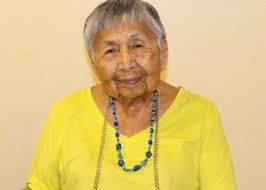
Image Metadata
|
Created: Tuesday, October 18, 2022 - 19:15 |
||
Summary:
An interview with Yuchi citizen, Mrs. Maxine Wildcat-Barnett.Description:
An interview with native Yuchi speaker Maxine Wildcat-Barnett. A downloadable transcript may be found by link: Maxine Wildcat-Barnett
Transcription:
The Muscogee (Creek) Nation
Historic and Cultural Preservation Department Oral History Program
“A Twenty-First Century Pandemic in Indian Country: The Resilience of the Muscogee (Creek) Nation Against Covid-19”
As Remembered by: Mrs. Maxine Wildcat-Barnett
Interview by: Ms. Midge Dellinger
Date: August 11, 2021
Transcription: The Audio Transcription Company
Edited by: Ms. Midge Dellinger
MIDGE DELLINGER: This is Midge Dellinger, oral historian for the Muscogee Nation. Today is August 11, 2021. I am at my home in Tulsa, Oklahoma, interviewing Yuchi citizen Mrs. Maxine Wildcat-Barnett, who is at her home in Sapulpa, Oklahoma. This interview is being performed remotely due to the ongoing COVID-19 pandemic. I am performing this interview on behalf of the Muscogee Nation Historic and Cultural Preservation Department for the oral history project titled “A Twenty-First-Century Pandemic in Indian Country: The Resilience of the Muscogee (Creek) Nation Against COVID-19.”
Mrs. Wildcat-Barnett, I am so excited to be here with you today and to have this opportunity to ask you some questions about your life. [00:01:00] And I’d like to begin by asking you, what is your clan and tribal town?
BRENT DEO: She was asking if you know your clan or your tribal town. MAXINE WILDCAT-BARNETT: No.
DELLINGER: Okay. And where were you born?
DEO: Where were you born?
WILDCAT-BARNETT: I was born in Sapulpa, in town.
DELLINGER: Mrs. Wildcat-Barnett, what is your age?
1
DEO: How old are you?
WILDCAT-BARNETT: Right now, I’m ninety-six.
DELLINGER: That’s fantastic. So, have you spent your entire life there in Sapulpa? DEO: Have you lived in Sapulpa [00:02:00] your whole life?
WILDCAT-BARNETT: All my life.
DELLINGER: Okay. And who are your parents?
DEO: Who’s your mom and your dad?
WILDCAT-BARNETT: My mom was Lizzy Bighead, and my dad was Maxie Wildcat. DELLINGER: Did she say Maxie?
DEO: Yeah, Maxie.
WILDCAT-BARNETT: Yeah.
2
DELLINGER: Okay. Now, do you have any siblings, brothers and sisters? DEO: What about your brothers and sisters?
WILDCAT-BARNETT: I have an older sister that died, and I have an older brother that died. Well, they’re all gone. I’m the only one left.
DEO: So, you just have one brother and one sister, or do you have more? WILDCAT-BARNETT: Yeah, I had [00:03:00] three brothers.
DEO: Three brothers and one sister?
WILDCAT-BARNETT: I had three brothers and one sister, and they’re all dead. DELLINGER: Okay. Do you know where your family ancestors originate from?
DEO: She was asking, do you know where your people come from, like maybe before Oklahoma?
WILDCAT-BARNETT: No.
DEO: Or just as far back as Oklahoma, are your people just only from Sapulpa?
3
WILDCAT-BARNETT: Dad’s people, the Wildcats, were from Kellyville, and the other, his mother was from Kellyville. I don't know where they are. I think Grandma Cooper [00:04:00]. I think she always lived around Mounds.
DELLINGER: Oh, okay. And where did you go to school? Did you attend boarding school?
DEO: Where’d you go to school?
WILDCAT-BARNETT: Went to school at Forest Park in Sapulpa, the Forest Park School.
DELLINGER: And so, that was a public school.
DEO: And then what about after?
WILDCAT-BARNETT: That’s where the clinic is now. That’s where Forest Park School, that’s where I first started school.
DEO: Where’d you go after that?
WILDCAT-BARNETT: Pickett Chapel, Pickett School.
4
DEO: And then what boarding school did you go to? [00:05:00]
WILDCAT-BARNETT: Chilocco. After I got out of Pickett, I couldn’t go to—it went as high as it went, and then they sent us to Chilocco.
DELLINGER: Do you remember how old you were when you went to Chilocco? WILDCAT-BARNETT: Most of the Indian kids did that.
DEO: How old were you when you went to Chilocco?
WILDCAT-BARNETT: Oh, Chilocco, I must’ve been—
DEO: How old?
WILDCAT-BARNETT: I must’ve been nine or ten years old.
DELLINGER: [00:06:00] Okay. Now, there in Sapulpa, since you’ve been there your whole life, I’m assuming that that’s where you married and had children. Can you tell me anything about your husband and your children?
DEO: She’s asking, did you get married and have children in Sapulpa?
5
WILDCAT-BARNETT: Yeah.
DEO: And she said, “Talk about your husband.”
WILDCAT-BARNETT: Well, he’s just a regular man. We lived on his allotment. When he got out of school, the government were taking care of his money, I guess, and when he was in school, that’s where he and mom met, at school.
DEO: [00:07:00] What was his name?
WILDCAT-BARNETT: Sapulpa Village School in Sapulpa.
DEO: No, your husband, what was his name?
WILDCAT-BARNETT: My husband was—
DEO: Harrison.
WILDCAT-BARNETT: Harrison, yeah.
DEO: Harrison Barnett?
6
WILDCAT-BARNETT: Uh-huh.
DELLINGER: Okay. And did you say that you met at school in Sapulpa? DEO: Where did y’all meet?
WILDCAT-BARNETT: I guess we met around Sapulpa, going to church. DEO: Church?
WILDCAT-BARNETT: That’s all I knew, was church.
DELLINGER: And how many children do you have?
WILDCAT-BARNETT: And his family, they all lived around Sapulpa too. DEO: What was your question?
DELLINGER: How many children [00:08:00] does she have? DEO: How many children did you have?
WILDCAT-BARNETT: How many what?
7
DEO: Children.
WILDCAT-BARNETT: Oh, I had five.
DELLINGER: Five children.
WILDCAT-BARNETT: No, no, I didn’t have five. Let me go back over. I’m getting forgetful.
DELLINGER: That’s okay.
WILDCAT-BARNETT: I had Don, Pat, and—
DEO: There’s Dennis.
WILDCAT-BARNETT: Yeah. You have to help me. Yeah.
DELLINGER: Don, Pat, and Dennis. And now, do you have grandchildren? DEO: How many grandchildren?
DEO: wahalA. (laughter) A whole bunch. [00:09:00] So, Richie, he’s her grandson.
8
DELLINGER: Yeah, so you guys don’t have a count on how many there are total? (laughs)
DEO: No, not me, and I think she’s having a hard time thinking of them.
DELLINGER: Okay. That’s all right. So, I also wanted to ask if, in her younger life, if she had an occupation, if she worked outside of the home.
DEO: When you were younger, what did you do for a living?
WILDCAT-BARNETT: We just went off to school. When we graduated, couldn’t go to Pickett no more, they sent us all to Chilocco school up there. I stayed up there till I [00:10:00] finished.
DEO: Where’d you go to work after that?
WILDCAT-BARNETT: Went to work at BC.
DEO: The glass plant?
WILDCAT-BARNETT: Bartlett-Collins, that glass plant.
9
DEO: How long did you work there?
WILDCAT-BARNETT: I worked there till—oh, I worked there a long time. I can’t remember the years.
DEO: And then what’d you end up doing after that? Is that when you got into nursing? WILDCAT-BARNETT: No.
DEO: Or was that a little later?
WILDCAT-BARNETT: I just worked. I just worked all the time.
DEO: When did you get into home healthcare?
WILDCAT-BARNETT: That was one of my jobs. I worked for the Creek Nation, and I worked for Tulsa [00:11:00] Home Health.
DELLINGER: Wow. So, she got a nursing degree at some point?
WILDCAT-BARNETT: We always had a home because dad’s acreage. The Creek Nation up there, they built a home on that—so, when he got out of school, he had a home already built. Muscogee had it built, and we had a pretty nice home there, and then
10
somebody talked him into selling it, smart people out there who wanted him to sell it because he was on that real good land there.
DELLIGNER: Oh, okay. Now, I know that church has been a big part of your life. Can you tell me the name of your church? [00:12:00]
DEO: What’s the name of your church?
WILDCAT-BARNETT: Pickett Chapel, and they’re still there.
DELLINGER: It’s still there. Okay, so that has been her church throughout her life then? WILDCAT-BARNETT: Hand me my drink.
DEO: Yep, her whole life.
WILDCAT-BARNETT: Yeah, I’m still there at Pickett Chapel.
DELLINGER: That’s fantastic. I’m not familiar with that church. Can you tell me where that church is in Sapulpa?
DEO: Can you tell her where that church is at?
11
WILDCAT-BARNETT: It’s about six miles straight south on Hickory. DEO: In Sapulpa.
WILDCAT-BARNETT: In Sapulpa. You go south, [00:13:00] south on Hickory Street and gets you right there. It’s on your righthand side of the road.
DELLINGER: Okay.
WILDCAT-BARNETT: You’ll come to a little white church first, and then you just go about a mile, and then you’ll come to Pickett Chapel Indian Church.
DELLINGER: Has your family been involved in that church all these years and decades? How have they been involved with the church?
DEO: How is your family involved in the church?
WILDCAT-BARNETT: My uncle was a pastor, dad’s brother. And dad, he had [00:14:00] money. His land was good, so he never really had to work, so that land that they chose, that land from a white man, he owned it, so he wanted to sell it to him, so he sold it, and they built the home. That’s where we lived there.
DEO: How’d your family start going to Pickett?
12
WILDCAT-BARNETT: Dad’s mother had land out there. That’s where he lived, and my mother, her parents, were living at Mounds. Liberty Mounds. And that’s where she lived there. But they met, and when they built Yuchi a school [00:15:00] —and I can’t tell you nothing about that because we just never really talked about it—that’s where they went to school there, and that’s where they met and got married in Sapulpa, and he already had a home built, so he just moved mom in there. And every time a child was born, she was the one that took it.
DEO: So, y’all just lived right there, close to church.
WILDCAT-BARNETT: Yeah. No, we lived in Sapulpa. His land was just right at the edge of Sapulpa city.
DELLINGER: Yeah, Brent, what side of Sapulpa is that? Is that on the south side? DEO: Yes.
DELLINGER: Okay. Now, I understand that [00:16:00] you are the most fluent Yuchi speaker living today. And I would like to know who taught you to speak Yuchi.
DEO: She said that she’s heard that you’re one of the last Yuchi speakers left. You’re the last one. And she wanted to know how’d you learn or who taught you.
13
WILDCAT-BARNETT: Who took care of us?
DEO: No, who taught you the Yuchi language?
WILDCAT-BARNETT: That’s all that was spoken in our home. We didn’t learn English till we went to school. Yuchi was spoken at home.
DELLINGER: So, you spoke Yuchi at home, and then when you went to public school, [00:17:00] and even at the boarding school, you were expected to speak English. So, I’m just wondering what that experience was like.
DEO: She wants to know, when you went to school, and they expected you to talk English, what was that experience like when you only knew Yuchi?
WILDCAT-BARNETT: I don’t remember that. (Deo laughs) I just don’t remember.
DEO: What about your time learning English or your time at school? What’d you think of your time there at school?
WILDCAT-BARNETT: Oh, English school?
DEO: Yes.
14
WILDCAT-BARNETT: I don't know. It was just spoken. When you’re small, you don’t think about questions like that. [00:18:00]
DELLINGER: I want to ask some questions about the Yuchi Language Project that, from my understanding, was established in 1996. I’d like to know, have you been involved with that program since its beginning?
DEO: She wants to know how long you’ve been working with the Yuchi language.
WILDCAT-BARNETT: Oh, gosh. To get paid, it hadn’t been that long, but I taught the language way before that. A white man come here from around somewhere south, and he nosing around, and you know they are. And he found out I could get some money, and so [00:19:00] that man left, and it wasn’t very long where Richard Grounds started coming around. And he knew that man there. That man kind of stayed with him when he was here, and he was a white man. And he’s the one that helped quite a bit getting Richard started how to do all that stuff.
DEO: So, when you got out of boarding school, did you still know Yuchi? WILDCAT-BARNETT: Oh, yeah. That’s my language.
DEO: And I remember you saying you would go learn with Mose.
15
WILDCAT-BARNETT: Well, he told us a lot of story. We found that a lot of fun later. [00:20:00] I don’t want to repeat now that stuff.
DEO: But after boarding school, you still knew a bunch of the language? WILDCAT-BARNETT: Yeah, never forgot it.
DEO: Never forgot it. s@nlA. (Very good)
DELLINGER: So, I’d like to know too—I’d like to hear why it’s been important to you to save the Yuchi language.
DEO: She said, “Why is it important to you to be involved in saving the Yuchi language and help pass it on?”
WILDCAT-BARNETT: Well, that’s my language. I just never forgot it, never think about forgetting about it. English is my second language. [00:21:00]
DELLINGER: I wanted to ask too, I know that her grandmother Eliza was important in her life.
WILDCAT-BARNETT: Even the elderly people have told me that I always spoke Yuchi.
16
DELLINGER: Yes. I was going to ask if she remembers her grandmother Eliza, because from what I’ve read—
DEO: She was asking what you remember about Eliza.
WILDCAT-BARNETT: Who?
DEO: Eliza Bighead.
WILDCAT-BARNETT: Eliza Bighead, I can hardly remember her. That was my grandma. I can hardly remember her.
DEO: nelaha sAnû. (Your grandmother)
WILDCAT-BARNETT: Yeah. That was my mother’s mother. Wait, [00:22:00] we got to rest a little while. I’m getting mixed up here. (Deo laughs)
DELLINGER: Brent, do we want to pause a minute?
WILDCAT-BARNETT: Eliza Bighead.
DEO: Yeah, we can pause and come back.
17
WILDCAT-BARNETT: Yeah.
DELLINGER: I want to ask you, Mrs. Wildcat-Barnett, what is your biggest hope for future generations of Yuchi?
DEO: She was asking, what’s your biggest hope for the youngsters, for the young generation of Yuchis? What do you want for them?
WILDCAT-BARNETT: Well, I’d like for them to know their language, but you got to have a real good, fluent [00:23:00] speaker, and I can speak the language, but I don’t know the history of it like I would like to, because we’re not Creek; we’re Yuchi. Or I would like to speak some of my language.
DEO: So, in other words, you want them to know who they are.
WILDCAT-BARNETT: Yeah.
DELLINGER: Yes, that’s very important, very important. So, now I’d like to ask a question about the COVID-19 pandemic. I really would just like to know what [00:24:00] Maxine thinks about the COVID-19 pandemic, just any thoughts that she has about it.
DEO: She was asking, what’s your thought on the sickness going around, the COVID?
18
WILDCAT-BARNETT: I hardly never even thought about it.
DELLINGER: What did she say?
DEO: She says she tries not to think about it. (laughs) And she’s just been inside all the time anyway. What about when you go somewhere and you have to wear your mask?
WILDCAT-BARNETT: I really haven’t wore my mask, [00:25:00] only maybe over three or four times. The store downtown, let’s see, what’s the name of that? It’s not a dollar store; it’s right on the corner there. They’re the only one that asked me to wear a mask. I go in there, I have to wear a mask.
DEO: What do you think about that?
WILDCAT-BARNETT: If I want to go there, and I ask questions, they have a right to get the right answers. I just think of it like that. I don’t think it’s anything, pandemic or anything.
DEO: Yeah, just mask up, no problem about it, [00:26:00] huh?
DELLINGER: Have you been sick with COVID-19?
19
DEO: Did you get sick with COVID?
WILDCAT-BARNETT: Did I what?
DEO: Did you get sick with COVID?
WILDCAT-BARNETT: I can’t—
DEO: Do you remember last year when you got sick, and you had to stay in the hospital, and we had to come see you through the window?
DELLINGER: Oh. Okay.
WILDCAT-BARNETT: I don’t remember that.
DEO: She was in the hospital for COVID, and we went to go visit, and we had to stand outside her window and wave at her, pretty much. And we called her [00:27:00] and talked to her and stuff. I think she’s having a hard time just what COVID is, I guess. It’s kind of—I don't know—just new.
DELLINGER: Okay. Well, Brent, if you’re good, I’m good to wrap things up here and let her rest. Mrs. Wildcat-Barnett, thank you so much for your time today. This has been
20
such an honor to meet you and to visit with you and to hear some of your very important words. You take care. Thank you.
DEO: She was saying she was very honored to talk to you, and she wanted to thank you for having a conversation with her, and she’s very blessed to meet you.
DELLINGER: Bye-bye. [00:28:00]
DEO: I was going to say, I could have her say a prayer possibly if you want to get a prayer.
DELLINGER: Sure.
DEO: Would you make a prayer in Yuchi?
WILDCAT-BARNETT: Yeah. [00:29:00] gOh@TOnA (Creator) aga s@nlA yOk’û (You have made a great day) nandA abA hElA K@T@lAnAha (And today we have all gathered) gât’A wAwahalA K@T@lAwAha (As many people are gathering) endA sô yUdjEha nAnû OwûlA KAnAha (And still there is some of us Yuchis here) hafalAdA K@T@lAnAha neKAê nÔk’û’wAdA (Only sometimes we gather like this and talk) n@ sahandA nÔk’û’wAdA KAnAnû (We don’t always talk) endA “KAdA dEhû dEhaê KAdOchE” OdOgwanA (And then me “I am getting old sitting here” I tell them) yUdjEha gO’wAdAnA-A âzAlA @yû hE@yU’onda dEt@ (I just want y'all to know the
21
Yuchi language) afâ K@T@lA ha (That is why we are meeting) gO’wAdAnA-AdA n@fig@aya (And you all don't forget the language) EkanlA KAnAnû Owû k’ala wahalA nÔ’nê KAnAnû (Some of us that have been around a long time have seen many things) endA afâ k@nÔthlEhA (And then that's why when we finish) lAchEdA k’ala n@fig@ayanô (That too is something for you all not to forget) endA anzA k’ala anjaha dE dOCHw@ (And when I hear the things you all say) hendA dO’nangaTAnô (then I will believe) nandA n@TakA s’@dOchE achUda (And y’all just don’t have me here and listen) s’@dOchE k@thl@^hA s’@dOchEhû dE dE’wAdAhATA (Wherever I’m at I am the one who must talk) aKAê aKAê (It’s like that it’s like that) lAchE â’wAdAchE n@hEdOonda n@ â’wAdAhû (If y'all don't speak I don't know if y’all can) [00:30:00] Do you understand me?
DELLINGER: Mvto. Thank you so much for that.
DEO: Mvto. s@nlA k’ayasOTa (Thank You) All right, we’ll see you later. hEtOhA (Later)
WILDCAT-BARNETT: hEtOhA (Later)
END OF INTERVIEW
22
Historic and Cultural Preservation Department Oral History Program
“A Twenty-First Century Pandemic in Indian Country: The Resilience of the Muscogee (Creek) Nation Against Covid-19”
As Remembered by: Mrs. Maxine Wildcat-Barnett
Interview by: Ms. Midge Dellinger
Date: August 11, 2021
Transcription: The Audio Transcription Company
Edited by: Ms. Midge Dellinger
MIDGE DELLINGER: This is Midge Dellinger, oral historian for the Muscogee Nation. Today is August 11, 2021. I am at my home in Tulsa, Oklahoma, interviewing Yuchi citizen Mrs. Maxine Wildcat-Barnett, who is at her home in Sapulpa, Oklahoma. This interview is being performed remotely due to the ongoing COVID-19 pandemic. I am performing this interview on behalf of the Muscogee Nation Historic and Cultural Preservation Department for the oral history project titled “A Twenty-First-Century Pandemic in Indian Country: The Resilience of the Muscogee (Creek) Nation Against COVID-19.”
Mrs. Wildcat-Barnett, I am so excited to be here with you today and to have this opportunity to ask you some questions about your life. [00:01:00] And I’d like to begin by asking you, what is your clan and tribal town?
BRENT DEO: She was asking if you know your clan or your tribal town. MAXINE WILDCAT-BARNETT: No.
DELLINGER: Okay. And where were you born?
DEO: Where were you born?
WILDCAT-BARNETT: I was born in Sapulpa, in town.
DELLINGER: Mrs. Wildcat-Barnett, what is your age?
1
DEO: How old are you?
WILDCAT-BARNETT: Right now, I’m ninety-six.
DELLINGER: That’s fantastic. So, have you spent your entire life there in Sapulpa? DEO: Have you lived in Sapulpa [00:02:00] your whole life?
WILDCAT-BARNETT: All my life.
DELLINGER: Okay. And who are your parents?
DEO: Who’s your mom and your dad?
WILDCAT-BARNETT: My mom was Lizzy Bighead, and my dad was Maxie Wildcat. DELLINGER: Did she say Maxie?
DEO: Yeah, Maxie.
WILDCAT-BARNETT: Yeah.
2
DELLINGER: Okay. Now, do you have any siblings, brothers and sisters? DEO: What about your brothers and sisters?
WILDCAT-BARNETT: I have an older sister that died, and I have an older brother that died. Well, they’re all gone. I’m the only one left.
DEO: So, you just have one brother and one sister, or do you have more? WILDCAT-BARNETT: Yeah, I had [00:03:00] three brothers.
DEO: Three brothers and one sister?
WILDCAT-BARNETT: I had three brothers and one sister, and they’re all dead. DELLINGER: Okay. Do you know where your family ancestors originate from?
DEO: She was asking, do you know where your people come from, like maybe before Oklahoma?
WILDCAT-BARNETT: No.
DEO: Or just as far back as Oklahoma, are your people just only from Sapulpa?
3
WILDCAT-BARNETT: Dad’s people, the Wildcats, were from Kellyville, and the other, his mother was from Kellyville. I don't know where they are. I think Grandma Cooper [00:04:00]. I think she always lived around Mounds.
DELLINGER: Oh, okay. And where did you go to school? Did you attend boarding school?
DEO: Where’d you go to school?
WILDCAT-BARNETT: Went to school at Forest Park in Sapulpa, the Forest Park School.
DELLINGER: And so, that was a public school.
DEO: And then what about after?
WILDCAT-BARNETT: That’s where the clinic is now. That’s where Forest Park School, that’s where I first started school.
DEO: Where’d you go after that?
WILDCAT-BARNETT: Pickett Chapel, Pickett School.
4
DEO: And then what boarding school did you go to? [00:05:00]
WILDCAT-BARNETT: Chilocco. After I got out of Pickett, I couldn’t go to—it went as high as it went, and then they sent us to Chilocco.
DELLINGER: Do you remember how old you were when you went to Chilocco? WILDCAT-BARNETT: Most of the Indian kids did that.
DEO: How old were you when you went to Chilocco?
WILDCAT-BARNETT: Oh, Chilocco, I must’ve been—
DEO: How old?
WILDCAT-BARNETT: I must’ve been nine or ten years old.
DELLINGER: [00:06:00] Okay. Now, there in Sapulpa, since you’ve been there your whole life, I’m assuming that that’s where you married and had children. Can you tell me anything about your husband and your children?
DEO: She’s asking, did you get married and have children in Sapulpa?
5
WILDCAT-BARNETT: Yeah.
DEO: And she said, “Talk about your husband.”
WILDCAT-BARNETT: Well, he’s just a regular man. We lived on his allotment. When he got out of school, the government were taking care of his money, I guess, and when he was in school, that’s where he and mom met, at school.
DEO: [00:07:00] What was his name?
WILDCAT-BARNETT: Sapulpa Village School in Sapulpa.
DEO: No, your husband, what was his name?
WILDCAT-BARNETT: My husband was—
DEO: Harrison.
WILDCAT-BARNETT: Harrison, yeah.
DEO: Harrison Barnett?
6
WILDCAT-BARNETT: Uh-huh.
DELLINGER: Okay. And did you say that you met at school in Sapulpa? DEO: Where did y’all meet?
WILDCAT-BARNETT: I guess we met around Sapulpa, going to church. DEO: Church?
WILDCAT-BARNETT: That’s all I knew, was church.
DELLINGER: And how many children do you have?
WILDCAT-BARNETT: And his family, they all lived around Sapulpa too. DEO: What was your question?
DELLINGER: How many children [00:08:00] does she have? DEO: How many children did you have?
WILDCAT-BARNETT: How many what?
7
DEO: Children.
WILDCAT-BARNETT: Oh, I had five.
DELLINGER: Five children.
WILDCAT-BARNETT: No, no, I didn’t have five. Let me go back over. I’m getting forgetful.
DELLINGER: That’s okay.
WILDCAT-BARNETT: I had Don, Pat, and—
DEO: There’s Dennis.
WILDCAT-BARNETT: Yeah. You have to help me. Yeah.
DELLINGER: Don, Pat, and Dennis. And now, do you have grandchildren? DEO: How many grandchildren?
DEO: wahalA. (laughter) A whole bunch. [00:09:00] So, Richie, he’s her grandson.
8
DELLINGER: Yeah, so you guys don’t have a count on how many there are total? (laughs)
DEO: No, not me, and I think she’s having a hard time thinking of them.
DELLINGER: Okay. That’s all right. So, I also wanted to ask if, in her younger life, if she had an occupation, if she worked outside of the home.
DEO: When you were younger, what did you do for a living?
WILDCAT-BARNETT: We just went off to school. When we graduated, couldn’t go to Pickett no more, they sent us all to Chilocco school up there. I stayed up there till I [00:10:00] finished.
DEO: Where’d you go to work after that?
WILDCAT-BARNETT: Went to work at BC.
DEO: The glass plant?
WILDCAT-BARNETT: Bartlett-Collins, that glass plant.
9
DEO: How long did you work there?
WILDCAT-BARNETT: I worked there till—oh, I worked there a long time. I can’t remember the years.
DEO: And then what’d you end up doing after that? Is that when you got into nursing? WILDCAT-BARNETT: No.
DEO: Or was that a little later?
WILDCAT-BARNETT: I just worked. I just worked all the time.
DEO: When did you get into home healthcare?
WILDCAT-BARNETT: That was one of my jobs. I worked for the Creek Nation, and I worked for Tulsa [00:11:00] Home Health.
DELLINGER: Wow. So, she got a nursing degree at some point?
WILDCAT-BARNETT: We always had a home because dad’s acreage. The Creek Nation up there, they built a home on that—so, when he got out of school, he had a home already built. Muscogee had it built, and we had a pretty nice home there, and then
10
somebody talked him into selling it, smart people out there who wanted him to sell it because he was on that real good land there.
DELLIGNER: Oh, okay. Now, I know that church has been a big part of your life. Can you tell me the name of your church? [00:12:00]
DEO: What’s the name of your church?
WILDCAT-BARNETT: Pickett Chapel, and they’re still there.
DELLINGER: It’s still there. Okay, so that has been her church throughout her life then? WILDCAT-BARNETT: Hand me my drink.
DEO: Yep, her whole life.
WILDCAT-BARNETT: Yeah, I’m still there at Pickett Chapel.
DELLINGER: That’s fantastic. I’m not familiar with that church. Can you tell me where that church is in Sapulpa?
DEO: Can you tell her where that church is at?
11
WILDCAT-BARNETT: It’s about six miles straight south on Hickory. DEO: In Sapulpa.
WILDCAT-BARNETT: In Sapulpa. You go south, [00:13:00] south on Hickory Street and gets you right there. It’s on your righthand side of the road.
DELLINGER: Okay.
WILDCAT-BARNETT: You’ll come to a little white church first, and then you just go about a mile, and then you’ll come to Pickett Chapel Indian Church.
DELLINGER: Has your family been involved in that church all these years and decades? How have they been involved with the church?
DEO: How is your family involved in the church?
WILDCAT-BARNETT: My uncle was a pastor, dad’s brother. And dad, he had [00:14:00] money. His land was good, so he never really had to work, so that land that they chose, that land from a white man, he owned it, so he wanted to sell it to him, so he sold it, and they built the home. That’s where we lived there.
DEO: How’d your family start going to Pickett?
12
WILDCAT-BARNETT: Dad’s mother had land out there. That’s where he lived, and my mother, her parents, were living at Mounds. Liberty Mounds. And that’s where she lived there. But they met, and when they built Yuchi a school [00:15:00] —and I can’t tell you nothing about that because we just never really talked about it—that’s where they went to school there, and that’s where they met and got married in Sapulpa, and he already had a home built, so he just moved mom in there. And every time a child was born, she was the one that took it.
DEO: So, y’all just lived right there, close to church.
WILDCAT-BARNETT: Yeah. No, we lived in Sapulpa. His land was just right at the edge of Sapulpa city.
DELLINGER: Yeah, Brent, what side of Sapulpa is that? Is that on the south side? DEO: Yes.
DELLINGER: Okay. Now, I understand that [00:16:00] you are the most fluent Yuchi speaker living today. And I would like to know who taught you to speak Yuchi.
DEO: She said that she’s heard that you’re one of the last Yuchi speakers left. You’re the last one. And she wanted to know how’d you learn or who taught you.
13
WILDCAT-BARNETT: Who took care of us?
DEO: No, who taught you the Yuchi language?
WILDCAT-BARNETT: That’s all that was spoken in our home. We didn’t learn English till we went to school. Yuchi was spoken at home.
DELLINGER: So, you spoke Yuchi at home, and then when you went to public school, [00:17:00] and even at the boarding school, you were expected to speak English. So, I’m just wondering what that experience was like.
DEO: She wants to know, when you went to school, and they expected you to talk English, what was that experience like when you only knew Yuchi?
WILDCAT-BARNETT: I don’t remember that. (Deo laughs) I just don’t remember.
DEO: What about your time learning English or your time at school? What’d you think of your time there at school?
WILDCAT-BARNETT: Oh, English school?
DEO: Yes.
14
WILDCAT-BARNETT: I don't know. It was just spoken. When you’re small, you don’t think about questions like that. [00:18:00]
DELLINGER: I want to ask some questions about the Yuchi Language Project that, from my understanding, was established in 1996. I’d like to know, have you been involved with that program since its beginning?
DEO: She wants to know how long you’ve been working with the Yuchi language.
WILDCAT-BARNETT: Oh, gosh. To get paid, it hadn’t been that long, but I taught the language way before that. A white man come here from around somewhere south, and he nosing around, and you know they are. And he found out I could get some money, and so [00:19:00] that man left, and it wasn’t very long where Richard Grounds started coming around. And he knew that man there. That man kind of stayed with him when he was here, and he was a white man. And he’s the one that helped quite a bit getting Richard started how to do all that stuff.
DEO: So, when you got out of boarding school, did you still know Yuchi? WILDCAT-BARNETT: Oh, yeah. That’s my language.
DEO: And I remember you saying you would go learn with Mose.
15
WILDCAT-BARNETT: Well, he told us a lot of story. We found that a lot of fun later. [00:20:00] I don’t want to repeat now that stuff.
DEO: But after boarding school, you still knew a bunch of the language? WILDCAT-BARNETT: Yeah, never forgot it.
DEO: Never forgot it. s@nlA. (Very good)
DELLINGER: So, I’d like to know too—I’d like to hear why it’s been important to you to save the Yuchi language.
DEO: She said, “Why is it important to you to be involved in saving the Yuchi language and help pass it on?”
WILDCAT-BARNETT: Well, that’s my language. I just never forgot it, never think about forgetting about it. English is my second language. [00:21:00]
DELLINGER: I wanted to ask too, I know that her grandmother Eliza was important in her life.
WILDCAT-BARNETT: Even the elderly people have told me that I always spoke Yuchi.
16
DELLINGER: Yes. I was going to ask if she remembers her grandmother Eliza, because from what I’ve read—
DEO: She was asking what you remember about Eliza.
WILDCAT-BARNETT: Who?
DEO: Eliza Bighead.
WILDCAT-BARNETT: Eliza Bighead, I can hardly remember her. That was my grandma. I can hardly remember her.
DEO: nelaha sAnû. (Your grandmother)
WILDCAT-BARNETT: Yeah. That was my mother’s mother. Wait, [00:22:00] we got to rest a little while. I’m getting mixed up here. (Deo laughs)
DELLINGER: Brent, do we want to pause a minute?
WILDCAT-BARNETT: Eliza Bighead.
DEO: Yeah, we can pause and come back.
17
WILDCAT-BARNETT: Yeah.
DELLINGER: I want to ask you, Mrs. Wildcat-Barnett, what is your biggest hope for future generations of Yuchi?
DEO: She was asking, what’s your biggest hope for the youngsters, for the young generation of Yuchis? What do you want for them?
WILDCAT-BARNETT: Well, I’d like for them to know their language, but you got to have a real good, fluent [00:23:00] speaker, and I can speak the language, but I don’t know the history of it like I would like to, because we’re not Creek; we’re Yuchi. Or I would like to speak some of my language.
DEO: So, in other words, you want them to know who they are.
WILDCAT-BARNETT: Yeah.
DELLINGER: Yes, that’s very important, very important. So, now I’d like to ask a question about the COVID-19 pandemic. I really would just like to know what [00:24:00] Maxine thinks about the COVID-19 pandemic, just any thoughts that she has about it.
DEO: She was asking, what’s your thought on the sickness going around, the COVID?
18
WILDCAT-BARNETT: I hardly never even thought about it.
DELLINGER: What did she say?
DEO: She says she tries not to think about it. (laughs) And she’s just been inside all the time anyway. What about when you go somewhere and you have to wear your mask?
WILDCAT-BARNETT: I really haven’t wore my mask, [00:25:00] only maybe over three or four times. The store downtown, let’s see, what’s the name of that? It’s not a dollar store; it’s right on the corner there. They’re the only one that asked me to wear a mask. I go in there, I have to wear a mask.
DEO: What do you think about that?
WILDCAT-BARNETT: If I want to go there, and I ask questions, they have a right to get the right answers. I just think of it like that. I don’t think it’s anything, pandemic or anything.
DEO: Yeah, just mask up, no problem about it, [00:26:00] huh?
DELLINGER: Have you been sick with COVID-19?
19
DEO: Did you get sick with COVID?
WILDCAT-BARNETT: Did I what?
DEO: Did you get sick with COVID?
WILDCAT-BARNETT: I can’t—
DEO: Do you remember last year when you got sick, and you had to stay in the hospital, and we had to come see you through the window?
DELLINGER: Oh. Okay.
WILDCAT-BARNETT: I don’t remember that.
DEO: She was in the hospital for COVID, and we went to go visit, and we had to stand outside her window and wave at her, pretty much. And we called her [00:27:00] and talked to her and stuff. I think she’s having a hard time just what COVID is, I guess. It’s kind of—I don't know—just new.
DELLINGER: Okay. Well, Brent, if you’re good, I’m good to wrap things up here and let her rest. Mrs. Wildcat-Barnett, thank you so much for your time today. This has been
20
such an honor to meet you and to visit with you and to hear some of your very important words. You take care. Thank you.
DEO: She was saying she was very honored to talk to you, and she wanted to thank you for having a conversation with her, and she’s very blessed to meet you.
DELLINGER: Bye-bye. [00:28:00]
DEO: I was going to say, I could have her say a prayer possibly if you want to get a prayer.
DELLINGER: Sure.
DEO: Would you make a prayer in Yuchi?
WILDCAT-BARNETT: Yeah. [00:29:00] gOh@TOnA (Creator) aga s@nlA yOk’û (You have made a great day) nandA abA hElA K@T@lAnAha (And today we have all gathered) gât’A wAwahalA K@T@lAwAha (As many people are gathering) endA sô yUdjEha nAnû OwûlA KAnAha (And still there is some of us Yuchis here) hafalAdA K@T@lAnAha neKAê nÔk’û’wAdA (Only sometimes we gather like this and talk) n@ sahandA nÔk’û’wAdA KAnAnû (We don’t always talk) endA “KAdA dEhû dEhaê KAdOchE” OdOgwanA (And then me “I am getting old sitting here” I tell them) yUdjEha gO’wAdAnA-A âzAlA @yû hE@yU’onda dEt@ (I just want y'all to know the
21
Yuchi language) afâ K@T@lA ha (That is why we are meeting) gO’wAdAnA-AdA n@fig@aya (And you all don't forget the language) EkanlA KAnAnû Owû k’ala wahalA nÔ’nê KAnAnû (Some of us that have been around a long time have seen many things) endA afâ k@nÔthlEhA (And then that's why when we finish) lAchEdA k’ala n@fig@ayanô (That too is something for you all not to forget) endA anzA k’ala anjaha dE dOCHw@ (And when I hear the things you all say) hendA dO’nangaTAnô (then I will believe) nandA n@TakA s’@dOchE achUda (And y’all just don’t have me here and listen) s’@dOchE k@thl@^hA s’@dOchEhû dE dE’wAdAhATA (Wherever I’m at I am the one who must talk) aKAê aKAê (It’s like that it’s like that) lAchE â’wAdAchE n@hEdOonda n@ â’wAdAhû (If y'all don't speak I don't know if y’all can) [00:30:00] Do you understand me?
DELLINGER: Mvto. Thank you so much for that.
DEO: Mvto. s@nlA k’ayasOTa (Thank You) All right, we’ll see you later. hEtOhA (Later)
WILDCAT-BARNETT: hEtOhA (Later)
END OF INTERVIEW
22
Related Content:
Community:
Category:
Collections:
Original Date Description:
August 11, 2021Original Date:
2021 August 11thRights:
All rights are retained by the creator, soley the Muscogee (Creek) Nation.Licensing Options:

Attribution-NonCommercial-NoDerivatives 4.0 International (CC BY-NC-ND 4.0)
Source:
Muscogee (Creek) Nation National Library and ArchivesExternal Links:
Identifier:
2021MCN.10.001Type:
Format: