
- Search Results
- Carly Treece, Interview
Carly Treece, Interview


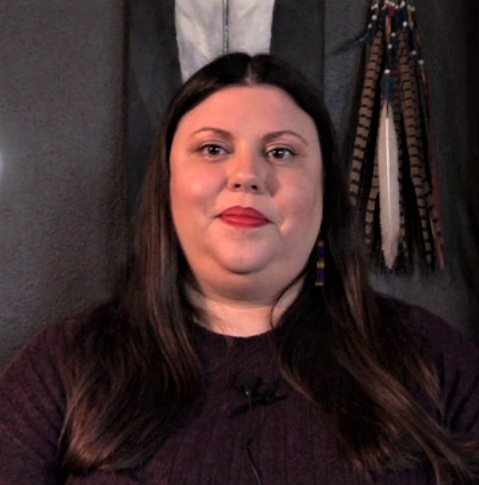
Image Metadata
|
Created: Thursday, May 11, 2023 - 09:30 |
||
Summary:
An interview with Muscogee (Creek) Nation citizen Carly Treece.Description:
An interview with Muscogee (Creek) Nation citizen Carly Treece. A downloadable transcript may be found by link: Carly Treece. This interview has been indexed through the Louie B. Nunn Center for Oral History Center’s Oral History Metadata Synchronizer system at the University of Kentucky. For an indexed copy of the video, please follow the external link found in the bar on the right of this page.
Transcription:
The Muscogee (Creek) Nation
Historic and Cultural Preservation Department Oral History Program
“A Twenty-First Century Pandemic in Indian Country: The Resilience of the Muscogee (Creek) Nation Against Covid-19”
As Remembered by: Ms. Carly Treece
Interview by: Ms. Midge Dellinger
Date: December 21, 2022
Transcription: The Audio Transcription Company
Edited by: Ms. Midge Dellinger
MIDGE DELLINGER: This is Midge Dellinger, oral historian for the Muscogee (Creek) Nation. Today is December 21st, 2022. And I am in Sand Springs, Oklahoma, interviewing Muscogee citizen and artist, Miss Carly Treece. I’m performing this interview on behalf of the Muscogee (Creek) Nation Historic and Cultural Preservation Department, for the oral history project titled “The Twenty-First-Century Pandemic in Indian Country: the Resilience of the Muscogee (Creek) Nation against COVID-19.” Miss Treece, thank you so much for taking time out of your day to do this interview with me. We’re going to begin with some questions about your life and your personal background. And so, let’s start with what is your tribal town and clan?
CARLY TREECE: So one of my cousins did the research, and our tribal town is Coweta, and clan is Deer. But because of boarding school trauma, those things, we were not raised in those things.
DELLINGER: Okay. Okay. Now where were you born?
TREECE: I was born in Tulsa.
DELLINGER: and the hospital [00:01:00] there?
TREECE: St. Francis.
DELLINGER: Okay. And now, you were born in Tulsa, where did you grow up?
1
TREECE: I grew up in North Tulsa.
DELLINGER: And any particular area there in North Tulsa?
TREECE: A little area called Dawson, and it’s kind of between Pine and Apache, Yale and Sheridan.
DELLINGER: Okay, and did you spend your entire childhood in the Dawson community?
TREECE: Pretty much until I was about sixteen, and then we moved out to Sand Springs.
DELLINGER: Okay. I want to ask you about your folks, if you would, will you please tell me about each one of them?
TREECE: My mom is Tracy Young, and she is a Muscogee citizen. Right now, I am kind of helping her, she’s having some memory problems, and so I’ve been helping her, but she did a lot in [00:02:00] Indian education, she was very active in that, she was very active in the community with like TICAR, Tulsa Indian Coalition Against Racism. The Indian Chamber of Commerce. So she was very active in the Indian community whenever I was a teenager. Then my dad is Gary Treece, and he is Cherokee, and I did not grow up around him a whole lot, just here and there, so I don’t have a lot of
2
knowledge, I do know that his mom was an artist, and he was a beader. I have like, memories of him beading, and making drums when I would go over, but it’s not many memories of that.
DELLINGER: Okay. Miss Treece, what was life like growing up in Sand Springs?
TREECE: Well Sand Springs, I moved out here whenever I was around sixteen, and so I came from North Tulsa [00:03:00] and growing up in North Tulsa, it was, you know, that’s kind of a neglected part of Tulsa, always has been, still is. And it was rough sometimes, but then also, there’s also a sense of community, because you have all these people that grow up in the same situations, a lot of us in poverty, a lot of us, you know, and we come together to take care of one another. Now whenever I moved out to Sand Springs at around sixteen, it was different, and I was a little bit of an outcast. So, I was like the girl from North Tulsa, and they didn’t know what to think, and they didn’t know, you know, they didn’t like how I dressed, and all of that.
DELLINGER: Okay. Miss Treece, what about siblings? Do you have siblings?
TREECE: I do have siblings. I have two brothers, [00:04:00] and two sisters. I have two younger sisters and a younger brother from my mother, and an older brother from my dad. So, I was raised as the oldest, because I did not meet my older brother until I was seventeen, and then I was raised as the oldest with my younger siblings. And so there’s
3
Tate is the baby, and Casey and Chelsea, and then me, and then Shane is my brother from my dad, and he does stuff on Reservation Dogs, and all that. (laughs)
DELLINGER: Oh wow! So what is he doing with that project?
TREECE: He does like a lot of, I think the cinematography and photography, all the images that you see that FX puts out are his images that he’s taken.
DELLINGER: That’s fantastic. And what’s his first and last name again? TREECE: Shane Brown.
DELLINGER: Shane Brown. Will you go ahead and repeat your other siblings’ names with their last names?
TREECE: Yes. So then Casey Duck is [00:05:00] my middle sister, and we work together.
DELLINGER: Oh!
TREECE: And then Chelsea Wilson, or not Wilson anymore, it’s Barrett. (laughter) DELLINGER: Okay!
4
TREECE: Chelsea Barrett, and she works in a dental office. And then Tate Phillips, and he works for ONG.
DELLINGER: So it sounds like you guys are all close, as siblings.
TREECE: We are. Me, Casey, and Chelsea all live within a five-mile radius of one another.
DELLINGER: Okay, so yeah, even demographically, you’re close— TREECE: Yeah. Yeah! (laugh)
DELLINGER: —to one another, very good. Now previously, I’m going to go back to something real quick, previously we had talked about your relationship with your mother, and some of the things that your mom is going through right now. Can you talk a little bit more about that relationship?
TREECE: Yes. So, the last few years, I had noticed that her memory was kind of worsening, [00:06:00] and I asked her if she would go to the doctor and have it tested. Her mom, my Muscogee grandma, had dementia, and I was also a part-time caretaker, helped my aunts with her. And I lived with my grandmother a lot growing up, too. So my
5
mom went, and they diagnosed her with early onset dementia, and it was caused from a traumatic brain injury from domestic violence.
DELLINGER: Okay. Okay. And she’s close by you as well, correct? TREECE: She’s like five houses down.
DELLINGER: Okay. Yeah, that’s great. All right! So let’s move onto talking about grandparents, I’d love for you to share about your grandparents, and memories that you have of them.
TREECE: So my grandmother is, her maiden name, Anita Coleen Tiger, married name Young, [00:07:00] and she went by Coleen. And my grandfather is William Doyle Young, and he went by Doyle Young. My grandmother was, this is my mom’s mom, Muscogee, and she was just a fun grandma, and like, you know, she’d point her finger at you when you were doing wrong, and then she’d hug you tight, you know, to let you know she still loved you, and she just always, she took, whenever I lived with her, we were at church a lot. Like Sunday morning, Sunday night, Wednesday night revivals. And that’s like a big memory of my childhood. She was a great cook, she was always cooking, just anything that you could think of, she was just a wonderful cook. She did a lot of stuff for the church, and she did a lot of stuff, you know, just for her family, helped. And then my grandfather did a lot of stuff for the community, and he actually has [00:08:00] a bridge in Dawson named after him now, he—
6
DELLINGER: Wow, okay!
TREECE: —he’d go get like the little ladies and take them to vote, and people, even at his funeral, somebody came up and said well, he just loaned me twenty bucks last week, because I didn’t have anything, you know, to eat, and yeah.
DELLINGER: That’s amazing, that’s wonderful. Can you say where that bridge is, do you know?
TREECE: It’s on North Darlington and it’s between Pine and Apache, on North Darlington, and I can’t think, I want to say it’s Ute.
DELLINGER: Oh okay. Okay.
TREECE: Yeah, and my—they were great, my grandma was wonderful.
DELLINGER: Did your, did this grandma, with her cooking, did she cook any traditional Muscogee foods?
TREECE: She, not really that I remember. Like she did a lot of like, [00:09:00] Southern comfort foods. Like fried chicken. Now she would take us like, to that little Tulsa Indian Methodist Church over on North College, and we’d go to like, wild onion dinners. And
7
then her sisters, who married—they went and married Cherokee men, we’d go out to their house, and they always cooked traditional foods. And so, but she just cooked a lot of Southern, fried pies, and fried chicken, (laughter) roast, and—but I never, I don’t have any memories of her making like frybread, or grape dumplings, or anything like that.
DELLINGER: Okay. I’ve been to that little church for wild onion dinners. They were always so good.
TREECE: Yeah, she’d take us up there, and when they’d have traditional speakers of— traditional language speakers and stuff, so that we could hear that too.
DELLINGER: Yeah, so that was her church that she attended?
TREECE: Well she went to that one, the one that we actually went to is called Dawson Free Will Baptist, and that [00:10:00] was right next door to her house, and it preached hellfire and brimstone.
DELLINGER: So a non-Indigenous—
TREECE: It was a non-Indigenous, yeah.
DELLINGER: Yeah, okay. Okay. And now, what about grandparents on your father’s side of the family?
8
TREECE: So I know my grandmother, her name—her maiden name was Verba Sevens, married name Verba Treece. And she has Alzheimer’s, but she was a Cherokee artist, and she painted like, feathers, and rocks, bones, just little like, scenery paintings. And did beadwork, and made jewelry and stuff too, because I have memories of that, the few times that I did go over there, I have memories of that, her doing beadwork. And she has Alzheimer’s and is still living, as far as I know. And I don’t know anything about his dad. [00:11:00] I don’t even know his dad’s name, yeah.
DELLINGER: Okay. But really, I mean it’s through your, through this grandmother, and your father, that it seems you get your artistic abilities.
TREECE: I think that that’s come from there, and whenever I met my older brother for the first time, and kind of, we were both kind of like oh, you’re an artist too, you like to draw too, and it just kind of connected. Now, but my Muscogee grandmother is the one that took time, and put me in art classes growing up, saw those talents and kind of
fostered those talents.
DELLINGER: Okay. Yeah, that’s important, important to know. Okay, Miss Treece, is there anything else you’d like to share about, you know, any of your grandparents?
TREECE: Oh, my Muscogee grandmother, she was an Indian education teacher in the ’70s.
9
DELLINGER: Oh! Okay.
TREECE: And then she stopped to help my mom take care of me, my mom was nineteen [00:12:00] when she had me, and so she quit to help take care of me, and pretty much raised me. And actually, these earrings I have on are from one of her student’s families from when she was in Indian education.
DELLINGER: Wow!
TREECE: She gave those to me before she passed, so they’re older than me. These are vintage.
DELLINGER: Wow, those are vintage, and they’re beautiful!
TREECE: (laughs) Thank you.
DELLINGER: Now do you know where, when she was teaching, like was that with Tulsa public schools, or—that was with Tulsa public schools?
TREECE: Mm-hmm.
DELLINGER: And that was in the ’70s?
10
TREECE: Yeah.
DELLINGER: See, I wouldn’t have known that they, that Tulsa public schools even had an Indian education—I know they do now.
TREECE: Yeah.
DELLINGER: But that it does back that far.
TREECE: Yeah.
DELLINGER: So your grandma like, may have been one of the pioneers with that program, do you think?
TREECE: She may have been, I don’t have a whole lot of information, now she was a homemaker most of her life. And I think after the kids got out of the house is whenever she started doing that, is what my mom has told me. And [00:13:00] my grandmother, I mean she just told me a little bit about it, and so I don’t know if she helped come up with it, now when we were growing up, she was real active in our schools with PTA. And so I don’t know if she helped with that, or if she just was there for the Native students, or what, and I don’t know how long she did it, either.
11
DELLINGER: Okay. Okay. No, that’s really cool. All right! Well so, where did life take you after high school?
TREECE: After high school, I got pregnant at an early age. I was twenty, and then I had my daughter at twenty-one, and I was married to her dad for about ten years, and so I went, I started going to college around probably twenty-three or twenty-four, and I originally [00:14:00] was going to go for nursing, and I started, and I went halfway through nursing school, and then I got divorced, and it was just too much to be in nursing school and be a single parent. But I worked in healthcare for fifteen years, and I was just a busy single mom, pretty much. (laughs)
DELLINGER: Yes! Since you’ve mentioned having a daughter, will you go ahead and share a little bit about her, and her life?
TREECE: Yes. Her name is Lilly Ann Rose Bodley, and—
DELLINGER: I love that!
TREECE: Thanks. She just moved out this summer, and she is working at Domino’s Pizza as a delivery driver, and she’s kind of figuring out what path she wants to do in school. So, or in life. She’s been talking about school, she talked about art school, she’s talked about language, so she’s just kind of, you know, at twenty [00:15:00] years old, we’re figuring that out. (laughs)
12
DELLINGER: Right, that’s great, that’s great! Now does she live close by?
TREECE: She does, she lives in Berryhill. And her and her boyfriend live together. And she comes, you know, here and there, comes by to see mom, especially whenever she needs help with something, like new brakes, or new tires. (laughter)
DELLINGER: Yeah that’s how those relationships continue on, for sure. Now, where are you currently working?
TREECE: I work for a company, Tiger Natural Gas. And it is a woman-owned, Muscogee (Creek) owned natural gas company. We’re a third-party supplier, so we buy natural gas in bulk and then ship it through the pipelines to businesses, homes, a lot in California, Colorado, New Mexico, [00:16:00] Florida. Some in Oklahoma and Texas.
DELLINGER: Yeah, so I think you told me this is a family-owned business?
TREECE: It is. My aunt Laurie, Laurie Johnson, started it thirty years ago in her spare bedroom. And then—
DELLINGER: Wow!
13
TREECE: —yeah, she brought in my mom and my Aunt Debbie, Debbie Smith is my other aunt. And they kind of just went from there, and it just kept growing, and growing, and growing. And they do really well now.
DELLINGER: Is it all family, or are there other employees now as well?
TREECE: There’s other employees, and there’s a Tulsa office, a Colorado office, and a Pittsburgh office. So there’s probably, I’m trying to think of how many family members, maybe about five or six family members that still work there? And then the rest, [00:17:00] around forty employees, the rest are just employees, yeah.
DELLINGER: Yeah. Yeah, that’s fantastic! Yeah, that’s really great. Now I know you’re currently in school, and I’d like for you to share a little bit about that, and what you’re pursuing academically.
TREECE: So I’m trying to finish a bachelor’s degree, I graduated with my associate’s degree when I was thirty-eight, in 2019. And that was a big accomplishment, because I did not finish high school, I got my GED. And so that was a very big accomplishment, I graduated with a psychology and liberal arts degree. And right now, I’m working on multidisciplinary studies, and with a minor in public health. And I would like to maybe go on and get a master’s in public health or something, I’m not quite sure yet. [00:18:00] I would really like to start a nonprofit that helps indigenous women and Two-Spirits break into the art world, helps get all of the supplies needed, takes away those barriers to
14
create, takes away the barriers of going to galleries, like just kind of helps them get into that world, and have their voice and their art heard and seen.
DELLINGER: Yeah, that sounds amazing, that really does. I’d like for you to talk now, if you would, about your work as an artist, and maybe go back to your childhood, and you know, when you can remember first being interested in art, and kind of just how this part of your life has evolved.
TREECE: So, my work as an artist now, I work with cold wax and oils, and I do a lot of abstract [00:19:00] landscapes. I’m working on a show that will be in March of 2023, and it’s called “13 Counties,” and it’s my idea, and it’s a collaborative show with other contemporary Native artists. But the series that I’m doing is going to the thirteen counties in Oklahoma that are named after tribal nations, and kind of putting on painting my experience in those counties. So, I’ve done Osage, and Comanche, Pawnee, and it just kind of like, the colors, and the scratches, and the things that you see in the paintings are my experience in their—it’s in abstract form. So I do a lot of Native landscapes, and I also like to paint Indigenous women’s lives, and just kind of like, that bond. Just the things that [00:20:00] we go through, and how we’re there for one another. That’s kind of my focus now. And then I started just like, as a little kid, just drawing, and sometimes it would make my friends happy, and so I’d draw and I’d give them that, and some of my family members would see, and they’d ask me to draw things for them, and so I’d draw them things, and my grandmother really started like, seeing that that was something I was interested in, and I had talent, and she would take me to community centers and put me
15
just like in little classes, cartooning classes, portrait classes, whatever there was, she would put me in it to help me learn and help give me that gift of creating, and so that’s kind of how it started. Yeah.
DELLINGER: Right, yeah, you had mentioned that as a child, you started out drawing, like you drew all the time. [00:21:00] And you had sent me that article about your grandma.
TREECE: Yes.
DELLINGER: And I noticed that she mentioned that she did the same thing as a child, that that’s kind of how she started out was she was always drawing.
TREECE: Yes. Yeah.
DELLINGER: Yeah, and so I think that’s a really cool, you know, connection— TREECE: Yes.
DELLINGER: —between you and your grandmother. So I did do a little reading up on, you shared some things with me that I was able to look at, and you know, I did see where you do focus on Indigenous women and Muscogee women with your artwork, which I think is fantastic. You know, from a historical aspect, Indigenous women have just kind
16
of, they’ve been so diminished, you know, in the history of this country, and you know, the state of Oklahoma, and so I’m all about Indigenous [00:22:00] empowerment, you know, women’s empowerment. You, I read something, and I’m going to ask you if you would talk a little bit about this, your statement about how your work focuses on sovereignty over land and body. Can you say a little bit about that?
TREECE: So really, the landscapes that I do, they’re Native landscapes, they’re here in Oklahoma, they’re sovereign nations. And I like to kind of play on that, like with the thirteen counties, yeah we’re here in Oklahoma, but before this was Oklahoma, this was Indian Territory, and you have all of these connections, and these roots, and these ties with these Native cultures and Native tribes that are sovereign [00:23:00] from the State of Oklahoma, from the federal government. So I kind of like just going out to those places and exploring, and you know, like in my mind, whenever I’m doing that work, it’s—sometimes it’s prayers for that land, or you know, like I’m scribbling in the cold wax, it’s kind of a language of what I’m wishing for, or just to calm my mind, and help me with that connection with the land.
And then like with the body sovereignty, I think just especially here with the post Roe, you know, how they turned over Roe, or gave it, the states right to decide, and in Oklahoma, Governor Stitt and what he did, and put the total ban on any abortions, [00:24:00] I think it’s important that we know as Indigenous people, it’s not just sovereignty of our tribes, it’s not just sovereignty of that land, whenever women don’t have sovereignty over their own bodies, that’s a problem as well. And we need to be fighting for those women, and so that’s why I like painting Indigenous women, and
17
showing that bond, and how we’re there for each other in times of distress, in times of need.
DELLINGER: Yes. That’s fantastic. To quote you in something, you know, that I read, that you said “Native art is powerful art,” can we talk a little bit about, you know, what you mean with those words?
TREECE: It is powerful, every piece of Native art is a story of survival. [00:25:00] No matter what it’s about, if it’s a painting that you’re doing of your kid, if it’s a painting of land, if it’s a painting of a plant, of an animal, of something silly, you know, whatever that may be, every piece is a story of survival, because we have survived, and we continue to survive, and you know, I feel like we’re, as tribal nations, we’re thriving now, and we’re doing everything that we can to help our people. And that’s powerful, and I think every piece of art from any Indigenous artist its powerful stories of survival.
DELLINGER: Okay. Okay, very good. Why is art and your process of it so important to you personally? [00:26:00]
TREECE: It helps calm my mind. It helps me just maybe like, whenever you have thoughts in your head that are jumbled up, and tangled up, and you can’t really get out into words, it kind of helps me process through being active. Some people run, some people lift weights, some people, you know, everyone has different things, and this kind of is a process of me getting out through my hands my thoughts and how I feel.
18
DELLINGER: Okay. Miss Treece, what other special interests and hobbies do you enjoy?
TREECE: I love gardening. In the summer, I have a pollinator garden, I have a veggie garden, I had strawberries, but they died this last year. I have blackberry bushes, [00:27:00] and I love gardening. I love bringing my nieces and nephews over to get out there and, you know, taste things directly off of it, and help me pick, and help me water, and just teaching them how this all helps the world that we live in, it helps the bees, it helps the butterflies, it helps the little microbes in the soil that feed our plants, and so I love gardening. Those are my two big ones, art and gardening. (laughter)
DELLINGER: Okay! Very good. Now what community activities do you stay engaged with?
TREECE: I volunteer with Rock the Native Vote, and I love that, because you’re out in the community, you’re around other Indigenous people, and you’re helping them get involved, and let them know that their voice matters. And we never, we don’t, you know, [00:28:00] say you should vote this way, or you should enroll this way, it’s nothing like that. It’s just getting out there and voting, because you know, us as Indigenous people, we didn’t have that right, we did not always have that right. And it’s important that we exercise it.
19
DELLINGER: Yes.
TREECE: I volunteer at SPCA also with, I started with my daughter when she was younger, because she was such an animal lover, and so we volunteered at SPCA. And then that has continued with my niece, Addison. She wants to own an animal rescue one day. And so I’m like, well you’re going to see what all it takes! (laughs)
DELLINGER: Yes, that’s—yeah, that’s hard work.
TREECE: Yes.
DELLINGER: And emotional work, as well.
TREECE: It is, it is. Yeah. And then I volunteer here and there, like friends might call me and ask me, they have an event, like I volunteered at Pride this summer with Take Control Initiative, [00:29:00] and they’re an organization that provides birth control to people at no cost. So I volunteered with them at their booth at Pride. I volunteered with Tulsa Girls Art School, just different little ones. But Rock the Native Vote and SPCA are the main ones.
DELLINGER: Okay. Well it sounds like you have a very busy life.
TREECE: Yes. (laughs)
20
DELLINGER: So that’s good. And okay, well listen, thank you so much for sharing these things about your life, and your background. I think we’re going to go ahead now and transition the interview, and I’m going to ask you some questions about your experiences with COVID-19 and the pandemic. And I want to start with when in 2020 do you remember first hearing about the COVID-19 virus, and how did you first learn about the COVID-19 virus?
TREECE: So it was March of 2020, and I want to say it was around like [00:30:00] spring break, and they said that there was this new virus, I heard it on the news, I don’t remember exactly, but I was like oh my goodness, there’s a new virus, we’ve got to start masking up, it’s—and then it just kept getting worse, like it was killing more and more people. More and more people were being hospitalized, and it was getting more and more serious. Like every news report that I heard, and it was scary. At first it was like, I thought it was going to go away within a few weeks. And it didn’t, it just kept worsening.
DELLINGER: Yeah, so it’s interesting to me, what you just said, that when you first started hearing about it, one of your first thoughts was oh my gosh, you know, we need to start masking up, because you know, a lot of people, and myself included, I just thought oh, you know, it’s not going to come here.
TREECE: Yeah.
21
DELLINGER: And meaning, [00:31:00] it’s not going to come into the Muscogee (Creek) Nation, it’s not going to, you know, make it here into Oklahoma. And so, do you remember like any of the initial conversations that you had with family, or friends, or you know, people you socialize with?
TREECE: I think basically, everyone in my life was like, hunker down, we’re not going to be able to see each other, or we had a small community that saw—and my grandmother was still alive at that time, and she was in a nursing facility, and that was something that was very scary. Like we talked about moving her out of there, and in with one of us, but then they locked it down, and just all of it was very scary. [00:32:00] I think most of the people in my life pretty much wanted to mask up and hunker down, and isolate.
DELLINGER: Okay. Yeah. And so, when local and state governments did begin the lockdowns, and shelter in place orders, which you know, I’m curious, just those words alone, do you remember how those words made you feel?
TREECE: Very anxious. Very anxious. Because I am a person that likes to be around other people. I’m an extrovert, I enjoy people. And that’s kind of sometimes how I decompress too, is going and being around people. So it made me very anxious, like oh, what are we going to do, what’s going to happen? How is this going to affect everyone in our town, in our city, how is this going to affect America? How is it, you know? [00:33:00] It was scary.
22
DELLINGER: Yeah. What, was there anything in particular, you know, and again we’re talking about in the early days of the pandemic, was there anything in particular that made you realize the severity of the virus?
TREECE: From working in healthcare for so long, I knew a lot of nurses, and just hearing their stories of people dying and you know, gasping for air, and how serious it was, I knew that it was a terrible thing happening. It was, I worked in nursing during the Ebola outbreak, and that was very scary, and that’s kind of how COVID-19 made me feel. [00:34:00] It was a very scary unknown thing.
DELLINGER: And so, you know, after COVID-19 did make its way here to Sand Springs, Oklahoma, here in the Muscogee Nation, can you go into some details about how it did change life for you?
TREECE: I started working from home. My grandmother, I went to see her twice a week, I would take her lunch on Sundays, and we weren’t allowed to go in and see her, we weren’t allowed to like, touch her. We had to like, stand at a distance, we had to stand through gates, I think at first we couldn’t even go there, we just had to talk to her on Facetime, and that was awful, because she had dementia, and we were her caretakers, and somebody was over there every single day, taking care of her. You know, [00:35:00] that was terrible. My daughter was still in school, her not, you know, having to go from going
23
to school to doing it online, and the stress of that, working from home, not having that disconnection of work and home, that was hard. Yeah.
DELLINGER: Okay. Has COVID-19 influenced or affected your work as an artist?
TREECE: It definitely, I started practicing more. I had kind of been out of practice for years. Other than like, you know, a painting here and there, and it definitely helped me practice and create more, because there wasn’t, you know, life was—we didn’t [00:36:00] have the same life. We weren’t able to do the same things, so I was, you know, to de-stress, I started just painting and painting, and creating, and so I think it helped me become better, and realize how important art really is in my life.
DELLINGER: Okay. Did you do any, like since the pandemic has been with us, COVID has been with us, do you have any pieces now that are like, COVID-focused, or themed?
TREECE: None that are COVID-focused or themed, no.
DELLINGER: Okay.
TREECE: And I have thought about that, like painting someone with masks, but I just haven’t done it, yeah.
24
DELLINGER: Okay. All right. So we, you know, we had COVID-19 in existence like a year before vaccines rolled out, and so during that time, what was your plan of action to stay safe from the virus, both [00:37:00] you know, here at home, and then also when you ventured out?
TREECE: I was not venturing out very often. I think I did grocery delivery during that time, and would spray down the groceries. I wore a mask everywhere, and just, I started upping vitamin, I think it was vitamin D, they said vitamin D, vitamin C, and then I started taking like, some antiviral, like Silymarin vitamins, to help just like, build up immunity. I started making more like, holistic elderberry, fire cider, started making things like that, just to help build up mine and my daughter’s immune system. Made some cedar oil, just making different, [00:38:00] you know, whatever I could.
DELLINGER: Right. Right. I want to ask you, what is your knowledge and understanding about the COVID-19 virus? Especially its effect on the human body if someone contracts it.
TREECE: So, I know that it’s a respiratory virus, and it attacks our lungs. I know that it’s very easy to pass. I know that it has detrimental effects on people that have other health issues. I have asthma, and I did contract it twice, and it was, I thought I was going to die one of the times. I know that it, some people don’t bounce back from that. [00:39:00] Some, I mean we’ve seen the effect, we’ve seen how many people have died. There’s death, there’s people that have to go on oxygen afterwards. It’s sad.
25
DELLINGER: Are you comfortable talking about the experience that you had when you were so ill, like what you went through?
TREECE: Yeah. So it was right whenever the vaccines rolled out, and Osage Nation was vaccinating all tribal citizens, not just Osage. And so I drove up to Pawhuska to get the vaccine that day, and I started just feeling terrible. And I was like oh, the vaccine’s making me sick, and then the next day I just felt even worse, and I went to the doctor because I was like oh, I think I might have pneumonia, and having asthma, I know whenever I get respiratory stuff, and how easily it can go downhill. [00:40:00] I went to the doctor and I tested positive for COVID, and I was shocked, because I felt like I had been doing all of the right things, but some—
DELLINGER: And that was the day after you got the vaccine?
TREECE: I had it whenever I went in to get the vaccine, and I just didn’t know, the symptoms hadn’t, you know? And so, I just started feeling worse, and worse, and I slept, and my breathing was real bad, my oxygen got down to like 82 percent. They sent me in for an infusion at St. John’s, and I think that that’s kind of what saved me, was that infusion. If I hadn’t had that, I mean I was texting my sisters, I was in bed so sick, texting my sisters, here’s my life insurance policy, here’s all this, please you guys, [00:41:00] take care of my daughter.
26
DELLINGER: Oh gosh.
TREECE: It was that bad, it was scary.
DELLINGER: Yeah, that’s horrible. Well I’m sorry you went through that, and then it sounds like the second time you had it, it wasn’t so bad?
TREECE: It was like a bad cold the second time. But I had been fully vaccinated the second time.
DELLINGER: Yes, and you had had it.
TREECE: And I had had it.
DELLINGER: So you had antibodies from that.
TREECE: Yeah.
DELLINGER: Gosh. Yeah that’s scary.
TREECE: Yeah.
27
DELLINGER: How do you think that the Muscogee (Creek) Nation leadership, you know, if this is something that you’ve paid attention to, of course, how do you think our Muscogee (Creek) Nation leadership performed, especially in those early days, you know, say the first year of the pandemic?
TREECE: I think that they did great. I mean, immediately, I felt like they started thinking about their citizens. [00:42:00] And they got us the ARPA funds for people that— because so many people lost their jobs during that time, and so many people weren’t able to work, you know, don’t have savings—the average Americans, I don’t think you have, you know, a whole lot. We all, a lot of us live paycheck to paycheck. And so I think that they did great, they rolled those funds out, they rolled out the program for vaccinating people, they vaccinated Oklahoma, it wasn’t just Muscogee Nation, they were, you know, everyone, they wanted to get everyone vaccinated. And even like, talking to my aunts about it too, my aunts were very impressed, and they said that they had never, you know, seen anything like that, to where it was for every single citizen, no matter what. So I think they did great.
DELLINGER: So you’re saying these things [00:43:00] in regard to our leadership, but also to our Muscogee (Creek) Nation Health Department?
TREECE: Yes. Yes.
DELLINGER: Yes. So what services of their have you used?
28
TREECE: Well I went to IHS my entire life growing up. So I’ve always, and we always went out to Claremore. Now as an adult, I do have private insurance, but I still go to the Sapulpa Clinic, because I like it out there, and they, the doctors are all great. I’ve used that, I’ve—they’ve paid for some of my education. They helped me with my down payment on my house, they helped me become a homeowner. I know that they helped with my grandmother’s funeral. They’ve just helped me throughout my life, at many times that were needed.
DELLINGER: Okay. Now Miss Treece, have you been vaccinated? TREECE: Yes.
DELLINGER: And why was it important [00:44:00] to you to get vaccinated?
TREECE: I don’t want to contract it and spread it to anyone else. I don’t want to be the reason that someone else gets it and maybe doesn’t know that they have it, and they spread it to their grandmother, or a baby, or you know, I want to do my part in helping protect other citizens.
DELLINGER: All right. What vaccine did you receive?
TREECE: The Moderna.
29
DELLINGER: Moderna. Did you have any side effects from that?
TREECE: Yeah, so it just made me feel like I had a cold all weekend. I was real tired, a little bit feverish.
DELLINGER: Right. And have you had any of the boosters?
TREECE: Yes. And it kind of made me feel the same way. Yeah.
DELLINGER: Right. Okay, very good. After three years of having COVID-19 in existence here in the U.S., what are your thoughts [00:45:00] about COVID-19 ever going away?
TREECE: I think it’s here to stay. I think it will be a part of like, our yearly vaccines, like the flu. I think, you know, that they’ll keep learning about it, and bettering medicine, and bettering how we treat it. But I think it’s here to stay, and I think that, you know, we’ll all have to get vaccinated against it yearly.
DELLINGER: So are you engaging in a life that is more similar to what life was like before COVID-19 and the pandemic?
30
TREECE: I am getting out more, and being around people more. Now since there has been a rise in cases, I have kind of isolated again. But like I was, you know, getting out and going amongst people, and [00:46:00] traveling, but here this last month, the cases have started rising again, and I’ve kind of been like, hmm, staying away, or wearing a mask. And so I ordered a whole bunch of new masks.
DELLINGER: Yeah I’m glad, actually I’m glad you mentioned that, because here in December of 2022, cases are starting to rise again here in the U.S., and in other parts of the world. And so, yeah. Thank you for bringing that up. So, it sounds like you are continuing to maintain some of your safety measures then at this time.
TREECE: Yes.
DELLINGER: Okay. I want to, you know, I was sitting here and something just popped into my head. I want to go back, we’re going to go back to your life, and the things that you were sharing about your life, because I realized, you’re involved with something [00:47:00] that we didn’t touch on, and that’s your Fellowship.
TREECE: Yes.
DELLINGER: So will you talk a little bit about that? That’s really important.
31
TREECE: Yes. So I have been in a fellowship through the Oklahoma Center for Humanities, through TU, and it’s for 2022, 2023, the theme was freedom, so everyone, we have all these people from different walks of life that we all present at a seminar, and talked about freedom. Mine was, we did some painting, I showed them how, like the oil and cold wax techniques that I use. And then we just talked about Indigenous sovereignty, sovereignty of women, I, you know, gave them some statistics about Indigenous peoples, and how we’re still [00:48:00] having to fight for our rights today. I mean in 2022 we are still having to fight for our rights. And I think like a lot of, you know, non-Indigenous people, I don’t think they realize that. So it’s been a lot of fun, and it’s been a learning experience of people from different cultures, there’s ten of us fellows, and next year I’ll be having an exhibit at the Zarrow Center in March of 2023, and April, it’ll be March through April. And it’s from, spins off of the fellowship, and that’s the “13 Counties.” And it’ll be going on during, I think, Chickasaw Nation, Cherokee Nation, TU Law, and Harvard Law are putting on a tribal sovereignty symposium, and it’ll be going on during that too, so it’s very exciting.
DELLINGER: Yeah that sounds very exciting, [00:49:00] and it’s just, again, you know, it’s amazing to me, and I think it’s wonderful how all of these things can work together.
TREECE: Yes, yes.
32
DELLINGER: Yes, I mean you have the history, you have the artwork, you have the legal aspect of things, and you’re right there in the middle of all of that with your work, so—
TREECE: Yeah.
DELLINGER: —I think that’s fantastic.
TREECE: It’s very exciting.
DELLINGER: Okay good. So is that all, is that what you wanted to say about— TREECE: Yeah, I mean—
DELLINGER: Okay.
TREECE: —the fellowship has just been great, it’s been a learning experience, and getting, I met all of these great other fellows that do work in our community, and it’s been a great experience.
DELLINGER: Okay. All right, well Miss Treece, we’re down to our last two questions. For future generations of Muscogee who may find themselves faced with a global health
33
and economic event such as the COVID-19 pandemic, what words of advice do you have for them about surviving and finding life again after such a catastrophic event?
TREECE: I think surviving, you have to find joy in every day. Even with the anxieties of it, like as Indigenous people, we deserve joy every day of our lives. And I think that, you know, surviving it, you have to look, and you have to find things that bring you joy, gardening, painting, dancing in your living room silly, you know, that’s—and masking up and listening to (laughs) your science professionals. That’s how you survive it. Taking care of your community, helping, yeah. What was the second part to it?
DELLINGER: [00:51:00] Oh yeah, just surviving, and then finding life again— TREECE: Yeah.
DELLINGER: —you know, learning how to go on.
TREECE: I think if you find joy, you’ll learn how to find life again once it’s, once you break back out.
DELLINGER: Okay, great. All right, so in closing, Miss Treece, is there anything else that you want to say about your experiences with the COVID-19 pandemic?
34
TREECE: It was very scary, and we didn’t know what was going to happen, but we survived, and us as Indigenous people, as Muscogee people, we are survivors. And we’re here to stay, and thrive, and live our lives, and yeah, mvto.
DELLINGER: All right. Well again, thank you so much. Yes, mvto for taking time to do this interview with me. [00:52:00] Thank you so much for sharing, you know, your life, and your thoughts, and your words of wisdom. And you take care.
TREECE: Thank you.
END OF INTERVIEW
35
Historic and Cultural Preservation Department Oral History Program
“A Twenty-First Century Pandemic in Indian Country: The Resilience of the Muscogee (Creek) Nation Against Covid-19”
As Remembered by: Ms. Carly Treece
Interview by: Ms. Midge Dellinger
Date: December 21, 2022
Transcription: The Audio Transcription Company
Edited by: Ms. Midge Dellinger
MIDGE DELLINGER: This is Midge Dellinger, oral historian for the Muscogee (Creek) Nation. Today is December 21st, 2022. And I am in Sand Springs, Oklahoma, interviewing Muscogee citizen and artist, Miss Carly Treece. I’m performing this interview on behalf of the Muscogee (Creek) Nation Historic and Cultural Preservation Department, for the oral history project titled “The Twenty-First-Century Pandemic in Indian Country: the Resilience of the Muscogee (Creek) Nation against COVID-19.” Miss Treece, thank you so much for taking time out of your day to do this interview with me. We’re going to begin with some questions about your life and your personal background. And so, let’s start with what is your tribal town and clan?
CARLY TREECE: So one of my cousins did the research, and our tribal town is Coweta, and clan is Deer. But because of boarding school trauma, those things, we were not raised in those things.
DELLINGER: Okay. Okay. Now where were you born?
TREECE: I was born in Tulsa.
DELLINGER: and the hospital [00:01:00] there?
TREECE: St. Francis.
DELLINGER: Okay. And now, you were born in Tulsa, where did you grow up?
1
TREECE: I grew up in North Tulsa.
DELLINGER: And any particular area there in North Tulsa?
TREECE: A little area called Dawson, and it’s kind of between Pine and Apache, Yale and Sheridan.
DELLINGER: Okay, and did you spend your entire childhood in the Dawson community?
TREECE: Pretty much until I was about sixteen, and then we moved out to Sand Springs.
DELLINGER: Okay. I want to ask you about your folks, if you would, will you please tell me about each one of them?
TREECE: My mom is Tracy Young, and she is a Muscogee citizen. Right now, I am kind of helping her, she’s having some memory problems, and so I’ve been helping her, but she did a lot in [00:02:00] Indian education, she was very active in that, she was very active in the community with like TICAR, Tulsa Indian Coalition Against Racism. The Indian Chamber of Commerce. So she was very active in the Indian community whenever I was a teenager. Then my dad is Gary Treece, and he is Cherokee, and I did not grow up around him a whole lot, just here and there, so I don’t have a lot of
2
knowledge, I do know that his mom was an artist, and he was a beader. I have like, memories of him beading, and making drums when I would go over, but it’s not many memories of that.
DELLINGER: Okay. Miss Treece, what was life like growing up in Sand Springs?
TREECE: Well Sand Springs, I moved out here whenever I was around sixteen, and so I came from North Tulsa [00:03:00] and growing up in North Tulsa, it was, you know, that’s kind of a neglected part of Tulsa, always has been, still is. And it was rough sometimes, but then also, there’s also a sense of community, because you have all these people that grow up in the same situations, a lot of us in poverty, a lot of us, you know, and we come together to take care of one another. Now whenever I moved out to Sand Springs at around sixteen, it was different, and I was a little bit of an outcast. So, I was like the girl from North Tulsa, and they didn’t know what to think, and they didn’t know, you know, they didn’t like how I dressed, and all of that.
DELLINGER: Okay. Miss Treece, what about siblings? Do you have siblings?
TREECE: I do have siblings. I have two brothers, [00:04:00] and two sisters. I have two younger sisters and a younger brother from my mother, and an older brother from my dad. So, I was raised as the oldest, because I did not meet my older brother until I was seventeen, and then I was raised as the oldest with my younger siblings. And so there’s
3
Tate is the baby, and Casey and Chelsea, and then me, and then Shane is my brother from my dad, and he does stuff on Reservation Dogs, and all that. (laughs)
DELLINGER: Oh wow! So what is he doing with that project?
TREECE: He does like a lot of, I think the cinematography and photography, all the images that you see that FX puts out are his images that he’s taken.
DELLINGER: That’s fantastic. And what’s his first and last name again? TREECE: Shane Brown.
DELLINGER: Shane Brown. Will you go ahead and repeat your other siblings’ names with their last names?
TREECE: Yes. So then Casey Duck is [00:05:00] my middle sister, and we work together.
DELLINGER: Oh!
TREECE: And then Chelsea Wilson, or not Wilson anymore, it’s Barrett. (laughter) DELLINGER: Okay!
4
TREECE: Chelsea Barrett, and she works in a dental office. And then Tate Phillips, and he works for ONG.
DELLINGER: So it sounds like you guys are all close, as siblings.
TREECE: We are. Me, Casey, and Chelsea all live within a five-mile radius of one another.
DELLINGER: Okay, so yeah, even demographically, you’re close— TREECE: Yeah. Yeah! (laugh)
DELLINGER: —to one another, very good. Now previously, I’m going to go back to something real quick, previously we had talked about your relationship with your mother, and some of the things that your mom is going through right now. Can you talk a little bit more about that relationship?
TREECE: Yes. So, the last few years, I had noticed that her memory was kind of worsening, [00:06:00] and I asked her if she would go to the doctor and have it tested. Her mom, my Muscogee grandma, had dementia, and I was also a part-time caretaker, helped my aunts with her. And I lived with my grandmother a lot growing up, too. So my
5
mom went, and they diagnosed her with early onset dementia, and it was caused from a traumatic brain injury from domestic violence.
DELLINGER: Okay. Okay. And she’s close by you as well, correct? TREECE: She’s like five houses down.
DELLINGER: Okay. Yeah, that’s great. All right! So let’s move onto talking about grandparents, I’d love for you to share about your grandparents, and memories that you have of them.
TREECE: So my grandmother is, her maiden name, Anita Coleen Tiger, married name Young, [00:07:00] and she went by Coleen. And my grandfather is William Doyle Young, and he went by Doyle Young. My grandmother was, this is my mom’s mom, Muscogee, and she was just a fun grandma, and like, you know, she’d point her finger at you when you were doing wrong, and then she’d hug you tight, you know, to let you know she still loved you, and she just always, she took, whenever I lived with her, we were at church a lot. Like Sunday morning, Sunday night, Wednesday night revivals. And that’s like a big memory of my childhood. She was a great cook, she was always cooking, just anything that you could think of, she was just a wonderful cook. She did a lot of stuff for the church, and she did a lot of stuff, you know, just for her family, helped. And then my grandfather did a lot of stuff for the community, and he actually has [00:08:00] a bridge in Dawson named after him now, he—
6
DELLINGER: Wow, okay!
TREECE: —he’d go get like the little ladies and take them to vote, and people, even at his funeral, somebody came up and said well, he just loaned me twenty bucks last week, because I didn’t have anything, you know, to eat, and yeah.
DELLINGER: That’s amazing, that’s wonderful. Can you say where that bridge is, do you know?
TREECE: It’s on North Darlington and it’s between Pine and Apache, on North Darlington, and I can’t think, I want to say it’s Ute.
DELLINGER: Oh okay. Okay.
TREECE: Yeah, and my—they were great, my grandma was wonderful.
DELLINGER: Did your, did this grandma, with her cooking, did she cook any traditional Muscogee foods?
TREECE: She, not really that I remember. Like she did a lot of like, [00:09:00] Southern comfort foods. Like fried chicken. Now she would take us like, to that little Tulsa Indian Methodist Church over on North College, and we’d go to like, wild onion dinners. And
7
then her sisters, who married—they went and married Cherokee men, we’d go out to their house, and they always cooked traditional foods. And so, but she just cooked a lot of Southern, fried pies, and fried chicken, (laughter) roast, and—but I never, I don’t have any memories of her making like frybread, or grape dumplings, or anything like that.
DELLINGER: Okay. I’ve been to that little church for wild onion dinners. They were always so good.
TREECE: Yeah, she’d take us up there, and when they’d have traditional speakers of— traditional language speakers and stuff, so that we could hear that too.
DELLINGER: Yeah, so that was her church that she attended?
TREECE: Well she went to that one, the one that we actually went to is called Dawson Free Will Baptist, and that [00:10:00] was right next door to her house, and it preached hellfire and brimstone.
DELLINGER: So a non-Indigenous—
TREECE: It was a non-Indigenous, yeah.
DELLINGER: Yeah, okay. Okay. And now, what about grandparents on your father’s side of the family?
8
TREECE: So I know my grandmother, her name—her maiden name was Verba Sevens, married name Verba Treece. And she has Alzheimer’s, but she was a Cherokee artist, and she painted like, feathers, and rocks, bones, just little like, scenery paintings. And did beadwork, and made jewelry and stuff too, because I have memories of that, the few times that I did go over there, I have memories of that, her doing beadwork. And she has Alzheimer’s and is still living, as far as I know. And I don’t know anything about his dad. [00:11:00] I don’t even know his dad’s name, yeah.
DELLINGER: Okay. But really, I mean it’s through your, through this grandmother, and your father, that it seems you get your artistic abilities.
TREECE: I think that that’s come from there, and whenever I met my older brother for the first time, and kind of, we were both kind of like oh, you’re an artist too, you like to draw too, and it just kind of connected. Now, but my Muscogee grandmother is the one that took time, and put me in art classes growing up, saw those talents and kind of
fostered those talents.
DELLINGER: Okay. Yeah, that’s important, important to know. Okay, Miss Treece, is there anything else you’d like to share about, you know, any of your grandparents?
TREECE: Oh, my Muscogee grandmother, she was an Indian education teacher in the ’70s.
9
DELLINGER: Oh! Okay.
TREECE: And then she stopped to help my mom take care of me, my mom was nineteen [00:12:00] when she had me, and so she quit to help take care of me, and pretty much raised me. And actually, these earrings I have on are from one of her student’s families from when she was in Indian education.
DELLINGER: Wow!
TREECE: She gave those to me before she passed, so they’re older than me. These are vintage.
DELLINGER: Wow, those are vintage, and they’re beautiful!
TREECE: (laughs) Thank you.
DELLINGER: Now do you know where, when she was teaching, like was that with Tulsa public schools, or—that was with Tulsa public schools?
TREECE: Mm-hmm.
DELLINGER: And that was in the ’70s?
10
TREECE: Yeah.
DELLINGER: See, I wouldn’t have known that they, that Tulsa public schools even had an Indian education—I know they do now.
TREECE: Yeah.
DELLINGER: But that it does back that far.
TREECE: Yeah.
DELLINGER: So your grandma like, may have been one of the pioneers with that program, do you think?
TREECE: She may have been, I don’t have a whole lot of information, now she was a homemaker most of her life. And I think after the kids got out of the house is whenever she started doing that, is what my mom has told me. And [00:13:00] my grandmother, I mean she just told me a little bit about it, and so I don’t know if she helped come up with it, now when we were growing up, she was real active in our schools with PTA. And so I don’t know if she helped with that, or if she just was there for the Native students, or what, and I don’t know how long she did it, either.
11
DELLINGER: Okay. Okay. No, that’s really cool. All right! Well so, where did life take you after high school?
TREECE: After high school, I got pregnant at an early age. I was twenty, and then I had my daughter at twenty-one, and I was married to her dad for about ten years, and so I went, I started going to college around probably twenty-three or twenty-four, and I originally [00:14:00] was going to go for nursing, and I started, and I went halfway through nursing school, and then I got divorced, and it was just too much to be in nursing school and be a single parent. But I worked in healthcare for fifteen years, and I was just a busy single mom, pretty much. (laughs)
DELLINGER: Yes! Since you’ve mentioned having a daughter, will you go ahead and share a little bit about her, and her life?
TREECE: Yes. Her name is Lilly Ann Rose Bodley, and—
DELLINGER: I love that!
TREECE: Thanks. She just moved out this summer, and she is working at Domino’s Pizza as a delivery driver, and she’s kind of figuring out what path she wants to do in school. So, or in life. She’s been talking about school, she talked about art school, she’s talked about language, so she’s just kind of, you know, at twenty [00:15:00] years old, we’re figuring that out. (laughs)
12
DELLINGER: Right, that’s great, that’s great! Now does she live close by?
TREECE: She does, she lives in Berryhill. And her and her boyfriend live together. And she comes, you know, here and there, comes by to see mom, especially whenever she needs help with something, like new brakes, or new tires. (laughter)
DELLINGER: Yeah that’s how those relationships continue on, for sure. Now, where are you currently working?
TREECE: I work for a company, Tiger Natural Gas. And it is a woman-owned, Muscogee (Creek) owned natural gas company. We’re a third-party supplier, so we buy natural gas in bulk and then ship it through the pipelines to businesses, homes, a lot in California, Colorado, New Mexico, [00:16:00] Florida. Some in Oklahoma and Texas.
DELLINGER: Yeah, so I think you told me this is a family-owned business?
TREECE: It is. My aunt Laurie, Laurie Johnson, started it thirty years ago in her spare bedroom. And then—
DELLINGER: Wow!
13
TREECE: —yeah, she brought in my mom and my Aunt Debbie, Debbie Smith is my other aunt. And they kind of just went from there, and it just kept growing, and growing, and growing. And they do really well now.
DELLINGER: Is it all family, or are there other employees now as well?
TREECE: There’s other employees, and there’s a Tulsa office, a Colorado office, and a Pittsburgh office. So there’s probably, I’m trying to think of how many family members, maybe about five or six family members that still work there? And then the rest, [00:17:00] around forty employees, the rest are just employees, yeah.
DELLINGER: Yeah. Yeah, that’s fantastic! Yeah, that’s really great. Now I know you’re currently in school, and I’d like for you to share a little bit about that, and what you’re pursuing academically.
TREECE: So I’m trying to finish a bachelor’s degree, I graduated with my associate’s degree when I was thirty-eight, in 2019. And that was a big accomplishment, because I did not finish high school, I got my GED. And so that was a very big accomplishment, I graduated with a psychology and liberal arts degree. And right now, I’m working on multidisciplinary studies, and with a minor in public health. And I would like to maybe go on and get a master’s in public health or something, I’m not quite sure yet. [00:18:00] I would really like to start a nonprofit that helps indigenous women and Two-Spirits break into the art world, helps get all of the supplies needed, takes away those barriers to
14
create, takes away the barriers of going to galleries, like just kind of helps them get into that world, and have their voice and their art heard and seen.
DELLINGER: Yeah, that sounds amazing, that really does. I’d like for you to talk now, if you would, about your work as an artist, and maybe go back to your childhood, and you know, when you can remember first being interested in art, and kind of just how this part of your life has evolved.
TREECE: So, my work as an artist now, I work with cold wax and oils, and I do a lot of abstract [00:19:00] landscapes. I’m working on a show that will be in March of 2023, and it’s called “13 Counties,” and it’s my idea, and it’s a collaborative show with other contemporary Native artists. But the series that I’m doing is going to the thirteen counties in Oklahoma that are named after tribal nations, and kind of putting on painting my experience in those counties. So, I’ve done Osage, and Comanche, Pawnee, and it just kind of like, the colors, and the scratches, and the things that you see in the paintings are my experience in their—it’s in abstract form. So I do a lot of Native landscapes, and I also like to paint Indigenous women’s lives, and just kind of like, that bond. Just the things that [00:20:00] we go through, and how we’re there for one another. That’s kind of my focus now. And then I started just like, as a little kid, just drawing, and sometimes it would make my friends happy, and so I’d draw and I’d give them that, and some of my family members would see, and they’d ask me to draw things for them, and so I’d draw them things, and my grandmother really started like, seeing that that was something I was interested in, and I had talent, and she would take me to community centers and put me
15
just like in little classes, cartooning classes, portrait classes, whatever there was, she would put me in it to help me learn and help give me that gift of creating, and so that’s kind of how it started. Yeah.
DELLINGER: Right, yeah, you had mentioned that as a child, you started out drawing, like you drew all the time. [00:21:00] And you had sent me that article about your grandma.
TREECE: Yes.
DELLINGER: And I noticed that she mentioned that she did the same thing as a child, that that’s kind of how she started out was she was always drawing.
TREECE: Yes. Yeah.
DELLINGER: Yeah, and so I think that’s a really cool, you know, connection— TREECE: Yes.
DELLINGER: —between you and your grandmother. So I did do a little reading up on, you shared some things with me that I was able to look at, and you know, I did see where you do focus on Indigenous women and Muscogee women with your artwork, which I think is fantastic. You know, from a historical aspect, Indigenous women have just kind
16
of, they’ve been so diminished, you know, in the history of this country, and you know, the state of Oklahoma, and so I’m all about Indigenous [00:22:00] empowerment, you know, women’s empowerment. You, I read something, and I’m going to ask you if you would talk a little bit about this, your statement about how your work focuses on sovereignty over land and body. Can you say a little bit about that?
TREECE: So really, the landscapes that I do, they’re Native landscapes, they’re here in Oklahoma, they’re sovereign nations. And I like to kind of play on that, like with the thirteen counties, yeah we’re here in Oklahoma, but before this was Oklahoma, this was Indian Territory, and you have all of these connections, and these roots, and these ties with these Native cultures and Native tribes that are sovereign [00:23:00] from the State of Oklahoma, from the federal government. So I kind of like just going out to those places and exploring, and you know, like in my mind, whenever I’m doing that work, it’s—sometimes it’s prayers for that land, or you know, like I’m scribbling in the cold wax, it’s kind of a language of what I’m wishing for, or just to calm my mind, and help me with that connection with the land.
And then like with the body sovereignty, I think just especially here with the post Roe, you know, how they turned over Roe, or gave it, the states right to decide, and in Oklahoma, Governor Stitt and what he did, and put the total ban on any abortions, [00:24:00] I think it’s important that we know as Indigenous people, it’s not just sovereignty of our tribes, it’s not just sovereignty of that land, whenever women don’t have sovereignty over their own bodies, that’s a problem as well. And we need to be fighting for those women, and so that’s why I like painting Indigenous women, and
17
showing that bond, and how we’re there for each other in times of distress, in times of need.
DELLINGER: Yes. That’s fantastic. To quote you in something, you know, that I read, that you said “Native art is powerful art,” can we talk a little bit about, you know, what you mean with those words?
TREECE: It is powerful, every piece of Native art is a story of survival. [00:25:00] No matter what it’s about, if it’s a painting that you’re doing of your kid, if it’s a painting of land, if it’s a painting of a plant, of an animal, of something silly, you know, whatever that may be, every piece is a story of survival, because we have survived, and we continue to survive, and you know, I feel like we’re, as tribal nations, we’re thriving now, and we’re doing everything that we can to help our people. And that’s powerful, and I think every piece of art from any Indigenous artist its powerful stories of survival.
DELLINGER: Okay. Okay, very good. Why is art and your process of it so important to you personally? [00:26:00]
TREECE: It helps calm my mind. It helps me just maybe like, whenever you have thoughts in your head that are jumbled up, and tangled up, and you can’t really get out into words, it kind of helps me process through being active. Some people run, some people lift weights, some people, you know, everyone has different things, and this kind of is a process of me getting out through my hands my thoughts and how I feel.
18
DELLINGER: Okay. Miss Treece, what other special interests and hobbies do you enjoy?
TREECE: I love gardening. In the summer, I have a pollinator garden, I have a veggie garden, I had strawberries, but they died this last year. I have blackberry bushes, [00:27:00] and I love gardening. I love bringing my nieces and nephews over to get out there and, you know, taste things directly off of it, and help me pick, and help me water, and just teaching them how this all helps the world that we live in, it helps the bees, it helps the butterflies, it helps the little microbes in the soil that feed our plants, and so I love gardening. Those are my two big ones, art and gardening. (laughter)
DELLINGER: Okay! Very good. Now what community activities do you stay engaged with?
TREECE: I volunteer with Rock the Native Vote, and I love that, because you’re out in the community, you’re around other Indigenous people, and you’re helping them get involved, and let them know that their voice matters. And we never, we don’t, you know, [00:28:00] say you should vote this way, or you should enroll this way, it’s nothing like that. It’s just getting out there and voting, because you know, us as Indigenous people, we didn’t have that right, we did not always have that right. And it’s important that we exercise it.
19
DELLINGER: Yes.
TREECE: I volunteer at SPCA also with, I started with my daughter when she was younger, because she was such an animal lover, and so we volunteered at SPCA. And then that has continued with my niece, Addison. She wants to own an animal rescue one day. And so I’m like, well you’re going to see what all it takes! (laughs)
DELLINGER: Yes, that’s—yeah, that’s hard work.
TREECE: Yes.
DELLINGER: And emotional work, as well.
TREECE: It is, it is. Yeah. And then I volunteer here and there, like friends might call me and ask me, they have an event, like I volunteered at Pride this summer with Take Control Initiative, [00:29:00] and they’re an organization that provides birth control to people at no cost. So I volunteered with them at their booth at Pride. I volunteered with Tulsa Girls Art School, just different little ones. But Rock the Native Vote and SPCA are the main ones.
DELLINGER: Okay. Well it sounds like you have a very busy life.
TREECE: Yes. (laughs)
20
DELLINGER: So that’s good. And okay, well listen, thank you so much for sharing these things about your life, and your background. I think we’re going to go ahead now and transition the interview, and I’m going to ask you some questions about your experiences with COVID-19 and the pandemic. And I want to start with when in 2020 do you remember first hearing about the COVID-19 virus, and how did you first learn about the COVID-19 virus?
TREECE: So it was March of 2020, and I want to say it was around like [00:30:00] spring break, and they said that there was this new virus, I heard it on the news, I don’t remember exactly, but I was like oh my goodness, there’s a new virus, we’ve got to start masking up, it’s—and then it just kept getting worse, like it was killing more and more people. More and more people were being hospitalized, and it was getting more and more serious. Like every news report that I heard, and it was scary. At first it was like, I thought it was going to go away within a few weeks. And it didn’t, it just kept worsening.
DELLINGER: Yeah, so it’s interesting to me, what you just said, that when you first started hearing about it, one of your first thoughts was oh my gosh, you know, we need to start masking up, because you know, a lot of people, and myself included, I just thought oh, you know, it’s not going to come here.
TREECE: Yeah.
21
DELLINGER: And meaning, [00:31:00] it’s not going to come into the Muscogee (Creek) Nation, it’s not going to, you know, make it here into Oklahoma. And so, do you remember like any of the initial conversations that you had with family, or friends, or you know, people you socialize with?
TREECE: I think basically, everyone in my life was like, hunker down, we’re not going to be able to see each other, or we had a small community that saw—and my grandmother was still alive at that time, and she was in a nursing facility, and that was something that was very scary. Like we talked about moving her out of there, and in with one of us, but then they locked it down, and just all of it was very scary. [00:32:00] I think most of the people in my life pretty much wanted to mask up and hunker down, and isolate.
DELLINGER: Okay. Yeah. And so, when local and state governments did begin the lockdowns, and shelter in place orders, which you know, I’m curious, just those words alone, do you remember how those words made you feel?
TREECE: Very anxious. Very anxious. Because I am a person that likes to be around other people. I’m an extrovert, I enjoy people. And that’s kind of sometimes how I decompress too, is going and being around people. So it made me very anxious, like oh, what are we going to do, what’s going to happen? How is this going to affect everyone in our town, in our city, how is this going to affect America? How is it, you know? [00:33:00] It was scary.
22
DELLINGER: Yeah. What, was there anything in particular, you know, and again we’re talking about in the early days of the pandemic, was there anything in particular that made you realize the severity of the virus?
TREECE: From working in healthcare for so long, I knew a lot of nurses, and just hearing their stories of people dying and you know, gasping for air, and how serious it was, I knew that it was a terrible thing happening. It was, I worked in nursing during the Ebola outbreak, and that was very scary, and that’s kind of how COVID-19 made me feel. [00:34:00] It was a very scary unknown thing.
DELLINGER: And so, you know, after COVID-19 did make its way here to Sand Springs, Oklahoma, here in the Muscogee Nation, can you go into some details about how it did change life for you?
TREECE: I started working from home. My grandmother, I went to see her twice a week, I would take her lunch on Sundays, and we weren’t allowed to go in and see her, we weren’t allowed to like, touch her. We had to like, stand at a distance, we had to stand through gates, I think at first we couldn’t even go there, we just had to talk to her on Facetime, and that was awful, because she had dementia, and we were her caretakers, and somebody was over there every single day, taking care of her. You know, [00:35:00] that was terrible. My daughter was still in school, her not, you know, having to go from going
23
to school to doing it online, and the stress of that, working from home, not having that disconnection of work and home, that was hard. Yeah.
DELLINGER: Okay. Has COVID-19 influenced or affected your work as an artist?
TREECE: It definitely, I started practicing more. I had kind of been out of practice for years. Other than like, you know, a painting here and there, and it definitely helped me practice and create more, because there wasn’t, you know, life was—we didn’t [00:36:00] have the same life. We weren’t able to do the same things, so I was, you know, to de-stress, I started just painting and painting, and creating, and so I think it helped me become better, and realize how important art really is in my life.
DELLINGER: Okay. Did you do any, like since the pandemic has been with us, COVID has been with us, do you have any pieces now that are like, COVID-focused, or themed?
TREECE: None that are COVID-focused or themed, no.
DELLINGER: Okay.
TREECE: And I have thought about that, like painting someone with masks, but I just haven’t done it, yeah.
24
DELLINGER: Okay. All right. So we, you know, we had COVID-19 in existence like a year before vaccines rolled out, and so during that time, what was your plan of action to stay safe from the virus, both [00:37:00] you know, here at home, and then also when you ventured out?
TREECE: I was not venturing out very often. I think I did grocery delivery during that time, and would spray down the groceries. I wore a mask everywhere, and just, I started upping vitamin, I think it was vitamin D, they said vitamin D, vitamin C, and then I started taking like, some antiviral, like Silymarin vitamins, to help just like, build up immunity. I started making more like, holistic elderberry, fire cider, started making things like that, just to help build up mine and my daughter’s immune system. Made some cedar oil, just making different, [00:38:00] you know, whatever I could.
DELLINGER: Right. Right. I want to ask you, what is your knowledge and understanding about the COVID-19 virus? Especially its effect on the human body if someone contracts it.
TREECE: So, I know that it’s a respiratory virus, and it attacks our lungs. I know that it’s very easy to pass. I know that it has detrimental effects on people that have other health issues. I have asthma, and I did contract it twice, and it was, I thought I was going to die one of the times. I know that it, some people don’t bounce back from that. [00:39:00] Some, I mean we’ve seen the effect, we’ve seen how many people have died. There’s death, there’s people that have to go on oxygen afterwards. It’s sad.
25
DELLINGER: Are you comfortable talking about the experience that you had when you were so ill, like what you went through?
TREECE: Yeah. So it was right whenever the vaccines rolled out, and Osage Nation was vaccinating all tribal citizens, not just Osage. And so I drove up to Pawhuska to get the vaccine that day, and I started just feeling terrible. And I was like oh, the vaccine’s making me sick, and then the next day I just felt even worse, and I went to the doctor because I was like oh, I think I might have pneumonia, and having asthma, I know whenever I get respiratory stuff, and how easily it can go downhill. [00:40:00] I went to the doctor and I tested positive for COVID, and I was shocked, because I felt like I had been doing all of the right things, but some—
DELLINGER: And that was the day after you got the vaccine?
TREECE: I had it whenever I went in to get the vaccine, and I just didn’t know, the symptoms hadn’t, you know? And so, I just started feeling worse, and worse, and I slept, and my breathing was real bad, my oxygen got down to like 82 percent. They sent me in for an infusion at St. John’s, and I think that that’s kind of what saved me, was that infusion. If I hadn’t had that, I mean I was texting my sisters, I was in bed so sick, texting my sisters, here’s my life insurance policy, here’s all this, please you guys, [00:41:00] take care of my daughter.
26
DELLINGER: Oh gosh.
TREECE: It was that bad, it was scary.
DELLINGER: Yeah, that’s horrible. Well I’m sorry you went through that, and then it sounds like the second time you had it, it wasn’t so bad?
TREECE: It was like a bad cold the second time. But I had been fully vaccinated the second time.
DELLINGER: Yes, and you had had it.
TREECE: And I had had it.
DELLINGER: So you had antibodies from that.
TREECE: Yeah.
DELLINGER: Gosh. Yeah that’s scary.
TREECE: Yeah.
27
DELLINGER: How do you think that the Muscogee (Creek) Nation leadership, you know, if this is something that you’ve paid attention to, of course, how do you think our Muscogee (Creek) Nation leadership performed, especially in those early days, you know, say the first year of the pandemic?
TREECE: I think that they did great. I mean, immediately, I felt like they started thinking about their citizens. [00:42:00] And they got us the ARPA funds for people that— because so many people lost their jobs during that time, and so many people weren’t able to work, you know, don’t have savings—the average Americans, I don’t think you have, you know, a whole lot. We all, a lot of us live paycheck to paycheck. And so I think that they did great, they rolled those funds out, they rolled out the program for vaccinating people, they vaccinated Oklahoma, it wasn’t just Muscogee Nation, they were, you know, everyone, they wanted to get everyone vaccinated. And even like, talking to my aunts about it too, my aunts were very impressed, and they said that they had never, you know, seen anything like that, to where it was for every single citizen, no matter what. So I think they did great.
DELLINGER: So you’re saying these things [00:43:00] in regard to our leadership, but also to our Muscogee (Creek) Nation Health Department?
TREECE: Yes. Yes.
DELLINGER: Yes. So what services of their have you used?
28
TREECE: Well I went to IHS my entire life growing up. So I’ve always, and we always went out to Claremore. Now as an adult, I do have private insurance, but I still go to the Sapulpa Clinic, because I like it out there, and they, the doctors are all great. I’ve used that, I’ve—they’ve paid for some of my education. They helped me with my down payment on my house, they helped me become a homeowner. I know that they helped with my grandmother’s funeral. They’ve just helped me throughout my life, at many times that were needed.
DELLINGER: Okay. Now Miss Treece, have you been vaccinated? TREECE: Yes.
DELLINGER: And why was it important [00:44:00] to you to get vaccinated?
TREECE: I don’t want to contract it and spread it to anyone else. I don’t want to be the reason that someone else gets it and maybe doesn’t know that they have it, and they spread it to their grandmother, or a baby, or you know, I want to do my part in helping protect other citizens.
DELLINGER: All right. What vaccine did you receive?
TREECE: The Moderna.
29
DELLINGER: Moderna. Did you have any side effects from that?
TREECE: Yeah, so it just made me feel like I had a cold all weekend. I was real tired, a little bit feverish.
DELLINGER: Right. And have you had any of the boosters?
TREECE: Yes. And it kind of made me feel the same way. Yeah.
DELLINGER: Right. Okay, very good. After three years of having COVID-19 in existence here in the U.S., what are your thoughts [00:45:00] about COVID-19 ever going away?
TREECE: I think it’s here to stay. I think it will be a part of like, our yearly vaccines, like the flu. I think, you know, that they’ll keep learning about it, and bettering medicine, and bettering how we treat it. But I think it’s here to stay, and I think that, you know, we’ll all have to get vaccinated against it yearly.
DELLINGER: So are you engaging in a life that is more similar to what life was like before COVID-19 and the pandemic?
30
TREECE: I am getting out more, and being around people more. Now since there has been a rise in cases, I have kind of isolated again. But like I was, you know, getting out and going amongst people, and [00:46:00] traveling, but here this last month, the cases have started rising again, and I’ve kind of been like, hmm, staying away, or wearing a mask. And so I ordered a whole bunch of new masks.
DELLINGER: Yeah I’m glad, actually I’m glad you mentioned that, because here in December of 2022, cases are starting to rise again here in the U.S., and in other parts of the world. And so, yeah. Thank you for bringing that up. So, it sounds like you are continuing to maintain some of your safety measures then at this time.
TREECE: Yes.
DELLINGER: Okay. I want to, you know, I was sitting here and something just popped into my head. I want to go back, we’re going to go back to your life, and the things that you were sharing about your life, because I realized, you’re involved with something [00:47:00] that we didn’t touch on, and that’s your Fellowship.
TREECE: Yes.
DELLINGER: So will you talk a little bit about that? That’s really important.
31
TREECE: Yes. So I have been in a fellowship through the Oklahoma Center for Humanities, through TU, and it’s for 2022, 2023, the theme was freedom, so everyone, we have all these people from different walks of life that we all present at a seminar, and talked about freedom. Mine was, we did some painting, I showed them how, like the oil and cold wax techniques that I use. And then we just talked about Indigenous sovereignty, sovereignty of women, I, you know, gave them some statistics about Indigenous peoples, and how we’re still [00:48:00] having to fight for our rights today. I mean in 2022 we are still having to fight for our rights. And I think like a lot of, you know, non-Indigenous people, I don’t think they realize that. So it’s been a lot of fun, and it’s been a learning experience of people from different cultures, there’s ten of us fellows, and next year I’ll be having an exhibit at the Zarrow Center in March of 2023, and April, it’ll be March through April. And it’s from, spins off of the fellowship, and that’s the “13 Counties.” And it’ll be going on during, I think, Chickasaw Nation, Cherokee Nation, TU Law, and Harvard Law are putting on a tribal sovereignty symposium, and it’ll be going on during that too, so it’s very exciting.
DELLINGER: Yeah that sounds very exciting, [00:49:00] and it’s just, again, you know, it’s amazing to me, and I think it’s wonderful how all of these things can work together.
TREECE: Yes, yes.
32
DELLINGER: Yes, I mean you have the history, you have the artwork, you have the legal aspect of things, and you’re right there in the middle of all of that with your work, so—
TREECE: Yeah.
DELLINGER: —I think that’s fantastic.
TREECE: It’s very exciting.
DELLINGER: Okay good. So is that all, is that what you wanted to say about— TREECE: Yeah, I mean—
DELLINGER: Okay.
TREECE: —the fellowship has just been great, it’s been a learning experience, and getting, I met all of these great other fellows that do work in our community, and it’s been a great experience.
DELLINGER: Okay. All right, well Miss Treece, we’re down to our last two questions. For future generations of Muscogee who may find themselves faced with a global health
33
and economic event such as the COVID-19 pandemic, what words of advice do you have for them about surviving and finding life again after such a catastrophic event?
TREECE: I think surviving, you have to find joy in every day. Even with the anxieties of it, like as Indigenous people, we deserve joy every day of our lives. And I think that, you know, surviving it, you have to look, and you have to find things that bring you joy, gardening, painting, dancing in your living room silly, you know, that’s—and masking up and listening to (laughs) your science professionals. That’s how you survive it. Taking care of your community, helping, yeah. What was the second part to it?
DELLINGER: [00:51:00] Oh yeah, just surviving, and then finding life again— TREECE: Yeah.
DELLINGER: —you know, learning how to go on.
TREECE: I think if you find joy, you’ll learn how to find life again once it’s, once you break back out.
DELLINGER: Okay, great. All right, so in closing, Miss Treece, is there anything else that you want to say about your experiences with the COVID-19 pandemic?
34
TREECE: It was very scary, and we didn’t know what was going to happen, but we survived, and us as Indigenous people, as Muscogee people, we are survivors. And we’re here to stay, and thrive, and live our lives, and yeah, mvto.
DELLINGER: All right. Well again, thank you so much. Yes, mvto for taking time to do this interview with me. [00:52:00] Thank you so much for sharing, you know, your life, and your thoughts, and your words of wisdom. And you take care.
TREECE: Thank you.
END OF INTERVIEW
35
Community:
Category:
Collections:
Original Date Description:
December 21, 2022Original Date:
2022 December 21stContributor:
Language:
EnglishRights:
All rights reserved by the Muscogee (Creek) Nation. Licensing Options:

Attribution-NonCommercial-NoDerivatives 4.0 International (CC BY-NC-ND 4.0)
Source:
Muscogee (Creek) Nation Library and ArchivesExternal Links:
Identifier:
2022MCN.16.006Type:
Format: