Cebon Kernell, Interview


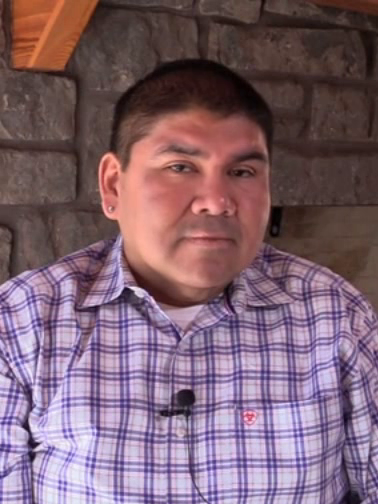
Image Metadata
|
Created: Thursday, May 11, 2023 - 10:15 |
||
Summary:
Oral history interview with Muckogee (Creek) Nation citizen Cebon Kernell.Description:
An interview with Muscogee (Creek) Nation citizen Cebon Kernell. A downloadable transcript may be found by link: Cebon Kernell. This interview has been indexed through the Louie B. Nunn Center for Oral History Center’s Oral History Metadata Synchronizer system at the University of Kentucky. For an indexed copy of the video, please follow the external link found in the bar on the right of this page.
Transcription:
The Muscogee (Creek) Nation
Historic and Cultural Preservation Department Oral History Program
“A Twenty-First Century Pandemic in Indian Country: The Resilience of the Muscogee (Creek) Nation Against Covid-19”
As Remembered by: Mr. Cebon Kernell
Interview by: Ms. Midge Dellinger
Date: February 27, 2023
Transcription: The Audio Transcription Company
Edited by: Ms. Midge Dellinger
MIDGE DELLINGER: This is Midge Dellinger, oral historian for the Muscogee (Creek) Nation. Today is February 27, 2023, and I am in Okmulgee, Oklahoma interviewing Mr. Cebon Kernell. I’m performing this interview on behalf of the Muscogee (Creek) Nation Historic and Cultural Preservation Department for the oral history project titled “A
Twenty-First-Century Pandemic in Indian Country: The Resilience of the Muscogee (Creek) Nation Against COVID-19”. Mr. Kernell, thank you so much for taking time out of your day to come and do this interview with me. We’re going to start with some questions about your personal life, and so let’s begin with what is your tribal town and clan.
CEBON KERNELL: My clan lineage is I’m a member of Hotvlkvlke is what we say, Wind Clan. Originally born into Cheyaha Town ceremonially. I know there’s a little bit difference between the political structure and our ceremonial structures. [00:01:00] And right now, I serve our community in a few capacities, ceremonial world, at Hvlvpe ceremonial ground.
DELLINGER: Okay. And Mr. Kernell, where were you born?
KERNELL: I was born in Oklahoma City, Oklahoma.
DELLINGER: And do you remember the name of the hospital?
1
KERNELL: I do. I thought you were going to ask me if I remember that day. (laughter) I was born at Baptist Hospital.
DELLINGER: And now, where did you grow up? Where’d you spend your childhood?
KERNELL: My childhood was basically spent in Shawnee, Oklahoma; Seminole, Oklahoma little bit further down the highway; even though technically I lived in Oklahoma City. My mother was a registered nurse. My father was an administrator for Indian Health Service and Environmental Health. So, we had to commute to his office that he was stationed [00:02:00] out of Shawnee, Oklahoma. But we went back and forth because of their employment. And I had my aunts, my uncles, my cousins, my grandmas, they all lived in Shawnee, Oklahoma for whatever reason. I think it’s okay forty years later to say we used their address and (laughter) just went back and forth. So from kindergarten to when I graduated high school, that’s where I went to my schooling. That’s where I played sports, had all my friends. It was really a good environment that kept me out of maybe some of the elements that I might’ve found in the inner cities.
DELLINGER: All right. What is your father’s name?
KERNELL: My father’s name is Glen Kernell, Sr. And I’m actually technically a junior so I have the same name as well, but everyone calls me Cebon.
DELLINGER: Will you please share about your father and his life?
2
KERNELL: From what I know, he was one who was [00:03:00] raised primarily in some of our churches, more in the Christian realm having himself been raised around Shawnee, Seminole area, places, like I said, down the road a little bit. A little bit access to our ceremonial life, mainly around one of our particular New Tulsa ceremonial grounds. We have some family connections there. He kind of was exposed to those things but was an athlete, baseball player, and served in the US Army for a time, that type of thing.
And he met my mother and they started their family. I have two sisters, one older and one younger. I know with that type of an environment, there’s a lot of things that [00:04:00] our people have to kind of figure out about faith and beliefs and those kinds of things. And I know my dad, my mom, and I guess all of us to some extent had to go through some things to think about where do we find wellness, where do we find satisfaction to take care of that part of our lives. And I know he was one that was on that journey his whole life.
He dedicated his life to his work. He retired from the Indian Health Service, knew many of our people, worked with many of our tribal communities that were surrounding the greater metropolitan area of Shawnee. I think they said there are six to seven different nations that he would assign different persons to look at water quality, crews, different things. So I know he was able to do that. But then personally was—how should we say— a wonderful grandfather, wonderful dad.
3
[00:05:00] We still talk about some of the stories that he shared before he passed and some of his experiences. And there was not a day that went by that he did not work to spoil his grandchildren, I guess you could say. And I really think that’s a characteristic
that we find in all of our people in the relationship between even mothers and fathers and their children, but specifically grandparents and their grandchildren. And he was one of many that he did that, and have wonderful memories of those occasions.
DELLINGER: Great. I’m glad that you were talking about grandparents because my next question is to ask you about your father’s parents and what you remember about them.
KERNELL: On my father’s side, this is a little bit of things that I think all of us go through to some level, to some degree. That I really believe that [00:06:00] our people left us really early; some of our ancestors, some of our elders. And that kind of comes with our culture. Being removed from our homelands, being removed here is that there’s so many inconsistencies in the quality of life that we kind of were just forced to normalize and we don’t realize it. And so when we look back on it, I believe that our grandparents they kind of leave us too soon. Even parents, we might find they leave us too soon. And I know there’s a lot of us that are trying to work to make that not the case anymore.
But I think back to all my grandparents and what they did for us. But on my dad’s side, of course there’s Kernells is the last name. But then also we’re Culleys on my grandmother’s side. And I’m just thankful. In their own way, they both lived out
4
[00:07:00] their lives with the self-determination of our people. Which may have given the illusion of it being passive, but we lived as Muscogee people. We lived as stecate people, Native American people. And there wasn’t a day that went by that I didn’t see that in their lives.
My grandfather, Simeon Kernell, he’s one that I think about quite often because I know he was a veteran of the Second World War. He was a survivor of being a prisoner of war in a German concentration camp. And even just last year in 2022, I didn’t know it at the
time but I was very near the site where that prisoner camp was where he was held in Germany. I do know that he suffered from PTSD, post-traumatic stress disorder, [00:08:00] when he came back, and I know there was a host of ailments that kind of plagued his recovery. I hope and pray—he wasn’t with us as long as I had hoped as a youngster—that he has found peace because I know they were forced to see things that no one should have to see in any life.
And so I have a high respect for his life and I always am honored that he served his country and he served our people in that way. And in fact, I came out of some ceremonies just yesterday mentioning that to some of our veterans as I was asked to pray for them in this particular ceremony. And so that’s what I think about. That’s what I tell my children about when I show them pictures. But I know he was one that had a preference for kind of the Native American Christian Church [00:09:00] that they were part of. But also, like I said, in those days we had so much of our culture in place, we did things that other people might not have known. We did things that were not visible to the non-Native
5
American world. And that’s how we lived, and we still kind of live that way. We don’t have to explain it. We don’t have to go and say we did this or we did that. It’s just how we exist. And he was a person like that.
My grandmother is one who—actually both my grandmothers are really the ones who raised me. Every spring break, every time school was canceled because of snow, summer breaks, that’s where I was, constantly there. That I have all these memories of being with both my grandmothers. And so she was one who was—our Culley family and the characteristics that they possess, I always say is that we’re fierce defenders of ourselves. That they [00:10:00] have a—we’re real strong, and that’s how my grandma was. I remember her ready to fight if anybody was trying to harm us as grandchildren, different things like that, and I saw her.
I can even remember when I was in high school I was a wrestler. And I can remember telling her I was going to a tournament or something like that. And she would use choice words that I won’t say in our interview today, but what she meant was go out there and win and win big. (laughter) And I’ll just leave it at that. Because she wanted to see her grandson succeed, but really there was a self-determination that she wanted to see our Native American young people succeed. And that’s what I took from her life, and so I was able to interact with her and to just have that constantly surrounding me.
And so I was thankful for that. Because while they had this [00:11:00] fierceness about her, there was also this gentleness. There was also this love that often went unspoken that
6
was in every interaction. Whether it was a conversation, whether it was just watching TV together or whatever it might be, that it was there. One of my more pleasant memories that I have—well, they’re all pleasant. One of my most fondest memories that I have, I can remember I may have been eleven or twelve; so going on thirty-five, thirty-six years ago, something like that. I remember watching her one day. She loved to sew. One time, her and my aunts, they would—I don’t even know what they’re called. They would have these big looms that you kind of raised them up and pulled them down and they would sew together these quilts, that kind of thing.
And then I also watched her make them on her own. And on one [00:12:00] occasion I watched her sit there and sew on her—I think she used her machine. Sometimes she used a needle. But she was making a blanket, and I watched her for a long time. I don’t know how long it took, but in my mind as a kid I kind of said, Why are you doing that for days, just sitting there doing it? And I watched her making just this quilt, and I didn’t think anything of it. We were taught to mind our own business. We’re not going to go and ask questions, “Hey, who’s that for? What are you doing?” If it was important enough, they would tell us.
And I didn’t think anything of it, so I watched her. And when the time came, I guess it was springtime, close to the time that we’re doing this recording. And it was my birthday. We were just going to, like families do, just have cake or something. And so we were doing that and I remember sitting there eating, doing that. And she came out and she had it all folded up and she gave me this quilt, said, “This is for you.” And I said, [00:13:00]
7
“Aw.” I was surprised. I was young. And she knew that my mom and dad, they were avid basketball players and softball players. We were a softball playing family. And she said, “I know you’re always at these tournaments and stuff, so I want you to have this blanket if you have to lay down outside or take it with you if it gets cold.” She said, “I want you to have it.” I said, “Aw, okay.” And I was a kid. You know, I don’t know how to use words yet. And so I took it.
And up until the time I moved out of the house, I used that blanket every night. I think I moved out when I was probably twenty, maybe twenty-one. I can’t quite remember. But now as time has gone on, I’ve put it up. I told my companion, I said, “Maybe when my time comes that I depart this earth, I might put it on my casket.” I said, “But we’ll see,” I said, “I also want my children to know what it is, so maybe I’ll just leave it.” I don’t know. We’ll figure it out. [00:14:00] Because I know those kinds of things, they won’t last forever. So maybe it’s just a memory. But I know that’s one of the thoughts—that’s how she was, my grandmother on my dad’s side.
DELLINGER: And what was her name?
KERNELL: Amelia Culley Kernell.
DELLINGER: That’s great. Listening to you, I have a blanket that my grandma made too. And those things are so precious to us. I mean, not that we have to have material things, but it is something that connects us to those that we’ve lost like that.
8
KERNELL: And I think even it represents a different day in time. Because those kinds of things, it’s real meticulous to make something like that. That we don’t even have—not just Native American culture but the culture in general, [00:15:00] we don’t really do those things anymore where we sit there for maybe hours upon hours of stitching things together. But that used to be the world. Even with the clothing we wear, the things that we do. And I’m not ever going to degrade someone’s gift to you, but gifts meant a little bit more when you did those kinds of things for a loved one. So, yeah, they hold a special place.
DELLINGER: Okay. And what about your mom’s folks? Will you share a little bit about them?
KERNELL: On my mom’s side, since we’re matrilineal this is where I get my clan or I get my tribal town. And there’s some of the things that I’ve come to know as who I am, the things that we do. That on my mother’s side, my grandfather was Delmer Wolf who
was one of our ceremonial leaders of Cheyaha ceremonial ground. [00:16:00] He and his brother, Jack Wolf, served for many, many, many years, just loosely put, as our Stomp Dance world. I have memories of being raised around the camp. And just like everybody else, running around, playing as kids do.
And even I remember in that environment I felt like I was very spoiled. There was no telling me no. I can remember doing our dances and getting dressed up for what we say
9
Yvnvsv-Pvnkv, our Buffalo Dance. And I was probably seven or eight, sitting there really proud. I had a hat on and a vest that had been specially made, walking around and everyone taking pictures and talking. And cameras were not like cameras today. They’d sit there with these little hard film cameras, and I can remember them pulling them out. That was the environment. Never did anything that I [00:17:00] didn’t want to do. It was a safe place, and my grandfather provided me with that type of environment. All of us, his grandchildren but also all of our kids. So, I know that was some of the things that we celebrated.
And, you know everyday life. I remember sitting there just, like I said, those characteristics that we saw in them as elders of just we were—the whole world centered around us is how we would say it. That there’s nothing that would go by that they wouldn’t not think about providing for us. And so I look back and I wish I had more time with all of them. And I can only kind of pull old photos together and think about the memories [00:18:00] that I had. But I see them carrying me as a toddler, carrying me as a baby. I just have to think about those and reflect upon what they meant because I did lose him untimely too when I was in elementary school.
And so I didn’t have as much time with him as I wanted to to ask the questions that I know we should’ve asked, to mature together in life with each other. But I know, like I said, this is something that all of our people have to contend with. But I was thankful at least I had the time that I did. I even had my uncles and my aunts, different ones, and my grandmother who were able to provide a little bit of a foundation to pick up things where
10
we left off. But today, those are the prayers that I carry is that for all of them in our [00:19:00] language and different things, I say that. That there’s going to be a day that we’ll pick up where we left off. There’s going to be a day when we’ll dance again, we’ll sing again. And we will all be with them another time, and so I think about that.
And so whatever things that they may have saw in another era in the life of this country, which they saw a lot. It’s not like we don’t see racism today, but they saw a lot of racism, discrimination. They would’ve had grandparents too that would’ve had oral memories of removal. I think my grandfather was born in 1904, I believe, so just the turn of the twentieth century. And so they would’ve had memories of these things that they were fresh. Just as much as I’m talking about him today, they would’ve talked about that then. [00:20:00] And they saw more than we will ever see. And so I’m thankful for the strength that they had to persevere.
And with that kind of thought, I’ll go to my mother’s mom was Martha Wolf and her maiden name was Alexander. And also, my first memories of her, of course, always cooking for me and always feeding me. That’s where it all started was her wanting to make sure I had enough to eat no matter what. And so I think about the person that she was, she is, holding down a camp, ceremonial ground, and doing the things for my grandfather. But then the small gentleness in her voice. I think I just shared over the weekend was some of our folks talking about our people might [00:21:00] not always get up and talk, but that does not mean that we don’t have confidence. That doesn’t mean that
11
we’re shy or passive. We’re respectful. We have confidence. We have all these things, but we don’t always need to get up and show off.
And so there’s power that I saw in her life. Like I said, she was raised ceremonially. She had that knowledge. But she also had a little bit of a preference for the church, for Christianity. That you have to imagine whether it was through boarding school, whether it was through missionaries, that they all were just indoctrinated day after day after day to have a preference for this lifestyle that became the United States, a preference for even conversion to Christianity. It was normalized. And so that was always kind of something that she carried. [00:22:00] And to be honest, my mother, myself, we also had that influence. And so I know she was a faithful, praying woman. One of these women leaders at some of our churches that she would go and visit from time to time. That’s the memories that I have.
And she was the one I got to spend the most time with. I lost her when I was a senior in high school. And on my dad’s side, I lost that grandmother when I was a junior in high school. So in two years I lost them both. But I’m thankful that I spent so much time with them. Because, like I said, to be honest they should’ve been here for at least two more decades with us. But I sit there, and I remember she would sit there and we’d go over words and language.
I remember coming over there and I said, “Grandma, how do you say Grandma in our [00:23:00] language?” And she was kind of shy because it sounds like a different word
12
for those that know our language. She said, “No, no, I’m not going to tell you.” And I said, “cv lawes,” and she looked at me and she replied in English. She knew I wasn’t a first-language speaker. She said, “Well, go get something in the kitchen,” (laughter) because I had told her, “I’m hungry.” And she said, “Get something in the kitchen,” and I said, “All right.”
But I remember us even—that might’ve been a few months before we lost her that my mother and father had bought me my first hymnal of Muscogee hymns. That’s the easy part. I was raised that way so I can sing these songs and grew up with some of my elders. And I said, “Grandma, look,” I said, “They got me a songbook.” And so we were looking at it and she was just going through them. But as a first-language speaker, she never was [00:24:00] taught that actual alphabet. That’s something that’s really a modern construction, putting an alphabet to our language because it’s an oral culture. And she was just looking at it and she said, “You must teach me how to read this one day.” And I said, “Okay,” because she’d never been around it. But she knew the songs. She knew the language, first-language speaker. And I said, “Okay.”
I think at that time we had a minivan. (laughs) I don’t know where we were going but she was riding with us. She crawled in the back with me and I was showing her that. And when we got back to her house, she couldn’t get down the steps. I said, “Just wait there, Grandma.” I said, “I’m going to pick you up.” (laughter) I said, “I’m going to get you out.” And I was a wrestler, so this was no thing. I picked her up, she said, “Ahhh,” but I
13
got her out of the van. I just picked her up and sat her down. [00:25:00] She said, “Ahhh.” I remember that like it was yesterday. But those are the things I think about.
I knew she had questions. But for us, we have a humbleness about our lives. We don’t question God or our understanding of God. We have a way of doing that in Muscogee culture as well. We don’t question those things. We just try to show our gratitude. And
even we do express our wants and our desires, but we don’t question. We make the best out of anything. Even trauma, even untimely deaths, we make the best of it. And like they always say is that we must go on. We must go on. So these things, I think about them a lot.
And to be honest, I don’t really believe that I’m separated from them. I still [00:26:00] walk with them. They still walk with me. Even I’ve lost both my mom and dad. I’m a young man and I still feel like—and I don’t feel like I’m separate from them. And every once in a while, the spirit will—they will remind us they’re right here with us. And sometimes it’s ornery and sometimes it’s nice, (laughter) different things that might happen.
DELLINGER: So, I want to ask you about language. It sounds like you were always around it. Did you know and understand at a certain point in your childhood that it was important to your grandparents that you—was it important to your grandparents that you learn the language?
14
KERNELL: I think I always knew. It was around. Everybody has stories about [00:27:00] speaking at different levels, especially for the younger ones, like myself, coming around. And there’s always a distinction point that we have. We have a story when we recognize being around non-Muscogee speakers and them not understanding something. And even I
have a story like that, even though I would never say I was a first-language speaker. I would never say I was fluent, even today. I would always say is that I’m in recovery and I’m trying to make sure that my life centers around that language. And maybe I’ll share why here in a little bit.
Because I was around them so much, I remember elders. I remember everyone coming over, and that’s the only language that was spoken in the home. Like I said, we don’t go and ask, “What are you doing? Why are you doing this?” We just play as kids play, [00:28:00] running around the living room and outside, and it was just normal. But I do have that story of using phrases and things and children not understanding what it meant.
I do think that there was a heavy influence from this boarding school era of assimilation so that there was always a preference for—to be successful, they would teach that you have to be fluent and English has to be your best language. And even today, I speak very well when I do presentations and things. I think it’s because of that influence of my grandparents and my parents and to me to get an education, to get what they would say a good job, to do these things. I think it comes from that experience.
15
So, it’s been a balancing of [00:29:00] recognizing where that comes from, that historical trauma because they were survivors of boarding schools. They were survivors that they knew—I can only imagine how they were treated in common society talking with English as a second language. I see what we do today in this century, in this year, to people who are not English first-language speakers. How we ridicule the things they do as a society, how we make comments about, “You need to learn the language,” even though English is not the languages of this land, of this North American continent. Our language, even though it was birthed in what is the southeastern part of the United States, it’s still closer to origins here even though we’re in Oklahoma which was other tribal territories.
I see what we do today, so I can’t even imagine what they heard as children. I can’t imagine what all of our elders heard [00:30:00] day after day after day, but still yet persevered to carry a little bit something more for us in this moment in time so that we can be at this moment where we see our nation, where we see initiatives that are trying to make the proper moves to have first-language speakers again. And so to me, because they came from this type of environment, it wasn’t something that was prioritized to my mom and dad. And I’m not ever going to be critical of that. We were in survival mode. I’m not sure if we’re not out of survival mode.
When I see not just the medical epidemics but the societal epidemics that face our people, the things that we’re surviving through, that I know there’s things that we have to do and prioritize just to live to see another day. [00:31:00] But I think about that a lot because
16
what happened was as I began my journey as a young adult, I started making more initiative to say, “You know, I need to do more. I need to do more. This isn’t sufficient.”
And when I started putting together what we lose if we don’t know our language, I was thinking, Wait a second here. For us, there’s an intimacy that comes with this respect for earth. Our words are so nuanced. There’s so much there that if we’re not speaking it, we don’t know our culture. We don’t know how to—even interaction with each other, we lose that. And I started putting those pieces together. And even today as I’m forty-five years old, this violence against our presence as Native American people is so insidious, it goes back so far, that it was meant to attack. Us not being able to live in [00:32:00] that culture was meant to attack our family structures, our belief in ourselves, our belief in our religion, our belief in this earth and what she provides for us. And even to make us, force us, to live in a way that exploits everything there is to exploit around us, the way a capitalistic extractive society is. And it began with taking all that away from us.
Now, I didn’t put that all together—I’m still putting it together—until now. So, it’s more crucial than ever as we see on this particular day—I don’t know if the folks watching this video will see the date that we talked. To even think just a few hours ago, we saw multiple tornadoes pop up and it’s only February. That this isn’t normal what we’re going through. And I was sitting there posting on social media. I said, “I was still holding out for some snow. It’s February.” (laughs) [00:33:00] We should still have at least four, five, six weeks of possible—pray to Creator to have mercy on us. We might get twelve inches tonight. But when I saw that, the things that we’ve normalized today is not normal to go
17
through violent weather like that. But there was a time when we had a reverence for everything, what we take from this earth, and it was found in our language.
And so I’m thankful that I was able to do what I was able to do. I do have phrases. I do have words now and structure. And even, I think, one of the biggest gifts that I’m thankful for is that even though it was a part of the Muscogee churches, I was glad that I was exposed to our songs. Because even in our songs they might seem like they’re Christian songs, but if you hear those words in our language it’s our cosmology [00:34:00] as Muscogee people. It’s saying something a little bit different than how it’s been interpreted by missionaries. It possesses who we are.
And so I was thankful that at least I have that. So, today I can sing many of our songs and was mentored by many of our elders within these churches that they’re not here with us, and I’m thankful for their life. But my hope is that somehow we can come back to that intimacy with language. But it is a moment of recognizing this intergenerational trauma that has happened. Because if a child knows more than their mom and dad knew, it’s hard because we’re taught we’ll never do anything to make somebody feel bad. We’ll never do anything to [00:35:00] boast about ourselves; to be proud of ourselves; to say I’m this, I’m that. That’s not in our culture. It’s not in our ways. But I come to know when I still had my mom and dad that I knew more language than they did.
And that was something that was hard for me because they’re my mom and dad and they always will be. And I’m never going to try to be above that, so to speak, to speak in those
18
kind of terms. And even today as I go to places across the country, across the world in my vocation, I sit there and I come across Muscogee people. We kind of introduce ourselves, kind of say hello, sometimes in the language, sometimes in English. We’ll ask clan lineage and things like that. And our people, we don’t even know what clans are sometimes. [00:36:00] These are elders. And I think I’ve had a person one time say, “Well, no one ever told me that.” And I didn’t mean to but I felt bad because I didn’t want them to feel bad.
And so this is a struggle that we go through is just trying to do the best we can to talk about our right to exist as our elders did. And so it’s a process of healing. It’s a process. It’s a journey that, I think, we’re starting to get into a place now where we see the goal that we have in mind. And I think right now we just have to tiptoe around politics and efforts of, How do we get there now? But my hope is that we’ll continue to have first language speakers be born into this earth. But right now there’s only a handful of children that I know that speak. And I’m not going to say who [00:37:00] or where, but I know them. Just for the sanctity of their lives and the privacy of their lives. But it’s very, very, very rare. So my hope is that. That was a little bit of how I was raised. I’m hoping that by urging us to go in this direction, that will do my part to help us to see what we need to do to protect this way of life.
DELLINGER: You mentioned siblings, two sisters. Will you share their names and tell about them?
19
KERNELL: I have an older and a younger. My older sister is Christie and my younger sister is Gwendolyn. We were raised—Gwendolyn’s much younger than us, so I was a teenager when she was [00:38:00] not a toddler but was real young, much younger than
myself. And we had a good relationship. I think it was much in the same way that my grandparents raised me is I was just spoiled. There was no saying no to her as a little one, and just like a big brother trying to take care of her. I can remember now back in these days—this was a long time ago—they still had arcades. You put the coins in the games and you actually had to play it. I know that sounds crazy to us, but these kids nowadays they just have phones and there’s fifty thousand games you put on your phone. I would take her to the arcade and at the mall and we’d spend time like that doing different things.
My older sister, now, she is six years older than me. I do know there were times when we were close and whatnot. But for some [00:39:00] reason, that’s a big gap a little bit. She was kind of going into adulthood. When she graduated high school I think I was twelve. And so she kind of started her own life at that point and so I wasn’t around her for a lot of things. She wasn’t around me either for a lot of the moments when I started coming of age and becoming a teenager, high school. So we weren’t as close as I see a lot of families today.
And some of that might be living in an urban area; like I said, historical intergenerational stuff that’s going on. But we tried to do what we could, as time went on, to take care of our mom and dad. Just like any other family, there’s successes and there’s failures. We’re sitting there getting mad at each other. It happens to everybody. So, had a fairly good
20
environment. I was the only [00:40:00] son and I was the middle child, but I didn’t feel any of that middle child syndrome type of stuff. I enjoyed it. Maybe it was because I was the boy of the group. But we did what we could when we were raised and fought when we fought, argued when we argued.
But now I think as we’re reaching this point in our lives, it’s just trying to figure out how do we exist in a good way, I guess, because they’ve had their own health ailments and things that have debilitated them. And I’m trying to raise my family. And even at this moment in time, as I anticipate in the next two months I’ll have my first grandchild that will be born into this world. As I prepare for that life, it’s going to limit me a little bit. [00:41:00] So, those kinds of things. And I think that’s about all I can say about that relationship.
DELLINGER: Are your sisters close-by? Do you all live close by each other?
KERNELL: They do. They’re in Oklahoma City. Now it’s only eight or nine miles away, but it’s a good twenty minutes, twenty-five minutes in the city miles. So they’re close. And like I said, there’s successes and failures. And they kind of have their own life but they’re staying together trying to help each other out.
DELLINGER: All right. Will you share, where was your family’s church and the name of the church when you were growing up?
21
KERNELL: Well, in the urban center of Oklahoma City it’s a little bit different because that’s where I spent most of my formative years. I guess I still live in that metropolitan area there. But [00:42:00] we were a part of the Methodist structure, which a lot of people in this part of Oklahoma—if you look at our records through the US government and stuff, different denominations were kind of parceled out to take different regions of the country. Missionize, assimilate is what the purpose was. So in certain areas you’ll have a high number of Episcopalian. In certain areas you even have the Roman Catholic Church being in charge of missionaries. But for here in Oklahoma, the two major ones were Methodist and also Southern Baptist.
And so that’s why you look around today and you’ll see that’s pretty much most, even though there’s a sprinkling of Native peoples that are Catholic. There’s a sprinkling that are Presbyterian, of course. And then we have so many Methodist churches and Baptist churches all around us. But that’s why is that this was kind of their territory. So we were no different. So we were exposed to Methodist Church. [00:43:00] And in the Oklahoma City area, the way that they were structured is they had three original Native American congregations is the word that we would use. And one was for Chickasaw, Choctaw families, persons. And at one time there was language there, so everything was done in the very familiar similar language of Chickasaw, Choctaw people.
The other one was for—I want to be judicious with my words because we in the eastern part of the state say, “Oh, that’s Western tribes,” (laughs) non-Southeastern tribes but really kind of Kiowa, Comanche. A conglomeration of a lot of tribes went to this other
22
church. And the one that we were a part of was one that was kind of geared a little bit more towards Muscogee (Creek) Seminole people, which there’s a lot of deconstruction that we have to do because there’s branches of Seminole that are Muscogee people. But because of relocation; [00:44:00] because of moving, wars, some were forced to consider themselves another tribe. Even though the Seminole people never was a prehistoric group of people, but that’s probably a history lesson for another dissertation or webinar. And so we’re all Muscogee people.
And so that church was established for Muscogee speakers, different ones, and that’s the one we went to at varying degrees. I can remember being a kid and I was just dropped off, “Well, you’ve got to go to church.” I’d walk in there. It might’ve been thirty minutes late but they would always take me to Sunday school and different things. But that’s where we grew up. And as time went on, it became to be a little bit more important in life. We were historic members of the Methodist movement in Eastern Oklahoma, just like [00:45:00] here in the capital of the Muscogee reservation. That we had churches all throughout, from Oklahoma City all the way back to Tulsa, Okmulgee here.
And so the church that my grandmother was affiliated with was the Hechetey Methodist Church where she was a women’s leader, very close to the ceremonial grounds there where my grandfather participated. So that was always there and it was always a part of how we believe that with all its complications, that we had to pay attention to that part of life. And so that’s what we did. So time went on and that was the environment. That even though I had ceremonial life right here, there still was a preference that this is kind of
23
what you need to do because we don’t want you to be—just to use terms, and I don’t want to offend anybody. I know we’re all trying. But we don’t want you to be unsaved or unchurched, and [00:46:00] the classic definition of the consequences of what would happen to you if that was the case. And so we went.
It grew over time. But I’m thankful that there were persons that talked to me about our language. I can remember some of my fondest memories of Reverend John Lowe being there. I still remember him pulling out a—I think it might’ve been a chalkboard at that time, and we were going over Muscogee hymns and going over pronunciation. And I sat there, and I didn’t pay attention like I should. But if I just listen to it I’m like, Okay, yeah, I know that song, and we’d sing. I still sing it to this day. But I remember them doing that, allowing us an environment at least to be a little bit different than the non-Native American world, to affirm who we are. So that’s where I grew up.
But I was glad because [00:47:00] I didn’t know it at the time, but we were divided up into districts, those churches. And so, of course, because we were Muscogee (Creek) Seminole Church that we were put in our Northeastern district. And so I was back here all the time. We had our camps up here at Preston, sitting there. We didn’t think anything different. We just came. I still remember playing volleyball and basketball. And I think some of the things don’t even look the same at our regional center up here. But I remember going to all of our churches. I remember being at Springfield. I remember being even here at Okmulgee at some of our churches. I remember being at all these places, and it wasn’t anything. We had youth rallies. We’d visit. Everybody, “Cebon.”
24
Even to this day I’ll go and—how you say my name in our language is “Cepane.” They still call me, “Cepane.” I’m like, “I’ve known you since [00:48:00] you were little, since you were a baby.” I still remember our former Principal Chief James Floyd coming to our ceremonial ground a few years ago. He said, “Cepane it’s me.” And I said, “Huh?” “Cepane,” and I said, “James, oh.” And we still have that relationship. And I said, “I’m sorry.” It had been many years since I had seen him. But that’s how we are.
But it put me in those environments. I sit here and I think about coming around to our churches. I’m thankful that at least in a time when we’re trying to piece together community, it provided that, a little interaction. Even to this day, people that I grew up with there I still run across them from time to time. And like I said, we’re all at different places. But it gave us that connection that we’re common in some way, we’re related in some way. So, I’m glad for that.
DELLINGER: Yes. [00:49:00] Now, what year did you graduate from Shawnee High School?
KERNELL: I graduated in 1995.
DELLINGER: Nineteen ninety-five. And then where did life take you in your pursuits of higher education?
25
KERNELL: Oh, this is something that’s kind of crazy. I don’t know how much time we have. The first step, I actually have to thank—and for whoever watches these videos, I have to thank a Kiowa elder by the name of Joseph “Bud” Shamaunt, Dr. Shamaunt, who was the athletic director at Oklahoma City University at this time. That because OCU was a Methodist school, we always got free tickets to the basketball games. And so since I was twelve years old, we would be at every basketball game sitting there at home games in Oklahoma City watching it.
We call him Bud. Bud, he knew me, watched me grow up. And so when time went on, he knew I was an athlete. He knew I did things. [00:50:00] He would always come by and shake our hands at the ball games. And he said, “Yeah, Cebon, we need you to come to school here.” He’d start planting those seeds in my mind. Now in school, I never considered myself an academic wizard or being very sharp. I was just an athlete. I just played sports. And if I went to school, it was going to be to play sports—baseball, wrestling, or football. Even though I stopped growing (laughs) at some point. I wasn’t too tall but I still was successful, at least in my mind.
And so I never considered myself like, Where are these schools at? Am I going to go to an Ivy League school? Am I going to go to OU, Oklahoma? I never thought like that. But because Bud kept saying that, “When are you going to do this? Cebon, it’s January. I need you to take the ACT.” I’m like, “ACT? Mom, what’s an ACT?” “Did you get your application in? We’ve got to have it.” He’s like, “I put my name on it,” and he said, “So
26
they’re looking for it. You don’t have to pay the application fees.” And so I was like, [00:51:00] Okay. So I (laughs) started doing these things.
And because of him, I enrolled at Oklahoma City University. I’m not sure if he didn’t do that if I would’ve went anywhere. I think that’s enormous for the vocation that I’m a part of in my modern day—the work that I do across this country and across the world, that I
go back to him as the starting point. And I’ve shared those words with him. I actually gave opening invocation to the city of Tulsa’s Native American Human Rights Commission. I can’t remember what they call it.
He got an award last year, and he and I were there. And I heard him, he said, “Cebon’s supposed to be here.” He was looking for me. And we still were all masked up because of COVID. And I said, “Bud, I’m over here.” And so I was able to share that expression that I appreciated that. Which wasn’t just me but he did that for everybody, [00:52:00] so I credit him. He’s a member of the Kiowa Nation. But he did that for so many students. I would say that I wouldn’t be here in this position, this moment, if it wasn’t for what he did. And so that’s how I went to undergraduate studies.
I graduated high school. I did the bare minimums to get out of high school. If I made less than a 3.0 GPA I would’ve gotten a scolding. I don’t think we spanked or anything, (laughter) but I would’ve gotten a talk to. And so I made a 3.0 and got out, made the bare minimums in ACT. My children have all just excelled, made wonderful entrance exam marks and things like that. And I said, “You know, I only made this,” and I tell them. But
27
I went. And at that point, I did retire from playing sports so all I did was just study. [00:53:00] And that first semester—now, I know people might laugh at me a little bit. But for me it was a big deal that I got my scores back and my grades, and that first semester I made a 3.6 GPA, almost straight A’s. And this wasn’t any weighted grading system or anything. They have all kinds of stuff today that goes into it. But I sat there and I’m like, I didn’t know I could do that.
I was borderline even, I think. When I was in junior high, they debated on whether sending me to other school services because they just thought I was someone who was going to be a troublemaker. And I know there’s some of our people that have to go through that and survive that. They call it alternative learning, I guess. But some of us don’t always get out of that environment. And so this debate was going on will he do this, will he do that. [00:54:00] But I made it to school. And in that first semester I said, I can do this? And so I started learning about my voice as an Indigenous man, a young man who had all this background, and I started taking those steps.
My major was political science with an emphasis on pre-law because I was heading to law school. I survived that, went through it. And then I joke, my companion in life also— I say it was the third semester of my junior year—and no one kind of gets that (Dellinger laughs), but meaning that junior year took me a long time to (laughter) become a senior— is when I met her. It was not but a year later or so we started our family; which was a surprise to us, a good surprise. [00:55:00] We started then but we survived that moment.
28
We had to pause for a little bit our schooling. I think I stopped for one semester and then I went back so I could work.
I worked full-time to pay for expenses, our rent, all those things that families do today. So I went and did that. And I can remember because Dr. Shamaunt had given me scholarships, had given me money to go to school. And I said, “Bud, I’m going to have to stop.” I said, “I’m going to come back. Just one semester let me go. I’ve got to work to get things in order for my family that I’m starting.” And he was, I would say, crushed because he said, “Cebon—” and he used the term—I don’t use the term Indian. But he said, “Indian students when they leave, they never come back. They never come back.” He said, “You have to come back.” And I said, “I will, Bud. I’ll be back.” I don’t know how he felt on the inside.
[00:56:00] But I was only gone one semester and I came back, and I graduated in 2000 with my bachelor of arts in political science. And at that time in my immediate family— not cousins or anybody—I was the first one to get my bachelor’s degree. And so I sat there and I had—a room like this, everybody came and we ate barbecue. Everybody was happy. My daughter, I think she was almost one, not quite one year old but she was being passed around. It was a moment. We sat there and it was a big deal.
And so I went through a little bit—all the time I can remember those last two years were probably the hardest in my life because I wanted to go to law school. So I had constitutional law. I had international law. I had all these classes that were stacked up.
29
They were undergrad level, just trying to prepare me for actual law school. [00:57:00] I remember the last two years until I graduated, I worked full-time in a manual labor position from seven to three is what I negotiated. And I said four o’clock is my first class for four semesters. I took classes from four to nine, and my schedule went.
It worked out, thank goodness, that I would go there with my same gear on, my work boots and everything all dirty and dusty. I remember sitting there in class like this, sometimes I’d be falling asleep. But I did it. And I can remember we’d eat—my wife teases me because every night it seemed like we ate spaghetti. (laughter) She’d have spaghetti on the table and we’d eat dinner at nine thirty or ten. I’d get cleaned up, we’d eat that. And then about eleven o’clock I’d pull out these constitutional law books and things, going over case studies. And so about one o’clock [00:58:00] in the morning I’d finally get to sleep, and then six thirty wake up again and get ready and go.
And I’m thankful to my boss at that time. I was probably late quite a bit. In fact, I remember my workers they would laugh at me saying, “Yeah—” they called me Glen because it was official—”We can always tell when Glen’s in school, when semester’s in, because he’s over there in the breakroom falling asleep like this.” When school wasn’t in session I’d probably be talking like normal. I said, “Oh, really?” I said, “I didn’t know you all could notice.” But I made it through it and I graduated.
And a little bit after that, I made that decision. I said, Well, I’ve got to go to law school. So I took the LSAT, did different things, Law School Admission Test. And I made decent
30
enough. It wasn’t as good as I wanted to. I was still honing my writing skills a little bit. Good enough to get in schools. I think I just wanted to go back to Oklahoma City University [00:59:00] or Oklahoma University. I didn’t want to go to—you know, we have a lot of nice schools now across the country for Native American law—Arizona State, different ones. I said, No, this is sufficient.
But as I was going through that, I began to think about legal precedents. I said, Well, all law goes back to European structure. Even some property laws go back to the Doctrine of Discovery that was issued by the church giving Spain and Portugal the right to own and seize whatever they so-called conquested that were non-Christian territories. And I remember thinking a little bit about that. I said, Oh, there’s going to be a limitation. I’m not going to go as far as I want to go with the assertion of who I am as a Native person, as an Indigenous person. But then I also had a little bit of a calling.
We were in the church. And so I said, You know, I don’t know if this is going to fulfill me. [01:00:00] And so I said, I’m going to try to—maybe I just need to start preaching or becoming a clergyperson, go that route. But I didn’t want to just go and, “Hey, give me a church,” or, “Hey, give me attention.” I was going to go to get my graduate degree and study in a seminary environment. And I said, I’m young. I need my education. And so at that moment I changed my mind. And I don’t know what my mom, my dad thought. Well, I do know what my mom thought. She saw all these pastors around her that didn’t have health insurance, that were subsistence living.
31
We still don’t pay our clergy, even though we expect them to be more than full-time in these positions. They don’t have a living wage. Now, I’m not saying be a televangelist and get rich. But they don’t even have a living wage. My mom was like, “Oh, no. He’s going to have a lifetime of suffering.” A little bit she was almost right. (laughs) But I
said, “No, this is what I’m called to do.” [01:01:00] And so I said, In order to do that I want to be trained properly. Even the degree program I entered into had a certain degree of behavioral health training. These kinds of things that we put people in these communities and assign them, and they don’t have no training at all. I said, I need to go ahead and do these things. Along with biblical analysis and study and constructive theology, things that some of those educated folks kind of know about. At that time, I didn’t know nothing like that. And I said, I need to do that.
And so the school that was the closest to me was one that was in Tulsa, Oklahoma, Phillips Theological Seminary, which was the only college still open from Phillips University that used to be in Enid, Oklahoma. And I said, “I’m thinking about coming here.” And, boy, they were all over it. They gave me a full ride. They said, “No, this will work out. The way we do our classes, it’s [01:02:00] commuter based so you can do them all—you don’t have to come up here more than once a week.” So a three hour course, graduate level course in one day. There were some hard days there. The Methodist Church gave me an enormous scholarship. For the first time, I didn’t have to worry about financing my education. And so that’s what I did. I started that.
32
Now, I do plan on publishing, at some point, a documentation of what that looked like personally because I was very conservative in my Christian beliefs, and when I went to school that altered dramatically. I can remember there were two classes that it changed the most for me was Introduction to Theology is what they call it. The study of God is
theology. And then also [01:03:00] Introduction to the New Testament. I can remember sitting there in that theology class and I didn’t know what the heck I was hearing. I’m like, What? This isn’t what I heard growing up. What are you talking about? And I can remember actually praying. I said, “God, help me. I don’t want to remember the things that are causing me this grief, but help me just to take what I need from it and to get past the class.” I remember saying it every morning before I went in there and that moment.
I guess I should preface that a little bit. Two other classes, that New Testament but it was History of Christianity and the New Testament class. I remember sitting there and we were going over different scholars. These are professors well known all across the world. And they were talking about the Gospel of Luke. [01:04:00] And I was sitting there just in shock of these things we’re hearing. Someone raised their hand and asked a question and said, “So, you’re telling me Luke isn’t the author of the Gospel of Luke.” And everyone kind of started snickering, so I guess in this environment that was common knowledge. But I was sitting there like this because I had the same question. No one ever told me that in Sunday school. Nobody ever preached that. And I sat there and I had the same question.
33
And what I began to find is that we weren’t told the whole truth, especially as people who were missionized. That this Bible was constructed over hundreds of years. The beliefs that we have taken as the doctrine of Christianity even evolved over hundreds of years. We had always been taught to drop everything there was about our Indigenous identity to [01:05:00] convert, and I was hearing this. I’m like, Wait a second, something’s not adding up here. I can remember having these thoughts. But luckily I had a good mentor, a good advisor, Dr. Ellen Blue. I still communicate with Ellen from time to time. She’s retired now.
I remember sitting there in the History of Christianity class and we were studying when Spain and Portugal were in pursuits to missionize the world. They said missionize, but they were looking for gold. They were looking for land. They were looking for anything that could have wealth. It wasn’t about the people. And they came and encountered Indigenous peoples. And the church officially had a debate on whether these peoples they encountered, if they were in fact human; in fact, if they were worthy of missionary endeavors, of salvation; [01:06:00] and they debated on if we even had a soul or not.
I remember at that moment, I don’t need to be here. I don’t want to be a part of this church. I said, You’re debating on whether our ancestors had souls or not. I was beginning to debate on whether this Christian movement or the church had a soul or not. And I’ve said that ever since that time. I teach that. I’ve actually gotten standing ovations for saying that at conferences and groups. I sat there and said, I have a way of life. I was given something. If I was meant to speak English, our ancestors would’ve spoke English.
34
If we were meant to be a part of something, don’t you think we would’ve had that? And so I about walked away.
And it was at that moment I said, Well, there’s something I can do is speak the truth. And so from that point on, [01:07:00] that’s what I committed to do. To point to those things like, Well, this isn’t even your background for those that are in the Christian church. Respect others. And so I built a career—well, I’ve been blessed with a career that allows me to do that across the world. And so in this day and age, I went and graduated, got my master of divinity degree. And the rest is almost history because the past twelve years have seemed like a whirlwind. I can’t even remember what year that was, maybe ’15. But the past twelve years as things have just built up, to say where can you help us at. Universities, museums, even I’ve worked with military institutions on Native American and graves and repatriation, all kinds of stuff.
Because at the end of the day, the only agenda I promote is respecting our culture and way of life, [01:08:00] and how we hope to have a future with that culture and identity. And so here we are in the year 2023, and I sit here and I think a lot about our elders and everyone. Because I know this is something that I wish. I wish it was them doing the teaching, not me. I’m always going to be the student. I’m always going to be the one who needs to be at their feet listening. But I try to do what I can to speak that truth. So that was a little bit about my education.
35
DELLINGER: And as you’ve mentioned, you’ve traveled all over the world. And the work that you’ve done has been through the United Methodist Church, correct?
KERNELL: That is correct.
DELLINGER: What are you doing currently? What is your occupation today?
KERNELL: Well, currently I am ordained in the Methodist Church so I’m clergy. I’m in appointment status [01:09:00] or extension ministries is how they classify that. For the past ten years I was appointed to—it’s funny because it was the missionary arm of the Methodist Church for Indigenous peoples’ work. And I always told them, I said, “Never in my wildest dreams would I ever think I’d work for a missionary entity,” because of all the negativity and negative connotations that came from their interaction with Indigenous peoples. But it gave me an opportunity to encounter our communities across the world. To even work to halt interactions with those communities that perpetuated a violence against their right to exist.
To give you an example—I didn’t realize that until I was in the middle of it. One day my office, or myself, I was reached out as a consultant for one of our grants for our missionaries. And we always had this process that we did to go and check with so-and-so before it went to the approval process. And I remember sitting there, I was reading through it. And this particular missionary was in [01:10:00] Northern Brazil, in
36
Amazonia is what we call it. In the basin, they’re working with Indigenous tribes and they were looking for funding to do English classes to teach English.
I looked at the grant proposal, the request, and I said, “Where is your consultation that teaches respect of the land because it comes in Indigenous language?” I said, “Respect of the cosmology. And in fact, it should be missionaries learning that language.” I said, “Where are these things at?” And it wasn’t found in this request. I said, “I won’t approve any type of funding that doesn’t respect a peoples’ right to exist in their home territories.” And they said, “No, this is why it’s important to have an Indigenous person on staff.” To me, that was basic. But when I realized things are happening all over the world like that that undermines our right to exist. And so I sat there and I began to realize what my purpose was [01:11:00] in this missionary arm. And so that’s what started it.
Not only did I interact with our communities, but I had to represent, at least to some degree, at different gatherings. This is where I was deployed to my office at that time, I had to go back and forth to New York City. So we had a relationship with the United Nations for human rights meetings, different things that they would have; specifically, the United Nations permanent form on Indigenous issues. And so for over a decade, I’ve annually gone up there to monitor what’s being reported from our Indigenous communities across the world.
And I would try to connect with those that were most in common with what I was capable of addressing. Maybe it was language, maybe it was spirituality, maybe it was
37
land. And I would go and learn more. And so it wasn’t so much the reporting to the UN, which sometimes can be moot and fruitless. But it was working together with our people [01:12:00] to see where what we call extractive society is trying to take. Much like what was taken from us, we see that going on now across the world. And so it gave me those
opportunities. It gave me a chance to do that. And so I began that process in learning more and trying to figure out, What do we need to do?
There’s more to Christianity, for those that call that their spiritual home, than just having revivals and fundraisers. You can stand up for what’s right. You can be on the right side of history if you choose that path. And so I said, “I’m going to help you try to figure out why you should choose that path.” That’s what I do is I work to put that information out
there. I bring a testimony from across the world. I bring stories over here of displacement; dispossession of territories, homelands, that kind of thing. The same things that we’ve gone through.
And my hope was that maybe through some of the work that I do, maybe I could [01:13:00] prevent what has happened to us from happening to somebody else. Because in a lot of these territories and communities across the world, they still have intimacy with their language. They still have a cosmology there. They still have these things in place. And I would never want to see that disrupted any more than it already has been. So, I’ve been in different meetings and different places trying to educate, Where does the Christian faith situate itself? Where does this denomination situate itself? And so I can
38
only say I’ve been blessed and I’m thankful that I’ve been in these environments just over a decade, I guess, to help out, to see our values.
I think one of my most impactful moments is when I was deployed to the island of Mindanao in the Philippines. And there, there’s eighteen tribes on that island. They call them Lumads. [01:14:00] And I can remember the reason I went there is because the communities were protesting because they were forced to live off of rice subsidies. And they already didn’t have their ancestral homes. They were being pushed into the mountains and living. And so they were protesting to get more rice per family. And the paramilitary police forces that were in charge of this regional area opened fire on them during that protest. I think several of them were killed and even more were injured.
And as they looked for safety, the Methodist properties where the bishop of the area lived and different ones, they all went on to the church property because it was behind a gate. And in that area there’s a high reverence for Christianity, and so they were able to find what they called sanctuary there. They stopped. But they lived on that property for about two weeks because any time they came off they were [01:15:00] either arrested—and they were even harassed while they were inside that—just for lack of a better term, it sounds negative—compound. But church people over there, different ones, were nervous and so they wanted to know, How do we provide sanctuary? How do we stand up for something that is wrong?
39
And so they asked me to come over there and talk to them and others. And I said, “For someone trying not to be killed, we should never feel bad about giving them a safe place to go. It should never be a debate.” And I was sitting there and I talked with them. And we had a press conference and everything talking about this is our stance is that if anyone’s ever looking for that safety, we should always be a place for them to come. Not only did I do that, they sent me to visit with these communities. And there were some that were actually living in a refugee camp. And so I sat there and I listened to their stories. [01:16:00] They took photos with me. They were still in crutches and bandages and everything from being shot.
And what I found out is that if they’re to leave, their leaders were being assassinated about one person every couple of weeks just for standing up for their rights. I sat there and I listened to them. Because I know we have human rights issues here, but there’s so much we can do together when we walk with one another. And so even though I worked for the missionary arm of a denomination that I still am very critical of the Christian movement, very critical of the missionary things. In fact, I’m okay if they ever kick me out. I’ll be okay. I have my way of life.
I’m there so that they can stop the violence against our people. But I do feel and believe that we can walk together to make the world a better place for those [01:17:00] that are vulnerable. Now, there’s more to that story of my time over there but that was just one of my interactions. And I found out that if I listen to the people, I can find ways for us to
40
help maybe, just maybe, alleviate some of the harm that we see going on in the world. And so that’s what I try to do.
DELLINGER: Okay, that’s great. Thank you so much for sharing all those things about your work. Before I move on though, is there anything else, Mr. Kernell, that you would like to share about your work?
KERNELL: Well, that was up until 2019. Halfway through that year I took a new position. It’s all within the Methodist Church. It doesn’t sound any different to the non Methodist. But I took a new position that kind of had more programmatic [01:18:00] value of doing everyday trainings for mainly folks here in North America, the United States. And I thought I could get more focused on actually training our people how we can interact with international communities of Indigenous peoples, how we can recognize those things that are going on.
And because our denomination is in the middle of schism is what they call it, or splitting up, that we were preparing for what they call the general gathering, General Conference. And I haven’t even been able to get to that type of work yet because we were preparing for that moment. But then right as we were preparing in March of 2020 is when the pandemic hit. And so the entire world is different now, including the church. And so we’re just now in this time period getting back to, How do we function now? And we can’t even go back to what we used to be because it doesn’t exist anymore.
41
And so I’ve had to do a lot of more [01:19:00] independent work of me personally being almost like a consultant to institutions, to agencies, to different things. And I’ve done I don’t know how many webinars over this three year time period. I’m thinking upwards of thirty-something. Just trying to do different things from education on human rights, education on Native American peoples here, just a host of things, that just trying to keep busy during that transition. And so we’re just now coming out of that, and so that’s what my hope is though.
One of the things that I realized during my experience over the past just over a decade was that if anybody wants to interact with our Native American communities you have to have four priorities that you have to focus on. And one of those, of course, is Indigenous spirituality, Indigenous language, the role of Indigenous women. And at one time I used to say food sovereignty, [01:20:00] which is not food security. Food sovereignty is the raising of our own food and knowing the spirituality and theology behind it. Things that our Muscogee people were raised with is the sacredness for corn. And all of us have corn mother stories, origin stories, of that.
But I came to terms that food sovereignty wasn’t enough when I recognized the threats to this earth mother and our climate, the climate change that’s going on. And so that fourth priority moved from food sovereignty to climate justice. Because if we don’t have an earth to walk on, we won’t be able to raise our own food. And so I thought it could be a component of that. So I say if you’re interacting with us, you have to address these four
42
things because they’re most under attack in this day and age. And people don’t really realize that, but they are.
There are still assimilative efforts out there. There are still efforts that—I remember doing a training for this missionary entity and I said, “The world is violent to the [01:21:00] presence of Indigenous peoples. We don’t have to do anything aggressive to receive violence.” I was at Standing Rock for a period of time, and the only weapon that was carried there was prayer. But yet, we saw numerous accounts of violent acts inflicted upon those that were simply praying. And even there were things that happened while I went into the ceremonial community and prayed with the local community, and there were things that were done to disrupt that prayer time. So, I’ve seen it firsthand.
I say that because this has all been percolating in the past three and a half years during the pandemic of COVID-19. And I really am excited because I believe this year that this is the first moment we can start kind of rolling up our sleeves and saying, How do we mobilize persons of like-mindedness, persons who seek justice, persons who—what I say is that you shouldn’t call for our conversion. If we’re being [01:22:00] harmed, you should still be standing with our people. Don’t say, “I’ll stand with you only if you join my church. I’ll stand with you only if you get baptized. I’ll give you clean water only if you do this.” It doesn’t work that way. We should be in the business of doing all of that no matter what. Making sure our children have a right to be safe, making sure we have the right to walk upon earth wherever we see fit and to be free. And so that’s what I try to do to this day.
43
DELLINGER: Excellent. Okay. Will you please tell me about your family and life in Oklahoma City?
KERNELL: I would be happy to tell you about that. I would say my family says, “Well, my dad’s not really always in Oklahoma City.” In fact, I’m on our reservation here quite a bit actually. But family life, just like any other. My priority is my family. My priority is my children. My priority is [01:23:00] my companion in life. And it starts there. I have no right to go and talk anywhere if I don’t have a healthy relationship with my family. If I’m not a person of integrity that lives under the understanding of love and humbleness and respect. Even as our elders would say as being lowly in heart is what they would say if I don’t do those things, and so they’re my priority.
I’m thankful that my companion—like I said, when we were in school we had our first child. She’s twenty-four and she’s about to give us our first grandchild here in the next couple of months, month and a half now. I’ve been given my marching orders. I cannot
travel during a certain time period in the year 2023. So, I have to abide by that. Even while I was coming here today, (laughs) I was reminded on the phone, “No, no, no.” I said, “Okay, I got it. I got it.” (Dellinger laughs) [01:24:00] I have five children. One is in graduate school and she’s expecting.
DELLINGER: Mr. Kernell, will you say their names, share the name of your wife and your children?
44
KERNELL: Yes. My wife is Sara, maiden name is Isham. Sara Kernell, she is a registered nurse as well, over twenty years in that capacity. But over the past might be going on seven years, she’s a part of our United States Commissioned Corps. So she’s an officer in the Public Health Service and she’s a lieutenant commander, which we’re still learning that process. That it’s the civilian branch of this military service, but she’s an officer. So we’re kind of surprised that when we go from place to place that if she’s in her uniform and those things, that persons will salute her for that position. It’s got a lot of respect to it.
[01:25:00] And we’re still grateful for that because we always will have a gratitude for those that have been in—what do they call—actual armed conflict. And for the other branches of service, we’re always grateful for that and we never want to disrespect that. But she has been taking care of our people. She’s deployed out of the Lawton Area Hospital in Lawton, Oklahoma. And she was actually deployed during the pandemic for one month as we didn’t know what we were up against when COVID first came to the United States. And so she was actually working with two of the—they were cruise liners, cruise ships, that were being held in, I believe, the Bay Area in San Francisco. But they took them to a place in San Diego to hold them until their symptoms would go away. And in the middle of that is when the world declared it a pandemic. So I think [01:26:00] when they first started there wasn’t even regulations on wearing masks or anything. But she was there for four weeks.
45
DELLINGER: So she worked on those? They were floating hospitals, weren’t they?
KERNELL: They actually took them off the cruise liners. And I don’t know how much I’m at liberty to say, but they were in military facilities. And they had what they considered a hot zone that was established for them as they recovered, which some of them didn’t recover. But she was there. And then when she came back she had to go into her own quarantine. I remember looking up and she was at a local hotel for a week. I was looking up. I was visiting. She was sitting there, and it was kind of crazy. She was looking down from the window and I was looking up, and we took pictures of each other. (laughs) But she was safe. She didn’t get sick or anything, and served our country that way. And that’s just as important because we have to stay healthy as well. So she’s done that, and that’s her profession.
[01:27:00] Kaycee is our oldest. She was our oldest that was born while we were in undergraduate studies. She graduated from the same school that I did, Oklahoma City University, just last year. And she’s in graduate school in behavioral health areas at University of Central Oklahoma. So she’s in her second semester and also is expecting a child in April. So we’ll have if all goes well—which looks like it is, really blessed—our first grandson at that time. And then the next one after Kaycee was my son Josiah Kernell.
He’s my right-handed man. He’s always there when I need help and studying the language, raised ceremonial ways. And he’s in his sophomore year, his fourth semester,
46
at [01:28:00] Oklahoma State University studying mechanical engineering. And so he’s always there to help me and comes back every so often. And I think he won’t be back for another couple of weeks. Which he’s not too far, about an hour away from the house. He said, “Dad, I’m not going to come home until after spring break.” I said, “Ah, okay.” (Dellinger laughs) I’m really not going to say nothing. He’s his own person.
And then I have Raylen who is a sophomore at South Moore High School, playing sports and basketball. We’re just now coming to the end of the season. We’ve been following her all since November. And now she’s getting ready for her AAU team getting out there and playing. So we might do a little bit of intermittent travel from state to state to watch her tournaments over the next two or three months. And then I have two that are younger than Raylen. They’re ten and nine. Solomon, who is in the third grade, [01:29:00] and Calie, who is in the second grade. Life is always interesting and fun. The worst things that we do is trying to pick out if we want to go out to eat for dinner, and if we do what are we going to eat. They just want to go against each other, “I want this,” “I want that.” So, those are probably the tensest times we have in the house is doing that. But it makes life fun.
And for me, I’ve always wanted to have a big family. I see how being dispossessed from our territories decimated our people. That I talk a lot about our populations collectively as Native American people is that we’re still in recovery from that time period. And I want our way of life, I want our people to be here for generations and generations to come. So I’ve always wanted a big family because that’s where it starts. And so that’s kind of how
47
[01:30:00] I try to do it. Even though I do go across the world, I do go across the country, that’s my center point. That’s my focus. And so when we get into our summer months is when I spend the most amount of time because we’re going and visiting respective ceremonial grounds. We have a couple of camps that we try to keep up. And that’s really the only thing I do on the weekends is that. And so we’re looking forward to that even as we get ready for spring that is about to emerge before us here in the next few weeks.
DELLINGER: Okay, thanks for telling me about your family. I want you to have the opportunity here today if you want to share a little bit, what you can, about your tribal town, the history of your tribal town. And also if you could [01:31:00] share why is maintaining this relationship with your ceremonial ground so important to you.
KERNELL: I’ll just speak for a couple of minutes for the Hvlvpe community. Because this is something that I want to—no matter who studies this recording, this document, to know it’s with reverence that I talk about this because we’re getting to a point where oral transmission of our cosmology, our existence is almost ceasing to exist is that grandparent to grandchild, elder to non-elder. We used to see that in abundance and we don’t quite see that anymore.
Partly because the world has vastly changed. Where when I think about something as simple as our children aren’t being taught to even write in cursive anymore, I’m like, whoa. That’s an art [01:32:00] that we were taught to do that. That I see as gravitating to a point where we’re not able to express how we feel about something verbally anymore.
48
We’ll send an emoji on the phone. I see that degrading very quickly. And so too it has an impact on even us. We’re still an oral culture. We’re still a way of transmitting as best we can. That’s our preference is to be able to have that interaction. But I know today things have changed. It can’t always be that way.
So, what my hope is that is to pay respect because Hvlvpe ceremonial ground is where I’ve been for probably the past two decades or so, and it’s a place where my father-in-law found a home. I think about our elder Billy Wolf, who at one time was the Mekko of the ceremonial ground there. That really he was the reason why we went to that community because [01:33:00] he invited my father-in-law and others to come and do the things that our people have done. And so the way we say it is that I’m kind of married into that. Now, we’re not original Hvlvpe. There’s a family that is the original that’s all the way back to before removal. That is the original, and all of our grounds have that. Those are the priorities when we go to do certain things.
So we’re kind of folks that for me is that I’m married into the ground because that’s where my wife—she would participate when I met her and that type of thing. And so that’s kind of where I started going. When the time came in the middle of the starting of my family, I said, We need to do this as our religion. We need to do this and make all efforts to not let another day go by. [01:34:00] Too much time had already passed. Even with my own grandparents and everything. I said, No, we have to make this the number one priority in our life. That luckily it worked out that way. And so I went there and we went there. So that’s how we came to the grounds. I was married into it.
49
And today the things that I do to help out, I try to incorporate every piece of information that elders had told me over these years, over the past thirty years or so, that were to be our priorities in how we exist. And I do what I can to make sure that we have a direction that will always be there for our kids. I think about how many tribal towns were removed to Oklahoma and how many [01:35:00] are still there today. But then also how many actually function out of those, and it’s just very few of this ancient way of living. And so this is what I celebrate. That’s kind of what my view is is that it’s our priority.
And as hard as it is a way of life to balance because I don’t allow my education, I don’t allow the privilege of work experience or anything to influence what we do in that arena. I try to do as my elders did. And so people will be like, “Oh, I didn’t know you did this.” I said, “Well, I’m not going to say this is what I do. I’m here to take care of our people as best as we can.” And I’m thankful there’s elders that have helped me with that. So, that’s what I try to do today with the Hvlvpe area is to make sure its fire is still strong, that we still have this available for our children, for our [01:36:00] elders, and for our members.
And there’s tough times. But when we think about one of the most simplest of teachings that our elders would always say is that we’re doing this so that those that are yet to come will have this way of life. And we’re getting to a time period now that with the language being where it’s at, that things are getting really, really concerning. And so I’m glad, though, that we’re still able to do the things that they passed on. But it’s because of those elders like Bill Wolf, even an older chief after was Daniel Harjo, a member of the family
50
there. Because of their enormous power of love that they had in their life is really the reason why that my family [01:37:00] has come there.
And so that’s what I try to—as much as I’ll fail, I try to do the same thing for others is to make sure that our ways of life are founded in that love and respect for each other and that we remember what the values of our Muscogee people are. I’m thankful that I can help out just a little bit in this way. So when I think about the actual tribal town or the ceremonial ground, that’s kind of how I view it. Some of our people will look at it in a political way because we’ve taken the concept of tribal town and moved it into voting districts and that kind of thing, which is a little bit different than how we understood these communities.
So, I try to make sure my values that I teach and talk about in our speeches and things I ask people to say are always going back to that way [01:38:00] of understanding, which is very different than even what some might have come to terms with the concept of Muscogee (Creek) Nation. To me, that term means more the political structure, the government, when there’s the Muscogee people. And we carry something that goes far back beyond any governmental entity, and this is the true sovereignty of who we are as Indigenous peoples, as Native American peoples. And we would say in the language, “Este catvlke,” as who we are. And so this is really how we should exist with that sovereignty and the right to live by those values.
51
DELLINGER: Thank you. Mr. Kernell, we’re going to transition our interview now and I’m going to ask you some questions about COVID-19 and the pandemic. [01:39:00] Here in the US, COVID has been in existence for three years now, since the beginning of 2020. When and how did you first hear about the COVID-19 virus?
KERNELL: I believe it was very similar to most people in this country like, Oh, it’s something in China. It’s something very distant, very foreign. We don’t need to even be concerned about it. Because other sicknesses had come about over the past few decades. We saw different things that have happened, Ebola, different things on the African continent. And it’s always happened, but it never impacted us the way this pandemic has.
Even in January of 2020, we were coming back from a high school trip to London and all of us got the flu. But there was something circulating then that got everybody sick, and even I got sick on the flight home. And they diagnosed me with influenza, [01:40:00] but we’re wondering if there wasn’t something still percolating even at one of the world’s busiest airports, London Heathrow, the city of London. There was no testing then though, so there was no way. There wasn’t COVID tests or these kinds of things. But it was always something that was foreign. It wasn’t even in our mindset when all that was happening.
But we saw it begin to spread. And even when it went into the West Coast, it was almost kind of like, Oh, it’s going to go away. It’ll die out. It’s going so fast. But because of my wife’s occupation, we kind of saw it from a different perspective. And so we kind of kept
52
our eye on it and knew that things were getting a little bit heated up. And even I remember having a conversation with my companion weeks before she was deployed. She said, “This might be something I have to go help with.” And I said, “Okay, we’ll be ready. We’ll be ready.”
DELLINGER: Do you remember specifically [01:41:00] what were some of the initial conversations that you had with your family and friends too about COVID-19?
KERNELL: And it’s hard being three years into it now because we know so much that we didn’t know before. We knew how it was transmitted. We knew different things. I think even one of the first outbreaks was a church in Oregon or Washington where it was a choir where they were practicing singing. They thought they would be safe but it was because it was airborne. They thought washing hands and that kind of stuff would’ve been sufficient. So I knew we had those kind of preliminary conversations, “Oh, we’ll wash our hands. We’ll have these things.” But we didn’t know to what degree, how fast things would shut down.
That week in March, I think over the weekend before I took my son, who was five or six at the time, to watch a movie at the [01:42:00] theater. And I didn’t realize that that would be our last time for a year before we’d go to another theater. I think it was Sonic the Hedgehog and he was looking forward to it and he was excited. And to me, that moment, it made me emotional because what if I didn’t go that day and we didn’t go. But
53
luckily, we’re getting to a point where it’s a little bit safer now years later. So, some of those conversations I remember having but it was just like everything else.
We didn’t know how to exist during the lockdown. I was actually at a meeting in Nashville when my wife had to get on a plane to go to California to be deployed. And so while she was going there, I had to rearrange my flights to come home because that was the night that the Utah Jazz was in town in Oklahoma City at the Oklahoma City Thunder game. And there was an outbreak of diagnoses in the locker room. I think two players from the Jazz got it. And so the entire stadium [01:43:00] in Oklahoma City was forced to go home. It was on the news, ESPN, all these things. And right at that point, the whole world went on lockdown.
I remember in Nashville they were having the SEC basketball tournament. Closed it down, so everybody was rushing for flights to get back. And I remember being on that flight. I heard people coughing and I’m like, Guys, at least cover your mouth and quit hacking. I was just sitting there like, I just want to get home. I just want to get home, because I knew nothing about it. We knew it was contagious, but it was only in the next weeks and months we realized how lethal those initial strains were. And in even three years, we are just now assessing how it has impacted our Native American communities and our Muscogee community.
54
DELLINGER: So you weren’t even home when all these lockdowns and shelter in place orders [01:44:00] started. Do you remember specifically just hearing those words— lockdown and shelter in place—what emotions you felt hearing that?
KERNELL: I think I was okay because I didn’t mind an excuse to stay home. I said, “Oh, yeah, this’ll be cool.” And I can remember even venturing out to Walmart to buy food, and I was nervous about that. But they were trying to say, “Oh, yeah, we’ve got two weeks we don’t have to do anything. We’re just going to let it go by.” And they had Christmas music on just trying to let everyone kind of think about Christmas break, that kind of thing. And I didn’t question that.
My son, who his and I, our birthdays are in March, and this was March of 2020. He’s like, “Well, can we go out to eat?” And he’s the little one. And I said, “No,” I said, “When Mama comes home, it’ll be okay to go back to a restaurant.” Unbeknownst to me [01:45:00] what happened would happen. But he was like, “I know, Daddy, let’s do this.” I said, “No, baby, that restaurant’s closed too.” And so we just didn’t have an idea of how long we would be in that moment.
And so I think as time went on we started to realize, This isn’t going away like we want. Even though we saw the publications talking about the previous pandemic with influenza, how long it lasted and peaks and spikes that happened. It lasted three years. You could see it on some of the charts. And we didn’t want to believe it. I didn’t want to believe it. I
55
was ready to be normal again and still am, I guess, to that extent. So I’m glad life is getting a little bit better.
DELLINGER: At the beginning of the pandemic, what was it like for you? [01:46:00] Because it sounds like your wife was gone and you were at home with the kids and you had older kids who were out of the home at that point. What was it like for you as a father knowing that COVID-19 was infecting and killing people of all ages, including children?
KERNELL: When we realized how lethal it was was almost several months after that initial lockdown when we started to see those numbers. When we saw infections of children that were starting to be documented was also several months later. What I felt was my disappointment in the public persona of just respecting each other’s existence. I saw the complaints in our state of Oklahoma about simply wearing a mask. Just wear a mask. This is something that I had contemplated doing because of my international travel. That it was [01:47:00] common for people to wear masks just from the everyday common cold to other things. I had seen that. And I was talking to my wife before the pandemic, “I think I might start carrying a mask just for things. I don’t want people coughing on me and I don’t want to cough on them.”
And even at that time I had already carried Clorox wipes for airports because I know they don’t have time to clean their tables and stuff. So I said, I’ll just wipe down where I’m at. I had already been doing that. But that was my disappointment when I saw just common rebellion. And even when I would go shopping for our groceries, I tried to get in and out.
56
I can remember doing that like, I’m going to get everything fast and go check out and get home. I saw people who were rebellious. They would almost walk to you intentionally to prove that they don’t have a mask on or they’re not going to be forced to do something. That’s what was disappointing is just to be respectful.
And then when we started finding out those numbers [01:48:00] of how many persons— we started discrediting them. We had morgues that bodies couldn’t even fit in them. New York City didn’t have a hospital bed. We saw that happening. And we still tried to claim
that it wasn’t the truth of what was happening, but it was. And even to this day, what I did—I did everything in my power because during that moment we were doing webinars. We were trying to function a little bit. You saw worship services going online, that kind of thing. Wherever I went, I let people know the tally of people that I had who I had lost from COVID.
And I’m thankful. While we still have infections, it’s not as lethal as it was. So I’m thankful that those numbers have plateaued finally. But I think I was in the area of somewhere like twenty-seven or twenty-eight. I had to start writing them down, [01:49:00] of the names of people that I had personally known. Not just acquaintances, Oh, so-and-so, so-and-so. People that would say, “Cebon,” shake my hand. I’ve ate with them. I’ve prayed with them. That we lost. And I’m just one person. I know other families had went through that as well.
57
DELLINGER: How did you and your wife engage with your children and talk to them about the pandemic?
KERNELL: That was probably—now, I get a little emotional about it because I think we had a courage, a wisdom where I knew I’m not going to perpetuate any anxiety more than they already had. They already had enough. And so we did all that we could to let them enjoy their time. I remember we went to the park and I called my wife. It was outside at the school playground. [01:50:00] I said, “Are they supposed to be touching this equipment? Can this virus live on this equipment?” And now we kind of know it’s not going to be there forever. It’s safe. It’s okay. Just wash your hands when you get home. Don’t touch your face, that kind of thing. I didn’t know that at the time. So we were figuring those things out.
But I think the whole school scenario of getting them in environments that were safe bothered me because I could not go on if I lost one of them. And I was going to do everything within my power to not put them in that position. And so we virtual-schooled them, I think, for a year. That was a horrendous failure. (laughter) I will be the first to say I’m not a schoolteacher. It’s not my gift. But I had two kids who were at the informational, foundational learning stages. I couldn’t do my job. I had to sit there here. I had to sit there here. And everyone’s like, [01:51:00] “Oh, we’ll just send their homework with you. It’s all right there.” You had to walk with them. You had to read. They were learning to read. They were learning to write. They needed your attention the
58
whole time they did it. And so it was a struggle, and all the while I was trying to work and keep my income coming in.
So those are things that were very hard because people didn’t realize that, and so that was the struggle. And then even seeing when we chose to send them back to school. The kids still weren’t taught to just wear masks. And I still remember my son—we sent them back.
I can’t remember the timeframe but it was a spring nine weeks, the last nine weeks, just to get them back, incorporated back into going to school. And they had their masks on. They were the only ones in pictures that would wear them. And he said, “Daddy, I don’t think I’m ready for this.” And I said, “Baby, I know. But it’ll be okay.” [01:52:00] And
so we started our journey then in getting them back acclimated. So, we kept them home. We kept them away. I can remember Christmas gatherings. I think we went in, got our food. We had different seating areas. We ate and then we left, thirty minutes.
DELLINGER: That’s what you did with your family?
KERNELL: With the family and my mother-in-law and father-in-law. They were in another room. We got to see each other, got to talk. I think the first year—I can’t remember which year it was, I almost think they just did a FaceTime with each other while we were eating. We just cooked at home. But it was that second one where we did it in other rooms. We did what we could to take__
59
I enjoyed the time though, being with my family because it brought to light what life is supposed to be like. We’re not supposed to be married to a job; to work, work, work. We’re supposed to [01:53:00] be there if our child scratches their knee to help them, to speak words of comfort. We’re supposed to be there like that. But the society that we live in has pulled us in a different direction. So, that’s what I’m saying is that we should never go back to that way of living.
I advocate for altered work weeks. I advocate for even discretion in how we go about our work. If we take a meeting here, take a meeting there, but we don’t have to necessarily be in an office setting anymore. I don’t think we should ever go back to that. It drains too many resources, including our own resources. And so that’s how I live now is I have a phone, I have a thing, I can just take it wherever I need to. I’ll go shake hands, go visit with elders in a safe way. But we shouldn’t go back to that is how I look at it because that’s not how a community should live. Yeah, so that’s what we went through those.
And I can remember all the [01:54:00] way up until the vaccinations came. Which, like I said, it’s all a blur. I can’t even believe it’s three years. I still feel like it’s 2020 almost. I remember my children, we went and they took pictures because we went to my wife’s clinic in Anadarko, Oklahoma where she works every day. And they had the media out there because they had just opened it up to the age group. So they were interviewing people and they took pictures of them. And my son says, “Daddy, I’m so glad. I’m so glad we got our shots, just so happy.” It’s at least a level of defense.
60
And so that’s what we don’t even want them thinking about those things. I do know during that moment in time I was working with Johns Hopkins Center for Disease Control out of Atlanta and talking about monitoring the mental impacts on our Native American children. And so they were able to get some resources, some books that kind of [01:55:00] helps us alleviate some of our concerns. And even today, we still have those same anxieties. And so we try to do what we can to help nurture good feelings and let them know that they don’t have to worry about things and put them in an environment that’s safe.
DELLINGER: Right. So do you feel like your little ones—did they make the transition okay? They’ve been back in school for quite a while now and all that’s been going well?
KERNELL: They are. And what we’re finding out now is we’re just now able to assess the impacts of this time period, and I don’t think we’ve recovered from that. Because they were at that age where it was foundational, we went ahead and decided to retain them a year so that they could start again. Because that one semester or almost a whole semester, they lost. We left school that day during the lockdown thinking we were coming back in two or three [01:56:00] weeks. I can still remember dropping off library books, “Okay, put them in these plastic bags. We’re going to sanitize them. Turn your library books in.” And we had to drive through, handed it to them. They had gloves on, took their library books back. We thought we were coming back.
61
They didn’t, and they only had makeshift homework assignments. That they were worksheets here. It wasn’t curriculum. And so from that time period we did retain them. But what we’re seeing is that they still missed so much and we’re still finding ourselves trying to catch up. And from speaking with teachers and the principal of our elementary school, that’s common all throughout the school. So, I would like to say collectively I don’t even think we really know the scars that we have in the education process from that time period. Because I do think people are kind of covering up too, “Oh, this is okay. We’ll just keep moving on.” [01:57:00] It was true trauma.
DELLINGER: Do you feel like you can talk a little bit about—you’ve kind of already touched on this—how the pandemic did affect your ceremonial ground and activities and then church activities as well?
KERNELL: For Christian churches, Native American churches, in the position I am now I relate to all of our Methodist Native American churches all across the country. I had no problem. I said, “You do not need to meet. There is nothing mandatory about you having to meet. God is not going to get mad at you if you don’t meet.” And I actually put out a
video during that time saying that. Let it be dispersed amongst the communities saying, “Please, don’t meet.” There were outbreaks from churches in our communities. We lost people. But people were so stubborn. Even administrative offices, they would never say don’t [01:58:00] meet. They let people do that even though it was dangerous. So that part
was easy.
62
Ceremonial life, we have to think about other things. We get sick because we don’t take care of ourselves. The things that our ancestors and elders passed onto us give us a position to be stronger to overcome things. Now, I’m not going to say what that is and how we do that. But it was under my opinion that we are better if we continue to do the things that we should do, and so that’s what we tried to do. We did have a little bit of protocols in place that were a little bit different. Maybe one or two different things that there was a little bit of resistance. But we never stopped in that context.
I do think what helped us because we didn’t have any massive outbreaks or things like that. But what helped us, I believe—that we know the science now, we didn’t know it then—is that we were outside. [01:59:00] We had plenty of airflow. We had plenty of
those things going on. And I think that did help us. But I know there were other respective grounds that made decisions not to do anything, and that’s okay. We’re all at different places for different reasons. And so all that I wanted was for our people to be safe and come out on the other end. And as we know now, that not all of us made it to the other side, so to speak. But we decided to go ahead and we did what we could to stay safe.
DELLINGER: Now, have you or anyone in your family had COVID?
KERNELL: I laugh because I think everybody has (laughs) at this point. I guess the first to get it was my high school daughter, at that time middle school daughter, and my wife. But my wife, she was doing testing clinics. She was doing vaccinations. She was at
63
[02:00:00] the Riverside Boarding School. She was all over the place. And so there was something very constant about her being around it. And she was the first to be diagnosed and had no symptoms. And my daughter also got sick, so we had to kind of divide up our house. This was, I think, the fall of 2020. They did well. I think my daughter lost her smell and her taste and that kind of thing. I think what was hardest is her older sister was still an undergraduate only across town, but they put her in isolation too because she had been around us. And so she had to be isolated in her room and she was upset being by herself.
DELLINGER: She couldn’t go to class.
KERNELL: Couldn’t go to class, couldn’t come home. So she did come home later the next semester I think. But that was rough. Then fast forward to 2021 in January, and this is where we started to see lives being [02:01:00] impacted here in Muscogee (Creek) Nation. We started losing elders. We started losing people here and there. Whenever there was a spike in the cases right after the Christmas holiday in 2021, and myself and my son were a part of that. My son was still—it was his senior year, God bless his soul. He was a wrestler and he wanted to be normal. I said, “No, go ahead. This is our last time to take part in sports.” So he was wrestling and he went to a tournament and he got sick.
We didn’t know he was sick. And it was a few days after that, maybe a week, somehow it crossed that, I got COVID-19. And so that’s when we did. And that first and only time that I got sick, it actually hit me very hard. I do have other ailments. And in the first four
64
days, my wife just saw me go downhill, [02:02:00] downhill. And I’m thankful that the science was so rapidly trying to figure out solutions that at least during that moment in 2021, at that time, they had the monoclonal infusions. And so they took me to the emergency room and gave it to me, and it was by the next day that my fever started breaking. I started recovering.
It still took a few days before—my whole head was congested. I could breathe okay. It took a little while, but I could tell I was getting better. I wasn’t getting worse. Because in that first strain, they would say day ten is your worst. It just kept building up. And I was sitting like, This is day four. What’s going to happen to me at day ten? But it got better and I came through. And I know I’m reverent with that because I know a lot of our people didn’t make it. But that’s when that happened. [02:03:00] But over time, my others—I think my oldest daughter was the last one to get it, just probably within the past year. And then last year my two little ones got it in 2022. But because the strains had been so watered down, they had been vaccinated, all these things, they didn’t even know they were sick. One might’ve had a runny nose and he got over it. And then my youngest daughter, she didn’t even know why we were keeping her home. She said, “Daddy, how come I can’t go to school?”
DELLINGER: That’s good though.
KERNELL: Yeah. And that was because of the hard work of all of these healthcare workers, everybody developing vaccines, protocols, all of that. That when it finally got to
65
them, they didn’t even know what. They’re sitting there and playing video games, “How come I can’t go to school?” And I’d say, “Oh, just a few more days and you’ll get to go back.”
DELLINGER: Did you or anyone else in your [02:04:00] family have any issues with the vaccines? Did you have any side effects?
KERNELL: No, not any major. I think when I got my second dose, I did have just the— you know, they would always tell you it’s twenty-four hours to forty-eight hours you might feel symptoms. And I did go through that through the second dose. I was like, Oh, this feels frighteningly familiar. I said, Oh, I got a fever. But then by about thirty hours after, it was gone. So just that little hiccup. I do have colleagues within the Methodist Church, part of other tribal communities went out and—particularly in the California, Nevada area, who he had an adverse reaction to the vaccine. I think something happened to him in a parking lot. After the fifteen minute time period, he was leaving and something happened and he passed on from that. So we’re not sure [02:05:00] what—I wasn’t told all the details, but I know we lost him at that moment.
DELLINGER: Gosh. What are your thoughts about COVID-19 ever completely going away?
KERNELL: I don’t believe—I’m a person who does have an education. I do believe in science. I don’t believe it’s ever going to go away. I think we’ll see mutations and
66
evolutions of what it is. But I do think what we’ve seen is it’s gotten weaker and weaker. So I think it’s going to be something similar to the flu. We all get flu shots. I have no choice. My companion in life makes me get my flu shot starting in September and whatnot. So, for years and years I haven’t had any choice (laughs) to get those. I think it’s going to be something like that is what my hope is.
That we don’t encounter these kinds of things because this earth mother, this nature, often reminds us who’s in charge of life. And there’s things that we just can’t do. And even [02:06:00] the work that I do in climate justice is that they say when we manipulate the earth and its climate, there are sicknesses out there that we can’t come to terms with and so we should be cautious. Any time we eliminate a system of biodiversity that has already been sustainable, when we eliminate that it makes us susceptible to having these kinds of erratic sicknesses that we haven’t documented before. And when we see the attacks on this earth, that could happen more frequently.
DELLINGER: What are your thoughts about how Muscogee (Creek) Nation leadership has handled the pandemic?
KERNELL: Now, I’m displaced in Oklahoma City. But from what I could see with what knowledge we had—like I said, the science was developing as we were surviving through this. But when I saw the community, I think the biggest thing [02:07:00] that I can remember during the pandemic was when we started getting access to the vaccine. I saw efforts to reach out to our elders, to our language speakers, even to our ceremonial
67
leaders to get them access to this vaccine because they were considered—not to use terms like this, but the most valuable, the most vulnerable. And I think that’s something that I really appreciated.
I remember sharing different initiatives on social media of the mobile vaccination van, or something to that effect, going around and doing those things. So I was very happy with it. I can remember calling some of our folks to say, “I’m here in Oklahoma City,” I said, “Is it okay if I try to go ahead and come get my vaccine, my shot?” And absolutely, there were no questions asked. This is something that is available. So I think that’s the biggest
thing. And even just providing that moral support because we were in turmoil from the federal government to societies as a whole.
[02:08:00] We didn’t know what to do. Everybody didn’t know what to do. And so I think just weathering that storm and being present, even when we sat there and we cried with those that we had lost. I saw our national council members, different ones, being able to provide that spiritual support for our people and our families. And in times like that, that’s about all we can do. Because, like I said, there was no answer to some things. So I think we all did the best that we could.
DELLINGER: How do you think Native American peoples are weathering COVID-19 today?
68
KERNELL: I think these are things that we always said that we’ve always encountered pandemics as Native peoples. We’ve always done that. We’ve always overcome it, and I think we’re overcoming it. But I’m fearful though. Like I said, it’s going to take us another couple of years before we can assess truly what we lost. I think we’re just in the beginning stages of seeing how many people we lost, how many speakers we have. [02:09:00] Not just Muscogee people, all of us. I think it’s going to have—when we all sit down, it’s going to be devastating.
Even in some of those calls that I had with Johns Hopkins that some of our Navajo reservation people out that way, they actually were taking the pulse oxygen monitors around to persons because that’s the only testing they had. And they would find people who their rates were sixty or something like that, and it should be a hundred. And they’re like, Oh, no, and they would lose them within the next two or three days. But that’s how dire it got. So I think we’re going to be just now in that mode of looking back and saying, This is what happened. And I think we’re just now starting to do that.
DELLINGER: Okay, well, I’ll tell you what. We’re winding down here. I’ve got a couple more questions for you. For future generations of Indigenous people who may find themselves trying to survive [02:10:00] a global health and economic event, such as the COVID-19 pandemic and of course its lingering impacts, what words of advice do you have for them about surviving and finding life again after such a catastrophic event?
69
KERNELL: To remember what our elders told us what life should be about. Don’t always believe what you see in popular culture, popular media; even from federal people, governmental entities. That don’t let them define how we exist. We have a right to live as our ancestors did because we’ve seen things before. We didn’t have a society that was what we call extractive and harmful and exploited other things. It’s okay to stay home with our children. It’s okay to stay and study our language, to be in communities that are safe, to do less. What the society would say is, “Oh, shouldn’t you be doing more with your life?” I’m like, What’s more precious than raising a child? What’s more precious than [02:11:00] taking care of a grandma or grandpa? Nothing’s more precious than these gifts.
So to remember those things, I think, despite the pressures of life that will be upon us. Because really, that’s why we lost so many people is because there was a demand to get back to the economic structure that we once had in place. That we were losing too much money, that the stockmarket had crashed again, and all this and all that. I’m like, Those things haven’t been here since the beginning of time. But our people have. So where’s the wisdom then? It’s with our people.
DELLINGER: Thank you. All right, Mr. Kernell. In closing, is there anything else that you would like to share here today?
KERNELL: No. I’m just thankful. To me, I wish I could speak to people face to face and person to person. That’s always going to be the best way of talking. But I’m glad that
70
we’re thinking about these kinds of things to—it’s not just me, but a host of other voices that we can [02:12:00] have for those that might not be here in Oklahoma. Maybe they’re across the country or even in time, maybe somewhere down the road. Maybe if I’m called
to be home with my elders, then they might have a little something to listen to. So I’m just thankful for that. But at the same time, I’m going to ask the Creator for a long, long life as best as I can. I was told that I could do that if I have love in my heart is what my elders said. So I’m going to try to do the best I can.
DELLINGER: All right, Mr. Kernell. Again, mvto. Thank you so much for coming today and sharing your experiences; your life experiences, your experiences with the COVID 19 pandemic, your thoughts, and words of wisdom. You continue to take care.
KERNELL: Thank you.
END OF INTERVIEW
71
Historic and Cultural Preservation Department Oral History Program
“A Twenty-First Century Pandemic in Indian Country: The Resilience of the Muscogee (Creek) Nation Against Covid-19”
As Remembered by: Mr. Cebon Kernell
Interview by: Ms. Midge Dellinger
Date: February 27, 2023
Transcription: The Audio Transcription Company
Edited by: Ms. Midge Dellinger
MIDGE DELLINGER: This is Midge Dellinger, oral historian for the Muscogee (Creek) Nation. Today is February 27, 2023, and I am in Okmulgee, Oklahoma interviewing Mr. Cebon Kernell. I’m performing this interview on behalf of the Muscogee (Creek) Nation Historic and Cultural Preservation Department for the oral history project titled “A
Twenty-First-Century Pandemic in Indian Country: The Resilience of the Muscogee (Creek) Nation Against COVID-19”. Mr. Kernell, thank you so much for taking time out of your day to come and do this interview with me. We’re going to start with some questions about your personal life, and so let’s begin with what is your tribal town and clan.
CEBON KERNELL: My clan lineage is I’m a member of Hotvlkvlke is what we say, Wind Clan. Originally born into Cheyaha Town ceremonially. I know there’s a little bit difference between the political structure and our ceremonial structures. [00:01:00] And right now, I serve our community in a few capacities, ceremonial world, at Hvlvpe ceremonial ground.
DELLINGER: Okay. And Mr. Kernell, where were you born?
KERNELL: I was born in Oklahoma City, Oklahoma.
DELLINGER: And do you remember the name of the hospital?
1
KERNELL: I do. I thought you were going to ask me if I remember that day. (laughter) I was born at Baptist Hospital.
DELLINGER: And now, where did you grow up? Where’d you spend your childhood?
KERNELL: My childhood was basically spent in Shawnee, Oklahoma; Seminole, Oklahoma little bit further down the highway; even though technically I lived in Oklahoma City. My mother was a registered nurse. My father was an administrator for Indian Health Service and Environmental Health. So, we had to commute to his office that he was stationed [00:02:00] out of Shawnee, Oklahoma. But we went back and forth because of their employment. And I had my aunts, my uncles, my cousins, my grandmas, they all lived in Shawnee, Oklahoma for whatever reason. I think it’s okay forty years later to say we used their address and (laughter) just went back and forth. So from kindergarten to when I graduated high school, that’s where I went to my schooling. That’s where I played sports, had all my friends. It was really a good environment that kept me out of maybe some of the elements that I might’ve found in the inner cities.
DELLINGER: All right. What is your father’s name?
KERNELL: My father’s name is Glen Kernell, Sr. And I’m actually technically a junior so I have the same name as well, but everyone calls me Cebon.
DELLINGER: Will you please share about your father and his life?
2
KERNELL: From what I know, he was one who was [00:03:00] raised primarily in some of our churches, more in the Christian realm having himself been raised around Shawnee, Seminole area, places, like I said, down the road a little bit. A little bit access to our ceremonial life, mainly around one of our particular New Tulsa ceremonial grounds. We have some family connections there. He kind of was exposed to those things but was an athlete, baseball player, and served in the US Army for a time, that type of thing.
And he met my mother and they started their family. I have two sisters, one older and one younger. I know with that type of an environment, there’s a lot of things that [00:04:00] our people have to kind of figure out about faith and beliefs and those kinds of things. And I know my dad, my mom, and I guess all of us to some extent had to go through some things to think about where do we find wellness, where do we find satisfaction to take care of that part of our lives. And I know he was one that was on that journey his whole life.
He dedicated his life to his work. He retired from the Indian Health Service, knew many of our people, worked with many of our tribal communities that were surrounding the greater metropolitan area of Shawnee. I think they said there are six to seven different nations that he would assign different persons to look at water quality, crews, different things. So I know he was able to do that. But then personally was—how should we say— a wonderful grandfather, wonderful dad.
3
[00:05:00] We still talk about some of the stories that he shared before he passed and some of his experiences. And there was not a day that went by that he did not work to spoil his grandchildren, I guess you could say. And I really think that’s a characteristic
that we find in all of our people in the relationship between even mothers and fathers and their children, but specifically grandparents and their grandchildren. And he was one of many that he did that, and have wonderful memories of those occasions.
DELLINGER: Great. I’m glad that you were talking about grandparents because my next question is to ask you about your father’s parents and what you remember about them.
KERNELL: On my father’s side, this is a little bit of things that I think all of us go through to some level, to some degree. That I really believe that [00:06:00] our people left us really early; some of our ancestors, some of our elders. And that kind of comes with our culture. Being removed from our homelands, being removed here is that there’s so many inconsistencies in the quality of life that we kind of were just forced to normalize and we don’t realize it. And so when we look back on it, I believe that our grandparents they kind of leave us too soon. Even parents, we might find they leave us too soon. And I know there’s a lot of us that are trying to work to make that not the case anymore.
But I think back to all my grandparents and what they did for us. But on my dad’s side, of course there’s Kernells is the last name. But then also we’re Culleys on my grandmother’s side. And I’m just thankful. In their own way, they both lived out
4
[00:07:00] their lives with the self-determination of our people. Which may have given the illusion of it being passive, but we lived as Muscogee people. We lived as stecate people, Native American people. And there wasn’t a day that went by that I didn’t see that in their lives.
My grandfather, Simeon Kernell, he’s one that I think about quite often because I know he was a veteran of the Second World War. He was a survivor of being a prisoner of war in a German concentration camp. And even just last year in 2022, I didn’t know it at the
time but I was very near the site where that prisoner camp was where he was held in Germany. I do know that he suffered from PTSD, post-traumatic stress disorder, [00:08:00] when he came back, and I know there was a host of ailments that kind of plagued his recovery. I hope and pray—he wasn’t with us as long as I had hoped as a youngster—that he has found peace because I know they were forced to see things that no one should have to see in any life.
And so I have a high respect for his life and I always am honored that he served his country and he served our people in that way. And in fact, I came out of some ceremonies just yesterday mentioning that to some of our veterans as I was asked to pray for them in this particular ceremony. And so that’s what I think about. That’s what I tell my children about when I show them pictures. But I know he was one that had a preference for kind of the Native American Christian Church [00:09:00] that they were part of. But also, like I said, in those days we had so much of our culture in place, we did things that other people might not have known. We did things that were not visible to the non-Native
5
American world. And that’s how we lived, and we still kind of live that way. We don’t have to explain it. We don’t have to go and say we did this or we did that. It’s just how we exist. And he was a person like that.
My grandmother is one who—actually both my grandmothers are really the ones who raised me. Every spring break, every time school was canceled because of snow, summer breaks, that’s where I was, constantly there. That I have all these memories of being with both my grandmothers. And so she was one who was—our Culley family and the characteristics that they possess, I always say is that we’re fierce defenders of ourselves. That they [00:10:00] have a—we’re real strong, and that’s how my grandma was. I remember her ready to fight if anybody was trying to harm us as grandchildren, different things like that, and I saw her.
I can even remember when I was in high school I was a wrestler. And I can remember telling her I was going to a tournament or something like that. And she would use choice words that I won’t say in our interview today, but what she meant was go out there and win and win big. (laughter) And I’ll just leave it at that. Because she wanted to see her grandson succeed, but really there was a self-determination that she wanted to see our Native American young people succeed. And that’s what I took from her life, and so I was able to interact with her and to just have that constantly surrounding me.
And so I was thankful for that. Because while they had this [00:11:00] fierceness about her, there was also this gentleness. There was also this love that often went unspoken that
6
was in every interaction. Whether it was a conversation, whether it was just watching TV together or whatever it might be, that it was there. One of my more pleasant memories that I have—well, they’re all pleasant. One of my most fondest memories that I have, I can remember I may have been eleven or twelve; so going on thirty-five, thirty-six years ago, something like that. I remember watching her one day. She loved to sew. One time, her and my aunts, they would—I don’t even know what they’re called. They would have these big looms that you kind of raised them up and pulled them down and they would sew together these quilts, that kind of thing.
And then I also watched her make them on her own. And on one [00:12:00] occasion I watched her sit there and sew on her—I think she used her machine. Sometimes she used a needle. But she was making a blanket, and I watched her for a long time. I don’t know how long it took, but in my mind as a kid I kind of said, Why are you doing that for days, just sitting there doing it? And I watched her making just this quilt, and I didn’t think anything of it. We were taught to mind our own business. We’re not going to go and ask questions, “Hey, who’s that for? What are you doing?” If it was important enough, they would tell us.
And I didn’t think anything of it, so I watched her. And when the time came, I guess it was springtime, close to the time that we’re doing this recording. And it was my birthday. We were just going to, like families do, just have cake or something. And so we were doing that and I remember sitting there eating, doing that. And she came out and she had it all folded up and she gave me this quilt, said, “This is for you.” And I said, [00:13:00]
7
“Aw.” I was surprised. I was young. And she knew that my mom and dad, they were avid basketball players and softball players. We were a softball playing family. And she said, “I know you’re always at these tournaments and stuff, so I want you to have this blanket if you have to lay down outside or take it with you if it gets cold.” She said, “I want you to have it.” I said, “Aw, okay.” And I was a kid. You know, I don’t know how to use words yet. And so I took it.
And up until the time I moved out of the house, I used that blanket every night. I think I moved out when I was probably twenty, maybe twenty-one. I can’t quite remember. But now as time has gone on, I’ve put it up. I told my companion, I said, “Maybe when my time comes that I depart this earth, I might put it on my casket.” I said, “But we’ll see,” I said, “I also want my children to know what it is, so maybe I’ll just leave it.” I don’t know. We’ll figure it out. [00:14:00] Because I know those kinds of things, they won’t last forever. So maybe it’s just a memory. But I know that’s one of the thoughts—that’s how she was, my grandmother on my dad’s side.
DELLINGER: And what was her name?
KERNELL: Amelia Culley Kernell.
DELLINGER: That’s great. Listening to you, I have a blanket that my grandma made too. And those things are so precious to us. I mean, not that we have to have material things, but it is something that connects us to those that we’ve lost like that.
8
KERNELL: And I think even it represents a different day in time. Because those kinds of things, it’s real meticulous to make something like that. That we don’t even have—not just Native American culture but the culture in general, [00:15:00] we don’t really do those things anymore where we sit there for maybe hours upon hours of stitching things together. But that used to be the world. Even with the clothing we wear, the things that we do. And I’m not ever going to degrade someone’s gift to you, but gifts meant a little bit more when you did those kinds of things for a loved one. So, yeah, they hold a special place.
DELLINGER: Okay. And what about your mom’s folks? Will you share a little bit about them?
KERNELL: On my mom’s side, since we’re matrilineal this is where I get my clan or I get my tribal town. And there’s some of the things that I’ve come to know as who I am, the things that we do. That on my mother’s side, my grandfather was Delmer Wolf who
was one of our ceremonial leaders of Cheyaha ceremonial ground. [00:16:00] He and his brother, Jack Wolf, served for many, many, many years, just loosely put, as our Stomp Dance world. I have memories of being raised around the camp. And just like everybody else, running around, playing as kids do.
And even I remember in that environment I felt like I was very spoiled. There was no telling me no. I can remember doing our dances and getting dressed up for what we say
9
Yvnvsv-Pvnkv, our Buffalo Dance. And I was probably seven or eight, sitting there really proud. I had a hat on and a vest that had been specially made, walking around and everyone taking pictures and talking. And cameras were not like cameras today. They’d sit there with these little hard film cameras, and I can remember them pulling them out. That was the environment. Never did anything that I [00:17:00] didn’t want to do. It was a safe place, and my grandfather provided me with that type of environment. All of us, his grandchildren but also all of our kids. So, I know that was some of the things that we celebrated.
And, you know everyday life. I remember sitting there just, like I said, those characteristics that we saw in them as elders of just we were—the whole world centered around us is how we would say it. That there’s nothing that would go by that they wouldn’t not think about providing for us. And so I look back and I wish I had more time with all of them. And I can only kind of pull old photos together and think about the memories [00:18:00] that I had. But I see them carrying me as a toddler, carrying me as a baby. I just have to think about those and reflect upon what they meant because I did lose him untimely too when I was in elementary school.
And so I didn’t have as much time with him as I wanted to to ask the questions that I know we should’ve asked, to mature together in life with each other. But I know, like I said, this is something that all of our people have to contend with. But I was thankful at least I had the time that I did. I even had my uncles and my aunts, different ones, and my grandmother who were able to provide a little bit of a foundation to pick up things where
10
we left off. But today, those are the prayers that I carry is that for all of them in our [00:19:00] language and different things, I say that. That there’s going to be a day that we’ll pick up where we left off. There’s going to be a day when we’ll dance again, we’ll sing again. And we will all be with them another time, and so I think about that.
And so whatever things that they may have saw in another era in the life of this country, which they saw a lot. It’s not like we don’t see racism today, but they saw a lot of racism, discrimination. They would’ve had grandparents too that would’ve had oral memories of removal. I think my grandfather was born in 1904, I believe, so just the turn of the twentieth century. And so they would’ve had memories of these things that they were fresh. Just as much as I’m talking about him today, they would’ve talked about that then. [00:20:00] And they saw more than we will ever see. And so I’m thankful for the strength that they had to persevere.
And with that kind of thought, I’ll go to my mother’s mom was Martha Wolf and her maiden name was Alexander. And also, my first memories of her, of course, always cooking for me and always feeding me. That’s where it all started was her wanting to make sure I had enough to eat no matter what. And so I think about the person that she was, she is, holding down a camp, ceremonial ground, and doing the things for my grandfather. But then the small gentleness in her voice. I think I just shared over the weekend was some of our folks talking about our people might [00:21:00] not always get up and talk, but that does not mean that we don’t have confidence. That doesn’t mean that
11
we’re shy or passive. We’re respectful. We have confidence. We have all these things, but we don’t always need to get up and show off.
And so there’s power that I saw in her life. Like I said, she was raised ceremonially. She had that knowledge. But she also had a little bit of a preference for the church, for Christianity. That you have to imagine whether it was through boarding school, whether it was through missionaries, that they all were just indoctrinated day after day after day to have a preference for this lifestyle that became the United States, a preference for even conversion to Christianity. It was normalized. And so that was always kind of something that she carried. [00:22:00] And to be honest, my mother, myself, we also had that influence. And so I know she was a faithful, praying woman. One of these women leaders at some of our churches that she would go and visit from time to time. That’s the memories that I have.
And she was the one I got to spend the most time with. I lost her when I was a senior in high school. And on my dad’s side, I lost that grandmother when I was a junior in high school. So in two years I lost them both. But I’m thankful that I spent so much time with them. Because, like I said, to be honest they should’ve been here for at least two more decades with us. But I sit there, and I remember she would sit there and we’d go over words and language.
I remember coming over there and I said, “Grandma, how do you say Grandma in our [00:23:00] language?” And she was kind of shy because it sounds like a different word
12
for those that know our language. She said, “No, no, I’m not going to tell you.” And I said, “cv lawes,” and she looked at me and she replied in English. She knew I wasn’t a first-language speaker. She said, “Well, go get something in the kitchen,” (laughter) because I had told her, “I’m hungry.” And she said, “Get something in the kitchen,” and I said, “All right.”
But I remember us even—that might’ve been a few months before we lost her that my mother and father had bought me my first hymnal of Muscogee hymns. That’s the easy part. I was raised that way so I can sing these songs and grew up with some of my elders. And I said, “Grandma, look,” I said, “They got me a songbook.” And so we were looking at it and she was just going through them. But as a first-language speaker, she never was [00:24:00] taught that actual alphabet. That’s something that’s really a modern construction, putting an alphabet to our language because it’s an oral culture. And she was just looking at it and she said, “You must teach me how to read this one day.” And I said, “Okay,” because she’d never been around it. But she knew the songs. She knew the language, first-language speaker. And I said, “Okay.”
I think at that time we had a minivan. (laughs) I don’t know where we were going but she was riding with us. She crawled in the back with me and I was showing her that. And when we got back to her house, she couldn’t get down the steps. I said, “Just wait there, Grandma.” I said, “I’m going to pick you up.” (laughter) I said, “I’m going to get you out.” And I was a wrestler, so this was no thing. I picked her up, she said, “Ahhh,” but I
13
got her out of the van. I just picked her up and sat her down. [00:25:00] She said, “Ahhh.” I remember that like it was yesterday. But those are the things I think about.
I knew she had questions. But for us, we have a humbleness about our lives. We don’t question God or our understanding of God. We have a way of doing that in Muscogee culture as well. We don’t question those things. We just try to show our gratitude. And
even we do express our wants and our desires, but we don’t question. We make the best out of anything. Even trauma, even untimely deaths, we make the best of it. And like they always say is that we must go on. We must go on. So these things, I think about them a lot.
And to be honest, I don’t really believe that I’m separated from them. I still [00:26:00] walk with them. They still walk with me. Even I’ve lost both my mom and dad. I’m a young man and I still feel like—and I don’t feel like I’m separate from them. And every once in a while, the spirit will—they will remind us they’re right here with us. And sometimes it’s ornery and sometimes it’s nice, (laughter) different things that might happen.
DELLINGER: So, I want to ask you about language. It sounds like you were always around it. Did you know and understand at a certain point in your childhood that it was important to your grandparents that you—was it important to your grandparents that you learn the language?
14
KERNELL: I think I always knew. It was around. Everybody has stories about [00:27:00] speaking at different levels, especially for the younger ones, like myself, coming around. And there’s always a distinction point that we have. We have a story when we recognize being around non-Muscogee speakers and them not understanding something. And even I
have a story like that, even though I would never say I was a first-language speaker. I would never say I was fluent, even today. I would always say is that I’m in recovery and I’m trying to make sure that my life centers around that language. And maybe I’ll share why here in a little bit.
Because I was around them so much, I remember elders. I remember everyone coming over, and that’s the only language that was spoken in the home. Like I said, we don’t go and ask, “What are you doing? Why are you doing this?” We just play as kids play, [00:28:00] running around the living room and outside, and it was just normal. But I do have that story of using phrases and things and children not understanding what it meant.
I do think that there was a heavy influence from this boarding school era of assimilation so that there was always a preference for—to be successful, they would teach that you have to be fluent and English has to be your best language. And even today, I speak very well when I do presentations and things. I think it’s because of that influence of my grandparents and my parents and to me to get an education, to get what they would say a good job, to do these things. I think it comes from that experience.
15
So, it’s been a balancing of [00:29:00] recognizing where that comes from, that historical trauma because they were survivors of boarding schools. They were survivors that they knew—I can only imagine how they were treated in common society talking with English as a second language. I see what we do today in this century, in this year, to people who are not English first-language speakers. How we ridicule the things they do as a society, how we make comments about, “You need to learn the language,” even though English is not the languages of this land, of this North American continent. Our language, even though it was birthed in what is the southeastern part of the United States, it’s still closer to origins here even though we’re in Oklahoma which was other tribal territories.
I see what we do today, so I can’t even imagine what they heard as children. I can’t imagine what all of our elders heard [00:30:00] day after day after day, but still yet persevered to carry a little bit something more for us in this moment in time so that we can be at this moment where we see our nation, where we see initiatives that are trying to make the proper moves to have first-language speakers again. And so to me, because they came from this type of environment, it wasn’t something that was prioritized to my mom and dad. And I’m not ever going to be critical of that. We were in survival mode. I’m not sure if we’re not out of survival mode.
When I see not just the medical epidemics but the societal epidemics that face our people, the things that we’re surviving through, that I know there’s things that we have to do and prioritize just to live to see another day. [00:31:00] But I think about that a lot because
16
what happened was as I began my journey as a young adult, I started making more initiative to say, “You know, I need to do more. I need to do more. This isn’t sufficient.”
And when I started putting together what we lose if we don’t know our language, I was thinking, Wait a second here. For us, there’s an intimacy that comes with this respect for earth. Our words are so nuanced. There’s so much there that if we’re not speaking it, we don’t know our culture. We don’t know how to—even interaction with each other, we lose that. And I started putting those pieces together. And even today as I’m forty-five years old, this violence against our presence as Native American people is so insidious, it goes back so far, that it was meant to attack. Us not being able to live in [00:32:00] that culture was meant to attack our family structures, our belief in ourselves, our belief in our religion, our belief in this earth and what she provides for us. And even to make us, force us, to live in a way that exploits everything there is to exploit around us, the way a capitalistic extractive society is. And it began with taking all that away from us.
Now, I didn’t put that all together—I’m still putting it together—until now. So, it’s more crucial than ever as we see on this particular day—I don’t know if the folks watching this video will see the date that we talked. To even think just a few hours ago, we saw multiple tornadoes pop up and it’s only February. That this isn’t normal what we’re going through. And I was sitting there posting on social media. I said, “I was still holding out for some snow. It’s February.” (laughs) [00:33:00] We should still have at least four, five, six weeks of possible—pray to Creator to have mercy on us. We might get twelve inches tonight. But when I saw that, the things that we’ve normalized today is not normal to go
17
through violent weather like that. But there was a time when we had a reverence for everything, what we take from this earth, and it was found in our language.
And so I’m thankful that I was able to do what I was able to do. I do have phrases. I do have words now and structure. And even, I think, one of the biggest gifts that I’m thankful for is that even though it was a part of the Muscogee churches, I was glad that I was exposed to our songs. Because even in our songs they might seem like they’re Christian songs, but if you hear those words in our language it’s our cosmology [00:34:00] as Muscogee people. It’s saying something a little bit different than how it’s been interpreted by missionaries. It possesses who we are.
And so I was thankful that at least I have that. So, today I can sing many of our songs and was mentored by many of our elders within these churches that they’re not here with us, and I’m thankful for their life. But my hope is that somehow we can come back to that intimacy with language. But it is a moment of recognizing this intergenerational trauma that has happened. Because if a child knows more than their mom and dad knew, it’s hard because we’re taught we’ll never do anything to make somebody feel bad. We’ll never do anything to [00:35:00] boast about ourselves; to be proud of ourselves; to say I’m this, I’m that. That’s not in our culture. It’s not in our ways. But I come to know when I still had my mom and dad that I knew more language than they did.
And that was something that was hard for me because they’re my mom and dad and they always will be. And I’m never going to try to be above that, so to speak, to speak in those
18
kind of terms. And even today as I go to places across the country, across the world in my vocation, I sit there and I come across Muscogee people. We kind of introduce ourselves, kind of say hello, sometimes in the language, sometimes in English. We’ll ask clan lineage and things like that. And our people, we don’t even know what clans are sometimes. [00:36:00] These are elders. And I think I’ve had a person one time say, “Well, no one ever told me that.” And I didn’t mean to but I felt bad because I didn’t want them to feel bad.
And so this is a struggle that we go through is just trying to do the best we can to talk about our right to exist as our elders did. And so it’s a process of healing. It’s a process. It’s a journey that, I think, we’re starting to get into a place now where we see the goal that we have in mind. And I think right now we just have to tiptoe around politics and efforts of, How do we get there now? But my hope is that we’ll continue to have first language speakers be born into this earth. But right now there’s only a handful of children that I know that speak. And I’m not going to say who [00:37:00] or where, but I know them. Just for the sanctity of their lives and the privacy of their lives. But it’s very, very, very rare. So my hope is that. That was a little bit of how I was raised. I’m hoping that by urging us to go in this direction, that will do my part to help us to see what we need to do to protect this way of life.
DELLINGER: You mentioned siblings, two sisters. Will you share their names and tell about them?
19
KERNELL: I have an older and a younger. My older sister is Christie and my younger sister is Gwendolyn. We were raised—Gwendolyn’s much younger than us, so I was a teenager when she was [00:38:00] not a toddler but was real young, much younger than
myself. And we had a good relationship. I think it was much in the same way that my grandparents raised me is I was just spoiled. There was no saying no to her as a little one, and just like a big brother trying to take care of her. I can remember now back in these days—this was a long time ago—they still had arcades. You put the coins in the games and you actually had to play it. I know that sounds crazy to us, but these kids nowadays they just have phones and there’s fifty thousand games you put on your phone. I would take her to the arcade and at the mall and we’d spend time like that doing different things.
My older sister, now, she is six years older than me. I do know there were times when we were close and whatnot. But for some [00:39:00] reason, that’s a big gap a little bit. She was kind of going into adulthood. When she graduated high school I think I was twelve. And so she kind of started her own life at that point and so I wasn’t around her for a lot of things. She wasn’t around me either for a lot of the moments when I started coming of age and becoming a teenager, high school. So we weren’t as close as I see a lot of families today.
And some of that might be living in an urban area; like I said, historical intergenerational stuff that’s going on. But we tried to do what we could, as time went on, to take care of our mom and dad. Just like any other family, there’s successes and there’s failures. We’re sitting there getting mad at each other. It happens to everybody. So, had a fairly good
20
environment. I was the only [00:40:00] son and I was the middle child, but I didn’t feel any of that middle child syndrome type of stuff. I enjoyed it. Maybe it was because I was the boy of the group. But we did what we could when we were raised and fought when we fought, argued when we argued.
But now I think as we’re reaching this point in our lives, it’s just trying to figure out how do we exist in a good way, I guess, because they’ve had their own health ailments and things that have debilitated them. And I’m trying to raise my family. And even at this moment in time, as I anticipate in the next two months I’ll have my first grandchild that will be born into this world. As I prepare for that life, it’s going to limit me a little bit. [00:41:00] So, those kinds of things. And I think that’s about all I can say about that relationship.
DELLINGER: Are your sisters close-by? Do you all live close by each other?
KERNELL: They do. They’re in Oklahoma City. Now it’s only eight or nine miles away, but it’s a good twenty minutes, twenty-five minutes in the city miles. So they’re close. And like I said, there’s successes and failures. And they kind of have their own life but they’re staying together trying to help each other out.
DELLINGER: All right. Will you share, where was your family’s church and the name of the church when you were growing up?
21
KERNELL: Well, in the urban center of Oklahoma City it’s a little bit different because that’s where I spent most of my formative years. I guess I still live in that metropolitan area there. But [00:42:00] we were a part of the Methodist structure, which a lot of people in this part of Oklahoma—if you look at our records through the US government and stuff, different denominations were kind of parceled out to take different regions of the country. Missionize, assimilate is what the purpose was. So in certain areas you’ll have a high number of Episcopalian. In certain areas you even have the Roman Catholic Church being in charge of missionaries. But for here in Oklahoma, the two major ones were Methodist and also Southern Baptist.
And so that’s why you look around today and you’ll see that’s pretty much most, even though there’s a sprinkling of Native peoples that are Catholic. There’s a sprinkling that are Presbyterian, of course. And then we have so many Methodist churches and Baptist churches all around us. But that’s why is that this was kind of their territory. So we were no different. So we were exposed to Methodist Church. [00:43:00] And in the Oklahoma City area, the way that they were structured is they had three original Native American congregations is the word that we would use. And one was for Chickasaw, Choctaw families, persons. And at one time there was language there, so everything was done in the very familiar similar language of Chickasaw, Choctaw people.
The other one was for—I want to be judicious with my words because we in the eastern part of the state say, “Oh, that’s Western tribes,” (laughs) non-Southeastern tribes but really kind of Kiowa, Comanche. A conglomeration of a lot of tribes went to this other
22
church. And the one that we were a part of was one that was kind of geared a little bit more towards Muscogee (Creek) Seminole people, which there’s a lot of deconstruction that we have to do because there’s branches of Seminole that are Muscogee people. But because of relocation; [00:44:00] because of moving, wars, some were forced to consider themselves another tribe. Even though the Seminole people never was a prehistoric group of people, but that’s probably a history lesson for another dissertation or webinar. And so we’re all Muscogee people.
And so that church was established for Muscogee speakers, different ones, and that’s the one we went to at varying degrees. I can remember being a kid and I was just dropped off, “Well, you’ve got to go to church.” I’d walk in there. It might’ve been thirty minutes late but they would always take me to Sunday school and different things. But that’s where we grew up. And as time went on, it became to be a little bit more important in life. We were historic members of the Methodist movement in Eastern Oklahoma, just like [00:45:00] here in the capital of the Muscogee reservation. That we had churches all throughout, from Oklahoma City all the way back to Tulsa, Okmulgee here.
And so the church that my grandmother was affiliated with was the Hechetey Methodist Church where she was a women’s leader, very close to the ceremonial grounds there where my grandfather participated. So that was always there and it was always a part of how we believe that with all its complications, that we had to pay attention to that part of life. And so that’s what we did. So time went on and that was the environment. That even though I had ceremonial life right here, there still was a preference that this is kind of
23
what you need to do because we don’t want you to be—just to use terms, and I don’t want to offend anybody. I know we’re all trying. But we don’t want you to be unsaved or unchurched, and [00:46:00] the classic definition of the consequences of what would happen to you if that was the case. And so we went.
It grew over time. But I’m thankful that there were persons that talked to me about our language. I can remember some of my fondest memories of Reverend John Lowe being there. I still remember him pulling out a—I think it might’ve been a chalkboard at that time, and we were going over Muscogee hymns and going over pronunciation. And I sat there, and I didn’t pay attention like I should. But if I just listen to it I’m like, Okay, yeah, I know that song, and we’d sing. I still sing it to this day. But I remember them doing that, allowing us an environment at least to be a little bit different than the non-Native American world, to affirm who we are. So that’s where I grew up.
But I was glad because [00:47:00] I didn’t know it at the time, but we were divided up into districts, those churches. And so, of course, because we were Muscogee (Creek) Seminole Church that we were put in our Northeastern district. And so I was back here all the time. We had our camps up here at Preston, sitting there. We didn’t think anything different. We just came. I still remember playing volleyball and basketball. And I think some of the things don’t even look the same at our regional center up here. But I remember going to all of our churches. I remember being at Springfield. I remember being even here at Okmulgee at some of our churches. I remember being at all these places, and it wasn’t anything. We had youth rallies. We’d visit. Everybody, “Cebon.”
24
Even to this day I’ll go and—how you say my name in our language is “Cepane.” They still call me, “Cepane.” I’m like, “I’ve known you since [00:48:00] you were little, since you were a baby.” I still remember our former Principal Chief James Floyd coming to our ceremonial ground a few years ago. He said, “Cepane it’s me.” And I said, “Huh?” “Cepane,” and I said, “James, oh.” And we still have that relationship. And I said, “I’m sorry.” It had been many years since I had seen him. But that’s how we are.
But it put me in those environments. I sit here and I think about coming around to our churches. I’m thankful that at least in a time when we’re trying to piece together community, it provided that, a little interaction. Even to this day, people that I grew up with there I still run across them from time to time. And like I said, we’re all at different places. But it gave us that connection that we’re common in some way, we’re related in some way. So, I’m glad for that.
DELLINGER: Yes. [00:49:00] Now, what year did you graduate from Shawnee High School?
KERNELL: I graduated in 1995.
DELLINGER: Nineteen ninety-five. And then where did life take you in your pursuits of higher education?
25
KERNELL: Oh, this is something that’s kind of crazy. I don’t know how much time we have. The first step, I actually have to thank—and for whoever watches these videos, I have to thank a Kiowa elder by the name of Joseph “Bud” Shamaunt, Dr. Shamaunt, who was the athletic director at Oklahoma City University at this time. That because OCU was a Methodist school, we always got free tickets to the basketball games. And so since I was twelve years old, we would be at every basketball game sitting there at home games in Oklahoma City watching it.
We call him Bud. Bud, he knew me, watched me grow up. And so when time went on, he knew I was an athlete. He knew I did things. [00:50:00] He would always come by and shake our hands at the ball games. And he said, “Yeah, Cebon, we need you to come to school here.” He’d start planting those seeds in my mind. Now in school, I never considered myself an academic wizard or being very sharp. I was just an athlete. I just played sports. And if I went to school, it was going to be to play sports—baseball, wrestling, or football. Even though I stopped growing (laughs) at some point. I wasn’t too tall but I still was successful, at least in my mind.
And so I never considered myself like, Where are these schools at? Am I going to go to an Ivy League school? Am I going to go to OU, Oklahoma? I never thought like that. But because Bud kept saying that, “When are you going to do this? Cebon, it’s January. I need you to take the ACT.” I’m like, “ACT? Mom, what’s an ACT?” “Did you get your application in? We’ve got to have it.” He’s like, “I put my name on it,” and he said, “So
26
they’re looking for it. You don’t have to pay the application fees.” And so I was like, [00:51:00] Okay. So I (laughs) started doing these things.
And because of him, I enrolled at Oklahoma City University. I’m not sure if he didn’t do that if I would’ve went anywhere. I think that’s enormous for the vocation that I’m a part of in my modern day—the work that I do across this country and across the world, that I
go back to him as the starting point. And I’ve shared those words with him. I actually gave opening invocation to the city of Tulsa’s Native American Human Rights Commission. I can’t remember what they call it.
He got an award last year, and he and I were there. And I heard him, he said, “Cebon’s supposed to be here.” He was looking for me. And we still were all masked up because of COVID. And I said, “Bud, I’m over here.” And so I was able to share that expression that I appreciated that. Which wasn’t just me but he did that for everybody, [00:52:00] so I credit him. He’s a member of the Kiowa Nation. But he did that for so many students. I would say that I wouldn’t be here in this position, this moment, if it wasn’t for what he did. And so that’s how I went to undergraduate studies.
I graduated high school. I did the bare minimums to get out of high school. If I made less than a 3.0 GPA I would’ve gotten a scolding. I don’t think we spanked or anything, (laughter) but I would’ve gotten a talk to. And so I made a 3.0 and got out, made the bare minimums in ACT. My children have all just excelled, made wonderful entrance exam marks and things like that. And I said, “You know, I only made this,” and I tell them. But
27
I went. And at that point, I did retire from playing sports so all I did was just study. [00:53:00] And that first semester—now, I know people might laugh at me a little bit. But for me it was a big deal that I got my scores back and my grades, and that first semester I made a 3.6 GPA, almost straight A’s. And this wasn’t any weighted grading system or anything. They have all kinds of stuff today that goes into it. But I sat there and I’m like, I didn’t know I could do that.
I was borderline even, I think. When I was in junior high, they debated on whether sending me to other school services because they just thought I was someone who was going to be a troublemaker. And I know there’s some of our people that have to go through that and survive that. They call it alternative learning, I guess. But some of us don’t always get out of that environment. And so this debate was going on will he do this, will he do that. [00:54:00] But I made it to school. And in that first semester I said, I can do this? And so I started learning about my voice as an Indigenous man, a young man who had all this background, and I started taking those steps.
My major was political science with an emphasis on pre-law because I was heading to law school. I survived that, went through it. And then I joke, my companion in life also— I say it was the third semester of my junior year—and no one kind of gets that (Dellinger laughs), but meaning that junior year took me a long time to (laughter) become a senior— is when I met her. It was not but a year later or so we started our family; which was a surprise to us, a good surprise. [00:55:00] We started then but we survived that moment.
28
We had to pause for a little bit our schooling. I think I stopped for one semester and then I went back so I could work.
I worked full-time to pay for expenses, our rent, all those things that families do today. So I went and did that. And I can remember because Dr. Shamaunt had given me scholarships, had given me money to go to school. And I said, “Bud, I’m going to have to stop.” I said, “I’m going to come back. Just one semester let me go. I’ve got to work to get things in order for my family that I’m starting.” And he was, I would say, crushed because he said, “Cebon—” and he used the term—I don’t use the term Indian. But he said, “Indian students when they leave, they never come back. They never come back.” He said, “You have to come back.” And I said, “I will, Bud. I’ll be back.” I don’t know how he felt on the inside.
[00:56:00] But I was only gone one semester and I came back, and I graduated in 2000 with my bachelor of arts in political science. And at that time in my immediate family— not cousins or anybody—I was the first one to get my bachelor’s degree. And so I sat there and I had—a room like this, everybody came and we ate barbecue. Everybody was happy. My daughter, I think she was almost one, not quite one year old but she was being passed around. It was a moment. We sat there and it was a big deal.
And so I went through a little bit—all the time I can remember those last two years were probably the hardest in my life because I wanted to go to law school. So I had constitutional law. I had international law. I had all these classes that were stacked up.
29
They were undergrad level, just trying to prepare me for actual law school. [00:57:00] I remember the last two years until I graduated, I worked full-time in a manual labor position from seven to three is what I negotiated. And I said four o’clock is my first class for four semesters. I took classes from four to nine, and my schedule went.
It worked out, thank goodness, that I would go there with my same gear on, my work boots and everything all dirty and dusty. I remember sitting there in class like this, sometimes I’d be falling asleep. But I did it. And I can remember we’d eat—my wife teases me because every night it seemed like we ate spaghetti. (laughter) She’d have spaghetti on the table and we’d eat dinner at nine thirty or ten. I’d get cleaned up, we’d eat that. And then about eleven o’clock I’d pull out these constitutional law books and things, going over case studies. And so about one o’clock [00:58:00] in the morning I’d finally get to sleep, and then six thirty wake up again and get ready and go.
And I’m thankful to my boss at that time. I was probably late quite a bit. In fact, I remember my workers they would laugh at me saying, “Yeah—” they called me Glen because it was official—”We can always tell when Glen’s in school, when semester’s in, because he’s over there in the breakroom falling asleep like this.” When school wasn’t in session I’d probably be talking like normal. I said, “Oh, really?” I said, “I didn’t know you all could notice.” But I made it through it and I graduated.
And a little bit after that, I made that decision. I said, Well, I’ve got to go to law school. So I took the LSAT, did different things, Law School Admission Test. And I made decent
30
enough. It wasn’t as good as I wanted to. I was still honing my writing skills a little bit. Good enough to get in schools. I think I just wanted to go back to Oklahoma City University [00:59:00] or Oklahoma University. I didn’t want to go to—you know, we have a lot of nice schools now across the country for Native American law—Arizona State, different ones. I said, No, this is sufficient.
But as I was going through that, I began to think about legal precedents. I said, Well, all law goes back to European structure. Even some property laws go back to the Doctrine of Discovery that was issued by the church giving Spain and Portugal the right to own and seize whatever they so-called conquested that were non-Christian territories. And I remember thinking a little bit about that. I said, Oh, there’s going to be a limitation. I’m not going to go as far as I want to go with the assertion of who I am as a Native person, as an Indigenous person. But then I also had a little bit of a calling.
We were in the church. And so I said, You know, I don’t know if this is going to fulfill me. [01:00:00] And so I said, I’m going to try to—maybe I just need to start preaching or becoming a clergyperson, go that route. But I didn’t want to just go and, “Hey, give me a church,” or, “Hey, give me attention.” I was going to go to get my graduate degree and study in a seminary environment. And I said, I’m young. I need my education. And so at that moment I changed my mind. And I don’t know what my mom, my dad thought. Well, I do know what my mom thought. She saw all these pastors around her that didn’t have health insurance, that were subsistence living.
31
We still don’t pay our clergy, even though we expect them to be more than full-time in these positions. They don’t have a living wage. Now, I’m not saying be a televangelist and get rich. But they don’t even have a living wage. My mom was like, “Oh, no. He’s going to have a lifetime of suffering.” A little bit she was almost right. (laughs) But I
said, “No, this is what I’m called to do.” [01:01:00] And so I said, In order to do that I want to be trained properly. Even the degree program I entered into had a certain degree of behavioral health training. These kinds of things that we put people in these communities and assign them, and they don’t have no training at all. I said, I need to go ahead and do these things. Along with biblical analysis and study and constructive theology, things that some of those educated folks kind of know about. At that time, I didn’t know nothing like that. And I said, I need to do that.
And so the school that was the closest to me was one that was in Tulsa, Oklahoma, Phillips Theological Seminary, which was the only college still open from Phillips University that used to be in Enid, Oklahoma. And I said, “I’m thinking about coming here.” And, boy, they were all over it. They gave me a full ride. They said, “No, this will work out. The way we do our classes, it’s [01:02:00] commuter based so you can do them all—you don’t have to come up here more than once a week.” So a three hour course, graduate level course in one day. There were some hard days there. The Methodist Church gave me an enormous scholarship. For the first time, I didn’t have to worry about financing my education. And so that’s what I did. I started that.
32
Now, I do plan on publishing, at some point, a documentation of what that looked like personally because I was very conservative in my Christian beliefs, and when I went to school that altered dramatically. I can remember there were two classes that it changed the most for me was Introduction to Theology is what they call it. The study of God is
theology. And then also [01:03:00] Introduction to the New Testament. I can remember sitting there in that theology class and I didn’t know what the heck I was hearing. I’m like, What? This isn’t what I heard growing up. What are you talking about? And I can remember actually praying. I said, “God, help me. I don’t want to remember the things that are causing me this grief, but help me just to take what I need from it and to get past the class.” I remember saying it every morning before I went in there and that moment.
I guess I should preface that a little bit. Two other classes, that New Testament but it was History of Christianity and the New Testament class. I remember sitting there and we were going over different scholars. These are professors well known all across the world. And they were talking about the Gospel of Luke. [01:04:00] And I was sitting there just in shock of these things we’re hearing. Someone raised their hand and asked a question and said, “So, you’re telling me Luke isn’t the author of the Gospel of Luke.” And everyone kind of started snickering, so I guess in this environment that was common knowledge. But I was sitting there like this because I had the same question. No one ever told me that in Sunday school. Nobody ever preached that. And I sat there and I had the same question.
33
And what I began to find is that we weren’t told the whole truth, especially as people who were missionized. That this Bible was constructed over hundreds of years. The beliefs that we have taken as the doctrine of Christianity even evolved over hundreds of years. We had always been taught to drop everything there was about our Indigenous identity to [01:05:00] convert, and I was hearing this. I’m like, Wait a second, something’s not adding up here. I can remember having these thoughts. But luckily I had a good mentor, a good advisor, Dr. Ellen Blue. I still communicate with Ellen from time to time. She’s retired now.
I remember sitting there in the History of Christianity class and we were studying when Spain and Portugal were in pursuits to missionize the world. They said missionize, but they were looking for gold. They were looking for land. They were looking for anything that could have wealth. It wasn’t about the people. And they came and encountered Indigenous peoples. And the church officially had a debate on whether these peoples they encountered, if they were in fact human; in fact, if they were worthy of missionary endeavors, of salvation; [01:06:00] and they debated on if we even had a soul or not.
I remember at that moment, I don’t need to be here. I don’t want to be a part of this church. I said, You’re debating on whether our ancestors had souls or not. I was beginning to debate on whether this Christian movement or the church had a soul or not. And I’ve said that ever since that time. I teach that. I’ve actually gotten standing ovations for saying that at conferences and groups. I sat there and said, I have a way of life. I was given something. If I was meant to speak English, our ancestors would’ve spoke English.
34
If we were meant to be a part of something, don’t you think we would’ve had that? And so I about walked away.
And it was at that moment I said, Well, there’s something I can do is speak the truth. And so from that point on, [01:07:00] that’s what I committed to do. To point to those things like, Well, this isn’t even your background for those that are in the Christian church. Respect others. And so I built a career—well, I’ve been blessed with a career that allows me to do that across the world. And so in this day and age, I went and graduated, got my master of divinity degree. And the rest is almost history because the past twelve years have seemed like a whirlwind. I can’t even remember what year that was, maybe ’15. But the past twelve years as things have just built up, to say where can you help us at. Universities, museums, even I’ve worked with military institutions on Native American and graves and repatriation, all kinds of stuff.
Because at the end of the day, the only agenda I promote is respecting our culture and way of life, [01:08:00] and how we hope to have a future with that culture and identity. And so here we are in the year 2023, and I sit here and I think a lot about our elders and everyone. Because I know this is something that I wish. I wish it was them doing the teaching, not me. I’m always going to be the student. I’m always going to be the one who needs to be at their feet listening. But I try to do what I can to speak that truth. So that was a little bit about my education.
35
DELLINGER: And as you’ve mentioned, you’ve traveled all over the world. And the work that you’ve done has been through the United Methodist Church, correct?
KERNELL: That is correct.
DELLINGER: What are you doing currently? What is your occupation today?
KERNELL: Well, currently I am ordained in the Methodist Church so I’m clergy. I’m in appointment status [01:09:00] or extension ministries is how they classify that. For the past ten years I was appointed to—it’s funny because it was the missionary arm of the Methodist Church for Indigenous peoples’ work. And I always told them, I said, “Never in my wildest dreams would I ever think I’d work for a missionary entity,” because of all the negativity and negative connotations that came from their interaction with Indigenous peoples. But it gave me an opportunity to encounter our communities across the world. To even work to halt interactions with those communities that perpetuated a violence against their right to exist.
To give you an example—I didn’t realize that until I was in the middle of it. One day my office, or myself, I was reached out as a consultant for one of our grants for our missionaries. And we always had this process that we did to go and check with so-and-so before it went to the approval process. And I remember sitting there, I was reading through it. And this particular missionary was in [01:10:00] Northern Brazil, in
36
Amazonia is what we call it. In the basin, they’re working with Indigenous tribes and they were looking for funding to do English classes to teach English.
I looked at the grant proposal, the request, and I said, “Where is your consultation that teaches respect of the land because it comes in Indigenous language?” I said, “Respect of the cosmology. And in fact, it should be missionaries learning that language.” I said, “Where are these things at?” And it wasn’t found in this request. I said, “I won’t approve any type of funding that doesn’t respect a peoples’ right to exist in their home territories.” And they said, “No, this is why it’s important to have an Indigenous person on staff.” To me, that was basic. But when I realized things are happening all over the world like that that undermines our right to exist. And so I sat there and I began to realize what my purpose was [01:11:00] in this missionary arm. And so that’s what started it.
Not only did I interact with our communities, but I had to represent, at least to some degree, at different gatherings. This is where I was deployed to my office at that time, I had to go back and forth to New York City. So we had a relationship with the United Nations for human rights meetings, different things that they would have; specifically, the United Nations permanent form on Indigenous issues. And so for over a decade, I’ve annually gone up there to monitor what’s being reported from our Indigenous communities across the world.
And I would try to connect with those that were most in common with what I was capable of addressing. Maybe it was language, maybe it was spirituality, maybe it was
37
land. And I would go and learn more. And so it wasn’t so much the reporting to the UN, which sometimes can be moot and fruitless. But it was working together with our people [01:12:00] to see where what we call extractive society is trying to take. Much like what was taken from us, we see that going on now across the world. And so it gave me those
opportunities. It gave me a chance to do that. And so I began that process in learning more and trying to figure out, What do we need to do?
There’s more to Christianity, for those that call that their spiritual home, than just having revivals and fundraisers. You can stand up for what’s right. You can be on the right side of history if you choose that path. And so I said, “I’m going to help you try to figure out why you should choose that path.” That’s what I do is I work to put that information out
there. I bring a testimony from across the world. I bring stories over here of displacement; dispossession of territories, homelands, that kind of thing. The same things that we’ve gone through.
And my hope was that maybe through some of the work that I do, maybe I could [01:13:00] prevent what has happened to us from happening to somebody else. Because in a lot of these territories and communities across the world, they still have intimacy with their language. They still have a cosmology there. They still have these things in place. And I would never want to see that disrupted any more than it already has been. So, I’ve been in different meetings and different places trying to educate, Where does the Christian faith situate itself? Where does this denomination situate itself? And so I can
38
only say I’ve been blessed and I’m thankful that I’ve been in these environments just over a decade, I guess, to help out, to see our values.
I think one of my most impactful moments is when I was deployed to the island of Mindanao in the Philippines. And there, there’s eighteen tribes on that island. They call them Lumads. [01:14:00] And I can remember the reason I went there is because the communities were protesting because they were forced to live off of rice subsidies. And they already didn’t have their ancestral homes. They were being pushed into the mountains and living. And so they were protesting to get more rice per family. And the paramilitary police forces that were in charge of this regional area opened fire on them during that protest. I think several of them were killed and even more were injured.
And as they looked for safety, the Methodist properties where the bishop of the area lived and different ones, they all went on to the church property because it was behind a gate. And in that area there’s a high reverence for Christianity, and so they were able to find what they called sanctuary there. They stopped. But they lived on that property for about two weeks because any time they came off they were [01:15:00] either arrested—and they were even harassed while they were inside that—just for lack of a better term, it sounds negative—compound. But church people over there, different ones, were nervous and so they wanted to know, How do we provide sanctuary? How do we stand up for something that is wrong?
39
And so they asked me to come over there and talk to them and others. And I said, “For someone trying not to be killed, we should never feel bad about giving them a safe place to go. It should never be a debate.” And I was sitting there and I talked with them. And we had a press conference and everything talking about this is our stance is that if anyone’s ever looking for that safety, we should always be a place for them to come. Not only did I do that, they sent me to visit with these communities. And there were some that were actually living in a refugee camp. And so I sat there and I listened to their stories. [01:16:00] They took photos with me. They were still in crutches and bandages and everything from being shot.
And what I found out is that if they’re to leave, their leaders were being assassinated about one person every couple of weeks just for standing up for their rights. I sat there and I listened to them. Because I know we have human rights issues here, but there’s so much we can do together when we walk with one another. And so even though I worked for the missionary arm of a denomination that I still am very critical of the Christian movement, very critical of the missionary things. In fact, I’m okay if they ever kick me out. I’ll be okay. I have my way of life.
I’m there so that they can stop the violence against our people. But I do feel and believe that we can walk together to make the world a better place for those [01:17:00] that are vulnerable. Now, there’s more to that story of my time over there but that was just one of my interactions. And I found out that if I listen to the people, I can find ways for us to
40
help maybe, just maybe, alleviate some of the harm that we see going on in the world. And so that’s what I try to do.
DELLINGER: Okay, that’s great. Thank you so much for sharing all those things about your work. Before I move on though, is there anything else, Mr. Kernell, that you would like to share about your work?
KERNELL: Well, that was up until 2019. Halfway through that year I took a new position. It’s all within the Methodist Church. It doesn’t sound any different to the non Methodist. But I took a new position that kind of had more programmatic [01:18:00] value of doing everyday trainings for mainly folks here in North America, the United States. And I thought I could get more focused on actually training our people how we can interact with international communities of Indigenous peoples, how we can recognize those things that are going on.
And because our denomination is in the middle of schism is what they call it, or splitting up, that we were preparing for what they call the general gathering, General Conference. And I haven’t even been able to get to that type of work yet because we were preparing for that moment. But then right as we were preparing in March of 2020 is when the pandemic hit. And so the entire world is different now, including the church. And so we’re just now in this time period getting back to, How do we function now? And we can’t even go back to what we used to be because it doesn’t exist anymore.
41
And so I’ve had to do a lot of more [01:19:00] independent work of me personally being almost like a consultant to institutions, to agencies, to different things. And I’ve done I don’t know how many webinars over this three year time period. I’m thinking upwards of thirty-something. Just trying to do different things from education on human rights, education on Native American peoples here, just a host of things, that just trying to keep busy during that transition. And so we’re just now coming out of that, and so that’s what my hope is though.
One of the things that I realized during my experience over the past just over a decade was that if anybody wants to interact with our Native American communities you have to have four priorities that you have to focus on. And one of those, of course, is Indigenous spirituality, Indigenous language, the role of Indigenous women. And at one time I used to say food sovereignty, [01:20:00] which is not food security. Food sovereignty is the raising of our own food and knowing the spirituality and theology behind it. Things that our Muscogee people were raised with is the sacredness for corn. And all of us have corn mother stories, origin stories, of that.
But I came to terms that food sovereignty wasn’t enough when I recognized the threats to this earth mother and our climate, the climate change that’s going on. And so that fourth priority moved from food sovereignty to climate justice. Because if we don’t have an earth to walk on, we won’t be able to raise our own food. And so I thought it could be a component of that. So I say if you’re interacting with us, you have to address these four
42
things because they’re most under attack in this day and age. And people don’t really realize that, but they are.
There are still assimilative efforts out there. There are still efforts that—I remember doing a training for this missionary entity and I said, “The world is violent to the [01:21:00] presence of Indigenous peoples. We don’t have to do anything aggressive to receive violence.” I was at Standing Rock for a period of time, and the only weapon that was carried there was prayer. But yet, we saw numerous accounts of violent acts inflicted upon those that were simply praying. And even there were things that happened while I went into the ceremonial community and prayed with the local community, and there were things that were done to disrupt that prayer time. So, I’ve seen it firsthand.
I say that because this has all been percolating in the past three and a half years during the pandemic of COVID-19. And I really am excited because I believe this year that this is the first moment we can start kind of rolling up our sleeves and saying, How do we mobilize persons of like-mindedness, persons who seek justice, persons who—what I say is that you shouldn’t call for our conversion. If we’re being [01:22:00] harmed, you should still be standing with our people. Don’t say, “I’ll stand with you only if you join my church. I’ll stand with you only if you get baptized. I’ll give you clean water only if you do this.” It doesn’t work that way. We should be in the business of doing all of that no matter what. Making sure our children have a right to be safe, making sure we have the right to walk upon earth wherever we see fit and to be free. And so that’s what I try to do to this day.
43
DELLINGER: Excellent. Okay. Will you please tell me about your family and life in Oklahoma City?
KERNELL: I would be happy to tell you about that. I would say my family says, “Well, my dad’s not really always in Oklahoma City.” In fact, I’m on our reservation here quite a bit actually. But family life, just like any other. My priority is my family. My priority is my children. My priority is [01:23:00] my companion in life. And it starts there. I have no right to go and talk anywhere if I don’t have a healthy relationship with my family. If I’m not a person of integrity that lives under the understanding of love and humbleness and respect. Even as our elders would say as being lowly in heart is what they would say if I don’t do those things, and so they’re my priority.
I’m thankful that my companion—like I said, when we were in school we had our first child. She’s twenty-four and she’s about to give us our first grandchild here in the next couple of months, month and a half now. I’ve been given my marching orders. I cannot
travel during a certain time period in the year 2023. So, I have to abide by that. Even while I was coming here today, (laughs) I was reminded on the phone, “No, no, no.” I said, “Okay, I got it. I got it.” (Dellinger laughs) [01:24:00] I have five children. One is in graduate school and she’s expecting.
DELLINGER: Mr. Kernell, will you say their names, share the name of your wife and your children?
44
KERNELL: Yes. My wife is Sara, maiden name is Isham. Sara Kernell, she is a registered nurse as well, over twenty years in that capacity. But over the past might be going on seven years, she’s a part of our United States Commissioned Corps. So she’s an officer in the Public Health Service and she’s a lieutenant commander, which we’re still learning that process. That it’s the civilian branch of this military service, but she’s an officer. So we’re kind of surprised that when we go from place to place that if she’s in her uniform and those things, that persons will salute her for that position. It’s got a lot of respect to it.
[01:25:00] And we’re still grateful for that because we always will have a gratitude for those that have been in—what do they call—actual armed conflict. And for the other branches of service, we’re always grateful for that and we never want to disrespect that. But she has been taking care of our people. She’s deployed out of the Lawton Area Hospital in Lawton, Oklahoma. And she was actually deployed during the pandemic for one month as we didn’t know what we were up against when COVID first came to the United States. And so she was actually working with two of the—they were cruise liners, cruise ships, that were being held in, I believe, the Bay Area in San Francisco. But they took them to a place in San Diego to hold them until their symptoms would go away. And in the middle of that is when the world declared it a pandemic. So I think [01:26:00] when they first started there wasn’t even regulations on wearing masks or anything. But she was there for four weeks.
45
DELLINGER: So she worked on those? They were floating hospitals, weren’t they?
KERNELL: They actually took them off the cruise liners. And I don’t know how much I’m at liberty to say, but they were in military facilities. And they had what they considered a hot zone that was established for them as they recovered, which some of them didn’t recover. But she was there. And then when she came back she had to go into her own quarantine. I remember looking up and she was at a local hotel for a week. I was looking up. I was visiting. She was sitting there, and it was kind of crazy. She was looking down from the window and I was looking up, and we took pictures of each other. (laughs) But she was safe. She didn’t get sick or anything, and served our country that way. And that’s just as important because we have to stay healthy as well. So she’s done that, and that’s her profession.
[01:27:00] Kaycee is our oldest. She was our oldest that was born while we were in undergraduate studies. She graduated from the same school that I did, Oklahoma City University, just last year. And she’s in graduate school in behavioral health areas at University of Central Oklahoma. So she’s in her second semester and also is expecting a child in April. So we’ll have if all goes well—which looks like it is, really blessed—our first grandson at that time. And then the next one after Kaycee was my son Josiah Kernell.
He’s my right-handed man. He’s always there when I need help and studying the language, raised ceremonial ways. And he’s in his sophomore year, his fourth semester,
46
at [01:28:00] Oklahoma State University studying mechanical engineering. And so he’s always there to help me and comes back every so often. And I think he won’t be back for another couple of weeks. Which he’s not too far, about an hour away from the house. He said, “Dad, I’m not going to come home until after spring break.” I said, “Ah, okay.” (Dellinger laughs) I’m really not going to say nothing. He’s his own person.
And then I have Raylen who is a sophomore at South Moore High School, playing sports and basketball. We’re just now coming to the end of the season. We’ve been following her all since November. And now she’s getting ready for her AAU team getting out there and playing. So we might do a little bit of intermittent travel from state to state to watch her tournaments over the next two or three months. And then I have two that are younger than Raylen. They’re ten and nine. Solomon, who is in the third grade, [01:29:00] and Calie, who is in the second grade. Life is always interesting and fun. The worst things that we do is trying to pick out if we want to go out to eat for dinner, and if we do what are we going to eat. They just want to go against each other, “I want this,” “I want that.” So, those are probably the tensest times we have in the house is doing that. But it makes life fun.
And for me, I’ve always wanted to have a big family. I see how being dispossessed from our territories decimated our people. That I talk a lot about our populations collectively as Native American people is that we’re still in recovery from that time period. And I want our way of life, I want our people to be here for generations and generations to come. So I’ve always wanted a big family because that’s where it starts. And so that’s kind of how
47
[01:30:00] I try to do it. Even though I do go across the world, I do go across the country, that’s my center point. That’s my focus. And so when we get into our summer months is when I spend the most amount of time because we’re going and visiting respective ceremonial grounds. We have a couple of camps that we try to keep up. And that’s really the only thing I do on the weekends is that. And so we’re looking forward to that even as we get ready for spring that is about to emerge before us here in the next few weeks.
DELLINGER: Okay, thanks for telling me about your family. I want you to have the opportunity here today if you want to share a little bit, what you can, about your tribal town, the history of your tribal town. And also if you could [01:31:00] share why is maintaining this relationship with your ceremonial ground so important to you.
KERNELL: I’ll just speak for a couple of minutes for the Hvlvpe community. Because this is something that I want to—no matter who studies this recording, this document, to know it’s with reverence that I talk about this because we’re getting to a point where oral transmission of our cosmology, our existence is almost ceasing to exist is that grandparent to grandchild, elder to non-elder. We used to see that in abundance and we don’t quite see that anymore.
Partly because the world has vastly changed. Where when I think about something as simple as our children aren’t being taught to even write in cursive anymore, I’m like, whoa. That’s an art [01:32:00] that we were taught to do that. That I see as gravitating to a point where we’re not able to express how we feel about something verbally anymore.
48
We’ll send an emoji on the phone. I see that degrading very quickly. And so too it has an impact on even us. We’re still an oral culture. We’re still a way of transmitting as best we can. That’s our preference is to be able to have that interaction. But I know today things have changed. It can’t always be that way.
So, what my hope is that is to pay respect because Hvlvpe ceremonial ground is where I’ve been for probably the past two decades or so, and it’s a place where my father-in-law found a home. I think about our elder Billy Wolf, who at one time was the Mekko of the ceremonial ground there. That really he was the reason why we went to that community because [01:33:00] he invited my father-in-law and others to come and do the things that our people have done. And so the way we say it is that I’m kind of married into that. Now, we’re not original Hvlvpe. There’s a family that is the original that’s all the way back to before removal. That is the original, and all of our grounds have that. Those are the priorities when we go to do certain things.
So we’re kind of folks that for me is that I’m married into the ground because that’s where my wife—she would participate when I met her and that type of thing. And so that’s kind of where I started going. When the time came in the middle of the starting of my family, I said, We need to do this as our religion. We need to do this and make all efforts to not let another day go by. [01:34:00] Too much time had already passed. Even with my own grandparents and everything. I said, No, we have to make this the number one priority in our life. That luckily it worked out that way. And so I went there and we went there. So that’s how we came to the grounds. I was married into it.
49
And today the things that I do to help out, I try to incorporate every piece of information that elders had told me over these years, over the past thirty years or so, that were to be our priorities in how we exist. And I do what I can to make sure that we have a direction that will always be there for our kids. I think about how many tribal towns were removed to Oklahoma and how many [01:35:00] are still there today. But then also how many actually function out of those, and it’s just very few of this ancient way of living. And so this is what I celebrate. That’s kind of what my view is is that it’s our priority.
And as hard as it is a way of life to balance because I don’t allow my education, I don’t allow the privilege of work experience or anything to influence what we do in that arena. I try to do as my elders did. And so people will be like, “Oh, I didn’t know you did this.” I said, “Well, I’m not going to say this is what I do. I’m here to take care of our people as best as we can.” And I’m thankful there’s elders that have helped me with that. So, that’s what I try to do today with the Hvlvpe area is to make sure its fire is still strong, that we still have this available for our children, for our [01:36:00] elders, and for our members.
And there’s tough times. But when we think about one of the most simplest of teachings that our elders would always say is that we’re doing this so that those that are yet to come will have this way of life. And we’re getting to a time period now that with the language being where it’s at, that things are getting really, really concerning. And so I’m glad, though, that we’re still able to do the things that they passed on. But it’s because of those elders like Bill Wolf, even an older chief after was Daniel Harjo, a member of the family
50
there. Because of their enormous power of love that they had in their life is really the reason why that my family [01:37:00] has come there.
And so that’s what I try to—as much as I’ll fail, I try to do the same thing for others is to make sure that our ways of life are founded in that love and respect for each other and that we remember what the values of our Muscogee people are. I’m thankful that I can help out just a little bit in this way. So when I think about the actual tribal town or the ceremonial ground, that’s kind of how I view it. Some of our people will look at it in a political way because we’ve taken the concept of tribal town and moved it into voting districts and that kind of thing, which is a little bit different than how we understood these communities.
So, I try to make sure my values that I teach and talk about in our speeches and things I ask people to say are always going back to that way [01:38:00] of understanding, which is very different than even what some might have come to terms with the concept of Muscogee (Creek) Nation. To me, that term means more the political structure, the government, when there’s the Muscogee people. And we carry something that goes far back beyond any governmental entity, and this is the true sovereignty of who we are as Indigenous peoples, as Native American peoples. And we would say in the language, “Este catvlke,” as who we are. And so this is really how we should exist with that sovereignty and the right to live by those values.
51
DELLINGER: Thank you. Mr. Kernell, we’re going to transition our interview now and I’m going to ask you some questions about COVID-19 and the pandemic. [01:39:00] Here in the US, COVID has been in existence for three years now, since the beginning of 2020. When and how did you first hear about the COVID-19 virus?
KERNELL: I believe it was very similar to most people in this country like, Oh, it’s something in China. It’s something very distant, very foreign. We don’t need to even be concerned about it. Because other sicknesses had come about over the past few decades. We saw different things that have happened, Ebola, different things on the African continent. And it’s always happened, but it never impacted us the way this pandemic has.
Even in January of 2020, we were coming back from a high school trip to London and all of us got the flu. But there was something circulating then that got everybody sick, and even I got sick on the flight home. And they diagnosed me with influenza, [01:40:00] but we’re wondering if there wasn’t something still percolating even at one of the world’s busiest airports, London Heathrow, the city of London. There was no testing then though, so there was no way. There wasn’t COVID tests or these kinds of things. But it was always something that was foreign. It wasn’t even in our mindset when all that was happening.
But we saw it begin to spread. And even when it went into the West Coast, it was almost kind of like, Oh, it’s going to go away. It’ll die out. It’s going so fast. But because of my wife’s occupation, we kind of saw it from a different perspective. And so we kind of kept
52
our eye on it and knew that things were getting a little bit heated up. And even I remember having a conversation with my companion weeks before she was deployed. She said, “This might be something I have to go help with.” And I said, “Okay, we’ll be ready. We’ll be ready.”
DELLINGER: Do you remember specifically [01:41:00] what were some of the initial conversations that you had with your family and friends too about COVID-19?
KERNELL: And it’s hard being three years into it now because we know so much that we didn’t know before. We knew how it was transmitted. We knew different things. I think even one of the first outbreaks was a church in Oregon or Washington where it was a choir where they were practicing singing. They thought they would be safe but it was because it was airborne. They thought washing hands and that kind of stuff would’ve been sufficient. So I knew we had those kind of preliminary conversations, “Oh, we’ll wash our hands. We’ll have these things.” But we didn’t know to what degree, how fast things would shut down.
That week in March, I think over the weekend before I took my son, who was five or six at the time, to watch a movie at the [01:42:00] theater. And I didn’t realize that that would be our last time for a year before we’d go to another theater. I think it was Sonic the Hedgehog and he was looking forward to it and he was excited. And to me, that moment, it made me emotional because what if I didn’t go that day and we didn’t go. But
53
luckily, we’re getting to a point where it’s a little bit safer now years later. So, some of those conversations I remember having but it was just like everything else.
We didn’t know how to exist during the lockdown. I was actually at a meeting in Nashville when my wife had to get on a plane to go to California to be deployed. And so while she was going there, I had to rearrange my flights to come home because that was the night that the Utah Jazz was in town in Oklahoma City at the Oklahoma City Thunder game. And there was an outbreak of diagnoses in the locker room. I think two players from the Jazz got it. And so the entire stadium [01:43:00] in Oklahoma City was forced to go home. It was on the news, ESPN, all these things. And right at that point, the whole world went on lockdown.
I remember in Nashville they were having the SEC basketball tournament. Closed it down, so everybody was rushing for flights to get back. And I remember being on that flight. I heard people coughing and I’m like, Guys, at least cover your mouth and quit hacking. I was just sitting there like, I just want to get home. I just want to get home, because I knew nothing about it. We knew it was contagious, but it was only in the next weeks and months we realized how lethal those initial strains were. And in even three years, we are just now assessing how it has impacted our Native American communities and our Muscogee community.
54
DELLINGER: So you weren’t even home when all these lockdowns and shelter in place orders [01:44:00] started. Do you remember specifically just hearing those words— lockdown and shelter in place—what emotions you felt hearing that?
KERNELL: I think I was okay because I didn’t mind an excuse to stay home. I said, “Oh, yeah, this’ll be cool.” And I can remember even venturing out to Walmart to buy food, and I was nervous about that. But they were trying to say, “Oh, yeah, we’ve got two weeks we don’t have to do anything. We’re just going to let it go by.” And they had Christmas music on just trying to let everyone kind of think about Christmas break, that kind of thing. And I didn’t question that.
My son, who his and I, our birthdays are in March, and this was March of 2020. He’s like, “Well, can we go out to eat?” And he’s the little one. And I said, “No,” I said, “When Mama comes home, it’ll be okay to go back to a restaurant.” Unbeknownst to me [01:45:00] what happened would happen. But he was like, “I know, Daddy, let’s do this.” I said, “No, baby, that restaurant’s closed too.” And so we just didn’t have an idea of how long we would be in that moment.
And so I think as time went on we started to realize, This isn’t going away like we want. Even though we saw the publications talking about the previous pandemic with influenza, how long it lasted and peaks and spikes that happened. It lasted three years. You could see it on some of the charts. And we didn’t want to believe it. I didn’t want to believe it. I
55
was ready to be normal again and still am, I guess, to that extent. So I’m glad life is getting a little bit better.
DELLINGER: At the beginning of the pandemic, what was it like for you? [01:46:00] Because it sounds like your wife was gone and you were at home with the kids and you had older kids who were out of the home at that point. What was it like for you as a father knowing that COVID-19 was infecting and killing people of all ages, including children?
KERNELL: When we realized how lethal it was was almost several months after that initial lockdown when we started to see those numbers. When we saw infections of children that were starting to be documented was also several months later. What I felt was my disappointment in the public persona of just respecting each other’s existence. I saw the complaints in our state of Oklahoma about simply wearing a mask. Just wear a mask. This is something that I had contemplated doing because of my international travel. That it was [01:47:00] common for people to wear masks just from the everyday common cold to other things. I had seen that. And I was talking to my wife before the pandemic, “I think I might start carrying a mask just for things. I don’t want people coughing on me and I don’t want to cough on them.”
And even at that time I had already carried Clorox wipes for airports because I know they don’t have time to clean their tables and stuff. So I said, I’ll just wipe down where I’m at. I had already been doing that. But that was my disappointment when I saw just common rebellion. And even when I would go shopping for our groceries, I tried to get in and out.
56
I can remember doing that like, I’m going to get everything fast and go check out and get home. I saw people who were rebellious. They would almost walk to you intentionally to prove that they don’t have a mask on or they’re not going to be forced to do something. That’s what was disappointing is just to be respectful.
And then when we started finding out those numbers [01:48:00] of how many persons— we started discrediting them. We had morgues that bodies couldn’t even fit in them. New York City didn’t have a hospital bed. We saw that happening. And we still tried to claim
that it wasn’t the truth of what was happening, but it was. And even to this day, what I did—I did everything in my power because during that moment we were doing webinars. We were trying to function a little bit. You saw worship services going online, that kind of thing. Wherever I went, I let people know the tally of people that I had who I had lost from COVID.
And I’m thankful. While we still have infections, it’s not as lethal as it was. So I’m thankful that those numbers have plateaued finally. But I think I was in the area of somewhere like twenty-seven or twenty-eight. I had to start writing them down, [01:49:00] of the names of people that I had personally known. Not just acquaintances, Oh, so-and-so, so-and-so. People that would say, “Cebon,” shake my hand. I’ve ate with them. I’ve prayed with them. That we lost. And I’m just one person. I know other families had went through that as well.
57
DELLINGER: How did you and your wife engage with your children and talk to them about the pandemic?
KERNELL: That was probably—now, I get a little emotional about it because I think we had a courage, a wisdom where I knew I’m not going to perpetuate any anxiety more than they already had. They already had enough. And so we did all that we could to let them enjoy their time. I remember we went to the park and I called my wife. It was outside at the school playground. [01:50:00] I said, “Are they supposed to be touching this equipment? Can this virus live on this equipment?” And now we kind of know it’s not going to be there forever. It’s safe. It’s okay. Just wash your hands when you get home. Don’t touch your face, that kind of thing. I didn’t know that at the time. So we were figuring those things out.
But I think the whole school scenario of getting them in environments that were safe bothered me because I could not go on if I lost one of them. And I was going to do everything within my power to not put them in that position. And so we virtual-schooled them, I think, for a year. That was a horrendous failure. (laughter) I will be the first to say I’m not a schoolteacher. It’s not my gift. But I had two kids who were at the informational, foundational learning stages. I couldn’t do my job. I had to sit there here. I had to sit there here. And everyone’s like, [01:51:00] “Oh, we’ll just send their homework with you. It’s all right there.” You had to walk with them. You had to read. They were learning to read. They were learning to write. They needed your attention the
58
whole time they did it. And so it was a struggle, and all the while I was trying to work and keep my income coming in.
So those are things that were very hard because people didn’t realize that, and so that was the struggle. And then even seeing when we chose to send them back to school. The kids still weren’t taught to just wear masks. And I still remember my son—we sent them back.
I can’t remember the timeframe but it was a spring nine weeks, the last nine weeks, just to get them back, incorporated back into going to school. And they had their masks on. They were the only ones in pictures that would wear them. And he said, “Daddy, I don’t think I’m ready for this.” And I said, “Baby, I know. But it’ll be okay.” [01:52:00] And
so we started our journey then in getting them back acclimated. So, we kept them home. We kept them away. I can remember Christmas gatherings. I think we went in, got our food. We had different seating areas. We ate and then we left, thirty minutes.
DELLINGER: That’s what you did with your family?
KERNELL: With the family and my mother-in-law and father-in-law. They were in another room. We got to see each other, got to talk. I think the first year—I can’t remember which year it was, I almost think they just did a FaceTime with each other while we were eating. We just cooked at home. But it was that second one where we did it in other rooms. We did what we could to take__
59
I enjoyed the time though, being with my family because it brought to light what life is supposed to be like. We’re not supposed to be married to a job; to work, work, work. We’re supposed to [01:53:00] be there if our child scratches their knee to help them, to speak words of comfort. We’re supposed to be there like that. But the society that we live in has pulled us in a different direction. So, that’s what I’m saying is that we should never go back to that way of living.
I advocate for altered work weeks. I advocate for even discretion in how we go about our work. If we take a meeting here, take a meeting there, but we don’t have to necessarily be in an office setting anymore. I don’t think we should ever go back to that. It drains too many resources, including our own resources. And so that’s how I live now is I have a phone, I have a thing, I can just take it wherever I need to. I’ll go shake hands, go visit with elders in a safe way. But we shouldn’t go back to that is how I look at it because that’s not how a community should live. Yeah, so that’s what we went through those.
And I can remember all the [01:54:00] way up until the vaccinations came. Which, like I said, it’s all a blur. I can’t even believe it’s three years. I still feel like it’s 2020 almost. I remember my children, we went and they took pictures because we went to my wife’s clinic in Anadarko, Oklahoma where she works every day. And they had the media out there because they had just opened it up to the age group. So they were interviewing people and they took pictures of them. And my son says, “Daddy, I’m so glad. I’m so glad we got our shots, just so happy.” It’s at least a level of defense.
60
And so that’s what we don’t even want them thinking about those things. I do know during that moment in time I was working with Johns Hopkins Center for Disease Control out of Atlanta and talking about monitoring the mental impacts on our Native American children. And so they were able to get some resources, some books that kind of [01:55:00] helps us alleviate some of our concerns. And even today, we still have those same anxieties. And so we try to do what we can to help nurture good feelings and let them know that they don’t have to worry about things and put them in an environment that’s safe.
DELLINGER: Right. So do you feel like your little ones—did they make the transition okay? They’ve been back in school for quite a while now and all that’s been going well?
KERNELL: They are. And what we’re finding out now is we’re just now able to assess the impacts of this time period, and I don’t think we’ve recovered from that. Because they were at that age where it was foundational, we went ahead and decided to retain them a year so that they could start again. Because that one semester or almost a whole semester, they lost. We left school that day during the lockdown thinking we were coming back in two or three [01:56:00] weeks. I can still remember dropping off library books, “Okay, put them in these plastic bags. We’re going to sanitize them. Turn your library books in.” And we had to drive through, handed it to them. They had gloves on, took their library books back. We thought we were coming back.
61
They didn’t, and they only had makeshift homework assignments. That they were worksheets here. It wasn’t curriculum. And so from that time period we did retain them. But what we’re seeing is that they still missed so much and we’re still finding ourselves trying to catch up. And from speaking with teachers and the principal of our elementary school, that’s common all throughout the school. So, I would like to say collectively I don’t even think we really know the scars that we have in the education process from that time period. Because I do think people are kind of covering up too, “Oh, this is okay. We’ll just keep moving on.” [01:57:00] It was true trauma.
DELLINGER: Do you feel like you can talk a little bit about—you’ve kind of already touched on this—how the pandemic did affect your ceremonial ground and activities and then church activities as well?
KERNELL: For Christian churches, Native American churches, in the position I am now I relate to all of our Methodist Native American churches all across the country. I had no problem. I said, “You do not need to meet. There is nothing mandatory about you having to meet. God is not going to get mad at you if you don’t meet.” And I actually put out a
video during that time saying that. Let it be dispersed amongst the communities saying, “Please, don’t meet.” There were outbreaks from churches in our communities. We lost people. But people were so stubborn. Even administrative offices, they would never say don’t [01:58:00] meet. They let people do that even though it was dangerous. So that part
was easy.
62
Ceremonial life, we have to think about other things. We get sick because we don’t take care of ourselves. The things that our ancestors and elders passed onto us give us a position to be stronger to overcome things. Now, I’m not going to say what that is and how we do that. But it was under my opinion that we are better if we continue to do the things that we should do, and so that’s what we tried to do. We did have a little bit of protocols in place that were a little bit different. Maybe one or two different things that there was a little bit of resistance. But we never stopped in that context.
I do think what helped us because we didn’t have any massive outbreaks or things like that. But what helped us, I believe—that we know the science now, we didn’t know it then—is that we were outside. [01:59:00] We had plenty of airflow. We had plenty of
those things going on. And I think that did help us. But I know there were other respective grounds that made decisions not to do anything, and that’s okay. We’re all at different places for different reasons. And so all that I wanted was for our people to be safe and come out on the other end. And as we know now, that not all of us made it to the other side, so to speak. But we decided to go ahead and we did what we could to stay safe.
DELLINGER: Now, have you or anyone in your family had COVID?
KERNELL: I laugh because I think everybody has (laughs) at this point. I guess the first to get it was my high school daughter, at that time middle school daughter, and my wife. But my wife, she was doing testing clinics. She was doing vaccinations. She was at
63
[02:00:00] the Riverside Boarding School. She was all over the place. And so there was something very constant about her being around it. And she was the first to be diagnosed and had no symptoms. And my daughter also got sick, so we had to kind of divide up our house. This was, I think, the fall of 2020. They did well. I think my daughter lost her smell and her taste and that kind of thing. I think what was hardest is her older sister was still an undergraduate only across town, but they put her in isolation too because she had been around us. And so she had to be isolated in her room and she was upset being by herself.
DELLINGER: She couldn’t go to class.
KERNELL: Couldn’t go to class, couldn’t come home. So she did come home later the next semester I think. But that was rough. Then fast forward to 2021 in January, and this is where we started to see lives being [02:01:00] impacted here in Muscogee (Creek) Nation. We started losing elders. We started losing people here and there. Whenever there was a spike in the cases right after the Christmas holiday in 2021, and myself and my son were a part of that. My son was still—it was his senior year, God bless his soul. He was a wrestler and he wanted to be normal. I said, “No, go ahead. This is our last time to take part in sports.” So he was wrestling and he went to a tournament and he got sick.
We didn’t know he was sick. And it was a few days after that, maybe a week, somehow it crossed that, I got COVID-19. And so that’s when we did. And that first and only time that I got sick, it actually hit me very hard. I do have other ailments. And in the first four
64
days, my wife just saw me go downhill, [02:02:00] downhill. And I’m thankful that the science was so rapidly trying to figure out solutions that at least during that moment in 2021, at that time, they had the monoclonal infusions. And so they took me to the emergency room and gave it to me, and it was by the next day that my fever started breaking. I started recovering.
It still took a few days before—my whole head was congested. I could breathe okay. It took a little while, but I could tell I was getting better. I wasn’t getting worse. Because in that first strain, they would say day ten is your worst. It just kept building up. And I was sitting like, This is day four. What’s going to happen to me at day ten? But it got better and I came through. And I know I’m reverent with that because I know a lot of our people didn’t make it. But that’s when that happened. [02:03:00] But over time, my others—I think my oldest daughter was the last one to get it, just probably within the past year. And then last year my two little ones got it in 2022. But because the strains had been so watered down, they had been vaccinated, all these things, they didn’t even know they were sick. One might’ve had a runny nose and he got over it. And then my youngest daughter, she didn’t even know why we were keeping her home. She said, “Daddy, how come I can’t go to school?”
DELLINGER: That’s good though.
KERNELL: Yeah. And that was because of the hard work of all of these healthcare workers, everybody developing vaccines, protocols, all of that. That when it finally got to
65
them, they didn’t even know what. They’re sitting there and playing video games, “How come I can’t go to school?” And I’d say, “Oh, just a few more days and you’ll get to go back.”
DELLINGER: Did you or anyone else in your [02:04:00] family have any issues with the vaccines? Did you have any side effects?
KERNELL: No, not any major. I think when I got my second dose, I did have just the— you know, they would always tell you it’s twenty-four hours to forty-eight hours you might feel symptoms. And I did go through that through the second dose. I was like, Oh, this feels frighteningly familiar. I said, Oh, I got a fever. But then by about thirty hours after, it was gone. So just that little hiccup. I do have colleagues within the Methodist Church, part of other tribal communities went out and—particularly in the California, Nevada area, who he had an adverse reaction to the vaccine. I think something happened to him in a parking lot. After the fifteen minute time period, he was leaving and something happened and he passed on from that. So we’re not sure [02:05:00] what—I wasn’t told all the details, but I know we lost him at that moment.
DELLINGER: Gosh. What are your thoughts about COVID-19 ever completely going away?
KERNELL: I don’t believe—I’m a person who does have an education. I do believe in science. I don’t believe it’s ever going to go away. I think we’ll see mutations and
66
evolutions of what it is. But I do think what we’ve seen is it’s gotten weaker and weaker. So I think it’s going to be something similar to the flu. We all get flu shots. I have no choice. My companion in life makes me get my flu shot starting in September and whatnot. So, for years and years I haven’t had any choice (laughs) to get those. I think it’s going to be something like that is what my hope is.
That we don’t encounter these kinds of things because this earth mother, this nature, often reminds us who’s in charge of life. And there’s things that we just can’t do. And even [02:06:00] the work that I do in climate justice is that they say when we manipulate the earth and its climate, there are sicknesses out there that we can’t come to terms with and so we should be cautious. Any time we eliminate a system of biodiversity that has already been sustainable, when we eliminate that it makes us susceptible to having these kinds of erratic sicknesses that we haven’t documented before. And when we see the attacks on this earth, that could happen more frequently.
DELLINGER: What are your thoughts about how Muscogee (Creek) Nation leadership has handled the pandemic?
KERNELL: Now, I’m displaced in Oklahoma City. But from what I could see with what knowledge we had—like I said, the science was developing as we were surviving through this. But when I saw the community, I think the biggest thing [02:07:00] that I can remember during the pandemic was when we started getting access to the vaccine. I saw efforts to reach out to our elders, to our language speakers, even to our ceremonial
67
leaders to get them access to this vaccine because they were considered—not to use terms like this, but the most valuable, the most vulnerable. And I think that’s something that I really appreciated.
I remember sharing different initiatives on social media of the mobile vaccination van, or something to that effect, going around and doing those things. So I was very happy with it. I can remember calling some of our folks to say, “I’m here in Oklahoma City,” I said, “Is it okay if I try to go ahead and come get my vaccine, my shot?” And absolutely, there were no questions asked. This is something that is available. So I think that’s the biggest
thing. And even just providing that moral support because we were in turmoil from the federal government to societies as a whole.
[02:08:00] We didn’t know what to do. Everybody didn’t know what to do. And so I think just weathering that storm and being present, even when we sat there and we cried with those that we had lost. I saw our national council members, different ones, being able to provide that spiritual support for our people and our families. And in times like that, that’s about all we can do. Because, like I said, there was no answer to some things. So I think we all did the best that we could.
DELLINGER: How do you think Native American peoples are weathering COVID-19 today?
68
KERNELL: I think these are things that we always said that we’ve always encountered pandemics as Native peoples. We’ve always done that. We’ve always overcome it, and I think we’re overcoming it. But I’m fearful though. Like I said, it’s going to take us another couple of years before we can assess truly what we lost. I think we’re just in the beginning stages of seeing how many people we lost, how many speakers we have. [02:09:00] Not just Muscogee people, all of us. I think it’s going to have—when we all sit down, it’s going to be devastating.
Even in some of those calls that I had with Johns Hopkins that some of our Navajo reservation people out that way, they actually were taking the pulse oxygen monitors around to persons because that’s the only testing they had. And they would find people who their rates were sixty or something like that, and it should be a hundred. And they’re like, Oh, no, and they would lose them within the next two or three days. But that’s how dire it got. So I think we’re going to be just now in that mode of looking back and saying, This is what happened. And I think we’re just now starting to do that.
DELLINGER: Okay, well, I’ll tell you what. We’re winding down here. I’ve got a couple more questions for you. For future generations of Indigenous people who may find themselves trying to survive [02:10:00] a global health and economic event, such as the COVID-19 pandemic and of course its lingering impacts, what words of advice do you have for them about surviving and finding life again after such a catastrophic event?
69
KERNELL: To remember what our elders told us what life should be about. Don’t always believe what you see in popular culture, popular media; even from federal people, governmental entities. That don’t let them define how we exist. We have a right to live as our ancestors did because we’ve seen things before. We didn’t have a society that was what we call extractive and harmful and exploited other things. It’s okay to stay home with our children. It’s okay to stay and study our language, to be in communities that are safe, to do less. What the society would say is, “Oh, shouldn’t you be doing more with your life?” I’m like, What’s more precious than raising a child? What’s more precious than [02:11:00] taking care of a grandma or grandpa? Nothing’s more precious than these gifts.
So to remember those things, I think, despite the pressures of life that will be upon us. Because really, that’s why we lost so many people is because there was a demand to get back to the economic structure that we once had in place. That we were losing too much money, that the stockmarket had crashed again, and all this and all that. I’m like, Those things haven’t been here since the beginning of time. But our people have. So where’s the wisdom then? It’s with our people.
DELLINGER: Thank you. All right, Mr. Kernell. In closing, is there anything else that you would like to share here today?
KERNELL: No. I’m just thankful. To me, I wish I could speak to people face to face and person to person. That’s always going to be the best way of talking. But I’m glad that
70
we’re thinking about these kinds of things to—it’s not just me, but a host of other voices that we can [02:12:00] have for those that might not be here in Oklahoma. Maybe they’re across the country or even in time, maybe somewhere down the road. Maybe if I’m called
to be home with my elders, then they might have a little something to listen to. So I’m just thankful for that. But at the same time, I’m going to ask the Creator for a long, long life as best as I can. I was told that I could do that if I have love in my heart is what my elders said. So I’m going to try to do the best I can.
DELLINGER: All right, Mr. Kernell. Again, mvto. Thank you so much for coming today and sharing your experiences; your life experiences, your experiences with the COVID 19 pandemic, your thoughts, and words of wisdom. You continue to take care.
KERNELL: Thank you.
END OF INTERVIEW
71
Community:
Category:
Collections:
Original Date Description:
February 27, 2023 Original Date:
2023 February 27thContributor:
Language:
EnglishRights:
All rights retained by the Muscogee (Creek) Nation.Licensing Options:

Attribution-NonCommercial-NoDerivatives 4.0 International (CC BY-NC-ND 4.0)
Source:
Muscogee (Creek) Nation Library and ArchivesExternal Links:
Identifier:
2023MCN.02.001Type:
Format: