Gabrielle Noriega


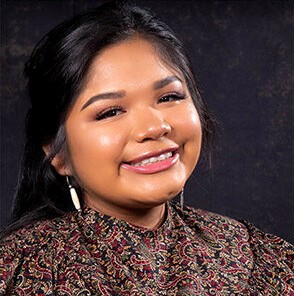
Image Metadata
|
Created: Sunday, May 21, 2023 - 13:15 |
||
Summary:
An interview with Muscogee (Creek) Nation citizen Gabrielle Noriega.Description:
An interview with Muscogee (Creek) Nation citizen Gabrielle Noriega. A downloadable transcript may be found by link: Gabrielle Noriega. This interview has been indexed through the Louie B. Nunn Center for Oral History Center’s Oral History Metadata Synchronizer system at the University of Kentucky. For an indexed copy of the video, please follow the external link found in the bar on the right of this page.
Transcription:
The Muscogee (Creek) Nation
Historic and Cultural Preservation Department
Oral History Program
“A Twenty-First Century Pandemic in Indian Country:
The Resilience of the Muscogee (Creek) Nation Against Covid-19”
As Remembered by: Ms. Gabrielle Noriega,
Jr. Miss Muscogee (Creek) Nation
Interview by: Ms. Midge Dellinger
Date: December 17, 2021
Transcription: The Audio Transcription Company
Edited by: Ms. Midge Dellinger
MIDGE DELLINGER: This is Midge Dellinger, Oral Historian for the Muscogee (Creek) Nation. Today is December 17, 2021, and I am at the Muscogee (Creek) Nation Council House located in downtown Okmulgee, Oklahoma, interviewing Muscogee citizen and Jr. Miss Muscogee (Creek) Nation Gabrielle Noriega. I’m performing this interview on behalf of the Muscogee (Creek) Nation Historic and Cultural Preservation Department for the oral history project titled, “A Twenty-First Century Pandemic in Indian Country, The Resilience of the Muscogee (Creek) Nation Against COVID-19.”
Miss Noriega, thank you so much for being here today and taking time out of your life and your busy schedule to participate in this project. We’re going to start out this interview by finding out just a little bit about yourself. And so, I’m going to ask some questions about your personal life and your background. [00:01:00] And I’d like to start out by asking you what is your tribal town and clan?
GABRIELLE NORIEGA: My clan is Wind clan, and my tribal town—well, I’ve been told it’s Yuchi Town because we’re Yuchi, so we don’t really have a tribal town that much. But that’s what I consider, is Yuchi Town.
DELLINGER: Okay, where were you born?
NORIEGA: I was born in Tulsa. I’ve grown up in Glenpool my whole life. But I attend school at Eufaula High School.
DELLINGER: Now is—Tulsa, though, is not where you and your family live, correct?
NORIEGA: Yes.
DELLINGER: You do live in Tulsa?
NORIEGA: No, we live in Glenpool.
DELLINGER: Oh, okay. You’re in Glenpool.
NORIEGA: Yeah. (laughs)
DELLINGER: Oh, okay. And who is in the household with you?
NORIEGA: My mom, my dad, and my brother. That’s where I grew up was with them; just that’s all who lives in my household is just my parents and my brother. [00:02:00]
DELLINGER: Now, who are your parents?
NORIEGA: Trina and Carlos Noriega. Those are my parents.
DELLINGER: And what are their occupations?
NORIEGA: My mom is a former dental assistant, and my dad is a welder.
DELLINGER: Okay, and who is your brother?
NORIEGA: Carlito Noriega.
DELLINGER: And how old is he?
NORIEGA: He’s nine.
DELLINGER: He’s nine, okay. Do you have any pets?
NORIEGA: (laughs) Yes, we have two dogs. Their names are Mo and Gordo.
DELLINGER: Mo and Gordo, okay. Very good; I like those names. Will you share with us who are your grandparents?
NORIEGA: Marilyn McIntosh and Dennis Barnett. And my other grandparents, which are my dad’s parents, have passed away, Manuel Noriega and Ramona Harjo.
DELLINGER: Okay. Now did they—your grandparents [00:03:00] who are still living—do they live close by? Are you able to see them?
NORIEGA: Yeah, we’re able to see them. But time gets a little, you know, busy at times. So, I don’t really get to see my grandparents that much. But my grandpa lives here in Okmulgee, and my grandma lives in Sapulpa.
DELLINGER: Okay. Now you already said, I think, that you attend the Eufaula Dormitory.
NORIEGA: Yes.
DELLINGER: And so, what grade are you in right now?
NORIEGA: I am in tenth grade.
DELLINGER: Tenth grade, so being at the dormitory, though, you actually attend Eufaula public schools?
NORIEGA: Yes.
DELLINGER: Okay, and how many years have you been at the dormitory?
NORIEGA: One and a half years, yeah. Last year we weren’t able to attend because of COVID, so I couldn’t attend that year.
DELLINGER: Right. And do you enjoy it there?
NORIEGA: Yeah, [00:04:00] I enjoy it there. There’s a little bit more freedom throughout the week and everything. And everybody kind of stays on top of you about your grades, so it kind of pushes you to do better a lot. So, yeah.
DELLINGER: Right. Will you share what is a typical day for you in Eufaula?
NORIEGA: First, we do our details in the morning. So, we have little details and everything; it considers like cleaning and everything like that. And then we go down to breakfast, and then just go to school. And I usually have softball workouts in the afternoon, but I have to go to basketball practice. (laughs) And then I just go back to the dormitory and hang out. So, that’s a typical day for me.
DELLINGER: I didn’t hear homework in there. (laughter)
NORIEGA: My homework is usually finished at school, so—
DELLINGER: Oh, that’s good.—
NORIEGA: —I don’t really have that much homework, yeah.
DELLINGER: That’s really good. Yeah, so I was going to ask you if you do participate [00:05:00] in any school activities. You’ve mentioned a couple things. Can you talk about those a little bit more?
NORIEGA: I play softball for Eufaula High School. I do travel ball. I’m a manager for the basketball team, but basketball really isn’t my sport. So, that’s all my sports and activities that I attend and do. So, yeah.
DELLINGER: Okay. Do you have time—I guess I’ll ask it this way—do you have time to participate in any of the Muscogee (Creek) Nation’s Youth Services activities?
NORIEGA: Yeah, they come up there every Wednesday actually. And I’ve signed up for the mentor program. And so, they come up there, just kind of do little activities with us like language activities, and just try to get to know us. So, I participate a lot in those.
DELLINGER: Okay, great. You’re in the tenth grade. Have you started thinking about what you want to do after high school? [00:06:00]
NORIEGA: Yes, actually. I’m thinking about applying for Wichita State University and playing ball or joining their pre-med [pre-medical] program that they offer because I really want to become a pediatrician in the future after high school. So,—
DELLINGER: That’s fantastic. What type of music do you like to listen to?
NORIEGA: (laughs) A lot of everything. Recently I’ve been into country music—
DELLINGER: Oh, yeah.
NORIEGA: —which is a big thing in Eufaula especially, so yeah, just anything really.
DELLINGER: So, when you have free time, whether it’s during the week in Eufaula or when you’re at home in Glenpool, what do you like to do?
NORIEGA: I like to hang out with my cousin, Danielle. She—me and her together—it’s really crazy. We just like to hang out together and just have fun. [00:07:00] But we usually do our makeup every now and then and just kind of hang out, take pictures and stuff. That’s what I like to do on my free time.
DELLINGER: Okay. Now, do you have a church that you belong to?
NORIEGA: I don’t really attend church, but the churches that I would consider myself to would probably be my grandma’s church, which is Okmulgee Indian Baptist Church or Pickett Chapel in Sapulpa.
DELLINGER: All right. Do you attend a ceremonial ground?
NORIEGA: Yes, my ceremonial ground is Duck Creek Ceremonial Ground.
DELLINGER: Okay, can you talk about that just a little bit? Like where is—can you say where that is, where that’s located?
NORIEGA: Duck Creek Ceremonial Ground is in Liberty, Oklahoma—Liberty Mounds, Oklahoma. So, it’s by Hectorville and everything like that.
DELLINGER: Okay. And what do you think that you enjoy most about being a member of the ceremonial ground? [00:08:00] Why is that important to you?
NORIEGA: It’s important to me just because I like to be around my family a lot. I like to have fun with them and just kind of hang out, and feel good about being there, just feeling joyous, I guess you could say. Just being around them and having their company, it just feels a lot better and just kind of makes you feel, you know, safe and everything like that. That’s why I like being out there.
DELLINGER: That’s great. Why was becoming Jr. Miss Muscogee (Creek) Nation important to you?
NORIEGA: It has helped me become more confident in everything. And it’s helped me speak out a lot more about different topics that I feel like should be spoken out about. My platform is COVID, so I really like to speak out a lot about just the topic of it and everything like that. That’s why I feel like it was a good [00:09:00] role for me to play. I came in with a lot of confidence, and I’m going to leave with a bunch of confidence also. So, it’s really a win-win.
DELLINGER: Yeah, okay, that’s wonderful. I’m curious, I personally don’t know a lot about how all this works with the royalty and the process of becoming either Miss Muscogee (Creek) Nation or Jr. Miss. Can you talk just a little bit about the process, like what you had to go through, how long the process was, and some of the things you had to do?
NORIEGA: I decided that I wanted to be Jr. Miss whenever the applications were available. I was thinking it over and just talking about it with my friends and my family, just like getting the support and everything for it. But the main process is filling out your application and then knowing what your talent is going to be. And then after, that it’s just a walk in the park. [00:10:00] You’ve just got to have confidence when you go through with it. But most of it, it’s kind of a long process. And it takes a lot more time to kind of sit down and take a breath, and just go over your talent, and make sure you know what you’re going to talk about, and just kind of be more knowledgeable about it before you go into the pageant. But is that what you were asking me? Or did you—
DELLINGER: Yeah, no.
NORIEGA: —want to know every, like the little step that goes into it, just like the application and—?
DELLINGER: So, how long from the time you submit the application until the pageant? What’s the time period?
NORIEGA: Just a few months—a couple months really—because the applications are opened in January and the pageant is in June, so it’s really not that long. But whenever you’re trying to be ready for it, it just kind of takes a little more time to, I guess—I don’t know how to explain it. It’s kind of like, [00:11:00] Okay, okay, I’m really going to do this type of thing. You know, just getting out there and talking in front of everybody, it feels like it’s forever. So, yeah.
DELLINGER: What was your talent? Or what is your talent?
NORIEGA: My talent is poem—I read a poem by Joy Harjo. And so, it was a poem that she really liked. And she reads it everywhere she goes. She really enjoys it because it really means a lot to her. So, I read it, and I felt like I had a lot of confidence when I read it because I know how to speak. So, yeah.
DELLINGER: Speaking of, you said, “I know how to speak,” and that just made something pop into my head. Do you speak any Muscogee?
NORIEGA: Unfortunately, no. I’m not fluent, but I do know a few words. I know my introduction and everything like that, which I really want to get more knowledgeable on the Muscogee language—you know, learn everybody else’s dialect and just kind of go along with it, so,—
DELLINGER: Right. [00:12:00] I want to ask you this because I think it’s important that we have our language recorded, and would you feel comfortable in doing your introduction?
NORIEGA: Yes.
DELLINGER: So that we can hear some of the Muscogee language?
NORIEGA: Yeah.
DELLINGER: Okay.
NORIEGA: Hesci, stonko! Gabrielle Noriega cvhocefkv tos. Vmeliketv Hotvlkvlke tos. Cvcvlke Trina Noriega momen Carlos Noriega. Cvpvsvlke Marily McIntosh momen Dennis Barnett, Ramona Harjo momen Manuel Noriega. Mvto. [Hello, how are you?! My name is Gabrielle Noriega. I am of the Wind Clan. My parents are Trina Noriega and Carlos Noriega. My grandparents are Marilyn McIntosh and Dennis Barnett, Ramona Harjo and Manuel Noriega. Thank You.]
DELLINGER: Very good. So, how has it felt, and how does it feel, knowing that you’re this year’s Jr. Miss?
NORIEGA: It’s, like I said, helped a lot this year—just kind of boost my confidence a little bit more, just trying to help me [00:13:00] jump out of my shell a little bit. It’s really been amazing getting to meet a lot of new people. And doing the reign with Claudia, it’s helped a lot like on a sisterly bond. You know, I feel like I needed this, especially with having the year that I had. It just felt a lot better to have this position, and being able to speak out about everything that I wanted to, so,—
DELLINGER: So, what are some of your duties and responsibilities?
NORIEGA: Just being an ambassador of the nation, just kind of putting out there that you can really do anything that you set your mind to. And I feel like that’s a big part of the whole royalty position just because young girls do want to be able to be—being a young girl, you want to be a princess and everything. I feel like if that’s what you want to do when you grow up, then you should be able to. So, I feel like us being here in this position just kind of helps a lot more [00:14:00] on letting young girls know that they can do it. So, I feel like that’s a really big part of it.
DELLINGER: I know that you have to—you and Miss Muscogee (Creek) Nation—you have to attend events. So, how many times a month are you required to attend some type of event?
NORIEGA: As much as people request us. Sometimes there are only a couple, but then there are some times where there could be five in the same month. But it just kind of depends on whoever requests us, whoever wants us to be at their events. You know, anything important for them is important for us. So, I feel like that’s a really big part of it, too, is just feeling like if it’s important to them, it’s important to us, too. So, yeah.
DELLINGER: Okay. Now, I believe you’ve already mentioned very briefly your platform, but what is your platform for your reign? [00:15:00]
NORIEGA: My platform is COVID-19 awareness.
DELLINGER: Have you had any opportunities up to this point to work on any projects or give any presentations that do focus on COVID-19?
NORIEGA: I haven’t been able to actually have a presentation or anything just for COVID. I’ve been kind of busy just trying to get everything situated, especially with it being sophomore year of high school. You know, everything is starting to come around at that time. But I’ve spoken out about it a lot with the vaccine and everything like that. So, yeah.
DELLINGER: Okay. And so, I’m understanding then that your hope—the hope that you have that you want to accomplish during this time of your reign with COVID—is just to make people more aware and to be more safe. Is that correct?
NORIEGA: Yes. [00:16:00] I feel that when people have more knowledge about it, or it hasn’t happened to them yet, I feel like when they know the effects and everything of it, they’ll be more safe and aware of everything else.
DELLINGER: Okay, all right, Miss Noriega. Thank you so much for sharing these things about your personal life. We’re going to transition now into some questions that focus more on COVID-19 and your experiences with the pandemic.
So, I’m going to make you take your memory back to 2020. Do you remember when in 2020 you first heard about COVID and how you first heard about COVID-19?
NORIEGA: The first time I heard about COVID was the beginning of 2020, actually, because I was in eighth grade. And we had gone to spring break, and we never came back. (laughs) So, [00:17:00] that’s whenever I first heard about COVID and everything like that. So,—
DELLINGER: At that time, what were your thoughts about it? Were you concerned that it would, you know—?
NORIEGA: I was concerned just because it was a new name that I hadn’t known. Everybody knows about the flu and everything like that. But whenever you hear COVID-19—or at the time it was coronavirus—it was just kind of like, What is this? And nobody knew what it was, so it kind of worried me because we didn’t know what it was. And nobody else knew. So, there wasn’t really much we could do about it.
DELLINGER: Do you remember what some of your early conversations were with your family and your friends about COVID-19?
NORIEGA: I can’t remember really anything that I’ve conversed with any of my friends or family about COVID in the early stages of it. But I do remember some people were like, “Oh, it’s just another flu. It’s just another, you know, [00:18:00] disease, whatever.” But me being me, I was like, Well, I don’t know. Just overthinking it, I guess. But it turned out to be different. And then everybody was like, “Well—” You know, just trying to still brush it off like it was the flu, so—
DELLINGER: But you chose to take it more seriously, really, it sounds like, from the get-go. Yeah. When you started hearing—in time, the state government and local governments, they started locking things down and shutting things down, making people shelter in place. So, when you heard those words—when you first heard those words: “lockdown,” “shelter in place”—how did those make you feel?
NORIEGA: It really like— it really [00:19:00] made me realize how serious the whole COVID was. Hearing, “Well, this place is going to lock down because too many COVID cases,” and everything, that’s whenever we all started taking it seriously in my family. We didn’t go out as much. We wore masks everywhere. We sanitized everywhere, as we’re still doing. But that’s what kind of made us realize it was a serious thing.
DELLINGER: What do you think—again, we’re going back to last year at the beginning of the pandemic—what do you think was the general attitude of younger people? Do you think they were taking it seriously? Or what do you think about their attitudes?
NORIEGA: A lot of my peers were just still having the whole brush-it-off mindset. [00:20:00] They weren’t taking it as serious. But I kept trying to tell everybody, “It’s serious. We’re shutting everything down because of it. So, why can’t you take it seriously?” And people just weren’t listening at the time. They were just like, “Well, it’ll pass over,” and everything like that. But they weren’t taking it as serious as I was.
DELLINGER: I’d like for you to share your knowledge of COVID-19 as far as, for example, if you might have an idea where you think it came from, how it’s spread, and some of the symptoms that people might experience if they contract COVID.
NORIEGA: Nobody really knows where it came from. From what I’ve heard, it’s been around for a long time, and it’s just a little bit more serious now. But I think the main symptoms are like [00:21:00] cold symptoms—you know, fever and everything like that—so you can’t really determine if it is COVID or just like a cold system—sickness. But the main thing that spreads it is nobody wears their mask that much, or the vaccine; nobody sanitizes; nobody takes precaution for anything. I feel like that’s how it’s spread the most, just nobody has the precaution for it. So, that’s how I feel like it’s spread. But yeah.
DELLINGER: I want to go back to last year when the pandemic did hit Muscogee Nation including Eufaula. Can you talk a little bit more specifically about how the pandemic impacted the Eufaula Dormitory, how it changed life there?
NORIEGA: It shut the whole dormitory down. I couldn’t attend [00:22:00] my freshman year. So, during the whole freshman year, I had to stay with my family out at Eufaula. But we had precautions at school—which we wore masks and everything, social distanced. So, I feel like it really affected the dormitory because it shut down the dormitory, and kids weren’t able to attend that needed to attend for school, just to be away, everything like that. But that’s how it impacted a lot.
When we came back this year, it really hadn’t impacted us that much. We still do the social distancing because there are only two to each room now. So,—
DELLINGER: So, let me go back to something you just said. So, in 2020 when the dormitory shut down, you said you stayed in Eufaula. Is that because the schools were still open? Were you still able to attend school?
NORIEGA: Yes.
DELLINGER: And so, did you finish the school year?
NORIEGA: Yes.
DELLINGER: Okay, [00:23:00] and then you went back to Glenpool for the summer?
NORIEGA: Yes.
DELLINGER: And that was in 2020. And so, then in August of 2020, you went back to the dormitory. It had opened back up?
NORIEGA: No. The dormitory opened this year. Yes, yes, okay.
DELLINGER: I know, it’s confusing sometimes, isn’t it? Because we’ve all lost this period of time, right?
NORIEGA: Yes.
DELLINGER: In our lives and our memories. I have to stop and think about it, too. But yeah, so you went back to school in August of 2020.
NORIEGA: (laughs) Yes.
DELLINGER: And everything, for the most part, has been pretty normal? Has that been your experience?
NORIEGA: No, actually, we went back August this year. Yes, we went back August this year.
DELLINGER: See? Okay.
NORIEGA: Yeah, yes.
DELLINGER: You’re right, August of 2021.
NORIEGA: August of 2021. August of 2020, that’s my freshman year. [00:24:00] So, I wasn’t able to attend the dormitory because of COVID. (laughs)
DELLINGER: Right. Okay, I think we have it. I think I have it straightened out in my brain now. So, you were not in the dormitory for a whole year?
NORIEGA: Yeah, yes.
DELLINGER: Longer than a year actually. Okay, and then so you come back in August of 2021. And they have made some slight changes, it sounds like—
NORIEGA: Yes.
DELLINGER: —to try to keep the kids safe?
NORIEGA: Yes.
DELLINGER: Are there as many kids there this year as what have been there prior to the pandemic?
NORIEGA: No, there are not as many kids as there was before just because they’ve limited the amount of kids who could attend because of the limited amount of each in a room.
DELLINGER: But this year kids have been able to go home on the weekends—
NORIEGA: Yes.
DELLINGER: —and be with their families? Okay. Can you share any other—[00:25:00] maybe any other safety measures—that the dorm is doing to help keep you guys safe?
NORIEGA: At the beginning of the year when we were doing applications, we had to be vaccinated. So, they made a mandatory vaccination for the students there to attend and everything like that, just to be on the safe side. So, that was a big thing, too.
DELLINGER: Okay. How has the pandemic changed life for you and your family?
NORIEGA: It’s changed a lot. We’ve lost a few members of our family to COVID. So, it’s really impacted us a lot more. So, it’s just changed a lot of things for us.
DELLINGER: When you were away from the dorm for that year, how did you—were you able to stay in touch with some of your friends there? [00:26:00] Were you able to stay connected?
NORIEGA: Yes.
DELLINGER: And how did you do that?
NORIEGA: Well, we all have cell phones, so we just stayed in contact that way. But sometimes I would have my friend come home with me—one of my best friends—I’d have her come home with me sometimes on weekends just to hang out. You know, stuff like that. But I kept in touch with a lot of them.
DELLINGER: So, during the school year this year, have there been any kids sent home because they possibly were exposed to COVID? Have you had to go through any type of quarantine situation this year at the dorm?
NORIEGA: No, none of the kids have come back to the dormitory with COVID. Or there were a few exposures and everything like that, but the school didn’t make a mandatory quarantine for us. If we were exposed—you know, because everybody was mainly vaccinated—so, it depended on [00:27:00] if you wanted to do it in your choice. But none of the kids that I know of really were exposed to COVID or had COVID or anything. But I know a few kids who went home sick. But that’s it.
DELLINGER: Okay. I want to give you the opportunity—you’ve already mentioned that you have lost some family members to COVID-19—and I want to give you an opportunity to talk about that and to talk about these folks and say whatever you would like to say about that.
NORIEGA: Back in November of 2020, my grandma had come back home with COVID. And that’s when she stayed in the household with us because she was kind of sick. So, we let her stay with us. And my mom and my dad [00:28:00] and my brother had caught COVID because they were all in the same household. And so, since I was staying in Eufaula, I wasn’t able to go back home because of COVID. And I didn’t have COVID, and I wasn’t exposed to COVID because it had happened during a week of school.
Since I couldn’t be home, it just kind of impacted me a lot more. But it really took a toll on my grandma and my mom because my grandma had passed away from COVID the following week. Um, it was a little bit harder on my family because she was a really big part of it. Pause in recording.
Like I was saying, my grandma was a big part of our family, and her passing away because of the COVID, [00:29:00] it just kind of did take a big toll on us. This is my Grandma Harjo, Ramona Harjo. She was a big person in our family. She helped us out a lot. So, when she had COVID, it just kind of broke us down in so many different ways. But I think us feeling that, and just that heartbreak after she had caught COVID, and my parents and my brother—you know, it just kind of scared us a lot more to be more aware of it.
It had a big outcome on my mom, too. It just kind of—it didn’t help her health issues, I guess you could say. My dad, he didn’t really have that many symptoms. He has a strong immune system, I guess. (laughs) But it was just—you know, losing her, it made us realize how serious the COVID-19 [00:30:00] really needs to be for everybody else. We kept saying that nobody’s going to understand it till it hits you, or nobody’s going to understand it until it hurts your family, or it hits your family.
But that was the biggest impact on me because I wasn’t able to come home for almost a month. I had to stay in Eufaula, go to school, and just keep going knowing that my family was still hurting or still sick. It was just—it shaped me into a stronger person than I was back then. You know, it just kind of showed me how much I could take on. But COVID had a lot of different outcomes for me and my family. Recently, we had just lost another family member to COVID. [00:31:00] But it’s just more of nobody understands until it hits your family. So,—
DELLINGER: Miss Noriega, how old was your grandmother?
NORIEGA: Sixty-two. Sixty-two, yes.
DELLINGER: Sixty-two. She was a young woman. Did she—with her illness—did she have to spend time in the hospital?
NORIEGA: Yes. I think my parents explained it to where I can kind of get a picture. It was one evening, she hadn’t come out of her room all night, I guess, and all day. So, they went to check on her; she was just in her bed. She couldn’t move or anything. So, then they called the ambulance. And they had taken her to the hospital, and she had COVID. And then she had been put on the ventilator [00:32:00] a couple of days after she arrived at the hospital, I’m pretty sure. And the night before she had been put on the ventilator, I had called her. (pause) And people are like, “Well, you can’t call her when she’s on a ventilator because she can’t hear you, or—” (pause) Sorry.
DELLINGER: Do you believe that she heard you?
NORIEGA: Huh?
DELLINGER: When you called her.
NORIEGA: Yeah, she heard me because that’s whenever she could respond and everything. (crying) But—
DELLINGER: Is there anything else that you would [00:33:00] like to say about your grandma or—?
NORIEGA: Yeah, um (sighs) okay. When I called her, she was just like, “I’ll be okay.” You know, just trying to reassure me that it will just blow over, and she’ll be all right, and she’ll be out of the hospital soon. (crying) Then a week after that, that’s when she had passed away. But I think it broke me down really just because—it just kind of broke me down because she was a big part of my life. So, then that’s whenever I encouraged everybody to mask up, and just sanitize, [00:34:00] and just be more safe about the whole COVID-19. But yeah.
DELLINGER: Yeah. Okay, well I appreciate you sharing that. I really do. Now, is there anyone else that you would like to mention? Any other family and friends that have been impacted or have passed away from COVID?
NORIEGA: Monday of this past week my cousin, Cynthia Watashe, she had passed away from COVID. Actually, we just went to her wake service last night. But she had COVID, and then she got over it. And then after—the aftereffects—her body just couldn’t recover from it.
And so, she was a big part of my life, too. She was like my aunt. She was really there for me. And it was just kind of hard seeing her [00:35:00] in that way. But just knowing that her and my grandma are both okay now—they’re just not having to be hooked up to machines anymore—it makes me feel a lot better.
DELLINGER: Yeah, okay. I want to ask you—so we’re nearing the second year of COVID-19 being in the United States—what do you think about the fact that it’s still here? Do you have any thoughts about that?
NOREGA: My thoughts are like I know it’s probably not just going to go away because right now everybody is still passing it around. But the whole new variants and everything coming out, it just doesn’t help the situation at all. And it just kind of shocks me at this point that people think [00:36:00] just because there’s not that many cases, it’s just going to be going away. That’s my thoughts on it. But—
DELLINGER: What are your thoughts about how COVID has impacted the Muscogee Nation? The nation and its people?
NORIEGA: It’s impacted a lot on the people, especially because we’ve lost so many Muscogee citizens, like memorable Muscogee citizens, to COVID. And I feel like knowing that we’ve lost so many elders and ancestors and everything to COVID, it just kind of opens everybody’s eyes a little bit more to realizing how much it does affect somebody else.
DELLINGER: Now has COVID had an impact on your ceremonial grounds and activities?
NORIEGA: Yes. Our ceremonial chief, [00:37:00] Simon Harry, had passed away from COVID. So, it really impacted us a lot on the ceremonial life because he was the oldest chief in the ceremonial life. So, it just impacted everybody by—he was always there at the grounds. Whether he was sick or couldn’t walk or anything, he was always there. I’d always go up to him, shake his hand, greet him and everything. But it's a little bit different now. But I feel like he was okay; he knew he was okay. So, it impacted us a lot on the ceremonial life.
DELLINGER: Now for this next question, I want you to think about our citizens who are here today as well as our future generations and Muscogee youth. What are some words of [00:38:00] wisdom or advice that you can give them for living through and surviving a pandemic such as COVID-19?
NORIEGA: I’d say just keep going. Be strong and just know everything will be okay in the end. Just keep striving for better for yourself no matter what is thrown at you. Sometimes Creator’s just trying to see how far you can bend before you break, so just keep going. Those are my words of wisdom.
DELLINGER: That’s great. Those are fantastic words. All right, well, we’re down to the end of the interview. And what I’d like to do is, I want to give you an opportunity. If there’s anything that we haven’t talked about; maybe I have forgotten something to ask that is important to you that you want to share about your experiences with the [00:39:00] COVID-19 pandemic. This is your opportunity to do that. So, is there anything else that you would like to say?
NORIEGA: I’d like to say just to be—you know, after the interview—just kind of be more aware of what’s going on and know that COVID will always be around. Just kind of be more safe around everybody with everything and take a lot more precaution because you don’t know what might happen in the future. You don’t know who’s sick and who’s not. And so, that’s it.
DELLINGER: Okay. Jr. Miss Muscogee (Creek) Nation Gabrielle Noriega, thank you so much for your words and your thoughts here today. They are very important and greatly appreciated. And so, you keep taking care of yourself.
NORIEGA: Thank you.
DELLINGER: And mvto. Thank you.
NORIEGA: Mvto.
END OF INTERVIEW
Historic and Cultural Preservation Department
Oral History Program
“A Twenty-First Century Pandemic in Indian Country:
The Resilience of the Muscogee (Creek) Nation Against Covid-19”
As Remembered by: Ms. Gabrielle Noriega,
Jr. Miss Muscogee (Creek) Nation
Interview by: Ms. Midge Dellinger
Date: December 17, 2021
Transcription: The Audio Transcription Company
Edited by: Ms. Midge Dellinger
MIDGE DELLINGER: This is Midge Dellinger, Oral Historian for the Muscogee (Creek) Nation. Today is December 17, 2021, and I am at the Muscogee (Creek) Nation Council House located in downtown Okmulgee, Oklahoma, interviewing Muscogee citizen and Jr. Miss Muscogee (Creek) Nation Gabrielle Noriega. I’m performing this interview on behalf of the Muscogee (Creek) Nation Historic and Cultural Preservation Department for the oral history project titled, “A Twenty-First Century Pandemic in Indian Country, The Resilience of the Muscogee (Creek) Nation Against COVID-19.”
Miss Noriega, thank you so much for being here today and taking time out of your life and your busy schedule to participate in this project. We’re going to start out this interview by finding out just a little bit about yourself. And so, I’m going to ask some questions about your personal life and your background. [00:01:00] And I’d like to start out by asking you what is your tribal town and clan?
GABRIELLE NORIEGA: My clan is Wind clan, and my tribal town—well, I’ve been told it’s Yuchi Town because we’re Yuchi, so we don’t really have a tribal town that much. But that’s what I consider, is Yuchi Town.
DELLINGER: Okay, where were you born?
NORIEGA: I was born in Tulsa. I’ve grown up in Glenpool my whole life. But I attend school at Eufaula High School.
DELLINGER: Now is—Tulsa, though, is not where you and your family live, correct?
NORIEGA: Yes.
DELLINGER: You do live in Tulsa?
NORIEGA: No, we live in Glenpool.
DELLINGER: Oh, okay. You’re in Glenpool.
NORIEGA: Yeah. (laughs)
DELLINGER: Oh, okay. And who is in the household with you?
NORIEGA: My mom, my dad, and my brother. That’s where I grew up was with them; just that’s all who lives in my household is just my parents and my brother. [00:02:00]
DELLINGER: Now, who are your parents?
NORIEGA: Trina and Carlos Noriega. Those are my parents.
DELLINGER: And what are their occupations?
NORIEGA: My mom is a former dental assistant, and my dad is a welder.
DELLINGER: Okay, and who is your brother?
NORIEGA: Carlito Noriega.
DELLINGER: And how old is he?
NORIEGA: He’s nine.
DELLINGER: He’s nine, okay. Do you have any pets?
NORIEGA: (laughs) Yes, we have two dogs. Their names are Mo and Gordo.
DELLINGER: Mo and Gordo, okay. Very good; I like those names. Will you share with us who are your grandparents?
NORIEGA: Marilyn McIntosh and Dennis Barnett. And my other grandparents, which are my dad’s parents, have passed away, Manuel Noriega and Ramona Harjo.
DELLINGER: Okay. Now did they—your grandparents [00:03:00] who are still living—do they live close by? Are you able to see them?
NORIEGA: Yeah, we’re able to see them. But time gets a little, you know, busy at times. So, I don’t really get to see my grandparents that much. But my grandpa lives here in Okmulgee, and my grandma lives in Sapulpa.
DELLINGER: Okay. Now you already said, I think, that you attend the Eufaula Dormitory.
NORIEGA: Yes.
DELLINGER: And so, what grade are you in right now?
NORIEGA: I am in tenth grade.
DELLINGER: Tenth grade, so being at the dormitory, though, you actually attend Eufaula public schools?
NORIEGA: Yes.
DELLINGER: Okay, and how many years have you been at the dormitory?
NORIEGA: One and a half years, yeah. Last year we weren’t able to attend because of COVID, so I couldn’t attend that year.
DELLINGER: Right. And do you enjoy it there?
NORIEGA: Yeah, [00:04:00] I enjoy it there. There’s a little bit more freedom throughout the week and everything. And everybody kind of stays on top of you about your grades, so it kind of pushes you to do better a lot. So, yeah.
DELLINGER: Right. Will you share what is a typical day for you in Eufaula?
NORIEGA: First, we do our details in the morning. So, we have little details and everything; it considers like cleaning and everything like that. And then we go down to breakfast, and then just go to school. And I usually have softball workouts in the afternoon, but I have to go to basketball practice. (laughs) And then I just go back to the dormitory and hang out. So, that’s a typical day for me.
DELLINGER: I didn’t hear homework in there. (laughter)
NORIEGA: My homework is usually finished at school, so—
DELLINGER: Oh, that’s good.—
NORIEGA: —I don’t really have that much homework, yeah.
DELLINGER: That’s really good. Yeah, so I was going to ask you if you do participate [00:05:00] in any school activities. You’ve mentioned a couple things. Can you talk about those a little bit more?
NORIEGA: I play softball for Eufaula High School. I do travel ball. I’m a manager for the basketball team, but basketball really isn’t my sport. So, that’s all my sports and activities that I attend and do. So, yeah.
DELLINGER: Okay. Do you have time—I guess I’ll ask it this way—do you have time to participate in any of the Muscogee (Creek) Nation’s Youth Services activities?
NORIEGA: Yeah, they come up there every Wednesday actually. And I’ve signed up for the mentor program. And so, they come up there, just kind of do little activities with us like language activities, and just try to get to know us. So, I participate a lot in those.
DELLINGER: Okay, great. You’re in the tenth grade. Have you started thinking about what you want to do after high school? [00:06:00]
NORIEGA: Yes, actually. I’m thinking about applying for Wichita State University and playing ball or joining their pre-med [pre-medical] program that they offer because I really want to become a pediatrician in the future after high school. So,—
DELLINGER: That’s fantastic. What type of music do you like to listen to?
NORIEGA: (laughs) A lot of everything. Recently I’ve been into country music—
DELLINGER: Oh, yeah.
NORIEGA: —which is a big thing in Eufaula especially, so yeah, just anything really.
DELLINGER: So, when you have free time, whether it’s during the week in Eufaula or when you’re at home in Glenpool, what do you like to do?
NORIEGA: I like to hang out with my cousin, Danielle. She—me and her together—it’s really crazy. We just like to hang out together and just have fun. [00:07:00] But we usually do our makeup every now and then and just kind of hang out, take pictures and stuff. That’s what I like to do on my free time.
DELLINGER: Okay. Now, do you have a church that you belong to?
NORIEGA: I don’t really attend church, but the churches that I would consider myself to would probably be my grandma’s church, which is Okmulgee Indian Baptist Church or Pickett Chapel in Sapulpa.
DELLINGER: All right. Do you attend a ceremonial ground?
NORIEGA: Yes, my ceremonial ground is Duck Creek Ceremonial Ground.
DELLINGER: Okay, can you talk about that just a little bit? Like where is—can you say where that is, where that’s located?
NORIEGA: Duck Creek Ceremonial Ground is in Liberty, Oklahoma—Liberty Mounds, Oklahoma. So, it’s by Hectorville and everything like that.
DELLINGER: Okay. And what do you think that you enjoy most about being a member of the ceremonial ground? [00:08:00] Why is that important to you?
NORIEGA: It’s important to me just because I like to be around my family a lot. I like to have fun with them and just kind of hang out, and feel good about being there, just feeling joyous, I guess you could say. Just being around them and having their company, it just feels a lot better and just kind of makes you feel, you know, safe and everything like that. That’s why I like being out there.
DELLINGER: That’s great. Why was becoming Jr. Miss Muscogee (Creek) Nation important to you?
NORIEGA: It has helped me become more confident in everything. And it’s helped me speak out a lot more about different topics that I feel like should be spoken out about. My platform is COVID, so I really like to speak out a lot about just the topic of it and everything like that. That’s why I feel like it was a good [00:09:00] role for me to play. I came in with a lot of confidence, and I’m going to leave with a bunch of confidence also. So, it’s really a win-win.
DELLINGER: Yeah, okay, that’s wonderful. I’m curious, I personally don’t know a lot about how all this works with the royalty and the process of becoming either Miss Muscogee (Creek) Nation or Jr. Miss. Can you talk just a little bit about the process, like what you had to go through, how long the process was, and some of the things you had to do?
NORIEGA: I decided that I wanted to be Jr. Miss whenever the applications were available. I was thinking it over and just talking about it with my friends and my family, just like getting the support and everything for it. But the main process is filling out your application and then knowing what your talent is going to be. And then after, that it’s just a walk in the park. [00:10:00] You’ve just got to have confidence when you go through with it. But most of it, it’s kind of a long process. And it takes a lot more time to kind of sit down and take a breath, and just go over your talent, and make sure you know what you’re going to talk about, and just kind of be more knowledgeable about it before you go into the pageant. But is that what you were asking me? Or did you—
DELLINGER: Yeah, no.
NORIEGA: —want to know every, like the little step that goes into it, just like the application and—?
DELLINGER: So, how long from the time you submit the application until the pageant? What’s the time period?
NORIEGA: Just a few months—a couple months really—because the applications are opened in January and the pageant is in June, so it’s really not that long. But whenever you’re trying to be ready for it, it just kind of takes a little more time to, I guess—I don’t know how to explain it. It’s kind of like, [00:11:00] Okay, okay, I’m really going to do this type of thing. You know, just getting out there and talking in front of everybody, it feels like it’s forever. So, yeah.
DELLINGER: What was your talent? Or what is your talent?
NORIEGA: My talent is poem—I read a poem by Joy Harjo. And so, it was a poem that she really liked. And she reads it everywhere she goes. She really enjoys it because it really means a lot to her. So, I read it, and I felt like I had a lot of confidence when I read it because I know how to speak. So, yeah.
DELLINGER: Speaking of, you said, “I know how to speak,” and that just made something pop into my head. Do you speak any Muscogee?
NORIEGA: Unfortunately, no. I’m not fluent, but I do know a few words. I know my introduction and everything like that, which I really want to get more knowledgeable on the Muscogee language—you know, learn everybody else’s dialect and just kind of go along with it, so,—
DELLINGER: Right. [00:12:00] I want to ask you this because I think it’s important that we have our language recorded, and would you feel comfortable in doing your introduction?
NORIEGA: Yes.
DELLINGER: So that we can hear some of the Muscogee language?
NORIEGA: Yeah.
DELLINGER: Okay.
NORIEGA: Hesci, stonko! Gabrielle Noriega cvhocefkv tos. Vmeliketv Hotvlkvlke tos. Cvcvlke Trina Noriega momen Carlos Noriega. Cvpvsvlke Marily McIntosh momen Dennis Barnett, Ramona Harjo momen Manuel Noriega. Mvto. [Hello, how are you?! My name is Gabrielle Noriega. I am of the Wind Clan. My parents are Trina Noriega and Carlos Noriega. My grandparents are Marilyn McIntosh and Dennis Barnett, Ramona Harjo and Manuel Noriega. Thank You.]
DELLINGER: Very good. So, how has it felt, and how does it feel, knowing that you’re this year’s Jr. Miss?
NORIEGA: It’s, like I said, helped a lot this year—just kind of boost my confidence a little bit more, just trying to help me [00:13:00] jump out of my shell a little bit. It’s really been amazing getting to meet a lot of new people. And doing the reign with Claudia, it’s helped a lot like on a sisterly bond. You know, I feel like I needed this, especially with having the year that I had. It just felt a lot better to have this position, and being able to speak out about everything that I wanted to, so,—
DELLINGER: So, what are some of your duties and responsibilities?
NORIEGA: Just being an ambassador of the nation, just kind of putting out there that you can really do anything that you set your mind to. And I feel like that’s a big part of the whole royalty position just because young girls do want to be able to be—being a young girl, you want to be a princess and everything. I feel like if that’s what you want to do when you grow up, then you should be able to. So, I feel like us being here in this position just kind of helps a lot more [00:14:00] on letting young girls know that they can do it. So, I feel like that’s a really big part of it.
DELLINGER: I know that you have to—you and Miss Muscogee (Creek) Nation—you have to attend events. So, how many times a month are you required to attend some type of event?
NORIEGA: As much as people request us. Sometimes there are only a couple, but then there are some times where there could be five in the same month. But it just kind of depends on whoever requests us, whoever wants us to be at their events. You know, anything important for them is important for us. So, I feel like that’s a really big part of it, too, is just feeling like if it’s important to them, it’s important to us, too. So, yeah.
DELLINGER: Okay. Now, I believe you’ve already mentioned very briefly your platform, but what is your platform for your reign? [00:15:00]
NORIEGA: My platform is COVID-19 awareness.
DELLINGER: Have you had any opportunities up to this point to work on any projects or give any presentations that do focus on COVID-19?
NORIEGA: I haven’t been able to actually have a presentation or anything just for COVID. I’ve been kind of busy just trying to get everything situated, especially with it being sophomore year of high school. You know, everything is starting to come around at that time. But I’ve spoken out about it a lot with the vaccine and everything like that. So, yeah.
DELLINGER: Okay. And so, I’m understanding then that your hope—the hope that you have that you want to accomplish during this time of your reign with COVID—is just to make people more aware and to be more safe. Is that correct?
NORIEGA: Yes. [00:16:00] I feel that when people have more knowledge about it, or it hasn’t happened to them yet, I feel like when they know the effects and everything of it, they’ll be more safe and aware of everything else.
DELLINGER: Okay, all right, Miss Noriega. Thank you so much for sharing these things about your personal life. We’re going to transition now into some questions that focus more on COVID-19 and your experiences with the pandemic.
So, I’m going to make you take your memory back to 2020. Do you remember when in 2020 you first heard about COVID and how you first heard about COVID-19?
NORIEGA: The first time I heard about COVID was the beginning of 2020, actually, because I was in eighth grade. And we had gone to spring break, and we never came back. (laughs) So, [00:17:00] that’s whenever I first heard about COVID and everything like that. So,—
DELLINGER: At that time, what were your thoughts about it? Were you concerned that it would, you know—?
NORIEGA: I was concerned just because it was a new name that I hadn’t known. Everybody knows about the flu and everything like that. But whenever you hear COVID-19—or at the time it was coronavirus—it was just kind of like, What is this? And nobody knew what it was, so it kind of worried me because we didn’t know what it was. And nobody else knew. So, there wasn’t really much we could do about it.
DELLINGER: Do you remember what some of your early conversations were with your family and your friends about COVID-19?
NORIEGA: I can’t remember really anything that I’ve conversed with any of my friends or family about COVID in the early stages of it. But I do remember some people were like, “Oh, it’s just another flu. It’s just another, you know, [00:18:00] disease, whatever.” But me being me, I was like, Well, I don’t know. Just overthinking it, I guess. But it turned out to be different. And then everybody was like, “Well—” You know, just trying to still brush it off like it was the flu, so—
DELLINGER: But you chose to take it more seriously, really, it sounds like, from the get-go. Yeah. When you started hearing—in time, the state government and local governments, they started locking things down and shutting things down, making people shelter in place. So, when you heard those words—when you first heard those words: “lockdown,” “shelter in place”—how did those make you feel?
NORIEGA: It really like— it really [00:19:00] made me realize how serious the whole COVID was. Hearing, “Well, this place is going to lock down because too many COVID cases,” and everything, that’s whenever we all started taking it seriously in my family. We didn’t go out as much. We wore masks everywhere. We sanitized everywhere, as we’re still doing. But that’s what kind of made us realize it was a serious thing.
DELLINGER: What do you think—again, we’re going back to last year at the beginning of the pandemic—what do you think was the general attitude of younger people? Do you think they were taking it seriously? Or what do you think about their attitudes?
NORIEGA: A lot of my peers were just still having the whole brush-it-off mindset. [00:20:00] They weren’t taking it as serious. But I kept trying to tell everybody, “It’s serious. We’re shutting everything down because of it. So, why can’t you take it seriously?” And people just weren’t listening at the time. They were just like, “Well, it’ll pass over,” and everything like that. But they weren’t taking it as serious as I was.
DELLINGER: I’d like for you to share your knowledge of COVID-19 as far as, for example, if you might have an idea where you think it came from, how it’s spread, and some of the symptoms that people might experience if they contract COVID.
NORIEGA: Nobody really knows where it came from. From what I’ve heard, it’s been around for a long time, and it’s just a little bit more serious now. But I think the main symptoms are like [00:21:00] cold symptoms—you know, fever and everything like that—so you can’t really determine if it is COVID or just like a cold system—sickness. But the main thing that spreads it is nobody wears their mask that much, or the vaccine; nobody sanitizes; nobody takes precaution for anything. I feel like that’s how it’s spread the most, just nobody has the precaution for it. So, that’s how I feel like it’s spread. But yeah.
DELLINGER: I want to go back to last year when the pandemic did hit Muscogee Nation including Eufaula. Can you talk a little bit more specifically about how the pandemic impacted the Eufaula Dormitory, how it changed life there?
NORIEGA: It shut the whole dormitory down. I couldn’t attend [00:22:00] my freshman year. So, during the whole freshman year, I had to stay with my family out at Eufaula. But we had precautions at school—which we wore masks and everything, social distanced. So, I feel like it really affected the dormitory because it shut down the dormitory, and kids weren’t able to attend that needed to attend for school, just to be away, everything like that. But that’s how it impacted a lot.
When we came back this year, it really hadn’t impacted us that much. We still do the social distancing because there are only two to each room now. So,—
DELLINGER: So, let me go back to something you just said. So, in 2020 when the dormitory shut down, you said you stayed in Eufaula. Is that because the schools were still open? Were you still able to attend school?
NORIEGA: Yes.
DELLINGER: And so, did you finish the school year?
NORIEGA: Yes.
DELLINGER: Okay, [00:23:00] and then you went back to Glenpool for the summer?
NORIEGA: Yes.
DELLINGER: And that was in 2020. And so, then in August of 2020, you went back to the dormitory. It had opened back up?
NORIEGA: No. The dormitory opened this year. Yes, yes, okay.
DELLINGER: I know, it’s confusing sometimes, isn’t it? Because we’ve all lost this period of time, right?
NORIEGA: Yes.
DELLINGER: In our lives and our memories. I have to stop and think about it, too. But yeah, so you went back to school in August of 2020.
NORIEGA: (laughs) Yes.
DELLINGER: And everything, for the most part, has been pretty normal? Has that been your experience?
NORIEGA: No, actually, we went back August this year. Yes, we went back August this year.
DELLINGER: See? Okay.
NORIEGA: Yeah, yes.
DELLINGER: You’re right, August of 2021.
NORIEGA: August of 2021. August of 2020, that’s my freshman year. [00:24:00] So, I wasn’t able to attend the dormitory because of COVID. (laughs)
DELLINGER: Right. Okay, I think we have it. I think I have it straightened out in my brain now. So, you were not in the dormitory for a whole year?
NORIEGA: Yeah, yes.
DELLINGER: Longer than a year actually. Okay, and then so you come back in August of 2021. And they have made some slight changes, it sounds like—
NORIEGA: Yes.
DELLINGER: —to try to keep the kids safe?
NORIEGA: Yes.
DELLINGER: Are there as many kids there this year as what have been there prior to the pandemic?
NORIEGA: No, there are not as many kids as there was before just because they’ve limited the amount of kids who could attend because of the limited amount of each in a room.
DELLINGER: But this year kids have been able to go home on the weekends—
NORIEGA: Yes.
DELLINGER: —and be with their families? Okay. Can you share any other—[00:25:00] maybe any other safety measures—that the dorm is doing to help keep you guys safe?
NORIEGA: At the beginning of the year when we were doing applications, we had to be vaccinated. So, they made a mandatory vaccination for the students there to attend and everything like that, just to be on the safe side. So, that was a big thing, too.
DELLINGER: Okay. How has the pandemic changed life for you and your family?
NORIEGA: It’s changed a lot. We’ve lost a few members of our family to COVID. So, it’s really impacted us a lot more. So, it’s just changed a lot of things for us.
DELLINGER: When you were away from the dorm for that year, how did you—were you able to stay in touch with some of your friends there? [00:26:00] Were you able to stay connected?
NORIEGA: Yes.
DELLINGER: And how did you do that?
NORIEGA: Well, we all have cell phones, so we just stayed in contact that way. But sometimes I would have my friend come home with me—one of my best friends—I’d have her come home with me sometimes on weekends just to hang out. You know, stuff like that. But I kept in touch with a lot of them.
DELLINGER: So, during the school year this year, have there been any kids sent home because they possibly were exposed to COVID? Have you had to go through any type of quarantine situation this year at the dorm?
NORIEGA: No, none of the kids have come back to the dormitory with COVID. Or there were a few exposures and everything like that, but the school didn’t make a mandatory quarantine for us. If we were exposed—you know, because everybody was mainly vaccinated—so, it depended on [00:27:00] if you wanted to do it in your choice. But none of the kids that I know of really were exposed to COVID or had COVID or anything. But I know a few kids who went home sick. But that’s it.
DELLINGER: Okay. I want to give you the opportunity—you’ve already mentioned that you have lost some family members to COVID-19—and I want to give you an opportunity to talk about that and to talk about these folks and say whatever you would like to say about that.
NORIEGA: Back in November of 2020, my grandma had come back home with COVID. And that’s when she stayed in the household with us because she was kind of sick. So, we let her stay with us. And my mom and my dad [00:28:00] and my brother had caught COVID because they were all in the same household. And so, since I was staying in Eufaula, I wasn’t able to go back home because of COVID. And I didn’t have COVID, and I wasn’t exposed to COVID because it had happened during a week of school.
Since I couldn’t be home, it just kind of impacted me a lot more. But it really took a toll on my grandma and my mom because my grandma had passed away from COVID the following week. Um, it was a little bit harder on my family because she was a really big part of it. Pause in recording.
Like I was saying, my grandma was a big part of our family, and her passing away because of the COVID, [00:29:00] it just kind of did take a big toll on us. This is my Grandma Harjo, Ramona Harjo. She was a big person in our family. She helped us out a lot. So, when she had COVID, it just kind of broke us down in so many different ways. But I think us feeling that, and just that heartbreak after she had caught COVID, and my parents and my brother—you know, it just kind of scared us a lot more to be more aware of it.
It had a big outcome on my mom, too. It just kind of—it didn’t help her health issues, I guess you could say. My dad, he didn’t really have that many symptoms. He has a strong immune system, I guess. (laughs) But it was just—you know, losing her, it made us realize how serious the COVID-19 [00:30:00] really needs to be for everybody else. We kept saying that nobody’s going to understand it till it hits you, or nobody’s going to understand it until it hurts your family, or it hits your family.
But that was the biggest impact on me because I wasn’t able to come home for almost a month. I had to stay in Eufaula, go to school, and just keep going knowing that my family was still hurting or still sick. It was just—it shaped me into a stronger person than I was back then. You know, it just kind of showed me how much I could take on. But COVID had a lot of different outcomes for me and my family. Recently, we had just lost another family member to COVID. [00:31:00] But it’s just more of nobody understands until it hits your family. So,—
DELLINGER: Miss Noriega, how old was your grandmother?
NORIEGA: Sixty-two. Sixty-two, yes.
DELLINGER: Sixty-two. She was a young woman. Did she—with her illness—did she have to spend time in the hospital?
NORIEGA: Yes. I think my parents explained it to where I can kind of get a picture. It was one evening, she hadn’t come out of her room all night, I guess, and all day. So, they went to check on her; she was just in her bed. She couldn’t move or anything. So, then they called the ambulance. And they had taken her to the hospital, and she had COVID. And then she had been put on the ventilator [00:32:00] a couple of days after she arrived at the hospital, I’m pretty sure. And the night before she had been put on the ventilator, I had called her. (pause) And people are like, “Well, you can’t call her when she’s on a ventilator because she can’t hear you, or—” (pause) Sorry.
DELLINGER: Do you believe that she heard you?
NORIEGA: Huh?
DELLINGER: When you called her.
NORIEGA: Yeah, she heard me because that’s whenever she could respond and everything. (crying) But—
DELLINGER: Is there anything else that you would [00:33:00] like to say about your grandma or—?
NORIEGA: Yeah, um (sighs) okay. When I called her, she was just like, “I’ll be okay.” You know, just trying to reassure me that it will just blow over, and she’ll be all right, and she’ll be out of the hospital soon. (crying) Then a week after that, that’s when she had passed away. But I think it broke me down really just because—it just kind of broke me down because she was a big part of my life. So, then that’s whenever I encouraged everybody to mask up, and just sanitize, [00:34:00] and just be more safe about the whole COVID-19. But yeah.
DELLINGER: Yeah. Okay, well I appreciate you sharing that. I really do. Now, is there anyone else that you would like to mention? Any other family and friends that have been impacted or have passed away from COVID?
NORIEGA: Monday of this past week my cousin, Cynthia Watashe, she had passed away from COVID. Actually, we just went to her wake service last night. But she had COVID, and then she got over it. And then after—the aftereffects—her body just couldn’t recover from it.
And so, she was a big part of my life, too. She was like my aunt. She was really there for me. And it was just kind of hard seeing her [00:35:00] in that way. But just knowing that her and my grandma are both okay now—they’re just not having to be hooked up to machines anymore—it makes me feel a lot better.
DELLINGER: Yeah, okay. I want to ask you—so we’re nearing the second year of COVID-19 being in the United States—what do you think about the fact that it’s still here? Do you have any thoughts about that?
NOREGA: My thoughts are like I know it’s probably not just going to go away because right now everybody is still passing it around. But the whole new variants and everything coming out, it just doesn’t help the situation at all. And it just kind of shocks me at this point that people think [00:36:00] just because there’s not that many cases, it’s just going to be going away. That’s my thoughts on it. But—
DELLINGER: What are your thoughts about how COVID has impacted the Muscogee Nation? The nation and its people?
NORIEGA: It’s impacted a lot on the people, especially because we’ve lost so many Muscogee citizens, like memorable Muscogee citizens, to COVID. And I feel like knowing that we’ve lost so many elders and ancestors and everything to COVID, it just kind of opens everybody’s eyes a little bit more to realizing how much it does affect somebody else.
DELLINGER: Now has COVID had an impact on your ceremonial grounds and activities?
NORIEGA: Yes. Our ceremonial chief, [00:37:00] Simon Harry, had passed away from COVID. So, it really impacted us a lot on the ceremonial life because he was the oldest chief in the ceremonial life. So, it just impacted everybody by—he was always there at the grounds. Whether he was sick or couldn’t walk or anything, he was always there. I’d always go up to him, shake his hand, greet him and everything. But it's a little bit different now. But I feel like he was okay; he knew he was okay. So, it impacted us a lot on the ceremonial life.
DELLINGER: Now for this next question, I want you to think about our citizens who are here today as well as our future generations and Muscogee youth. What are some words of [00:38:00] wisdom or advice that you can give them for living through and surviving a pandemic such as COVID-19?
NORIEGA: I’d say just keep going. Be strong and just know everything will be okay in the end. Just keep striving for better for yourself no matter what is thrown at you. Sometimes Creator’s just trying to see how far you can bend before you break, so just keep going. Those are my words of wisdom.
DELLINGER: That’s great. Those are fantastic words. All right, well, we’re down to the end of the interview. And what I’d like to do is, I want to give you an opportunity. If there’s anything that we haven’t talked about; maybe I have forgotten something to ask that is important to you that you want to share about your experiences with the [00:39:00] COVID-19 pandemic. This is your opportunity to do that. So, is there anything else that you would like to say?
NORIEGA: I’d like to say just to be—you know, after the interview—just kind of be more aware of what’s going on and know that COVID will always be around. Just kind of be more safe around everybody with everything and take a lot more precaution because you don’t know what might happen in the future. You don’t know who’s sick and who’s not. And so, that’s it.
DELLINGER: Okay. Jr. Miss Muscogee (Creek) Nation Gabrielle Noriega, thank you so much for your words and your thoughts here today. They are very important and greatly appreciated. And so, you keep taking care of yourself.
NORIEGA: Thank you.
DELLINGER: And mvto. Thank you.
NORIEGA: Mvto.
END OF INTERVIEW
Community:
Category:
Collections:
Original Date Description:
December 17, 2021Original Date:
2021 December 17thContributor:
Language:
EnglishRights:
All rights retained by the Muscogee (Creek) Nation Licensing Options:

Attribution-NonCommercial-NoDerivatives 4.0 International (CC BY-NC-ND 4.0)
Source:
Muscogee (Creek) Nation Library and ArchivesExternal Links:
Identifier:
2021MCN.21.006Type:
Format: