Jay Fife


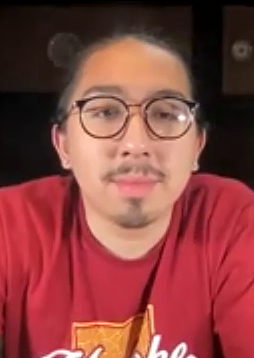
Image Metadata
|
Created: Sunday, May 21, 2023 - 13:45 |
||
Summary:
An interview with Muscogee (Creek) Nation citizen Jay Fife. Description:
An interview with Muscogee (Creek) Nation citizen Jay Fife. A downloadable transcript may be found by link: Jay Fife. This interview has been indexed through the Louie B. Nunn Center for Oral History Center’s Oral History Metadata Synchronizer system at the University of Kentucky. For an indexed copy of the video, please follow the external link found in the bar on the right of this page.
Transcription:
The Muscogee (Creek) Nation
Historic and Cultural Preservation Department
Oral History Program
“A Twenty-First Century Pandemic in Indian Country:
The Resilience of the Muscogee (Creek) Nation Against Covid-19”
As Remembered by: Mr. Jay Fife
Interview by: Ms. Midge Dellinger
Date: February 21, 2022
Transcription: The Audio Transcription Company
Edited by: Ms. Midge Dellinger
JAY FIFE: Alrighty.
MIDGE DELLINGER: This is Midge Dellinger, oral historian for the Muscogee (Creek) Nation. Today is February 21, 2022. And I’m at my home in Tulsa, Oklahoma, interviewing Muscogee citizen Mr. Jay Fife, who is at his home in New Haven, Connecticut. I’m performing this interview on behalf of the Muscogee (Creek) Nation Historic and Cultural Preservation Department for the oral history project titled “A Twenty-First-Century Pandemic in Indian Country: The Resilience of the Muscogee (Creek) Nation against COVID-19.”
Mr. Fife, thank you so much for taking time out of your busy day to be with me here this afternoon and to do this interview. We’re going to start with some questions about your personal life and your background. And so I’d like to begin with: What is your tribal town and clan?
FIFE: Sure. [Muscogee Language]. [00:01:06] So, my tribal town is [Muscogee Language] Oce Vpofv, also known as Hickory Ground. And my clan is the Wind Clan. And tribal towns and the clans are inherited through the mother’s side. Within our tribe, we receive our tribal towns and our clans through our mothers. What is different about, I guess, contemporary practices of the ceremonials grounds tribal towns is that the tribal towns and the ceremonial towns—or ceremonial grounds—refer to the same thing. Essentially called an etvlwv. That’s what we call it in the language, etvlwv. And today, we refer to ceremonial grounds and tribal towns inexchangibly [sic]. But in the language, etvlwv refers to a political, social, cultural, and religious [00:02:00] entity that practice Muscogee traditions. And so, from my mother, I’m actually from the [Muscogee Language] etvlwv—the Fish Pond people. And we can trace our lineage back to the Fish Pond people through my mother’s side. However, tribal towns, their relationship to their people, often change, as communities do, right? And I’ve actually been adopted by the Hickory Ground people. And on my paternal side, through my father’s side, our family has interacted with the Hickory Ground people from as long as I can remember. So, that’s how I became a part of the Oce Vpofv tribal town.
DELLINGER: Thank you for that. Where were you born and where did you grow up?
FIFE: I was born in Tulsa, Oklahoma, in 1999. I grew up with my family in Beggs, Oklahoma, but I spent a lot of my time down [00:03:00] in Dustin, [Muscogee Language], Okemah, and Okmulgee area. So, I kind of say I’m from all those areas. (laughs)
DELLINGER: Okay. I’d like for you to tell me about your family. Who are your parents?
FIFE: Yeah, so, my mother, her name is Thomasine Fife. She is Muscogee and [Crow Language] Crow. And my father is Jeff Fife—and I’m actually named after him. I just go by Jay. And he’s Chickasaw and Muscogee, as well.
DELLINGER: And what are your folks—what are their occupations? You can start with your dad, if you would.
FIFE: Yeah, so, my father is an interesting individual. He kind of does it all, he’s a jack of all trades. He’s an artist, a family man, a cultural protector, cultural practitioner. [00:04:00] He’s been involved with law enforcement as a lighthorse officer. Also served on the national council and in multiple capacities at the tribe. My mother, she currently serves—or works in behavioral health for the Muscogee Nation Department of Health. And her role is primarily as a caretaker in whatever capacity that is. Whether that’s mental health related, or grants, or seeing clients. That’s kind of what she does is takes care of people. That’s what I like to tell people.
DELLINGER: That’s great. Now, what about siblings, who are your siblings?
FIFE: Yeah, so, [Muscogee Language]. I have one brother. His name is Aaron Jones. We—let’s see, he has a couple children. And right now, my second oldest nephew, [00:05:00] Cutke Jones, he lives with us. And so, I also like to say he’s kind of my sibling, but I still tell him he’s my nephew.
DELLINGER: All right, Mr. Fife. And can you share with us a little bit about your grandparents?
FIFE: Sure, on my maternal side, my grandparents are Melinda Byrd, who is a moccasin maker, a full-blood Muscogee (Creek) citizen. And she actually met my grandfather at Chilocco Indian School near Newkirk. They met in the seventies and my mother came out of that interaction. (laughs) My grandfather, my mother’s father, his name is Kenneth Deputy, and he was—he’s Crow. He came from St. Xavier, Montana. So, there was a large population of Crow students that attended Chilocco throughout the school’s history. [00:06:00] On my father’s side, my grandfather, Bill Fife, actually served as principal chief of the Muscogee Nation in the nineties. And Grandpa was married to my grandmother, Mary Nell Poe Fife, and she’s Chickasaw. And she came from Connerville, Oklahoma. Unfortunately, she passed away in 2009. So, I have three grandparents who are still with us today. My grandmother is with us in different forms, but I still like to maintain my relationships with my grandparents. They’re important assets to my identity, but also to my love, you know?
DELLINGER: Yes, absolutely. Mr. Fife, where did you graduate from high school?
FIFE: I graduated high school from Preston High School in Preston, Oklahoma. Two thousand eighteen—that was in 2018, yeah.
DELLINGER: Okay, 2018?
FIFE: Yes.
DELLINGER: I’d like for you to, if you would, [00:07:00] talk a little bit about your college recruitment experience and how you made the decision to attend Yale University.
FIFE: Yeah, so, I’ve only went to Preston growing up, and the education system—and reflecting about it now, I really am—I’m thankful for my educational experience. Being able to attend Preston was really a blessing, if you will. Our school is kind of more known for its academics, along with its athletics. But Preston really motivated me to excel as a student, and along with other programs, such as College Horizons—and College Horizons was my introduction to Yale. While attending this program, I met an admissions officer who was also Native. Her name was Dinée Dorame from (??), New Mexico. And she was a Yale alum [00:08:00] and she—I like to say she recruited me, but it was really through our meaningful interactions that she made me realize that I could attend Yale, but also excel as a Native student, so long as I had support from other community members, but also so long as I also believed in myself. So, she kind of instilled that into me, and then I applied, as a senior, to University of Tulsa, Colorado College, Dartmouth College, and Yale University. And I was accepted to all institutions, but I ultimately chose Yale for a plethora of reasons. The support system here is very unique. I knew that attending Yale would allow me to thrive in ways that I did not imagine at eighteen years of age. But also, to the academic structure, I really appreciate the academic opportunities that exist at Yale. And [00:09:00] now, I’m a senior, so I’m really thankful for being at this campus and being able to also give back to the campus and my community in a variety of ways.
DELLINGER: Great. What are you studying at Yale University?
FIFE: Right, so, I am studying American Studies. At Yale, we don’t have Indigenous Studies or Native American Studies. I wanted to do something interdisciplinary. I came into Yale expecting to be a linguistics major. Took a few classes and realized that linguistics wasn’t necessarily for me. (laughs) So, instead, I chose to major in American Studies because of the interdisciplinary nature of the academic field. So, right now, I’m also a Edward A. Bouchett Undergraduate Fellow, which basically means I am paid by the [00:10:00] institution to conduct paid research. And so, my project combines American Studies, linguistics, religious studies, and history, to examine the relationship between Christianity and the Muscogee Language. So, my major is kind of taking me all over the places, but it’s actually something that I enjoy and I’m glad that I’m able to contribute to this emerging work and scholarship. So, yeah, American Studies. (laughs)
DELLINGER: That’s great. Your research sounds so interesting and, I think, necessary.
FIFE: Definitely.
DELLINGER: Yeah, so that’s wonderful. So, now, when will you be—what’s your graduation date?
FIFE: So, I will graduate this spring—May—the last Monday in May 2022.
DELLINGER: Right, getting closer.
FIFE: Getting close, yep.
DELLINGER: Right. And so, have you made any [00:11:00] plans for after graduation? Like what direction is life going to take you in after graduation?
FIFE: Well, my immediate plans is to return back to Beggs and to the reservation to enjoy my time off and celebrate my accomplishments of the four years. After that, I have a couple of opportunities. I don’t want to spoil them yet. But really with my experiences at Yale, and back home, I kind of have the ability to select whichever way I want to go. Which is really, also, very comforting, knowing that I have multiple options. So, right now, I can stay in New Haven, I can return back home, I can work for the tribe, or I can continue to engage in research, in whatever forms that is. So, right now, I just tell everybody I’m taking it day by day. (laughs)
DELLINGER: [00:12:00] Okay. I want to go back to your involvement with your ceremonial ground and ask you, what does it mean to you to belong to a Muscogee ceremonial ground?
FIFE: Right, thank you for that question, because I think it’s a question that many Muscogee citizens should ask themselves. But asking it requires deep reflection into history but also, too, identity. And for me, I always tell people, “If you’re a Muscogee person, you belong to a Muscogee tribal town. But that doesn’t mean you also belong to a ceremonial ground.” And there’s a reason why we use these two terms to refer to the same thing, right? So, as a Muscogee person, you are inherently [00:13:00] a part of a larger kinship network, which is that tribal town. And every person who is Muscogee belongs to a tribal town and a clan. And even if they’re not, they’re adopted through whatever ways that practice is. So, for me, when I tell people I’m part of the Hickory Ground ceremonial ground, it brings me a great sense of joy, gratefulness, and responsibility. As a young person, I would say the joy is that I’m learning the traditions of our Muscogee people, whether that’s through song, language, practices, or other community members. And the other side of that—the other joy that’s produced through being a member of the ceremonial grounds is interacting with the community. I mean, it really is a deep sense of community in attending the ceremonial grounds, [00:14:00] participating in ceremonies, and you really kind of find your place down at the ceremonial ground. And—but I also recognize that not every Muscogee person is a part of a ceremonial ground, given the history of our Muscogee people, but also the history of the United States and religious history, as well.
So, I encourage a lot of people to explore the ceremonial grounds, because that’s where Muscogee people belong. That was our first religion before Christianity, before other religions entered this continent. And it’s important to reflect on what it means for us, as a people, to still have a ceremonial ground and still have our Muscogee beliefs. It brings me a great sense of pride to say we still have our dances, our ceremonies, because I recognize that some other tribes don’t have that opportunity. [00:15:00] So, we’re really fortunate. And that’s why I always try to urge our Muscogee people to try to venture out to the ceremonial grounds and experience that. Because it is a unique experience, but it’s also our experience. Our experience as Mvskokvlke. And it’s important to recognize the strength of our people, but also, too, the ways that we can engage with our ancestors. Because, after all, that’s what the ceremonials grounds are for. It’s for connecting to those around you while you connect to the ones that came before you. So, it’s a great feeling to be a part of the ceremonial grounds. And I’m really fortunate to call Hickory Ground my ceremonial grounds.
DELLINGER: Very nice. That’s beautiful. So, obviously, you are a fluent language speaker, as we have already heard here in the first few minutes of this interview. Why has it been important [00:16:00] to you to learn the Muscogee language?
FIFE: Yeah. So, I kind of want to reiterate something. I’m not fluent, I’ll say that. Some people will say, “You’re fluent” and I’ll say, “Well, no.” Muscogee wasn’t my first language, it’s my second language. And growing up, I always knew I was Muscogee, I knew I was stecate, Native, but school was really—kindergarten—I think about kindergarten and the role that that had. That was my introduction to learning about the real world, if you will, right? I learned about gender, I learned about class, I learned about ethnicities and race by attending school. I always knew that I was different. But I didn’t understand what made me different. And it really wasn’t until after participating in Challenge Bowl and kind of becoming aware of my environment and my communities that language was at the forefront and the heart of identity. [00:17:00] And I really kind of set with that idea, and I told my parents, “I really want to learn the language.” And this was around fifth grade. I said, “I’d like to learn how to talk Creek.” And my parents said, “Well, we can teach you phrases, we can teach you words, but that’s not talking, that’s not communicating.” And I believe it was my mother—my mother expressed to my grandma that, “Hey, Jay, he wants to learn the language.”
And both my parents worked and my grandmother, she would work the mornings so she could take care of me after school. And she said, “Okay, well, I know a few fluent Creek speakers and they’re my friends. I’ll take him to those speakers and I’ll just let them sit and visit.” Which, in hindsight now, I’m extremely thankful for my grandmother showing that love for me. One, showing love for me as a grandson, but also a love for the language. [00:18:00] Because my grandmother, she went to boarding school. She’s full-blood, but she doesn’t talk Muscogee. And she recognized the importance of learning Muscogee in me. And so, I started learning—I really tell people I started learning the language probably around fifth grade—is when I really devoted time to actually visiting with elders, reading the Muscogee dictionary, practicing language. I would talk to myself, I would visit the elders and say, “How do you say this?” Or “How can I say that? Does this make sense?” Things like that. And over time, these elders—Porky—[Muscogee Language]—Porky and Rose and some other people, they really told me, they said, “If you want to learn it, keep going, we’re going to be here to help you because nobody else is learning.” And that kind of solidified my responsibility. I recognized then that they were [00:19:00] entrusting in me to learn the language, which is a form of love. At that time, I recognized it as a form of love. And so, that’s kind of what started my journey. And ever since fifth grade, man, people knew that, “Hey, that boy, he’s really trying to learn Creek, you better talk Creek to him.” And that kind of helped build confidence, as well. So, I started talking with people from the language program, people from church, people from the ceremonial grounds. And it’s really through those journeys that I’m able to speak the Muscogee language today.
DELLINGER: I’m glad that you mentioned Porky and Rose. I was going to ask you who are some of your language mentors. Are there any other folks that you’d like to mention and give that credit to?
FIFE: Yeah, so, I first have to thank my grandmother, as I’ve mentioned. That takes a lot to recognize that love for the [00:20:00] language through helping someone else learn the language. And we would often go to Porky’s house after school. After school, my grandmother would pick me up and we would go visit Porky over at the elderly housing, because that’s where he lived. And we would sit there talking. Talk until Mama got off, or Dad was done working. And so, I spent many afternoons at the elderly housing. And Porky actually lived next door to Sam Proctor. And so, there were occasions where Porky and Sam would be sitting in the living room talking and they would just say, “Chebon [Muscogee language]. You better listen.” And they would just start talking. Talking anything and everything. And at that age, I didn’t recognize, really, what all was going on in terms of what they were talking about, or the moment of joy that was being created in them in their [00:21:00] conversations. And so, Porky was a major teacher in my life, at my young age. And Rose and Sam Proctor. And as I got older, I kind of discovered more people who were able to help me. And those people include Rosemary McCombs Maxey, who was also from Dustin; Becky Barnett from Hanna; Susie Gracine Hicks from Okemah way; Oscar Phillip Harjo also from Dustin ways and Hanna ways. And so, there’s a plethora of teachers that have informed my language learning skills. But they’ve also became a community for me. And I am eternally grateful for their knowledge, and also entrusting that they—entrusting me for speaking stecate wvnvkv. [Translation]
DELLINGER: Mr. Fife, for the record, can [00:22:00] you share Porky and Rose’s last names?
FIFE: Yeah. So, Porky was his stecate name. I think his real name was John Scott. I think that was his real name. Porky Scott is always how I’ve known him. But I think his real name was John Scott. And Rose—oh goodness, Rose Johnson. [Muscogee language]. So, Porky passed on January 5, 2015 and then Rose passed that following year on the same day. And I recognized that the community of speakers that I’ve engaged with are not always with me in physical form. But I think, today, about Rose, and Porky, and I’d really love to talk with them today. They would be [00:23:00] really proud to see how far I’ve come since a fifth-grade boy, you know? And I sometimes really wish I took in those moments a little bit more. But now, I’m really grateful that they took time—and that I also took time to learn from them and be in their presence. And I hope one day [Muscogee language]. So, one day, when we all pass, we’re going to see each other again and we’ll all be talking stecate wvnvkv. I’m looking forward to that day.
DELLINGER: That sounds great. I’m sure they are very proud of you. Okay, so, for my next question, I want to ask you, do you involve—I know you’re really busy with your school work, and I’m sure you keep up with things back home here in the Muscogee Nation—[00:24:00] but are you involved, either there at school or here at home, with any community activities?
FIFE: Oh, yes. I’m very involved with community activities. For me, I’ve been fortunate to still maintain community with the tribe through the Muscogee Nation Youth Council, which we started in 2015. I was actually one of the founding members, along with a few other of my friends, who are still my friends. We did that when we were—2015—so, like, fifteen-, sixteen-year-olds, we were creating and envisioning a future where Muscogee youth were valued for their opinions, but also had an input in how the tribe engages with future work. And so, that’s been a main avenue that I’ve maintained community. Also, down at the ceremonial grounds. I’ve been going down Oce Vpofv, [00:25:00] man, all my life, but I really got involved kind of around fifteen. Fifteen years old and I’d come back home for Last Dance or Green Corn. I’d always make sure that I’m there for my people, because it’s important to me to continuously engage in my spiritual life. And I’m thankful that I’m able to do that. You know, Yale respects that, and my mekko, my community, they also respect that. Everybody’s kind of on the same page and they support me in continuing my relationships with people back home.
In terms of on campus, I’m involved with a variety of things. I’m involved with my residential college, Davenport, which I’m employed through. I also serve in different capacities. I currently serve as the Class Day committee member for 2022. I work for the Native American Cultural Center here on campus, where I serve as a house [00:26:00] staff member. Again, Bouchett is another way to engage with community. So, I try to involve myself with as many communities that I find meaningful and in ways that I can contribute. But also, too, kind of continue a legacy that’s already established. So, I’m very thankful that I’m able to engage with my communities in this manner.
DELLINGER: Okay. Listening to you, I don’t know if you ever actually have any free time, just time to yourself. But when you do, what do you like to do for fun? Do you have any hobbies or interests that you engage with?
FIFE: Yeah. So, my free time is mainly me thinking. (laughs) That’s what I tell people. I say, “I just sit with my thoughts and think about it.” Yeah, so, in my free time, I actually like to [00:27:00] write. I write in my journal almost daily. But I also like to write about things that I’m thinking about and feelings that I’m expressing and feeling at the moment. So, a lot of times, I’ll write to my Aunt Carol, who is eighty years old, and we will exchange letters. She’s kind of like my pen pal. So, any time I have free time, I think, “I better write to my aunt to kind of capture this moment, but also to share that love.” I listen to a lot of music. I enjoy Spotify—making playlists on Spotify or listening to recordings from our Green Corn ceremony or stickball games. Things like that. And I tell people in my free time, I just like to think about home, think about our people, think about the future. And through those thoughts, I kind of act on it in different ways. Whether that’s writing, or creating art, or [00:28:00] calling people and visiting with them. Things like that. And so, that’s kind of how I spend my free time, is really engaging with community, because it doesn’t—I mean, it brings me happiness and it doesn’t feel like a chore. It’s something that comes naturally. I know I’m going to be happy after interacting in those things. So, that’s kind of how I spend my free time.
DELLINGER: Okay. All right, well, listen, mvto, thank you so much for sharing all these things about yourself. And especially for speaking about the language. And the importance—the purpose and the importance of your ceremonial ground. So, what we’re going to do now is transition with our questioning and I’m going to ask you some questions about your knowledge and experiences with the COVID-19 pandemic.
FIFE: Okay.
DELLINGER: So, we are—we’ve now been living for over two years with [00:29:00] this pandemic. And what I’d like to ask is when in 2020—so, we’re going back now—when in 2020 did you first hear about the coronavirus—COVID-19—and how did you first hear about it?
FIFE: Okay. The first time I remember actually thinking, “Oh, COVID, is going to come for us,” was probably about February of 2020. I remember being in my dorm room at Davenport college, and I was scrolling on Twitter and I’d seen that COVID was trending on Twitter. And I think it, at that time, was in Washington or Oregon. Somewhere in the northwest. And I thought, “Wow, it’s actually here.” A couple weeks later, lo and behold, it would be in New York and then all over. And so, at that time, COVID was kind of a [00:30:00] thought in the back of my head, because I was actually planning a trip back to Oklahoma—this was a collaboration between the Yale Native American Cultural Center and Davenport—not Davenport—Yale Native American Cultural Center and a course I was enrolled in called Writing Tribal Histories. And kind of a project I engaged with through this course was actually coordinating an Oklahoma sovereignty tour, in which students of this course would have the opportunity to travel to Oklahoma and interact with tribes and learn about ways that sovereignty is enacted in contemporary times and also explore tribal history and tribal cultures.
And so, COVID was in the back of our minds during planning, but it wasn’t until March that actually COVID entered Oklahoma. And it just so happens that we were on the Oklahoma [00:31:00] sovereignty tour, so we had fifteen Yale students with us who just got a notification from campus that “You won’t be returning back for spring break.” So, the trip occurred during spring break, and we were telling people, “We might be coming back to campus, we might not, who knows what’s going to happen.” And so, there were fifteen other of my peers in Oklahoma who said, “COVID’s a real thing. Like, what are we going to do?” And actually, we called off the trip midway through, because airports were beginning to shut down and we didn’t know if these Yale students were going to stay in Oklahoma, or get back home, or what was going to happen. And so, it was kind of real blatant. It was in our face. It was like, “Okay, how are we going to address COVID with people from different areas, people from different cultures, [00:32:00] and what have you?” And after we called off the trip and sent everybody back home it was kind of like, “Wow, COVID is a real thing and it’s coming for us.”
And then, March 2020, things kind of slowed down, right? Things—people moved to remote school, grocery stores had limited hours, and people—it was hysteria essentially. And while the hysteria was ongoing, I was a sophomore at Yale. And so, I was like, “Well, I don’t have to do work, because I don’t have access to Wi-Fi.” I mean, what can I do in this moment? And for me, it really allowed me to reflect on kind of what my values were as a student, but also as a person navigating this pandemic. And it was in that moment, in these times that are still ongoing, that I realized that with COVID going on, I have a [00:33:00] responsibility to continue learning and enjoying the moment, being more present. And so, during that time, I would really safely interact with Becky Barnett. I would go over to her house; I would take her groceries—because I wanted to protect her, and so I would take her groceries and then I would go over to her house and visit her. And wear a mask. And say, “Teach me the language. I know I have school I could be doing, but I don’t have Wi-Fi at the house. I have access to you as a language speaker, let’s teach me the language and let’s ensure that our language will continue.” And we did that for—gosh, until I went back to school as a junior. So, that was March to September that I actually got to spend meaningful time with Becky, and other [00:34:00] language speakers, in ensuring that I was able to learn. And I’m so thankful that I got to do that.
But yeah, during that time, I learned so much about Muscogee philosophy on the end of times, what sickness meant, religious traditions, cultural practices, and what the old ones said. And that’s kind of what I really enjoyed about the times, because when COVID hit, it allowed our—it allowed some Muscogee people to actually fully be Muscogee. And I say that because it allowed us a time to one, check up on one another. It was kind of now like, “Okay, go check up on people, because you don’t know if they’re going to get sick. You don’t know what’s going to happen with them. But be there for one another.” And that’s what COVID did for us. It allowed us to be there for those who maybe couldn’t leave their house, or those who didn’t have [00:35:00] access to PPE, or things of that nature. But it also allowed us to kind of alleviate our jobs. And that’s really what serves as a hinderance to learning if you think about it. I know for me, I said, “Well, I don’t”—school is a job, right? But there’s also other forms of education that don’t require this job mentality. And Becky, as an employee of the tribe, she said, “I don’t have to go to work. I can’t go to work because we don’t know when this is ending.” And so, she would just call me up and say, “Come on down, come on over, we’ll talk. And we’ll engage in work in different manners.” And that’s what I tell people was that the time where we shut down was the best time of our lives, because it really allowed us to reflect on what is important to us. There’s a sense of—that uncertainty provides a sense of reflection that we aren’t allowed to necessarily engage with, because [00:36:00] we have other responsibilities—work, or school, or other stresses that are created in the white man’s world. And so, I miss those times of shutdown because I think back now and I think, “Wow, if we were to shut down again, what could I do this time? What can—how can I make more meaningful interactions with people now?” And so, man, I miss those times of when we were all shut down and we could garden, we could do it—we could spend our time however we wanted. And that was really liberating. Really, really liberating.
DELLINGER: Let me ask you this. In what you’re saying here, in what you’re talking about here, during the lockdowns and the shelter in place safety measures that were enacted by the local and state governments, [00:37:00] when you first heard those words, how did the words themselves, though, make you feel initially?
FIFE: Well, when they said, “We’re going on lockdown”—and even Chief Hill said something like, “We’re in a state of emergency”—I got a little scared. I said, “I’ve never experienced anything like this, so I don’t know what it means.” But in terms of practicality, I said, “They can’t lock us down.” How do you ensure that people are following the rules and the lockdown measures and things like that? But I also thought to myself, “You can’t lock down Muscogee people, because we’re inherently social beings.” We inherently check up on one another. We take care of one another. And taking care of one another requires movement. It requires engagement and being there for one another. And so, I thought to myself, [00:38:00] “Yes, let’s take care of one another, but let’s do it responsibly. There’s a way to do it responsibly. But also, too, it’s our responsibility to take care of one another, so we can’t lock down.”
And so, I remember the first days, I would go to the store, I would wear my double mask—I would go to the store and buy groceries. That’s something I did for a couple months was buy groceries for my grandparents, my mekko, Becky, people that I actually cared for. And would take them groceries and say, “I know you can’t get out right now, but I want to ensure that you’re okay.” And that meant a lot to them, but it meant more to me, because I knew that I was fulfilling my responsibility in taking care of our elders, but also making sure that they were able to survive. That’s kind of what the time said to me. It’s like, [00:39:00] when they said, “Okay, we’re going to lock down,” I thought, “Well, what’s the best way to responsibly survive?” And you know, that looks different for everybody. But for me and my family that was, “Well, let’s sit down and talk about things.” Because that’s all we could do. We would go outside and just sit under the tree and talk and talk and talk. Or we’d call someone. And yes, the lockdowns kind of created a sense of anxiety, but it also really allowed me to reflect on what’s important. And through that reflection, I just enacted upon it. I reacted to it and said, “Okay, well, stehetke world, it has different values and concepts of what safety is and what responsibility is. But in our stecate world and our Muscogee world, we have to acknowledge that and really enact upon those values which our people instilled upon us.”
DELLINGER: [00:40:00] What were some of the initial conversations, if you can share, that you had with your family and friends about the virus?
FIFE: Well, you know, with my immediate family, we talked about, “What is death?” We really reflect on death and the meaning of life. For us, we were like—you know, at that time—it’s 2022 right now and I’ve had COVID. And I’m thankful that I got COVID in 2022 as opposed to early days, because in 2020, COVID was a death sentence. We didn’t have ventilators; we didn’t know what it did to the body. And now, we’re kind of at a point now where we understand kind of the effects of COVID—not fully, right? But we’re still learning and comprehending what COVID does to the body. So, for us, it was like, if you get it that might be it. And how are we going to accept that [00:41:00] this is the life that we’ve lived before the pandemic? So those were some of the initial conversations, but then we started reflecting on philosophy. The philosophy of taking care of one another, the philosophy of sickness—what role does sickness have in our Muscogee world? What role does sickness have in the white world? And that’s kind of the conversations. We’d dive into those topics of like, What world do we occupy? What world are we creating? And is it one world? Is it a conglomerate of worlds? That’s kind of what we looked at. Like, what is our values in this moment? And again, it went to the responsibility.
Now, as COVID progressed, and the year 2020 progressed, conversations with my friends shifted, because, in particular with one of my friends, [00:42:00] Erin Bunner, she and I engaged in discourse—deep meaningful conversations about Black Lives Matter and the social protests that occurred in that summer. And it was a crazy time because for the first time in my life, I felt that we were all kind of collectively having these conversations about, What is life? What is justice? What does it mean to die? What does it mean to be safe? And it’s kind of through these conversations that I was informed my world view, but also informed my philosophy on things. And I look back on those conversations and I think, “Wow, there’s probably never going to be another moment where the only thing that matters is the person with us and that conversation that we’re engaging in.” Just because, as we know, life’s picking back up, right? And so, we have to return back to this sense of normalcy—[00:43:00] the new normal, right? Whether that’s doing things virtual now, or working, or whatever that is. So, that’s kind of where our conversations took us in 2020.
DELLINGER: Thank you for all that. So, I just want to go back here a little bit and clarify that when the pandemic was hitting in its early days—spring of 2020—and things started shutting down, you were actually here, you were home here in the Muscogee Nation. And you were not allowed to go back to school.
FIFE: Correct.
DELLINGER: You didn’t even have that option, right? So, you had to stay here at home.
FIFE: Well, the—so, I was there in Oklahoma on the reservation—and that’s another [00:44:00] thing, too, right? McGirt—the McGirt ruling also came out during the pandemic. And we often overlook that, too. You know, it’s crazy, because I remember at the highlight of COVID the McGirt ruling came out virtually. We got to watch them do oral arguments. And I remember logging on to my computer and watching YouTube to listen to the oral arguments. And then, when the decision came out, which was July 9, 2020, it was like, How do we celebrate responsibly? Because COVID’s around and what do we do, essentially? And so, I was home during that crazy time and as Yale kind of formulated a plan for returning back to the academic year for 2020–2021, they said, “All classes will be remote. [00:45:00] So, there’s not a need to come to campus because we don’t want to be a site of infection and transmission for COVID.” But unfortunately, I signed an off-campus apartment lease prior to COVID actually coming to—becoming a real force. And even that was kind of wonky, too, because it’s like, do I still pay my rent at New Haven? Blah, blah, blah. So, actually, I was fortunate in that I had the option to return back to Connecticut in the fall of 2020 to continue my studies. And that’s what I did. I returned back to New Haven and stayed in my apartment with two other roommates who were also Indigenous people. And that was also another site of reflection and allowed us to kind of engage in those conversations.
And it was meaningful, and it was a time of friendship, [00:46:00] it was a time of learning, but I also recognize that I was safer in Connecticut than I was on our own reservation. And so, that’s another reason that I came back to Connecticut, because the mask mandates were here and there was a kind of a greater sense of self-responsibility, if you will, to say it nicely, in Connecticut than there was in Oklahoma. You know, people—“I’m not wearing a mask and I don’t believe in COVID.” Which was sentiments expressed by Muscogee people that I actually witnessed and encountered while I was here. And I thought, “You know, that’s not doing it justice to that person, but also to the severity of COVID.” And so, I did have the opportunity to return back to Connecticut and that’s essentially what I did. But I still would come back home, as well. I would come back home for ceremonies, [00:47:00] because ceremonies did continue. Some ceremonies continued even as the pandemic was going on. I would come back home to get over my homesickness. That’s another thing I was glad that I was able to travel back home to—for birthday parties or just check in on people and say, “Are you good?” Stuff like that. So, the pandemic really did allow me that fall semester to have sort of a flexibility that I never had. And so, I was in Connecticut and Oklahoma my junior year of Yale. Uh-oh, I can’t hear you. You’re on mute.
DELLINGER: You just touched on something that I was going to ask you about, which is what has been the impact of COVID on Muscogee traditional practices?
FIFE: Yeah. So, [00:48:00] [Muscogee language]. So, in the Muscogee world view, there’s always this idea that a sickness or something will come to our people and it’ll kill a bunch of us off. And this is—we’re kind of seeing that. And for us, as a community who practices Muscogee traditions, it was really a time for us to kind of reevaluate, What do we kind of prioritize? Do we prioritize what the World Health Organization is saying about this deadly virus that we have no idea what it is? [00:49:00] Or do we revert back to our traditional Muscogee beliefs and continue to engage in medicinal practices that protect us from things that we can’t see, things such as sickness? And for some communities, they really had a tough time reckoning with confronting this. Do we believe the white values or do we believe our own values? And so the pandemic also allowed us to reflect on what does it mean to be Muscogee as well. And my experience—at least from my observation—is that it was a little bit harder for our Muscogee churches to continue practicing. There was a point there that there were a bunch of preachers passing away and a lot of church members from [00:50:00] all throughout the reservation catching COVID and being sites of COVID transmission. And in my view, that was kind of the Creator saying, “You guys aren’t necessarily practicing what you should be practicing.” [Muscogee language] that’s my belief. Because I believe that our ceremonial grounds, many of them continued. Hickory Ground, we took a break, which is a practice that some ceremonial grounds do, is that if there’s a tumultuous time, if you will, the ceremonial grounds will be—they’ll sleep, they’ll rest, for however long that is. And for our tribal town, our ceremonial ground, we said, “Let’s hold off for the year. We’ll still practice our medicine ways, but we don’t need stomp dance and stickball to still practice our [00:51:00] medicinal practices.” So, we continued to take medicine, wash off, and be engaged in our medicinal practices. But we did it responsibly and we did it safely. And thankfully, many of us did not get COVID that summer.
And other ceremonial grounds, they continued to practice. They said, “No, our medicinal ways was given to us by the Creator. And there’s sickness that has existed before we were here. And our songs and our medicines will protect us from that.” And I really felt that many people recognized that, because it almost seemed that more people were going to stomp dance in 2020. Now, the other reasoning—or possible reasoning for that could be that ceremonial grounds are practiced outside. So, you’re a little more—you can engage in social distancing in a better manner. [00:52:00] Whereas the churches, you know, you’re stagnant. You’re sitting at the pews; you’re not moving as much. And so, for the ceremonial grounds, it was like, “Okay, we need to continue practicing because that’s what our old ones told us to do. No matter what happens, you keep that fire going.” And a lot of ceremonial practitioners held on to that belief. And so, if you will, I like to say that the ceremonial grounds kind of got stronger in that regard. There was a time that people recognized, “Okay, without”—and this was in a time before vaccines, so people kind of put their faith back into our Muscogee medicinal practices, rather than their religious Christian practices. And I still reflect upon that, too. I think, Wow, when is the last time a large amount of Muscogee people kind of rededicated themselves back to the ceremonial [00:53:00] grounds? And I don’t think there’s been one in a while. And so, it’s kind of a—it’s a shift in our religious identity, but also, too, in how we engage with our spirituality.
DELLINGER: All right. What did you observe to be the initial response of younger people to COVID-19?
FIFE: Yeah, I think in terms of young people—ooh, that’s a tough one. So, my observation is that for young people, we were kind of attuned (laughs) to living and interacting with one another through the internet. And so, like, TikTok was real big, Instagram, Facebook. It was almost like this solidified online interactions. Like, we need social media and all of those [00:54:00] things to survive. That’s kind of what I felt is that we’re more relying on the internet and the role that it has on our lives, as opposed to the actual interactions. Now, I’ll say that I’m old school, so I like face-to-face conversations, so it was kind of hard for me to engage in online conversations, and Facebook, and things like that. But I did feel that, again, this was summer—or in 2020, so again, you kind of have Black Lives Matter, you have the COVID pandemic, you have McGirt, you have all these things that’s happening at once. And how do you engage in a conversation about the three in a way that’s accessible to everybody? And so, a lot of people would go to the internet. So, I enjoyed seeing people’s thoughts, their expressions on all these [00:55:00] occurrences. But it was really interesting in seeing how people perceived COVID, also how they believed in its severity. Like, some people said, “No, this isn’t real,” and some people said, “Yeah, it is real.” Things like that. And man, I just remember thinking, “Wow, this is going to be a moment in time that kind of defines us as a generation, but as a people, too.” Right? I mean, there’s so much to unpack in how all this played out. But for young people, especially, it was kind of like, “Okay, we can kind of forge our narrative a little bit more now, because now people are on the internet and now people will look to the internet as a factual source of knowledge, and news, and opinions.” So, young people, they kind of recognized this [00:56:00] moment occurring. And Twitter’s an interesting world, which was primarily how I was getting my news, but I also saw the Facebook. And people were also creating accounts now, so more people moved to the digital identity and digital personas. So, yeah, young people, they just do what they did best and got back on social media. (laughs)
DELLINGER: All right. Mr. Fife, what is your knowledge and understanding about the COVID-19 virus, including how it is spread, and its effect on the human body if contracted?
FIFE: Yeah, so, I was actually having a conversation with my dean earlier about COVID, because right now on campus, yesterday—well, in the past seven days, there have been a confirmed 486 cases—over 400, nearly 500 cases—[00:57:00] positive cases of COVID on campus. Which is alarming. My dean and I were actually talking about if people had access to the actual effects of COVID, maybe we would be more cautious, maybe we would be a little bit more—excuse me—alert, responsible to how we are interacting with these things. And I thought to myself, “What do I know about COVID?” You know? And what is actually true? So again, questioning what is reality? What is truth?
For me, I know that COVID is a respiratory disease. I mean, that’s for sure. I know that COVID is a deadly disease. I know that it’s easily transmittable. Again, I also contracted COVID two weeks ago, my first week being back at Yale. I also lived with people who had COVID. Everybody in my household, we all had COVID. [00:58:00] At different points, but we all had COVID. And so, knowing that it’s easily transmittable in the air, social distancing, masks, those are ways to protect yourself. Washing hands, disinfecting. But I just wish that—I do know that it’s an airborne respiratory disease, right? Some people will say, “No, that’s not right.” But I’m thinking, “Why is there so much contestation about the validity of a disease?” Especially one that we actually see is killing a bunch of people. So, that’s kind of my knowledge about it.
And in terms of the Muscogee knowledge about COVID, our elders have always said that there would be a disease—we might not see it, meaning the generations that we are, but future generations are going to see this disease. So, it’s almost like our people knew that there would be a time where we’d have to [00:59:00] face it. The unfortunate side is that we’re seeing it now and we have to live through it. So, yeah, that’s kind of my limited knowledge about COVID.
DELLINGER: Will you—if you feel comfortable—will you share some of the symptoms that you and some of your family members experienced?
FIFE: Yeah. So, my symptoms of COVID was really just a sore throat. I remember thinking, Oh, I got a sore throat and runny nose. That’s a symptom. Let me check, let me get tested. And thankfully, at Yale, we are required to test twice a week throughout the academic year, which again, is another safety measure that is why I’m in Connecticut. Just knowing who has it and who doesn’t have it, there’s comfort in knowing the status of other people in terms of if they have it or not. [01:00:00] But again, my symptoms were very, very mild. I would say it was just like a cold, but they said, “Yes, you do have COVID in you.” I tested positive. Now, my nephew, he was actually the first person in our household to contract COVID. And he contracted it on my birthday (laughs) last year. So, August of 2020, he actually tested positive. And we know that he got COVID from Preston Schools. They were still doing in-person, did not require masks, which brought COVID into the home. And so, for me, that obviously upsetted me because the institution—Preston was not taking COVID seriously and not ensuring that these children were safe, right? And it did upset me. But my nephew had it the worst. He was ten at the time, he had a headache, [01:01:00] he couldn’t stop coughing, he would cry from the aches. So, he had body aches and he would cry and say that, “My back hurts, my legs hurt,” and he would cry. You don’t understand the amount of pain someone’s in if you don’t understand what the virus—how it fully effects the body. And so, all we could do, essentially, was put on our masks and hold him and take care of him while he’s feeling these ways. But at the same time, you’re trying to protect yourself. So, how much—how do you navigate that? How much do you give to a person and receive from that person? And I really think that Cutke, he had it pretty bad. And unfortunately, I left the reservation at that time to return back to school. And I remember thinking, “Oh, I hope I don’t have COVID. I hope I don’t have COVID.” [01:02:00] And I didn’t. And we socially distanced. I mean, we would always wear masks in the household, he would wear his mask, he would be in a room, he would come outside, things like that.
And my parents also had COVID, as well. What’s weird is, none of us had the symptom of not being able to taste or smell. So, thankfully we all had our ability to taste and smell. Which was kind of like a first symptom that I remember being aware of. They would say, “Well, if you can’t smell you’ve got COVID. Or if you can’t taste something, you’ve got COVID.” Which now, it’s not like that. So, I’m interested in the progression of the virus and how that’s occurred. But again, my parents, runny nose, headaches, sneezing, coughing, mild cold. So, those are some of the symptoms that we encountered in household.
DELLINGER: Mr. Fife, have you been [01:03:00] vaccinated against COVID-19?
FIFE: Yes. I was vaccinated almost—actually, over a year now I’ve been vaccinated. So, I—in February 2021, I was actually still home for Christmas break, because our Christmas break was November to February, which is a long Christmas break. And this—during Christmas break, they actually brought the vaccines—the federal government brought the vaccines to our tribal health system in Okmulgee. And I remember my mother receiving her vaccine. She said, “Oh, I just want this to end. I’m going to get the vaccine.” And I remember, as a child, when swine flu was kind of a short-term pandemic, if you will. And I remember being vaccinated against swine flu. And I thought, “Okay, well, because I was vaccinated against that, then I need to get vaccinated for [01:04:00] this even more deadly disease.” Right? So, my mother was the first to be vaccinated in our home.
And then—because she was an essential worker, providing services, interacting with citizens, a couple weeks later—right before I actually left, to return back to Connecticut, I was taking my father—I was driving him because you get the shot, you have side effects, and we didn’t know what his side effects were going to be. So, I said, “Oh, I’ll drive you. Hop in the truck, we’ll go down there.” And he had an appointment and the—we pulled up and I asked that nurse, I said, “Hey, hokte”—because I knew of her—actually, I didn’t know the nurse that was checking us in, but I said, “[Muscogee language]”—which means, “I’m a fluent—I’m a speaker of the language [01:05:00] and I’m looking for help.” And of course, that employee didn’t recognize the language, and so, they asked someone else to come over there and Chelsey Fry, she came over there, she said, “Hey Chebon.” And I said, “Hey, [Muscogee language]”—which is, “I’m looking for the shot.” And at that time, the vaccine was only given to those at risk and those above a certain age. And my father was at risk, and I told them, I said, “Well, I speak the language, I can communicate with some of our elders, and I know I could be taking a spot of another elder. I don’t want to do that. Do you have extra vaccines?” And they said, “Yes, we have extra vaccines to provide, would you like one?” And I immediately was like, “Yes, let’s do it.”
But the reason why they had extra vaccines is because people—they were scared [01:06:00] of it. They didn’t know what was in it, what it would do to you, anything like that. And my mentality, again as a young person, was, “Go ahead and give me that vaccine. At least I know I’m protecting myself and others.” So, that was kind of my journey to vaccination. And my whole family is vaccinated. And unfortunately, I did have my booster when I did contract COVID-19. But I trusted in the vaccine and was thankful for the vaccine because it allowed us to kind of get back to normal. Not normal normal, but get back there. And once I got the vaccine, then I was—I felt more safe and comfortable in interacting with people who were also vaccinated, because I knew that we were safe, right? And that’s a good feeling to know that one another is safe and we’re not spreading this disease that could eventually kill someone.
Because that’s—a lot of times, that’s what happened back home on the [01:07:00] reservation. Someone would have it and then they would infect a bunch of other people. And then, before you know it, there’s three funerals in a week. And I remember there were—we lost a lot of people in 2020 and 2021. Because of the vaccine, it really kind of reminded people, “Hey if you get the vaccine, there’s a good chance that death won’t come to you.” Not to say that death didn’t come to people who didn’t have the vaccine—or did have the vaccine. But rather, people were starting to recognize if our people are dying from this disease, then we need to get vaccinated. And I think that’s kind of what shifted the communal perception on vaccines. So now, I would say a lot of people are vaccinated. And I’m thankful that they are because it does bring a sense of safety and comfort.
DELLINGER: What vaccine did you receive?
FIFE: [01:08:00] [Muscogee language]—Pfizer. [Muscogee language]. They gave me Pfizer.
DELLINGER: Did you have side effects?
FIFE: All of my vaccines have been Pfizer. Yeah. My first side effect for that first shot was I got tired, real—just tired. And I was scared when they gave me the vaccine because I was like, “What’s it going to do to my body?” And it made me tired. It was okay, the first one. Now, the second one, when I got my second vaccine, I had hot flashes, I was cold, I had the chills, lost my appetite, just kind of felt real sickly. I didn’t like that feeling. But I was all right after that. And also, when I got my booster, which was during Thanksgiving break—it was the day before Thanksgiving—I got Pfizer again and boy, it just knocked me out. It really made me [01:09:00] not feel good. I was—it felt like I had the flu. You know, it felt like a flu shot in how my body reacted in that same manner. So, my arm hurt, but I was real tired. I didn’t eat for—I didn’t even Thanksgiving. (laughs) You know, that’s how much the vaccine took me—took me out, because I got my vaccines in January and February. So then, kind of the earlier bunch to get the vaccine. And then, in November, kind of readjusting my body to those antibodies. That was kind of a—really beating my body up. But I was thankful I got it at that time, because then COVID kind of started—the cases really started increasing once again. And this was around Christmas time and we didn’t even have family Christmas this year, because of the high amount of cases. So, I was thankful because the cases were rising back up again and I said, “Well, at least I’m vaccinated. I know I’m okay.” [01:10:00] So, yeah, those were kind of my side effects of the Pfizer vaccine.
DELLINGER: So, it sounds like throughout the pandemic, you’ve been travelling a lot. And fortunately, you’ve been able to stay well after your travels, is that how you feel about it?
FIFE: Yeah. I’m very thankful that I’m able to travel. I recognize that it’s a privilege, honestly. Especially in the pandemic to, one, be able to just travel in general. I’m able-bodied, I’m able to get on a plane or have someone drop me off, things like that. But also, too, I’m able to enjoy it. Last year—actually, last spring semester, I was in New York City [01:11:00] just for the weekend. And again, New York City, travelling responsibily, double masked, and I actually received a phone call from my friend, Darrell Proctor—[Muscogee language]. And he called me and he said, “Anne Mekko passed away.” And I remember exactly where I was. I was at—I was in Times Square with one of my friends. And receiving that call in Times Square really shook me up, because it kind of reminded me that, one, I was in Times Square receiving a phone call about our dear friend, Anne Mekko. And in that moment, I really felt survivor’s guilt. I felt really bad because I was like, here I am in Times Square of all places, as a Muscogee person, in Times Square, and Anne Mekko, she was in the hospital and just passed away. And I’m never going to talk to her again. [01:12:00] And it really shook me up, because I, on the one hand, felt sad because I wasn’t home, because I wasn’t able to go to the funeral. But I also felt thankful that I was able to move and able to be in places that other people weren’t, such as Anne. I’m sure Anne would have love to sit down on the tables and chairs at Times Square and talk Creek all day. But I was there and I was by myself. And it kind of reminded me that this is a deadly disease. And I told Mahe, I said, “Well, let me sit with this, because I feel really bad right now, because I’m not able to be home. But I’m feeling survivor’s guilt.” And also, how—what does survivor’s guilt of COVID-19 look like? And that was kind of offered me an opportunity to kind of, [01:13:00] again, to reflect on what it meant to be able to travel, and also to be able to know these elders.
Because Anne, she was eighty-three, I think, and she was a fluent Muscogee speaker. And I remember the last conversation she and I had. It was at ¬¬¬¬__________(??) right before COVID started, too, man. It was March 2020 and me and Mahe actually ate with Anne. And she told me and Mahe, she said, “Chebon, [Muscogee language].” [01:14:02] So, essentially what she told me was her elders used to tell her the two ways of practicing spirituality or Muscogee religious ways—she said, “One of them’s going to die. It’s going to go to sleep.” She said, “The church people are the ones that are going to suffer the most in this pandemic.” She said, “But our [Muscogee language], our ceremonial grounds, if we return back to them, then we might be all right,” is what she was saying. And for context, Anne Mekko, she was the eldest church member over at Hickory Ground number two. And for her, as a Christian woman, to kind of confide that in us really revealed where she was at in life, but also the knowledge that her ancestors instilled upon her. And I thought, Wow, [01:15:00] that’s a powerful moment. And I thought to myself, at Times Square, I thought, I wish I could talk to her again. I wish I was there to help. But in a time of COVID, it’s real hard to figure out how much can you help and how do you do that responsibly. So, yeah, I mean, I’m thankful that I’m able to travel, I’m able to have the financial ability to also travel. School helps me, my parents help me, but also the support that exists in being able to travel.
DELLINGER: What are some of your thoughts about how the Muscogee (Creek) Nation has handled the pandemic in comparison to the state of Oklahoma?
FIFE: Well, I’ve got lots of thoughts on that. One, I want to situate us [01:16:00] and say that in thinking about how the tribe handled the situation, we also have to remind ourselves that Chief Hill began his term as principal chief January 2020. That was a drastically different time than March 2020. In a multitude of ways. And I think, if you think three months later, into July—or however long. So, you look at January 2020, March 2020, and July 2020, there was a lot of politics that occurred within those moments. You have Chief Hill sworn in, you have the beginning of the pandemic, and then you have McGirt. And McGirt really is a moment in Muscogee history where we kind of reacknowledged our sovereignty as a nation. We’ve always known we’re a sovereign nation. But [01:17:00] McGirt really kind of reminded us that we are a reservation and we can enact sovereignty in whatever ways we see fit, because of that sovereignty. Right? Now the downside is, is it’s a tremendous responsibility, right? Because, as you mentioned, the state of Oklahoma and the way that the tribe has handled it—I think the tribe could have been more proactive in a multitude of ways. After McGirt was decided, Chief Hill, and the council, could have said, “Okay, we’re going to do a shelter in place, mask mandate throughout the reservation.” Because that’s what sovereignty is, is protecting people. And Chief Hill could have implemented this, or the council could have implemented this. But we weren’t really—“we” being the tribe and as Muscogee people—weren’t really cognizant of the true power [01:18:00] we have in our sovereignty. So, I think the tribe really did kind of neglect some of its responsibilities in reacting to COVID.
But I will say that the tribe did a way better job than the state of Oklahoma, right? I mean, in this given moment, Oklahoma—really since Mary Fallen—Mary Failing, right? We’ve really had a tough time with engaging with the state. And this isn’t just something that happened overnight, right? We Muscogee people have always battled with the state of Oklahoma, which I appreciate and enjoy witnessing. But I think the tribe did a better job than the state ever did. I mean, you look to the tribe and we were—our reservation, specifically, was a highly vaccinated area, right? And that’s a testament to our commitment to ensuring our protection. [01:19:00] But again, there’s only so much you can do in navigating this tumultuous time. So, I appreciate the efforts of our tribe, whether that’s the council, Chief Hill, the Department of Health—really all of our essential workers. They were putting in work now. And of course, there were a bunch of people complaining, there were a bunch of people thankful, there were a bunch of people that quit. I mean, it was just a unique moment in our histories that really kind of revealed that our tribe could be like the state of Oklahoma. So, you know, I’m thankful for what the tribe did, but I recognize that there’s more that could have been done, and that can be done now. Uh--oh, back on mute.
DELLINGER: [01:20:00] We’re down to our last two questions of the interview. For future generations of Muscogee who may find themselves trying to survive a global health and economic pandemic, such as what we have been experiencing with the COVID-19 pandemic, what words of advice or wisdom do you have for them about living with and surviving such a catastrophic event?
FIFE: [Muscogee language]. [01:21:00] So, in challenging times, it’s important to remember that [Muscogee language], which in our language means, “Keep going.” It doesn’t mean it in a literal sense, but it also means it in a figurative manner. [Muscogee language] is kind of a mantra that was created during the Trail of Tears, which at that time reflected the traumas of removal. And today, I’d like to say that we’re still in a time of removal. We’re still trying to navigate who we are as Muscogee people. But we’re not removed in the sense of physical location. We’re removed from our identity and we’re really trying to figure out who we are. And that’s a tremendous responsibility. And it’s not [01:22:00] something that one person can recognize and provide answers to. But, so long as you keep going, you kind of figure that out. It’s a journey, right? And you have to keep going to discover what comfort is, how to be successful, and how to overcome these trying times. Because in stecate way, in the Muscogee world, you’re going to reach a time when everything makes sense and everything is good again. It might not be immediately, but you’ll reach that time. That’s what they always say, “[Muscogee language].” It’ll come to you. It’ll come to you.
And the other phrase that I always enjoyed came from the church. It was a church song, actually. It’s called, “Momekvs.” And momekvs essentially means “Be present. [01:23:00] Let things happen the way that they are happening.” And that’s been a challenge for me, accepting things for how they are. But now that I am working on accepting things for how they are, I do recognize that there is a sense of control in my attitude and my effort, which is aligned from my father. But in navigating these trying times, it’s important to keep going, but also let things happen the way they’re supposed to happen. So, I hope that no future generations of Muscogee people have to go through another global pandemic. But in an event that it does happen, just reflect on the importance of love, of family, of kinship, of land, of space, of time. I mean, there’s—it’s all about reflecting. And that’s what momekvs [01:24:00] allows you to do. If you let things happen the way that they’re going on, you can reflect on that and be present. But that also means that you have to keep going and that’s what our Muscogee people did. They kept doing during the Trail, they kept going as they stole our lands and took away our rights. They kept going. And that’s all that matters for us as Mvskokvlke. As long as we keep going, we’re going to be all right.
DELLINGER: Mvto. Thank you for those words. I think those are excellent words of wisdom for folks whether they’re in a pandemic or not. I think those are some amazing words just to live by. So, thank you for that.
FIFE: Mvto.
DELLINGER: So, now, is there anything else that you would like to share about your knowledge and experiences with the pandemic? Maybe I have, I don’t know, missed something that’s important to you [01:25:00] that you’d like to share?
FIFE: Is there—I mean, I could share more, I just don’t have anything pressing that says, “Share this, share this.” So, if you have any other questions or somebody talked about—I know I mentioned other people, too, who did the interview. Mahe, Becky, and people like that. So, any other questions, I’m happy to answer.
DELLINGER: Well, I think I’m good at this point. I don’t want to keep you too much longer. We’ve gone quite a while here. And I really do, again, appreciate you taking time out of your busy schedule there at Yale and your studies. And so, mvto. And you continue to do what you’re doing there and take care of yourself.
FIFE: Alrighty. Mvto for everything.
END OF INTERVIEW
Historic and Cultural Preservation Department
Oral History Program
“A Twenty-First Century Pandemic in Indian Country:
The Resilience of the Muscogee (Creek) Nation Against Covid-19”
As Remembered by: Mr. Jay Fife
Interview by: Ms. Midge Dellinger
Date: February 21, 2022
Transcription: The Audio Transcription Company
Edited by: Ms. Midge Dellinger
JAY FIFE: Alrighty.
MIDGE DELLINGER: This is Midge Dellinger, oral historian for the Muscogee (Creek) Nation. Today is February 21, 2022. And I’m at my home in Tulsa, Oklahoma, interviewing Muscogee citizen Mr. Jay Fife, who is at his home in New Haven, Connecticut. I’m performing this interview on behalf of the Muscogee (Creek) Nation Historic and Cultural Preservation Department for the oral history project titled “A Twenty-First-Century Pandemic in Indian Country: The Resilience of the Muscogee (Creek) Nation against COVID-19.”
Mr. Fife, thank you so much for taking time out of your busy day to be with me here this afternoon and to do this interview. We’re going to start with some questions about your personal life and your background. And so I’d like to begin with: What is your tribal town and clan?
FIFE: Sure. [Muscogee Language]. [00:01:06] So, my tribal town is [Muscogee Language] Oce Vpofv, also known as Hickory Ground. And my clan is the Wind Clan. And tribal towns and the clans are inherited through the mother’s side. Within our tribe, we receive our tribal towns and our clans through our mothers. What is different about, I guess, contemporary practices of the ceremonials grounds tribal towns is that the tribal towns and the ceremonial towns—or ceremonial grounds—refer to the same thing. Essentially called an etvlwv. That’s what we call it in the language, etvlwv. And today, we refer to ceremonial grounds and tribal towns inexchangibly [sic]. But in the language, etvlwv refers to a political, social, cultural, and religious [00:02:00] entity that practice Muscogee traditions. And so, from my mother, I’m actually from the [Muscogee Language] etvlwv—the Fish Pond people. And we can trace our lineage back to the Fish Pond people through my mother’s side. However, tribal towns, their relationship to their people, often change, as communities do, right? And I’ve actually been adopted by the Hickory Ground people. And on my paternal side, through my father’s side, our family has interacted with the Hickory Ground people from as long as I can remember. So, that’s how I became a part of the Oce Vpofv tribal town.
DELLINGER: Thank you for that. Where were you born and where did you grow up?
FIFE: I was born in Tulsa, Oklahoma, in 1999. I grew up with my family in Beggs, Oklahoma, but I spent a lot of my time down [00:03:00] in Dustin, [Muscogee Language], Okemah, and Okmulgee area. So, I kind of say I’m from all those areas. (laughs)
DELLINGER: Okay. I’d like for you to tell me about your family. Who are your parents?
FIFE: Yeah, so, my mother, her name is Thomasine Fife. She is Muscogee and [Crow Language] Crow. And my father is Jeff Fife—and I’m actually named after him. I just go by Jay. And he’s Chickasaw and Muscogee, as well.
DELLINGER: And what are your folks—what are their occupations? You can start with your dad, if you would.
FIFE: Yeah, so, my father is an interesting individual. He kind of does it all, he’s a jack of all trades. He’s an artist, a family man, a cultural protector, cultural practitioner. [00:04:00] He’s been involved with law enforcement as a lighthorse officer. Also served on the national council and in multiple capacities at the tribe. My mother, she currently serves—or works in behavioral health for the Muscogee Nation Department of Health. And her role is primarily as a caretaker in whatever capacity that is. Whether that’s mental health related, or grants, or seeing clients. That’s kind of what she does is takes care of people. That’s what I like to tell people.
DELLINGER: That’s great. Now, what about siblings, who are your siblings?
FIFE: Yeah, so, [Muscogee Language]. I have one brother. His name is Aaron Jones. We—let’s see, he has a couple children. And right now, my second oldest nephew, [00:05:00] Cutke Jones, he lives with us. And so, I also like to say he’s kind of my sibling, but I still tell him he’s my nephew.
DELLINGER: All right, Mr. Fife. And can you share with us a little bit about your grandparents?
FIFE: Sure, on my maternal side, my grandparents are Melinda Byrd, who is a moccasin maker, a full-blood Muscogee (Creek) citizen. And she actually met my grandfather at Chilocco Indian School near Newkirk. They met in the seventies and my mother came out of that interaction. (laughs) My grandfather, my mother’s father, his name is Kenneth Deputy, and he was—he’s Crow. He came from St. Xavier, Montana. So, there was a large population of Crow students that attended Chilocco throughout the school’s history. [00:06:00] On my father’s side, my grandfather, Bill Fife, actually served as principal chief of the Muscogee Nation in the nineties. And Grandpa was married to my grandmother, Mary Nell Poe Fife, and she’s Chickasaw. And she came from Connerville, Oklahoma. Unfortunately, she passed away in 2009. So, I have three grandparents who are still with us today. My grandmother is with us in different forms, but I still like to maintain my relationships with my grandparents. They’re important assets to my identity, but also to my love, you know?
DELLINGER: Yes, absolutely. Mr. Fife, where did you graduate from high school?
FIFE: I graduated high school from Preston High School in Preston, Oklahoma. Two thousand eighteen—that was in 2018, yeah.
DELLINGER: Okay, 2018?
FIFE: Yes.
DELLINGER: I’d like for you to, if you would, [00:07:00] talk a little bit about your college recruitment experience and how you made the decision to attend Yale University.
FIFE: Yeah, so, I’ve only went to Preston growing up, and the education system—and reflecting about it now, I really am—I’m thankful for my educational experience. Being able to attend Preston was really a blessing, if you will. Our school is kind of more known for its academics, along with its athletics. But Preston really motivated me to excel as a student, and along with other programs, such as College Horizons—and College Horizons was my introduction to Yale. While attending this program, I met an admissions officer who was also Native. Her name was Dinée Dorame from (??), New Mexico. And she was a Yale alum [00:08:00] and she—I like to say she recruited me, but it was really through our meaningful interactions that she made me realize that I could attend Yale, but also excel as a Native student, so long as I had support from other community members, but also so long as I also believed in myself. So, she kind of instilled that into me, and then I applied, as a senior, to University of Tulsa, Colorado College, Dartmouth College, and Yale University. And I was accepted to all institutions, but I ultimately chose Yale for a plethora of reasons. The support system here is very unique. I knew that attending Yale would allow me to thrive in ways that I did not imagine at eighteen years of age. But also, to the academic structure, I really appreciate the academic opportunities that exist at Yale. And [00:09:00] now, I’m a senior, so I’m really thankful for being at this campus and being able to also give back to the campus and my community in a variety of ways.
DELLINGER: Great. What are you studying at Yale University?
FIFE: Right, so, I am studying American Studies. At Yale, we don’t have Indigenous Studies or Native American Studies. I wanted to do something interdisciplinary. I came into Yale expecting to be a linguistics major. Took a few classes and realized that linguistics wasn’t necessarily for me. (laughs) So, instead, I chose to major in American Studies because of the interdisciplinary nature of the academic field. So, right now, I’m also a Edward A. Bouchett Undergraduate Fellow, which basically means I am paid by the [00:10:00] institution to conduct paid research. And so, my project combines American Studies, linguistics, religious studies, and history, to examine the relationship between Christianity and the Muscogee Language. So, my major is kind of taking me all over the places, but it’s actually something that I enjoy and I’m glad that I’m able to contribute to this emerging work and scholarship. So, yeah, American Studies. (laughs)
DELLINGER: That’s great. Your research sounds so interesting and, I think, necessary.
FIFE: Definitely.
DELLINGER: Yeah, so that’s wonderful. So, now, when will you be—what’s your graduation date?
FIFE: So, I will graduate this spring—May—the last Monday in May 2022.
DELLINGER: Right, getting closer.
FIFE: Getting close, yep.
DELLINGER: Right. And so, have you made any [00:11:00] plans for after graduation? Like what direction is life going to take you in after graduation?
FIFE: Well, my immediate plans is to return back to Beggs and to the reservation to enjoy my time off and celebrate my accomplishments of the four years. After that, I have a couple of opportunities. I don’t want to spoil them yet. But really with my experiences at Yale, and back home, I kind of have the ability to select whichever way I want to go. Which is really, also, very comforting, knowing that I have multiple options. So, right now, I can stay in New Haven, I can return back home, I can work for the tribe, or I can continue to engage in research, in whatever forms that is. So, right now, I just tell everybody I’m taking it day by day. (laughs)
DELLINGER: [00:12:00] Okay. I want to go back to your involvement with your ceremonial ground and ask you, what does it mean to you to belong to a Muscogee ceremonial ground?
FIFE: Right, thank you for that question, because I think it’s a question that many Muscogee citizens should ask themselves. But asking it requires deep reflection into history but also, too, identity. And for me, I always tell people, “If you’re a Muscogee person, you belong to a Muscogee tribal town. But that doesn’t mean you also belong to a ceremonial ground.” And there’s a reason why we use these two terms to refer to the same thing, right? So, as a Muscogee person, you are inherently [00:13:00] a part of a larger kinship network, which is that tribal town. And every person who is Muscogee belongs to a tribal town and a clan. And even if they’re not, they’re adopted through whatever ways that practice is. So, for me, when I tell people I’m part of the Hickory Ground ceremonial ground, it brings me a great sense of joy, gratefulness, and responsibility. As a young person, I would say the joy is that I’m learning the traditions of our Muscogee people, whether that’s through song, language, practices, or other community members. And the other side of that—the other joy that’s produced through being a member of the ceremonial grounds is interacting with the community. I mean, it really is a deep sense of community in attending the ceremonial grounds, [00:14:00] participating in ceremonies, and you really kind of find your place down at the ceremonial ground. And—but I also recognize that not every Muscogee person is a part of a ceremonial ground, given the history of our Muscogee people, but also the history of the United States and religious history, as well.
So, I encourage a lot of people to explore the ceremonial grounds, because that’s where Muscogee people belong. That was our first religion before Christianity, before other religions entered this continent. And it’s important to reflect on what it means for us, as a people, to still have a ceremonial ground and still have our Muscogee beliefs. It brings me a great sense of pride to say we still have our dances, our ceremonies, because I recognize that some other tribes don’t have that opportunity. [00:15:00] So, we’re really fortunate. And that’s why I always try to urge our Muscogee people to try to venture out to the ceremonial grounds and experience that. Because it is a unique experience, but it’s also our experience. Our experience as Mvskokvlke. And it’s important to recognize the strength of our people, but also, too, the ways that we can engage with our ancestors. Because, after all, that’s what the ceremonials grounds are for. It’s for connecting to those around you while you connect to the ones that came before you. So, it’s a great feeling to be a part of the ceremonial grounds. And I’m really fortunate to call Hickory Ground my ceremonial grounds.
DELLINGER: Very nice. That’s beautiful. So, obviously, you are a fluent language speaker, as we have already heard here in the first few minutes of this interview. Why has it been important [00:16:00] to you to learn the Muscogee language?
FIFE: Yeah. So, I kind of want to reiterate something. I’m not fluent, I’ll say that. Some people will say, “You’re fluent” and I’ll say, “Well, no.” Muscogee wasn’t my first language, it’s my second language. And growing up, I always knew I was Muscogee, I knew I was stecate, Native, but school was really—kindergarten—I think about kindergarten and the role that that had. That was my introduction to learning about the real world, if you will, right? I learned about gender, I learned about class, I learned about ethnicities and race by attending school. I always knew that I was different. But I didn’t understand what made me different. And it really wasn’t until after participating in Challenge Bowl and kind of becoming aware of my environment and my communities that language was at the forefront and the heart of identity. [00:17:00] And I really kind of set with that idea, and I told my parents, “I really want to learn the language.” And this was around fifth grade. I said, “I’d like to learn how to talk Creek.” And my parents said, “Well, we can teach you phrases, we can teach you words, but that’s not talking, that’s not communicating.” And I believe it was my mother—my mother expressed to my grandma that, “Hey, Jay, he wants to learn the language.”
And both my parents worked and my grandmother, she would work the mornings so she could take care of me after school. And she said, “Okay, well, I know a few fluent Creek speakers and they’re my friends. I’ll take him to those speakers and I’ll just let them sit and visit.” Which, in hindsight now, I’m extremely thankful for my grandmother showing that love for me. One, showing love for me as a grandson, but also a love for the language. [00:18:00] Because my grandmother, she went to boarding school. She’s full-blood, but she doesn’t talk Muscogee. And she recognized the importance of learning Muscogee in me. And so, I started learning—I really tell people I started learning the language probably around fifth grade—is when I really devoted time to actually visiting with elders, reading the Muscogee dictionary, practicing language. I would talk to myself, I would visit the elders and say, “How do you say this?” Or “How can I say that? Does this make sense?” Things like that. And over time, these elders—Porky—[Muscogee Language]—Porky and Rose and some other people, they really told me, they said, “If you want to learn it, keep going, we’re going to be here to help you because nobody else is learning.” And that kind of solidified my responsibility. I recognized then that they were [00:19:00] entrusting in me to learn the language, which is a form of love. At that time, I recognized it as a form of love. And so, that’s kind of what started my journey. And ever since fifth grade, man, people knew that, “Hey, that boy, he’s really trying to learn Creek, you better talk Creek to him.” And that kind of helped build confidence, as well. So, I started talking with people from the language program, people from church, people from the ceremonial grounds. And it’s really through those journeys that I’m able to speak the Muscogee language today.
DELLINGER: I’m glad that you mentioned Porky and Rose. I was going to ask you who are some of your language mentors. Are there any other folks that you’d like to mention and give that credit to?
FIFE: Yeah, so, I first have to thank my grandmother, as I’ve mentioned. That takes a lot to recognize that love for the [00:20:00] language through helping someone else learn the language. And we would often go to Porky’s house after school. After school, my grandmother would pick me up and we would go visit Porky over at the elderly housing, because that’s where he lived. And we would sit there talking. Talk until Mama got off, or Dad was done working. And so, I spent many afternoons at the elderly housing. And Porky actually lived next door to Sam Proctor. And so, there were occasions where Porky and Sam would be sitting in the living room talking and they would just say, “Chebon [Muscogee language]. You better listen.” And they would just start talking. Talking anything and everything. And at that age, I didn’t recognize, really, what all was going on in terms of what they were talking about, or the moment of joy that was being created in them in their [00:21:00] conversations. And so, Porky was a major teacher in my life, at my young age. And Rose and Sam Proctor. And as I got older, I kind of discovered more people who were able to help me. And those people include Rosemary McCombs Maxey, who was also from Dustin; Becky Barnett from Hanna; Susie Gracine Hicks from Okemah way; Oscar Phillip Harjo also from Dustin ways and Hanna ways. And so, there’s a plethora of teachers that have informed my language learning skills. But they’ve also became a community for me. And I am eternally grateful for their knowledge, and also entrusting that they—entrusting me for speaking stecate wvnvkv. [Translation]
DELLINGER: Mr. Fife, for the record, can [00:22:00] you share Porky and Rose’s last names?
FIFE: Yeah. So, Porky was his stecate name. I think his real name was John Scott. I think that was his real name. Porky Scott is always how I’ve known him. But I think his real name was John Scott. And Rose—oh goodness, Rose Johnson. [Muscogee language]. So, Porky passed on January 5, 2015 and then Rose passed that following year on the same day. And I recognized that the community of speakers that I’ve engaged with are not always with me in physical form. But I think, today, about Rose, and Porky, and I’d really love to talk with them today. They would be [00:23:00] really proud to see how far I’ve come since a fifth-grade boy, you know? And I sometimes really wish I took in those moments a little bit more. But now, I’m really grateful that they took time—and that I also took time to learn from them and be in their presence. And I hope one day [Muscogee language]. So, one day, when we all pass, we’re going to see each other again and we’ll all be talking stecate wvnvkv. I’m looking forward to that day.
DELLINGER: That sounds great. I’m sure they are very proud of you. Okay, so, for my next question, I want to ask you, do you involve—I know you’re really busy with your school work, and I’m sure you keep up with things back home here in the Muscogee Nation—[00:24:00] but are you involved, either there at school or here at home, with any community activities?
FIFE: Oh, yes. I’m very involved with community activities. For me, I’ve been fortunate to still maintain community with the tribe through the Muscogee Nation Youth Council, which we started in 2015. I was actually one of the founding members, along with a few other of my friends, who are still my friends. We did that when we were—2015—so, like, fifteen-, sixteen-year-olds, we were creating and envisioning a future where Muscogee youth were valued for their opinions, but also had an input in how the tribe engages with future work. And so, that’s been a main avenue that I’ve maintained community. Also, down at the ceremonial grounds. I’ve been going down Oce Vpofv, [00:25:00] man, all my life, but I really got involved kind of around fifteen. Fifteen years old and I’d come back home for Last Dance or Green Corn. I’d always make sure that I’m there for my people, because it’s important to me to continuously engage in my spiritual life. And I’m thankful that I’m able to do that. You know, Yale respects that, and my mekko, my community, they also respect that. Everybody’s kind of on the same page and they support me in continuing my relationships with people back home.
In terms of on campus, I’m involved with a variety of things. I’m involved with my residential college, Davenport, which I’m employed through. I also serve in different capacities. I currently serve as the Class Day committee member for 2022. I work for the Native American Cultural Center here on campus, where I serve as a house [00:26:00] staff member. Again, Bouchett is another way to engage with community. So, I try to involve myself with as many communities that I find meaningful and in ways that I can contribute. But also, too, kind of continue a legacy that’s already established. So, I’m very thankful that I’m able to engage with my communities in this manner.
DELLINGER: Okay. Listening to you, I don’t know if you ever actually have any free time, just time to yourself. But when you do, what do you like to do for fun? Do you have any hobbies or interests that you engage with?
FIFE: Yeah. So, my free time is mainly me thinking. (laughs) That’s what I tell people. I say, “I just sit with my thoughts and think about it.” Yeah, so, in my free time, I actually like to [00:27:00] write. I write in my journal almost daily. But I also like to write about things that I’m thinking about and feelings that I’m expressing and feeling at the moment. So, a lot of times, I’ll write to my Aunt Carol, who is eighty years old, and we will exchange letters. She’s kind of like my pen pal. So, any time I have free time, I think, “I better write to my aunt to kind of capture this moment, but also to share that love.” I listen to a lot of music. I enjoy Spotify—making playlists on Spotify or listening to recordings from our Green Corn ceremony or stickball games. Things like that. And I tell people in my free time, I just like to think about home, think about our people, think about the future. And through those thoughts, I kind of act on it in different ways. Whether that’s writing, or creating art, or [00:28:00] calling people and visiting with them. Things like that. And so, that’s kind of how I spend my free time, is really engaging with community, because it doesn’t—I mean, it brings me happiness and it doesn’t feel like a chore. It’s something that comes naturally. I know I’m going to be happy after interacting in those things. So, that’s kind of how I spend my free time.
DELLINGER: Okay. All right, well, listen, mvto, thank you so much for sharing all these things about yourself. And especially for speaking about the language. And the importance—the purpose and the importance of your ceremonial ground. So, what we’re going to do now is transition with our questioning and I’m going to ask you some questions about your knowledge and experiences with the COVID-19 pandemic.
FIFE: Okay.
DELLINGER: So, we are—we’ve now been living for over two years with [00:29:00] this pandemic. And what I’d like to ask is when in 2020—so, we’re going back now—when in 2020 did you first hear about the coronavirus—COVID-19—and how did you first hear about it?
FIFE: Okay. The first time I remember actually thinking, “Oh, COVID, is going to come for us,” was probably about February of 2020. I remember being in my dorm room at Davenport college, and I was scrolling on Twitter and I’d seen that COVID was trending on Twitter. And I think it, at that time, was in Washington or Oregon. Somewhere in the northwest. And I thought, “Wow, it’s actually here.” A couple weeks later, lo and behold, it would be in New York and then all over. And so, at that time, COVID was kind of a [00:30:00] thought in the back of my head, because I was actually planning a trip back to Oklahoma—this was a collaboration between the Yale Native American Cultural Center and Davenport—not Davenport—Yale Native American Cultural Center and a course I was enrolled in called Writing Tribal Histories. And kind of a project I engaged with through this course was actually coordinating an Oklahoma sovereignty tour, in which students of this course would have the opportunity to travel to Oklahoma and interact with tribes and learn about ways that sovereignty is enacted in contemporary times and also explore tribal history and tribal cultures.
And so, COVID was in the back of our minds during planning, but it wasn’t until March that actually COVID entered Oklahoma. And it just so happens that we were on the Oklahoma [00:31:00] sovereignty tour, so we had fifteen Yale students with us who just got a notification from campus that “You won’t be returning back for spring break.” So, the trip occurred during spring break, and we were telling people, “We might be coming back to campus, we might not, who knows what’s going to happen.” And so, there were fifteen other of my peers in Oklahoma who said, “COVID’s a real thing. Like, what are we going to do?” And actually, we called off the trip midway through, because airports were beginning to shut down and we didn’t know if these Yale students were going to stay in Oklahoma, or get back home, or what was going to happen. And so, it was kind of real blatant. It was in our face. It was like, “Okay, how are we going to address COVID with people from different areas, people from different cultures, [00:32:00] and what have you?” And after we called off the trip and sent everybody back home it was kind of like, “Wow, COVID is a real thing and it’s coming for us.”
And then, March 2020, things kind of slowed down, right? Things—people moved to remote school, grocery stores had limited hours, and people—it was hysteria essentially. And while the hysteria was ongoing, I was a sophomore at Yale. And so, I was like, “Well, I don’t have to do work, because I don’t have access to Wi-Fi.” I mean, what can I do in this moment? And for me, it really allowed me to reflect on kind of what my values were as a student, but also as a person navigating this pandemic. And it was in that moment, in these times that are still ongoing, that I realized that with COVID going on, I have a [00:33:00] responsibility to continue learning and enjoying the moment, being more present. And so, during that time, I would really safely interact with Becky Barnett. I would go over to her house; I would take her groceries—because I wanted to protect her, and so I would take her groceries and then I would go over to her house and visit her. And wear a mask. And say, “Teach me the language. I know I have school I could be doing, but I don’t have Wi-Fi at the house. I have access to you as a language speaker, let’s teach me the language and let’s ensure that our language will continue.” And we did that for—gosh, until I went back to school as a junior. So, that was March to September that I actually got to spend meaningful time with Becky, and other [00:34:00] language speakers, in ensuring that I was able to learn. And I’m so thankful that I got to do that.
But yeah, during that time, I learned so much about Muscogee philosophy on the end of times, what sickness meant, religious traditions, cultural practices, and what the old ones said. And that’s kind of what I really enjoyed about the times, because when COVID hit, it allowed our—it allowed some Muscogee people to actually fully be Muscogee. And I say that because it allowed us a time to one, check up on one another. It was kind of now like, “Okay, go check up on people, because you don’t know if they’re going to get sick. You don’t know what’s going to happen with them. But be there for one another.” And that’s what COVID did for us. It allowed us to be there for those who maybe couldn’t leave their house, or those who didn’t have [00:35:00] access to PPE, or things of that nature. But it also allowed us to kind of alleviate our jobs. And that’s really what serves as a hinderance to learning if you think about it. I know for me, I said, “Well, I don’t”—school is a job, right? But there’s also other forms of education that don’t require this job mentality. And Becky, as an employee of the tribe, she said, “I don’t have to go to work. I can’t go to work because we don’t know when this is ending.” And so, she would just call me up and say, “Come on down, come on over, we’ll talk. And we’ll engage in work in different manners.” And that’s what I tell people was that the time where we shut down was the best time of our lives, because it really allowed us to reflect on what is important to us. There’s a sense of—that uncertainty provides a sense of reflection that we aren’t allowed to necessarily engage with, because [00:36:00] we have other responsibilities—work, or school, or other stresses that are created in the white man’s world. And so, I miss those times of shutdown because I think back now and I think, “Wow, if we were to shut down again, what could I do this time? What can—how can I make more meaningful interactions with people now?” And so, man, I miss those times of when we were all shut down and we could garden, we could do it—we could spend our time however we wanted. And that was really liberating. Really, really liberating.
DELLINGER: Let me ask you this. In what you’re saying here, in what you’re talking about here, during the lockdowns and the shelter in place safety measures that were enacted by the local and state governments, [00:37:00] when you first heard those words, how did the words themselves, though, make you feel initially?
FIFE: Well, when they said, “We’re going on lockdown”—and even Chief Hill said something like, “We’re in a state of emergency”—I got a little scared. I said, “I’ve never experienced anything like this, so I don’t know what it means.” But in terms of practicality, I said, “They can’t lock us down.” How do you ensure that people are following the rules and the lockdown measures and things like that? But I also thought to myself, “You can’t lock down Muscogee people, because we’re inherently social beings.” We inherently check up on one another. We take care of one another. And taking care of one another requires movement. It requires engagement and being there for one another. And so, I thought to myself, [00:38:00] “Yes, let’s take care of one another, but let’s do it responsibly. There’s a way to do it responsibly. But also, too, it’s our responsibility to take care of one another, so we can’t lock down.”
And so, I remember the first days, I would go to the store, I would wear my double mask—I would go to the store and buy groceries. That’s something I did for a couple months was buy groceries for my grandparents, my mekko, Becky, people that I actually cared for. And would take them groceries and say, “I know you can’t get out right now, but I want to ensure that you’re okay.” And that meant a lot to them, but it meant more to me, because I knew that I was fulfilling my responsibility in taking care of our elders, but also making sure that they were able to survive. That’s kind of what the time said to me. It’s like, [00:39:00] when they said, “Okay, we’re going to lock down,” I thought, “Well, what’s the best way to responsibly survive?” And you know, that looks different for everybody. But for me and my family that was, “Well, let’s sit down and talk about things.” Because that’s all we could do. We would go outside and just sit under the tree and talk and talk and talk. Or we’d call someone. And yes, the lockdowns kind of created a sense of anxiety, but it also really allowed me to reflect on what’s important. And through that reflection, I just enacted upon it. I reacted to it and said, “Okay, well, stehetke world, it has different values and concepts of what safety is and what responsibility is. But in our stecate world and our Muscogee world, we have to acknowledge that and really enact upon those values which our people instilled upon us.”
DELLINGER: [00:40:00] What were some of the initial conversations, if you can share, that you had with your family and friends about the virus?
FIFE: Well, you know, with my immediate family, we talked about, “What is death?” We really reflect on death and the meaning of life. For us, we were like—you know, at that time—it’s 2022 right now and I’ve had COVID. And I’m thankful that I got COVID in 2022 as opposed to early days, because in 2020, COVID was a death sentence. We didn’t have ventilators; we didn’t know what it did to the body. And now, we’re kind of at a point now where we understand kind of the effects of COVID—not fully, right? But we’re still learning and comprehending what COVID does to the body. So, for us, it was like, if you get it that might be it. And how are we going to accept that [00:41:00] this is the life that we’ve lived before the pandemic? So those were some of the initial conversations, but then we started reflecting on philosophy. The philosophy of taking care of one another, the philosophy of sickness—what role does sickness have in our Muscogee world? What role does sickness have in the white world? And that’s kind of the conversations. We’d dive into those topics of like, What world do we occupy? What world are we creating? And is it one world? Is it a conglomerate of worlds? That’s kind of what we looked at. Like, what is our values in this moment? And again, it went to the responsibility.
Now, as COVID progressed, and the year 2020 progressed, conversations with my friends shifted, because, in particular with one of my friends, [00:42:00] Erin Bunner, she and I engaged in discourse—deep meaningful conversations about Black Lives Matter and the social protests that occurred in that summer. And it was a crazy time because for the first time in my life, I felt that we were all kind of collectively having these conversations about, What is life? What is justice? What does it mean to die? What does it mean to be safe? And it’s kind of through these conversations that I was informed my world view, but also informed my philosophy on things. And I look back on those conversations and I think, “Wow, there’s probably never going to be another moment where the only thing that matters is the person with us and that conversation that we’re engaging in.” Just because, as we know, life’s picking back up, right? And so, we have to return back to this sense of normalcy—[00:43:00] the new normal, right? Whether that’s doing things virtual now, or working, or whatever that is. So, that’s kind of where our conversations took us in 2020.
DELLINGER: Thank you for all that. So, I just want to go back here a little bit and clarify that when the pandemic was hitting in its early days—spring of 2020—and things started shutting down, you were actually here, you were home here in the Muscogee Nation. And you were not allowed to go back to school.
FIFE: Correct.
DELLINGER: You didn’t even have that option, right? So, you had to stay here at home.
FIFE: Well, the—so, I was there in Oklahoma on the reservation—and that’s another [00:44:00] thing, too, right? McGirt—the McGirt ruling also came out during the pandemic. And we often overlook that, too. You know, it’s crazy, because I remember at the highlight of COVID the McGirt ruling came out virtually. We got to watch them do oral arguments. And I remember logging on to my computer and watching YouTube to listen to the oral arguments. And then, when the decision came out, which was July 9, 2020, it was like, How do we celebrate responsibly? Because COVID’s around and what do we do, essentially? And so, I was home during that crazy time and as Yale kind of formulated a plan for returning back to the academic year for 2020–2021, they said, “All classes will be remote. [00:45:00] So, there’s not a need to come to campus because we don’t want to be a site of infection and transmission for COVID.” But unfortunately, I signed an off-campus apartment lease prior to COVID actually coming to—becoming a real force. And even that was kind of wonky, too, because it’s like, do I still pay my rent at New Haven? Blah, blah, blah. So, actually, I was fortunate in that I had the option to return back to Connecticut in the fall of 2020 to continue my studies. And that’s what I did. I returned back to New Haven and stayed in my apartment with two other roommates who were also Indigenous people. And that was also another site of reflection and allowed us to kind of engage in those conversations.
And it was meaningful, and it was a time of friendship, [00:46:00] it was a time of learning, but I also recognize that I was safer in Connecticut than I was on our own reservation. And so, that’s another reason that I came back to Connecticut, because the mask mandates were here and there was a kind of a greater sense of self-responsibility, if you will, to say it nicely, in Connecticut than there was in Oklahoma. You know, people—“I’m not wearing a mask and I don’t believe in COVID.” Which was sentiments expressed by Muscogee people that I actually witnessed and encountered while I was here. And I thought, “You know, that’s not doing it justice to that person, but also to the severity of COVID.” And so, I did have the opportunity to return back to Connecticut and that’s essentially what I did. But I still would come back home, as well. I would come back home for ceremonies, [00:47:00] because ceremonies did continue. Some ceremonies continued even as the pandemic was going on. I would come back home to get over my homesickness. That’s another thing I was glad that I was able to travel back home to—for birthday parties or just check in on people and say, “Are you good?” Stuff like that. So, the pandemic really did allow me that fall semester to have sort of a flexibility that I never had. And so, I was in Connecticut and Oklahoma my junior year of Yale. Uh-oh, I can’t hear you. You’re on mute.
DELLINGER: You just touched on something that I was going to ask you about, which is what has been the impact of COVID on Muscogee traditional practices?
FIFE: Yeah. So, [00:48:00] [Muscogee language]. So, in the Muscogee world view, there’s always this idea that a sickness or something will come to our people and it’ll kill a bunch of us off. And this is—we’re kind of seeing that. And for us, as a community who practices Muscogee traditions, it was really a time for us to kind of reevaluate, What do we kind of prioritize? Do we prioritize what the World Health Organization is saying about this deadly virus that we have no idea what it is? [00:49:00] Or do we revert back to our traditional Muscogee beliefs and continue to engage in medicinal practices that protect us from things that we can’t see, things such as sickness? And for some communities, they really had a tough time reckoning with confronting this. Do we believe the white values or do we believe our own values? And so the pandemic also allowed us to reflect on what does it mean to be Muscogee as well. And my experience—at least from my observation—is that it was a little bit harder for our Muscogee churches to continue practicing. There was a point there that there were a bunch of preachers passing away and a lot of church members from [00:50:00] all throughout the reservation catching COVID and being sites of COVID transmission. And in my view, that was kind of the Creator saying, “You guys aren’t necessarily practicing what you should be practicing.” [Muscogee language] that’s my belief. Because I believe that our ceremonial grounds, many of them continued. Hickory Ground, we took a break, which is a practice that some ceremonial grounds do, is that if there’s a tumultuous time, if you will, the ceremonial grounds will be—they’ll sleep, they’ll rest, for however long that is. And for our tribal town, our ceremonial ground, we said, “Let’s hold off for the year. We’ll still practice our medicine ways, but we don’t need stomp dance and stickball to still practice our [00:51:00] medicinal practices.” So, we continued to take medicine, wash off, and be engaged in our medicinal practices. But we did it responsibly and we did it safely. And thankfully, many of us did not get COVID that summer.
And other ceremonial grounds, they continued to practice. They said, “No, our medicinal ways was given to us by the Creator. And there’s sickness that has existed before we were here. And our songs and our medicines will protect us from that.” And I really felt that many people recognized that, because it almost seemed that more people were going to stomp dance in 2020. Now, the other reasoning—or possible reasoning for that could be that ceremonial grounds are practiced outside. So, you’re a little more—you can engage in social distancing in a better manner. [00:52:00] Whereas the churches, you know, you’re stagnant. You’re sitting at the pews; you’re not moving as much. And so, for the ceremonial grounds, it was like, “Okay, we need to continue practicing because that’s what our old ones told us to do. No matter what happens, you keep that fire going.” And a lot of ceremonial practitioners held on to that belief. And so, if you will, I like to say that the ceremonial grounds kind of got stronger in that regard. There was a time that people recognized, “Okay, without”—and this was in a time before vaccines, so people kind of put their faith back into our Muscogee medicinal practices, rather than their religious Christian practices. And I still reflect upon that, too. I think, Wow, when is the last time a large amount of Muscogee people kind of rededicated themselves back to the ceremonial [00:53:00] grounds? And I don’t think there’s been one in a while. And so, it’s kind of a—it’s a shift in our religious identity, but also, too, in how we engage with our spirituality.
DELLINGER: All right. What did you observe to be the initial response of younger people to COVID-19?
FIFE: Yeah, I think in terms of young people—ooh, that’s a tough one. So, my observation is that for young people, we were kind of attuned (laughs) to living and interacting with one another through the internet. And so, like, TikTok was real big, Instagram, Facebook. It was almost like this solidified online interactions. Like, we need social media and all of those [00:54:00] things to survive. That’s kind of what I felt is that we’re more relying on the internet and the role that it has on our lives, as opposed to the actual interactions. Now, I’ll say that I’m old school, so I like face-to-face conversations, so it was kind of hard for me to engage in online conversations, and Facebook, and things like that. But I did feel that, again, this was summer—or in 2020, so again, you kind of have Black Lives Matter, you have the COVID pandemic, you have McGirt, you have all these things that’s happening at once. And how do you engage in a conversation about the three in a way that’s accessible to everybody? And so, a lot of people would go to the internet. So, I enjoyed seeing people’s thoughts, their expressions on all these [00:55:00] occurrences. But it was really interesting in seeing how people perceived COVID, also how they believed in its severity. Like, some people said, “No, this isn’t real,” and some people said, “Yeah, it is real.” Things like that. And man, I just remember thinking, “Wow, this is going to be a moment in time that kind of defines us as a generation, but as a people, too.” Right? I mean, there’s so much to unpack in how all this played out. But for young people, especially, it was kind of like, “Okay, we can kind of forge our narrative a little bit more now, because now people are on the internet and now people will look to the internet as a factual source of knowledge, and news, and opinions.” So, young people, they kind of recognized this [00:56:00] moment occurring. And Twitter’s an interesting world, which was primarily how I was getting my news, but I also saw the Facebook. And people were also creating accounts now, so more people moved to the digital identity and digital personas. So, yeah, young people, they just do what they did best and got back on social media. (laughs)
DELLINGER: All right. Mr. Fife, what is your knowledge and understanding about the COVID-19 virus, including how it is spread, and its effect on the human body if contracted?
FIFE: Yeah, so, I was actually having a conversation with my dean earlier about COVID, because right now on campus, yesterday—well, in the past seven days, there have been a confirmed 486 cases—over 400, nearly 500 cases—[00:57:00] positive cases of COVID on campus. Which is alarming. My dean and I were actually talking about if people had access to the actual effects of COVID, maybe we would be more cautious, maybe we would be a little bit more—excuse me—alert, responsible to how we are interacting with these things. And I thought to myself, “What do I know about COVID?” You know? And what is actually true? So again, questioning what is reality? What is truth?
For me, I know that COVID is a respiratory disease. I mean, that’s for sure. I know that COVID is a deadly disease. I know that it’s easily transmittable. Again, I also contracted COVID two weeks ago, my first week being back at Yale. I also lived with people who had COVID. Everybody in my household, we all had COVID. [00:58:00] At different points, but we all had COVID. And so, knowing that it’s easily transmittable in the air, social distancing, masks, those are ways to protect yourself. Washing hands, disinfecting. But I just wish that—I do know that it’s an airborne respiratory disease, right? Some people will say, “No, that’s not right.” But I’m thinking, “Why is there so much contestation about the validity of a disease?” Especially one that we actually see is killing a bunch of people. So, that’s kind of my knowledge about it.
And in terms of the Muscogee knowledge about COVID, our elders have always said that there would be a disease—we might not see it, meaning the generations that we are, but future generations are going to see this disease. So, it’s almost like our people knew that there would be a time where we’d have to [00:59:00] face it. The unfortunate side is that we’re seeing it now and we have to live through it. So, yeah, that’s kind of my limited knowledge about COVID.
DELLINGER: Will you—if you feel comfortable—will you share some of the symptoms that you and some of your family members experienced?
FIFE: Yeah. So, my symptoms of COVID was really just a sore throat. I remember thinking, Oh, I got a sore throat and runny nose. That’s a symptom. Let me check, let me get tested. And thankfully, at Yale, we are required to test twice a week throughout the academic year, which again, is another safety measure that is why I’m in Connecticut. Just knowing who has it and who doesn’t have it, there’s comfort in knowing the status of other people in terms of if they have it or not. [01:00:00] But again, my symptoms were very, very mild. I would say it was just like a cold, but they said, “Yes, you do have COVID in you.” I tested positive. Now, my nephew, he was actually the first person in our household to contract COVID. And he contracted it on my birthday (laughs) last year. So, August of 2020, he actually tested positive. And we know that he got COVID from Preston Schools. They were still doing in-person, did not require masks, which brought COVID into the home. And so, for me, that obviously upsetted me because the institution—Preston was not taking COVID seriously and not ensuring that these children were safe, right? And it did upset me. But my nephew had it the worst. He was ten at the time, he had a headache, [01:01:00] he couldn’t stop coughing, he would cry from the aches. So, he had body aches and he would cry and say that, “My back hurts, my legs hurt,” and he would cry. You don’t understand the amount of pain someone’s in if you don’t understand what the virus—how it fully effects the body. And so, all we could do, essentially, was put on our masks and hold him and take care of him while he’s feeling these ways. But at the same time, you’re trying to protect yourself. So, how much—how do you navigate that? How much do you give to a person and receive from that person? And I really think that Cutke, he had it pretty bad. And unfortunately, I left the reservation at that time to return back to school. And I remember thinking, “Oh, I hope I don’t have COVID. I hope I don’t have COVID.” [01:02:00] And I didn’t. And we socially distanced. I mean, we would always wear masks in the household, he would wear his mask, he would be in a room, he would come outside, things like that.
And my parents also had COVID, as well. What’s weird is, none of us had the symptom of not being able to taste or smell. So, thankfully we all had our ability to taste and smell. Which was kind of like a first symptom that I remember being aware of. They would say, “Well, if you can’t smell you’ve got COVID. Or if you can’t taste something, you’ve got COVID.” Which now, it’s not like that. So, I’m interested in the progression of the virus and how that’s occurred. But again, my parents, runny nose, headaches, sneezing, coughing, mild cold. So, those are some of the symptoms that we encountered in household.
DELLINGER: Mr. Fife, have you been [01:03:00] vaccinated against COVID-19?
FIFE: Yes. I was vaccinated almost—actually, over a year now I’ve been vaccinated. So, I—in February 2021, I was actually still home for Christmas break, because our Christmas break was November to February, which is a long Christmas break. And this—during Christmas break, they actually brought the vaccines—the federal government brought the vaccines to our tribal health system in Okmulgee. And I remember my mother receiving her vaccine. She said, “Oh, I just want this to end. I’m going to get the vaccine.” And I remember, as a child, when swine flu was kind of a short-term pandemic, if you will. And I remember being vaccinated against swine flu. And I thought, “Okay, well, because I was vaccinated against that, then I need to get vaccinated for [01:04:00] this even more deadly disease.” Right? So, my mother was the first to be vaccinated in our home.
And then—because she was an essential worker, providing services, interacting with citizens, a couple weeks later—right before I actually left, to return back to Connecticut, I was taking my father—I was driving him because you get the shot, you have side effects, and we didn’t know what his side effects were going to be. So, I said, “Oh, I’ll drive you. Hop in the truck, we’ll go down there.” And he had an appointment and the—we pulled up and I asked that nurse, I said, “Hey, hokte”—because I knew of her—actually, I didn’t know the nurse that was checking us in, but I said, “[Muscogee language]”—which means, “I’m a fluent—I’m a speaker of the language [01:05:00] and I’m looking for help.” And of course, that employee didn’t recognize the language, and so, they asked someone else to come over there and Chelsey Fry, she came over there, she said, “Hey Chebon.” And I said, “Hey, [Muscogee language]”—which is, “I’m looking for the shot.” And at that time, the vaccine was only given to those at risk and those above a certain age. And my father was at risk, and I told them, I said, “Well, I speak the language, I can communicate with some of our elders, and I know I could be taking a spot of another elder. I don’t want to do that. Do you have extra vaccines?” And they said, “Yes, we have extra vaccines to provide, would you like one?” And I immediately was like, “Yes, let’s do it.”
But the reason why they had extra vaccines is because people—they were scared [01:06:00] of it. They didn’t know what was in it, what it would do to you, anything like that. And my mentality, again as a young person, was, “Go ahead and give me that vaccine. At least I know I’m protecting myself and others.” So, that was kind of my journey to vaccination. And my whole family is vaccinated. And unfortunately, I did have my booster when I did contract COVID-19. But I trusted in the vaccine and was thankful for the vaccine because it allowed us to kind of get back to normal. Not normal normal, but get back there. And once I got the vaccine, then I was—I felt more safe and comfortable in interacting with people who were also vaccinated, because I knew that we were safe, right? And that’s a good feeling to know that one another is safe and we’re not spreading this disease that could eventually kill someone.
Because that’s—a lot of times, that’s what happened back home on the [01:07:00] reservation. Someone would have it and then they would infect a bunch of other people. And then, before you know it, there’s three funerals in a week. And I remember there were—we lost a lot of people in 2020 and 2021. Because of the vaccine, it really kind of reminded people, “Hey if you get the vaccine, there’s a good chance that death won’t come to you.” Not to say that death didn’t come to people who didn’t have the vaccine—or did have the vaccine. But rather, people were starting to recognize if our people are dying from this disease, then we need to get vaccinated. And I think that’s kind of what shifted the communal perception on vaccines. So now, I would say a lot of people are vaccinated. And I’m thankful that they are because it does bring a sense of safety and comfort.
DELLINGER: What vaccine did you receive?
FIFE: [01:08:00] [Muscogee language]—Pfizer. [Muscogee language]. They gave me Pfizer.
DELLINGER: Did you have side effects?
FIFE: All of my vaccines have been Pfizer. Yeah. My first side effect for that first shot was I got tired, real—just tired. And I was scared when they gave me the vaccine because I was like, “What’s it going to do to my body?” And it made me tired. It was okay, the first one. Now, the second one, when I got my second vaccine, I had hot flashes, I was cold, I had the chills, lost my appetite, just kind of felt real sickly. I didn’t like that feeling. But I was all right after that. And also, when I got my booster, which was during Thanksgiving break—it was the day before Thanksgiving—I got Pfizer again and boy, it just knocked me out. It really made me [01:09:00] not feel good. I was—it felt like I had the flu. You know, it felt like a flu shot in how my body reacted in that same manner. So, my arm hurt, but I was real tired. I didn’t eat for—I didn’t even Thanksgiving. (laughs) You know, that’s how much the vaccine took me—took me out, because I got my vaccines in January and February. So then, kind of the earlier bunch to get the vaccine. And then, in November, kind of readjusting my body to those antibodies. That was kind of a—really beating my body up. But I was thankful I got it at that time, because then COVID kind of started—the cases really started increasing once again. And this was around Christmas time and we didn’t even have family Christmas this year, because of the high amount of cases. So, I was thankful because the cases were rising back up again and I said, “Well, at least I’m vaccinated. I know I’m okay.” [01:10:00] So, yeah, those were kind of my side effects of the Pfizer vaccine.
DELLINGER: So, it sounds like throughout the pandemic, you’ve been travelling a lot. And fortunately, you’ve been able to stay well after your travels, is that how you feel about it?
FIFE: Yeah. I’m very thankful that I’m able to travel. I recognize that it’s a privilege, honestly. Especially in the pandemic to, one, be able to just travel in general. I’m able-bodied, I’m able to get on a plane or have someone drop me off, things like that. But also, too, I’m able to enjoy it. Last year—actually, last spring semester, I was in New York City [01:11:00] just for the weekend. And again, New York City, travelling responsibily, double masked, and I actually received a phone call from my friend, Darrell Proctor—[Muscogee language]. And he called me and he said, “Anne Mekko passed away.” And I remember exactly where I was. I was at—I was in Times Square with one of my friends. And receiving that call in Times Square really shook me up, because it kind of reminded me that, one, I was in Times Square receiving a phone call about our dear friend, Anne Mekko. And in that moment, I really felt survivor’s guilt. I felt really bad because I was like, here I am in Times Square of all places, as a Muscogee person, in Times Square, and Anne Mekko, she was in the hospital and just passed away. And I’m never going to talk to her again. [01:12:00] And it really shook me up, because I, on the one hand, felt sad because I wasn’t home, because I wasn’t able to go to the funeral. But I also felt thankful that I was able to move and able to be in places that other people weren’t, such as Anne. I’m sure Anne would have love to sit down on the tables and chairs at Times Square and talk Creek all day. But I was there and I was by myself. And it kind of reminded me that this is a deadly disease. And I told Mahe, I said, “Well, let me sit with this, because I feel really bad right now, because I’m not able to be home. But I’m feeling survivor’s guilt.” And also, how—what does survivor’s guilt of COVID-19 look like? And that was kind of offered me an opportunity to kind of, [01:13:00] again, to reflect on what it meant to be able to travel, and also to be able to know these elders.
Because Anne, she was eighty-three, I think, and she was a fluent Muscogee speaker. And I remember the last conversation she and I had. It was at ¬¬¬¬__________(??) right before COVID started, too, man. It was March 2020 and me and Mahe actually ate with Anne. And she told me and Mahe, she said, “Chebon, [Muscogee language].” [01:14:02] So, essentially what she told me was her elders used to tell her the two ways of practicing spirituality or Muscogee religious ways—she said, “One of them’s going to die. It’s going to go to sleep.” She said, “The church people are the ones that are going to suffer the most in this pandemic.” She said, “But our [Muscogee language], our ceremonial grounds, if we return back to them, then we might be all right,” is what she was saying. And for context, Anne Mekko, she was the eldest church member over at Hickory Ground number two. And for her, as a Christian woman, to kind of confide that in us really revealed where she was at in life, but also the knowledge that her ancestors instilled upon her. And I thought, Wow, [01:15:00] that’s a powerful moment. And I thought to myself, at Times Square, I thought, I wish I could talk to her again. I wish I was there to help. But in a time of COVID, it’s real hard to figure out how much can you help and how do you do that responsibly. So, yeah, I mean, I’m thankful that I’m able to travel, I’m able to have the financial ability to also travel. School helps me, my parents help me, but also the support that exists in being able to travel.
DELLINGER: What are some of your thoughts about how the Muscogee (Creek) Nation has handled the pandemic in comparison to the state of Oklahoma?
FIFE: Well, I’ve got lots of thoughts on that. One, I want to situate us [01:16:00] and say that in thinking about how the tribe handled the situation, we also have to remind ourselves that Chief Hill began his term as principal chief January 2020. That was a drastically different time than March 2020. In a multitude of ways. And I think, if you think three months later, into July—or however long. So, you look at January 2020, March 2020, and July 2020, there was a lot of politics that occurred within those moments. You have Chief Hill sworn in, you have the beginning of the pandemic, and then you have McGirt. And McGirt really is a moment in Muscogee history where we kind of reacknowledged our sovereignty as a nation. We’ve always known we’re a sovereign nation. But [01:17:00] McGirt really kind of reminded us that we are a reservation and we can enact sovereignty in whatever ways we see fit, because of that sovereignty. Right? Now the downside is, is it’s a tremendous responsibility, right? Because, as you mentioned, the state of Oklahoma and the way that the tribe has handled it—I think the tribe could have been more proactive in a multitude of ways. After McGirt was decided, Chief Hill, and the council, could have said, “Okay, we’re going to do a shelter in place, mask mandate throughout the reservation.” Because that’s what sovereignty is, is protecting people. And Chief Hill could have implemented this, or the council could have implemented this. But we weren’t really—“we” being the tribe and as Muscogee people—weren’t really cognizant of the true power [01:18:00] we have in our sovereignty. So, I think the tribe really did kind of neglect some of its responsibilities in reacting to COVID.
But I will say that the tribe did a way better job than the state of Oklahoma, right? I mean, in this given moment, Oklahoma—really since Mary Fallen—Mary Failing, right? We’ve really had a tough time with engaging with the state. And this isn’t just something that happened overnight, right? We Muscogee people have always battled with the state of Oklahoma, which I appreciate and enjoy witnessing. But I think the tribe did a better job than the state ever did. I mean, you look to the tribe and we were—our reservation, specifically, was a highly vaccinated area, right? And that’s a testament to our commitment to ensuring our protection. [01:19:00] But again, there’s only so much you can do in navigating this tumultuous time. So, I appreciate the efforts of our tribe, whether that’s the council, Chief Hill, the Department of Health—really all of our essential workers. They were putting in work now. And of course, there were a bunch of people complaining, there were a bunch of people thankful, there were a bunch of people that quit. I mean, it was just a unique moment in our histories that really kind of revealed that our tribe could be like the state of Oklahoma. So, you know, I’m thankful for what the tribe did, but I recognize that there’s more that could have been done, and that can be done now. Uh--oh, back on mute.
DELLINGER: [01:20:00] We’re down to our last two questions of the interview. For future generations of Muscogee who may find themselves trying to survive a global health and economic pandemic, such as what we have been experiencing with the COVID-19 pandemic, what words of advice or wisdom do you have for them about living with and surviving such a catastrophic event?
FIFE: [Muscogee language]. [01:21:00] So, in challenging times, it’s important to remember that [Muscogee language], which in our language means, “Keep going.” It doesn’t mean it in a literal sense, but it also means it in a figurative manner. [Muscogee language] is kind of a mantra that was created during the Trail of Tears, which at that time reflected the traumas of removal. And today, I’d like to say that we’re still in a time of removal. We’re still trying to navigate who we are as Muscogee people. But we’re not removed in the sense of physical location. We’re removed from our identity and we’re really trying to figure out who we are. And that’s a tremendous responsibility. And it’s not [01:22:00] something that one person can recognize and provide answers to. But, so long as you keep going, you kind of figure that out. It’s a journey, right? And you have to keep going to discover what comfort is, how to be successful, and how to overcome these trying times. Because in stecate way, in the Muscogee world, you’re going to reach a time when everything makes sense and everything is good again. It might not be immediately, but you’ll reach that time. That’s what they always say, “[Muscogee language].” It’ll come to you. It’ll come to you.
And the other phrase that I always enjoyed came from the church. It was a church song, actually. It’s called, “Momekvs.” And momekvs essentially means “Be present. [01:23:00] Let things happen the way that they are happening.” And that’s been a challenge for me, accepting things for how they are. But now that I am working on accepting things for how they are, I do recognize that there is a sense of control in my attitude and my effort, which is aligned from my father. But in navigating these trying times, it’s important to keep going, but also let things happen the way they’re supposed to happen. So, I hope that no future generations of Muscogee people have to go through another global pandemic. But in an event that it does happen, just reflect on the importance of love, of family, of kinship, of land, of space, of time. I mean, there’s—it’s all about reflecting. And that’s what momekvs [01:24:00] allows you to do. If you let things happen the way that they’re going on, you can reflect on that and be present. But that also means that you have to keep going and that’s what our Muscogee people did. They kept doing during the Trail, they kept going as they stole our lands and took away our rights. They kept going. And that’s all that matters for us as Mvskokvlke. As long as we keep going, we’re going to be all right.
DELLINGER: Mvto. Thank you for those words. I think those are excellent words of wisdom for folks whether they’re in a pandemic or not. I think those are some amazing words just to live by. So, thank you for that.
FIFE: Mvto.
DELLINGER: So, now, is there anything else that you would like to share about your knowledge and experiences with the pandemic? Maybe I have, I don’t know, missed something that’s important to you [01:25:00] that you’d like to share?
FIFE: Is there—I mean, I could share more, I just don’t have anything pressing that says, “Share this, share this.” So, if you have any other questions or somebody talked about—I know I mentioned other people, too, who did the interview. Mahe, Becky, and people like that. So, any other questions, I’m happy to answer.
DELLINGER: Well, I think I’m good at this point. I don’t want to keep you too much longer. We’ve gone quite a while here. And I really do, again, appreciate you taking time out of your busy schedule there at Yale and your studies. And so, mvto. And you continue to do what you’re doing there and take care of yourself.
FIFE: Alrighty. Mvto for everything.
END OF INTERVIEW
Community:
Category:
Collections:
Original Date Description:
February 21, 2022Original Date:
2022 February 21stContributor:
Rights:
All rights retained by the Muscogee (Creek) Nation. Licensing Options:

Attribution-NonCommercial-NoDerivatives 4.0 International (CC BY-NC-ND 4.0)
Source:
Muscogee (Creek) Nation Library and ArchivesExternal Links:
Identifier:
2022MCN.03.001Type:
Format: