
Loretta Freeman, Interview


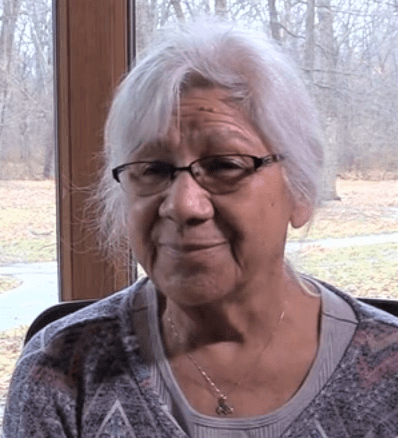
Image Metadata
|
Created: Thursday, May 11, 2023 - 11:15 |
||
Summary:
An interview with Muscogee (Creek) Nation citizen Loretta Freeman.Description:
An interview with Muscogee (Creek) Nation citizen Loretta Freeman. A downloadable copy of her transcript may be found at this link: Loretta Freeman. This interview has been indexed through the Louie B. Nunn Center for Oral History Center’s Oral History Metadata Synchronizer system at the University of Kentucky. For an indexed copy of the video, please follow the external link found in the bar on the right of this page.
Transcription:
The Muscogee (Creek) Nation
Historic and Cultural Preservation Department Oral History Program
“A Twenty-First Century Pandemic in Indian Country: The Resilience of the Muscogee (Creek) Nation Against Covid-19”
As Remembered by: Mrs. Loretta Freeman
Interview by: Ms. Midge Dellinger
Date: February 8, 2023
Transcription: The Audio Transcription Company
Edited by: Ms. Midge Dellinger
MIDGE DELLINGER: This is Midge Dellinger, oral historian for the Muscogee (Creek) Nation. Today is February 8, 2023, and I’m in Okmulgee, Oklahoma interviewing Muscogee citizen Mrs. Senora Loretta Freeman. I am performing this interview on behalf of the Muscogee (Creek) Nation Historic and Cultural Preservation Department for the oral history project titled “A Twenty-First-Century Pandemic in Indian Country: The Resilience of the Muscogee (Creek) Nation Against COVID-19.” Mrs. Freeman, thank you so much for being here today and doing this interview with me. We’re going to begin with some questions about your personal life. And so let’s start with what is your tribal town and clan.
LORETTA FREEMAN: My clan is Bear Clan, and I’m not sure about my tribal town. I try to look it up, and it starts with a t. I can’t even pronounce it. (laughs)
DELLINGER: Okay. Now, where were you born?
FREEMAN: I was born in Claremore, Oklahoma at the Indian Hospital. DELLINGER: [00:01:00] And I’d like to know, where did you grow up?
FREEMAN: I’ve spent most of my life in Sapulpa, Oklahoma. But when I was younger we just kind of moved back and forth to Tulsa and Sapulpa.
1
DELLINGER: Now, Mrs. Freeman, who are your parents? Will you please tell me about each one of them?
FREEMAN: Well, my dad is Hispanic. His name was Joovie Paul Perez, and he came from Texas. Well, he was born in Texas. I don’t know where he really came from. There’s a little story. He says his mother was Guatemalan. So we don’t have any kind of history about that, but that’s what he tells us. And he was a coalminer. When I was little I remember—well, I don’t remember but I have pictures of us living in Wyoming in the snow. I was maybe about, I would say, a year or two. [00:02:00] And I don’t remember too much about when I was real little, but we just kind of lived in Tulsa out in the country.
My grandmother has property out on Land Road, her allotment, and so we kind of stayed out there off and on. And then my mom’s name was Senora Edith Rogers. She was full blood. And she was married once before she married my dad, so I have seven half brothers and sisters. Their last name is Bruner. And I think I have one sister left of that group. All the rest have passed away. They were older than me. My dad and mom didn’t get together until they were in their thirties. So there’s me and I have three brothers that are Perezes. Our last name was Perez.
[00:03:00] Well, I just went to school in Sapulpa and then we moved out to the country. My grandmother bought my mom a little house. She had moved out there when I was about sixteen. And we didn’t have water or gas or electric out there or anything, so we’d
2
stay out there in the summer and use coal oil lamps and wood stoves to cook and stuff like that. But when winter came, we’d have to move to town. And we’d get a little sleeping room and just kind of ate out. (laughs) I didn’t graduate from Sapulpa. I went to Sapulpa schools until I was in the tenth grade, and then I went to Chilocco when I was a sophomore.
And then I dropped out of school, I got married, and I had four girls. And then [00:04:00] during one of my pregnancies actually, my third one I think or second one, I went to— they call it MDTA to finish high school. So I had to go all day long from eight to four, I think. It was almost like going to work. (laughs) But I did graduate from Central in Tulsa. That’s the school they graduated us from. Let’s see. I’m kind of old now so I have a lot of—(laughter) I can’t remember all the things.
DELLINGER: Well, let me ask you some questions here. Yeah, because I want to go back to some of these things that you’ve shared. First of all, I want to ask you. Will you say your father’s full name again?
FREEMAN: Jovie Paul Perez.
DELLINGER: And you were talking about your mother’s mother, your grandmother on your mom’s side and you said she [00:05:00] had some land out in the country. And so you mean outside of the Tulsa area or Sapulpa area?
3
FREEMAN: It’s in Creek County but we’re right on the Tulsa County border. DELLINGER: Now, does that land happen to still be in the family?
FREEMAN: Yes.
DELLINGER: Oh, that’s fantastic. On your mother’s side, will you share the names of your grandparents and just talk a little bit about them?
FREEMAN: My grandmother, we’ll start with her since we were talking about her, was Afeney Sarkache Rogers. Whenever you’d ask her what her name is, she’d always emphasize the Sarkache so you knew where she came from. And she always told us that we were Bear Clan. She wanted to make sure that we all knew that we were Bear Clan. She couldn’t speak English very good. I guess I could tell you a little funny about us when we were [?]. She couldn’t hardly see, and me and my mom always took her. I’d drive them to wherever [00:06:00] we had to go, like to the BIA [Bureau of Indian Affairs]. She wouldn’t go to the store or she wouldn’t go hardly anywhere. That’s about the only place we could go in the car. She stayed home all the time.
And when we were coming back one time, we come around the country road and we hit a squirrel. And I said, “Oh, no, I hit that squirrel.” And my grandma said, “Get it, get it, get it.” (laughs) My mom said—I said, “What does she want to do that for?” And she said, “She wants to go make squirrel soup.” I said, “Oh, my gosh.” So, she made me stop and
4
pick up that dead squirrel and put it in the trunk of the car and take it home. And I guess she had squirrel for supper. I don’t know. But she took that squirrel.
That was one thing I remember when I was younger, them burning the hair off that squirrel. Oh my gosh, that was the awfulest smell. (laughs) Almost like plucking the chickens. And then my grandmother, she passed away—I really don’t know how old she was. [00:07:00] And she didn’t even know when her birthday was. She just said it was when the mulberries bloomed. So, I don’t really know when that was. But I think in the census book they had her listed as fifteen in 1907 or something like that.
DELLINGER: Okay. Yeah, I don’t know if mulberries bloom in the fall or in the spring. FREEMAN: I think it’s in May, but I’m not sure. Let’s see. What else? DELLINGER: Did you know your grandfather on your mother’s side?
FREEMAN: His name was Robert Rogers. He didn’t have a middle name. And I kind of looked him up too, and he had all kinds of—he was kind of like an orphan, I think, at one time.
DELLINGER: And he was Muscogee?
5
FREEMAN: Uh-huh. Well, he’s on the Muscogee (Creek) roll but all his relatives are on Cherokee roll. So, I don’t know about—one of my cousins had said that all of his nephews and stuff [00:08:00] like that were on the Cherokee roll, so I don’t know. His allotment was in Sand Springs, but he sold all his when he was younger. He was a man about town, I guess. (laughter)
DELLINGER: What did he do for a living?
FREEMAN: Actually, he just farmed. I don’t remember him ever working at an outside job. I think he just farmed mainly.
DELLINGER: Yeah, so for the most part your grandparents stayed there on the home site.
FREEMAN: Um-hm. The home site’s out on Land Road.
DELLINGER: I’m not familiar with that road.
FREEMAN: South Forty-Ninth West Avenue.
DELLINGER: Oh, okay.
6
FREEMAN: It’s right below the—there’s a golf course on a hill, Oaks Country Club. Our land is connected on the south side of there, just right next to it actually.
DELLINGER: Yes, I know exactly where that is then.
FREEMAN: Yeah, we’re down the hill from our place. And we’ve got it divided from my mom into—there were eleven of us, so I inherited 3.6 acres. My estate. (laughs) [00:09:00] My mom only got a quarter, so we had forty acres between them. And then her sister sold hers and then her two brothers. Well, one of the brothers, his children live down there on their forty acres.
DELLINGER: Okay, I was going to ask. Because you said that this land is still in the family, and so it’s that generation of family that are maintaining the land there.
FREEMAN: Um-hm. Yeah, my uncle’s children have kind of like the top of the hill. And then my other uncle, he passed away so they sold his. And then my aunt, she didn’t have any children so they sold hers. So we just have two tracks of our part, but it’s still there. My grandfather, [00:10:00] he did roundups with Will Rogers he said, him and his dad. His dad’s name was Cebon Rogers. He’d always talk about going over to Will Rogers’ home and they would do roundups on the horses and stuff. And I took him to the museum one time, and there was a lady in there. Her name was Victoria. He said, “That’s my aunt.” So, I don’t know. He was looking and he said, “That’s my aunt.”
7
DELLINGER: Yeah, that’s interesting because, again, there’s that Cherokee connection. And then did you know your father’s grandparents?
FREEMAN: No, I didn’t know them. I only knew my grandmother on that side and she couldn’t speak English either. She spoke Spanish. Whenever we’d go visit so we could distinguish between our grandmas, my grandma that lives in the country is my sofke grandma. And my grandma that [00:11:00] lives in Tulsa is my tortilla grandma. (Dellinger laughs) So that’s how we distinguished them. (laughs)
DELLINGER: That’s great. And what was your tortilla grandma’s name? FREEMAN: Mary Perez.
DELLINGER: Mary Perez.
FREEMAN: When I was young I can remember understanding what she was saying but I’ve never been able to speak Spanish, so I don’t know.
DELLINGER: Right. And so did she live most of her life in Tulsa then?
FREEMAN: Yes, she did. Her husband died—I never met him. And my dad kind of took care of the family, his nephews. I don’t remember him saying anything about his brothers. But one of his nephews lived in California. And then two of his nephews, I
8
think, lived in Tulsa. I can only remember one, and I think it was Pete and Larry Cerda was their name. [00:12:00] But I didn’t know that family that well. But when my dad passed away, my dad’s sister—her name was Louisa. She lived in New York. Her daughter brought her and we got to meet her. She was our cousin. And she was saying, “I had to come.” She said, “Mom said she didn’t care if she had to get out there and walk, she was coming by herself,” because she said, “That was the only brother I have.” And she said, “I’m going to his funeral.”
DELLINGER: Did you say her name was Louisa
FREEMAN: Louisa, I want to say it’s Saldana. I don’t really remember. I think it was Saldana. My cousin then was Josie. And she said she had some brothers but we didn’t really get to talk about a lot of stuff because it was during the funeral time. So we just got to visit with her just, [00:13:00] you know, maybe one afternoon and then they flew back. I haven’t heard from them since. But I think my brother, Gano Sr., he keeps in contact with them. I don’t know if he’s talked to them lately. And then one of my brothers, my younger brother, after he got out of the war it kind of really messed him up and he stayed in Portland, Oregon between Portland and Salem. Oh for years, we didn’t hear from him. And then out of the blue he’d call, maybe ten years. We hadn’t heard from him in over ten years. So my brother Gano Sr. went out to try to find him. And he already had passed away over a year ago, and they gave him his ashes. I just hated that because that was my baby brother.
9
DELLINGER: [00:14:00] Yeah, so who was holding onto those ashes?
FREEMAN: I’m not sure. It was some state office, and they said they couldn’t contact anybody. They didn’t know—he didn’t have any contact information on him or something.
DELLINGER: And what war was he in?
FREEMAN: He was in Vietnam.
DELLINGER: Vietnam, yeah.
FREEMAN: Yeah, he got pretty bad. And he said we were better off without him being close to the family is what he told us. That’s why he wouldn’t stay here. He came back and visited once and then he got in trouble. And then after that he stayed out in Portland because I guess he had friends out there. I don’t know. And my other brothers, I’ve only got my two brothers left. Jovie Paul Jr., that’s my brother right next to me, and then Gano Jimsey Perez. And, of course, [00:15:00] we’ve got a lot of nephews and grandchildren, all of us. I don’t even know half of them. (laughs)
DELLINGER: So, I think you had told me during our previous conversation that in total you had eleven siblings.
10
FREEMAN: Um-hm, yeah. And it’s just me, just two girls and two boys left. DELLINGER: And you all live close by each other?
FREEMAN: I just moved to Henryetta in September but I lived close to the property out there in Tulsa. And then my two brothers live on the property. And some of my nieces inherited my brother’s land where my mama’s house was and they still stay there. And then one of my other nephews lives in the back. We call it way in the back. He lives way back there. (laughter) And they’ve lived there for quite a while. But other than that, everybody else doesn’t live—[00:16:00] they have property but they don’t ever come out there. We have a cemetery out there on our property too.
DELLINGER: Oh, a family cemetery?
FREEMAN: Um-hm.
DELLINGER: Does it have a name?
FREEMAN: Bruner Cemetery. One of my sisters, Madeline Bruner Watashe, she passed away and she had eleven children. She said, “Well, that’s not enough land to divide between eleven children so we’ll just make a cemetery.” So, that’s what they did. So she’s buried out there and some of the other—I don’t know who all is buried out there, but it’s growing.
11
DELLINGER: Right. Okay. So as a child growing up, did you have quite a bit of exposure to Muscogee language and some of our cultural and traditional ways of [00:17:00] life?
FREEMAN: Well, my grandmother, she still lived—she wouldn’t even use her propane kitchen. She tried to turn it on and it blew the door off, and so she says, “Nope, get my wood stove back in here.” So they had to put her wood stove back there, so she did that. She did okay with electric. And she still cooked all the way she used to. One thing I really remember is that I don’t care what time it was or when you went to her house, you would always have to eat. Sometimes I wonder if that wasn’t that squirrel I run over that I ate. But that’s something, she always wanted you to eat. And even when she was real old, she couldn’t see or anything. She’d still get up and go try to fix you something to eat. And I’d tell her, I said, “Grandma, you don’t have to give us something to eat.” She said, “No, you eat. You eat.” She’d get me some water and everything.
[00:18:00] I really did feel bad. I know that one time I didn’t get to go out there. Because I went out there every month the first of the month. And she didn’t get very much money. I think I made eighteen dollars a month and I’d always take her—she always wanted me to go get the chicken feed—because she wouldn’t go to the store—and stuff that she might need at the house. I didn’t get to go that one month. And I want you to know that everybody went out there and tried to take her, “I’ll get your stuff. I’ll take you to the store.” She said, “No.” She called me Th-retta because she couldn’t say Loretta. She said,
12
“No, Th-retta come.” And I didn’t get to go. At that time, I was married and I had four babies. So we’d load up all the babies and we’d go pick her—we wouldn’t go pick her up, we’d just go see what she wanted. And she’d say, “I need sugar,” or, “I need lard,” or just something, staple stuff. And my uncle kind of brought her wood. And [00:19:00] a lot of the kids whenever they would go out, they would kind of keep her stacked in wood.
But I remember they had some kind of little—one of my uncles had a little disagreement with my mom and we had to go to court over stuff because my grandma made her will and they weren’t happy with it. And so I think Jonas Partridge was our interpreter. So we went to court and that judge was asking her certain questions and she told him in Creek, she said, “No, I’m not selling my land. They just want to put me out of the section line.” And everybody started laughing. I didn’t know what she said at the time, but my mom told me because she was chuckling and he was chuckling. And he told the judge, he said, “No, I don’t think she wants to sell her land.” (laughter)
DELLINGER: She knew what was going on. Well, so as a young child did your grandma let you come into the kitchen and help her cook? [00:20:00] Did she teach you?
FREEMAN: My aunts stayed with my grandma and they did all the cooking. The only thing we got to do is go and help turn that thing for the butter. And then sometimes they’d go out there and we’d pluck chicken feathers, oh my God. And then just—
DELLINGER: The hard stuff. (laughs)
13
FREEMAN: —the other stuff. I call it the hard stuff. And we’d go and try to go get the— she said, “Go get the eggs.” And so I’d go out there and try to get them eggs, and that hen would peck me. I didn’t want to go out there, and I said, “No, Grandma. That chicken bites me.” She’d go out there and she’d put her hand underneath the back of the chicken. I said, “Well, no wonder it bit me. I was going back there to the front.” (laughter) I can just remember little things like that.
We had a big barn. Me and my cousins, we always went out to Grandma’s for Thanksgiving when we were younger. All of us, and there was a whole [00:21:00] bunch of kids. And all my nieces are almost all the same age I was. And so we’d get on those old workhorses and my grandpa would tell us, “Don’t get over there by them horses.” First thing we’d do is run out to the country. And one of us would hold the horse there and the other would go try to climb the fence to get on because those horses were real big and fat. So we’d try to get on. One of us would get on, and then the other one would try to climb on there. And just about the time you’d try to get on, that horse would walk away then you couldn’t get on. Then you had to go pull him back over there, then you’d try to climb up there. I think two of us got on.
DELLINGER: Would you all get in trouble for that?
FREEMAN: No, we never did tell. But there was one incident, and I can’t say it on here what happened. But I had to tell my grandma and she said, “You all were out there on
14
those horses?” And you know what? She talked Creek, and I must’ve been able to understand her because I knew what she was saying. But [00:22:00] I couldn’t talk Creek. I would say something to her in English but she could understand me. And then she would say something but half of it would be in Creek and half of it would be in English; enough of it, I guess, to maybe where I could understand.
DELLINGER: Now, did your mom, did she speak—
FREEMAN: She was fluent. She didn’t want us to learn. She didn’t want us to learn because she said that she’d had such a hard time. The little school that she went to was just right around the road from us. It was a little country school. I went there; me and my sister, the sister that’s just older than me. And we stayed out there with Grandma one year and we had to go to that little school. Oh, I’ve got to tell you a funny about her. We had to wear these big, old, long socks and roll them up here at the thigh. And we had those old brown shoes around your ankle. She didn’t like to wear them old socks because—I don’t know why. I remember we’d stop under the bridge and she’d take them off and just put her shoes back on.
And then my grandma would [00:23:00] make us a lunch in a little syrup bucket. They had little syrup buckets that had a little handle. Molasses, I think it was molasses. It may not have been syrup. She would fix us a sausage and biscuit sandwich, and we always had fruit because we had a fruit orchard like peaches and apples and cherries. So we would have whatever was in season. That time it was an apple. So, she left her lunch
15
under there. She didn’t want to take it. And I’d be crying because I said, “No, I don’t want to leave my food under the bridge.” She said, “Oh, they’ll give you something to eat when we get up there.” I’d say, “Well, can I take my apple?” So I’d take my apple. She was four years older than me so she was the boss.
Anyway, so we went and I gave my teacher the apple. That time, I think I took my lunch with me because these little white children they had bologna sandwiches and light bread. And I never had light bread before. We just [00:24:00] always had biscuits. And so I traded my biscuit and sausage sandwich for theirs, and they liked my biscuits and sausage. Almost every time whenever I’d come I’d run and I’d search their bags to see which one I wanted to trade. (laughter) I thought that was kind of neat. That was kind of a fun time. And then one time me and my sister—her nickname’s Iodine. Her name was Marie Fisher but her nickname is Iodine. All of us had nicknames.
DELLINGER: Are you saying Iodine?
FREEMAN: Uh-huh. Well, Grandpa got out on the town and he came home with the team. And I guess he was sleeping. Grandma didn’t want to wake him, so we didn’t have no way to get to church. And we always went to church. And the church was Little Cussetah Baptist Church, and it’s just down the road on Hilton Road and we were on Land Road. So my grandma, [00:25:00] she had this little metal kettle that had a handle on it, and she would cook. Don’t ask me what she cooked. I can’t remember. But she’d have that and, boy, she’d be walking down the road like this. And me and Iodine would
16
be behind her and we’d get tired, “Grandma, we’re tired.” And she’d say something in Creek about, “You better come on. Something’s going to get you if you don’t hurry up.” We’d sit down. And, boy, she’d just get a little bit out of the way. Man, we’d jump up and we’d run, run, and catch up with her.
And then she’d cut across the field, and there were big cows and bulls out there. We were scared of that big bull. And she’d tell us, she said, “He’s going to chase you if you don’t hurry up and get over here.” So we got over there and we got to church. And we had a camp house at the church. Everybody had camp houses at church. So we’d go and we’d spend the night. And then I guess Grandpa probably came after us that next Monday (laughs) because he knew where we’d be. [00:26:00] We had a lot of fun at church. A lot of people in Sapulpa went to that church because it was close by.
DELLINGER: What’s the denomination again?
FREEMAN: Baptist, Little Cussetah Baptist. It used to be Little Cussetah Indian Baptist Church but now we say Little Cussetah Baptist Church so we don’t discriminate. (laughs)
DELLINGER: Right. You consider that church then your family church?
FREEMAN: Oh, yes. I went there from the time I was real little until—well, I still go there. I went to another church a couple of times, and then the Lord just led me back to go there so I’m back there now.
17
DELLINGER: Yeah, that’s where you’re supposed to be.
FREEMAN: And now I’m in Henryetta, so I don’t know. I’ve been going and visiting some of the little churches. And then I found out they don’t have church every Sunday like our church does. So you go to this church and the next Sunday then—I guess you get a little circuit. There are about four or five churches and then everybody goes and helps each other. So we have fourth [00:27:00] Sunday every Sunday. I thought, I’m not used to eating every Sunday. (laughter) And they have church all day long. You go and eat and then you go back to church. That was kind of different.
And I’m looking forward to going to some of the others because a lot of them are traditional, and I want to learn about the traditions. I can kind of see the transition from what it used to be because ours used to be like that too. And then we’ve kind of transitioned to more modern everything, so it’s been kind of interesting. And I’ve met several—not young ladies. All the churches I went to—it’s so sad—were all old, like me. And I thought, What are we going to do when all these people—and there’s not very many, when they die out. They’ll be closing the doors to this church. So I’ve been praying that God will just open up our young peoples’ eyes so they can see that they need to be carrying on and everything.
[00:28:00] My granddaughter has a boyfriend that goes to Arbeka Baptist Church, and we went over there. I said, “I want you to show me where it is because I’ve been trying to go
18
to these churches.” So he took me out. I never would’ve found it. But he took me all on these backroads and we found it. He said, “I’m going to go and check on my grandma. My grandma has camp houses out there.” So he went out there, and one of them had been torn down and the other one was still up. I said, “Well, you need to be coming out here and helping keep that camp house going.” I said, “Our church has lost all of its camp houses and don’t have them anymore.” I’m really kind of sad about that because when I was growing up we all had our camp houses all around our church and we don’t have any now. Just two little buildings that are barely hanging in there. You can’t use them because they’re just falling apart. Basically, they’re historical I guess you’d say.
[00:29:00] I’m still active in church. In fact, we have our Muscogee-Seminole-Wichita Baptist Association here in Henryetta. So maybe God has a plan for me here. We have a camp in June for the children and we have a camp called Family Camp in July. And now that I get to go to these other little churches, I’m going to try to take up flyers and stuff and invite them. So if they do have young children—I know they do but they just don’t go to church, then maybe they’ll come to camp because they don’t charge that much for camp. You go to these other white camps and you try to go to them, they cost you a lot of money. And even Falls Creek I think it’s, I want to say, fifty or sixty. It may be more than that just for registration.
At our church, for our Family Camp. They call it GARA Act Teens Camp. That’s ages eight to seventeen boys and girls. And they only charge them—[00:30:00] I want to say last year it was twelve dollars a person, and that’s for three meals a day and we have a
19
dormitory. And then they have all kinds of stuff out there going on, a lot of recreation, a lot of learning about missionaries. This past year one of our missionaries came. We have a John McIntosh person, and he was a missionary to the Wichitas. And he went out there on horseback. We kind of celebrate stuff like that, and we take up a mission offering for our assembly like that.
Anyway, they started a church in Wichita, I mean Wichita people. And it was Rock Springs and it’s in Anadarko. So their church comes to our meetings. And that was us sending out—from our association he went out as a missionary. And one of the guys that came here just this year, [00:31:00] he’s a missionary in the Philippines and he said he came from Rock Springs. And he said, “I just wanted to meet some of the people from MSW [Muscogee-Seminole-Wichita Baptist Association] because—” he said, “—if it wasn’t for them, I probably never would’ve been a missionary. I never would’ve probably known about Jesus or become a Christian.” And that was so great because he’s here now. Because of the pandemic, they had to come back.
And he’s been going around. He’s just been spreading the gospel and telling everybody, I guess, more of encouragement. Like, all your work was not in vain. Look what happened. Here I am a missionary in the Philippines and I came from Anadarko Rock Springs Church where you are a part of starting. So I thought that was just really neat. And I’m looking forward to when we have our McIntosh day, which is in May. I’m hoping that he’ll still be here to come and speak. That would really be an inspiration for us.
20
DELLINGER: Yes. I want to ask you. This John McIntosh character, person, [00:32:00] now is he related to Chilly McIntosh?
FREEMAN: I believe he was.
DELLINGER: His son, one of his sons.
FREEMAN: Uh-huh, I think so. Yeah, he was in that McIntosh part.
DELLINGER: Yeah, because I know Chilly was a Baptist minister, Chilly McIntosh. Okay. I want to go back to your year at Chilocco. And if you would, just share a little bit about what that year was like for you being at that school and being at an Indigenous boarding school.
FREEMAN: Well, I had to go there. I was put there. My mom and dad were having trouble and they were separated and we didn’t have any place to stay. And I got in trouble for curfew. Then, curfew was you’d get thrown in jail (laughs) and stuff. My dad, I had— I don’t see [00:33:00] how that go. I can’t remember now. But me and my niece, we kind of ran off because she was having trouble at home. And I went with her. I didn’t want her to go by herself. So then whenever we got picked up, we had to go before a judge. And he said that we could go to a boarding school or we could go to Tecumseh, which is a girl’s reformatory. So that’s how I went.
21
That judge was really good because I didn’t have the clothes or anything to go or anything. And one of his secretaries, she was a young girl. So she gave me a lot of clothes and they took them to a tailor and had them all to fit me. And so I went to school. When I was in high school I made two skirts. My friend showed me how to sew, so I made me two skirts. So I had two skirts and two shirts and a pair of jeans. That’s what was my wardrobe, and that’s what I wore all year. But when I went to [00:34:00] Chilocco I had dresses, I had skirts, because they had provided me with all that. I didn’t know what to think of it. They were really good to me.
And he got me a sponsor and they sent me ten dollars a month, which I didn’t know I was getting until me and my niece, she said, “I want to go home.” And so we ran off from Chilocco and they picked us up and took us back. The judge told me, he said, “Well, if you’ll go back—” I said, “Well, my parents don’t have a way to come see me or come get us or anything.” He said, “I promise you,” he said, “I will send you a bus ticket to come home on Christmas and go back.” And he said, “And I’ll get an organization to help support you by ten dollars a month,” which was a lot of money at that time.
DELLINGER: Now, was this a different judge?
FREEMAN: No, that was the same one.
DELLINGER: The same judge.
22
FREEMAN: Um-hm. His name was Woodelsey, I think. Woodelsey, that sounds right. So anyway, but he was really good. And so I went back and I went through the tenth grade. I met three girls. [00:35:00] They were my best friends. They were from Washington State. And to this day, I have one of them left. Two of them have passed away. I still talk to her on the phone every now and then. They used to come down for the Chilocco reunion and they’d stay with me. We really did have a lot of fun.
I’ve been up to Washington too, the Yakama Reservation. First time I went to a powwow—I mean, I went to Tulsa Powwow but it was different from this one because I—they had the teepees all around, very traditional. And then they had this little log things so you could sit around all over the place. And I was just really watching because I’d never seen anything like it. I really did enjoy it. But anyway, I lost two of them. I kind of really hated that because every year I knew I would get a card or a letter at Christmas time, [00:36:00] and I really looked forward to it. Because, you know, in your life you never have all that many friends.
I have another friend that lives in Texas, went to school in Washington all the way through grade school. Her husband went to the service and she traveled all over the world and now she lives in McKinney, Texas. And her husband passed away, so she lives by herself. She has a great big house all by herself. Me and my husband went down to visit her. She’s wanting me to come. She said, “When are you going to come back and visit me?” I said, “Well, maybe before we get too old we can’t drive into Dallas.” (laughs) But I did meet those ladies.
23
And it was different. You have roommates. I think we had eight girls in our room. You have your own little drawers that you have to keep straight, and they come and they check them. [00:37:00] We really had a strict matron. And she would come in there and, boy, she’d get that white glove and go under our bunkbeds and there better not be no dust there. I mean, she was just really, really strict. We had to mop and wax the floors with those big buffers. I don’t know how that felt. I bet it’s got scars all over the walls where I had to use that thing because you’d lift it up and put it down, lift it up. And that thing would go zoom, zoom, zoom. I’d hit this one and it’d go that way, hit this one. (Dellinger laughs) But I did learn how to wax the floor.
And they had a lot of activities for us to go to. I went to church at Newkirk in town. And then sometimes they would come out to—I think we only went one time to the church. But they would come and have services at the school, and so we would have it in the gymnasium. My friends all joined glee clubs and all the other kind of clubs. [00:38:00] I was the secretary for our class, (laughs) sophomore class that year. Didn’t do anything but get my picture taken. (laughter)
DELLINGER: So, what year were you there?
FREEMAN: Sixty-one and sixty-two.
DELLINGER: So you would be in that yearbook?
24
FREEMAN: Oh, yeah.
DELLINGER: Do you have that yearbook?
FREEMAN: Yeah, and by the way I went to school with Wes Studi. He was in my class. I didn’t know when he became a movie star. The girls in Washington, they said, “Wes is starring in a movie,” and stuff like that. And I said, “Who’s Wes?” She said, “Loretta, he was in our classroom.” I said, “Oh, I don’t remember.” So I looked him up and I
remembered him after I looked him up. But I didn’t remember him at the time. I knew him but I just didn’t connect the name I guess. He was Wesley.
DELLINGER: Given the fact that you had to be there that year, [00:39:00] was your experience a favorable one?
FREEMAN: At some points. It’s hard when you’re with other tribes because tribes don’t get along. But it was really good. They had a lot of things for us to do. And there was always a lot of—not really, I won’t say gang fights or anything. But some of the tribes would kind of try to bully other tribes and stuff like that. But I never did have any problem. Whenever I ran off and I came back, I had to fight to get my clothes back. But other than that—(laughs)
25
DELLINGER: Oh, gosh, yeah. Well, so you were there just for that one year. How did you get away from Chilocco?
FREEMAN: Whenever I went back home, my dad had rented me a little sleeping room. And he would come faithfully every [00:40:00] Friday and pay my rent. It was six dollars for the week. I had a bedroom and I had a little refrigerator and I had a—no, I just had a refrigerator.
DELLINGER: And where was this?
FREEMAN: This was in Sapulpa. In them days in the apartments, all the whole thing was all Native. You didn’t lock your doors. You just had a screen door with a little rag across it and you just had a little latch, kind of old time latch. You just latched your doors. But on weekends it was pretty loud. You had to shut your door. And you didn’t have any fans or air conditioners or anything, so you just opened the window. We stayed cool like that I guess.
DELLINGER: So you came home from school on a break, and then at that point you were able to stay home?
FREEMAN: Yeah, that was during summer. And then my dad got me the room and then I went to work at a laundry [00:41:00] with my sister. One of my sisters were working at the—I think it was called Guaranty Laundry. It was down on South Main Street in
26
Sapulpa. And I made sixteen dollars a week. Oh, I thought I was rich. But I did learn one thing. I didn’t like putting stuff in layaway because it took me forever to get it out. To this day, I don’t like to put stuff in layaway. If I put it in layaway, I pay down it and I get it out the next week or whenever I get paid again. That broke me from layaway. I mean, I can see paying every month and everything. But I went for a long, long time just to buy something that was only about twenty-five dollars. It took me forever to get out. So, I don’t do layaway anymore. (laughter)
DELLINGER: So, you shared a little bit earlier that you got married [00:42:00] and you had your four daughters, and then you were able to get the MDTA. Because you had mentioned to me previously that they didn’t have the GED at that time. It was called the MDTA. And I can’t remember if I asked you. Do you remember what those letters stand for?
FREEMAN: I can’t remember. I really don’t remember, something of teaching. I know the last was teaching.
DELLINGER: Yeah, that’s okay. And from there, you’ve had a long work life. And I’d like for you, if you would, to just share some of the different things that you’ve done in your life as far as employment.
FREEMAN: Well, I went to Draughons Business School in ’72. But before that I worked at that [00:43:00] laundromat, and then I can’t remember what else I did. And then I went
27
to work at Liberty Glass Company in Sapulpa. I was already married then. I got married in ’65. And then I worked there for about four years. We all got laid off in ’72, I think, so ’72. Let’s see, ’67, ’68, ’69, ’70, ’71. I’m trying to think. My memory’s not that good. I had one of my children during that time. She must’ve been born in ’68, my last one Kathy. Anyway, in ’72 I went to Draughons Business School. And then when I got out of there I went to work at Bartlett-Collins Memorial Hospital in Sapulpa and I worked for director of nursing there for several years.
Actually, I had two jobs because by that time in ’76, I think, [00:44:00] I got a divorce. He kept two of my children and I kept two of the children. I got the oldest one and the youngest one and he got the two in between. And then I bought a trailer and moved it out to the property by my mom. And then I worked at Bartlett Hospital for her. And at that time, I didn’t make enough money, so I had to go get a second job. So, I went to work— my boss was really good. She was the nurse that I worked with. She was over the convalescent part. No, she was my friend. The other lady was the director. This lady, she was over the convalescent part and we got to be friends. She was an RN.
So she would let me fill in, and I’d go down and feed the patients and stuff like that because I didn’t really do anything nursing other than feed them and help the ladies clean them up and stuff. [00:45:00] And so I did that. Right after I got off of my office job, I went down there and I did that until they went to bed about eight. So that gave me extra money. We lived out there. And then during that time, I think—well, then I met my second husband. We were together for four years. We had a daughter. And then we got
28
married in 1980. That was Douglas Freeman. And we’ve been together since. But we had a hard getting along time there for a while but then we finally settled down. (laughter)
DELLINGER: Now, you had shared with me previously that you decided at fifty-some years of age to go to nursing school.
FREEMAN: Yeah. Whenever I first got my divorce, I tried to go to school [00:46:00] and that’s when I met Douglas. He was so—oh gosh, I don’t know what you’d call it. He was ornery. He ripped the wires out of my car and other stuff. I had moved to Edmond and he went with me. I couldn’t cope with him and go to school, so I wound up coming back. And by that time, I had put my two girls in boarding school at Jones Academy so that I could go to school. Because I worked real hard to get all my bills paid so I could go to school, and then I didn’t get to go. So then I came back and I went to work at the hospital. I worked at OSU. It’s OSU now. At that time it was Osteopathic Hospital. I transcribed in cardiology department. Then I went and worked in x-ray, just [00:47:00] checking people in and getting information from them. I think I was there about four years. And then we had our second baby, and then I was off work for a while.
Then City of Faith opened. I’m going to tell you this story about City of Faith. This is just awesome how God works in your life. I had lost my job at Osteopathic Hospital because the supervisor we had was just—I think he was prejudice actually. And he was trying to get rid of an Indian girl and a Black girl. He did manage to get rid of the Black girl, but then he started in on the Indian girl. And I went to the human resource people and I just
29
told them, I said, “You know, he has hired people in there that they’re not even techs and he’s training them. But yet, they’re supposed to—” they told us that she was supposed to be the file clerk. I said, “But she’s never come in there and helped us file, do anything.” I said, “She just goes out with the girls on the floor and he was training them.”
[00:48:00] And those other girls were getting aggravated. If they would say anything, he would really say they weren’t doing their work right. He was just calling them in and counseling them because if you get called in about two or three times, they’d terminate you. And he was just always on their backs just trying to do that. So anyway, I went there and he started doing that to me. When I first went there I had children and he told me that I could—the other lady that I worked with, she liked to come in early and leave early or come in late, or vice versa. I can’t remember what it was. Because I had to take my children to the bus stop, he always let me come in about 8:30. Well, as soon as I would let them off I would get there about 8:15 or 8:20 before 8:30.
So then when he brought me in to counsel with him and he said, [00:49:00] “You’ve been coming in late every day.” And I said, “Well, that was an understanding because of my children. You always said it was okay.” He said, “Well, it’s not okay anymore.” He said, “I’m going to write you up.” So he wrote me up. And then I told him, I said, “Well, I have to have that time with my children.” I said, “And the other lady, she doesn’t want to be—she would come in earlier so I could have that time.”
30
Anyway, he did something else. He said I did something. I can’t remember what it was. And he had this other guy to come in, the supervisor that he had hired. They both came in and they just really battered me actually. And he was saying, “No, we never said that. We didn’t say that.” And I said, “Yes, you did.” And he said, “No, you didn’t.” He really got down in my face too. Boy, I was about ready to pop him one. He made me cry. So I went to HR And they told me, “Well, just hang in there. He’ll probably get himself out of [00:50:00] there,” which he did after he fired me. But they told me that I could apply at another department. They weren’t firing me but they were laying me off of that but I could apply at another department. But I just never did. And then about that time I got pregnant with my last baby, with her. (laughs)
DELLINGER: And that was all at City of Faith?
FREEMAN: No, this was at Osteopathic. That was before I went to City of Faith. Then I was home with her until she went to school, and I worked part-time at—oh, well, let me tell you how I got to go. I was kind of upset because I lost my job and everything. I was kind of hurt over it because I never got fired before. But I was glad the other Indian girl, she got to keep her job. Because it wasn’t right after that they fired him, and so she was
okay. I talked to her later. She said, “I hated that you lost your job,” and she said, “But they’re working on getting rid of him now.” And I said, “Well, good.” Anyway, things worked out for her.
31
But anyway, so I was off work. I went to apply for a job at [00:51:00] this professor. It was at the school. I went in there and, of course, he was talking to me. And I was emotional about it telling him about what happened at my last job. He prayed with me and everything. I never got my interview. (laughter) I said, “Oh, I just feel so much better.” I just walked in there and didn’t even get my interview. So then I applied at City of Faith because it was a hospital opening. So I thought, Well, I’ll go over there and apply. I put my application in and nobody ever called me. I came to work here at (Creek) Nation. They had an opening somewhere. They were finishing out a grant or something, so I went ahead and worked that. And then they didn’t get granted the next year so I lost my job. And so I thought, Oh no.
I think all this was during the time that I had went to apply because City of Faith had just put applications out, so I went to apply through there. [00:52:00] I think I only went to work in that department about two or three weeks or something like that because they thought they were going to get another grant and they didn’t get it. So anyway, I had those two weeks. And in the meantime, City of Faith had been trying to call me and they were leaving messages on my answering machine. One day while I was home—I’d come home from there and said, Well, I guess I’ll go and put some more applications in. I looked and I thought, Oh, I got all kinds of messages. So I was listening to messages and it says, “We’ve been trying to get ahold of you for City of Faith to come in for an interview.” And I said, Oh.
32
So I go over for the interview. I went in there. I got in there, and I just kept telling everybody, I said—all that week if somebody said, “What are you doing now?” I said, “I’m getting ready to go work at City of Faith.” It’d just come out of my mouth. And I thought, Hold on, why’d I say that? And somebody else would say something, “Did you find a job?” I said, “Oh, I’m going to work at City of Faith.” So anyway, I go up there and they said, “Well, you’ve got to take this [00:53:00] typing test.” I said, “Oh my God, I haven’t even typed in about three or four years.” And I want you to know I typed the fastest with no errors. I couldn’t believe I even typed that fast with no errors.
So they called me in for an interview. So I went there and I talked to the nurse. And she asked me, she said, “How did you come to work here?” And it just came out of my mouth, I said, “God sent me to work here.” She said, “That’s all I want to know.” That was my interview. So, then she said, “We want you to come to orientation,” and they sent me a date. So I came back to orientation. It was a big room, kind of like this. I guess there were twenty or thirty people in there, nurses and other people that had come to work there. And so I was sitting over here and the lady was—no, I was sitting here and she was standing here. And she said, “Okay, I want everybody to stand up and say your name, where you’re from, and how you came [00:54:00] to work here at City of Faith.”
And all of a sudden, I just kind of got this spirit of fear and I thought, Oh God, I’m going to have to tell these people God sent me here to work. That was what I was thinking, you know. So I was glad that she started on that side and she went around the table and everything. They got up, said their name. And every one of them was from another state,
33
another country, and they were all different nationalities. I was the only Indian, only one from Oklahoma. Anyway, when she got to me—every one of them got up and said, “God sent me here to work at City of Faith.” Every single one of them. I was so relaxed by the
time it got to me, and I told them, I said, “You know, I didn’t know how I was going to tell you that God sent me here to work.” And I said, “I’m so glad she started on that table because God had sent all of you here to work.” And I told them I was from Oklahoma, I was Native American, and everything.
But that was so—I still look at it almost like a miracle. I knew God sent me there to work because I kept saying it. Every time somebody would say, [00:55:00] “Well, Loretta, what have you been doing here lately?” I’d say, “I’m getting ready to go work at City of Faith.” Just like that, it would just come out. (laughs) I think that was one of the first experiences I had with the Holy Spirit just speaking for me or something. It was really good. That was—I don’t know how to say it—the best job, the best place I have ever worked. When we went in, we would all gather before our shift started. We’d come in and we’d have a prayer. And we had lots of premature babies and stuff, and a lot of them lived where they didn’t even think they were going to have a chance. We had this one little baby and it was in a shoebox. It had tubes in it.
And, I mean, these nurses were God sent because we had those interns that come in that—they’re new doctors, they didn’t really know. And she would be in there—I know this one doctor had told her to do something and she said, “No,” she said, “That’ll blow the baby’s lungs. [00:56:00] He’s too little,” because they were going to up it because it
34
wasn’t breathing or something. And she told him what to do and everything because she had been working—you know, she knew what to do.
And she just told him, she said, “Give me that—” she hollered at me, she said, “Bring me the crash cart in here.” So I took the crash cart in there. She said, “Get the doctor on the line and put him on speaker.” So while she was putting the IV in the baby’s head and stuff and doing some other stuff, getting it prepared, he got on the line and she told him what was going on with the baby. And so he directed her, gave her the orders right then. So she went ahead and—like she was the doctor. (laughter) We were all back there praying, all of us were praying. That’s what she told us. She said, “You all be praying because I know God wants this baby to live.” Anyway, that was experience. Even the doctors would come and pray with you. They would ask you if they knew they were having a serious baby to be born. And they had a lot of premature babies and natural born babies. [00:57:00] And they would call us and we’d all stand right by the door and we’d all pray.
I met this lady. She was the Black lady. I’ll never forget. Her name is Nellie. She went to Rhema. She would go to school and every night she’d work with me. Me and her worked the night shift. And she would come back and just tell me what she’d learned at Rhema. My little spirit was just soaking it up like a sponge. I was just excited to hear. I couldn’t wait to get to work. I would get to work fifteen or twenty minutes early just so we could have time to visit and everything. I worked with her for about five years, and then I took a layoff so that she could work. She was called to be a minister. She told me, she said, “I
35
will always remember you and I will always be praying for you.” And I think she does too because sometimes I’ll have hard times and I think about her, and I know when I think about her she’s probably praying for me at that time.
She literally took [00:58:00] everything out of her closet and went into her closet to pray for God’s guidance to where she was going to be. She had some instances with other jobs. And she said she went to work with this one doctor. She said he was just blaspheming and cussing and everything. She said, “I was just praying for him and everything because I knew if he’d come to me and said something like that, I was going to have to stand up for my God.” And so that day came and he cussed at her. She got up and she said, “You know, I’ve listened to a lot of things that you’ve said.” She said, “But I can’t stand here and let you talk about my God like that.” So she said, “I’m going to do you a favor. I’m going to walk out of here and save your life,” she said, “Because God will bring down wrath upon you.” And so she said, “I had to leave because I knew something bad would happen to that man if he would keep on treating his child like that.”
(laughs) And so that’s when she went into her closet and [00:59:00] I went over to visit her, and she gave me a picture. I’ve got it in my storage somewhere to remember her by. She gave away all her furniture, gave all of her clothes while she was in that closet. And
she said, “I’ve got to be prepared for where God’s going to send me.” And then she wrote me a letter and she was in the Virgin Islands and she was a minister over there. I haven’t heard from her then, but I’m pretty sure she’s doing the Lord’s work somewhere. (laughs)
36
DELLINGER: It sounds like she probably is. So, Mrs. Freeman, how many years have you been retired now?
FREEMAN: Since ’09.
DELLINGER: ‘09, okay. And what were you doing?
FREEMAN: Oh, I was an LPN. Oh, I was going to tell you. I was going to school. This is one of the times when I wasn’t going to Little Cussetah. I had gone to Morning Star, which is Negiel Big Pond’s church out here on Hectorville Road. I went there for a couple of years, and I got into the prayer group. [01:00:00] There were three of us and we prayed every Wednesday morning for about two years. I mean, faithfully every—snow, rain, everything, we were there praying. And sometimes we’d pray all day long and sometimes in the evening.
That was another miracle thing that happened with how he got the money to build that thing. I got to be a part of that. We went to Dallas. And, of course, everybody was praying, really spirit filled. There was a preacher up there and I wanted to have him pray for us. So we had these little brochures telling about his ministry and everything. And I ran up there to give it to him and these guards wouldn’t let me come up there. They did like that. I said, “All I want him to do is just pray for us.” So he took the papers and everything.
37
Negiel had said that we didn’t know we were going to get the money because we had gone down there and someone was supposed to sow seed into making the church [01:01:00] there that’s there now, and they didn’t do it. So the next morning, that preacher called him up there. He told us to go ahead and go home, so we left early that morning and he stayed for the service. And on the way over there, though, just about lunchtime, we were in there and we just got real—I don’t know. We got the Holy Spirit somehow. We were just laughing. I don’t think we ever ate. We were laughing so hard we were crying and everything. I just had this real strange vision. It was all of different countries, and I could see their faces but I didn’t know what it was about. Anyway, we got out of there laughing and we finally—I don’t know how we made it home, but we got home. And then the next day, I got to hear—and I never got to go back to the church after that. That was my last time when we went down there because God released me and let me go to nursing school.
I had applied and I told them, I said, “I’m going to start Monday.” And I said, “I know I’m old and I’m going to probably have to spend [01:02:00] a lot of time studying,” which I did, I mean, day and night because I was old. I didn’t know anything about the computer, and I had one. I didn’t know how to go back or anything like that. I would just take the page out and start all over again. I had a big old stack of paper where I had to start all over again. Anyway, so he told them, he said that preacher told Negiel, he said, “I’ve got some money.” He said, “Somebody wants to sow a hundred thousand dollars into your ministry.” So he gave him a check for a hundred thousand dollars.” And then
38
they took up an offering and got, I think, forty-something thousand. So he came back with over a hundred and forty-something thousand dollars to build what’s out there now.
And I thought that was so great and I said, “Oh, I don’t even get to enjoy it.” I didn’t get to go because I was in school all that year when they got it all built and everything. I did go back out there later after I got out of school, and I just [01:03:00] didn’t feel like that was my church anymore. So I guess God had sent me through that season and it was time
for me to go somewhere else. Then now God’s moved me to Henryetta here, and I don’t know what’s in store.
DELLINGER: (laughs) Well, you know it’s going to be something. Just listening and all these things that you’ve had happen in your life, I’m sure there is something good in store for you that’s coming down the road. Your nursing degree, what school did that come from?
FREEMAN: I went to the Vo-tech in Sapulpa. I went to school there for the learning part, but we went out to Cushing and—
DELLINGER: Different hospitals?
FREEMAN: Yeah. Just nursing homes and hospitals, the small ones, for clinicals and stuff. If it hadn’t been for my niece, I don’t know if I’d have made it because—[01:04:00] both of us together, we made it together. Because I was encouraging her, and when I was
39
feeling like I want to quit and she would encourage me. She said, “Oh no, Auntie, you can’t quit. You’ve got to go. I have to go.” And I’m glad because her husband passed away. He had a heart attack and passed away, so now she’s doing really good taking care of her and her family.
DELLINGER: Right. So, how many years then in total did you work in the medical field after you got your nursing degree?
FREEMAN: From 2000 to 2009, so nine years.
DELLINGER: Okay. And then I think you had told me when you retired you were working at a school in Tulsa.
FREEMAN: No, I was working at—they call it infirmary. But it was St. Joseph Monastery. It’s a monastery. And I worked with nuns. Whenever they retire, they don’t go to a nursing home. They have their own built in. It’s kind of like a nursing home, but them ladies live to be a hundred years old and they were [01:05:00] still up walking around. Just very few of them ever got where they were in bed and had to be taken care of. I can remember one, she was 101 years old. She had the little walker and she could make it down there.
That was another experience I had. They died in peace. I’ve never seen any such peaceful—one instance this one lady, one of the nurse aides, come in and she said, “Can I
40
get anything for you, Sister?” She said, “You know what? I’d like to have a cup of coffee.” And she went out and got her a cup of coffee, and she took one drink of that coffee and she said, “Boy, that tastes good.” And then she was gone just like that. I think God was trying to show me something because I kind of feared death, and he was showing me that it wasn’t bad. It was something good. It was all the ones that passed away like that. I lost—I don’t know—about four or five, then I’d—it [01:06:00] kind of got hard because you get really close to these people when you work with them like that. It’s almost like losing your mom every day. And so I finally thought, Well, I think it’s time for me to retire. I was sixty-two.
DELLINGER: Now, I’d like for you, if you would, to share a little bit—you’ve mentioned Douglas, your husband. Will you share some things about Douglas?
FREEMAN: Oh my gosh, who all’s going to be listening to this? (laughter) DELLINGER: The world.
FREEMAN: Oh, no. Well, I won’t say anything about his younger years when I met him. We have two daughters. We have a granddaughter. Her name is Jessica Freeman and Paula Freeman. And Jessica has one daughter. And we have a little great [01:07:00] grandson, which is Lucas Lucas, and he is a terror. He comes and sees us now and he calls Doug Ah-Ah or Monkey. They have a really good relationship, my daughter and them. Right now one of my daughters is staying with the grandma until she gets back to
41
her job. She just started back at her job the other day, so they’ll probably be moving out. But I was just enjoying having them there.
But anyway, Doug works—he’s worked at different places. He was married before and he has one son. His son is about as old as my second daughter. They got to be pretty close whenever—because I think we got together when he was about ten or eleven years old. He’d been divorced too. So, he went with me when I went to try to go to nursing school (laughs) the first time. And then he got to be a [01:08:00] truck driver and he did that for several years. He’s long-term at his jobs. He worked one job maybe—I think he worked at Affiliated for about twenty years. And then he went to work for a steel company and he got hurt when he was, I want to say, fifty-eight or fifty-nine years old. He’s been disabled since then. He had back surgery. He’s still aggravated with the doctor. The doctor says, “Oh yeah, you’ll be able to go back to work.” Well, he wasn’t able to go back to work. It was just really a transition for him because he’s very active and he’s always worked and everything. So now I tell him he’s going to have to take care of chickens and mow the grass. (laughter)
DELLINGER: Now, where is he and his family from?
FREEMAN: His dad and his mom are—he’s the only child between—his dad [01:09:00] is Robert Freeman and his mother was Evelyn Douglas. She’s married to Doug, and Doug’s one of the older children of the son. And then they got a divorce and then she
42
married a Wilson. He has five siblings of the Wilsons. And then his dad got married to a Berryhill, Hepsey Berryhill. She was here from Okmulgee.
He worked for oil field, Phillips Petroleum or something like that I think. And they moved to Kansas. They transferred him to Kansas. So all of his eleven siblings were up there. And so he had eleven there and he had seven there, so he’s probably got seventeen. And we were talking about that the other day and I said, “I don’t want to have to answer all these questions. How am I supposed to tell about your family?” He said, “Well,” he said, “We also had two twins that passed away.” So he has about seventeen siblings, [01:10:00] brothers and sisters.
DELLINGER: You said eleven and seven, that’s eighteen. And then two more is twenty.
FREEMAN: Oh, is it twenty? Okay. Yeah, well, he’s one of the seven. He has three brothers and two sisters. Is that right? And counting him must be—no, let’s see. Three brothers and two sisters, and counting him. Oh no, there’s six because he’s got five of the Wilsons. See, I’m already getting confused. He’s just got to straighten me out.
DELLINGER: He’s got a lot. We’ll say that, right. He had a lot of siblings. That’s a large family. Now, where were they from though?
FREEMAN: The Wilsons are from around Okmulgee. Do you know where that smoke shop is out on the highway?
43
DELLINGER: Seventy-five?
FREEMAN: Yeah.
DELLINGER: Um-hm.
FREEMAN: By Beggs. I think their family [01:11:00] came from back that way. And then his dad was from—I think I remember him saying he was from Edna, Oklahoma. But he has him and another brother and, I think, a sister. And they’ve all passed. All of them are passed away now. But Doug’s dad was ninety-two years old when he passed
away, and Doug’s mother was fifty. And he was always worried about—because that side of the family had a lot of cancer, and he thought he was going to be—I guess that’s why he lived so wild. He thought he was going to be dying early. (laughs) And now here he is old. I told him, I said, “Well, if you’d known you were going to live this long, you’d have took better care of yourself.”
DELLINGER: You know, Mrs. Freeman, I’m going to have you—so, several times during this conversation you’ve mentioned children but I haven’t had you say any of their names and that’s important. So, if you would just kind of go through the line there of your children and [01:12:00] say their names, first and last names.
FREEMAN: My children?
44
DELLINGER: Yeah.
FREEMAN: Okay. My oldest daughter is Dewana Boley. She lives in Fort Gibson and she just had a birthday the third. She’s fifty-nine. And then my second one was MaryAnn Tecumseh. She passed away in 2013. She has—I can’t remember how many children. My oldest daughter only had one daughter. And then my second one had three—let me think, three girls and a boy. And then my next daughter is Patricia Lynn Acres-Davis. She’s one of the Davises. She had twins [01:13:00] and then right now she has one son and two daughters that are living. And then there’s Kathryn. She was my baby of the Davises, and she’s fifty-something too. I can’t remember how old she is. She was born in ’67 or ’68. She lives in Kellyville. Patty lives in Sapulpa down by South Hickory in Sapulpa. And Kathy lives in Kellyville, and she has one girl and three boys and lots of grandchildren. I think I have eighteen grandchildren, and I think I have over thirty great grandchildren. And we just now had another little boy. He’s a little over a year old. I don’t know. If I was to have to name them, I don’t know if I could even name them. (laughs)
DELLINGER: I’m not going to ask you to do that. [01:14:00] Those are your four daughters, though, from your first marriage. And then who are your children from your second marriage?
FREEMAN: Doug? There’s Jessica and Paula.
45
DELLINGER: Jessica and Paula, right. And then you mentioned that Doug has a son.
FREEMAN: And Doug has a son. His name is Eugene Freeman. He lives in Sapulpa and he has daughters and grandchildren too. I don’t know all of them. There’s Brooklyn and Michala and Cheyenne I think. And then they have children too. But I don’t hardly ever see them so I don’t even know some of their names. Eugene comes up just—in fact, we haven’t seen him in over a month. He keeps saying, “I’m going to be up Christmas. I’m going to be up Thanksgiving.” Well—
DELLINGER: Haven’t seen him.
FREEMAN: —haven’t made it yet. (laughs) But he’s single, so you know. [01:15:00] So he has other priorities than us I think. (laughter)
DELLINGER: All right. Well, I want to get into one more thing here that pertains to your life. You shared with me that in 2014 you had a cancer diagnosis. And if you’re comfortable with it, I’d like for you to just talk a little bit about that.
FREEMAN: Well, I didn’t know I was sick. I kept having this neck pain across my neck and I went to the doctors. And you know how they do; they give you Tylenol, ibuprofen, tramadol, and stuff. At this time, we had went to stay with my daughter in Fort Gibson because she’s the nurse. And we were kind of getting sickly so the kids wanted us to go up there and stay with them for a while. They had this little house that they fixed up for
46
us, so we went up there and we stayed about a year. And my other daughter kept our house going [01:16:00] because we were down here more than we was up there, but we basically had just let our children kind of take over our house at that time.
And so I went to Tahlequah because it was hurting so bad I was just in tears. My daughter said, “Mom, it’s too far to go to Okmulgee. Let’s just go to Tahlequah.” So we went to Tahlequah. After they put me in ER, they diagnosed me with leukemia and shipped me to Saint Francis in Tulsa. Of course, you know, they do all the bone marrow and all that kind of stuff, put me on chemo medicine. I was in there for about, I want to say, a week. And then I got to go home, and that medicine made me so deathly sick. They had me on morphine. And I, to this day, think that morphine was making me feel like I was still in pain because I felt like I was in pain. I would literally be crying because I didn’t want to take the medicine or anything. And my daughter, she was crying trying to get me to take it.
[01:17:00] So anyway, the reason I think that is because I went to Kathy’s to spend the weekend because everybody was so tired. They were up with me because I was so sick all the time. And I had to give Doug and Dewana a break, so I went down and spent the
weekend with her. I felt like I was in pain all week. And one of the pastors where I went to church, Betty and Al Pulver in Sapulpa, they brought me a—I have to say this because it was important to me. It was a healing cloth. You know, the Bible says that they blessed them and they handed them out, the disciples did. So they anointed it and they prayed over it and everything, and they gave it to me.
47
And I literally hugged that thing all night long. I kept thinking that I was in pain. I thought that I was awake and I was in pain. And I told Kathy, I said, “Oh, I didn’t sleep at all last night.” I said, “I was in so much pain.” And she said, “Mom, you slept all night long.” And I said, “No, I didn’t. [01:18:00] I was up all night long.” She said, “No, Mom. You were asleep.” So then I started getting sick, so she said, “We’re going to take you to the doctor.” I had to go back and get some more blood. Then I was in there for about three days.
I had mentioned to you that I had gone to Washington, DC on that tribal prayer thing with Negiel’s church. And we already had reservations to go out there and everything. We were riding the bus out there and we were going to fly back. Anyway, so I had to go back to the hospital right after that. And I told Kathy, I said, “Well, I don’t know if I should go or not. I don’t want to get sick on everybody and everything.” And so I was really praying about it and everything. She said, “Mom, we already got everything.” She said, “If anything happens, we’ll just come back early. We’ll just fly back early.” So I said okay because she knew I wanted to go. So we went.
[01:19:00] Got out there, I was just perfect. Didn’t get sick or anything until Friday night and I got really, really, really sick. Everybody was praying over me, and I really believe that God intervened because I have not been sick like that. I never got sick after that. That was the Friday that we went and that was in October. I got out of the hospital that Friday and I went to Washington, DC that following Monday. And we rode that bus, the (Creek)
48
Nation bus all the way out there and I never got sick. And then on that Friday is when I got sick, and that was when it was about over. And so Kathy and I had to go ahead and fly back. But they did lay hands over me, they prayed over me.
When I got home, I never got sick. I haven’t been sick since. Even when I got COVID, I didn’t get sick. And everybody’s always worried about your immune system being down because you’re on chemo [01:20:00] medications and everything. And I’m a diabetic, but you fight that constantly. But I’ve been pretty healthy. I don’t feel like I’m sick at all. I don’t claim being sick in the name of Jesus because I’m healed. (laughs) I always believe you have to be positive about stuff like that. Because that’s what the enemy wants, you to be negative so he can come in and steal your health. But anyway, I just have a strong belief. I just believe that God healed me.
Even though I was on such a low dose and my doctor—I hope my doctor don’t hear this. But anyway, I never did take that medicine full doses all the time. I got down to where I was taking maybe one hundred milligrams every other day, and sometimes not even every other day. But all my counts stayed good [01:21:00] and everything. I have not had any medicine, any cancer medicine since last year in November. My counts are still good. I had two episodes of virus, the vomiting stuff. I kind of worried about that myself but I’ve been just praying about it. And my white count went up a little bit but it’s not—it’s still normal, but it’s kind of creeping up there.
49
So I thought, Well—I haven’t been seeing the oncologist either because mine quit so I’ve got a new one, and I didn’t get to see her. But I only see them every three months, so it’s been over six months. I guess I need to call them. (laughs) But then the Lord moved us down here where we got our house. (Creek) Nation had worked on our house. Needless to say, my house in Tulsa was really bad. The floor, I had asked them to fix the floor. They did everything else but the floor. [01:22:00] They said they spent a lot of money on my house. And when I sold my house, I had to pay (Creek) Nation over twenty-two thousand and something, six hundred I think, before I could even sell my house. Which I was really upset with because of the work that they did.
My floor did finally fall in and I had to hire some Mexicans to come in. I maxed out my Lowe’s card for stuff. And then on my floor, the original floors that we first put in were about that thick. And I didn’t have enough money to get them that thick, so they were about that thick. So, it didn’t reach the—you know, it had a gap all the way around the house. And we had, oh gosh, scorpions and all kinds of bugs all the time. It was really, really bad. And I was really glad we sold our house. God bless us we sold our house and were able to buy another one, a better one. It’s a lot better. And, of course, [01:23:00] old houses you still have to fix on them, but this one is really good in Henryetta. Like I said, I’m just waiting to see what the Lord’s going to have in store for me there.
DELLINGER: Okay. Well, I’ll you what. Let’s do this. (Freeman coughs) I haven’t opened this bottle of water. Would you like this water?
50
FREEMAN: Yes. I woke up this morning and have this junk in my throat. DELLINGER: I haven’t opened it. You can have it.
FREEMAN: Okay, thank you.
DELLINGER: I always bring a bottle with me.
FREEMAN: I usually do. It’s probably in the car.
DELLINGER: So let’s go ahead now and talk a little bit about the pandemic that we’ve all gone through here since 2020. Do you remember how you first heard about COVID 19?
FREEMAN: Well, actually my daughters got sick. You’re hearing about it on the news that we’re getting ready to have a big [01:24:00] pandemic and they named it COVID-19. You hear it on the TV. And so Doug since I had been diagnosed with leukemia, he was always afraid I was going to get sick because he’s real cautious about it, making everything disinfected all the time, for him even at home. And so we heard about that, and then Kathy got it first I think. She did get pretty sick with it. I didn’t realize that she got sick because they don’t ever like me to know when they’re real sick. I call, “Oh, I’m doing okay. I’m okay.” But sometimes you kind of know that they’re really sick. Later she was telling me there were times where she really was scared because she couldn’t
51
breathe and stuff like that, but she never had to go to the hospital. And then she finally got the infusion and then she was okay. In fact, I think she got it twice. But the second time she said it wasn’t [01:25:00] nearly—she said since the first time was so bad, the second time didn’t even seem like it was bad.
And then Patty, my other daughter, she got it. She works at Walmart. She was pretty sick with it too. Kathy went over and kind of left food and stuff at her house and everything because we were at Fort Gibson then. No, we weren’t in Fort Gibson. We were homebound. They wouldn’t let me go nowhere. I had to stay in the house and not go to the store. And we masked up and we washed our hands everywhere which way, and Doug went out and bought a whole case of sanitizing spray. We kept everything, even the door handles and everything. They tell you to do that. But they were the only ones that really went out anywhere. I just kind of stayed home. If I went, I didn’t get out if there’s a lot of people. I didn’t go to Walmart. I went but I didn’t get out of the car. I stayed in the car and they went in and did all the shopping.
DELLINGER: [01:26:00] So when you first learned about COVID-19, and maybe even before your daughters got sick, do you remember what some of the initial conversations were that you had with your family, with your husband Doug, with your children? Do you remember any of those conversations?
FREEMAN: Mainly, they’d call me, “Don’t go anywhere.” Every time they’d call me they’d make sure I was at home, “Don’t go anywhere. Don’t go anywhere.” And she said,
52
“Be sure—” Doug and Paula wore a—and they were real good about wearing masks and stuff. I think Kathy was the first one that got it and then Patty, and then we kind of just— I’d just call and check on her but she couldn’t hardly talk on the phone. I did a lot of praying them days. (laughs) But they made it through there. They were the only two that really got it in my family [01:27:00] really sick. I think my granddaughter, Kathy’s daughter, her children got it but they didn’t really get sick either. It was just kind of like a cold. And I think it’s because they go to church. I’ll tell you what. If I ever get sick, I told my granddaughter, I said, “When I get sick, I want you to bring them babies over there and pray for me.” (laughter)
DELLINGER: Well, once the pandemic was here in the Muscogee (Creek) Nation—of course, it was everywhere; it was in the whole country—and the local and state governments began the lockdowns and the shelter in place orders, what did you think about all that? Just hearing those words, what did those words—how did they make you feel?
FREEMAN: Actually, I didn’t even think about it because I was so isolated in my home. I did get to go to the store, [01:28:00] I think, once and I was shocked. There was nothing on the shelves. I thought, Oh my God. We had to go store to store. We couldn’t find any toilet paper or any kind of paper, paper towels or nothing like that. And even some of the
bread, you’d go to the store and all the shelves would be empty. And I thought, Oh my gosh, what’s going on? There was a little store in—I think the only place we found that was in Tulsa on Southwest Boulevard. We went into that little store and it seemed like
53
they had a whole lot of everything. You’d go to Walmart, their shelves were empty. And so we got a few things.
But my niece, I don’t know where she came about it but she had a big box of toilet tissues. She said, “Auntie, if you need any—” I said, “I can’t find any anywhere.” So she brought us about five or six rolls. I said, “That ought to hold us for a while.” [01:29:00] And everybody just kind of helped each other. I knew she had it, and the girls couldn’t find it. One of my daughters, Jessica, was in Texas at this time. And they couldn’t get any anywhere. His mom had to ship them a box of toilet tissue because they couldn’t buy any anywhere. (laughs)
DELLINGER: Where did the mom live?
FREEMAN: She lives here in Tulsa. And she just bought some whenever she’d get stuff. If she found any, she’d buy some and she’d send it to them. But I thought that was bad because all the shelves—it’s kind of scary a little bit knowing that—and that’s what I told my husband. I said, “You know what? We need to get our garden going and (laughs) we need to start raising some food here now. It’s time for you to start being a farmer.” (laughs)
DELLINGER: Right. Yeah, so that situation at the beginning of the pandemic kind of got you thinking about that, about being—I think it probably did that with a lot of people,
54
like [01:30:00] how can we be self-sustaining. Do you remember exactly what it was that made you realize the severity of the virus?
FREEMAN: I think mainly when my girls got sick because I didn’t really know that it was that bad because when I talked to my daughter, she couldn’t hardly breathe or anything. She said, “Mom, I can’t hardly breathe. I need to get off the phone.” I told Doug, I said, “Oh gosh, I need to go see her or something.” I was kind of worried about her. And I told her, I said, “If you get to that point, you need to go to the ER.” But there was no place for them to go. And I didn’t want them to put her in a hospital knowing that some of my friends, their families couldn’t go see them. They died alone.
That really made me sad because I thought about that and I just asked the Lord, Please don’t let any of my family have to go like that where we can’t go see them. I’m just thankful that my girls were able to get over it [01:31:00] because they had it pretty bad. They were home and they had it for about two or three weeks. And then even after they had it, they were still having a hard time getting over cold and stuff like that. And then I got it and then they all panicked in November.
DELLINGER: Of what year?
FREEMAN: Last year.
DELLINGER: Okay, ’22.
55
FREEMAN: Yeah, last November. Was it last November? I think it was last November. Yeah, I think it was. It seems like it’s been longer than last year. But anyway, it was in November when we first started hearing about it, when first started getting down here in Oklahoma. I had kind of like a cold. I had a sore throat. And I had a doctor’s appointment down here in Okmulgee that day, and I hadn’t been feeling good. I’d been feeling tired and kind of [01:32:00] had a runny nose. And I told Doug, I said, “Well, I don’t want to go give anybody anything. I better go get checked,” you know, because everybody—at that time the pandemic had just barely started and people started getting sick. I said, “I don’t want to make anybody sick.”
So I went over to the urgent care. I guess it was urgent care. Anyway, I went in there and I said, “I just haven’t been feeling good.” I said, “I’ve had this little cough and I’ve had a little bit of a fever.” I said, “I want to get checked before I go to my doctor’s appointment
because if I’ve got anything, I don’t want to give it to him.” So they tested me and they told me that I had COVID. And I said, “Oh, I do?” I thought to myself, I can’t have COVID. I don’t feel sick. Like I said, I don’t receive it. I didn’t receive that. And so she said, “We’re going to send you over to—” because of the fact that you my immune system is low, “We’re going to send you over to Council Hill for an infusion.” So they called, so I went right [01:33:00] over there and got an infusion.
Then I went home and they told me I had to stay in my room and stay isolated. They told us what all not to—to clean everything and have my own plate and stuff like that. You
56
couldn’t get paper plates so I told him, “Just get my plate over there and write my name on it. Set it to the side.” And so I stayed in my room. My daughter and my granddaughter—and my granddaughter, bless her heart, she worked through that at the hospital. She worked here at George Nigh as a receptionist. And then whenever they had to close this down, they said, “Well, you can go to another position if you want to transfer.” And she said, “I have to work. I have four children I’ve got to take care of.”
So she went to work in the ER of all places, the ER, and checked them in. Every day I said, “Laura, you just be praying and praying.” And I was praying. But she never got sick, and she still hasn’t. And she never did take the vaccine unless she has now. But she never took the vaccine. And I think a [01:34:00] couple of her babies got it but it was just like they were diagnosed with it but they didn’t really get sick. It was light. We were really watching out. Because I told her, I said, “You know, we’ve got to really be praying.” Well, we pray all the time anyway.
But then they brought me a sack of all kinds of goodies. They had their masks on. They came in and put them at the foot of the bed and said, “You stay in bed. No, don’t get up and go doing everything.” She said, “How are you feeling?” I said, “I don’t feel like I’m
sick at all.” And I said, “I’m tired of laying in this bed.” I told Doug, I said, “I need to get out of this bed. I’m tired of laying here. My body is just aching because I’m laying here. I need to get up and walk around or something.” So I said, “You and Paula go to your room and I’m going to go do the dishes and see what kind of mess you’ve got up there in the kitchen.” (laughter) So I got up and I went and did the dishes, cleaned the kitchen. I
57
wiped everything down, door handles and everything. And so then I told Doug, I said, “Well, [01:35:00] I’m going back to my room now. You all can come back out and watch TV.” He said, “Okay.” So, I went back to my room and then we carried on. And then when my ten days were up I said, “Take me out of here. Take me for a ride or something.”
DELLINGER: So during that time though, during your quarantine, were you in conversation with the oncologist?
FREEMAN: Unh-uh.
DELLINGER: Did you go see the oncologist after that?
FREEMAN: No. I don’t even think they were open. I don’t think any of the doctors’ offices were open because none of us had any appointments. That was a happy day. (laughs) But, no, we didn’t go to any doctors. And I think that’s about the time they started doing the visual thing.
DELLINGER: Oh, the telemedicine.
FREEMAN: Yeah. I think I only did that one time with one doctor. I can’t remember who it was. Because I never could figure out how to work that machine. But [01:36:00] I
58
think I’ve had one. I’d just rather go to the doctor. I said, “I’d just rather come to see you because I don’t know how to use this phone and get myself on there.”
DELLINGER: Right. How did the pandemic affect your ability to go to church and your church?
FREEMAN: We went to church. Just very few of us, I would say maybe ten. But our church is pretty good size. Like this, we’d just sit isolated and everything. But, no, we had church. I think he only closed it down maybe a week in March and maybe—not very long, just maybe for a couple of weeks if somebody was sick. And we did have one gentleman that did get—he was a diabetic severely and he had heart problems and stuff, and he got it twice. But he said he never got sick. He stayed home. [01:37:00] They isolated him at home, but he never had to go to the hospital. And we’d just kind of talk on face messenger and stuff like that, our church did. Our church has a messenger thing that we kind of talk to each other all the time. But we did have church. We went every Sunday and Wednesday night.
DELLINGER: Were the folks at the church, were you guys taking any special precautions or measurements?
FREEMAN: Oh, yeah. (Creek) Nation sent us boxes of masks and little shields, and we had all kinds of hand cleaner sanitizers. They always tell you, “It’s up to you, but do social distancing,” at that time. So that’s what we did. We went.
59
DELLINGER: So you feel like overall the church handled the pandemic very well.
FREEMAN: Yeah, and nobody got sick. He was the only one. And he stayed home and he was just isolated. They isolated his whole family, but [01:38:00] none of them got sick. He was the only one that got sick with it. And none of his family, I don’t think, were ever in the hospital for it. But he was in there for other things because he was on dialysis too. I don’t know what he passed away of. I can’t remember now because I know he was pretty sick.
DELLINGER: So he did pass away eventually?
FREEMAN: Yeah, he passed away but it wasn’t from COVID, I don’t think. It may have contributed to it because he had pneumonia later. But I don’t know because he had been diagnosed with that. Then he’d get better, then get bad, but mainly it was his kidneys and his heart and stuff.
DELLINGER: Did you and the others living in your home—I guess that would be Doug and Paula. Did you all have any special routines that you did when you would—if someone would go outside of the house and then come back into the house, were there any—a lot of people [01:39:00] developed these special routines that they did.
FREEMAN: Oh, you mean like cleaning your hands when you’re going out?
60
DELLINGER: Well, people would take their clothes off in the garage before they even went into the house, those kinds—did you all do anything?
FREEMAN: Oh no, we didn’t do that. No, we didn’t go to that extreme. We just did a lot of hand cleaning and wiping down everything. We carried it, and we still do carry it and we still use it when we go to restaurants or anything. We keep it in the car, and I’ve got some in my purse now, hand sanitizers. He’s real good about that, and Paula. Him and Paula, they—I guess because of the fact that they think I’m always going to get sick. They have this fear that since my immune system is supposedly be low, that they always think I’m going to get sick. But I’m healthy as a horse. (laughs)
DELLINGER: As far as you’re concerned. [01:40:00] you know, I ask everybody this question. You’ve talked a little bit about what your daughters experienced when they got COVID, but will you share a little bit more if you can about your understanding of COVID-19 and what it can do to the human body if you get it?
FREEMAN: Well, because I didn’t get sick I didn’t really think—I don’t know. I just depended on the Lord to keep me safe, and I know that he did. I heard about people that couldn’t breathe. They would get a cold so bad. I couldn’t imagine. I mean, I can imagine it being where they can’t breathe and stuff like that. But I kept thinking, They should be finding something that—[01:41:00] it seems like by now that they could take. And it just seemed like they weren’t finding anything fast enough and people were dying and
61
everything every time you’d turn on the news. It’s kind of discouraging because you see everybody and you do get a little bit of fear because of the fact that your children are out here. They have to go to work. They have to be around people.
And some people won’t even want to wear a mask or won’t even protect—not just themselves, but they don’t care if anybody else was protected. I think that bothered me more than anything is the people that it seemed like they just didn’t care whether—if they got COVID, they didn’t care if they passed it on or not. And so I always told my children, “You just be careful. If you see somebody hacking around or coughing around or something like that, you move away from them and don’t get around them,” (laughs) just kind of stuff like that.
[01:42:00] I think I worried more about my children than actually us because mainly we stayed home. We didn’t really go out anywhere. Maybe if we had to, we’d go to Walmart to the grocery store. And we would go at hours where we didn’t think there would be a lot of people there. We’d either go real early in—well, they quit staying open all night long so we had to go real late when it was about to close or we’d go real early in the morning when everybody was not up and around. That’s kind of how we did it.
DELLINGER: What are your thoughts about how the Muscogee (Creek) Nation leadership performed, especially in the beginning of the pandemic? How do you think they did with taking care of Muscogee citizens?
62
FREEMAN: I know the hospitals filled up pretty fast. [01:43:00] I really hated that they sent people out of state different places all over the place. I thought to myself, Why didn’t they open George Nigh? They had beds here. Why didn’t they just turn it into a hospital like thing? I don’t know how many beds they had at Okemah, but it doesn’t seem like they have any now. I don’t know if they had any then where they could take care of more.
I know that my daughter—she’s a nurse, my oldest daughter. She worked at Hastings. They were packed all the time, and she worked in ICU [intensive care unit] and step down ICU among the really very severe patients. She would just get so—sometimes she would call me and she would be kind of upset. She said, “Oh, Mama, I just feel like I can’t do anything.” And she says, “I don’t know what to do. I do what I can and I see my patients [01:44:00] pass away, and it’s disheartening. It just breaks my heart,” because she had to see a lot of that. She really got under a lot of stress. I really, really prayed for her and for Laura because I was just really worried about them because they were right in the middle of it all.
But (Creek) Nation, I think they did pretty good. I think they should’ve—when people got it like I did, I think they should’ve had—if the infusion worked like it did on me, I think they should’ve done it all with everybody. That even whenever they got it so maybe they wouldn’t have gotten sick, you know what I mean. If they knew that it worked, they needed to let everybody have an opportunity to have it. But they were real fast on getting the—I wasn’t able to take my immunization until, I think, ninety days or sixty days. After I was diagnosed with it, I couldn’t take it for a certain amount of time. [01:45:00] But I
63
did get my vaccination. But Doug and Paula went down right after they—before I even got it, they went down and they got theirs because they didn’t want them to be the cause of me getting it or something.
DELLINGER: Do you remember which vaccine you received?
FREEMAN: Moderna.
DELLINGER: Did you have side effects from it?
FREEMAN: I didn’t.
DELLINGER: Did any of you?
FREEMAN: No, none of us did.
DELLINGER: That’s great.
FREEMAN: Yeah. Some people said they kind of got a little sick, but I don’t think any of us did. And Doug used to get the flu every year, and he started getting the flu shot because of me. Because he never would take it, “Oh, this makes me sick every time I take it,” and then he wouldn’t take it. But then after I was diagnosed, after that he started taking it every year because he always got it every year and he didn’t want me to get it.
64
Of course, I get it. In fact, I didn’t even get it this year because I don’t think they have it. I mean, every time when I went they didn’t give it to me.
DELLINGER: Now, have you been [01:46:00] boostered?
FREEMAN: No. I need to get boostered but I haven’t. I don’t know why I didn’t get boostered. It seems like they were going to give me a booster the last time I went to the doctor and I don’t think they gave it to me, come to think of it. Because she said, “Have you had your booster?” And I said, “No,” and they asked me if I’ve had pneumonia. And I said, “Yes, but it’s been a while.” So I said, “It’s in my chart.” But they were going to give me it, and I don’t think I got—I know I didn’t get it. And Doug was upset because he said they told him that they didn’t have a strong dose for the vaccine, so they just got—I don’t know—a weaker dose or something. He was kind of upset about that. He said, “Well, why don’t they get the full dose? Maybe this one won’t even help me.” (laughs)
DELLINGER: Now, where did you all go to get your vaccines?
FREEMAN: He went to Okmulgee this time.
DELLINGER: Clinic?
FREEMAN: Uh-huh. The last time he got his Moderna, it was at Coweta.
65
DELLINGER: Oh, okay.
FREEMAN: [01:47:00] We all got ours at Coweta. But I’m not sure where they got their booster at. I think probably Coweta because I haven’t had booster yet. And I think they were supposed to give it to me when I went to the doctor. It was last month, and I didn’t get it. I can’t remember why I didn’t get it.
DELLINGER: So after three years of having COVID-19 in existence in the United States, what are your thoughts about COVID-19 ever going away?
FREEMAN: I think it’s going to be like the flu. It might be a seasonal thing. Because, you know, the flu, they had it and it goes away and it comes back. That’s kind of what I think about that. I think, Well, looks like we’re going to have another—instead of flu season, it’s going to be a COVID-19 season. We’ll just have to see this summer because I don’t know how—[01:48:00] it seems like it’s kind of died down a lot since it first started. Everybody’s getting so lax about it, I kind of worry about that. Because I think they still need to keep precautions, especially in the winter because most people in Oklahoma already have water on their lungs. And then if you get the pneumonia, you know, when COVID turns into pneumonia, that’s where it’s really death-threatening. And I don’t know why they—I was told Oklahomans have already got fluid in their lungs just by living here in this atmosphere.
66
DELLINGER: Yeah, that’s interesting. I haven’t heard that. I’ll have to check that out.
FREEMAN: Somebody had told me that a long time ago. They said, “Well, Oklahoma weather and stuff like that, a lot of people have a lot of fluid on our lungs.” And that’s why we have to really watch for pneumonia I guess.
DELLINGER: I see, okay. Do you feel like at this point [01:49:00] that you’re living a life that is more similar to what you were living before the pandemic started in 2020?
FREEMAN: I still have times when I think I should wear a mask. In fact, I carry masks in my car. If we go into someplace where I just feel like it might—I don’t know. I just wear it sometimes and I don’t. Just like today I didn’t wear one because I knew I was just going to be talking to you. But if I go into a place where there’s a lot of people, I usually wear one.
DELLINGER: Okay. Again, after three years of COVID-19 in our existence, how do you think Muscogee people are managing life and therefore the future existence of the Muscogee (Creek) Nation?
FREEMAN: I think it hit a lot of people pretty hard. People went without jobs. I’m just thankful [01:50:00] that there were so many places where they could get food. I never had so much food since the pandemic than I had before it. And everybody kept saying, “God, there’s no food. There’s no this.” And our finances were better, I guess because we
67
couldn’t go buy anything. (laughs) I told Doug, I said, “God, I feel like we’ve had more money since all this happened.” And then you see on the news people are going without food. I said, “I don’t know how they’re going without food. There’s food on every corner and every church is giving out food and organizations are giving out food.” I said, “I don’t know how they’re not having any food.”
The only thing is about the homeless people. Of course, our church has little outreach things. We took coats and blankets and stuff to people that were living down in Sapulpa out there. They call it a tent city thing down there behind the Walmart, [01:51:00] I think, somewhere. I’ve never been down there, but they said that there were people staying down there. So they took gloves and hats and blankets and stuff and put them down there for people. There’s a lot of organizations, and we tried to help some of the organizations from our church and our mission groups with that.
DELLINGER: All right. Well, Mrs. Freeman, we’re down to our last two questions. FREEMAN: All right. (Dellinger laughs)
DELLINGER: For future generations of Muscogee who may find themselves faced with a global health and economic event, such as the COVID-19 pandemic, what words of advice can you give them about surviving and finding life again after such a catastrophic event?
68
FREEMAN: For me, I think I’m going to have a [01:52:00] garden. I’m going to get me some baby chicks and have a little chicken thing, and I’m going to get my own eggs. Have you been to the store? Eggs are over five dollars for one dozen. One dozen is one meal in our household because we like to eat eggs. We eat eggs for breakfast and sometimes put eggs in different meals that we prepare. To me, I think if you have any property you need to start getting ready to learn how to make you some tomatoes and stuff, food because it’s outrageous. And the groceries seem like they’re just going higher. I can’t believe the price of milk and stuff. Maybe I should get me a cow. (laughs)
But I think we need to start preparing more and learn survival. I can remember they did have some of that [01:53:00] making gardens, but they quit doing it. (Creek) Nation even had—you’d come out and they’d help you make gardens and show you how to grow stuff. I think that only lasted about a year, but I think they should bring that back up for people so that we can have—probably if they have an overabundance they could sell it to other people. Because I think we need to be more self-sufficient instead of depending on China or someplace else for everything. Because there’s a lot of things that I realize that we get from overseas.
And us as a nation, we should already have that here. They’ve shipped everything overseas so it’s cheaper. Now, here we’re doing without because we don’t have all the things and prepare all the things that we have. And that’s sad because for a nation like we are, we shouldn’t have to even depend on anybody. We should depend on ourself. And I think (Creek) Nation’s the same way. (Creek) Nation should get to the point where they
69
don’t have to [01:54:00] depend on a lot of stuff. They need to be self-sufficient. I remember somebody was saying something about one of the things they thought (Creek) Nation should invest in. You know those great big old fans that are in the sky that make electricity?
DELLINGER: Oh, the big wind turbines?
FREEMAN: Yeah. I said, “You know what? They should invest in some of that.” They got all (Creek) Nation and they pay out money for the citizens because their electric is so high. They’re paying out for the complex. They’re paying out, and I said, “They could have one here in Okmulgee and furnish everybody in Okmulgee and be a business and have people come in and buy electricity from (Creek) Nation.” And that’s something you’re always going to have to have, not something that’s just here today and gone tomorrow. They need to start looking at stuff that’s going to be here long-term, not just short-term.
I looked at that and I thought, Well, whoever had that idea. I went out in the field and I saw a whole bunch of them. [01:55:00] I said, “(Creek) Nation could have that and they could be billionaires. We wouldn’t have to depend on commodities.” (laughter) And same way with our families. We should learn. I know my children, they don’t even know—my great grandchildren don’t even know where an egg comes from. (laughs) And I told Doug, I said, “We’re going to get—” in fact, I was going to get me some baby chicks. The house I have now has a—I was blessed to have a chicken—what do you call
70
it—coop, and it has enough for six chickens. So I’m going to start off with just six chickens and see how we go.
And I told him, I said, “We’ve got—” and I always make a garden anyway. I make tomatoes. I didn’t get to last year. But I’ll make some tomatoes. The place I have now, God has blessed me I’ll tell you. Because all the things that I’ve always wanted at my other house, I have here now. I have the chicken coop [01:56:00], and I’m out where I can get chickens. And I have a place where I can have—the little garden’s already fixed up. The poles are already there and everything. All I’ve got to do is just put my seeds in the ground. So, I’m just looking forward to that because I like to garden. I’ve got a little greenhouse if I ever get it put up. It’s still in a box. (laughs) But I just think we need to look forward to stuff like that because it’s not going to get any better or easier because times are changing.
DELLINGER: Okay. Mrs. Freeman, mvto. Thank you so much for being here with me today and doing this interview and sharing all these things and thoughts that you have shared with us. And you continue to stay well.
FREEMAN: Oh, I intend to Lord willing. (laughs)
DELLINGER: Okay, thank you.
END OF INTERVIEW
71
Historic and Cultural Preservation Department Oral History Program
“A Twenty-First Century Pandemic in Indian Country: The Resilience of the Muscogee (Creek) Nation Against Covid-19”
As Remembered by: Mrs. Loretta Freeman
Interview by: Ms. Midge Dellinger
Date: February 8, 2023
Transcription: The Audio Transcription Company
Edited by: Ms. Midge Dellinger
MIDGE DELLINGER: This is Midge Dellinger, oral historian for the Muscogee (Creek) Nation. Today is February 8, 2023, and I’m in Okmulgee, Oklahoma interviewing Muscogee citizen Mrs. Senora Loretta Freeman. I am performing this interview on behalf of the Muscogee (Creek) Nation Historic and Cultural Preservation Department for the oral history project titled “A Twenty-First-Century Pandemic in Indian Country: The Resilience of the Muscogee (Creek) Nation Against COVID-19.” Mrs. Freeman, thank you so much for being here today and doing this interview with me. We’re going to begin with some questions about your personal life. And so let’s start with what is your tribal town and clan.
LORETTA FREEMAN: My clan is Bear Clan, and I’m not sure about my tribal town. I try to look it up, and it starts with a t. I can’t even pronounce it. (laughs)
DELLINGER: Okay. Now, where were you born?
FREEMAN: I was born in Claremore, Oklahoma at the Indian Hospital. DELLINGER: [00:01:00] And I’d like to know, where did you grow up?
FREEMAN: I’ve spent most of my life in Sapulpa, Oklahoma. But when I was younger we just kind of moved back and forth to Tulsa and Sapulpa.
1
DELLINGER: Now, Mrs. Freeman, who are your parents? Will you please tell me about each one of them?
FREEMAN: Well, my dad is Hispanic. His name was Joovie Paul Perez, and he came from Texas. Well, he was born in Texas. I don’t know where he really came from. There’s a little story. He says his mother was Guatemalan. So we don’t have any kind of history about that, but that’s what he tells us. And he was a coalminer. When I was little I remember—well, I don’t remember but I have pictures of us living in Wyoming in the snow. I was maybe about, I would say, a year or two. [00:02:00] And I don’t remember too much about when I was real little, but we just kind of lived in Tulsa out in the country.
My grandmother has property out on Land Road, her allotment, and so we kind of stayed out there off and on. And then my mom’s name was Senora Edith Rogers. She was full blood. And she was married once before she married my dad, so I have seven half brothers and sisters. Their last name is Bruner. And I think I have one sister left of that group. All the rest have passed away. They were older than me. My dad and mom didn’t get together until they were in their thirties. So there’s me and I have three brothers that are Perezes. Our last name was Perez.
[00:03:00] Well, I just went to school in Sapulpa and then we moved out to the country. My grandmother bought my mom a little house. She had moved out there when I was about sixteen. And we didn’t have water or gas or electric out there or anything, so we’d
2
stay out there in the summer and use coal oil lamps and wood stoves to cook and stuff like that. But when winter came, we’d have to move to town. And we’d get a little sleeping room and just kind of ate out. (laughs) I didn’t graduate from Sapulpa. I went to Sapulpa schools until I was in the tenth grade, and then I went to Chilocco when I was a sophomore.
And then I dropped out of school, I got married, and I had four girls. And then [00:04:00] during one of my pregnancies actually, my third one I think or second one, I went to— they call it MDTA to finish high school. So I had to go all day long from eight to four, I think. It was almost like going to work. (laughs) But I did graduate from Central in Tulsa. That’s the school they graduated us from. Let’s see. I’m kind of old now so I have a lot of—(laughter) I can’t remember all the things.
DELLINGER: Well, let me ask you some questions here. Yeah, because I want to go back to some of these things that you’ve shared. First of all, I want to ask you. Will you say your father’s full name again?
FREEMAN: Jovie Paul Perez.
DELLINGER: And you were talking about your mother’s mother, your grandmother on your mom’s side and you said she [00:05:00] had some land out in the country. And so you mean outside of the Tulsa area or Sapulpa area?
3
FREEMAN: It’s in Creek County but we’re right on the Tulsa County border. DELLINGER: Now, does that land happen to still be in the family?
FREEMAN: Yes.
DELLINGER: Oh, that’s fantastic. On your mother’s side, will you share the names of your grandparents and just talk a little bit about them?
FREEMAN: My grandmother, we’ll start with her since we were talking about her, was Afeney Sarkache Rogers. Whenever you’d ask her what her name is, she’d always emphasize the Sarkache so you knew where she came from. And she always told us that we were Bear Clan. She wanted to make sure that we all knew that we were Bear Clan. She couldn’t speak English very good. I guess I could tell you a little funny about us when we were [?]. She couldn’t hardly see, and me and my mom always took her. I’d drive them to wherever [00:06:00] we had to go, like to the BIA [Bureau of Indian Affairs]. She wouldn’t go to the store or she wouldn’t go hardly anywhere. That’s about the only place we could go in the car. She stayed home all the time.
And when we were coming back one time, we come around the country road and we hit a squirrel. And I said, “Oh, no, I hit that squirrel.” And my grandma said, “Get it, get it, get it.” (laughs) My mom said—I said, “What does she want to do that for?” And she said, “She wants to go make squirrel soup.” I said, “Oh, my gosh.” So, she made me stop and
4
pick up that dead squirrel and put it in the trunk of the car and take it home. And I guess she had squirrel for supper. I don’t know. But she took that squirrel.
That was one thing I remember when I was younger, them burning the hair off that squirrel. Oh my gosh, that was the awfulest smell. (laughs) Almost like plucking the chickens. And then my grandmother, she passed away—I really don’t know how old she was. [00:07:00] And she didn’t even know when her birthday was. She just said it was when the mulberries bloomed. So, I don’t really know when that was. But I think in the census book they had her listed as fifteen in 1907 or something like that.
DELLINGER: Okay. Yeah, I don’t know if mulberries bloom in the fall or in the spring. FREEMAN: I think it’s in May, but I’m not sure. Let’s see. What else? DELLINGER: Did you know your grandfather on your mother’s side?
FREEMAN: His name was Robert Rogers. He didn’t have a middle name. And I kind of looked him up too, and he had all kinds of—he was kind of like an orphan, I think, at one time.
DELLINGER: And he was Muscogee?
5
FREEMAN: Uh-huh. Well, he’s on the Muscogee (Creek) roll but all his relatives are on Cherokee roll. So, I don’t know about—one of my cousins had said that all of his nephews and stuff [00:08:00] like that were on the Cherokee roll, so I don’t know. His allotment was in Sand Springs, but he sold all his when he was younger. He was a man about town, I guess. (laughter)
DELLINGER: What did he do for a living?
FREEMAN: Actually, he just farmed. I don’t remember him ever working at an outside job. I think he just farmed mainly.
DELLINGER: Yeah, so for the most part your grandparents stayed there on the home site.
FREEMAN: Um-hm. The home site’s out on Land Road.
DELLINGER: I’m not familiar with that road.
FREEMAN: South Forty-Ninth West Avenue.
DELLINGER: Oh, okay.
6
FREEMAN: It’s right below the—there’s a golf course on a hill, Oaks Country Club. Our land is connected on the south side of there, just right next to it actually.
DELLINGER: Yes, I know exactly where that is then.
FREEMAN: Yeah, we’re down the hill from our place. And we’ve got it divided from my mom into—there were eleven of us, so I inherited 3.6 acres. My estate. (laughs) [00:09:00] My mom only got a quarter, so we had forty acres between them. And then her sister sold hers and then her two brothers. Well, one of the brothers, his children live down there on their forty acres.
DELLINGER: Okay, I was going to ask. Because you said that this land is still in the family, and so it’s that generation of family that are maintaining the land there.
FREEMAN: Um-hm. Yeah, my uncle’s children have kind of like the top of the hill. And then my other uncle, he passed away so they sold his. And then my aunt, she didn’t have any children so they sold hers. So we just have two tracks of our part, but it’s still there. My grandfather, [00:10:00] he did roundups with Will Rogers he said, him and his dad. His dad’s name was Cebon Rogers. He’d always talk about going over to Will Rogers’ home and they would do roundups on the horses and stuff. And I took him to the museum one time, and there was a lady in there. Her name was Victoria. He said, “That’s my aunt.” So, I don’t know. He was looking and he said, “That’s my aunt.”
7
DELLINGER: Yeah, that’s interesting because, again, there’s that Cherokee connection. And then did you know your father’s grandparents?
FREEMAN: No, I didn’t know them. I only knew my grandmother on that side and she couldn’t speak English either. She spoke Spanish. Whenever we’d go visit so we could distinguish between our grandmas, my grandma that lives in the country is my sofke grandma. And my grandma that [00:11:00] lives in Tulsa is my tortilla grandma. (Dellinger laughs) So that’s how we distinguished them. (laughs)
DELLINGER: That’s great. And what was your tortilla grandma’s name? FREEMAN: Mary Perez.
DELLINGER: Mary Perez.
FREEMAN: When I was young I can remember understanding what she was saying but I’ve never been able to speak Spanish, so I don’t know.
DELLINGER: Right. And so did she live most of her life in Tulsa then?
FREEMAN: Yes, she did. Her husband died—I never met him. And my dad kind of took care of the family, his nephews. I don’t remember him saying anything about his brothers. But one of his nephews lived in California. And then two of his nephews, I
8
think, lived in Tulsa. I can only remember one, and I think it was Pete and Larry Cerda was their name. [00:12:00] But I didn’t know that family that well. But when my dad passed away, my dad’s sister—her name was Louisa. She lived in New York. Her daughter brought her and we got to meet her. She was our cousin. And she was saying, “I had to come.” She said, “Mom said she didn’t care if she had to get out there and walk, she was coming by herself,” because she said, “That was the only brother I have.” And she said, “I’m going to his funeral.”
DELLINGER: Did you say her name was Louisa
FREEMAN: Louisa, I want to say it’s Saldana. I don’t really remember. I think it was Saldana. My cousin then was Josie. And she said she had some brothers but we didn’t really get to talk about a lot of stuff because it was during the funeral time. So we just got to visit with her just, [00:13:00] you know, maybe one afternoon and then they flew back. I haven’t heard from them since. But I think my brother, Gano Sr., he keeps in contact with them. I don’t know if he’s talked to them lately. And then one of my brothers, my younger brother, after he got out of the war it kind of really messed him up and he stayed in Portland, Oregon between Portland and Salem. Oh for years, we didn’t hear from him. And then out of the blue he’d call, maybe ten years. We hadn’t heard from him in over ten years. So my brother Gano Sr. went out to try to find him. And he already had passed away over a year ago, and they gave him his ashes. I just hated that because that was my baby brother.
9
DELLINGER: [00:14:00] Yeah, so who was holding onto those ashes?
FREEMAN: I’m not sure. It was some state office, and they said they couldn’t contact anybody. They didn’t know—he didn’t have any contact information on him or something.
DELLINGER: And what war was he in?
FREEMAN: He was in Vietnam.
DELLINGER: Vietnam, yeah.
FREEMAN: Yeah, he got pretty bad. And he said we were better off without him being close to the family is what he told us. That’s why he wouldn’t stay here. He came back and visited once and then he got in trouble. And then after that he stayed out in Portland because I guess he had friends out there. I don’t know. And my other brothers, I’ve only got my two brothers left. Jovie Paul Jr., that’s my brother right next to me, and then Gano Jimsey Perez. And, of course, [00:15:00] we’ve got a lot of nephews and grandchildren, all of us. I don’t even know half of them. (laughs)
DELLINGER: So, I think you had told me during our previous conversation that in total you had eleven siblings.
10
FREEMAN: Um-hm, yeah. And it’s just me, just two girls and two boys left. DELLINGER: And you all live close by each other?
FREEMAN: I just moved to Henryetta in September but I lived close to the property out there in Tulsa. And then my two brothers live on the property. And some of my nieces inherited my brother’s land where my mama’s house was and they still stay there. And then one of my other nephews lives in the back. We call it way in the back. He lives way back there. (laughter) And they’ve lived there for quite a while. But other than that, everybody else doesn’t live—[00:16:00] they have property but they don’t ever come out there. We have a cemetery out there on our property too.
DELLINGER: Oh, a family cemetery?
FREEMAN: Um-hm.
DELLINGER: Does it have a name?
FREEMAN: Bruner Cemetery. One of my sisters, Madeline Bruner Watashe, she passed away and she had eleven children. She said, “Well, that’s not enough land to divide between eleven children so we’ll just make a cemetery.” So, that’s what they did. So she’s buried out there and some of the other—I don’t know who all is buried out there, but it’s growing.
11
DELLINGER: Right. Okay. So as a child growing up, did you have quite a bit of exposure to Muscogee language and some of our cultural and traditional ways of [00:17:00] life?
FREEMAN: Well, my grandmother, she still lived—she wouldn’t even use her propane kitchen. She tried to turn it on and it blew the door off, and so she says, “Nope, get my wood stove back in here.” So they had to put her wood stove back there, so she did that. She did okay with electric. And she still cooked all the way she used to. One thing I really remember is that I don’t care what time it was or when you went to her house, you would always have to eat. Sometimes I wonder if that wasn’t that squirrel I run over that I ate. But that’s something, she always wanted you to eat. And even when she was real old, she couldn’t see or anything. She’d still get up and go try to fix you something to eat. And I’d tell her, I said, “Grandma, you don’t have to give us something to eat.” She said, “No, you eat. You eat.” She’d get me some water and everything.
[00:18:00] I really did feel bad. I know that one time I didn’t get to go out there. Because I went out there every month the first of the month. And she didn’t get very much money. I think I made eighteen dollars a month and I’d always take her—she always wanted me to go get the chicken feed—because she wouldn’t go to the store—and stuff that she might need at the house. I didn’t get to go that one month. And I want you to know that everybody went out there and tried to take her, “I’ll get your stuff. I’ll take you to the store.” She said, “No.” She called me Th-retta because she couldn’t say Loretta. She said,
12
“No, Th-retta come.” And I didn’t get to go. At that time, I was married and I had four babies. So we’d load up all the babies and we’d go pick her—we wouldn’t go pick her up, we’d just go see what she wanted. And she’d say, “I need sugar,” or, “I need lard,” or just something, staple stuff. And my uncle kind of brought her wood. And [00:19:00] a lot of the kids whenever they would go out, they would kind of keep her stacked in wood.
But I remember they had some kind of little—one of my uncles had a little disagreement with my mom and we had to go to court over stuff because my grandma made her will and they weren’t happy with it. And so I think Jonas Partridge was our interpreter. So we went to court and that judge was asking her certain questions and she told him in Creek, she said, “No, I’m not selling my land. They just want to put me out of the section line.” And everybody started laughing. I didn’t know what she said at the time, but my mom told me because she was chuckling and he was chuckling. And he told the judge, he said, “No, I don’t think she wants to sell her land.” (laughter)
DELLINGER: She knew what was going on. Well, so as a young child did your grandma let you come into the kitchen and help her cook? [00:20:00] Did she teach you?
FREEMAN: My aunts stayed with my grandma and they did all the cooking. The only thing we got to do is go and help turn that thing for the butter. And then sometimes they’d go out there and we’d pluck chicken feathers, oh my God. And then just—
DELLINGER: The hard stuff. (laughs)
13
FREEMAN: —the other stuff. I call it the hard stuff. And we’d go and try to go get the— she said, “Go get the eggs.” And so I’d go out there and try to get them eggs, and that hen would peck me. I didn’t want to go out there, and I said, “No, Grandma. That chicken bites me.” She’d go out there and she’d put her hand underneath the back of the chicken. I said, “Well, no wonder it bit me. I was going back there to the front.” (laughter) I can just remember little things like that.
We had a big barn. Me and my cousins, we always went out to Grandma’s for Thanksgiving when we were younger. All of us, and there was a whole [00:21:00] bunch of kids. And all my nieces are almost all the same age I was. And so we’d get on those old workhorses and my grandpa would tell us, “Don’t get over there by them horses.” First thing we’d do is run out to the country. And one of us would hold the horse there and the other would go try to climb the fence to get on because those horses were real big and fat. So we’d try to get on. One of us would get on, and then the other one would try to climb on there. And just about the time you’d try to get on, that horse would walk away then you couldn’t get on. Then you had to go pull him back over there, then you’d try to climb up there. I think two of us got on.
DELLINGER: Would you all get in trouble for that?
FREEMAN: No, we never did tell. But there was one incident, and I can’t say it on here what happened. But I had to tell my grandma and she said, “You all were out there on
14
those horses?” And you know what? She talked Creek, and I must’ve been able to understand her because I knew what she was saying. But [00:22:00] I couldn’t talk Creek. I would say something to her in English but she could understand me. And then she would say something but half of it would be in Creek and half of it would be in English; enough of it, I guess, to maybe where I could understand.
DELLINGER: Now, did your mom, did she speak—
FREEMAN: She was fluent. She didn’t want us to learn. She didn’t want us to learn because she said that she’d had such a hard time. The little school that she went to was just right around the road from us. It was a little country school. I went there; me and my sister, the sister that’s just older than me. And we stayed out there with Grandma one year and we had to go to that little school. Oh, I’ve got to tell you a funny about her. We had to wear these big, old, long socks and roll them up here at the thigh. And we had those old brown shoes around your ankle. She didn’t like to wear them old socks because—I don’t know why. I remember we’d stop under the bridge and she’d take them off and just put her shoes back on.
And then my grandma would [00:23:00] make us a lunch in a little syrup bucket. They had little syrup buckets that had a little handle. Molasses, I think it was molasses. It may not have been syrup. She would fix us a sausage and biscuit sandwich, and we always had fruit because we had a fruit orchard like peaches and apples and cherries. So we would have whatever was in season. That time it was an apple. So, she left her lunch
15
under there. She didn’t want to take it. And I’d be crying because I said, “No, I don’t want to leave my food under the bridge.” She said, “Oh, they’ll give you something to eat when we get up there.” I’d say, “Well, can I take my apple?” So I’d take my apple. She was four years older than me so she was the boss.
Anyway, so we went and I gave my teacher the apple. That time, I think I took my lunch with me because these little white children they had bologna sandwiches and light bread. And I never had light bread before. We just [00:24:00] always had biscuits. And so I traded my biscuit and sausage sandwich for theirs, and they liked my biscuits and sausage. Almost every time whenever I’d come I’d run and I’d search their bags to see which one I wanted to trade. (laughter) I thought that was kind of neat. That was kind of a fun time. And then one time me and my sister—her nickname’s Iodine. Her name was Marie Fisher but her nickname is Iodine. All of us had nicknames.
DELLINGER: Are you saying Iodine?
FREEMAN: Uh-huh. Well, Grandpa got out on the town and he came home with the team. And I guess he was sleeping. Grandma didn’t want to wake him, so we didn’t have no way to get to church. And we always went to church. And the church was Little Cussetah Baptist Church, and it’s just down the road on Hilton Road and we were on Land Road. So my grandma, [00:25:00] she had this little metal kettle that had a handle on it, and she would cook. Don’t ask me what she cooked. I can’t remember. But she’d have that and, boy, she’d be walking down the road like this. And me and Iodine would
16
be behind her and we’d get tired, “Grandma, we’re tired.” And she’d say something in Creek about, “You better come on. Something’s going to get you if you don’t hurry up.” We’d sit down. And, boy, she’d just get a little bit out of the way. Man, we’d jump up and we’d run, run, and catch up with her.
And then she’d cut across the field, and there were big cows and bulls out there. We were scared of that big bull. And she’d tell us, she said, “He’s going to chase you if you don’t hurry up and get over here.” So we got over there and we got to church. And we had a camp house at the church. Everybody had camp houses at church. So we’d go and we’d spend the night. And then I guess Grandpa probably came after us that next Monday (laughs) because he knew where we’d be. [00:26:00] We had a lot of fun at church. A lot of people in Sapulpa went to that church because it was close by.
DELLINGER: What’s the denomination again?
FREEMAN: Baptist, Little Cussetah Baptist. It used to be Little Cussetah Indian Baptist Church but now we say Little Cussetah Baptist Church so we don’t discriminate. (laughs)
DELLINGER: Right. You consider that church then your family church?
FREEMAN: Oh, yes. I went there from the time I was real little until—well, I still go there. I went to another church a couple of times, and then the Lord just led me back to go there so I’m back there now.
17
DELLINGER: Yeah, that’s where you’re supposed to be.
FREEMAN: And now I’m in Henryetta, so I don’t know. I’ve been going and visiting some of the little churches. And then I found out they don’t have church every Sunday like our church does. So you go to this church and the next Sunday then—I guess you get a little circuit. There are about four or five churches and then everybody goes and helps each other. So we have fourth [00:27:00] Sunday every Sunday. I thought, I’m not used to eating every Sunday. (laughter) And they have church all day long. You go and eat and then you go back to church. That was kind of different.
And I’m looking forward to going to some of the others because a lot of them are traditional, and I want to learn about the traditions. I can kind of see the transition from what it used to be because ours used to be like that too. And then we’ve kind of transitioned to more modern everything, so it’s been kind of interesting. And I’ve met several—not young ladies. All the churches I went to—it’s so sad—were all old, like me. And I thought, What are we going to do when all these people—and there’s not very many, when they die out. They’ll be closing the doors to this church. So I’ve been praying that God will just open up our young peoples’ eyes so they can see that they need to be carrying on and everything.
[00:28:00] My granddaughter has a boyfriend that goes to Arbeka Baptist Church, and we went over there. I said, “I want you to show me where it is because I’ve been trying to go
18
to these churches.” So he took me out. I never would’ve found it. But he took me all on these backroads and we found it. He said, “I’m going to go and check on my grandma. My grandma has camp houses out there.” So he went out there, and one of them had been torn down and the other one was still up. I said, “Well, you need to be coming out here and helping keep that camp house going.” I said, “Our church has lost all of its camp houses and don’t have them anymore.” I’m really kind of sad about that because when I was growing up we all had our camp houses all around our church and we don’t have any now. Just two little buildings that are barely hanging in there. You can’t use them because they’re just falling apart. Basically, they’re historical I guess you’d say.
[00:29:00] I’m still active in church. In fact, we have our Muscogee-Seminole-Wichita Baptist Association here in Henryetta. So maybe God has a plan for me here. We have a camp in June for the children and we have a camp called Family Camp in July. And now that I get to go to these other little churches, I’m going to try to take up flyers and stuff and invite them. So if they do have young children—I know they do but they just don’t go to church, then maybe they’ll come to camp because they don’t charge that much for camp. You go to these other white camps and you try to go to them, they cost you a lot of money. And even Falls Creek I think it’s, I want to say, fifty or sixty. It may be more than that just for registration.
At our church, for our Family Camp. They call it GARA Act Teens Camp. That’s ages eight to seventeen boys and girls. And they only charge them—[00:30:00] I want to say last year it was twelve dollars a person, and that’s for three meals a day and we have a
19
dormitory. And then they have all kinds of stuff out there going on, a lot of recreation, a lot of learning about missionaries. This past year one of our missionaries came. We have a John McIntosh person, and he was a missionary to the Wichitas. And he went out there on horseback. We kind of celebrate stuff like that, and we take up a mission offering for our assembly like that.
Anyway, they started a church in Wichita, I mean Wichita people. And it was Rock Springs and it’s in Anadarko. So their church comes to our meetings. And that was us sending out—from our association he went out as a missionary. And one of the guys that came here just this year, [00:31:00] he’s a missionary in the Philippines and he said he came from Rock Springs. And he said, “I just wanted to meet some of the people from MSW [Muscogee-Seminole-Wichita Baptist Association] because—” he said, “—if it wasn’t for them, I probably never would’ve been a missionary. I never would’ve probably known about Jesus or become a Christian.” And that was so great because he’s here now. Because of the pandemic, they had to come back.
And he’s been going around. He’s just been spreading the gospel and telling everybody, I guess, more of encouragement. Like, all your work was not in vain. Look what happened. Here I am a missionary in the Philippines and I came from Anadarko Rock Springs Church where you are a part of starting. So I thought that was just really neat. And I’m looking forward to when we have our McIntosh day, which is in May. I’m hoping that he’ll still be here to come and speak. That would really be an inspiration for us.
20
DELLINGER: Yes. I want to ask you. This John McIntosh character, person, [00:32:00] now is he related to Chilly McIntosh?
FREEMAN: I believe he was.
DELLINGER: His son, one of his sons.
FREEMAN: Uh-huh, I think so. Yeah, he was in that McIntosh part.
DELLINGER: Yeah, because I know Chilly was a Baptist minister, Chilly McIntosh. Okay. I want to go back to your year at Chilocco. And if you would, just share a little bit about what that year was like for you being at that school and being at an Indigenous boarding school.
FREEMAN: Well, I had to go there. I was put there. My mom and dad were having trouble and they were separated and we didn’t have any place to stay. And I got in trouble for curfew. Then, curfew was you’d get thrown in jail (laughs) and stuff. My dad, I had— I don’t see [00:33:00] how that go. I can’t remember now. But me and my niece, we kind of ran off because she was having trouble at home. And I went with her. I didn’t want her to go by herself. So then whenever we got picked up, we had to go before a judge. And he said that we could go to a boarding school or we could go to Tecumseh, which is a girl’s reformatory. So that’s how I went.
21
That judge was really good because I didn’t have the clothes or anything to go or anything. And one of his secretaries, she was a young girl. So she gave me a lot of clothes and they took them to a tailor and had them all to fit me. And so I went to school. When I was in high school I made two skirts. My friend showed me how to sew, so I made me two skirts. So I had two skirts and two shirts and a pair of jeans. That’s what was my wardrobe, and that’s what I wore all year. But when I went to [00:34:00] Chilocco I had dresses, I had skirts, because they had provided me with all that. I didn’t know what to think of it. They were really good to me.
And he got me a sponsor and they sent me ten dollars a month, which I didn’t know I was getting until me and my niece, she said, “I want to go home.” And so we ran off from Chilocco and they picked us up and took us back. The judge told me, he said, “Well, if you’ll go back—” I said, “Well, my parents don’t have a way to come see me or come get us or anything.” He said, “I promise you,” he said, “I will send you a bus ticket to come home on Christmas and go back.” And he said, “And I’ll get an organization to help support you by ten dollars a month,” which was a lot of money at that time.
DELLINGER: Now, was this a different judge?
FREEMAN: No, that was the same one.
DELLINGER: The same judge.
22
FREEMAN: Um-hm. His name was Woodelsey, I think. Woodelsey, that sounds right. So anyway, but he was really good. And so I went back and I went through the tenth grade. I met three girls. [00:35:00] They were my best friends. They were from Washington State. And to this day, I have one of them left. Two of them have passed away. I still talk to her on the phone every now and then. They used to come down for the Chilocco reunion and they’d stay with me. We really did have a lot of fun.
I’ve been up to Washington too, the Yakama Reservation. First time I went to a powwow—I mean, I went to Tulsa Powwow but it was different from this one because I—they had the teepees all around, very traditional. And then they had this little log things so you could sit around all over the place. And I was just really watching because I’d never seen anything like it. I really did enjoy it. But anyway, I lost two of them. I kind of really hated that because every year I knew I would get a card or a letter at Christmas time, [00:36:00] and I really looked forward to it. Because, you know, in your life you never have all that many friends.
I have another friend that lives in Texas, went to school in Washington all the way through grade school. Her husband went to the service and she traveled all over the world and now she lives in McKinney, Texas. And her husband passed away, so she lives by herself. She has a great big house all by herself. Me and my husband went down to visit her. She’s wanting me to come. She said, “When are you going to come back and visit me?” I said, “Well, maybe before we get too old we can’t drive into Dallas.” (laughs) But I did meet those ladies.
23
And it was different. You have roommates. I think we had eight girls in our room. You have your own little drawers that you have to keep straight, and they come and they check them. [00:37:00] We really had a strict matron. And she would come in there and, boy, she’d get that white glove and go under our bunkbeds and there better not be no dust there. I mean, she was just really, really strict. We had to mop and wax the floors with those big buffers. I don’t know how that felt. I bet it’s got scars all over the walls where I had to use that thing because you’d lift it up and put it down, lift it up. And that thing would go zoom, zoom, zoom. I’d hit this one and it’d go that way, hit this one. (Dellinger laughs) But I did learn how to wax the floor.
And they had a lot of activities for us to go to. I went to church at Newkirk in town. And then sometimes they would come out to—I think we only went one time to the church. But they would come and have services at the school, and so we would have it in the gymnasium. My friends all joined glee clubs and all the other kind of clubs. [00:38:00] I was the secretary for our class, (laughs) sophomore class that year. Didn’t do anything but get my picture taken. (laughter)
DELLINGER: So, what year were you there?
FREEMAN: Sixty-one and sixty-two.
DELLINGER: So you would be in that yearbook?
24
FREEMAN: Oh, yeah.
DELLINGER: Do you have that yearbook?
FREEMAN: Yeah, and by the way I went to school with Wes Studi. He was in my class. I didn’t know when he became a movie star. The girls in Washington, they said, “Wes is starring in a movie,” and stuff like that. And I said, “Who’s Wes?” She said, “Loretta, he was in our classroom.” I said, “Oh, I don’t remember.” So I looked him up and I
remembered him after I looked him up. But I didn’t remember him at the time. I knew him but I just didn’t connect the name I guess. He was Wesley.
DELLINGER: Given the fact that you had to be there that year, [00:39:00] was your experience a favorable one?
FREEMAN: At some points. It’s hard when you’re with other tribes because tribes don’t get along. But it was really good. They had a lot of things for us to do. And there was always a lot of—not really, I won’t say gang fights or anything. But some of the tribes would kind of try to bully other tribes and stuff like that. But I never did have any problem. Whenever I ran off and I came back, I had to fight to get my clothes back. But other than that—(laughs)
25
DELLINGER: Oh, gosh, yeah. Well, so you were there just for that one year. How did you get away from Chilocco?
FREEMAN: Whenever I went back home, my dad had rented me a little sleeping room. And he would come faithfully every [00:40:00] Friday and pay my rent. It was six dollars for the week. I had a bedroom and I had a little refrigerator and I had a—no, I just had a refrigerator.
DELLINGER: And where was this?
FREEMAN: This was in Sapulpa. In them days in the apartments, all the whole thing was all Native. You didn’t lock your doors. You just had a screen door with a little rag across it and you just had a little latch, kind of old time latch. You just latched your doors. But on weekends it was pretty loud. You had to shut your door. And you didn’t have any fans or air conditioners or anything, so you just opened the window. We stayed cool like that I guess.
DELLINGER: So you came home from school on a break, and then at that point you were able to stay home?
FREEMAN: Yeah, that was during summer. And then my dad got me the room and then I went to work at a laundry [00:41:00] with my sister. One of my sisters were working at the—I think it was called Guaranty Laundry. It was down on South Main Street in
26
Sapulpa. And I made sixteen dollars a week. Oh, I thought I was rich. But I did learn one thing. I didn’t like putting stuff in layaway because it took me forever to get it out. To this day, I don’t like to put stuff in layaway. If I put it in layaway, I pay down it and I get it out the next week or whenever I get paid again. That broke me from layaway. I mean, I can see paying every month and everything. But I went for a long, long time just to buy something that was only about twenty-five dollars. It took me forever to get out. So, I don’t do layaway anymore. (laughter)
DELLINGER: So, you shared a little bit earlier that you got married [00:42:00] and you had your four daughters, and then you were able to get the MDTA. Because you had mentioned to me previously that they didn’t have the GED at that time. It was called the MDTA. And I can’t remember if I asked you. Do you remember what those letters stand for?
FREEMAN: I can’t remember. I really don’t remember, something of teaching. I know the last was teaching.
DELLINGER: Yeah, that’s okay. And from there, you’ve had a long work life. And I’d like for you, if you would, to just share some of the different things that you’ve done in your life as far as employment.
FREEMAN: Well, I went to Draughons Business School in ’72. But before that I worked at that [00:43:00] laundromat, and then I can’t remember what else I did. And then I went
27
to work at Liberty Glass Company in Sapulpa. I was already married then. I got married in ’65. And then I worked there for about four years. We all got laid off in ’72, I think, so ’72. Let’s see, ’67, ’68, ’69, ’70, ’71. I’m trying to think. My memory’s not that good. I had one of my children during that time. She must’ve been born in ’68, my last one Kathy. Anyway, in ’72 I went to Draughons Business School. And then when I got out of there I went to work at Bartlett-Collins Memorial Hospital in Sapulpa and I worked for director of nursing there for several years.
Actually, I had two jobs because by that time in ’76, I think, [00:44:00] I got a divorce. He kept two of my children and I kept two of the children. I got the oldest one and the youngest one and he got the two in between. And then I bought a trailer and moved it out to the property by my mom. And then I worked at Bartlett Hospital for her. And at that time, I didn’t make enough money, so I had to go get a second job. So, I went to work— my boss was really good. She was the nurse that I worked with. She was over the convalescent part. No, she was my friend. The other lady was the director. This lady, she was over the convalescent part and we got to be friends. She was an RN.
So she would let me fill in, and I’d go down and feed the patients and stuff like that because I didn’t really do anything nursing other than feed them and help the ladies clean them up and stuff. [00:45:00] And so I did that. Right after I got off of my office job, I went down there and I did that until they went to bed about eight. So that gave me extra money. We lived out there. And then during that time, I think—well, then I met my second husband. We were together for four years. We had a daughter. And then we got
28
married in 1980. That was Douglas Freeman. And we’ve been together since. But we had a hard getting along time there for a while but then we finally settled down. (laughter)
DELLINGER: Now, you had shared with me previously that you decided at fifty-some years of age to go to nursing school.
FREEMAN: Yeah. Whenever I first got my divorce, I tried to go to school [00:46:00] and that’s when I met Douglas. He was so—oh gosh, I don’t know what you’d call it. He was ornery. He ripped the wires out of my car and other stuff. I had moved to Edmond and he went with me. I couldn’t cope with him and go to school, so I wound up coming back. And by that time, I had put my two girls in boarding school at Jones Academy so that I could go to school. Because I worked real hard to get all my bills paid so I could go to school, and then I didn’t get to go. So then I came back and I went to work at the hospital. I worked at OSU. It’s OSU now. At that time it was Osteopathic Hospital. I transcribed in cardiology department. Then I went and worked in x-ray, just [00:47:00] checking people in and getting information from them. I think I was there about four years. And then we had our second baby, and then I was off work for a while.
Then City of Faith opened. I’m going to tell you this story about City of Faith. This is just awesome how God works in your life. I had lost my job at Osteopathic Hospital because the supervisor we had was just—I think he was prejudice actually. And he was trying to get rid of an Indian girl and a Black girl. He did manage to get rid of the Black girl, but then he started in on the Indian girl. And I went to the human resource people and I just
29
told them, I said, “You know, he has hired people in there that they’re not even techs and he’s training them. But yet, they’re supposed to—” they told us that she was supposed to be the file clerk. I said, “But she’s never come in there and helped us file, do anything.” I said, “She just goes out with the girls on the floor and he was training them.”
[00:48:00] And those other girls were getting aggravated. If they would say anything, he would really say they weren’t doing their work right. He was just calling them in and counseling them because if you get called in about two or three times, they’d terminate you. And he was just always on their backs just trying to do that. So anyway, I went there and he started doing that to me. When I first went there I had children and he told me that I could—the other lady that I worked with, she liked to come in early and leave early or come in late, or vice versa. I can’t remember what it was. Because I had to take my children to the bus stop, he always let me come in about 8:30. Well, as soon as I would let them off I would get there about 8:15 or 8:20 before 8:30.
So then when he brought me in to counsel with him and he said, [00:49:00] “You’ve been coming in late every day.” And I said, “Well, that was an understanding because of my children. You always said it was okay.” He said, “Well, it’s not okay anymore.” He said, “I’m going to write you up.” So he wrote me up. And then I told him, I said, “Well, I have to have that time with my children.” I said, “And the other lady, she doesn’t want to be—she would come in earlier so I could have that time.”
30
Anyway, he did something else. He said I did something. I can’t remember what it was. And he had this other guy to come in, the supervisor that he had hired. They both came in and they just really battered me actually. And he was saying, “No, we never said that. We didn’t say that.” And I said, “Yes, you did.” And he said, “No, you didn’t.” He really got down in my face too. Boy, I was about ready to pop him one. He made me cry. So I went to HR And they told me, “Well, just hang in there. He’ll probably get himself out of [00:50:00] there,” which he did after he fired me. But they told me that I could apply at another department. They weren’t firing me but they were laying me off of that but I could apply at another department. But I just never did. And then about that time I got pregnant with my last baby, with her. (laughs)
DELLINGER: And that was all at City of Faith?
FREEMAN: No, this was at Osteopathic. That was before I went to City of Faith. Then I was home with her until she went to school, and I worked part-time at—oh, well, let me tell you how I got to go. I was kind of upset because I lost my job and everything. I was kind of hurt over it because I never got fired before. But I was glad the other Indian girl, she got to keep her job. Because it wasn’t right after that they fired him, and so she was
okay. I talked to her later. She said, “I hated that you lost your job,” and she said, “But they’re working on getting rid of him now.” And I said, “Well, good.” Anyway, things worked out for her.
31
But anyway, so I was off work. I went to apply for a job at [00:51:00] this professor. It was at the school. I went in there and, of course, he was talking to me. And I was emotional about it telling him about what happened at my last job. He prayed with me and everything. I never got my interview. (laughter) I said, “Oh, I just feel so much better.” I just walked in there and didn’t even get my interview. So then I applied at City of Faith because it was a hospital opening. So I thought, Well, I’ll go over there and apply. I put my application in and nobody ever called me. I came to work here at (Creek) Nation. They had an opening somewhere. They were finishing out a grant or something, so I went ahead and worked that. And then they didn’t get granted the next year so I lost my job. And so I thought, Oh no.
I think all this was during the time that I had went to apply because City of Faith had just put applications out, so I went to apply through there. [00:52:00] I think I only went to work in that department about two or three weeks or something like that because they thought they were going to get another grant and they didn’t get it. So anyway, I had those two weeks. And in the meantime, City of Faith had been trying to call me and they were leaving messages on my answering machine. One day while I was home—I’d come home from there and said, Well, I guess I’ll go and put some more applications in. I looked and I thought, Oh, I got all kinds of messages. So I was listening to messages and it says, “We’ve been trying to get ahold of you for City of Faith to come in for an interview.” And I said, Oh.
32
So I go over for the interview. I went in there. I got in there, and I just kept telling everybody, I said—all that week if somebody said, “What are you doing now?” I said, “I’m getting ready to go work at City of Faith.” It’d just come out of my mouth. And I thought, Hold on, why’d I say that? And somebody else would say something, “Did you find a job?” I said, “Oh, I’m going to work at City of Faith.” So anyway, I go up there and they said, “Well, you’ve got to take this [00:53:00] typing test.” I said, “Oh my God, I haven’t even typed in about three or four years.” And I want you to know I typed the fastest with no errors. I couldn’t believe I even typed that fast with no errors.
So they called me in for an interview. So I went there and I talked to the nurse. And she asked me, she said, “How did you come to work here?” And it just came out of my mouth, I said, “God sent me to work here.” She said, “That’s all I want to know.” That was my interview. So, then she said, “We want you to come to orientation,” and they sent me a date. So I came back to orientation. It was a big room, kind of like this. I guess there were twenty or thirty people in there, nurses and other people that had come to work there. And so I was sitting over here and the lady was—no, I was sitting here and she was standing here. And she said, “Okay, I want everybody to stand up and say your name, where you’re from, and how you came [00:54:00] to work here at City of Faith.”
And all of a sudden, I just kind of got this spirit of fear and I thought, Oh God, I’m going to have to tell these people God sent me here to work. That was what I was thinking, you know. So I was glad that she started on that side and she went around the table and everything. They got up, said their name. And every one of them was from another state,
33
another country, and they were all different nationalities. I was the only Indian, only one from Oklahoma. Anyway, when she got to me—every one of them got up and said, “God sent me here to work at City of Faith.” Every single one of them. I was so relaxed by the
time it got to me, and I told them, I said, “You know, I didn’t know how I was going to tell you that God sent me here to work.” And I said, “I’m so glad she started on that table because God had sent all of you here to work.” And I told them I was from Oklahoma, I was Native American, and everything.
But that was so—I still look at it almost like a miracle. I knew God sent me there to work because I kept saying it. Every time somebody would say, [00:55:00] “Well, Loretta, what have you been doing here lately?” I’d say, “I’m getting ready to go work at City of Faith.” Just like that, it would just come out. (laughs) I think that was one of the first experiences I had with the Holy Spirit just speaking for me or something. It was really good. That was—I don’t know how to say it—the best job, the best place I have ever worked. When we went in, we would all gather before our shift started. We’d come in and we’d have a prayer. And we had lots of premature babies and stuff, and a lot of them lived where they didn’t even think they were going to have a chance. We had this one little baby and it was in a shoebox. It had tubes in it.
And, I mean, these nurses were God sent because we had those interns that come in that—they’re new doctors, they didn’t really know. And she would be in there—I know this one doctor had told her to do something and she said, “No,” she said, “That’ll blow the baby’s lungs. [00:56:00] He’s too little,” because they were going to up it because it
34
wasn’t breathing or something. And she told him what to do and everything because she had been working—you know, she knew what to do.
And she just told him, she said, “Give me that—” she hollered at me, she said, “Bring me the crash cart in here.” So I took the crash cart in there. She said, “Get the doctor on the line and put him on speaker.” So while she was putting the IV in the baby’s head and stuff and doing some other stuff, getting it prepared, he got on the line and she told him what was going on with the baby. And so he directed her, gave her the orders right then. So she went ahead and—like she was the doctor. (laughter) We were all back there praying, all of us were praying. That’s what she told us. She said, “You all be praying because I know God wants this baby to live.” Anyway, that was experience. Even the doctors would come and pray with you. They would ask you if they knew they were having a serious baby to be born. And they had a lot of premature babies and natural born babies. [00:57:00] And they would call us and we’d all stand right by the door and we’d all pray.
I met this lady. She was the Black lady. I’ll never forget. Her name is Nellie. She went to Rhema. She would go to school and every night she’d work with me. Me and her worked the night shift. And she would come back and just tell me what she’d learned at Rhema. My little spirit was just soaking it up like a sponge. I was just excited to hear. I couldn’t wait to get to work. I would get to work fifteen or twenty minutes early just so we could have time to visit and everything. I worked with her for about five years, and then I took a layoff so that she could work. She was called to be a minister. She told me, she said, “I
35
will always remember you and I will always be praying for you.” And I think she does too because sometimes I’ll have hard times and I think about her, and I know when I think about her she’s probably praying for me at that time.
She literally took [00:58:00] everything out of her closet and went into her closet to pray for God’s guidance to where she was going to be. She had some instances with other jobs. And she said she went to work with this one doctor. She said he was just blaspheming and cussing and everything. She said, “I was just praying for him and everything because I knew if he’d come to me and said something like that, I was going to have to stand up for my God.” And so that day came and he cussed at her. She got up and she said, “You know, I’ve listened to a lot of things that you’ve said.” She said, “But I can’t stand here and let you talk about my God like that.” So she said, “I’m going to do you a favor. I’m going to walk out of here and save your life,” she said, “Because God will bring down wrath upon you.” And so she said, “I had to leave because I knew something bad would happen to that man if he would keep on treating his child like that.”
(laughs) And so that’s when she went into her closet and [00:59:00] I went over to visit her, and she gave me a picture. I’ve got it in my storage somewhere to remember her by. She gave away all her furniture, gave all of her clothes while she was in that closet. And
she said, “I’ve got to be prepared for where God’s going to send me.” And then she wrote me a letter and she was in the Virgin Islands and she was a minister over there. I haven’t heard from her then, but I’m pretty sure she’s doing the Lord’s work somewhere. (laughs)
36
DELLINGER: It sounds like she probably is. So, Mrs. Freeman, how many years have you been retired now?
FREEMAN: Since ’09.
DELLINGER: ‘09, okay. And what were you doing?
FREEMAN: Oh, I was an LPN. Oh, I was going to tell you. I was going to school. This is one of the times when I wasn’t going to Little Cussetah. I had gone to Morning Star, which is Negiel Big Pond’s church out here on Hectorville Road. I went there for a couple of years, and I got into the prayer group. [01:00:00] There were three of us and we prayed every Wednesday morning for about two years. I mean, faithfully every—snow, rain, everything, we were there praying. And sometimes we’d pray all day long and sometimes in the evening.
That was another miracle thing that happened with how he got the money to build that thing. I got to be a part of that. We went to Dallas. And, of course, everybody was praying, really spirit filled. There was a preacher up there and I wanted to have him pray for us. So we had these little brochures telling about his ministry and everything. And I ran up there to give it to him and these guards wouldn’t let me come up there. They did like that. I said, “All I want him to do is just pray for us.” So he took the papers and everything.
37
Negiel had said that we didn’t know we were going to get the money because we had gone down there and someone was supposed to sow seed into making the church [01:01:00] there that’s there now, and they didn’t do it. So the next morning, that preacher called him up there. He told us to go ahead and go home, so we left early that morning and he stayed for the service. And on the way over there, though, just about lunchtime, we were in there and we just got real—I don’t know. We got the Holy Spirit somehow. We were just laughing. I don’t think we ever ate. We were laughing so hard we were crying and everything. I just had this real strange vision. It was all of different countries, and I could see their faces but I didn’t know what it was about. Anyway, we got out of there laughing and we finally—I don’t know how we made it home, but we got home. And then the next day, I got to hear—and I never got to go back to the church after that. That was my last time when we went down there because God released me and let me go to nursing school.
I had applied and I told them, I said, “I’m going to start Monday.” And I said, “I know I’m old and I’m going to probably have to spend [01:02:00] a lot of time studying,” which I did, I mean, day and night because I was old. I didn’t know anything about the computer, and I had one. I didn’t know how to go back or anything like that. I would just take the page out and start all over again. I had a big old stack of paper where I had to start all over again. Anyway, so he told them, he said that preacher told Negiel, he said, “I’ve got some money.” He said, “Somebody wants to sow a hundred thousand dollars into your ministry.” So he gave him a check for a hundred thousand dollars.” And then
38
they took up an offering and got, I think, forty-something thousand. So he came back with over a hundred and forty-something thousand dollars to build what’s out there now.
And I thought that was so great and I said, “Oh, I don’t even get to enjoy it.” I didn’t get to go because I was in school all that year when they got it all built and everything. I did go back out there later after I got out of school, and I just [01:03:00] didn’t feel like that was my church anymore. So I guess God had sent me through that season and it was time
for me to go somewhere else. Then now God’s moved me to Henryetta here, and I don’t know what’s in store.
DELLINGER: (laughs) Well, you know it’s going to be something. Just listening and all these things that you’ve had happen in your life, I’m sure there is something good in store for you that’s coming down the road. Your nursing degree, what school did that come from?
FREEMAN: I went to the Vo-tech in Sapulpa. I went to school there for the learning part, but we went out to Cushing and—
DELLINGER: Different hospitals?
FREEMAN: Yeah. Just nursing homes and hospitals, the small ones, for clinicals and stuff. If it hadn’t been for my niece, I don’t know if I’d have made it because—[01:04:00] both of us together, we made it together. Because I was encouraging her, and when I was
39
feeling like I want to quit and she would encourage me. She said, “Oh no, Auntie, you can’t quit. You’ve got to go. I have to go.” And I’m glad because her husband passed away. He had a heart attack and passed away, so now she’s doing really good taking care of her and her family.
DELLINGER: Right. So, how many years then in total did you work in the medical field after you got your nursing degree?
FREEMAN: From 2000 to 2009, so nine years.
DELLINGER: Okay. And then I think you had told me when you retired you were working at a school in Tulsa.
FREEMAN: No, I was working at—they call it infirmary. But it was St. Joseph Monastery. It’s a monastery. And I worked with nuns. Whenever they retire, they don’t go to a nursing home. They have their own built in. It’s kind of like a nursing home, but them ladies live to be a hundred years old and they were [01:05:00] still up walking around. Just very few of them ever got where they were in bed and had to be taken care of. I can remember one, she was 101 years old. She had the little walker and she could make it down there.
That was another experience I had. They died in peace. I’ve never seen any such peaceful—one instance this one lady, one of the nurse aides, come in and she said, “Can I
40
get anything for you, Sister?” She said, “You know what? I’d like to have a cup of coffee.” And she went out and got her a cup of coffee, and she took one drink of that coffee and she said, “Boy, that tastes good.” And then she was gone just like that. I think God was trying to show me something because I kind of feared death, and he was showing me that it wasn’t bad. It was something good. It was all the ones that passed away like that. I lost—I don’t know—about four or five, then I’d—it [01:06:00] kind of got hard because you get really close to these people when you work with them like that. It’s almost like losing your mom every day. And so I finally thought, Well, I think it’s time for me to retire. I was sixty-two.
DELLINGER: Now, I’d like for you, if you would, to share a little bit—you’ve mentioned Douglas, your husband. Will you share some things about Douglas?
FREEMAN: Oh my gosh, who all’s going to be listening to this? (laughter) DELLINGER: The world.
FREEMAN: Oh, no. Well, I won’t say anything about his younger years when I met him. We have two daughters. We have a granddaughter. Her name is Jessica Freeman and Paula Freeman. And Jessica has one daughter. And we have a little great [01:07:00] grandson, which is Lucas Lucas, and he is a terror. He comes and sees us now and he calls Doug Ah-Ah or Monkey. They have a really good relationship, my daughter and them. Right now one of my daughters is staying with the grandma until she gets back to
41
her job. She just started back at her job the other day, so they’ll probably be moving out. But I was just enjoying having them there.
But anyway, Doug works—he’s worked at different places. He was married before and he has one son. His son is about as old as my second daughter. They got to be pretty close whenever—because I think we got together when he was about ten or eleven years old. He’d been divorced too. So, he went with me when I went to try to go to nursing school (laughs) the first time. And then he got to be a [01:08:00] truck driver and he did that for several years. He’s long-term at his jobs. He worked one job maybe—I think he worked at Affiliated for about twenty years. And then he went to work for a steel company and he got hurt when he was, I want to say, fifty-eight or fifty-nine years old. He’s been disabled since then. He had back surgery. He’s still aggravated with the doctor. The doctor says, “Oh yeah, you’ll be able to go back to work.” Well, he wasn’t able to go back to work. It was just really a transition for him because he’s very active and he’s always worked and everything. So now I tell him he’s going to have to take care of chickens and mow the grass. (laughter)
DELLINGER: Now, where is he and his family from?
FREEMAN: His dad and his mom are—he’s the only child between—his dad [01:09:00] is Robert Freeman and his mother was Evelyn Douglas. She’s married to Doug, and Doug’s one of the older children of the son. And then they got a divorce and then she
42
married a Wilson. He has five siblings of the Wilsons. And then his dad got married to a Berryhill, Hepsey Berryhill. She was here from Okmulgee.
He worked for oil field, Phillips Petroleum or something like that I think. And they moved to Kansas. They transferred him to Kansas. So all of his eleven siblings were up there. And so he had eleven there and he had seven there, so he’s probably got seventeen. And we were talking about that the other day and I said, “I don’t want to have to answer all these questions. How am I supposed to tell about your family?” He said, “Well,” he said, “We also had two twins that passed away.” So he has about seventeen siblings, [01:10:00] brothers and sisters.
DELLINGER: You said eleven and seven, that’s eighteen. And then two more is twenty.
FREEMAN: Oh, is it twenty? Okay. Yeah, well, he’s one of the seven. He has three brothers and two sisters. Is that right? And counting him must be—no, let’s see. Three brothers and two sisters, and counting him. Oh no, there’s six because he’s got five of the Wilsons. See, I’m already getting confused. He’s just got to straighten me out.
DELLINGER: He’s got a lot. We’ll say that, right. He had a lot of siblings. That’s a large family. Now, where were they from though?
FREEMAN: The Wilsons are from around Okmulgee. Do you know where that smoke shop is out on the highway?
43
DELLINGER: Seventy-five?
FREEMAN: Yeah.
DELLINGER: Um-hm.
FREEMAN: By Beggs. I think their family [01:11:00] came from back that way. And then his dad was from—I think I remember him saying he was from Edna, Oklahoma. But he has him and another brother and, I think, a sister. And they’ve all passed. All of them are passed away now. But Doug’s dad was ninety-two years old when he passed
away, and Doug’s mother was fifty. And he was always worried about—because that side of the family had a lot of cancer, and he thought he was going to be—I guess that’s why he lived so wild. He thought he was going to be dying early. (laughs) And now here he is old. I told him, I said, “Well, if you’d known you were going to live this long, you’d have took better care of yourself.”
DELLINGER: You know, Mrs. Freeman, I’m going to have you—so, several times during this conversation you’ve mentioned children but I haven’t had you say any of their names and that’s important. So, if you would just kind of go through the line there of your children and [01:12:00] say their names, first and last names.
FREEMAN: My children?
44
DELLINGER: Yeah.
FREEMAN: Okay. My oldest daughter is Dewana Boley. She lives in Fort Gibson and she just had a birthday the third. She’s fifty-nine. And then my second one was MaryAnn Tecumseh. She passed away in 2013. She has—I can’t remember how many children. My oldest daughter only had one daughter. And then my second one had three—let me think, three girls and a boy. And then my next daughter is Patricia Lynn Acres-Davis. She’s one of the Davises. She had twins [01:13:00] and then right now she has one son and two daughters that are living. And then there’s Kathryn. She was my baby of the Davises, and she’s fifty-something too. I can’t remember how old she is. She was born in ’67 or ’68. She lives in Kellyville. Patty lives in Sapulpa down by South Hickory in Sapulpa. And Kathy lives in Kellyville, and she has one girl and three boys and lots of grandchildren. I think I have eighteen grandchildren, and I think I have over thirty great grandchildren. And we just now had another little boy. He’s a little over a year old. I don’t know. If I was to have to name them, I don’t know if I could even name them. (laughs)
DELLINGER: I’m not going to ask you to do that. [01:14:00] Those are your four daughters, though, from your first marriage. And then who are your children from your second marriage?
FREEMAN: Doug? There’s Jessica and Paula.
45
DELLINGER: Jessica and Paula, right. And then you mentioned that Doug has a son.
FREEMAN: And Doug has a son. His name is Eugene Freeman. He lives in Sapulpa and he has daughters and grandchildren too. I don’t know all of them. There’s Brooklyn and Michala and Cheyenne I think. And then they have children too. But I don’t hardly ever see them so I don’t even know some of their names. Eugene comes up just—in fact, we haven’t seen him in over a month. He keeps saying, “I’m going to be up Christmas. I’m going to be up Thanksgiving.” Well—
DELLINGER: Haven’t seen him.
FREEMAN: —haven’t made it yet. (laughs) But he’s single, so you know. [01:15:00] So he has other priorities than us I think. (laughter)
DELLINGER: All right. Well, I want to get into one more thing here that pertains to your life. You shared with me that in 2014 you had a cancer diagnosis. And if you’re comfortable with it, I’d like for you to just talk a little bit about that.
FREEMAN: Well, I didn’t know I was sick. I kept having this neck pain across my neck and I went to the doctors. And you know how they do; they give you Tylenol, ibuprofen, tramadol, and stuff. At this time, we had went to stay with my daughter in Fort Gibson because she’s the nurse. And we were kind of getting sickly so the kids wanted us to go up there and stay with them for a while. They had this little house that they fixed up for
46
us, so we went up there and we stayed about a year. And my other daughter kept our house going [01:16:00] because we were down here more than we was up there, but we basically had just let our children kind of take over our house at that time.
And so I went to Tahlequah because it was hurting so bad I was just in tears. My daughter said, “Mom, it’s too far to go to Okmulgee. Let’s just go to Tahlequah.” So we went to Tahlequah. After they put me in ER, they diagnosed me with leukemia and shipped me to Saint Francis in Tulsa. Of course, you know, they do all the bone marrow and all that kind of stuff, put me on chemo medicine. I was in there for about, I want to say, a week. And then I got to go home, and that medicine made me so deathly sick. They had me on morphine. And I, to this day, think that morphine was making me feel like I was still in pain because I felt like I was in pain. I would literally be crying because I didn’t want to take the medicine or anything. And my daughter, she was crying trying to get me to take it.
[01:17:00] So anyway, the reason I think that is because I went to Kathy’s to spend the weekend because everybody was so tired. They were up with me because I was so sick all the time. And I had to give Doug and Dewana a break, so I went down and spent the
weekend with her. I felt like I was in pain all week. And one of the pastors where I went to church, Betty and Al Pulver in Sapulpa, they brought me a—I have to say this because it was important to me. It was a healing cloth. You know, the Bible says that they blessed them and they handed them out, the disciples did. So they anointed it and they prayed over it and everything, and they gave it to me.
47
And I literally hugged that thing all night long. I kept thinking that I was in pain. I thought that I was awake and I was in pain. And I told Kathy, I said, “Oh, I didn’t sleep at all last night.” I said, “I was in so much pain.” And she said, “Mom, you slept all night long.” And I said, “No, I didn’t. [01:18:00] I was up all night long.” She said, “No, Mom. You were asleep.” So then I started getting sick, so she said, “We’re going to take you to the doctor.” I had to go back and get some more blood. Then I was in there for about three days.
I had mentioned to you that I had gone to Washington, DC on that tribal prayer thing with Negiel’s church. And we already had reservations to go out there and everything. We were riding the bus out there and we were going to fly back. Anyway, so I had to go back to the hospital right after that. And I told Kathy, I said, “Well, I don’t know if I should go or not. I don’t want to get sick on everybody and everything.” And so I was really praying about it and everything. She said, “Mom, we already got everything.” She said, “If anything happens, we’ll just come back early. We’ll just fly back early.” So I said okay because she knew I wanted to go. So we went.
[01:19:00] Got out there, I was just perfect. Didn’t get sick or anything until Friday night and I got really, really, really sick. Everybody was praying over me, and I really believe that God intervened because I have not been sick like that. I never got sick after that. That was the Friday that we went and that was in October. I got out of the hospital that Friday and I went to Washington, DC that following Monday. And we rode that bus, the (Creek)
48
Nation bus all the way out there and I never got sick. And then on that Friday is when I got sick, and that was when it was about over. And so Kathy and I had to go ahead and fly back. But they did lay hands over me, they prayed over me.
When I got home, I never got sick. I haven’t been sick since. Even when I got COVID, I didn’t get sick. And everybody’s always worried about your immune system being down because you’re on chemo [01:20:00] medications and everything. And I’m a diabetic, but you fight that constantly. But I’ve been pretty healthy. I don’t feel like I’m sick at all. I don’t claim being sick in the name of Jesus because I’m healed. (laughs) I always believe you have to be positive about stuff like that. Because that’s what the enemy wants, you to be negative so he can come in and steal your health. But anyway, I just have a strong belief. I just believe that God healed me.
Even though I was on such a low dose and my doctor—I hope my doctor don’t hear this. But anyway, I never did take that medicine full doses all the time. I got down to where I was taking maybe one hundred milligrams every other day, and sometimes not even every other day. But all my counts stayed good [01:21:00] and everything. I have not had any medicine, any cancer medicine since last year in November. My counts are still good. I had two episodes of virus, the vomiting stuff. I kind of worried about that myself but I’ve been just praying about it. And my white count went up a little bit but it’s not—it’s still normal, but it’s kind of creeping up there.
49
So I thought, Well—I haven’t been seeing the oncologist either because mine quit so I’ve got a new one, and I didn’t get to see her. But I only see them every three months, so it’s been over six months. I guess I need to call them. (laughs) But then the Lord moved us down here where we got our house. (Creek) Nation had worked on our house. Needless to say, my house in Tulsa was really bad. The floor, I had asked them to fix the floor. They did everything else but the floor. [01:22:00] They said they spent a lot of money on my house. And when I sold my house, I had to pay (Creek) Nation over twenty-two thousand and something, six hundred I think, before I could even sell my house. Which I was really upset with because of the work that they did.
My floor did finally fall in and I had to hire some Mexicans to come in. I maxed out my Lowe’s card for stuff. And then on my floor, the original floors that we first put in were about that thick. And I didn’t have enough money to get them that thick, so they were about that thick. So, it didn’t reach the—you know, it had a gap all the way around the house. And we had, oh gosh, scorpions and all kinds of bugs all the time. It was really, really bad. And I was really glad we sold our house. God bless us we sold our house and were able to buy another one, a better one. It’s a lot better. And, of course, [01:23:00] old houses you still have to fix on them, but this one is really good in Henryetta. Like I said, I’m just waiting to see what the Lord’s going to have in store for me there.
DELLINGER: Okay. Well, I’ll you what. Let’s do this. (Freeman coughs) I haven’t opened this bottle of water. Would you like this water?
50
FREEMAN: Yes. I woke up this morning and have this junk in my throat. DELLINGER: I haven’t opened it. You can have it.
FREEMAN: Okay, thank you.
DELLINGER: I always bring a bottle with me.
FREEMAN: I usually do. It’s probably in the car.
DELLINGER: So let’s go ahead now and talk a little bit about the pandemic that we’ve all gone through here since 2020. Do you remember how you first heard about COVID 19?
FREEMAN: Well, actually my daughters got sick. You’re hearing about it on the news that we’re getting ready to have a big [01:24:00] pandemic and they named it COVID-19. You hear it on the TV. And so Doug since I had been diagnosed with leukemia, he was always afraid I was going to get sick because he’s real cautious about it, making everything disinfected all the time, for him even at home. And so we heard about that, and then Kathy got it first I think. She did get pretty sick with it. I didn’t realize that she got sick because they don’t ever like me to know when they’re real sick. I call, “Oh, I’m doing okay. I’m okay.” But sometimes you kind of know that they’re really sick. Later she was telling me there were times where she really was scared because she couldn’t
51
breathe and stuff like that, but she never had to go to the hospital. And then she finally got the infusion and then she was okay. In fact, I think she got it twice. But the second time she said it wasn’t [01:25:00] nearly—she said since the first time was so bad, the second time didn’t even seem like it was bad.
And then Patty, my other daughter, she got it. She works at Walmart. She was pretty sick with it too. Kathy went over and kind of left food and stuff at her house and everything because we were at Fort Gibson then. No, we weren’t in Fort Gibson. We were homebound. They wouldn’t let me go nowhere. I had to stay in the house and not go to the store. And we masked up and we washed our hands everywhere which way, and Doug went out and bought a whole case of sanitizing spray. We kept everything, even the door handles and everything. They tell you to do that. But they were the only ones that really went out anywhere. I just kind of stayed home. If I went, I didn’t get out if there’s a lot of people. I didn’t go to Walmart. I went but I didn’t get out of the car. I stayed in the car and they went in and did all the shopping.
DELLINGER: [01:26:00] So when you first learned about COVID-19, and maybe even before your daughters got sick, do you remember what some of the initial conversations were that you had with your family, with your husband Doug, with your children? Do you remember any of those conversations?
FREEMAN: Mainly, they’d call me, “Don’t go anywhere.” Every time they’d call me they’d make sure I was at home, “Don’t go anywhere. Don’t go anywhere.” And she said,
52
“Be sure—” Doug and Paula wore a—and they were real good about wearing masks and stuff. I think Kathy was the first one that got it and then Patty, and then we kind of just— I’d just call and check on her but she couldn’t hardly talk on the phone. I did a lot of praying them days. (laughs) But they made it through there. They were the only two that really got it in my family [01:27:00] really sick. I think my granddaughter, Kathy’s daughter, her children got it but they didn’t really get sick either. It was just kind of like a cold. And I think it’s because they go to church. I’ll tell you what. If I ever get sick, I told my granddaughter, I said, “When I get sick, I want you to bring them babies over there and pray for me.” (laughter)
DELLINGER: Well, once the pandemic was here in the Muscogee (Creek) Nation—of course, it was everywhere; it was in the whole country—and the local and state governments began the lockdowns and the shelter in place orders, what did you think about all that? Just hearing those words, what did those words—how did they make you feel?
FREEMAN: Actually, I didn’t even think about it because I was so isolated in my home. I did get to go to the store, [01:28:00] I think, once and I was shocked. There was nothing on the shelves. I thought, Oh my God. We had to go store to store. We couldn’t find any toilet paper or any kind of paper, paper towels or nothing like that. And even some of the
bread, you’d go to the store and all the shelves would be empty. And I thought, Oh my gosh, what’s going on? There was a little store in—I think the only place we found that was in Tulsa on Southwest Boulevard. We went into that little store and it seemed like
53
they had a whole lot of everything. You’d go to Walmart, their shelves were empty. And so we got a few things.
But my niece, I don’t know where she came about it but she had a big box of toilet tissues. She said, “Auntie, if you need any—” I said, “I can’t find any anywhere.” So she brought us about five or six rolls. I said, “That ought to hold us for a while.” [01:29:00] And everybody just kind of helped each other. I knew she had it, and the girls couldn’t find it. One of my daughters, Jessica, was in Texas at this time. And they couldn’t get any anywhere. His mom had to ship them a box of toilet tissue because they couldn’t buy any anywhere. (laughs)
DELLINGER: Where did the mom live?
FREEMAN: She lives here in Tulsa. And she just bought some whenever she’d get stuff. If she found any, she’d buy some and she’d send it to them. But I thought that was bad because all the shelves—it’s kind of scary a little bit knowing that—and that’s what I told my husband. I said, “You know what? We need to get our garden going and (laughs) we need to start raising some food here now. It’s time for you to start being a farmer.” (laughs)
DELLINGER: Right. Yeah, so that situation at the beginning of the pandemic kind of got you thinking about that, about being—I think it probably did that with a lot of people,
54
like [01:30:00] how can we be self-sustaining. Do you remember exactly what it was that made you realize the severity of the virus?
FREEMAN: I think mainly when my girls got sick because I didn’t really know that it was that bad because when I talked to my daughter, she couldn’t hardly breathe or anything. She said, “Mom, I can’t hardly breathe. I need to get off the phone.” I told Doug, I said, “Oh gosh, I need to go see her or something.” I was kind of worried about her. And I told her, I said, “If you get to that point, you need to go to the ER.” But there was no place for them to go. And I didn’t want them to put her in a hospital knowing that some of my friends, their families couldn’t go see them. They died alone.
That really made me sad because I thought about that and I just asked the Lord, Please don’t let any of my family have to go like that where we can’t go see them. I’m just thankful that my girls were able to get over it [01:31:00] because they had it pretty bad. They were home and they had it for about two or three weeks. And then even after they had it, they were still having a hard time getting over cold and stuff like that. And then I got it and then they all panicked in November.
DELLINGER: Of what year?
FREEMAN: Last year.
DELLINGER: Okay, ’22.
55
FREEMAN: Yeah, last November. Was it last November? I think it was last November. Yeah, I think it was. It seems like it’s been longer than last year. But anyway, it was in November when we first started hearing about it, when first started getting down here in Oklahoma. I had kind of like a cold. I had a sore throat. And I had a doctor’s appointment down here in Okmulgee that day, and I hadn’t been feeling good. I’d been feeling tired and kind of [01:32:00] had a runny nose. And I told Doug, I said, “Well, I don’t want to go give anybody anything. I better go get checked,” you know, because everybody—at that time the pandemic had just barely started and people started getting sick. I said, “I don’t want to make anybody sick.”
So I went over to the urgent care. I guess it was urgent care. Anyway, I went in there and I said, “I just haven’t been feeling good.” I said, “I’ve had this little cough and I’ve had a little bit of a fever.” I said, “I want to get checked before I go to my doctor’s appointment
because if I’ve got anything, I don’t want to give it to him.” So they tested me and they told me that I had COVID. And I said, “Oh, I do?” I thought to myself, I can’t have COVID. I don’t feel sick. Like I said, I don’t receive it. I didn’t receive that. And so she said, “We’re going to send you over to—” because of the fact that you my immune system is low, “We’re going to send you over to Council Hill for an infusion.” So they called, so I went right [01:33:00] over there and got an infusion.
Then I went home and they told me I had to stay in my room and stay isolated. They told us what all not to—to clean everything and have my own plate and stuff like that. You
56
couldn’t get paper plates so I told him, “Just get my plate over there and write my name on it. Set it to the side.” And so I stayed in my room. My daughter and my granddaughter—and my granddaughter, bless her heart, she worked through that at the hospital. She worked here at George Nigh as a receptionist. And then whenever they had to close this down, they said, “Well, you can go to another position if you want to transfer.” And she said, “I have to work. I have four children I’ve got to take care of.”
So she went to work in the ER of all places, the ER, and checked them in. Every day I said, “Laura, you just be praying and praying.” And I was praying. But she never got sick, and she still hasn’t. And she never did take the vaccine unless she has now. But she never took the vaccine. And I think a [01:34:00] couple of her babies got it but it was just like they were diagnosed with it but they didn’t really get sick. It was light. We were really watching out. Because I told her, I said, “You know, we’ve got to really be praying.” Well, we pray all the time anyway.
But then they brought me a sack of all kinds of goodies. They had their masks on. They came in and put them at the foot of the bed and said, “You stay in bed. No, don’t get up and go doing everything.” She said, “How are you feeling?” I said, “I don’t feel like I’m
sick at all.” And I said, “I’m tired of laying in this bed.” I told Doug, I said, “I need to get out of this bed. I’m tired of laying here. My body is just aching because I’m laying here. I need to get up and walk around or something.” So I said, “You and Paula go to your room and I’m going to go do the dishes and see what kind of mess you’ve got up there in the kitchen.” (laughter) So I got up and I went and did the dishes, cleaned the kitchen. I
57
wiped everything down, door handles and everything. And so then I told Doug, I said, “Well, [01:35:00] I’m going back to my room now. You all can come back out and watch TV.” He said, “Okay.” So, I went back to my room and then we carried on. And then when my ten days were up I said, “Take me out of here. Take me for a ride or something.”
DELLINGER: So during that time though, during your quarantine, were you in conversation with the oncologist?
FREEMAN: Unh-uh.
DELLINGER: Did you go see the oncologist after that?
FREEMAN: No. I don’t even think they were open. I don’t think any of the doctors’ offices were open because none of us had any appointments. That was a happy day. (laughs) But, no, we didn’t go to any doctors. And I think that’s about the time they started doing the visual thing.
DELLINGER: Oh, the telemedicine.
FREEMAN: Yeah. I think I only did that one time with one doctor. I can’t remember who it was. Because I never could figure out how to work that machine. But [01:36:00] I
58
think I’ve had one. I’d just rather go to the doctor. I said, “I’d just rather come to see you because I don’t know how to use this phone and get myself on there.”
DELLINGER: Right. How did the pandemic affect your ability to go to church and your church?
FREEMAN: We went to church. Just very few of us, I would say maybe ten. But our church is pretty good size. Like this, we’d just sit isolated and everything. But, no, we had church. I think he only closed it down maybe a week in March and maybe—not very long, just maybe for a couple of weeks if somebody was sick. And we did have one gentleman that did get—he was a diabetic severely and he had heart problems and stuff, and he got it twice. But he said he never got sick. He stayed home. [01:37:00] They isolated him at home, but he never had to go to the hospital. And we’d just kind of talk on face messenger and stuff like that, our church did. Our church has a messenger thing that we kind of talk to each other all the time. But we did have church. We went every Sunday and Wednesday night.
DELLINGER: Were the folks at the church, were you guys taking any special precautions or measurements?
FREEMAN: Oh, yeah. (Creek) Nation sent us boxes of masks and little shields, and we had all kinds of hand cleaner sanitizers. They always tell you, “It’s up to you, but do social distancing,” at that time. So that’s what we did. We went.
59
DELLINGER: So you feel like overall the church handled the pandemic very well.
FREEMAN: Yeah, and nobody got sick. He was the only one. And he stayed home and he was just isolated. They isolated his whole family, but [01:38:00] none of them got sick. He was the only one that got sick with it. And none of his family, I don’t think, were ever in the hospital for it. But he was in there for other things because he was on dialysis too. I don’t know what he passed away of. I can’t remember now because I know he was pretty sick.
DELLINGER: So he did pass away eventually?
FREEMAN: Yeah, he passed away but it wasn’t from COVID, I don’t think. It may have contributed to it because he had pneumonia later. But I don’t know because he had been diagnosed with that. Then he’d get better, then get bad, but mainly it was his kidneys and his heart and stuff.
DELLINGER: Did you and the others living in your home—I guess that would be Doug and Paula. Did you all have any special routines that you did when you would—if someone would go outside of the house and then come back into the house, were there any—a lot of people [01:39:00] developed these special routines that they did.
FREEMAN: Oh, you mean like cleaning your hands when you’re going out?
60
DELLINGER: Well, people would take their clothes off in the garage before they even went into the house, those kinds—did you all do anything?
FREEMAN: Oh no, we didn’t do that. No, we didn’t go to that extreme. We just did a lot of hand cleaning and wiping down everything. We carried it, and we still do carry it and we still use it when we go to restaurants or anything. We keep it in the car, and I’ve got some in my purse now, hand sanitizers. He’s real good about that, and Paula. Him and Paula, they—I guess because of the fact that they think I’m always going to get sick. They have this fear that since my immune system is supposedly be low, that they always think I’m going to get sick. But I’m healthy as a horse. (laughs)
DELLINGER: As far as you’re concerned. [01:40:00] you know, I ask everybody this question. You’ve talked a little bit about what your daughters experienced when they got COVID, but will you share a little bit more if you can about your understanding of COVID-19 and what it can do to the human body if you get it?
FREEMAN: Well, because I didn’t get sick I didn’t really think—I don’t know. I just depended on the Lord to keep me safe, and I know that he did. I heard about people that couldn’t breathe. They would get a cold so bad. I couldn’t imagine. I mean, I can imagine it being where they can’t breathe and stuff like that. But I kept thinking, They should be finding something that—[01:41:00] it seems like by now that they could take. And it just seemed like they weren’t finding anything fast enough and people were dying and
61
everything every time you’d turn on the news. It’s kind of discouraging because you see everybody and you do get a little bit of fear because of the fact that your children are out here. They have to go to work. They have to be around people.
And some people won’t even want to wear a mask or won’t even protect—not just themselves, but they don’t care if anybody else was protected. I think that bothered me more than anything is the people that it seemed like they just didn’t care whether—if they got COVID, they didn’t care if they passed it on or not. And so I always told my children, “You just be careful. If you see somebody hacking around or coughing around or something like that, you move away from them and don’t get around them,” (laughs) just kind of stuff like that.
[01:42:00] I think I worried more about my children than actually us because mainly we stayed home. We didn’t really go out anywhere. Maybe if we had to, we’d go to Walmart to the grocery store. And we would go at hours where we didn’t think there would be a lot of people there. We’d either go real early in—well, they quit staying open all night long so we had to go real late when it was about to close or we’d go real early in the morning when everybody was not up and around. That’s kind of how we did it.
DELLINGER: What are your thoughts about how the Muscogee (Creek) Nation leadership performed, especially in the beginning of the pandemic? How do you think they did with taking care of Muscogee citizens?
62
FREEMAN: I know the hospitals filled up pretty fast. [01:43:00] I really hated that they sent people out of state different places all over the place. I thought to myself, Why didn’t they open George Nigh? They had beds here. Why didn’t they just turn it into a hospital like thing? I don’t know how many beds they had at Okemah, but it doesn’t seem like they have any now. I don’t know if they had any then where they could take care of more.
I know that my daughter—she’s a nurse, my oldest daughter. She worked at Hastings. They were packed all the time, and she worked in ICU [intensive care unit] and step down ICU among the really very severe patients. She would just get so—sometimes she would call me and she would be kind of upset. She said, “Oh, Mama, I just feel like I can’t do anything.” And she says, “I don’t know what to do. I do what I can and I see my patients [01:44:00] pass away, and it’s disheartening. It just breaks my heart,” because she had to see a lot of that. She really got under a lot of stress. I really, really prayed for her and for Laura because I was just really worried about them because they were right in the middle of it all.
But (Creek) Nation, I think they did pretty good. I think they should’ve—when people got it like I did, I think they should’ve had—if the infusion worked like it did on me, I think they should’ve done it all with everybody. That even whenever they got it so maybe they wouldn’t have gotten sick, you know what I mean. If they knew that it worked, they needed to let everybody have an opportunity to have it. But they were real fast on getting the—I wasn’t able to take my immunization until, I think, ninety days or sixty days. After I was diagnosed with it, I couldn’t take it for a certain amount of time. [01:45:00] But I
63
did get my vaccination. But Doug and Paula went down right after they—before I even got it, they went down and they got theirs because they didn’t want them to be the cause of me getting it or something.
DELLINGER: Do you remember which vaccine you received?
FREEMAN: Moderna.
DELLINGER: Did you have side effects from it?
FREEMAN: I didn’t.
DELLINGER: Did any of you?
FREEMAN: No, none of us did.
DELLINGER: That’s great.
FREEMAN: Yeah. Some people said they kind of got a little sick, but I don’t think any of us did. And Doug used to get the flu every year, and he started getting the flu shot because of me. Because he never would take it, “Oh, this makes me sick every time I take it,” and then he wouldn’t take it. But then after I was diagnosed, after that he started taking it every year because he always got it every year and he didn’t want me to get it.
64
Of course, I get it. In fact, I didn’t even get it this year because I don’t think they have it. I mean, every time when I went they didn’t give it to me.
DELLINGER: Now, have you been [01:46:00] boostered?
FREEMAN: No. I need to get boostered but I haven’t. I don’t know why I didn’t get boostered. It seems like they were going to give me a booster the last time I went to the doctor and I don’t think they gave it to me, come to think of it. Because she said, “Have you had your booster?” And I said, “No,” and they asked me if I’ve had pneumonia. And I said, “Yes, but it’s been a while.” So I said, “It’s in my chart.” But they were going to give me it, and I don’t think I got—I know I didn’t get it. And Doug was upset because he said they told him that they didn’t have a strong dose for the vaccine, so they just got—I don’t know—a weaker dose or something. He was kind of upset about that. He said, “Well, why don’t they get the full dose? Maybe this one won’t even help me.” (laughs)
DELLINGER: Now, where did you all go to get your vaccines?
FREEMAN: He went to Okmulgee this time.
DELLINGER: Clinic?
FREEMAN: Uh-huh. The last time he got his Moderna, it was at Coweta.
65
DELLINGER: Oh, okay.
FREEMAN: [01:47:00] We all got ours at Coweta. But I’m not sure where they got their booster at. I think probably Coweta because I haven’t had booster yet. And I think they were supposed to give it to me when I went to the doctor. It was last month, and I didn’t get it. I can’t remember why I didn’t get it.
DELLINGER: So after three years of having COVID-19 in existence in the United States, what are your thoughts about COVID-19 ever going away?
FREEMAN: I think it’s going to be like the flu. It might be a seasonal thing. Because, you know, the flu, they had it and it goes away and it comes back. That’s kind of what I think about that. I think, Well, looks like we’re going to have another—instead of flu season, it’s going to be a COVID-19 season. We’ll just have to see this summer because I don’t know how—[01:48:00] it seems like it’s kind of died down a lot since it first started. Everybody’s getting so lax about it, I kind of worry about that. Because I think they still need to keep precautions, especially in the winter because most people in Oklahoma already have water on their lungs. And then if you get the pneumonia, you know, when COVID turns into pneumonia, that’s where it’s really death-threatening. And I don’t know why they—I was told Oklahomans have already got fluid in their lungs just by living here in this atmosphere.
66
DELLINGER: Yeah, that’s interesting. I haven’t heard that. I’ll have to check that out.
FREEMAN: Somebody had told me that a long time ago. They said, “Well, Oklahoma weather and stuff like that, a lot of people have a lot of fluid on our lungs.” And that’s why we have to really watch for pneumonia I guess.
DELLINGER: I see, okay. Do you feel like at this point [01:49:00] that you’re living a life that is more similar to what you were living before the pandemic started in 2020?
FREEMAN: I still have times when I think I should wear a mask. In fact, I carry masks in my car. If we go into someplace where I just feel like it might—I don’t know. I just wear it sometimes and I don’t. Just like today I didn’t wear one because I knew I was just going to be talking to you. But if I go into a place where there’s a lot of people, I usually wear one.
DELLINGER: Okay. Again, after three years of COVID-19 in our existence, how do you think Muscogee people are managing life and therefore the future existence of the Muscogee (Creek) Nation?
FREEMAN: I think it hit a lot of people pretty hard. People went without jobs. I’m just thankful [01:50:00] that there were so many places where they could get food. I never had so much food since the pandemic than I had before it. And everybody kept saying, “God, there’s no food. There’s no this.” And our finances were better, I guess because we
67
couldn’t go buy anything. (laughs) I told Doug, I said, “God, I feel like we’ve had more money since all this happened.” And then you see on the news people are going without food. I said, “I don’t know how they’re going without food. There’s food on every corner and every church is giving out food and organizations are giving out food.” I said, “I don’t know how they’re not having any food.”
The only thing is about the homeless people. Of course, our church has little outreach things. We took coats and blankets and stuff to people that were living down in Sapulpa out there. They call it a tent city thing down there behind the Walmart, [01:51:00] I think, somewhere. I’ve never been down there, but they said that there were people staying down there. So they took gloves and hats and blankets and stuff and put them down there for people. There’s a lot of organizations, and we tried to help some of the organizations from our church and our mission groups with that.
DELLINGER: All right. Well, Mrs. Freeman, we’re down to our last two questions. FREEMAN: All right. (Dellinger laughs)
DELLINGER: For future generations of Muscogee who may find themselves faced with a global health and economic event, such as the COVID-19 pandemic, what words of advice can you give them about surviving and finding life again after such a catastrophic event?
68
FREEMAN: For me, I think I’m going to have a [01:52:00] garden. I’m going to get me some baby chicks and have a little chicken thing, and I’m going to get my own eggs. Have you been to the store? Eggs are over five dollars for one dozen. One dozen is one meal in our household because we like to eat eggs. We eat eggs for breakfast and sometimes put eggs in different meals that we prepare. To me, I think if you have any property you need to start getting ready to learn how to make you some tomatoes and stuff, food because it’s outrageous. And the groceries seem like they’re just going higher. I can’t believe the price of milk and stuff. Maybe I should get me a cow. (laughs)
But I think we need to start preparing more and learn survival. I can remember they did have some of that [01:53:00] making gardens, but they quit doing it. (Creek) Nation even had—you’d come out and they’d help you make gardens and show you how to grow stuff. I think that only lasted about a year, but I think they should bring that back up for people so that we can have—probably if they have an overabundance they could sell it to other people. Because I think we need to be more self-sufficient instead of depending on China or someplace else for everything. Because there’s a lot of things that I realize that we get from overseas.
And us as a nation, we should already have that here. They’ve shipped everything overseas so it’s cheaper. Now, here we’re doing without because we don’t have all the things and prepare all the things that we have. And that’s sad because for a nation like we are, we shouldn’t have to even depend on anybody. We should depend on ourself. And I think (Creek) Nation’s the same way. (Creek) Nation should get to the point where they
69
don’t have to [01:54:00] depend on a lot of stuff. They need to be self-sufficient. I remember somebody was saying something about one of the things they thought (Creek) Nation should invest in. You know those great big old fans that are in the sky that make electricity?
DELLINGER: Oh, the big wind turbines?
FREEMAN: Yeah. I said, “You know what? They should invest in some of that.” They got all (Creek) Nation and they pay out money for the citizens because their electric is so high. They’re paying out for the complex. They’re paying out, and I said, “They could have one here in Okmulgee and furnish everybody in Okmulgee and be a business and have people come in and buy electricity from (Creek) Nation.” And that’s something you’re always going to have to have, not something that’s just here today and gone tomorrow. They need to start looking at stuff that’s going to be here long-term, not just short-term.
I looked at that and I thought, Well, whoever had that idea. I went out in the field and I saw a whole bunch of them. [01:55:00] I said, “(Creek) Nation could have that and they could be billionaires. We wouldn’t have to depend on commodities.” (laughter) And same way with our families. We should learn. I know my children, they don’t even know—my great grandchildren don’t even know where an egg comes from. (laughs) And I told Doug, I said, “We’re going to get—” in fact, I was going to get me some baby chicks. The house I have now has a—I was blessed to have a chicken—what do you call
70
it—coop, and it has enough for six chickens. So I’m going to start off with just six chickens and see how we go.
And I told him, I said, “We’ve got—” and I always make a garden anyway. I make tomatoes. I didn’t get to last year. But I’ll make some tomatoes. The place I have now, God has blessed me I’ll tell you. Because all the things that I’ve always wanted at my other house, I have here now. I have the chicken coop [01:56:00], and I’m out where I can get chickens. And I have a place where I can have—the little garden’s already fixed up. The poles are already there and everything. All I’ve got to do is just put my seeds in the ground. So, I’m just looking forward to that because I like to garden. I’ve got a little greenhouse if I ever get it put up. It’s still in a box. (laughs) But I just think we need to look forward to stuff like that because it’s not going to get any better or easier because times are changing.
DELLINGER: Okay. Mrs. Freeman, mvto. Thank you so much for being here with me today and doing this interview and sharing all these things and thoughts that you have shared with us. And you continue to stay well.
FREEMAN: Oh, I intend to Lord willing. (laughs)
DELLINGER: Okay, thank you.
END OF INTERVIEW
71
Community:
Category:
Collections:
Original Date Description:
February 8, 2023Original Date:
2023 February 8thContributor:
Language:
EnglishRights:
All rights retained by the Muscogee (Creek) NationLicensing Options:

Attribution-NonCommercial-NoDerivatives 4.0 International (CC BY-NC-ND 4.0)
External Links:
Identifier:
2023MCN.01.001Type:
Format: