Melba Checote-Eads, Interview


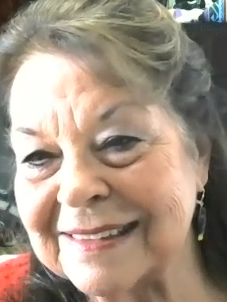
Image Metadata
|
Created: Wednesday, May 25, 2022 - 06:00 |
||
Summary:
An interview with Muscogee (Creek) Nation citizen, Mrs. Melba Checote-Eads.Description:
An interview with Muscogee (Creek) Nation citizen, Mrs. Melba Checote-Eads during the time of the Covid 19 pandemic. A downloadable transcript may be found by link: Melba Checote-Eads. This interview has been indexed through the Louie B. Nunn Center for Oral History Center’s Oral History Metadata Synchronizer system at the University of Kentucky. For an indexed copy of the video, please follow the external link found in the bar on the right of this page.
Deprecated: Directive 'allow_url_include' is deprecated in Unknown on line 0
Transcription:
MIDGE DELLINGER: This is Midge Dellinger, Oral Historian for the Muscogee Nation. Today is August 9th, 2021. And I am at my home in Tulsa, Oklahoma interviewing Muscogee citizen, Mrs. Melba Checote-Eads, who is at her home in Woodbury, Tennessee. I am performing this interview on behalf of the Muscogee Nation Historic and Cultural Preservation Department, for the oral history project titled, "A Twenty-First Century Pandemic in Indian Country: The Resilience of the Muscogee (Creek) Nation Against COVID-19." Mrs. Checote-Eads, thank you so much for being here today and for participating in this project. We're going to start this interview with some questions about your personal life and background. And so, I want to begin by asking you, what is your tribal town and clan?
MELBA CHECOTE-EADS: Well, hesci, estonko? My tribal town is Big Spring and my clan is Bear clan. And it's been interesting trying to locate the clan. And so, that--and I still could be wrong, but as near as I can get, we'll claim bear--Nokose.
DELLINGER: Okay.
CHECOTE-EADS: So, that's how I got there.
DELLINGER: Okay. So, now, you are not located here in the Muscogee Nation. You're in Woodbury, Tennessee. How long have you been in Woodbury?
CHECOTE-EADS: Well, I was born in Okmulgee, Oklahoma, and I have been here in Woodbury, I think, thirteen years. And before that, we lived in Mount Juliet, Tennessee for about ten years. Obviously, we're kind of kin to gypsies, because my dad was in the Navy. So, we--I left Okmulgee at a young age, but I always go home. My dad's land--we still have land there--my father does. And so, Okmulgee is in my heart, and kind of in my mind, has always been my home. However, I don't think I've lived there since I was in the sixth--let's see--I was in the second grade. And then, we moved--my husband and I moved back to Tulsa--moved to Tulsa and our third baby was born at Hillcrest Hospital. So, we still have an Oklahoma link, even though we're not there. But I consider Okmulgee as my home. And at this late day of my life, I'll probably never go back to live there, but I still consider that my home. Midge, I cannot hear you.
DELLINGER: Yeah, sorry about that. Tell me a little bit about your life in Woodbury.
CHECOTE-EADS: Well, our daughter lives in Murfreesboro, which is just about twenty miles from here. And we were living in Mount Juliet, and I told my husband, I said, "I want to live next"--when the grandbabies started coming, I said, "I want to live next door to my daughter. So, I'll help with the grandbabies." Well, my son-in-law had a heart attack over that. Well, anyway, we started looking for--we wanted to build. And so, we started looking for some land, or a lot--it was so expensive. I mean, it was more than the house. So, we kind of thought, "Well, we'll think on it a little bit longer." And then, my husband said, "Well, let's buy a house and remodel it, and then sell it and buy another house. That sort of thing." And I'm thinking, "No, I don't want to do that either. I want to have a home. I don't like this jumping around. I like to be--plant my flowers and stay still for a while." So, he bought this two-and-a-half acres up here in Woodbury, and he called me, he says, "Oh, I bought you some land and we could build our house." And I thought, "Well, we've been looking for a while, where did you buy it? And you bought it without me?" And he says, "Well, it's in Woodbury." And my thought was, "Well, where in the heck is Woodbury?" And so, he said back to me, "It's not far."
And Woodbury is in Cannon County. It's off the beaten path, it's not near any interstate, and it is far. And we're not next door to the grandkids. So, it is a little bit out, but it's--I call it the "hick town with the Dollar Store." And that's exactly what it is. But more interestingly, it is on the Northern Trail of Tears. And I have been doing a commemorative Trail of Tears walk in Mount Juliet. And so, when I moved up here to Woodbury, I said, "Oh, this is the Northern Trail." And it came through Nashville. I'm not sure it really touched Mount Juliet, but it may have. And so, then I began an additional commemorative Trail of Tears walk here. So, I maintain two walks for about--until about two, three years ago. And then, my connection in Mount Juliet was no longer able to help me. And I thought, "Well, it's time to let that one go and just focus on one." So, I'm really excited about living here because on the Northern Trail, Mvskoke people walked along with the Cherokee. So, that was really interesting. So, it got me more involved in the history here in our homeland--you know, Chattanooga is part of our homeland. Also, I see your mound on your picture here, Tennessee has lots of mounds. Mound Bottom, Pinson Mound in Jackson, Tennessee. Those are Muskogean. And so, you could say this is some of our homeland and our ancient peoples were here. So, it really affirmed and got me more interested in things I didn't know. And I began to find out.
So, I've been living--my son built our house here--my youngest son. He's an amazing boy. And he built the house that we live in now. And he didn't have a crew. He built it himself. When I say he built my house, I literally mean he got the hammer, the nails, the wood, everything, and built my beautiful home. Amazing.
DELLINGER: That's amazing. That's amazing.
CHECOTE-EADS: When he sits in the living room, he says, "I can't believe I built this house." It was quite a--so, that was thirteen years ago. It was a big undertaking for him.
DELLINGER: Right. Will you please share the names of your husband and your children?
CHECOTE-EADS: Oh, yes. Well, I have a genius husband, Gary, because he could fix this computer stuff for me. And he didn't have a nervous breakdown. He lived through it. It took him three days, but he did it. So, his name is Gary. And he actually is from--was born in Virginia--in Gates City, Tennessee--or Virginia. It's right on the Tennessee-Virginia line. And so then, he grew up in Oak Ridge, Tennessee. And I met him--this is a crazy story--I met him when I was in college in Texas. Alvin, Texas. So, I had no clue that I'd end up in Tennessee. Anyway, so, that's my husband, Gary. And then, we have four children together. We have Nathan--that's my oldest son. He lives in Charlotte, North Carolina. Then I have Rachel, my daughter, and she has my grandbabies--my two grandsons, Brandon and Adam. Brandon is sixteen and six-foot-three, thirteen-and-a-half shoe. So, he's not little. He's getting--he's a grown-up, you might say. And then, Adam is thirteen and he starts school tomorrow. And then, I have my son, Aaron, and he lives in Smyrna, which is just on the other side Murfreesboro. It's between Nashville, Murfreesboro--and he has a wonderful tourist business. He's an entrepreneur and he started this tourist business. And it started off with limousines, and now he has buses and takes tours. And hopefully, the COVID won't close him down again. And he's just busy, busy, busy. We never see him because he's driving somewhere all the time. And so, then, my youngest son, Ira, he lives a mile down the road from me. Whenever I need anything fixed, I call him. And he comes up and helps his mom. He has a little farm, he has cows, and chickens, and dogs, and pickup trucks. You know,he's just that kind of a boy. And he built his barn--I mean, he just builds everything. But being--there again, being Muscogee Citizen, that affected his construction and a lot of the business that he was involved in. So, he hasn't worked in a year, but he remodeled the house and sold it. So, he's blessed all the way around. We feel very blessed. We really do. My oldest son did have the COVID, and of course, we couldn't go and help him, or even go to see him. And so, that was really heavy on my heart. And we feel--I feel, personally, very blessed that we have come through so far, this well. And I do--I think prayer and just waiting on the Lord has been--it's been difficult, because I'm not a very--I want to get up and do a lot of things, but that has been a sustaining thing. I've been forced to do things--to be still and do more of that.
DELLINGER: Right, right. Well, I want to go back just a little bit. I'd like to know a little bit more about your life growing up. You know, your parents and any siblings you have, and any grandparents, too, if you'd like to share a little bit about them.
CHECOTE-EADS: Well, I just--I come from a kind of a small family. My mother was Rosalee Hollenbeck. And so, she's non-Indian. And her mother was--I love her name--Dorothy Daisy Disney. And they were from Guthrie, Oklahoma. And my grandmother was a widow at seventeen, with a baby. And so, she depended a lot on her sister next to her. And I think there was--let's see--I think there was seven children in that family. One boy and the rest girls. So, the women in that family were really strong. They cooked, they canned, they did everything. And they were really strong women. And they got together a lot. And that was my mother's family. And her--like I said, her father died when she was about eleven months old. So, she really didn't know his family, but we met them later in life.
And so--and my dad, he's from Okmulgee. My dad is Gideon Don Checote. And his father was the Reverend Samuel Jefferson Checote. And my grandfather was an orphan at age six, and he was raised in the home--when he wasn't at boarding schools--the home of Chief Samuel Checote. So, that is our--my father's family line. And so, Dad grew up there in Okmulgee. And the common thing that holds me still to this place is New Town Church--Tvlofv Mucvse--in Okmulgee, Oklahoma. And so, I just love going back. And of course, the COVID has really hit the congregation there, and families, very hard. So, I cherish the time that I get to hop in my new car and come home and go to church with friends and family. Get to visit people. That has always been dear to my heart. My aunt--my dad's sister, MaryAnn Checote Kane, she was the only daughter, and she had five brothers. So, she's the only daughter. I think that's right. Let's see--let's see--yep, I had to think about that. And she passed some years back. But she was a driving force of getting to go and stay weeks, sometimes a month I would go and hang out at her house. Or I'd go and stay two or three weeks, and I'd come home, and then I'd go back. And so, I had a real privilege of being able to go back and forth and do different things.
And the one reason why I went back and forth so much was I wanted to help New Town Church become a heritage landmark of Methodism. And Reverend Homer Nowley put that in my brain. And I kept thinking, "Well, it's such a small congregation now. Just a few Indian women." And I had a dream that I should do that. And so, I called my aunt and I said, "Aunt Me, I had this dream that if New Town's going to go out, it should go out on a bang, and we need to have a big celebration. And we need to write our history and submit it to the general church." And she says, "We're too old, we don't want to do anything." And that was the end. And I said, "Well, let me call the pastor, then." So, I think Gene was the pastor at that time, and people kind of got behind it. I'm still waiting on some stories now. And so, if any of them are listening to this, I still want your camp town memories from New Town. So, that was a real privilege. And even though I'm connected to that, living at large and living away, I missed out. I didn't know any--I mean, I went on the Internet and found a lot of stuff. And to ask people to share their stories, you just wouldn't believe how sullen everybody got. But they're getting more open to that. So, those are things we have to do. And it took us--well, it took two years of working--and because I was just an associate member, I feel like I had to just be a part, but I couldn't do it myself. I mean, I could have done it myself, but it probably wouldn't--it's not finished, is what I'm trying to say. But what has been put into and submitted to the general church is what it is. It's not finished, but it did pass the general church of the Methodist Church criteria. I think General Conference 2012. And so, it was accepted then. So, these are history stories, and it was wonderful to get to just share--get to be involved. And so, I had several meetings every other month or so with the women and the trustees and other people at the church, and we collectively got stuff together and met the criteria. And so, I'm proud to say that they are a congregation that--and it might be the only American Indian congregation still meeting now that is a historical landmark of the United Methodist Church. So, that was a big deal and it was hard to get--you know, people don't--people are very busy with their own life and even though they think, "Oh, that's a great idea, wonderful," it's hard to actually get that done. And so, I did not know that at the time. I mean--actually, I should have known that, but I didn't. So, I'm just happy that I was a small part of that.
DELLINGER: Right. That's fantastic, that work that you've done. Now, I'm curious, do you have a home congregation there in Woodbury?
CHECOTE-EADS: I do. I'm blessed to have--it's Woodbury First United Methodist Church. We--well, I'm part of the women of the church, and the women--ever since I started the Trail of Tears--here we go back to the Trail of Tears--little walk that we do, they always--they volunteered to say, "Well, we'll take this as a project for"--they have certain things that they have to do--"and we'll provide a snack." So, we went from doing it on a Friday, to now we do it on Sunday just after church. And then we walk. And it's gone from snacks to a dinner. So, we'll have to see how this year goes, though. So, I'm really--and I sing in the choir. And so, we're--the church there is just starting to come back. This past year, as we talk about the COVID, has been very hard. And there again, we have lost people at this church, but not all because of COVID. Because there is an older congregation. And so, we're losing these older people. And I just--and there again, their church did their history. And so, it's really interesting to see how history plays in all the places that you live. And I'm sure everybody will understand that, too.
One interesting thing that I found in the Moravian books, where they record all these histories--especially the Trail of Tears--was that when the Trail of Tears--when the people camped here at Woodbury, they came into town and they met the Methodist minister. And when I found that little bitty sentence in the diary--I think it was Butrick's diary--I said, "Oh, my goodness." So, that sealed, you know, when you go to mark places and provide evidence through history. Those are the invaluable things that you want to find. So, that was a little tidbit. And I said, "Hallelujah, I found something that proves they were here." So, that was something--we talk about that a lot. And I said--and it just happened. I mean, he could have met a lot of other preachers, I'm sure. But he ran into a man who was a circuit rider of that day and he was the preacher here at the Methodist church. So, I thought that was interesting. The connection.
DELLINGER: Right, right. Now, you also--I think you told me--don't you currently involve yourself in speaking engagements?
CHECOTE-EADS: I do, I do.
DELLINGER: And it's through the church, right?
CHECOTE-EADS: Most of it is through the church. You know, I had a ministry in Nashville--oh, 1998--and it was the Native American Gathers Fellowship. And we did a lot of amazing things. It's just amazing when I look back on that time, because God called me into ministry in 1994 at the Sesquicentennial of the Oklahoma Indian Missionary Conference. And I remember thinking, "God are you sure? Because I'm the least of anybody that"--I mean, I'm a mom, I'm a wife, I am a nurse--I forgot to say that. And so, I mean, even though I participated in my local church, and Sunday school, and all those things, that was never a part of what I thought. I just never thought--and I was also shy, too. I would never stand up and speak to anybody. I don't think. But here we go. God has the plan and if He calls you, He's going to open the door and I didn't walk through the door, I fell through the door. That's exactly right. I just fell in there. And I remember, we had just moved to Tennessee, by the way, and I came home from that event in Oklahoma and I started packing up these boxes that I had just unpacked. And my husband said, "What are you doing?" I said, "I'm packing these boxes." He said, "Well, why are you packing them?" And I said, "Because we're moving." And he was just like, "Oh, no, we're not." And we had moved from Virginia to Tennessee. And I said, "Well, yes, I believe we will, because God has called me into ministry, and I can't do that anywhere"--I mean, Native American ministry is very specific. "I can't do that anywhere except Oklahoma, because that's the only place I know Indian people." And my husband says, "We've been there, we're not going back." And he said, "If that's where you're going, you're going by yourself." And that sort of thought. And I thought, "No"--I said, "No, you're going to see, because I trust this word. And you'll see." Well, I'm still here in Tennessee because God didn't mean I was going to move. He meant I was going to be in ministry in some way, He was going to use me in ministry. And at that--I'm so small, I'm that small, and I didn't know--I didn't know how. I just kept thinking, "He has to mean that, because that's the only thing." And so, I have been blessed. I'm a certified lay speech speaker. And so, for a long time, I thought I needed to be a local pastor. But that wasn't right either. You have to trust the plan. And it's these worldly thoughts that come into my mind like, "Oh, we're moving to Oklahoma. Oh, I'll become a preacher." No, that really wasn't the plan. The plan was that God could use my heritage and he could put into my mind things to say, and use me in that way.
So, that's how--and I have been blessed to travel to Bolivia with a Native American team--to Bolivia--Mission team. That was interesting. We didn't necessarily preach. We worked. And we were hands-on with healing. And so, then, I began to meet other people. Suuqiina, who is an Inuit man--he came here to Tennessee and he married a friend of mine. And this next week--and I've been knowing him for all these years--they are involved with a Jewish and Native ministry--and they live in California, but they are coming back to Tennessee because they started here--and they have invited me to come and do a welcome to land and a land acknowledgement at a prayer event. So, I'm going to be three days really busy with them. And so, those are the kind of things. And then, last year, I went to Sukkot down in Georgia, with a--in Georgia, our homeland, by the river, beautiful place. And I did some Indian acknowledgement. But miracles happen. And so, I always think it's a miracle what--because I'll say--in fact, when the COVID started, I had been asked to participate with a group of college professors and college students--and I've forgotten the name of that--in Nashville. And I did the same thing. A land acknowledgement and a welcome to the land. And the night after we did all this great stuff, the tornado hit Nashville, and I was on the fifteenth floor and I saw that tornado pass my window. And I grabbed my coat and my pocketbook and went downstairs, because I was not going to stay up there. So, that was how the COVID hit us, is with a tornado.
But God does open up doors, creates in you something you never knew that could happen. And so, from then, I've attended Bacone College through the Internet. I had a little scholarship to their Native American Ministries program. So, I did that. I got to go to Israel with a Native American team, to Israel. That was really--I had a girl friend and she's Tlingit from Alaska--Tlingit Indian--and she says about three or four years before I even went to Israel--or even thought about going to Israel--she says, "Oh, Melba, when you go to Jerusalem in Israel"--she's an Elvis Presley nut, and so, she says, "I want you to go to the Elvis Presley Café." They have a café there and it's all Elvis Presley. They just love Elvis Presley. And I just looked at her and I said, "I am never going to Jerusalem. What do you think I am, Miss Moneybags or something?" And she just laughed and we both had a good laugh over that. And we went to Elvis Presley's eightieth birthday, and it was five degrees. I might have froze to death, but anyway. It was--he wasn't there, but they celebrate every year in January his birthday. So, that's when she told me. Lo and behold, I actually went to that place in Jerusalem. Elvis Presley's Café. Amazing. So, you might say she foretold what I was going to do. And I didn't even have a clue. And so, that was amazing to me.
So, I've been able to talk, I've been able to do many things around a ministry and around my Muscogee heritage that I just never, never thought that I would do. Amazing. I still am amazed.
DELLINGER: Yes. And hopefully you will continue to be amazed. Right? By the things that tend to just drop into your lap.
CHECOTE-EADS: Yes, yes.
DELLINGER: And future adventures that you'll have in your life. Well, listen, I appreciate you sharing all these things--these wonderful things about yourself and your background. What I'd like to do now is go ahead and transition into some questions about the COVID Pandemic. And you just mentioned--you kind of just touched on what was going to be my first question to you. I wanted to ask where were you and how did you first hear about the COVID Pandemic and COVID-19?
CHECOTE-EADS: Well, I guess it was starting to be noted in America because of news from Europe and other places. And I'm thinking about March. March first--or the first part of March--I was speaking in Nashville, and I was staying in the Omni Hotel with this wonderful event. There was just thousands of people there. And really, we were having a great, great time. And that night, the tornado came through Nashville. And it hit right along Fifth Avenue, which was right by where I was staying. And so, that was how--I look at it now and I said, "Well, that whole thing changed all of our lives," because we had a couple of tornadoes that spring that were devastating to this area. And so, that was March. And then, in April, my own home was damaged from a tornado. We lost two huge big oak trees--like forty-five or sixty feet tall. And our roof was damaged. And our siding. Missed my car--the tree missed my car. And it was quite damaging because we're in the older age of our life, and so, there was damage that was going to be a large--not only emotional, because I just love those trees, but financial. We set into a financial kind of--like, "Oh, my gosh." And that was when the COVID was, for me, very fearful. I became very fearful about becoming ill. And I don't know if other people were as fearful as I was. And I had one of my sons--he just--he made me more afraid than anything, because he says, "You better not go here, and you better not do this. And if you were to get sick"--and he was so concerned about me. Well, I became very fearful about it. And so, I don't know if other people were. And maybe it was because of the circumstance around me, but I began to fear this illness, because I don't think I understood what it really was. I'm a nurse, but I couldn't--I mean, I've been a nurse for fifty-two years. I couldn't understand how this particular thing could be--could cause the whole country to close. Could cause us to change what I knew about medicine, about wearing a mask, and different things like that. I just--it was just over--almost overpowering. And I think complicated with the tornadoes, that made it worse for me.
DELLINGER: Right, yeah. You were dealing with a lot. Now, just to confirm, we're talking about 2020--we're talking about March of 2020 when you were in Nashville and dealing with the tornadoes. And at that time, you're starting to hear about COVID-19. At that time, though, was COVID-19 in Tennessee, or was it still in other parts of the country?
CHECOTE-EADS: Well, we were starting to have issues with wearing masks, issues about starting to close--have children start home learning. It was just kind of--it just kind of started happening. Actually, to think back on it--I'm glad you're asking these questions--it's kind of hard to think how fast those lockdowns, those--I have to say, freedoms--were stopped. Our economy--just so many things just went--just crashed. And it was just very, very devastating to--and I don't really think that I--or maybe most people--have really recovered from that. But to think back on it, we, of course, just had an election, we had witnessed before the COVID so much violence--like on television and different things like that. Just unprecedented unrest that I think when the lockdowns of COVID really hit, it was devastating. And I'm guessing that there was COVID before March, but I know in March, we were walking freely in Nashville without masks, without any fear. But as March continued into April, that level became higher. And people became more cautious about things. And it is just overwhelming to look back at that time, how quickly you went from this happy day to a month later just not sure what was going to happen.
DELLINGER: Right. Were you thinking about the virus and the Pandemic making its way into the Muscogee Nation? What were thoughts about that?
CHECOTE-EADS: Well, yes, because as I connected with family and friends, shutdowns began to happen in tribal areas. Of course, we can look back and think of the Navajo Nation being so devastated. And that was very concerning. I have cousins that said, "Well, Muscogee Nation is giving out vaccines right away to all the elders first, and then, right away to all the people." And so, those kinds of things were on our mind. Then, the idea that we weren't working. Because I lost--I was forced to retire in March, which I did not anticipate. And it was because of health issues that my doctor said I should not return to work as a nurse, because of that. And so, they tolerated that for a while, and then they just said, "Well, you can't come back, so you're gone. If you want to come back, call us again." And I haven't called them back. I haven't gone back.
DELLINGER: Now, was this March of 2021 when you were forced to retire? Or 2020?
CHECOTE-EADS: Yeah, 2021. I'm trying to think, you know. That is right.
DELLINGER: So, you actually worked for a year after the Pandemic was here in the United States.
CHECOTE-EADS: No, I didn't. I was on medical leave.
DELLINGER: Okay.
CHECOTE-EADS: The last time I worked was August a year ago.
DELLINGER: Okay.
CHECOTE-EADS: Well, I might be getting that mixed up. Yep, it was July--the end of July, almost August, a year ago, was the last time I worked. And I worked for four days that month, and I didn't work again. Because I--and I also had a heart attack the end of October. So--and there was a lot of speculation, because there's no reason why I had a heart attack. So, that was another thing that happened. And so, when people have unforetold health issues that spring up--so, I had that heart attack and my daughter said, "Well, Mama, you went down to Georgia and you were with all those people, and they weren't wearing masks." And she says, "So now, Mom, you came home and you had a heart attack." And so, I never--I said, "Well, I haven't even been sick. I haven't had a sniffle, an allergy, nothing." And she says, "Well, you probably had COVID and it gave you a heart attack." So, I still don't think that's what I had, but there's no explanation why I had a heart attack. They did a heart cath thinking I had a blockage, and I did not. So, I told the doctor it was a miracle. A miracle of the Lord I didn't have a heart--I didn't have any of the things he thought I had. But maybe I did have them. And I was cured. So, I prefer that. So, it's hard to think about the year. So, here we are a whole summer again, and we may be facing more difficulties--more difficulties.
DELLINGER: Yeah. Will you please share what is your knowledge and understanding about the COVID-19 virus, including, if you can, how it spread and the physical impact that it can have on the body?
CHECOTE-EADS: You mean trust in the science?
DELLINGER: Okay.
CHECOTE-EADS: Okay, first of all, I don't trust their science. I think there's a lot of deception. And I am a person that doesn't trust very well, anyway. And that might be because of my background and heritage, I don't know. But I--after we--as the year has come by, I told you first, I had a lot of fear. I did have a lot of fear. But then, I began to read more, I began to hear conflicting reports, conflicting views, conflicting--even today, and we can all turn our radio on, our television on, and we can hear these conflicts about vaccinations, non-vaccinations, a vaccination and people becoming ill and hospitalized even though they had had a vaccination. So, there's a lot of deception here. And I never did trust the science. And so, my whole family feels--we feel the same way. We are not trusting what they say. It's unproven. And so, that's how I went. However, I will say, for a whole year, other than having a heart attack, I have not been ill. So, the idea--here's the good science for you--washing your hands, keeping things a little bit cleaner than usual, maybe. Being more mindful of those kind of health practices, they must really--they really work. So, I will commend that part of the science. Which, when I first started in nursing school, the first thing we learned was how to wash our hands. And I think we must have washed our hands for a week, trying to get that one thing through our brain, that handwashing was important. So, today, I feel almost like these things they have forced, and they are still forcing, are very evil. And I don't trust it--and I won't trust it. So, I think there's underlying thoughts about that. So, I better not say anymore. I'll be discon--I'll be--what do they do to people? They cancel you. So, I don't really want to be cancelled. But I think the fear and the distrust and the deception, untruths, politicalizing something that should have been cared for--I am a nurse. When we talk about early treatment, early diagnosis, treatments, no--and then, any treatment that has been found to be benefit an ill person was withheld from them. I'm serious. If you have a cold for two weeks, the doctor says, "Well, we better start you on antibiotics or something, because it could turn into pneumonia." So, with COVID, they send you home and say, "Well, take a Tylenol." I am appalled at this. I'm appalled at this. And there's been a lot of people that suffered and probably died because they did not get early treatment, they were not treated well, they were not cared for. And I am ashamed that that had to happen. And here we are a year later.
My son had COVID--my oldest son. And they told him to go home and if he felt bad, he could come to the emergency room and get an X-ray. What kind of medicine are we practicing? Witchcraft? What kind of science is that? I am appalled at this. As a Muscogee Citizen, I want my son to be well. I want him to have care. I don't want to lose our people because they didn't get early treatment and care. And that's the way I feel. These scientists that said trust them, God is going to judge this. And I do not trust them. I will not trust them. And so--but I have led very strongly on natural herbs, healthy eating, exercise, vitamin D, zinc, elderberry vitamins. I've held very much on natural immune-building minerals and vitamins. So, those things, I guess, were very helpful. I've never--I'm seventy-three, I haven't been sick. But I don't usually get sick. But I do usually have allergies and one or two yearly colds. Well, I've had a whole year without a cold. And here we are, I've had a whole year without an allergy attack. So, praise God. And so, I don't trust the science. I don't trust what they are telling us today. Forcing children and--you know, I am not a scientist or a doctor, but for those doctors who are, if they with--if they were guilty to withhold any of the medications that have been found to be helpful, they are a criminal in my eyes.
DELLINGER: Have you been--I'm just curious, have you been following mask protocol?
CHECOTE-EADS: I have, but--you know, I worked in labor and delivery for years and years, and newborn nursery. And so, we used to wear a mask in that newborn nursery. Well, when my grandchildren were born, nobody wore a mask anywhere in the NICU unit. The doctors--I mean, we used to have to dress up for fathers to come into the baby's room. Nobody--they just come in there with their clothes. So, I wonder. Of course, in isolation that's different. We're going to gown up, and we're going to mask up, and we're going to go in because of contagion. So, we do have those kind of protocols. And now that we're seeing so much discrepancy about masks--and of course, we--you know, as a nurse, we only wore masks at certain times in certain places. And they couldn't be worn all day. They get dirty. They're germ catchers. We put them on, use them, and discard them. You would never--a nurse would never wear a mask a whole dang day. Are you crazy? But somehow that's changed. I still think my mask got kind of--I mean, look, I graduated nursing school in 1970, so that's a long time. Maybe those old things are old. But you know, I wonder. On the other hand, washing your hands, covering your mouth if you're coughing, or if you've got a cold, put on a mask so you protect the rest of us and you don't cough on us. Keep your germs over there until you get well. So, I think, too, there's a lot of discrepancy now about should we wear a mask or not. So, that's how we think about that. I think one of my kids just hopped in here. Anyway, so--
DELLINGER: I want to ask you, since we're talking about safety measures, at your church there in Woodbury, did your church totally shut down at any point last year?
CHECOTE-EADS: Yes, yes they did. And it was--and I am very sorry about that because--I feel like there could have been more that the church did. But my personal church did not. They have a Wednesday thing on like a Zoom, in the afternoon. And we did have church on the Internet on Sunday. But we were closed down. And like I said, we had a lot of our elderly people that were sick, and isolated, and we had--I had dear friends that they fell and they broke a hip, and they were taken into a rehab situation. And there was nobody could visit or come. And I think that the church--I don't know about other churches, but I think we could have done more. I feel badly that I did not take more steps to do more things for people. The isolation that I suffered was really bad. I had to turn to different things. I began to do Bible studies on YouTube, I sought out different ways of encouragement. A wonderful man that I knew in Israel, he had a Bible study, and he did online stuff through Facebook. So, I was able to connect in these ways. So, a lot of the churches were very handicapped at this time and not being able to provide the things that people really, really needed. So, I was kind of lucky to have an iPhone that I could connect to Facebook things that would bring up all the Bible studies, and just different things like that. Which I felt fortunate. But I can see that churches really had a hard time. And my own church just recently--in the last month, maybe two months--allow us to come in the church without a mask. So, we're sitting in the church with a mask trying to sing. And it's very difficult. I think this has been a very difficult time.
So, I noticed just yesterday when I was at church, some people are wearing masks in the church again. I don't think I'm going to do that again. First of all, I have asthma and I can't breathe. And so, I don't feel that I'm going to do that again. Of course, if they say, "You can't come in without the mask." I'll say, "Okay, well, I don't need a mask and maybe I don't need to come in." You know, God is everywhere. And so, I have felt--I have had to lean on the Lord more. I have had to study and find ways of reaching that insurance. And probably other people have, too. And so, I'm glad for that, but I think we could have done more. And, I don't know--I visited--in Mount Juliet, I told you, I go over to Mount Juliet--I haven't gone over there--it's about sixty-something miles from me now. But a friend of--my friend from Israel was preaching there twice at Reverend Locke's church in Mount Juliet. And some people may have heard of him. He's very radical. He has a tent church, doesn't believe in wearing masks, and a bunch of stuff. So, he's very radical. I'm not going to say I'm radical as him. But I did go over and participate at their church. It was a wonderful experience and I got to see my friend, Gilad, from Israel. And hear him and hear some of his preachings. So, that was wonderful.
So, the churches have suffered and I'm not sure--I think we're all at a crossroad now. We've already tasted the bad stuff and we don't want to go back there. There may still be an element of fear. But I wouldn't want to see us just be radically closing everything and taking freedoms or forcing people--this is America. We are free people. We have our own mind. We can make our choices that are good for us. What is good for me may not be good for you, or someone else. And I can tell you my opinion, but you have your own. There again, you have to do what's good for you. I think we need to encourage one another more. And that's what I felt from this whole year. So, should we go forward and do more crazy things? My job is going to be encouraging people more. Letting them know that I am--I'm not dead over here and isolated on my little two-and-a-half acres. But that I'm much alive, that I am here if you need me, and I'm going to let you know, and not be isolated and held back. The time for being held back is over. We're looking up ahead. We're looking up ahead.
DELLINGER: Yes. Have you observed any changes or differences in the spiritual beliefs and practices of people--and I'm referring to people in general--because of the Pandemic?
CHECOTE-EADS: I'm not sure. Because, you know, I told you I live kind of an isolated life. My family--we live here, miles from people. And my friends and different people, we have yet to get back together on a regular basis. We're still kind of holding back to staying within our own family. I look at friends and family in Okmulgee, and I think they're getting out a whole lot better--a whole lot more than I am. I guess because there's just nothing going on in Woodbury. I just don't know. But I am hopeful about having the walk this year in September. So, I'm hopeful for that. And so, we're not getting out as much--I'm not getting out as much as I'd like to, other than family things. But for my own self, I feel more like I have reached out in my faith more. And because of that, I want to be more helpful to other people. Encouraging. I don't know what the future's going to hold. I am just trusting that I will be a part of whatever good can happen. Whatever good I can bring to somebody. Because we--it's been a devastating time for me. It has.
DELLINGER: Okay. I want to ask you--and of course, we talked about this prior to this interview, and you have touched on this a little bit. But have you been vaccinated against the COVID-19 virus?
CHECOTE-EADS: Nope. No. I have not. My family has not. My husband and I are not going to. It goes against my beliefs. I believe in life and some of the science about these vaccines--they're not proven, they're still in an experimental stage, and now, unfortunately--I mean, I would love to say that this vaccine was for me and others something that was beneficial. After all this time of people getting vaccines--and now, I don't mean to encourage other people not to take it. I want to say, each person has to do what's best for them. For me, I have asthma, so I already am compromised with breathing. I have had a heart attack, and I have circulation problems. So, with the evidence of vaccines, those vaccines--and there's different ones--may cause heart problems, circulation problems, and breathing problems. So, I feel, medically, that I do not want to have any complications other than what I have. I told you I'm well. And I've been well. So, I'm blessed, I'm fortunate. There's people that are not in my situation. My husband is well, he's a veteran, he goes to the VA--I think he's seventy-five now. Gosh, I'm losing track. He hasn't been ill. And so, we're well. We don't need to take an experiment. My oldest son has already had COVID, so he doesn't need a vaccine. His family, none of them are taking the vaccine. So, that's my feeling about it. And we're finding out, unfortunate--I think it's unfortunate that people who have had the vaccine are now becoming ill with the very thing they had the vaccine against. And so, I'm still going to wait and see. It may be that I will take the vaccine, I don't know. But at this time, I am not. I am not able to trust that at this time.
DELLINGER: Okay. How do you--
CHECOTE-EADS: I hope you don't just cancel me out because of that.
DELLINGER: No.
CHECOTE-EADS: But I do--I am concerned at the treatment of people who choose not to be vaccinated. You know, people who have illnesses, diabetes and other illnesses, are choosing not to take the vaccine. I feel like people will start turning with evil intent, with hatefulness, towards people who are not vaccinated. We have our reasons. We have our medical reasons and we have our right to our medical privacy and to our religious convictions about what is in these vaccines. What they make them with. For me it would be a mortal sin to participate in that. And so, I cannot and I will not subject myself to that. And on the second part is, I'm allergic to pain, so I would not want to do it.
DELLINGER: Okay. How do you think that the Muscogee Nation as a whole, including its leadership, the Health Department, Muscogee citizens--how do you think they're handling the Pandemic? Have you been keeping tabs on what's going on here in Oklahoma?
CHECOTE-EADS: Well, I haven't. Living away--and you know, I've had a family member pass, and I've had dear friends pass with COVID. So, it's been heartbreaking--heartbreaking for me. And at the beginning of this Pandemic, going to the grocery store was a big thing. Like, for us, we don't even live by a grocery store. We had a Dollar Store grocery store and a small market. So, we had to order everything. It was more expensive, and we had to do it on the Internet. Then, we had to drive thirty miles to the store to get our groceries and come home. If I were relating that to Oklahoma, I imagine there's plenty of our citizens that had that same kind of thing. And they may not have had an Internet to order their groceries. Or maybe they couldn't even do it by telephone. I have no idea. It was very challenging for me to order from Kroger's and expect--and then, half the things I ordered they didn't have, and they would substitute something else. And I'd think, "I don't even eat this." And they substitute that for part of my groceries. And I was thinking to myself, "I don't even eat this, so I don't know why I have this. I don't know why it's in my basket, because I certainly didn't order this one." So, that was very hard. And because of the tribe being shut down, I would think that it was very difficult for our people in Oklahoma. I mean, I don't have a tribe here. There's no tribes in the state of Tennessee. So, there's no entity like if you needed healthcare, if you wanted to--if you could use your CIB card, you know, you would go to Cherokee or South Carolina to some of those smaller tribes. To the Pee Dees in South Carolina or to the Cherokee Nation in North Carolina. And you could, it's four hours away. So, there's no health benefit, and so that's a big problem. My puppy is in here.
But anyway, so, our tribal government--and I don't know, but I think they could have done more to help citizens. I mean, there again, the isolation. The non-personal care for people. I think that's bad. And so--and here we go, why did we allow that? Why did we allow it? And I hope we have learned something from that. I hope our experiences are better. I hope we've learned something that maybe--you know, we're human beings. We need each other. And as a tribal citizen, more than ever, I need a community. And I think our people need that. And without that, we are--we live together on land held in common forever. That's our history. And for us to allow what is happening, is just--I don't understand it. I think I need more knowledge about why. And we suffered through it. We got through it, but maybe we're not through it yet. And I feel bad that we have lost something that we held very dear, and that's our community. Our togetherness. Our laughter. Our human feelings. I feel sad about that.
DELLINGER: Yes, those are very important points. Mvto for saying those things. Those are important things that we have to think about going forward as we continue through this Pandemic. I want to ask, do you have any--I know that you know a lot about your family history, you know a lot about Muscogee history. Do you have any family stories that have been passed down through oral tradition about maybe some of your ancestors or Mvskoke ancestors experiencing pandemics in our past history?
CHECOTE-EADS: Well, I don't think I really have--I read in some of my grandfather's diaries that apparently there was a lot of sickness in and around his life, but he would say, "I stayed around the house today, I didn't feel too good." And so, I--and I think he was very careful. If he felt bad, he was very careful to take care of himself so that he could be well. You know, we have to walk in wellness. We have to do things to continue being well. And so, after this pandemic, that's what I see. We must educate ourselves on how to be well. We cannot allow us to be Type 2 diabetics, we have to take care of what we eat and how we approach our lives. We can't allow our diseases--all these diseases that might be contributed of a sedentary lifestyle--of which I am guilty of that. I was a couch potato for half of this pandemic. I just felt like I couldn't move, I was stuck to the couch for whatever reason. And thank goodness I have woke up and said, "No, you can't do that. You have to do better for yourself, because I am still needed." And all of us are needed. We cannot pass away until we have completed what we are needed to do. And so, I'm still--I still feel strongly that I'm needed.
One story that I think--I often think about the Trail of Tears because I'm living in a land that we were removed from. And some of our people didn't get removed very happily, either. We were drug out of here with chains. And not a very happy--we had just suffered a Creek War where women and children were taken prisoners and never returned. I live close to the garrison down here where women and children from the Creek War were held. They were held there as prisoners of war, my goodness. And just a few short years after that, they walked the Trail of Tears. You know, we were early removed people. We suffered all kinds of upheavals. We didn't need a pandemic. There was like war and violence and just all kinds of things, it was terrible. So, I think of the Trail of Tears. That to me was a pandemic. That was a pandemic because it led to illnesses, it led to suicides. Our people suffered terrible with just one simple--why do I say simple? With one act of Congress, and with the greed we suffered and we lived through it. And so, the stories have come down that on this Trails of Tears about people suffering.
And then, the one story--and I read it not very long ago--and this was--I think you can still find this story in the Archives in Oklahoma. During the thirties, they did oral stories at that time. And this is a recording from a lady--and I've forgotten her name now--but I just read it. And she was talking about her grandmother shared--when they crossed over the Mississippi, that there was a hut, and that in that hut they had religious services. And that a lot of--that when the boat--and I would think the Monmouth was probably what she was talking--that so many people died in it, that they recovered bodies weeks after the event had happened. And they went to this little hut and they had religious services. Then, she mentioned my great-great-grandfather and said, "He was the first one to be baptized." And she mentioned it in her oral history. And I thought that was kind of interesting, because how old was he when he was baptized? You know, when did this happen? Because I would love to know the age, because we hear in history, he was a child, he was ten, fourteen. How old was he then? Or did he go back and come back? I mean, I--those are the stories I'd like to find. And I'm still looking for his parents' names. I don't know if I'll ever find that. So, that was a story that she revealed that--about some of us. But in that thought, being washed, being cleansed, in a ceremony of baptism, is an act of moving forward. And so, I think when she was telling about that, that was her thought. We've come to this little hut on the other side of the river and people began to be baptized, and they began to maybe try to live again. They just saw so much death and sorrow.
So, today I say, "Hallelujah, we got our reservation back." And it was kind of an odd case. But it brought the truth. It brought the truth out of our treaty. And so now, I am so excited to live in this time, because as a Muscogee citizen, I am so proud and so happy that we have this opportunity. And so far, our executive branch, and our tribal entities, and our national council, and all of our citizens. We have an opportunity to renew ourself and to truly do some things that we were barred all these years from doing. And it's kind of a shame, because they took away those years from us, but being who we are, it's okay, because we will flourish. We will live in community and we will flourish again. I'm just so excited. I'm so proud. This is our year anniversary, right? We have had our reservation a year. We have lots to do. We have so much to do. I'm--it would be the grocery list--you know, the long one. But I am praying for our future. I'm praying for our executive branch, and for our national council, and for our citizens, because culture and moving forward is a citizen's thing. We can do this. And so, I'm really happy that we have this opportunity. What a blessing. What a blessing. My grandpa would be so happy, you know? Because those early chiefs and early leaders, they had to fight to keep what we had after our treaty. And sad to say, it didn't last long. It did not last long. So, now we have a renewed opportunity and we can just show--we can show the world that we can persevere. We're not defeated. We've never been defeated. We're Muscogee strong. And so, we're moving forward. Yeah, I'm happy about that.
DELLINGER: Yes. Again, thank you so much. Those are very powerful thoughts and words that I think we all--as Muscogee, we all need to hear. And you know, I'm going to tell you--so, we're down to what is really the last question of our interview today. And you've already been touching--it's like you read my mind--you've already been touching on this question. But I want to go ahead and ask it anyway, just in case there's some other things that you want to add to this. So, what I want to ask you here--and again, we're thinking about our future generations of Muscogee who may find themselves having to survive a pandemic, like what we've been going through. And I just want to know, what words of advice or wisdom do you have for them about living with a pandemic like this and surviving it?
CHECOTE-EADS: I think the words I've heard over the year was, "Get ready and be prepared." Now, I am not very prepared. I wasn't prepared. I did not have an understanding of what a lockdown was, or the idea that I couldn't buy gasoline to go somewhere. I mean, we have to think about that. What if we could not get to a store? Like I told you, I live very rurally. So, I think gardens was a big thing. My garden is very small, but it was kind of nice to have. That was something I didn't have to buy. And so, we might need to look at old ways of doing things. We might need to start storing a few things up. And if our garden wasn't so good, we might go to the farmer's market and buy some--a bushel of green beans and can them. Or some tomatoes and get them canned, because there might come a time this winter that we're not able to get to the store. Or we're not able to purchase the things--you know, we have terrible inflation now. I'm on a social security, so I have a limited income and I'm not working, so that's even--it's very--it can be difficult. And I'm sure others are in the same way. And my daughter had children and she's still trying to come across--she's a single parent. She's still trying to do for her kids. So, we are trying to pull together, but it's difficult. And so, I would say, start looking at some small things when you go to the store, if you can afford it, you need one thing, buy one more. And the next time you go, buy more again. You're not buying a whole lot. Rotate. And just kind of--I mean, who can afford to go out and buy double groceries? We can't. But just kind of be mindful of some of the things that you really must have and kind of start being prepared.
And about money. I don't know if there's ever going to be enough money. But be mindful of your spending. Be mindful. Because we live--we've all lived through shortages of money, food, just so many things, and we made it. But in today's time, we're so dependent on our society that we may need to start thinking about how to reserve some stuff back from existent, in case things are hard again. I know, it's kind of funny now everybody wanted toilet paper. I have to laugh, because my grandma had--we had an outdoor toilet and we didn't have toilet paper. We had a Sears and Roebuck--well, here we go, we don't even have catalogues anymore. What will we use? So, that's just a humorous side. But we just might need to think about--and another thing, keep some ready cash somewhere. If your bank--I have an ATM card and sometimes that thing goes down. Keep you a little cash just in case you need to have some money. Now, I never did that before, because I never had any cash. That was kind of funny now. But I am trying to think about being more prepared just in case. You may never need it, but just in case have that preparation. It couldn't hurt. I think a lot of our people have suffered in our past history when we didn't have a lot of preparation. Or, we made preparation and it still wasn't enough. So, today, we might--you know, here we go--we have to be relying on our Creator--on God, our Creator. He's going to sustain. But He does ask for us not to be lazy. We've got a part in this. So, I would just want to say, take a little time and get prepared for stuff.
DELLINGER: Okay, thank you very much for that. And again, thank you so much for taking time out of your day and participating in this project. Your thoughts and words are meaningful and they are important. I have thoroughly enjoyed our interview here today. So, mvto, Mrs. Checote-Eads, thank you very much.
CHECOTE-EADS: Well, I just want to say back to you, thank you for reaching out. I'm a citizen at large and I feel very lonely out here. And we don't have the opportunities that we would have maybe in Oklahoma, where we have relatives and tribal members, and our tribal church, and singing, and all those things that we hold dear. We don't have them out here. We have to try to find each other and it's long, and distance from each other. But I just want to say thank you so much for preserving and asking questions. Thank you for thinking about me and including me as a citizen at large in this project. Mvto, mvto. Thank you. Bye, bye.
DELLINGER: Bye, bye.
MELBA CHECOTE-EADS: Well, hesci, estonko? My tribal town is Big Spring and my clan is Bear clan. And it's been interesting trying to locate the clan. And so, that--and I still could be wrong, but as near as I can get, we'll claim bear--Nokose.
DELLINGER: Okay.
CHECOTE-EADS: So, that's how I got there.
DELLINGER: Okay. So, now, you are not located here in the Muscogee Nation. You're in Woodbury, Tennessee. How long have you been in Woodbury?
CHECOTE-EADS: Well, I was born in Okmulgee, Oklahoma, and I have been here in Woodbury, I think, thirteen years. And before that, we lived in Mount Juliet, Tennessee for about ten years. Obviously, we're kind of kin to gypsies, because my dad was in the Navy. So, we--I left Okmulgee at a young age, but I always go home. My dad's land--we still have land there--my father does. And so, Okmulgee is in my heart, and kind of in my mind, has always been my home. However, I don't think I've lived there since I was in the sixth--let's see--I was in the second grade. And then, we moved--my husband and I moved back to Tulsa--moved to Tulsa and our third baby was born at Hillcrest Hospital. So, we still have an Oklahoma link, even though we're not there. But I consider Okmulgee as my home. And at this late day of my life, I'll probably never go back to live there, but I still consider that my home. Midge, I cannot hear you.
DELLINGER: Yeah, sorry about that. Tell me a little bit about your life in Woodbury.
CHECOTE-EADS: Well, our daughter lives in Murfreesboro, which is just about twenty miles from here. And we were living in Mount Juliet, and I told my husband, I said, "I want to live next"--when the grandbabies started coming, I said, "I want to live next door to my daughter. So, I'll help with the grandbabies." Well, my son-in-law had a heart attack over that. Well, anyway, we started looking for--we wanted to build. And so, we started looking for some land, or a lot--it was so expensive. I mean, it was more than the house. So, we kind of thought, "Well, we'll think on it a little bit longer." And then, my husband said, "Well, let's buy a house and remodel it, and then sell it and buy another house. That sort of thing." And I'm thinking, "No, I don't want to do that either. I want to have a home. I don't like this jumping around. I like to be--plant my flowers and stay still for a while." So, he bought this two-and-a-half acres up here in Woodbury, and he called me, he says, "Oh, I bought you some land and we could build our house." And I thought, "Well, we've been looking for a while, where did you buy it? And you bought it without me?" And he says, "Well, it's in Woodbury." And my thought was, "Well, where in the heck is Woodbury?" And so, he said back to me, "It's not far."
And Woodbury is in Cannon County. It's off the beaten path, it's not near any interstate, and it is far. And we're not next door to the grandkids. So, it is a little bit out, but it's--I call it the "hick town with the Dollar Store." And that's exactly what it is. But more interestingly, it is on the Northern Trail of Tears. And I have been doing a commemorative Trail of Tears walk in Mount Juliet. And so, when I moved up here to Woodbury, I said, "Oh, this is the Northern Trail." And it came through Nashville. I'm not sure it really touched Mount Juliet, but it may have. And so, then I began an additional commemorative Trail of Tears walk here. So, I maintain two walks for about--until about two, three years ago. And then, my connection in Mount Juliet was no longer able to help me. And I thought, "Well, it's time to let that one go and just focus on one." So, I'm really excited about living here because on the Northern Trail, Mvskoke people walked along with the Cherokee. So, that was really interesting. So, it got me more involved in the history here in our homeland--you know, Chattanooga is part of our homeland. Also, I see your mound on your picture here, Tennessee has lots of mounds. Mound Bottom, Pinson Mound in Jackson, Tennessee. Those are Muskogean. And so, you could say this is some of our homeland and our ancient peoples were here. So, it really affirmed and got me more interested in things I didn't know. And I began to find out.
So, I've been living--my son built our house here--my youngest son. He's an amazing boy. And he built the house that we live in now. And he didn't have a crew. He built it himself. When I say he built my house, I literally mean he got the hammer, the nails, the wood, everything, and built my beautiful home. Amazing.
DELLINGER: That's amazing. That's amazing.
CHECOTE-EADS: When he sits in the living room, he says, "I can't believe I built this house." It was quite a--so, that was thirteen years ago. It was a big undertaking for him.
DELLINGER: Right. Will you please share the names of your husband and your children?
CHECOTE-EADS: Oh, yes. Well, I have a genius husband, Gary, because he could fix this computer stuff for me. And he didn't have a nervous breakdown. He lived through it. It took him three days, but he did it. So, his name is Gary. And he actually is from--was born in Virginia--in Gates City, Tennessee--or Virginia. It's right on the Tennessee-Virginia line. And so then, he grew up in Oak Ridge, Tennessee. And I met him--this is a crazy story--I met him when I was in college in Texas. Alvin, Texas. So, I had no clue that I'd end up in Tennessee. Anyway, so, that's my husband, Gary. And then, we have four children together. We have Nathan--that's my oldest son. He lives in Charlotte, North Carolina. Then I have Rachel, my daughter, and she has my grandbabies--my two grandsons, Brandon and Adam. Brandon is sixteen and six-foot-three, thirteen-and-a-half shoe. So, he's not little. He's getting--he's a grown-up, you might say. And then, Adam is thirteen and he starts school tomorrow. And then, I have my son, Aaron, and he lives in Smyrna, which is just on the other side Murfreesboro. It's between Nashville, Murfreesboro--and he has a wonderful tourist business. He's an entrepreneur and he started this tourist business. And it started off with limousines, and now he has buses and takes tours. And hopefully, the COVID won't close him down again. And he's just busy, busy, busy. We never see him because he's driving somewhere all the time. And so, then, my youngest son, Ira, he lives a mile down the road from me. Whenever I need anything fixed, I call him. And he comes up and helps his mom. He has a little farm, he has cows, and chickens, and dogs, and pickup trucks. You know,he's just that kind of a boy. And he built his barn--I mean, he just builds everything. But being--there again, being Muscogee Citizen, that affected his construction and a lot of the business that he was involved in. So, he hasn't worked in a year, but he remodeled the house and sold it. So, he's blessed all the way around. We feel very blessed. We really do. My oldest son did have the COVID, and of course, we couldn't go and help him, or even go to see him. And so, that was really heavy on my heart. And we feel--I feel, personally, very blessed that we have come through so far, this well. And I do--I think prayer and just waiting on the Lord has been--it's been difficult, because I'm not a very--I want to get up and do a lot of things, but that has been a sustaining thing. I've been forced to do things--to be still and do more of that.
DELLINGER: Right, right. Well, I want to go back just a little bit. I'd like to know a little bit more about your life growing up. You know, your parents and any siblings you have, and any grandparents, too, if you'd like to share a little bit about them.
CHECOTE-EADS: Well, I just--I come from a kind of a small family. My mother was Rosalee Hollenbeck. And so, she's non-Indian. And her mother was--I love her name--Dorothy Daisy Disney. And they were from Guthrie, Oklahoma. And my grandmother was a widow at seventeen, with a baby. And so, she depended a lot on her sister next to her. And I think there was--let's see--I think there was seven children in that family. One boy and the rest girls. So, the women in that family were really strong. They cooked, they canned, they did everything. And they were really strong women. And they got together a lot. And that was my mother's family. And her--like I said, her father died when she was about eleven months old. So, she really didn't know his family, but we met them later in life.
And so--and my dad, he's from Okmulgee. My dad is Gideon Don Checote. And his father was the Reverend Samuel Jefferson Checote. And my grandfather was an orphan at age six, and he was raised in the home--when he wasn't at boarding schools--the home of Chief Samuel Checote. So, that is our--my father's family line. And so, Dad grew up there in Okmulgee. And the common thing that holds me still to this place is New Town Church--Tvlofv Mucvse--in Okmulgee, Oklahoma. And so, I just love going back. And of course, the COVID has really hit the congregation there, and families, very hard. So, I cherish the time that I get to hop in my new car and come home and go to church with friends and family. Get to visit people. That has always been dear to my heart. My aunt--my dad's sister, MaryAnn Checote Kane, she was the only daughter, and she had five brothers. So, she's the only daughter. I think that's right. Let's see--let's see--yep, I had to think about that. And she passed some years back. But she was a driving force of getting to go and stay weeks, sometimes a month I would go and hang out at her house. Or I'd go and stay two or three weeks, and I'd come home, and then I'd go back. And so, I had a real privilege of being able to go back and forth and do different things.
And the one reason why I went back and forth so much was I wanted to help New Town Church become a heritage landmark of Methodism. And Reverend Homer Nowley put that in my brain. And I kept thinking, "Well, it's such a small congregation now. Just a few Indian women." And I had a dream that I should do that. And so, I called my aunt and I said, "Aunt Me, I had this dream that if New Town's going to go out, it should go out on a bang, and we need to have a big celebration. And we need to write our history and submit it to the general church." And she says, "We're too old, we don't want to do anything." And that was the end. And I said, "Well, let me call the pastor, then." So, I think Gene was the pastor at that time, and people kind of got behind it. I'm still waiting on some stories now. And so, if any of them are listening to this, I still want your camp town memories from New Town. So, that was a real privilege. And even though I'm connected to that, living at large and living away, I missed out. I didn't know any--I mean, I went on the Internet and found a lot of stuff. And to ask people to share their stories, you just wouldn't believe how sullen everybody got. But they're getting more open to that. So, those are things we have to do. And it took us--well, it took two years of working--and because I was just an associate member, I feel like I had to just be a part, but I couldn't do it myself. I mean, I could have done it myself, but it probably wouldn't--it's not finished, is what I'm trying to say. But what has been put into and submitted to the general church is what it is. It's not finished, but it did pass the general church of the Methodist Church criteria. I think General Conference 2012. And so, it was accepted then. So, these are history stories, and it was wonderful to get to just share--get to be involved. And so, I had several meetings every other month or so with the women and the trustees and other people at the church, and we collectively got stuff together and met the criteria. And so, I'm proud to say that they are a congregation that--and it might be the only American Indian congregation still meeting now that is a historical landmark of the United Methodist Church. So, that was a big deal and it was hard to get--you know, people don't--people are very busy with their own life and even though they think, "Oh, that's a great idea, wonderful," it's hard to actually get that done. And so, I did not know that at the time. I mean--actually, I should have known that, but I didn't. So, I'm just happy that I was a small part of that.
DELLINGER: Right. That's fantastic, that work that you've done. Now, I'm curious, do you have a home congregation there in Woodbury?
CHECOTE-EADS: I do. I'm blessed to have--it's Woodbury First United Methodist Church. We--well, I'm part of the women of the church, and the women--ever since I started the Trail of Tears--here we go back to the Trail of Tears--little walk that we do, they always--they volunteered to say, "Well, we'll take this as a project for"--they have certain things that they have to do--"and we'll provide a snack." So, we went from doing it on a Friday, to now we do it on Sunday just after church. And then we walk. And it's gone from snacks to a dinner. So, we'll have to see how this year goes, though. So, I'm really--and I sing in the choir. And so, we're--the church there is just starting to come back. This past year, as we talk about the COVID, has been very hard. And there again, we have lost people at this church, but not all because of COVID. Because there is an older congregation. And so, we're losing these older people. And I just--and there again, their church did their history. And so, it's really interesting to see how history plays in all the places that you live. And I'm sure everybody will understand that, too.
One interesting thing that I found in the Moravian books, where they record all these histories--especially the Trail of Tears--was that when the Trail of Tears--when the people camped here at Woodbury, they came into town and they met the Methodist minister. And when I found that little bitty sentence in the diary--I think it was Butrick's diary--I said, "Oh, my goodness." So, that sealed, you know, when you go to mark places and provide evidence through history. Those are the invaluable things that you want to find. So, that was a little tidbit. And I said, "Hallelujah, I found something that proves they were here." So, that was something--we talk about that a lot. And I said--and it just happened. I mean, he could have met a lot of other preachers, I'm sure. But he ran into a man who was a circuit rider of that day and he was the preacher here at the Methodist church. So, I thought that was interesting. The connection.
DELLINGER: Right, right. Now, you also--I think you told me--don't you currently involve yourself in speaking engagements?
CHECOTE-EADS: I do, I do.
DELLINGER: And it's through the church, right?
CHECOTE-EADS: Most of it is through the church. You know, I had a ministry in Nashville--oh, 1998--and it was the Native American Gathers Fellowship. And we did a lot of amazing things. It's just amazing when I look back on that time, because God called me into ministry in 1994 at the Sesquicentennial of the Oklahoma Indian Missionary Conference. And I remember thinking, "God are you sure? Because I'm the least of anybody that"--I mean, I'm a mom, I'm a wife, I am a nurse--I forgot to say that. And so, I mean, even though I participated in my local church, and Sunday school, and all those things, that was never a part of what I thought. I just never thought--and I was also shy, too. I would never stand up and speak to anybody. I don't think. But here we go. God has the plan and if He calls you, He's going to open the door and I didn't walk through the door, I fell through the door. That's exactly right. I just fell in there. And I remember, we had just moved to Tennessee, by the way, and I came home from that event in Oklahoma and I started packing up these boxes that I had just unpacked. And my husband said, "What are you doing?" I said, "I'm packing these boxes." He said, "Well, why are you packing them?" And I said, "Because we're moving." And he was just like, "Oh, no, we're not." And we had moved from Virginia to Tennessee. And I said, "Well, yes, I believe we will, because God has called me into ministry, and I can't do that anywhere"--I mean, Native American ministry is very specific. "I can't do that anywhere except Oklahoma, because that's the only place I know Indian people." And my husband says, "We've been there, we're not going back." And he said, "If that's where you're going, you're going by yourself." And that sort of thought. And I thought, "No"--I said, "No, you're going to see, because I trust this word. And you'll see." Well, I'm still here in Tennessee because God didn't mean I was going to move. He meant I was going to be in ministry in some way, He was going to use me in ministry. And at that--I'm so small, I'm that small, and I didn't know--I didn't know how. I just kept thinking, "He has to mean that, because that's the only thing." And so, I have been blessed. I'm a certified lay speech speaker. And so, for a long time, I thought I needed to be a local pastor. But that wasn't right either. You have to trust the plan. And it's these worldly thoughts that come into my mind like, "Oh, we're moving to Oklahoma. Oh, I'll become a preacher." No, that really wasn't the plan. The plan was that God could use my heritage and he could put into my mind things to say, and use me in that way.
So, that's how--and I have been blessed to travel to Bolivia with a Native American team--to Bolivia--Mission team. That was interesting. We didn't necessarily preach. We worked. And we were hands-on with healing. And so, then, I began to meet other people. Suuqiina, who is an Inuit man--he came here to Tennessee and he married a friend of mine. And this next week--and I've been knowing him for all these years--they are involved with a Jewish and Native ministry--and they live in California, but they are coming back to Tennessee because they started here--and they have invited me to come and do a welcome to land and a land acknowledgement at a prayer event. So, I'm going to be three days really busy with them. And so, those are the kind of things. And then, last year, I went to Sukkot down in Georgia, with a--in Georgia, our homeland, by the river, beautiful place. And I did some Indian acknowledgement. But miracles happen. And so, I always think it's a miracle what--because I'll say--in fact, when the COVID started, I had been asked to participate with a group of college professors and college students--and I've forgotten the name of that--in Nashville. And I did the same thing. A land acknowledgement and a welcome to the land. And the night after we did all this great stuff, the tornado hit Nashville, and I was on the fifteenth floor and I saw that tornado pass my window. And I grabbed my coat and my pocketbook and went downstairs, because I was not going to stay up there. So, that was how the COVID hit us, is with a tornado.
But God does open up doors, creates in you something you never knew that could happen. And so, from then, I've attended Bacone College through the Internet. I had a little scholarship to their Native American Ministries program. So, I did that. I got to go to Israel with a Native American team, to Israel. That was really--I had a girl friend and she's Tlingit from Alaska--Tlingit Indian--and she says about three or four years before I even went to Israel--or even thought about going to Israel--she says, "Oh, Melba, when you go to Jerusalem in Israel"--she's an Elvis Presley nut, and so, she says, "I want you to go to the Elvis Presley Café." They have a café there and it's all Elvis Presley. They just love Elvis Presley. And I just looked at her and I said, "I am never going to Jerusalem. What do you think I am, Miss Moneybags or something?" And she just laughed and we both had a good laugh over that. And we went to Elvis Presley's eightieth birthday, and it was five degrees. I might have froze to death, but anyway. It was--he wasn't there, but they celebrate every year in January his birthday. So, that's when she told me. Lo and behold, I actually went to that place in Jerusalem. Elvis Presley's Café. Amazing. So, you might say she foretold what I was going to do. And I didn't even have a clue. And so, that was amazing to me.
So, I've been able to talk, I've been able to do many things around a ministry and around my Muscogee heritage that I just never, never thought that I would do. Amazing. I still am amazed.
DELLINGER: Yes. And hopefully you will continue to be amazed. Right? By the things that tend to just drop into your lap.
CHECOTE-EADS: Yes, yes.
DELLINGER: And future adventures that you'll have in your life. Well, listen, I appreciate you sharing all these things--these wonderful things about yourself and your background. What I'd like to do now is go ahead and transition into some questions about the COVID Pandemic. And you just mentioned--you kind of just touched on what was going to be my first question to you. I wanted to ask where were you and how did you first hear about the COVID Pandemic and COVID-19?
CHECOTE-EADS: Well, I guess it was starting to be noted in America because of news from Europe and other places. And I'm thinking about March. March first--or the first part of March--I was speaking in Nashville, and I was staying in the Omni Hotel with this wonderful event. There was just thousands of people there. And really, we were having a great, great time. And that night, the tornado came through Nashville. And it hit right along Fifth Avenue, which was right by where I was staying. And so, that was how--I look at it now and I said, "Well, that whole thing changed all of our lives," because we had a couple of tornadoes that spring that were devastating to this area. And so, that was March. And then, in April, my own home was damaged from a tornado. We lost two huge big oak trees--like forty-five or sixty feet tall. And our roof was damaged. And our siding. Missed my car--the tree missed my car. And it was quite damaging because we're in the older age of our life, and so, there was damage that was going to be a large--not only emotional, because I just love those trees, but financial. We set into a financial kind of--like, "Oh, my gosh." And that was when the COVID was, for me, very fearful. I became very fearful about becoming ill. And I don't know if other people were as fearful as I was. And I had one of my sons--he just--he made me more afraid than anything, because he says, "You better not go here, and you better not do this. And if you were to get sick"--and he was so concerned about me. Well, I became very fearful about it. And so, I don't know if other people were. And maybe it was because of the circumstance around me, but I began to fear this illness, because I don't think I understood what it really was. I'm a nurse, but I couldn't--I mean, I've been a nurse for fifty-two years. I couldn't understand how this particular thing could be--could cause the whole country to close. Could cause us to change what I knew about medicine, about wearing a mask, and different things like that. I just--it was just over--almost overpowering. And I think complicated with the tornadoes, that made it worse for me.
DELLINGER: Right, yeah. You were dealing with a lot. Now, just to confirm, we're talking about 2020--we're talking about March of 2020 when you were in Nashville and dealing with the tornadoes. And at that time, you're starting to hear about COVID-19. At that time, though, was COVID-19 in Tennessee, or was it still in other parts of the country?
CHECOTE-EADS: Well, we were starting to have issues with wearing masks, issues about starting to close--have children start home learning. It was just kind of--it just kind of started happening. Actually, to think back on it--I'm glad you're asking these questions--it's kind of hard to think how fast those lockdowns, those--I have to say, freedoms--were stopped. Our economy--just so many things just went--just crashed. And it was just very, very devastating to--and I don't really think that I--or maybe most people--have really recovered from that. But to think back on it, we, of course, just had an election, we had witnessed before the COVID so much violence--like on television and different things like that. Just unprecedented unrest that I think when the lockdowns of COVID really hit, it was devastating. And I'm guessing that there was COVID before March, but I know in March, we were walking freely in Nashville without masks, without any fear. But as March continued into April, that level became higher. And people became more cautious about things. And it is just overwhelming to look back at that time, how quickly you went from this happy day to a month later just not sure what was going to happen.
DELLINGER: Right. Were you thinking about the virus and the Pandemic making its way into the Muscogee Nation? What were thoughts about that?
CHECOTE-EADS: Well, yes, because as I connected with family and friends, shutdowns began to happen in tribal areas. Of course, we can look back and think of the Navajo Nation being so devastated. And that was very concerning. I have cousins that said, "Well, Muscogee Nation is giving out vaccines right away to all the elders first, and then, right away to all the people." And so, those kinds of things were on our mind. Then, the idea that we weren't working. Because I lost--I was forced to retire in March, which I did not anticipate. And it was because of health issues that my doctor said I should not return to work as a nurse, because of that. And so, they tolerated that for a while, and then they just said, "Well, you can't come back, so you're gone. If you want to come back, call us again." And I haven't called them back. I haven't gone back.
DELLINGER: Now, was this March of 2021 when you were forced to retire? Or 2020?
CHECOTE-EADS: Yeah, 2021. I'm trying to think, you know. That is right.
DELLINGER: So, you actually worked for a year after the Pandemic was here in the United States.
CHECOTE-EADS: No, I didn't. I was on medical leave.
DELLINGER: Okay.
CHECOTE-EADS: The last time I worked was August a year ago.
DELLINGER: Okay.
CHECOTE-EADS: Well, I might be getting that mixed up. Yep, it was July--the end of July, almost August, a year ago, was the last time I worked. And I worked for four days that month, and I didn't work again. Because I--and I also had a heart attack the end of October. So--and there was a lot of speculation, because there's no reason why I had a heart attack. So, that was another thing that happened. And so, when people have unforetold health issues that spring up--so, I had that heart attack and my daughter said, "Well, Mama, you went down to Georgia and you were with all those people, and they weren't wearing masks." And she says, "So now, Mom, you came home and you had a heart attack." And so, I never--I said, "Well, I haven't even been sick. I haven't had a sniffle, an allergy, nothing." And she says, "Well, you probably had COVID and it gave you a heart attack." So, I still don't think that's what I had, but there's no explanation why I had a heart attack. They did a heart cath thinking I had a blockage, and I did not. So, I told the doctor it was a miracle. A miracle of the Lord I didn't have a heart--I didn't have any of the things he thought I had. But maybe I did have them. And I was cured. So, I prefer that. So, it's hard to think about the year. So, here we are a whole summer again, and we may be facing more difficulties--more difficulties.
DELLINGER: Yeah. Will you please share what is your knowledge and understanding about the COVID-19 virus, including, if you can, how it spread and the physical impact that it can have on the body?
CHECOTE-EADS: You mean trust in the science?
DELLINGER: Okay.
CHECOTE-EADS: Okay, first of all, I don't trust their science. I think there's a lot of deception. And I am a person that doesn't trust very well, anyway. And that might be because of my background and heritage, I don't know. But I--after we--as the year has come by, I told you first, I had a lot of fear. I did have a lot of fear. But then, I began to read more, I began to hear conflicting reports, conflicting views, conflicting--even today, and we can all turn our radio on, our television on, and we can hear these conflicts about vaccinations, non-vaccinations, a vaccination and people becoming ill and hospitalized even though they had had a vaccination. So, there's a lot of deception here. And I never did trust the science. And so, my whole family feels--we feel the same way. We are not trusting what they say. It's unproven. And so, that's how I went. However, I will say, for a whole year, other than having a heart attack, I have not been ill. So, the idea--here's the good science for you--washing your hands, keeping things a little bit cleaner than usual, maybe. Being more mindful of those kind of health practices, they must really--they really work. So, I will commend that part of the science. Which, when I first started in nursing school, the first thing we learned was how to wash our hands. And I think we must have washed our hands for a week, trying to get that one thing through our brain, that handwashing was important. So, today, I feel almost like these things they have forced, and they are still forcing, are very evil. And I don't trust it--and I won't trust it. So, I think there's underlying thoughts about that. So, I better not say anymore. I'll be discon--I'll be--what do they do to people? They cancel you. So, I don't really want to be cancelled. But I think the fear and the distrust and the deception, untruths, politicalizing something that should have been cared for--I am a nurse. When we talk about early treatment, early diagnosis, treatments, no--and then, any treatment that has been found to be benefit an ill person was withheld from them. I'm serious. If you have a cold for two weeks, the doctor says, "Well, we better start you on antibiotics or something, because it could turn into pneumonia." So, with COVID, they send you home and say, "Well, take a Tylenol." I am appalled at this. I'm appalled at this. And there's been a lot of people that suffered and probably died because they did not get early treatment, they were not treated well, they were not cared for. And I am ashamed that that had to happen. And here we are a year later.
My son had COVID--my oldest son. And they told him to go home and if he felt bad, he could come to the emergency room and get an X-ray. What kind of medicine are we practicing? Witchcraft? What kind of science is that? I am appalled at this. As a Muscogee Citizen, I want my son to be well. I want him to have care. I don't want to lose our people because they didn't get early treatment and care. And that's the way I feel. These scientists that said trust them, God is going to judge this. And I do not trust them. I will not trust them. And so--but I have led very strongly on natural herbs, healthy eating, exercise, vitamin D, zinc, elderberry vitamins. I've held very much on natural immune-building minerals and vitamins. So, those things, I guess, were very helpful. I've never--I'm seventy-three, I haven't been sick. But I don't usually get sick. But I do usually have allergies and one or two yearly colds. Well, I've had a whole year without a cold. And here we are, I've had a whole year without an allergy attack. So, praise God. And so, I don't trust the science. I don't trust what they are telling us today. Forcing children and--you know, I am not a scientist or a doctor, but for those doctors who are, if they with--if they were guilty to withhold any of the medications that have been found to be helpful, they are a criminal in my eyes.
DELLINGER: Have you been--I'm just curious, have you been following mask protocol?
CHECOTE-EADS: I have, but--you know, I worked in labor and delivery for years and years, and newborn nursery. And so, we used to wear a mask in that newborn nursery. Well, when my grandchildren were born, nobody wore a mask anywhere in the NICU unit. The doctors--I mean, we used to have to dress up for fathers to come into the baby's room. Nobody--they just come in there with their clothes. So, I wonder. Of course, in isolation that's different. We're going to gown up, and we're going to mask up, and we're going to go in because of contagion. So, we do have those kind of protocols. And now that we're seeing so much discrepancy about masks--and of course, we--you know, as a nurse, we only wore masks at certain times in certain places. And they couldn't be worn all day. They get dirty. They're germ catchers. We put them on, use them, and discard them. You would never--a nurse would never wear a mask a whole dang day. Are you crazy? But somehow that's changed. I still think my mask got kind of--I mean, look, I graduated nursing school in 1970, so that's a long time. Maybe those old things are old. But you know, I wonder. On the other hand, washing your hands, covering your mouth if you're coughing, or if you've got a cold, put on a mask so you protect the rest of us and you don't cough on us. Keep your germs over there until you get well. So, I think, too, there's a lot of discrepancy now about should we wear a mask or not. So, that's how we think about that. I think one of my kids just hopped in here. Anyway, so--
DELLINGER: I want to ask you, since we're talking about safety measures, at your church there in Woodbury, did your church totally shut down at any point last year?
CHECOTE-EADS: Yes, yes they did. And it was--and I am very sorry about that because--I feel like there could have been more that the church did. But my personal church did not. They have a Wednesday thing on like a Zoom, in the afternoon. And we did have church on the Internet on Sunday. But we were closed down. And like I said, we had a lot of our elderly people that were sick, and isolated, and we had--I had dear friends that they fell and they broke a hip, and they were taken into a rehab situation. And there was nobody could visit or come. And I think that the church--I don't know about other churches, but I think we could have done more. I feel badly that I did not take more steps to do more things for people. The isolation that I suffered was really bad. I had to turn to different things. I began to do Bible studies on YouTube, I sought out different ways of encouragement. A wonderful man that I knew in Israel, he had a Bible study, and he did online stuff through Facebook. So, I was able to connect in these ways. So, a lot of the churches were very handicapped at this time and not being able to provide the things that people really, really needed. So, I was kind of lucky to have an iPhone that I could connect to Facebook things that would bring up all the Bible studies, and just different things like that. Which I felt fortunate. But I can see that churches really had a hard time. And my own church just recently--in the last month, maybe two months--allow us to come in the church without a mask. So, we're sitting in the church with a mask trying to sing. And it's very difficult. I think this has been a very difficult time.
So, I noticed just yesterday when I was at church, some people are wearing masks in the church again. I don't think I'm going to do that again. First of all, I have asthma and I can't breathe. And so, I don't feel that I'm going to do that again. Of course, if they say, "You can't come in without the mask." I'll say, "Okay, well, I don't need a mask and maybe I don't need to come in." You know, God is everywhere. And so, I have felt--I have had to lean on the Lord more. I have had to study and find ways of reaching that insurance. And probably other people have, too. And so, I'm glad for that, but I think we could have done more. And, I don't know--I visited--in Mount Juliet, I told you, I go over to Mount Juliet--I haven't gone over there--it's about sixty-something miles from me now. But a friend of--my friend from Israel was preaching there twice at Reverend Locke's church in Mount Juliet. And some people may have heard of him. He's very radical. He has a tent church, doesn't believe in wearing masks, and a bunch of stuff. So, he's very radical. I'm not going to say I'm radical as him. But I did go over and participate at their church. It was a wonderful experience and I got to see my friend, Gilad, from Israel. And hear him and hear some of his preachings. So, that was wonderful.
So, the churches have suffered and I'm not sure--I think we're all at a crossroad now. We've already tasted the bad stuff and we don't want to go back there. There may still be an element of fear. But I wouldn't want to see us just be radically closing everything and taking freedoms or forcing people--this is America. We are free people. We have our own mind. We can make our choices that are good for us. What is good for me may not be good for you, or someone else. And I can tell you my opinion, but you have your own. There again, you have to do what's good for you. I think we need to encourage one another more. And that's what I felt from this whole year. So, should we go forward and do more crazy things? My job is going to be encouraging people more. Letting them know that I am--I'm not dead over here and isolated on my little two-and-a-half acres. But that I'm much alive, that I am here if you need me, and I'm going to let you know, and not be isolated and held back. The time for being held back is over. We're looking up ahead. We're looking up ahead.
DELLINGER: Yes. Have you observed any changes or differences in the spiritual beliefs and practices of people--and I'm referring to people in general--because of the Pandemic?
CHECOTE-EADS: I'm not sure. Because, you know, I told you I live kind of an isolated life. My family--we live here, miles from people. And my friends and different people, we have yet to get back together on a regular basis. We're still kind of holding back to staying within our own family. I look at friends and family in Okmulgee, and I think they're getting out a whole lot better--a whole lot more than I am. I guess because there's just nothing going on in Woodbury. I just don't know. But I am hopeful about having the walk this year in September. So, I'm hopeful for that. And so, we're not getting out as much--I'm not getting out as much as I'd like to, other than family things. But for my own self, I feel more like I have reached out in my faith more. And because of that, I want to be more helpful to other people. Encouraging. I don't know what the future's going to hold. I am just trusting that I will be a part of whatever good can happen. Whatever good I can bring to somebody. Because we--it's been a devastating time for me. It has.
DELLINGER: Okay. I want to ask you--and of course, we talked about this prior to this interview, and you have touched on this a little bit. But have you been vaccinated against the COVID-19 virus?
CHECOTE-EADS: Nope. No. I have not. My family has not. My husband and I are not going to. It goes against my beliefs. I believe in life and some of the science about these vaccines--they're not proven, they're still in an experimental stage, and now, unfortunately--I mean, I would love to say that this vaccine was for me and others something that was beneficial. After all this time of people getting vaccines--and now, I don't mean to encourage other people not to take it. I want to say, each person has to do what's best for them. For me, I have asthma, so I already am compromised with breathing. I have had a heart attack, and I have circulation problems. So, with the evidence of vaccines, those vaccines--and there's different ones--may cause heart problems, circulation problems, and breathing problems. So, I feel, medically, that I do not want to have any complications other than what I have. I told you I'm well. And I've been well. So, I'm blessed, I'm fortunate. There's people that are not in my situation. My husband is well, he's a veteran, he goes to the VA--I think he's seventy-five now. Gosh, I'm losing track. He hasn't been ill. And so, we're well. We don't need to take an experiment. My oldest son has already had COVID, so he doesn't need a vaccine. His family, none of them are taking the vaccine. So, that's my feeling about it. And we're finding out, unfortunate--I think it's unfortunate that people who have had the vaccine are now becoming ill with the very thing they had the vaccine against. And so, I'm still going to wait and see. It may be that I will take the vaccine, I don't know. But at this time, I am not. I am not able to trust that at this time.
DELLINGER: Okay. How do you--
CHECOTE-EADS: I hope you don't just cancel me out because of that.
DELLINGER: No.
CHECOTE-EADS: But I do--I am concerned at the treatment of people who choose not to be vaccinated. You know, people who have illnesses, diabetes and other illnesses, are choosing not to take the vaccine. I feel like people will start turning with evil intent, with hatefulness, towards people who are not vaccinated. We have our reasons. We have our medical reasons and we have our right to our medical privacy and to our religious convictions about what is in these vaccines. What they make them with. For me it would be a mortal sin to participate in that. And so, I cannot and I will not subject myself to that. And on the second part is, I'm allergic to pain, so I would not want to do it.
DELLINGER: Okay. How do you think that the Muscogee Nation as a whole, including its leadership, the Health Department, Muscogee citizens--how do you think they're handling the Pandemic? Have you been keeping tabs on what's going on here in Oklahoma?
CHECOTE-EADS: Well, I haven't. Living away--and you know, I've had a family member pass, and I've had dear friends pass with COVID. So, it's been heartbreaking--heartbreaking for me. And at the beginning of this Pandemic, going to the grocery store was a big thing. Like, for us, we don't even live by a grocery store. We had a Dollar Store grocery store and a small market. So, we had to order everything. It was more expensive, and we had to do it on the Internet. Then, we had to drive thirty miles to the store to get our groceries and come home. If I were relating that to Oklahoma, I imagine there's plenty of our citizens that had that same kind of thing. And they may not have had an Internet to order their groceries. Or maybe they couldn't even do it by telephone. I have no idea. It was very challenging for me to order from Kroger's and expect--and then, half the things I ordered they didn't have, and they would substitute something else. And I'd think, "I don't even eat this." And they substitute that for part of my groceries. And I was thinking to myself, "I don't even eat this, so I don't know why I have this. I don't know why it's in my basket, because I certainly didn't order this one." So, that was very hard. And because of the tribe being shut down, I would think that it was very difficult for our people in Oklahoma. I mean, I don't have a tribe here. There's no tribes in the state of Tennessee. So, there's no entity like if you needed healthcare, if you wanted to--if you could use your CIB card, you know, you would go to Cherokee or South Carolina to some of those smaller tribes. To the Pee Dees in South Carolina or to the Cherokee Nation in North Carolina. And you could, it's four hours away. So, there's no health benefit, and so that's a big problem. My puppy is in here.
But anyway, so, our tribal government--and I don't know, but I think they could have done more to help citizens. I mean, there again, the isolation. The non-personal care for people. I think that's bad. And so--and here we go, why did we allow that? Why did we allow it? And I hope we have learned something from that. I hope our experiences are better. I hope we've learned something that maybe--you know, we're human beings. We need each other. And as a tribal citizen, more than ever, I need a community. And I think our people need that. And without that, we are--we live together on land held in common forever. That's our history. And for us to allow what is happening, is just--I don't understand it. I think I need more knowledge about why. And we suffered through it. We got through it, but maybe we're not through it yet. And I feel bad that we have lost something that we held very dear, and that's our community. Our togetherness. Our laughter. Our human feelings. I feel sad about that.
DELLINGER: Yes, those are very important points. Mvto for saying those things. Those are important things that we have to think about going forward as we continue through this Pandemic. I want to ask, do you have any--I know that you know a lot about your family history, you know a lot about Muscogee history. Do you have any family stories that have been passed down through oral tradition about maybe some of your ancestors or Mvskoke ancestors experiencing pandemics in our past history?
CHECOTE-EADS: Well, I don't think I really have--I read in some of my grandfather's diaries that apparently there was a lot of sickness in and around his life, but he would say, "I stayed around the house today, I didn't feel too good." And so, I--and I think he was very careful. If he felt bad, he was very careful to take care of himself so that he could be well. You know, we have to walk in wellness. We have to do things to continue being well. And so, after this pandemic, that's what I see. We must educate ourselves on how to be well. We cannot allow us to be Type 2 diabetics, we have to take care of what we eat and how we approach our lives. We can't allow our diseases--all these diseases that might be contributed of a sedentary lifestyle--of which I am guilty of that. I was a couch potato for half of this pandemic. I just felt like I couldn't move, I was stuck to the couch for whatever reason. And thank goodness I have woke up and said, "No, you can't do that. You have to do better for yourself, because I am still needed." And all of us are needed. We cannot pass away until we have completed what we are needed to do. And so, I'm still--I still feel strongly that I'm needed.
One story that I think--I often think about the Trail of Tears because I'm living in a land that we were removed from. And some of our people didn't get removed very happily, either. We were drug out of here with chains. And not a very happy--we had just suffered a Creek War where women and children were taken prisoners and never returned. I live close to the garrison down here where women and children from the Creek War were held. They were held there as prisoners of war, my goodness. And just a few short years after that, they walked the Trail of Tears. You know, we were early removed people. We suffered all kinds of upheavals. We didn't need a pandemic. There was like war and violence and just all kinds of things, it was terrible. So, I think of the Trail of Tears. That to me was a pandemic. That was a pandemic because it led to illnesses, it led to suicides. Our people suffered terrible with just one simple--why do I say simple? With one act of Congress, and with the greed we suffered and we lived through it. And so, the stories have come down that on this Trails of Tears about people suffering.
And then, the one story--and I read it not very long ago--and this was--I think you can still find this story in the Archives in Oklahoma. During the thirties, they did oral stories at that time. And this is a recording from a lady--and I've forgotten her name now--but I just read it. And she was talking about her grandmother shared--when they crossed over the Mississippi, that there was a hut, and that in that hut they had religious services. And that a lot of--that when the boat--and I would think the Monmouth was probably what she was talking--that so many people died in it, that they recovered bodies weeks after the event had happened. And they went to this little hut and they had religious services. Then, she mentioned my great-great-grandfather and said, "He was the first one to be baptized." And she mentioned it in her oral history. And I thought that was kind of interesting, because how old was he when he was baptized? You know, when did this happen? Because I would love to know the age, because we hear in history, he was a child, he was ten, fourteen. How old was he then? Or did he go back and come back? I mean, I--those are the stories I'd like to find. And I'm still looking for his parents' names. I don't know if I'll ever find that. So, that was a story that she revealed that--about some of us. But in that thought, being washed, being cleansed, in a ceremony of baptism, is an act of moving forward. And so, I think when she was telling about that, that was her thought. We've come to this little hut on the other side of the river and people began to be baptized, and they began to maybe try to live again. They just saw so much death and sorrow.
So, today I say, "Hallelujah, we got our reservation back." And it was kind of an odd case. But it brought the truth. It brought the truth out of our treaty. And so now, I am so excited to live in this time, because as a Muscogee citizen, I am so proud and so happy that we have this opportunity. And so far, our executive branch, and our tribal entities, and our national council, and all of our citizens. We have an opportunity to renew ourself and to truly do some things that we were barred all these years from doing. And it's kind of a shame, because they took away those years from us, but being who we are, it's okay, because we will flourish. We will live in community and we will flourish again. I'm just so excited. I'm so proud. This is our year anniversary, right? We have had our reservation a year. We have lots to do. We have so much to do. I'm--it would be the grocery list--you know, the long one. But I am praying for our future. I'm praying for our executive branch, and for our national council, and for our citizens, because culture and moving forward is a citizen's thing. We can do this. And so, I'm really happy that we have this opportunity. What a blessing. What a blessing. My grandpa would be so happy, you know? Because those early chiefs and early leaders, they had to fight to keep what we had after our treaty. And sad to say, it didn't last long. It did not last long. So, now we have a renewed opportunity and we can just show--we can show the world that we can persevere. We're not defeated. We've never been defeated. We're Muscogee strong. And so, we're moving forward. Yeah, I'm happy about that.
DELLINGER: Yes. Again, thank you so much. Those are very powerful thoughts and words that I think we all--as Muscogee, we all need to hear. And you know, I'm going to tell you--so, we're down to what is really the last question of our interview today. And you've already been touching--it's like you read my mind--you've already been touching on this question. But I want to go ahead and ask it anyway, just in case there's some other things that you want to add to this. So, what I want to ask you here--and again, we're thinking about our future generations of Muscogee who may find themselves having to survive a pandemic, like what we've been going through. And I just want to know, what words of advice or wisdom do you have for them about living with a pandemic like this and surviving it?
CHECOTE-EADS: I think the words I've heard over the year was, "Get ready and be prepared." Now, I am not very prepared. I wasn't prepared. I did not have an understanding of what a lockdown was, or the idea that I couldn't buy gasoline to go somewhere. I mean, we have to think about that. What if we could not get to a store? Like I told you, I live very rurally. So, I think gardens was a big thing. My garden is very small, but it was kind of nice to have. That was something I didn't have to buy. And so, we might need to look at old ways of doing things. We might need to start storing a few things up. And if our garden wasn't so good, we might go to the farmer's market and buy some--a bushel of green beans and can them. Or some tomatoes and get them canned, because there might come a time this winter that we're not able to get to the store. Or we're not able to purchase the things--you know, we have terrible inflation now. I'm on a social security, so I have a limited income and I'm not working, so that's even--it's very--it can be difficult. And I'm sure others are in the same way. And my daughter had children and she's still trying to come across--she's a single parent. She's still trying to do for her kids. So, we are trying to pull together, but it's difficult. And so, I would say, start looking at some small things when you go to the store, if you can afford it, you need one thing, buy one more. And the next time you go, buy more again. You're not buying a whole lot. Rotate. And just kind of--I mean, who can afford to go out and buy double groceries? We can't. But just kind of be mindful of some of the things that you really must have and kind of start being prepared.
And about money. I don't know if there's ever going to be enough money. But be mindful of your spending. Be mindful. Because we live--we've all lived through shortages of money, food, just so many things, and we made it. But in today's time, we're so dependent on our society that we may need to start thinking about how to reserve some stuff back from existent, in case things are hard again. I know, it's kind of funny now everybody wanted toilet paper. I have to laugh, because my grandma had--we had an outdoor toilet and we didn't have toilet paper. We had a Sears and Roebuck--well, here we go, we don't even have catalogues anymore. What will we use? So, that's just a humorous side. But we just might need to think about--and another thing, keep some ready cash somewhere. If your bank--I have an ATM card and sometimes that thing goes down. Keep you a little cash just in case you need to have some money. Now, I never did that before, because I never had any cash. That was kind of funny now. But I am trying to think about being more prepared just in case. You may never need it, but just in case have that preparation. It couldn't hurt. I think a lot of our people have suffered in our past history when we didn't have a lot of preparation. Or, we made preparation and it still wasn't enough. So, today, we might--you know, here we go--we have to be relying on our Creator--on God, our Creator. He's going to sustain. But He does ask for us not to be lazy. We've got a part in this. So, I would just want to say, take a little time and get prepared for stuff.
DELLINGER: Okay, thank you very much for that. And again, thank you so much for taking time out of your day and participating in this project. Your thoughts and words are meaningful and they are important. I have thoroughly enjoyed our interview here today. So, mvto, Mrs. Checote-Eads, thank you very much.
CHECOTE-EADS: Well, I just want to say back to you, thank you for reaching out. I'm a citizen at large and I feel very lonely out here. And we don't have the opportunities that we would have maybe in Oklahoma, where we have relatives and tribal members, and our tribal church, and singing, and all those things that we hold dear. We don't have them out here. We have to try to find each other and it's long, and distance from each other. But I just want to say thank you so much for preserving and asking questions. Thank you for thinking about me and including me as a citizen at large in this project. Mvto, mvto. Thank you. Bye, bye.
DELLINGER: Bye, bye.
Community:
Category:
Collections:
Original Date Description:
August 9th, 2021Original Date:
2021 August 9thContributor:
Language:
EnglishRights:
All rights retained by the Muscogee (Creek) Nation.Licensing Options:

Attribution-NonCommercial-NoDerivatives 4.0 International (CC BY-NC-ND 4.0)
Source:
Muscogee (Creek) Nation National Library and ArchivesExternal Links:
Identifier:
2021MCN.09.001Subject:
Muscogee (Creek) NationType:
Format: