
Representative Anna Marshall, Interview


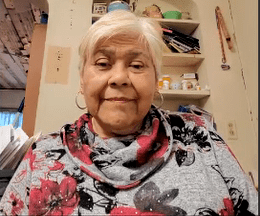
Image Metadata
|
Created: Thursday, May 11, 2023 - 11:30 |
||
Summary:
An interview with Muscogee (Creek) Nation citizen Representative Anna Marshall.Description:
An interview with Muscogee (Creek) Nation citizen and Representative Ann Marshall. A downloadable transcript may be found by link: Anna Marshall. This interview has been indexed through the Louie B. Nunn Center for Oral History Center’s Oral History Metadata Synchronizer system at the University of Kentucky. For an indexed copy of the video, please follow the external link found in the bar on the right of this page.
Transcription:
The Muscogee (Creek) Nation
Historic and Cultural Preservation Department Oral History Program
“A Twenty-First Century Pandemic in Indian Country: The Resilience of the Muscogee (Creek) Nation Against Covid-19”
As Remembered by: Ms. Anna Marshall
Interview by: Ms. Midge Dellinger
Date: May 5, 2021
Transcription: The Audio Transcription Company
Edited by: Ms. Midge Dellinger
MIDGE DELLINGER: [00:00:12] This is Midge Dellinger, Oral Historian for the Muscogee (Creek) Nation. Today it’s May 4, 2021, and I am at my home in Tulsa, Oklahoma interviewing Muscogee citizen and Muscogee (Creek) National Council Representative, Miss Anna Marshall, who is at her home in Holdenville, Oklahoma. This
interview is being performed remotely due to the on-going COVID-19 pandemic. I’m performing this interview on behalf of the Muscogee (Creek) Nation Historic and Cultural Preservation Department, for the oral history project titled “A Twenty-First Century Pandemic in Indian Country: The Resilience of the Muscogee (Creek) Nation Against COVID-19.”
Representative Marshall, I want to start by asking you some questions that pertain to your personal [00:01:00] life, and background. And I’m going to begin with, [00:01:03] what is your clan and tribal town?
ANNA MARSHALL: My clan is, I’m Bird Clan, and I belong to, well I guess you could say I was raised in the Tukvpvtce Tribal Town because that’s my father’s. My mother’s is Helvpe (Hillabee) Tribal Town.
DELLINGER: [00:01:25] Okay, and where were you born? Where was home growing up?
MARSHALL: Well, my home was Holdenville. I was born in Holdenville, and I was raised here, and I lived here until I graduated from college, and then I applied for different jobs and those jobs took me to different places. And then, I guess the year was
1
about 2005, 2006, when I came back to Holdenville, and I guess you can say [00:02:00] I’ve been here ever since. (laughs)
DELLINGER: Okay. So, that’s—
MARSHALL: I guess sometimes you can say your life comes full circle, so. (laughs)
DELLINGER: [00:02:07] Yes, yes. It sounds like yours has. Will you please share a little about growing up in Holdenville and your family including your parents and anyone else that you would like to mention?
MARSHALL: Okay. I can start with my grandparents. The grandparents that I knew was on my mother’s side, who was Margaret Lowe Marshall, and they were Joe Lowe, Sr., and Hepsey Harjo Lowe. And then I did not know my grandparents on my dad’s side, who was Phillip Marshall and Anna Elizabeth.
And I guess growing up in Holdenville, we – you know, back then it was a larger town. The population was larger. I guess the population now is [00:03:00] about seven thousand, maybe eight thousand; but way back when I was growing up, it was like fifteen, eighteen, twenty thousand. We had a lot of businesses here. We had a lot of manufacturing here. And so, there was—it had a life of its own, and the heyday of the time was Saturday night on Main Street, and movie theaters and things like that.
Now we find ourselves with no movie theaters, there’s no night life on Saturday night on Main Street. There’s no man—there’s very few manufacturing, and if you want
2
to call Tysons manufacturing, well, that’s here. And we have a private prison here. And that’s pretty much the crux of where most people work. Is in those two locations. They either work for Tysons or they work for the private prison.
And but the one thing that I can say that has stayed common through all these years has been [00:04:00] the issue of racism. And I know that sometimes we get tired of hearing about racism, but this town when I left was very racist towards Native Americans and toward African Americans. I come back years—you know, after having traveled around in different parts of the world and living in different—living in New York for many years, and I come back and it’s still the same. The only thing that’s changed is the players have changed. And so, that’s disappointing. I think that sometimes the more things change, the more they remain the same. And so, I had come back with high expectations that it would not be that way, and when I came back, it was. It was still the way it was when I left, and in some ways it’s more of a sophisticated and a subtle racism. Whereas before it was very overt. And [00:05:00] so, I guess that’s pretty much the life of Holdenville.
And so, for me, it’s been where the heyday was and how it’s just sort of declined: the population’s declined, the whole environment in this town has declined. And so, very few businesses that start, ever really last. I mean, they might last three or four months, and then before you know it the store front’s empty again and then you wonder, like, who’s going to be the next group that comes in? And I think a lot of that falls up on us as citizens that live here, because we don’t support those businesses. We’d rather go to Shawnee, or Tulsa, Oklahoma City and do our shopping rather than supporting local people.
3
And so, so life in Holdenville is not—the crime rate has increased. There wasn’t a lot of crime back when I was here growing up, but it seems [00:06:00] like now that drugs are just prevalent everywhere. Domestic violence—I mean, every day when you read the paper, which we only have a weekly paper when we used to have a daily paper, the weekly paper, that’s all you see in there is domestic violence, child abuse and neglect. I mean, I'm sure that was around but not at the level that it is today. And so, a lot of things that I see that this community is just ravaged with not a lot of real positive good things. Now, there are good and positive things that happen, but it seems that it’s more overshadowed by the crime rate, overshadowed by domestic violence, and child abuse. And many times, people don’t want to get involved and we can see why, because of some of the results that we get from the people who do try to do their civic duty and fulfill their responsibility as a [00:07:00] citizen you know, to report things and to try to make things right, and we end up either getting threatened or whatever. But that’s pretty much life in Holdenville in a nutshell.
Me growing up, I was involved, you know like I said we went to Tukvpvtce because it was an active ground at that time. My dad took us there, we participated, and then later on—but we also participated in church as well. And so, to me, I believe that we experienced both worlds. The good of both worlds. The church side as well as the ceremonial side. And I think that sometimes makes us very well-rounded because then we have, we’re more open—I’m not going to say we’re more open-minded, but we’re more open to other people, and to me that has served me well. It certainly has served me in other places that I’ve worked [00:08:00] and I’ve been able to go in and just being able to work with other people and just being able to accept people where they are and
4
working with them from that standpoint. But for me, that is really helped because I think it strengthens your spirituality. Whether it’s from the ceremonial side or from the church side. And then if you have it coming from both sides, then you find yourself with a strong spiritual foundation. For me that was my experience from that, from growing up that way.
DELLINGER: [00:08:38] Yeah. Yeah. So, going back to your early life, after you graduated from high school there in Holdenville, where did you attend college?
MARSHALL: Well, the first—well, I figured that I probably wouldn’t be able to make it at OU (laughs) because everybody was wanting to go to the University of Oklahoma. [00:09:00] Or going to Oklahoma State University. I chose a junior college. And I probably would not have gone to college, I probably would have just found a regular manufacturing job in Holdenville and probably stayed here, but my dad was really influential in pushing me to go to college because he didn’t want me to be working manual jobs like he had to do. And he said, “I’ve worked really hard,” and he said, “and I worked hard not to have you not go to school.” And so, he pushed me and then my mother was supportive, my grandparents were supportive, and really all my aunts and uncles and everybody supported me when I went to college.
And so, I went to Eastern Oklahoma State College in Wilburton for two years, and then I went a year in Chickasha when it was the old Oklahoma College of Liberal Arts before it became USAO [University of Science and Arts Oklahoma]. So, I lived in Chickasha for a year, worked part time, [00:10:00] went to school, and then I went to
5
East Central, and I graduated from East Central. And then I had a unique experience. See, it would have been in 2017, I believe. I had an opportunity to become a John Wesley Scholar and that gave me an opportunity to study on the campus of Oxford. And to me, it was just like, you know, Wow! Really smart people come (laughs) here! And I don’t think I’m really that smart, but I’m here. And to me, that was—I was just mesmerized by Oxford.
You know, that was such an experience, and I learned a whole lot about John Wesley, and then I understood my own self better as a Methodist. As a United Methodist. And but to have that, to have had that opportunity in Oxford for that summer was life changing. [00:11:00] Because I mean, I’ve studied in the United States, but I’ve never studied abroad, and that was to me the ultimate experience of all my college days. (laughs)
DELLINGER: Yeah, I was actually going to ask you about that experience later in the interview, but I’m glad you mentioned it here and so, you said that was just in 2017 so we’re just talking that was four years ago.
MARSHALL: Yeah.
DELLINGER: [00:11:27] So, you were over there for three months? MARSHALL: I was over there for one month. For thir—
6
DELLINGER: For one month.
MARSHALL: It was a one-month study. And not just the study part, but several of us stayed over and we traveled all over England. Even though we went to all the places that John Wesley studied, and we but you know basically we were based in Oxford. And so, we took day classes in the morning, and then in the afternoon they took us out to different places and [00:12:00] so they gave us—I mean, we had to be on the same schedule as John Wesley was when he was going to school.
DELLINGER: Oh!
MARSHALL: So, we were up at five thirty for morning prayer and communion. They did communion every day. (laughs) So, we did communion every day. We had morning prayers at five thirty, break—I mean, we were on a schedule. I mean, breakfast was like at seven, so we ate at seven, and then we studied for about three hours from seven a.m. to about ten a.m. and then they gave us an hour to get our stuff together, and then we had lunch from eleven to twelve, and then we got on the buses, and they took us to some location that was significant in John Wesley’s life. And so, we would go, and we’d have that experience, and then we’d have to come back, and we had to journal, and then they would give us these little quizzes that we had to answer all the questions and things like that, and then the end result was we had to write a paper. And that was, [00:13:00] that was kind of difficult because I’m not really, I’m not the kind of person that can just sit down and start writing. I wished I was, but I’m not. And so, I really struggled. You know,
7
and I was getting nervous because everybody else was already finishing up, and I’m thinking, I haven’t even gotten halfway through mine yet! (Dellinger laughs) And but eventually I did, and the paper turned out really well. Better than I thought. (laughs)
DELLINGER: Yeah.
MARSHALL: Because you always think, Oh this is horrible. (Dellinger laughs) And they said I did fine. And so, I finished that up, and I had some significant opportunities there because one, we got to see the original Magna Carta and so, to me, I mean we had to wait in a line for over an hour, but that was okay. But I mean, so we saw a lot of original documents that you read about in history, but then you act—when you’re a kid. I mean like when you’re in elementary school and you read about those things, and then you actually [00:14:00] are experiencing it, you know at my older age. And I look at that and I think, Gosh, just think: when I was at Yeager school I read about the Magna Carta, and here I am, I’m actually seeing it! Even though it's so fragile, here it is. It’s survived hundreds of years. And so, just seeing the historical parts of England and knowing that it’s been there forever.
And then I guess some people probably think about Robin Hood, you know? There’s actually a Sherwood Forrest, and we were driving along, and there’s this huge sign, it says, “Entering Sherwood Forrest” and you drive through it, and then you get to the other side, and it says, “You are now leaving Sherwood Forrest,” and everybody goes, This was Robin Hood’s area? (laughter) But anyway, that’s just a side note.
8
But one of the neatest things was when I was there, was Harry Potter, they have a scene in there, and [00:15:00] in one of the dining halls at Oxford, when they filmed it, Oxford decided that—the movie set people said you all can keep this, and keep it, so it’s a replica of when they made the movie, where he flies you know and stuff? Anyway, and that part, it’s still there. I mean, the tables, the China and everything, and you go in and you think, Gosh! I’m on a movie set! (laughter) because all of it is just pristine and clean and everything. But none of us knew about that until we actually got there, and they were telling us, Oh you got to go to the dining hall! You got to go to the dining hall! And everybody’s thinking like, Well what’s the big deal about the dining hall? So, we go over to the dining hall and there’s a big sign that said, you know, “This is where Harry Potter’s movie, part of it, was filmed.” And so we go in. And I have not—I hate to admit this, I have not seen Harry Potter. But some of the other people that were with me had, and they were going, Oh this is that scene! So, they were familiar [00:16:00] with it and so, so we just kind of you know took it all in and everything.
But those were some of the highlights, and then just learning about social justice and how important that was to John Wesley, and how important that is to a majority of your United Methodists. You know that we really do stand for social justice.
DELLINGER: That sounds like such a fantastic trip—
MARSHALL: It was.
9
DELLINGER: —sabbatical that you got to take, and just you know, that sounds like you were in like that was an immersion program where they just totally immersed you in his life and his history and his studies.
MARSHALL: Yes.
DELLINGER: So—
MARSHALL: It was definitely immersion. (laughs)
DELLINGER: (overlapping dialogue) Yeah. So, I know that after college—we’re going [00:17:00] back to your early life again. I know that after college you have had this long and amazing career with United Methodist Church, and I’m just curious at what point in your early life did you know that your career path was going to take this direction?
MARSHALL: I don’t think that I really knew that it was going to happen that way. I think for me, you know I had worked for the Tulsa Housing Authority. I had worked there, I had worked for Department of Corrections, and from the Department of Corrections I went to work for the Human Rights Commission. For the State of Oklahoma. And I was a—when I worked for the Tulsa Housing Authority, I enjoyed myself there, and then when I went to the Department of Corrections—it always seems at some point in my life, I realized I needed more. I needed to experience more. I wanted to grow more. And sometimes in some positions [00:18:00] you realize that that’s about as
10
far as you’re going to grow, and that you need to take a chance and step out in faith and find out what else is out there. And so, I did, and then I went to work for the Department of Corrections. And a lot of people, when I went to work there, a lot of them were very resentful because when I came in, I came in as a supervisor. I didn’t, like, work my way up. (laughs) You know, like starting at the bottom and working my way up through promotions and stuff. And so, when I went there, I didn’t know there was all this animosity before I even started. And so, when I got there, I had a really difficult time at Department of Corrections because I was supervising older men, I was supervising people who had worked for the department probably for four and five years, and here’s this Native woman that’s coming in, that is just stepping into a supervisor’s position that I’m [00:19:00] sure they felt they should have gotten, or they should have been hired. But they advertised, I applied, and I started there.
And so, it took me about six months to really deal with them because if I—and I guess because I was young, they felt like I really didn’t know what I was doing, or they felt like they didn’t have to listen to me. And it just got to the point where, it’s like a friend of mine said, “Well, you’re just going to have to go in there and just be mean.” You know? (laughs) Because evidently, niceness is not going to work with this group. And so, I went in and when I’d call for staff meetings, you know hardly nobody would come. Even if I took donuts and everything else, they wouldn’t show up. And so, finally one day I said, “If nobody shows up, you’re getting a letter of reprimand in your file. In your personnel file.” So, they didn’t. I had half of my team did not show up.
DELLINGER: Wow.
11
MARSHALL: So, I started writing letters of reprimand. And I went by. [00:20:00] I didn’t say a word to them. I went by, because if they ever wanted a promotion, that’s going to hurt them.
DELLINGER: Right.
MARSHALL: And so, I just thought, Okay. I’ll get your attention one way or the other. So, I just started—I did it when they were all at lunch. I just placed their letter of reprimand on their desk and so, I knew when they came back, because they started knocking on my door (laughs) and they wanted to talk to me. And they were saying, Has this already gone to Office of Personal Management? And I said, “It’s going in this afternoon’s mail.” And they said, Well you know, can you give me another chance? And I said, like, “What do you mean by ‘giving you another chance’?” I said, “You haven’t even given me a chance for us to work together, for us to even know that we’re compatible, that we can complement each other, or that we can help each other.” And so, finally—and that was how I got their attention, but it had to go to that point. And every one of them that came in wanted to know how they could work with me. Or what they could do [00:21:00] to rectify it and that letter not go. And I told them, I said, “Okay.” I said, “I will take your copy of that letter back,” and I said, “it will go in my bottom drawer and if we ever have problem again, it will go. There won’t be any time to come back and make it right.” And they said, Okay. So, after that, we had a better working
12
relationship and even the older men who was just, they were really my (laughs) thorn in my side, but eventually they came around.
And so, I liked that job and then it just got to the point where, you know how you just feel like there’s just, everything that happens, it happens to your department? Well, this is when they started doing house arrests, they started doing sex offenders, they started doing the hundred and twenty judicial review cases. They had that non-violent cases that came up, which was later declared unconstitutional [00:22:00] so they couldn’t do the non-violent anymore. But we had all these extra ones, and it just got to the point where pretty soon people were just burning out, because they had such a high case load, and then and no matter who came in, no matter how good they were, it got to be where it was overwhelming. Even though when I would tell them, I said, “There’s ways that we can manage our caseloads so let’s try to do it from a managerial perspective. They don’t all have to be seen once a month. But they can be seen maybe every six months, or every three months. If they have a job, they’re not drinking, they’re not doing drugs, they’re not hanging out with old friends, and things like that, then we can actually manage them, and you don’t have to see them all the time.” So, I tried innovative ways on how I could get them to manage their caseloads, and nobody would burn out. And that worked for a while, but then pretty soon you feel like, I just felt like I was getting smothered, and I just thought, Okay. It’s time for me (laughs) to [00:23:00] look for something else.
And so, it took me about another year, and I finally went to the Human Rights Commission, and I loved it there. I mean, I really, really liked it. I mean, no matter how—because the first time I went, there was a young African American attorney that was over the Human Rights Commission, and he was very innovative. Very progressive.
13
I think he was actually taking Oklahoma, as far as race relations, I think he was actually moving us into the early twentieth century. And this would have been like in the 1980s. And I thought, Well, you know if this person can be that—I’ve never worked for someone like him. You know, who was willing to try new things and new ideas were never, “Oh, that’s silly,” or, “Naw, that’s not going to work.” It’s a “Let’s try it and see!” And he said, “And if it doesn’t work out, let’s find out [00:24:00] why it didn’t work out. I think with that job my confidence got built up so much more than it had with Department of Corrections, Tulsa Housing Authority, or any other place that I had worked. I think that was the job that really shaped me as to who I was, because one, I could express my opinion, and I had relationships with all these other Human Rights Commissions across the state, and we had twelve at that time. So, I went out, I got to know the people, I got to know the communities, and to me, that was more valuable to me than anything I’d ever learned in my life. Because I learned group dynamics that I didn’t know before. When people are about on the verge of a riot or anything like that, but that really helped shape me and I really liked that work, but I suddenly realized— because I had applied for some promotions and they brought [00:25:00] somebody, they promoted in-house, but it was somebody from another department that moved over. And I just, and I was really disappointed because I really wanted to be the supervisor because I had some ideas that I think would have taken race relations, would have propelled it out there much farther than—even though we had come quite a ways, I think we still needed a lot further to go. And so, for me that sort of stopped because when this new person came in, they had no idea where to start, where to begin. Any idea of what they needed to
14
do, and so, I felt like for six months all we did was just, we were like stale. Is like we were just stagnant. We were just not moving anywhere.
And so, finally I thought, okay. Either one, I can just sit here and wait for him, [00:26:00] or I can just say, “Let’s do something.” (laughs) So, I took the initiative and I just said, “These are some ideas that I think that we need to be doing.” And he said, “Okay! Whatever you want to do, let’s go do it.” And so, then it was like I became the supervisor, even though I didn’t get the pay, I was doing the supervisor’s (laughs) work. But I thought, at least we’re out there with the communities, and we’re doing what we’re supposed to be doing, and that you know and so all of a sudden it was, is it more important to have the position, or to be able to have the authority to do the work? And I thought, Well, I may not have the position, but I do have his authority to go do it. And so, with that, so that sort of changed my mindset so I was happy again. (laughs) And so, I worked some more. I guess I worked about another year and a half. And then I realized, that even got wearisome after a while and I thought, okay there’s got to be something else that I can grow into. And so, I had [00:27:00] applied for a lot of jobs within the state system and there was nothing there.
And so, a friend of mine who was already living in New York, was working for the Health and Welfare Division of the General Board of Global Ministries. She sent me, she faxed me this, and she goes, “Ann, I know you’re looking for another job.” She said, “I think this one fits you to a T.” And I looked at it, and so I called her, and I said, “Kathy whatever made you think that this would fit me?” I said, “I don’t have a clue about what this job entails.” (Dellinger laughs) And she said, “That’s what I mean. It fits you to a T because you’ll grow into it.” (laughter) She said, “I’ve seen you over the years and I’ve
15
known you for decades,” and so, she goes, “Yeah. You will work into it. I’m not worried. You apply for that job. When you get it, you will know what to do.” And I said, “Are you sure?” And she said, “Yes.” And I said, “Okay.” So, I applied. I just applied. And so, then I got [00:28:00] a phone call about a month later, and they said, we screened all the applicants out, and we’re going to interview our top three people. And they said, Miss Marshall, we selected you as one of our top three. And I thought, Wow! I said, “Oh, okay.” After I got over the initial shock, it was like, “Okay!” And they said, Can you come in a couple of weekends? And so, I looked at my calendar, and I did have something else scheduled, and I said, “Yes, I can be there.” So, they said, Well, we’re going to fly you into New York, and so, why don’t you come, and we’ll interview you and we’ll just see where it goes from there. And it’s like, okay. So, I flew to New York, and then as I was on the plane I thought, you know whether I get the job or not, I’m getting a trip to (laughter) New York! I’m getting a trip to New York, I get to see my friend Kathy, we’re going to go to the theater, and then I’m going to fly out on Sunday morning.
So, I flew in on Friday night, did my interview on Saturday, and flew out [00:29:00] Sunday around in the afternoon. So, when I got there, that Saturday morning they called me in my room and they said, We’re going to take you, you’ll be our last interview. And it was like, Oh my God. I was like, Okay. I go, Are they cutting into my social time? (laughs) And I said, “So, what time is the last interview?” And they said, “Eleven a.m.” I said, “Oh, okay. I can do that.” And anyway, so I went in at eleven, and I guess because I felt no pressure, like if I get the job, I get the job. If I don’t, I don’t, because I still have a job that you know, I’m semi-happy at, and I’m okay with it, so even
16
if I don’t get this job, I’m still okay. So, I just, I was relaxed you know and stuff, and as I was leaving, the woman that was, as I was getting there, the woman that was leaving came out with a portfolio case, and I thought, Gosh, what’s in that (laughs) portfolio case? And one of the questions that they asked me was had I written any magazine articles? Or had I written a book? And it was like, uh [00:30:00] no and no! (laughs) And I said, “Now, I’ve written reports to the State of Oklahoma on different issues, like police/citizen relationships, hate groups, I’ve done one on community relations. I said I’ve written reports on the work that I’ve done in the state, and it was presented to the Oklahoma legislature, so it’s on file with the state legislature, so I said I can get your copies of those three studies.” And they said, No, no, no. We just want to know have you done any publishing, any writing. And I said, “Yes, I have.” And they said, Okay, that’s all we need to know. It was like, all right. (laughs) But I guess they were wanting to know had I written in any Christian magazines, had I written a book about ecumenism, and all these fancy titles that they use in the Church, and I had not. [00:31:00] And so, I thought, Okay. That probably means I’m not impressing them. And then pretty soon I had them laughing, and we were all laughing and stuff, so I left and I thought, Okay, I probably didn’t get the job. Because they said, Do you have any questions to ask? And I said, “Yes I do. So, what’s the other competition like?” (laughs) and they said, Well, one has a PhD and the other one has a masters. And I thought, Okay, I don’t stand a chance up against (laughs) those two.
So, I left, and I thought, Well I’m going to—so, I shook it off, and I said so, you know that you’re going to get beat out by education, and you’re going to get beat out by “the identifiers.” Because I found out that those are really important in the Church. If you
17
have a PhD, a masters, and whatever else there is. A law degree, and things like that. So, I thought, well in that case, I’m probably not going to get the job. So, I [00:32:00] went and met up with Kathy, and we went and saw Phantom of the Opera, and we had dinner, and then I went back out to the hotel. And so, she had asked me. She goes, “How do you think you did?” And I said, “Well, I don’t think I wow-ed them when I said I had not written any books, and I (laughs) had not written any Christian magazines.” And she goes, “Eh, they don’t care about stuff like that. They just want to know can you write.” And I said, “Well, I can write,” (laughs) and so, we laughed about it and then she goes, “Well, I really hope you get the job. I think I’ll go down and visit those people.” Because she was on the fifteenth floor, and they were on the thirteenth floor. She goes, “Well, I might just go down there and see some of those people and just kind of check it out and see what I can get out of them.” And I said, “No, Kathy. Just leave it alone. You don’t have to be nosey (laughs) or anything.” And so, she said “Okay, if you don’t want me to go down there and find out the scoop, I won’t do it then.” I said, “No, don’t. Just let me be surprised.” (laughs) [00:33:00]
And so, then that next morning, I was down there eating breakfast, and two of the ladies that was on the interview team came down, and they were sitting over there, and I thought—and then finally they said, Would you like to join us? And I said, “Sure!” So, I went over and I sat down with them, and we were sitting there talking. And then that was on Sunday.
On Tuesday I had to be out in Beaver, Oklahoma, and my office called me. They finally found me at the mayor’s office, and they said, These people have been calling like every two hours! They said, You need to call these people back. And I said, “Who are
18
they?” They said, It’s some man named Bruce Robins, and he’s from the—And they said, He’s saying he’s calling from New York. Anyway, the secretary says, “It sounds like it’s really important.” And I said, “Oh, okay. Well, what’s the number?” And so, they gave me the number, and I asked the mayor, I said, “Can I make a long, long-distance call?” And he said, “Like, how is long, long-distance?” (laughs) [00:34:00] I said, “New York.” And he goes, “Yeah, I guess.” And so, I made the call and he said, “Miss Marshall, I’m calling to offer you the job.” And it was like, what?! And he goes, “Yeah. We all decided hands down, after we interviewed you that you are the person—” he said it was unanimous. Everybody said, We have to have her. She’s got to come work for us. (laughs) And I said, “Seriously?” And he goes, “Why are you so surprised?” And I said, “Well, when I asked you what the competition was, and you said it was one man had a PhD and the woman had a masters, and they had all written books, the lady had written a book, the man had written several books and articles, I just figured I lost. I wouldn’t be considered because I didn’t have some of the major qualifications that y’all were asking about.” So, I said, “Yes. I’m quite shocked.” And he said, “Well, when can you start?” And I said, “Well, personally can you give me a couple of days? [00:35:00] Because I need to talk to my husband, and I need to maybe run it by my mother, and maybe just get some wisdom from people before I make the decision.” And he said, “Okay. I’ll give you a couple of days.” And I’ll swear, if not the next day he was already calling me again. “Well, what did you decide?” And it’s like, it hasn’t been two days. (laughs) Give me two days, okay?
So, the turning point for that, and I think in most jobs where I went from one position to another, has always been whenever I felt like I’ve outgrown a position. And
19
you know, and sometimes we can stay in a position, and we stay there forever. Because sometimes I think maybe we don’t have enough confidence to move on or we’re afraid to move on, and sometimes we just have to take a leap of faith and just do it. And I think the Human Rights Commission [00:36:00] position really prepared me for the Church. Because by the time I got there, I already had things down about how to organize groups and things like that, which was a part of my job, and the other part was yes, I did have to write (laughs) articles, and yes, I had to do magazine articles, and a part of that was it was a requirement: you had to do three articles a year. Which I did, which wasn’t a big deal.
So, I was able to accomplish that. But at the same time, I had an opportunity to travel around the world. I had an opportunity to meet all kinds of Indigenous people from all over the world, and just getting to become more knowledgeable about other cultures really made me appreciate my own even more. And sometimes I could go and listen to— whether they were the people from the Amazon, or if they were people in Russia, or the [00:37:00] Bedlam people in Palestine, or all the Indigenous groups. Even the gypsies. All those people, when you start talking to them, you find so many similarities between Indigenous peoples, no matter what part of the world they come from. And I got to meet so many people, and then of course living in New York, you’re close proximity to the United Nations. And that’s the gathering place with people from all over the world. And so, the United Methodist has a mission to the United Nations, and so, I spent a lot of time down at the United Nations getting to know all these various people. The Rapporteur on racism, the Rapporteur on religious freedom, and so many people that we got to meet and develop relationships with. And so, for me, the Church really, I think fully helped me mature as far as [00:38:00] my faith, my identity of who I am in this world, and why I
20
exist in this world. And I think when I went there, that’s when I found out what my true purpose was, and it was to take a small piece of wherever I’m at and make it better than when I found it. And so, that’s what I try to do even now as a councilperson.
You know, I’m sure that I mean, the council has done great work, but I’m just going to take my little part of the world and make it better. And so, that’s why even though in my early childhood, knowing how Holdenville is now, there’s got to be a way that this town can grow. I mean, it has to for itself. And so, my goal is to try to help this community either do some economic development to be able to just help the kids have a better self-image, and so [00:39:00] that they realize that there is a future. You can go to college. There’s things other than just staying here, getting caught up in the same things that all the other kids are into, which ends up being drugs, or drinking, or just unsafe things that they get involved in. And so, my goal is that there’s got to be a way that we can at least make a dent. Maybe not solve it all, but we can certainly make it better than where it is now. And so, that’s my main goal now as a councilperson, but even if I wasn’t a councilperson, I would still want to do that.
DELLINGER: Yeah, and I read where you are, at some point in your life you became both a certified mediator and chaplain.
MARSHALL: Yes.
DELLINGER: [00:39:52] What point in your life or points in your life did you do those things?
21
MARSHALL: As a certified mediator, [00:40:00] that was when I was with the Department of Corrections. And so, we mediated just to bring down—because I know that the courts were, like, overloaded with cases, and there were several district courts that were setting up mediator programs to take some of the cases away from the judges so they could deal with the more prominent cases and things like that. So, I did all those mediations. And so, I did everything from burglaries to other stuff, but I think the good part about the mediator position is that both parties come in and they’re both at level playing fields, so no one is up above the other, so they both come in at the same time. And I think mediation is good, because sometimes the people [00:41:00] have never really talked to each other, they just know about each other. And sometimes it’s amazing the things that transpire in a mediation. Sometimes you’ll have the offender, and the perpetrator are like hugging each other or they’re crying and forgiving each other. And that usually doesn’t happen in court. So, mediation I think for victims and perpetrators, it can be good. Sometimes it’s not so good. But overall, that was good. And then because I went to work for the Human Rights Commission, mediation really helped me. Especially in communities that were experiencing a lot of friction and there was a lot of turmoil in those communities, especially when it comes to race relations. One of the worst—well, I can’t—[00:42:00] well, the two places that I know that it—well, three places—that really called upon all of us that were there from the Human Rights Commission to be mediators, was once in Broken Bow. Broken Bow was one. McAlester was the other one. And then Hobart, Oklahoma was the other.
22
In Broken Bow there was a young Choctaw teenager and what sparked off that one was the young Indian kid, they suspected that he stole a candy bar out of this gas station, but he really didn’t. And so, as he was running away, the police officer told him to stop, and he just kept running. And so, he got shot at. He got shot at, and he died—he was actually struck, and he did [00:43:00] die. And he was only like fourteen. And then they found out that he didn’t even have a candy bar. And so, of course that set off the African Americans and the Choctaws, they got into a huge, huge fight with the white people. So, Governor Nigh was there at that time, and so Governor Nigh said, “All of you—Human Rights Commission, you’re on call. Go down there. Take care of it. Get it all calmed down. Calm them down, get everything under control.” And so, of course we went down there. By the time we got there, the National Guard was already there, because they had declared Martial Law. And so, we went down there, and we didn’t even know where to start because no one really knew that area. Everybody really knew Hugo, Idabel, and those other places but no one knew that area. And so, we went in and we— when [00:44:00] me and my boss drove into town, we saw an Indian man standing on the corner. And he didn’t even have a shirt on, and he was kind of like he'd been fighting a fire or something? And he had smut all over his face, and so whenever he was standing there, we pulled up and we said, Can you tell us—we know what happened, but can you tell us anything else that we need to know? And we said, Are you a person that we can talk to that’s like in charge? And he said, “No. Go down—” he gave us the instructions, and so we went down, and we found a core group of Blacks and a core group of Natives standing in a, they were all huddled up. So, we went over, and we told them who we were and that we were, that the governor was concerned about that community, and so, we
23
stayed there about three days. And so, while we were there, we told them, Where’s a good meeting place? [00:45:00] And they said, Probably the Baptist Church. So, we went to this Baptist Church and then they said there was a bomb threat, they thought there was a bomb in the church, so everybody went screaming out. Everybody (laughs) told them, Stay calm! Stay calm! But nobody did. And they all took off. And so then we had to, at one point we had to gather the people back, and then try to get them to call a truce and just say, you know, We’re going to have to sit down, and we’re going to have to talk this out. And so, by then we had called the Department of Justice in. So, they arrived and so, they were talking—they were doing the work between the police and the community. I mean, the boy’s family. So, they were working those things out, we were trying to work with the community itself with the Blacks, the Natives, and the white community to try to get them to understand, You guys can’t do this. And so, finally we decide [00:46:00] to set up a dialogue. And so, we asked them to name two leaders from each group. Two white, two Black, and two Natives, and to bring them in. And we were going to sit in a round table and we were going to talk it out until we can decide how they’re going to learn to live together. Because that’s the ultimate goal is, no matter what happens, you got to learn to live together. Whether that means just tolerating some things because you just need to maintain peace, and peace for all the people in the community.
Anyway, so we went through that process, and we did that, but every month we had to go back to make sure they were still working on things, and that things were still kind of quiet. So, that took care of itself. So, mediation has served me really well, no matter what position I’m in, and I’m sure at some point I may have to use it when I’m on the [00:47:00] council. (laughs) No, I’m just kidding. (Dellinger laughs) But I think it has
24
served me in all capacities. It started with the Department of Corrections, I’m glad I got certified by the best certifiers in mediation, and I’m glad that I did that, because those skills never go away. Because you’re always going to use those skills somewhere down the road. And see, the other one was, what was the other one?
DELLINGER: Oh, your certification as a chaplain.
MARSHALL: Oh! Yes. I went in—well, I was encouraged by another young Native woman. And she said, “You know, we don’t hardly have any Native chaplains. In particularly lay-chaplains.” And I said, “Okay.” And she said, “Most of them are clergy, but the need for lay-chaplains is far greater than it is for clergy-chaplains.” And I said, “Okay.” So, it took me a couple of years before I [00:48:00] worked through all that. And then finally they invited me to a meeting in Colorado, and they said, We want you to come and see what chaplains do, and get to meet some of their lay-chaplains, and they said, There’s going to be some clergy-chaplains there too. And they said, We want you to meet other people and just listen to what kind of work they do, and then if you’re interested, then we want you to declare that you want to be a chaplain. And if you feel like that’s not you, and that’s not something that you want to pursue, then you don’t have to. You know, it was like, Okay. So, I went to Colorado, and I met some of the best people. I mean, they were supportive, I mean, no question was a dumb question, and no question was silly or whatever, and there was a lot of affirmation in that group. And I think at that point in my life I think I needed the affirmation. And so, there was a lot of affirmation, [00:49:00] there was a lot of support, a lot of encouragement. And it just
25
seems like there was just a bond there. And you know, sometimes when people form a bond, it’s hard for other people to come in and join. But in this particular instance, there was a bond that was there, but yet they opened—they broke a piece open and let me in. And I thought, you know for a group to do that, there is a lot of trust in this group. And there’s a lot of hopefulness, because I saw that too. And I thought, you know with all of this, this is a place I like. I mean, I felt safe, I felt protected, I felt affirmed, I was encouraged, I was supported. And there’s not a lot of places that I’ve ever been or been a part of that could offer all of that. And I think a lot of it is because everybody respected each other’s spirituality.
[00:50:00] So, I declared and they—and it’s a two-year process, so you know you read a lot of books, you do a lot of writing, so I did a lot of writing. I did sermons. I wrote a couple of sermons. And then I had to give an example of how I would go and visit a terminally ill patient. What would I say, how would I build them up? And then on the other hand, it said how would you, if someone came to you and said, “I want you to preside over my funeral,” but you had never met this person before. What would be your response to that? And if your answer is yes, write a sermon. Write their sermon. And then the other one was, if you say no, then how would you tell them why you would not be able to do their sermon. I mean, to be able to do their funeral. And so, [00:51:00] they just put you in different situations because not everybody’s going to answer it the same, and no one’s going to deal with it the same. And even though you answered it, and you think that’s probably not the right answer, I found out there’s no right answer and there’s no wrong answer. (laughs) There is your answer. (laughs) And so, to me, I had not ever
26
been in that position before where it doesn’t matter what you say, it’s not right nor wrong, it’s your answer. And so, I learned a lot about myself.
And then just being with people who are terminally ill, I think really gives you a different perspective on life. Because even in the living, we can learn from the dying. You know, just like this one lady that I knew, I told her, I said, “The way you live your life is your sermon. I mean, [00:52:00] no one can tell your life better than you.” And I told her, I said, “Your life is your sermon, but you know what I’ve learned from you? You have given me the art for dying, because you’re dying with dignity, and you’re dying on your own terms, and to me we learn that. We can learn from your dying more than we probably will from how you lived. I think they’re both important: how you live and how you die.” And she looked at me, and she said, “I never thought about it that way.” So, she said, “I’m teaching you something about my dying?” And I said, “Yeah. You are. You’re teaching me a lot about who you are, through your dying.” And I thought maybe that wasn’t the right words. (laughs) After they were out there, I thought, Ooh, maybe I shouldn’t have said it that way. [00:53:00] But it was good for her to hear that I think.
DELLINGER: Yeah.
MARSHALL: So, I think sometimes with terminally ill people you tend to want to walk on eggshells, and I don’t think they really want that. I think they want you to be yourself.
DELLINGER: Yes.
27
MARSHALL: You know, just like they want to be themselves as well.
DELLINGER: Right. Yeah. Those are some very powerful and important words. That’s great philosophy, thanks for sharing that. [00:53:33] So, currently as I understand it, you are semi-retired—
MARSHALL: Right.
DELLINGER: And not only are you the Muscogee (Creek) Nation National Council Representative for the Tukvpvtce District, but you also lead a church in your community? Is that right?
MARSHALL: Ah, no. I don’t lead a church; I help in the church.
DELLINGER: Okay.
MARSHALL: Yeah, usually I speak at my church, but I don’t, I’m [00:54:00] not in charge of the church.
DELLINGER: Okay.
28
MARSHALL: But I speak at my church, I usually do devotions, and I usually do, like if there’s a communion, you know I can do communion. And so, those are—like I served a communion recently, so I’ve done communions. I’ve done a funeral. And I have preached behind the pulpit several times at my church. And I go to Wewoka Indian United Methodist Church.
DELLINGER: Okay. I was going to ask you, what is the name of your church. MARSHALL: (laughs) Yeah, and it’s not even near Wewoka. It’s like near—
DELLINGER: Well, I was going to ask—(Marshall laughs) Okay, that was going to be my next question because I didn’t think that that church was actually located in Wewoka.
MARSHALL: Right.
DELLINGER: [00:54:54] And how long has that church been in existence? MARSHALL: Since—
DELLINGER: Do you know?
MARSHALL: 19—since I think [00:55:00] 1904.
29
DELLINGER: Wow!
MARSHALL: Yeah.
DELLINGER: [00:55:04] Okay. And how long have you been a member of this church then? Most of your life, I’m assuming.
MARSHALL: All—yeah. All my life I’ve been there.
DELLINGER: Okay. That’s amazing. That’s really neat.
MARSHALL: Yeah, I know. I was baptized in that church. Even when I was away, I continued to support it financially. So, I guess you could say I never really left the (laughs) church. Even when I was in New York, I was still participating in church by tithing to the church and everything
DELLINGER: Right.
MARSHALL: Yeah.
DELLINGER: [00:55:35] That’s great. Representative Marshall, I wanted to ask you: what made you decide to run for the National Council?
30
MARSHALL: I was encouraged by several people to run. They thought that I would make a good representative, so I was encouraged by several people, and I guess my [00:56:00] great-great-grandfather was Canukey Lowe, and he was on the Tribal Council. So, in a sense I guess, being on the Council is kind of in my DNA probably. And I just felt that I wanted to do one thing for my Nation. Because I’m not—I’m like almost, I’ll be seventy in October. (Dellinger laughs) And I thought, and I told the ones that were supporting me, “I can run, but that doesn’t mean I’m going to win.”
DELLINGER: Fair enough. (Marshall laughs) Fair enough.
MARSHALL: I said, “Just because I run, that doesn’t mean I’m going to win, and you know, I’m not very good at winning contests.” (laughter) So, I went in knowing that I wanted to help [00:57:00] our people. I wanted to help our people. Elders have always— and I’m an elder now—but even in growing up, I always had a lot of respect for our elders, and I guess because I kind of considered them the Wisdom Keepers, because when they pass away it’s like all that history goes, and all that wisdom goes. And sometimes they’re the glue that kind of holds us together.
DELLINGER: Yeah.
MARSHALL: And when they’re gone, it’s just like you feel disconnected. And so, I thought you know our elders, they’ve never asked for anything. I don’t know of a lot of elders that really ask for things. And I thought, you know for once they need to—in their
31
later years—I can’t go back and change it earlier for them, but maybe I can make some good changes now [00:58:00] for those that are still here. So, that was important to me, and then our children are important to me because I see all these child—I hear all the stories about grandparents who want their grandchildren, and they can’t get them because of DHS [Department of Human Services], because of this, because of that. And so, I’ve seen a lot of elders who weep. Who weep for their grandchildren. And so, that’s important, that these generations of the young and the older generation, with those two— those are two of the most vulnerable populations that we have in our Nation, is our children and our elders. And the rest of us in the middle, we can probably, or should be able to deal with some of what’s going on with us, but these two opposite ends, the two polar ends [00:59:00] need our help as much as we can do for them.
And the situation of the way the world is now, it’s so different than when I was growing up, because back then it seems that everybody cared for each other, and everybody took care of each other. If you did something wrong, it was normal for somebody to get onto you and say, “We don’t do that, now. That’s not the right—you don’t do that no more!” And my parents never got mad. Now, it’s like if you tell (laughs) somebody, “Don’t do that little boy, or little girl!” The parents may get really upset with you and everything. But back then, it was like, it took a village to raise a child. And I guess that’s not the term that we would use, but that’s kind of what we did when I was growing up. It was like, wherever you went to church, every adult there had a right to say something to you. [01:00:00] If you were doing something wrong, they had every right to correct you. And it was okay with everybody. And so, I think we’ve lost some of that; that intergenerational caring and correcting, and just taking care of our families. And
32
family just didn’t mean your family. Family meant like whoever was around you was your family. And I miss that. I really miss that. And to me, if we want to recover anything from the past, that would be one that I would want to bring back is the caring and the love that we had for each other. I see the disconnect now. There’s not so much of that now. You might see it in just immediate families, but it doesn’t extend like it used to, to everybody. You know, to whoever’s in your circle, which could be some of us had huge circles.
Because I know my grandparents [01:01:00] used to bring my aunts and uncles— you know they all went to boarding school. They went to Haskell—and there would be kids who couldn’t go home because they lived on the reservations or whatever, and those kids, they would bring them home. And it didn’t matter. They were part of the family. And so, we would have kids from Navajo land, we would have kids from other reservations and stuff, and because they didn’t have a family to go to, so they would come and stay at my grandparents’ house, and they would never say, Oh no, we can’t, we don’t have enough. No, we can’t take care of them. It was just like, they just came, and they became a part of the family and then pretty soon it was like, I had an aunt this, an uncle there, and aunt here, and (laughs) that uncle there, and they weren’t even blood related. But because we were so close, because they would spend the entire summer there, and then they would go back to school, I just can’t imagine how their life was [01:02:00] because my grandparents loved them just like they loved their kids. And I think that’s what I saw growing up, and then I still saw it over the years, but it seems like recently, in the last probably ten to twenty years, a lot of that has just dissipated. It’s just
33
kind of went away and stuff, and that would be one thing that I would hope we would recover at some point is learning how to truly care and love each other.
DELLINGER: [01:02:31] Yeah, that’s fantastic and it’s such an important topic, and I appreciate your words on that and your thoughts on that, and any efforts that you will be making towards that for our future here in the Nation. I want to ask you; you know obviously your life is very busy. (Marshall laughs) But I’m wondering what downtime is like for you. [01:03:00] Do you have any hobbies or other interests that you engage in just for fun?
MARSHALL: Well, I just went to Shiprock, New Mexico over the weekend. (laughter) I was there a week. I like to travel. So, spending time with friends that probably aren’t around here, but that are other places. So, going to see my friend who I hadn’t seen in over a year, it was great to reconnect. And then when I was there at Shiprock, I found out that another one of my friends lived in a small community outside of Shiprock, so she joined us one night for dinner. And, oh my God, we talked, and I never laughed so much in my life because I had forgotten about all the fun things we did in the Church. And it was just, I mean, it was an amazing time. And I didn’t realize how much I missed that until I was on my way home. And I thought, God I really missed that! (laughter) I missed that part of my life. [01:04:00] (laughs) My friends.
But I like going to movies, which I haven’t been able to do a lot of here lately. But I love to travel, I love to go to movies, and I think for me just sitting down and reading something that is relaxing. You know, like a magazine or a book. A good
34
mystery! Like John—what’s his name. Tony Hillerman, and Anne Hillerman are my favorites, and when I was in Shiprock, we went down by where on the river in Shiprock is where, is it Jim Chee? That the Sergeant that was in the book? His little trailer house allegedly is down on that river. So, we went down there, and we were walking around. We said, Well, here’s Jim Chee. Now we got to go to Window Rock and see where Joe Leaphorn was. (laughter) So, we were just going to do a Tony Hillerman (laughter) drive through and everything.
DELLINGER: Right.
MARSHALL: [01:05:00] So, just reading those books and then having my friend take me to those places that are real—
DELLINGER: Yeah!
MARSHALL: —and everything, is always interesting. So, I enjoy going to the “Navajo Res.” So, I went there and came back. So, traveling, reading, and going to movies are some of my best downtimes. And then just hanging out with my friends and stuff.
DELLINGER: Right.
MARSHALL: Is always the best. (laughs)
35
DELLINGER: All right! Well, I hope you get to do more of that as we move forward here with the pandemic. So, what I’d like to do now, I want to ask you first, do you need a break?
MARSHALL: No, no. I’m good. I’m good.
DELLINGER: You’re good? Okay. Because what I’m going to do now is transition here a little bit. I’m going to ask you some questions that focus on your personal experiences and knowledge and thoughts [01:06:00] about this on-going COVID-19 pandemic. And I want to start out by asking you, [01:06:09] when in 2020 do you remember first hearing about the COVID-19 virus?
MARSHALL: For me, I first heard about it like in February.
DELLINGER: Okay.
MARSHALL: And that was before we even did the shut down and everything in March. But, in February they were talking about the early cases that they had found.
DELLINGER: Mm-hmm.
MARSHALL: But no one thought that it was just going to spread the way it did. Because the way they were leading it, the leading stories on it, was that it was just an isolated
36
incident. I forget where it was. Was it Kentucky? I can’t remember where it started, but anyway, they were saying that it was just an isolated incident. And then it was like a week later it was like, [01:07:00] Oh my God! It spread over here, and it spread over there. And then by March it was like everybody. It was just everywhere. You know, but I remember for me it was in the early part of February when they first started talking about this thing called COVID-19.
DELLINGER: [01:07:18] Right. And so when you did first hear about it in February of 2020, what were your thoughts? I mean, did you think that it could potentially make its way into Oklahoma? Or were you not concerned about it?
MARSHALL: Well, for me I think any time that they talk about a strand of something, I always wonder, like okay. Are they going to contain it where they found it? Even though it was an alleged isolated incident, are they going to be able to isolate it and keep it there?
Or is it going to spread? And then my fear is that Natives [01:08:00] are always more susceptible to these unknown viruses and things like that, so I assumed that it would come to Oklahoma. I knew that. But I just didn’t know when it would get here, and then how much of an impact it was going to have on us. Because in New York, I mean it was like it just, it went fast, because of the high population. But I did not expect it to move that fast in Oklahoma the way that it did.
DELLINGER: Right.
37
MARSHALL: That was a shock. But, you know, anytime that there—like, Ebola. When I was in Africa. I was kind of afraid when I was traveling, because I mean all the Africans were coming down with Ebola. And they had all those tented things up, and they were in isolation and things like that. And I didn’t stay very long in [01:09:00] Africa when the Ebola started panning out. I left. And so, I was just wondering, you know like, is this going to be as bad as Ebola was?
DELLINGER: Yeah.
MARSHALL: Because they were saying that it was affecting the breathing, and all of that, and it would start out as a pneumonia, and then it would lead into COVID-19. So, for me, yeah. I wasn’t worried worried, but there was a part of me that was cautious about it.
DELLINGER: Right.
MARSHALL: And everything. Yeah.
DELLINGER: [01:09:34] So, can you recall any of the initial conversations that you had with family and friends about the virus?
MARSHALL: Yes. I know that when they first started making people wear masks, I started telling my relatives to go ahead and wear a mask, and of course most of them
38
don’t want to. Now, this is before they had the mask mandate. You know, and they were [01:10:00] starting to come out with not the N95s or anything, but they were just saying, If you’re going to be going out in public, make sure you at least try to protect others from
yourself. And so, I tried to encourage my own family to do that and of course I have a couple of siblings that are not going to listen, and “Oh, I don’t want to wear a mask. That’s too much trouble. I can’t breathe,” you know, and stuff. But finally, they—I think when they realized that one of our cousins died from COVID, I think that’s what really drove it home for them.
DELLINGER: Yeah.
MARSHALL: That this is real.
DELLINGER: Right.
MARSHALL: Yeah. And then so, there’s been no more questions about wearing masks anymore. They just wear them. (laughs)
DELLINGER: Right.
MARSHALL: But yeah.
39
DELLINGER: [01:10:50] Now, were you at home in Holdenville when you first heard about the virus? Or were you out and about somewhere?
MARSHALL: I was at home. I was watching the news that [01:11:00] morning. When I saw it. Yeah.
DELLINGER: [01:11:03] Okay. What I want to ask you now is if you can share in a little bit of detail, if you will, what is your knowledge and understanding about the COVID-19 virus? So, including you know, where it came from, how it spread, the physical impact that it can have on the body once you contract it.
MARSHALL: Okay. Well, one, I guess everybody knows that it comes from China. (laughs) And that it probably came over. The first time—let me back up. I had a friend that went on a cruise, and when they were coming back, they started getting sick.
DELLINGER: Hmm.
MARSHALL: And that’s when they found out that they had, well they didn’t have it, but everybody was coming down with pneumonia. Or upper respiratory illnesses. [01:12:00] And so, she said that they—and then that’s when they said that there was this virus that was a strand that was called COVID-19. And so, when that came out, they docked them out at sea. They wouldn’t let them come into port. And so, they were worried. So, that’s when I, I guess that’s what really drove it home for me that this is going—it’s not just
40
isolated anymore. This has gone out. So, when she told me that and she said it was affecting their breathing, then that’s when I knew that that was a symptom. And so, for me, Covid, I learned about it from television that initially it started in China, and then from there it got transported to the US somehow, and probably through people. You know, with tourists coming and things like that. And so, before I knew it that one of the things is you lose your sense of taste, your sense of smell. [01:13:00] You can have like congestion in your chest, and it can be an upper respiratory, and you can be diagnosed with pneumonia. And then you think you’re over it? And then maybe it hasn’t affected your breathing yet, but you know that your chest feels like it’s full of congestion and stuff. And so, then they send them home saying that it was pneumonia. Now, they’ve overcome it, they send them home for a few days. And then in a few days, they’re back in the hospital. And this time it’s worse. It’s COVID. And then they put them on—but they don’t put them on the ventilator until toward the very end. Now, it’s my understanding that if people are going to survive, you need to keep the lungs flexible, and that if you have the ventilator first, when you first go in, if they can get those lungs [01:14:00] moving so that they don’t start sticking together, that as long as you can be on a ventilator and just keep that heart moving, I mean the lungs going, that very seldom—and then they take you off of it—they said very seldom will those lungs stick together, because it doesn’t have the opportunity to get sticky yet, because it’s still moving. And so, I think that if they would—I’m not in the medical profession or anything like that, I’m not a nurse or anything by any means, but I think that if maybe they had done that therapy versus doing it at the very end when they absolutely can’t breathe, that maybe that would have helped. One of my friends who’s a nurse, she had told me, she said, “Ann, if you get
41
COVID, you demand that be put on ventilator when they first admit you. Doctors won’t do it, but you keep insisting until they do, because you want to keep those lungs moving so they don’t have an opportunity [01:15:00] to get sticky. As long as that ventilator’s moving those lungs and you’re breathing, it’s not going to have an opportunity to get sticky and stick and then you can’t breathe at all. Because she said, at the end when they put them on there, it’s not going to do them any good because the lungs are already stuck, pretty much, with all that gook and stuff that’s in there.” So, for me that’s what I know about COVID-19, is that one is you lose your sense of taste and smell, and also for some it’s difficulty in breathing. Others it’s congestion and they get over it. Some of them have diagnoses of pneumonia, and they get over it. Next thing they know, a couple of weeks later they’re back in the hospital with COVID. So, it’s just different for each person. But that seems to be the general symptoms of it.
DELLINGER: [01:15:58] Right. Okay. [01:16:00] Well thank you for sharing that knowledge. I had not actually heard that about the ventilator and getting on that early. So, thank you for that. I’d like to ask you some questions concerning specifically how the virus and the pandemic have impacted your daily life. So, last year when the pandemic began here in the United States, and when lock downs and shelter in place safety measures were enacted by local and state governments, as well as the Muscogee (Creek) Nation, what was day to day life like for you? Did you shelter in place in your home?
MARSHALL: Yes. Yeah, we sheltered in place. I think that—because my sister lives with me.
42
DELLINGER: Okay.
MARSHALL: So, I think that probably for us, just having to spend that much time together (laughs) was like, Oh my God! Okay. We can get through this. (laughter) We will make it through. [01:17:00] (laughter) And so, I think the sheltering in place, now it didn’t affect me this way, but I think it could make you depressed because of the lack of person to person contact with other people, and over the long term I think you could have some form of depression because we’re humans, and we’re made to interact, and we’re made for contact and things like that. And without that, that was really hard. And even Zooming? I mean, you know, for the Council, everything was done by Zoom. So, for those of us who didn’t know how to Zoom, which was a lot of us, because it was new technology, I think for Zooming we certainly had to learn new things. That’s for sure. About how to conduct business in a different way, and in a way [01:18:00] that can be kind of anxiety-producing. Because you know like when you’re going to have a meeting, it's like, Am I going to be able to get on? Am I going to be able to get on? You know. And then when you get on you think, Well, why was I so worried about getting on? I got on! (laughs) And so, I think one, it was anxiety-producing. I think in some instance there’s some sort of depression that goes along with sheltering in place. And I think one is just having to feel, to get past the confinement behavior. And just knowing that this too shall pass. You know, we’re not going to be like this forever. Even though it seemed like it was forever. But just learning to just make the best of it and everything. But I think for us, there was a little bit of depression. There was some anxiety there for a while. There
43
was some aggravation, you know, when things didn’t work out the way you wanted them to. So, [01:19:00] some of those things were some of the things that we experienced in my household. But not only that, but just you know people was just—like when we went to the store, it was always the panic buying. You know, I mean, you’d go to the store and there’d never be toilet paper. There’d never be paper towels. And it’d be like, Where do we go? Where do we get these things?
DELLINGER: Right.
MARSHALL: And luckily, my brother had to come down for one of my cousin’s funeral. And he said, “Do y’all need anything from up here? Because I bet Holdenville doesn’t have nothing.” And I said, “They don’t. As soon as they put them out, they grab them, and they’re gone. So, if you can bring us some toilet paper, (laughs) if you can bring us some paper towels. That’s all we need.” And he said, “Okay.” So, he brought us some down—he brought us a lot down! So, we were able, that lasted us throughout the rest, so we didn’t have to worry about panic buying and all of that. But yeah. We sheltered in place, and I [01:20:00] think that sheltering in place was when we really realized how important it was for personal relationships. And I think our values for personal relationships really shifted I think at that time. And I think we really value each other more, because of the fact that at one time we couldn’t do that. So, it seems like when you can’t do something is when you appreciate it the most. And so, for me, I really value my relationships with people more than I ever have before.
44
DELLINGER: Right.
MARSHALL: And so that, and then just the fact of knowing that I can, my toleration level’s gone up a whole lot. My (laughter) patience level has gone way high. Whereas before I don’t think I would have been that patient all this time if I had not decided I’m just going to have to live differently. (laughs)
DELLINGER: Right.
MARSHALL: I’m going to have to be [01:21:00] patient, I’m going to have to be more tolerant, and that I’m not the only one living here. There’s somebody else that lives here (laughs) and everything. And then I think my cat helped. (laughs)
DELLINGER: [01:21:10] Oh yeah! Thank goodness for our pets (Marshall laughs) through this! But I want to ask you, you said something that made something else pop into my head. So, being there in a small town, last year you know, and you were talking about the panic shopping, did you ever have any issues with food not being on the shelves?
MARSHALL: For about two or three weeks, yes. It was hard to find meat. I mean, people were buying meat like crazy. And luckily, we would get the last package of you know, either ground beef, or we’d get the last package of sausage, or we’d get the last package of bacon or whatever. But yeah, we really had a problem with food. [01:22:00]
45
DELLINGER: Okay. Can you share—
MARSHALL: And—
DELLINGER: Oh, go ahead—
MARSHALL: No, no, go ahead.
DELLINGER: Oh, I was just going to say or ask, [01:22:08] can you share what have been some of your personal safety measures? Like, both there at the house with you and your sister and then also when you leave the house?
MARSHALL: Well, one of the things that we do here at the house, we’ve never used hand sanitizer, so we’ve got hand sanitizer all over the place. (laughter) We’ve got hand sanitizer. When we leave the house, we always make sure we have a mask. We even put masks in the car, so we know that we’ll always have one. And just washing our hands, keeping things clean, and everything. So, but basically, it’s just been personal hygiene and keeping the house clean and using those sanitizers, and just trying to you know, protect ourselves and each other. [01:23:00]
DELLINGER: [01:23:01] Right. And what about staying in communication and helping to keep others in your family, those that were maybe more susceptible to the virus, and
46
even some of your church members. Have you had to work on things to try to help with that and keep those folks safe from the virus?
MARSHALL: Yes. We have, as far as I’m concerned, what I did for the elders that I have phone numbers for, I would call them.
DELLINGER: Uh-huh.
MARSHALL: I would call them and check on them to see how they’re doing, or I would—and some of them that text, I would just text them and just say, “Are you doing okay? Is there anything you need?” Or stuff like that. And they would just say, Oh, I’m so glad you text me. I’m doing okay.
DELLINGER: Yeah.
MARSHALL: Because I know some of the elders are just really isolated [01:24:00]. I mean, there’s nobody that’s going to call them or anything, and so, I would do that with the elders that I had phone numbers for here in the community. And then the other thing that I did was I would, at the Church we made sure that we had a mask, we made sure everybody signed in so we’d know who was at church that day, so if somebody tested positive—
47
DELLINGER: Oh.
MARSHALL: —then we could call everybody on that list and let them know that they probably need to go get tested or whatever. And we even still do that now, even though we probably don’t have to, but we do.
DELLINGER: Yeah.
MARSHALL: We still encourage the mask, we still encourage signing in, so we’ll know who was at church that day, and so that’s some of the stuff that we did at the church. And then we’ve gone in, and we’ve wiped stuff down and then they did the fogger. You know, where you [01:25:00] fog it and everything after church. So, we’ve done that. We haven’t
served any meals. So, we quit serving. It was just like go to church, go home. So, I think Easter was our first Sunday to serve a meal. And everything went okay. And then I think probably Mother’s Day they’ll probably do another big dinner.
DELLINGER: Uh-huh.
MARSHALL: But yeah. But basically, at church it was mainly a signing in, still doing the mask, and there are some that even wear the gloves, you know.
DELLINGER: Yeah.
48
MARSHALL: And we didn’t do song books, we did song sheets, and then they’d take the song sheets and either tear them up, or take them home, or whatever. So, we didn’t do song books, and then everybody—it was like every other bench was, so we did social distancing. So, everything was a pew apart—
DELLINGER: Yeah.
MARSHALL: —and everything. And then if somebody [01:26:00] sat on this end, then you had to sit on the other opposite end, you know to make sure there was even more distancing. So, I think with that, we faired pretty good. And we did have some church members that had COVID, but they all survived, and they all got better.
DELLINGER: Oh, thank goodness for that.
MARSHALL: Yeah.
DELLINGER: Wow. You all have done some really fantastic things there at the church to keep your folks safe. That’s great.
MARSHALL: Uh-huh.
49
DELLINGER: [01:26:30] And the next question that I was going to ask you was if either you yourself or any of your family or friends have contracted the virus, and if you could just share a little bit about that.
MARSHALL: The only ones that I know that have contracted the virus have been all my cousins. Not all of them, but let’s see. Hold on, let me ask my sister how many—(to sister) [01:27:00] how many people passed away from COVID, Minnie? Two?
[Sister: (unintelligible)]
MARSHALL: We had two cousins that passed away from COVID. And then some of the other cousins came down with it but they got over it. And I think for me, when someone that close gets it? To me, it really makes you really concerned. Because you suddenly realize, there’s a possibility these people can die. You know, and then you realize you know how fragile life is, and that you really want them to be better and you want them to recover quickly. But I think the one that, I guess because he was like my age, I mean not my—well, yeah. He was close to my age. He was the cousin that passed away, and I was just, I was shocked that he died. And what really hurt me [01:28:00] was the fact that he didn’t even die here. He died in Amarillo, Texas. Because he was at Chickasaw Nation Hospital, and they transferred him to Amarillo. And so, a lot of us couldn’t go to Amarillo. I think his sister went a few times to see him, but he died—well, his sister was with him when he died, but when you really think about it, he spent a majority of his days by himself. And I think that’s the hardest part, is when people get COVID you suddenly
50
realize you can’t be there with them. You know, you can’t be there for them. You can call them, and you can pray with them over the phone, and you can do things like that, but otherwise, you can’t be with them. And for Indian people, or at least it is for my family, it’s important to be present.
DELLINGER: Yeah.
MARSHALL: You know, with them. And we couldn’t do that. And so, that made you feel helpless [01:29:00] because you couldn’t be there and you couldn’t be with them, and I think even being there and staying outside a window is probably the next best thing. But then the hospitals were starting to discourage standing outside and camping outside the hospital, so they started saying that you can’t do that anymore. And so, I think it’s really hard on families. I know it was hard on our family, whenever our cousin passed away. And then his wife passed away like a week or two weeks later. So, they’re both gone.
DELLINGER: (unintelligible)
MARSHALL: Yeah, so that just really shocked us. But yeah, there’s been a lot of young people that have passed away from it just, like, so, it’s like COVID knows no age. But those were just really difficult days. You know, to lose relatives and not be able to be there. [01:30:00] And then, not everybody wants to come to a funeral from someone that dies from COVID, so even the ones that want to come don’t even come to the service.
51
DELLINGER: Right.
MARSHALL: Yeah.
DELLINGER: [01:30:14] Are you comfortable sharing the names of those family members that you lost?
MARSHALL: Oh, one was James Lowe, and his wife Phyllis.
DELLINGER: Okay.
MARSHALL: And yeah. Those were—Oh, and then there was another one. Michelle. She was our other cousin, and that would have been James’ niece. And her name was Michelle. (to sister) What was Michelle’s last name?
[Sister: Lowe.]
MARSHALL: Michelle Lowe.
DELLINGER: Okay.
MARSHALL: And she was from Okemah, and James is from Holdenville.
52
DELLINGER: Okay, thank you for sharing that. I wanted to ask you a question, [01:31:00] in your work as a leader at your church and as a chaplain, I’m just curious if you have observed any changes or differences in the spiritual beliefs and practices of people—and I’m talking people in general—because of the pandemic.
(pause in audio)
DELLINGER: Oh! Anna you’re muted.
MARSHALL: I have seen several changes. Well, really, I’ve seen two: I’ve seen some people that have become strongly, strongly spiritual. I mean, it’s like they’re wanting to get closer to a creator, and they’re wanting to have that relationship with the Creator and to have a strong relationship. On the other hand, I’ve seen the other [01:32:00] side, where people are saying that you know, if there’s a God, if there’s a Creator, how can He let this happen? I mean, why would a god that is good allow this to happen?
So, there’s two polarizations that I’ve seen happen. One that have become stronger and closer, and one that is just totally turning its back because they believe that if there was a god, he wouldn’t let this happen. And my response, because as long as they’re on a strong spiritual path and they’re doing whatever it is that helps them become stronger, and to have a deeper relationship, than they’re okay. I mean, you don’t have to work with them as much. You know, maybe some words of encouragement and affirmation.
53
But on the other side, where these people, whoever [01:33:00] they may be, decide that they don’t believe in anything because if God was a god, and if a creator created things, why would they bring something like COVID-19 into our midst, and to me, my response—because this has happened to me because I did have a family that did tell me that. And they were saying, If there was a god, why would He have allowed for Him to take our son? And my response was, and I had to really struggle with this one. Because I told them, I said, “Well, God is a good God, and He loves all His people. But sometimes there are things that happen in this world—whether you believe it or not, God is still in control. He’s still in control. Sometimes it’s our decisions [01:34:00] that causes us to have these different types of experiences of only seeing God as bad, and seeing God as not caring, and God doesn’t love me is because of some decisions. And it’s not always made by us. Sometimes it’s made by other people. But we suffer the consequences as well. But” I said, “sometimes your strength, your faith is strengthened by what you go through. And this is just one isolated incident. And you did lose your son to COVID. But God didn’t cause the COVID. It was a man-made virus. So, you can’t blame God for this. But when you think about the days that your son was laying [01:35:00] in bed suffering, he no longer has to suffer. He’s made whole again. And it’s always hard to say that dying is better than suffering. I’m not saying that dying is better than suffering. What I’m saying is he is now in a place where he no longer has to suffer. And for me, that tells me that you as his parents, you’ve got other children, so you as parents are going to be the role model for how your children process this. So, if they see you doing this when your other kids really love God, then you’re going to have to make a statement today to your children that Steven has gone to be with God. [01:36:00] And that should bring you some
54
level of, that should bring you some level of coming to terms with your son dying. Because you know that he wasn’t living in the worl—I mean, he wasn’t doing drugs, he wasn’t doing all these other things. He died from a strand of a virus. And I know. There’s always that saying that the good die young, and your son was a good person. I knew him. He was a good son. He was a good kid in church. He was—and I know that he loved God. So, how can you say now that God is not good, when your son believed He was? So, if I were you—now, this is entirely up to you. It’s just a suggestion. But just think about [01:37:00] Steve. What would he say to you today? Would he tell you to turn your back on God? Or would he tell you to rejoice in the fact that he is now with God?”
And so, the parents kind of backed off and stuff. They’re still going to church, which I’m glad. But I don’t think they’re quite over it yet. And it’s going to—and I told them, “You’re not going to get over it tomorrow. It’s going to take you a while to work through it all. And I can’t tell you that it’s going to be easy, and I can’t tell you that it’s going to be hard. But if you really, truly focus on God, trust God to get you through it, He will. And you’ll be stronger when you get to the other side, but you’ve got to give yourself that chance. You’ve got to take that step out in faith that God is there for you. And what [01:38:00] He’ll do is He’ll show you that he is, but you’ve got to step out first.” And so, I hope they really did step out in faith, but that’s only for them to be able to tell me that they did. But I see that they’re going back to church, so. But yeah, those are the two polarizations that I see: some that are drawing closer to God, and there are some who have sort of are trying to back away from God because they don’t think that He cares and that He loves, because if He did, then He wouldn’t let any of this happen.
55
DELLINGER: [01:38:35] Yeah. Okay, well thank you for that. For sharing that insight and that wisdom on my question. So, what I’d like to do now is ask you some questions about the pandemic and your work as a Muscogee (Creek) Nation National Council Representative. Last year in March of 2020 the decision was made to shut down most [01:39:00] of the Muscogee (Creek) Nation and allow employees to shelter in place. As a council representative, what were your thoughts about this decision?
MARSHALL: Oh, about the sheltering in place for staff?
DELLINGER: Yeah.
MARSHALL: To me, I think that it was a good idea for protection. You know, protecting the staff from the general public. Because I understand they still worked from home, even if they were sheltering in place. Which I don’t have an issue with at all. But I didn’t know that the sheltering in place was going to last that long. I don’t think any of us thought it
was going to last as long as it did. But I think—and I’m sure that the staff didn’t want to shelter in place either. You know, of having to stay at home when they could have [01:40:00] been at work. But I think that as a precautionary, and since I sit on the Health, Education and Welfare, that was probably a good move for the time. You know, of it being advised that employees shelter in place. Because I think Mr. Terry from the Division of Health, I think he was really—to protect the Council, to protect staff, I mean that was his top priority, was the safety issue for employees. And so, I think that came up on a recommendation from Mr. Terry. So, that was probably a good thing. It seems that
56
he has been in the forefront of all of the COVID-19, so I think he’s done a fairly good job considering all the stuff you have to work with. But yeah. I think that was probably the right decision for the right time.
DELLINGER: Okay and [01:41:00] what agencies—agency or agencies, have been providing the Muscogee (Creek) Nation, including the National Council, with facts and information about COVID-19?
MARSHALL: I think Indian Health Service has helped. The Division of Health for Creek Nation. CDC [Center for Disease Control] I think has been the main focus I think of doing things. And then the other one, which Mr. Terry and I have talked about, is the World Health Organization—
DELLINGER: Oh!
MARSHALL: —that’s based in Geneva, Switzerland. So, I think that they started reaching out to the World Health Organization in addition to CDC and, well Indian Health Services has certainly been helpful in the whole process as well. But those are who have been providing information to—oh, and then of course the State Health Department as well.
DELLINGER: Oh, yes. Yes. [01:42:00] All right, and given your leadership role as a council representative, and with the horrendous devastation COVID-19 has caused to
57
both human life and the economy, we’re going in to our second year now. We’re well over a year into this pandemic—
MARSHALL: Mm-hmm.
DELLINGER: —what has been the biggest challenge or challenges in your effort to keep the Muscogee (Creek) Nation open, yet safe for its employees and citizens? What are some of the challenges?
MARSHALL: Well, I think one of the challenges would be making sure the citizens still received services. Even in the midst of that. To me, that’s been the biggest challenge. Making sure our citizens continue to get served despite what all is going on elsewhere. But that’s been the main challenge, is getting those services to the people. [01:43:00] Even in the midst of the pandemic. That’s been the biggest hurdle, and it’s probably the biggest hurdle for the employees too.
DELLINGER: [01:43:08] Right. And would you say that, like has that been your main focus as a council representative throughout the pandemic?
MARSHALL: Yes. Because those are the kinds of calls that I get the most. You know, one of them is Social Services, and the other one is Housing. Those are the two biggest calls that I get. And I know that they still worked. I mean, Housing was still getting out there and trying to do their work. And Social Services, it was just trying to link up Social
58
Services with the citizens so they could decide how Creek Nation could help the citizen. So, those usually required extra phone calls, extra emails, extra text [01:44:00] messages and things like that. So, yes. That’s been the biggest challenge, and I think it will always
be a challenge. Even after the pandemic’s over I think that will still, I think Social Services will still continue to be a challenge. You know, with the citizens being able to get in contact with them and being able to get their situations resolved.
DELLINGER: [01:44:26] So, Representative Marshall, how do you think that the Muscogee (Creek) Nation leadership has performed throughout the pandemic?
MARSHALL: Throughout the pandemic in general, I would say on a grade level of like A, B, C, D and F, (laughs) I would say they would get a B. I think they would get a B. Because I think there was a lot of things that they weren’t sure of. There was some uncertainty I think, because no one’s ever had to [01:45:00] do this before.
DELLINGER: Right.
MARSHALL: And they weren’t sure if they were doing it right. Which I don’t think there is a right or wrong, you just do it. (laughs) And so, I think those were the two biggest things on why I probably wouldn’t give them an A. But they certainly did follow through. You know, like housing and everything, they did a pretty good job, even in the midst of the pandemic, so.
59
DELLINGER: Okay.
MARSHALL: So, I would say a B.
DELLINGER: [01:45:32] Okay. And then you just touched on, you just mentioned Shawn Terry who is the Director of the Health Department. The Muscogee (Creek) Nation Health Department. How do you think, (basically the same question), How do you think that our health department has performed throughout the pandemic with their testing, their care of our people, and now the vaccination process?
MARSHALL: I think they’ve done a really [01:46:00] good job. I’ve heard some complaints, but not enough that it would like give them a less. But I think they would get an A, because I think that they were really forward thinking, and they foresaw things that were coming that probably most people wouldn’t have thought of, and things. And yeah, I would give the Health Division and A because they really have come through in every aspect that they did—the testing? I had to go and get tested because they thought that I—I really wasn’t exposed, but on the safety side, they told me I probably need to get tested, and they did a really good job at Okemah. Yeah. So, I think they did a really good job. Yeah. I would give them an A.
DELLINGER: [01:46:59] Okay. [01:47:00] And I’m going to ask you, have you been vaccinated against the COVID-19 virus?
60
MARSHALL: Yes.
DELLINGER: [01:47:07] And do you know which vaccine that you received?
MARSHALL: Well, I did not get the Pfizer, and I did not get the Moderna. I got the Johnson & Johnson.
DELLINGER: Okay.
MARSHALL: I did the single dose. Yeah.
DELLINGER: [01:47:23] And did you have any side effects from the vaccine?
MARSHALL: I sure didn’t. Because as soon—I got it on a Saturday. That Monday was when they found out that people had blood clots from it, and Creek Nation called me on Tuesday and was asking me if I had any side effects, and I said no. And they said if I did, for me to go to the ER [Emergency Room] and have myself checked out. But I never had any issues with it.
DELLINGER: That’s great.
MARSHALL: Yeah.
61
DELLINGER: [01:47:55] That’s great. And I want to ask you, how has the vaccine [01:48:00] changed life for you?
MARSHALL: The vaccine? Well, I’m a little more confident you know when I’m out, I think, that I was before. And I didn’t really realize that until I had the vaccine. But then I also realized it allows me to travel, too.
DELLINGER: Right.
MARSHALL: You know, because when I went to Shiprock, even though that they’ve opened up their borders, when I went, you know, New Mexico still has the mandatory mask mandate, and so wherever you go they’ve got a sign that say, “No mask, no service.” And they’re serious. That means if you don’t have a mask, they won’t let you in. (laughs)
DELLINGER: Yeah. Yeah. (laughs)
MARSHALL: So, yeah. So at least I’m more confident. When I traveled to Shiprock, I took my little vaccination card just because I thought, If they stop me and they ask me am I vaccinated, then I can show it to them. (laughs)
62
DELLINGER: [01:48:55] Right. Okay, well good. [01:49:00] How do you think the State of Oklahoma and the Federal Government have performed in handling the COVID 19 pandemic? From both a health and an economic perspective.
MARSHALL: I think, okay, you said the state and the federal?
DELLINGER: Yeah.
MARSHALL: I don’t think the State did such a good job. I think the Federal Government in some ways did better. But the State I—
(break in audio)
MARSHALL: So, as far as Stitt, I don’t know. Has he lifted the mask mandate yet? [Sister: Yes.]
MARSHALL: He has?
DELLINGER: Well, I know the mask mandate has been lifted here in Tulsa. MARSHALL: Okay, I think—
63
DELLINGER: Our mayor did that.
MARSHALL: And I think the [01:50:00] mayor in Oklahoma City did that too. But I think—well, anyway. Whatever the issue was with Stitt, I still think the Feds did better. Because they were always out with the, you know, they were always releasing information from the CDC, and they were always releasing information from the guy that was in charge of the Department of Health. And it seems like the State Health Department was just kind of absent from everything. And so, as far as the State, I don’t think they did a very good job. And if I had to make a choice about who did better, it would be the Feds. The Feds did much better.
DELLINGER: Okay. All right, so I’m going to ask you a pretty big question here now. And we’re getting down towards the end of our interview.
MARSHALL: Okay.
DELLINGER: [01:50:51] For future generations of Muscogee who might find themselves trying to survive a global health and economic event such as our current [01:51:00] corona virus pandemic, what words of wisdom or advice do you have to give about living with and surviving such a catastrophic event?
MARSHALL: My advice to another generation that comes behind, that hopefully they don’t have to go through something like this, because I don’t think any of us thought we
64
would ever see something like this. At first it seemed like it was a sci-fi movie or something—
DELLINGER: Yeah.
MARSHALL: —that we were all watching. And then reality set in, and it was like this is real time. I mean, we’re really going through this. And I think one is don’t immediately become fearful. You know, they always say don’t ever be afraid, and that’s what I would say. Don’t be afraid. Don’t be fearful. [01:52:00] But be cautious. And one, the best advice you can do early on, which we probably all should have, was if they say, These are some precautions that you can take: one, wash your hands. Sanitizers, wash your hands, wear a mask, social distance. If they say do that, or whatever instructions that they give, please follow it because you may find that you’re doing yourself the biggest favor by either one, reducing the spread of the virus, and then one, you’ll be able—someone can contain it, so it doesn’t spread, but we all have to do our part. It’s not just a few people can do it, but everyone has to do it. Everyone’s going to, whatever those instructions are, [01:53:00] for the next time or whatever the next pandemic is, please follow the instructions. But one, don’t be fear panicked, and you start doing crazy things, but never, you know, don’t be afraid. Have no fear. Be cautious and follow instructions. And always in some way find a way to look out for each other and look out after each other. That would be my advice.
65
DELLINGER: [01:53:37] Okay. Mvto. Thank you for that. In closing, is there anything that maybe I have missed that you would like to say or share about your experiences with the COVID-19 pandemic?
MARSHALL: No, I think you covered it. You did well.
DELLIGNER: Okay. All right. Well, Representative Anna Marshall, mvto for [01:54:00] taking time to participate in this project. Your thoughts, experiences, and words here today about the on-going COVID-19 pandemic are so important and greatly appreciated. Mvto.
MARSHALL: Enkv.
END OF INTERVIEW
66
Historic and Cultural Preservation Department Oral History Program
“A Twenty-First Century Pandemic in Indian Country: The Resilience of the Muscogee (Creek) Nation Against Covid-19”
As Remembered by: Ms. Anna Marshall
Interview by: Ms. Midge Dellinger
Date: May 5, 2021
Transcription: The Audio Transcription Company
Edited by: Ms. Midge Dellinger
MIDGE DELLINGER: [00:00:12] This is Midge Dellinger, Oral Historian for the Muscogee (Creek) Nation. Today it’s May 4, 2021, and I am at my home in Tulsa, Oklahoma interviewing Muscogee citizen and Muscogee (Creek) National Council Representative, Miss Anna Marshall, who is at her home in Holdenville, Oklahoma. This
interview is being performed remotely due to the on-going COVID-19 pandemic. I’m performing this interview on behalf of the Muscogee (Creek) Nation Historic and Cultural Preservation Department, for the oral history project titled “A Twenty-First Century Pandemic in Indian Country: The Resilience of the Muscogee (Creek) Nation Against COVID-19.”
Representative Marshall, I want to start by asking you some questions that pertain to your personal [00:01:00] life, and background. And I’m going to begin with, [00:01:03] what is your clan and tribal town?
ANNA MARSHALL: My clan is, I’m Bird Clan, and I belong to, well I guess you could say I was raised in the Tukvpvtce Tribal Town because that’s my father’s. My mother’s is Helvpe (Hillabee) Tribal Town.
DELLINGER: [00:01:25] Okay, and where were you born? Where was home growing up?
MARSHALL: Well, my home was Holdenville. I was born in Holdenville, and I was raised here, and I lived here until I graduated from college, and then I applied for different jobs and those jobs took me to different places. And then, I guess the year was
1
about 2005, 2006, when I came back to Holdenville, and I guess you can say [00:02:00] I’ve been here ever since. (laughs)
DELLINGER: Okay. So, that’s—
MARSHALL: I guess sometimes you can say your life comes full circle, so. (laughs)
DELLINGER: [00:02:07] Yes, yes. It sounds like yours has. Will you please share a little about growing up in Holdenville and your family including your parents and anyone else that you would like to mention?
MARSHALL: Okay. I can start with my grandparents. The grandparents that I knew was on my mother’s side, who was Margaret Lowe Marshall, and they were Joe Lowe, Sr., and Hepsey Harjo Lowe. And then I did not know my grandparents on my dad’s side, who was Phillip Marshall and Anna Elizabeth.
And I guess growing up in Holdenville, we – you know, back then it was a larger town. The population was larger. I guess the population now is [00:03:00] about seven thousand, maybe eight thousand; but way back when I was growing up, it was like fifteen, eighteen, twenty thousand. We had a lot of businesses here. We had a lot of manufacturing here. And so, there was—it had a life of its own, and the heyday of the time was Saturday night on Main Street, and movie theaters and things like that.
Now we find ourselves with no movie theaters, there’s no night life on Saturday night on Main Street. There’s no man—there’s very few manufacturing, and if you want
2
to call Tysons manufacturing, well, that’s here. And we have a private prison here. And that’s pretty much the crux of where most people work. Is in those two locations. They either work for Tysons or they work for the private prison.
And but the one thing that I can say that has stayed common through all these years has been [00:04:00] the issue of racism. And I know that sometimes we get tired of hearing about racism, but this town when I left was very racist towards Native Americans and toward African Americans. I come back years—you know, after having traveled around in different parts of the world and living in different—living in New York for many years, and I come back and it’s still the same. The only thing that’s changed is the players have changed. And so, that’s disappointing. I think that sometimes the more things change, the more they remain the same. And so, I had come back with high expectations that it would not be that way, and when I came back, it was. It was still the way it was when I left, and in some ways it’s more of a sophisticated and a subtle racism. Whereas before it was very overt. And [00:05:00] so, I guess that’s pretty much the life of Holdenville.
And so, for me, it’s been where the heyday was and how it’s just sort of declined: the population’s declined, the whole environment in this town has declined. And so, very few businesses that start, ever really last. I mean, they might last three or four months, and then before you know it the store front’s empty again and then you wonder, like, who’s going to be the next group that comes in? And I think a lot of that falls up on us as citizens that live here, because we don’t support those businesses. We’d rather go to Shawnee, or Tulsa, Oklahoma City and do our shopping rather than supporting local people.
3
And so, so life in Holdenville is not—the crime rate has increased. There wasn’t a lot of crime back when I was here growing up, but it seems [00:06:00] like now that drugs are just prevalent everywhere. Domestic violence—I mean, every day when you read the paper, which we only have a weekly paper when we used to have a daily paper, the weekly paper, that’s all you see in there is domestic violence, child abuse and neglect. I mean, I'm sure that was around but not at the level that it is today. And so, a lot of things that I see that this community is just ravaged with not a lot of real positive good things. Now, there are good and positive things that happen, but it seems that it’s more overshadowed by the crime rate, overshadowed by domestic violence, and child abuse. And many times, people don’t want to get involved and we can see why, because of some of the results that we get from the people who do try to do their civic duty and fulfill their responsibility as a [00:07:00] citizen you know, to report things and to try to make things right, and we end up either getting threatened or whatever. But that’s pretty much life in Holdenville in a nutshell.
Me growing up, I was involved, you know like I said we went to Tukvpvtce because it was an active ground at that time. My dad took us there, we participated, and then later on—but we also participated in church as well. And so, to me, I believe that we experienced both worlds. The good of both worlds. The church side as well as the ceremonial side. And I think that sometimes makes us very well-rounded because then we have, we’re more open—I’m not going to say we’re more open-minded, but we’re more open to other people, and to me that has served me well. It certainly has served me in other places that I’ve worked [00:08:00] and I’ve been able to go in and just being able to work with other people and just being able to accept people where they are and
4
working with them from that standpoint. But for me, that is really helped because I think it strengthens your spirituality. Whether it’s from the ceremonial side or from the church side. And then if you have it coming from both sides, then you find yourself with a strong spiritual foundation. For me that was my experience from that, from growing up that way.
DELLINGER: [00:08:38] Yeah. Yeah. So, going back to your early life, after you graduated from high school there in Holdenville, where did you attend college?
MARSHALL: Well, the first—well, I figured that I probably wouldn’t be able to make it at OU (laughs) because everybody was wanting to go to the University of Oklahoma. [00:09:00] Or going to Oklahoma State University. I chose a junior college. And I probably would not have gone to college, I probably would have just found a regular manufacturing job in Holdenville and probably stayed here, but my dad was really influential in pushing me to go to college because he didn’t want me to be working manual jobs like he had to do. And he said, “I’ve worked really hard,” and he said, “and I worked hard not to have you not go to school.” And so, he pushed me and then my mother was supportive, my grandparents were supportive, and really all my aunts and uncles and everybody supported me when I went to college.
And so, I went to Eastern Oklahoma State College in Wilburton for two years, and then I went a year in Chickasha when it was the old Oklahoma College of Liberal Arts before it became USAO [University of Science and Arts Oklahoma]. So, I lived in Chickasha for a year, worked part time, [00:10:00] went to school, and then I went to
5
East Central, and I graduated from East Central. And then I had a unique experience. See, it would have been in 2017, I believe. I had an opportunity to become a John Wesley Scholar and that gave me an opportunity to study on the campus of Oxford. And to me, it was just like, you know, Wow! Really smart people come (laughs) here! And I don’t think I’m really that smart, but I’m here. And to me, that was—I was just mesmerized by Oxford.
You know, that was such an experience, and I learned a whole lot about John Wesley, and then I understood my own self better as a Methodist. As a United Methodist. And but to have that, to have had that opportunity in Oxford for that summer was life changing. [00:11:00] Because I mean, I’ve studied in the United States, but I’ve never studied abroad, and that was to me the ultimate experience of all my college days. (laughs)
DELLINGER: Yeah, I was actually going to ask you about that experience later in the interview, but I’m glad you mentioned it here and so, you said that was just in 2017 so we’re just talking that was four years ago.
MARSHALL: Yeah.
DELLINGER: [00:11:27] So, you were over there for three months? MARSHALL: I was over there for one month. For thir—
6
DELLINGER: For one month.
MARSHALL: It was a one-month study. And not just the study part, but several of us stayed over and we traveled all over England. Even though we went to all the places that John Wesley studied, and we but you know basically we were based in Oxford. And so, we took day classes in the morning, and then in the afternoon they took us out to different places and [00:12:00] so they gave us—I mean, we had to be on the same schedule as John Wesley was when he was going to school.
DELLINGER: Oh!
MARSHALL: So, we were up at five thirty for morning prayer and communion. They did communion every day. (laughs) So, we did communion every day. We had morning prayers at five thirty, break—I mean, we were on a schedule. I mean, breakfast was like at seven, so we ate at seven, and then we studied for about three hours from seven a.m. to about ten a.m. and then they gave us an hour to get our stuff together, and then we had lunch from eleven to twelve, and then we got on the buses, and they took us to some location that was significant in John Wesley’s life. And so, we would go, and we’d have that experience, and then we’d have to come back, and we had to journal, and then they would give us these little quizzes that we had to answer all the questions and things like that, and then the end result was we had to write a paper. And that was, [00:13:00] that was kind of difficult because I’m not really, I’m not the kind of person that can just sit down and start writing. I wished I was, but I’m not. And so, I really struggled. You know,
7
and I was getting nervous because everybody else was already finishing up, and I’m thinking, I haven’t even gotten halfway through mine yet! (Dellinger laughs) And but eventually I did, and the paper turned out really well. Better than I thought. (laughs)
DELLINGER: Yeah.
MARSHALL: Because you always think, Oh this is horrible. (Dellinger laughs) And they said I did fine. And so, I finished that up, and I had some significant opportunities there because one, we got to see the original Magna Carta and so, to me, I mean we had to wait in a line for over an hour, but that was okay. But I mean, so we saw a lot of original documents that you read about in history, but then you act—when you’re a kid. I mean like when you’re in elementary school and you read about those things, and then you actually [00:14:00] are experiencing it, you know at my older age. And I look at that and I think, Gosh, just think: when I was at Yeager school I read about the Magna Carta, and here I am, I’m actually seeing it! Even though it's so fragile, here it is. It’s survived hundreds of years. And so, just seeing the historical parts of England and knowing that it’s been there forever.
And then I guess some people probably think about Robin Hood, you know? There’s actually a Sherwood Forrest, and we were driving along, and there’s this huge sign, it says, “Entering Sherwood Forrest” and you drive through it, and then you get to the other side, and it says, “You are now leaving Sherwood Forrest,” and everybody goes, This was Robin Hood’s area? (laughter) But anyway, that’s just a side note.
8
But one of the neatest things was when I was there, was Harry Potter, they have a scene in there, and [00:15:00] in one of the dining halls at Oxford, when they filmed it, Oxford decided that—the movie set people said you all can keep this, and keep it, so it’s a replica of when they made the movie, where he flies you know and stuff? Anyway, and that part, it’s still there. I mean, the tables, the China and everything, and you go in and you think, Gosh! I’m on a movie set! (laughter) because all of it is just pristine and clean and everything. But none of us knew about that until we actually got there, and they were telling us, Oh you got to go to the dining hall! You got to go to the dining hall! And everybody’s thinking like, Well what’s the big deal about the dining hall? So, we go over to the dining hall and there’s a big sign that said, you know, “This is where Harry Potter’s movie, part of it, was filmed.” And so we go in. And I have not—I hate to admit this, I have not seen Harry Potter. But some of the other people that were with me had, and they were going, Oh this is that scene! So, they were familiar [00:16:00] with it and so, so we just kind of you know took it all in and everything.
But those were some of the highlights, and then just learning about social justice and how important that was to John Wesley, and how important that is to a majority of your United Methodists. You know that we really do stand for social justice.
DELLINGER: That sounds like such a fantastic trip—
MARSHALL: It was.
9
DELLINGER: —sabbatical that you got to take, and just you know, that sounds like you were in like that was an immersion program where they just totally immersed you in his life and his history and his studies.
MARSHALL: Yes.
DELLINGER: So—
MARSHALL: It was definitely immersion. (laughs)
DELLINGER: (overlapping dialogue) Yeah. So, I know that after college—we’re going [00:17:00] back to your early life again. I know that after college you have had this long and amazing career with United Methodist Church, and I’m just curious at what point in your early life did you know that your career path was going to take this direction?
MARSHALL: I don’t think that I really knew that it was going to happen that way. I think for me, you know I had worked for the Tulsa Housing Authority. I had worked there, I had worked for Department of Corrections, and from the Department of Corrections I went to work for the Human Rights Commission. For the State of Oklahoma. And I was a—when I worked for the Tulsa Housing Authority, I enjoyed myself there, and then when I went to the Department of Corrections—it always seems at some point in my life, I realized I needed more. I needed to experience more. I wanted to grow more. And sometimes in some positions [00:18:00] you realize that that’s about as
10
far as you’re going to grow, and that you need to take a chance and step out in faith and find out what else is out there. And so, I did, and then I went to work for the Department of Corrections. And a lot of people, when I went to work there, a lot of them were very resentful because when I came in, I came in as a supervisor. I didn’t, like, work my way up. (laughs) You know, like starting at the bottom and working my way up through promotions and stuff. And so, when I went there, I didn’t know there was all this animosity before I even started. And so, when I got there, I had a really difficult time at Department of Corrections because I was supervising older men, I was supervising people who had worked for the department probably for four and five years, and here’s this Native woman that’s coming in, that is just stepping into a supervisor’s position that I’m [00:19:00] sure they felt they should have gotten, or they should have been hired. But they advertised, I applied, and I started there.
And so, it took me about six months to really deal with them because if I—and I guess because I was young, they felt like I really didn’t know what I was doing, or they felt like they didn’t have to listen to me. And it just got to the point where, it’s like a friend of mine said, “Well, you’re just going to have to go in there and just be mean.” You know? (laughs) Because evidently, niceness is not going to work with this group. And so, I went in and when I’d call for staff meetings, you know hardly nobody would come. Even if I took donuts and everything else, they wouldn’t show up. And so, finally one day I said, “If nobody shows up, you’re getting a letter of reprimand in your file. In your personnel file.” So, they didn’t. I had half of my team did not show up.
DELLINGER: Wow.
11
MARSHALL: So, I started writing letters of reprimand. And I went by. [00:20:00] I didn’t say a word to them. I went by, because if they ever wanted a promotion, that’s going to hurt them.
DELLINGER: Right.
MARSHALL: And so, I just thought, Okay. I’ll get your attention one way or the other. So, I just started—I did it when they were all at lunch. I just placed their letter of reprimand on their desk and so, I knew when they came back, because they started knocking on my door (laughs) and they wanted to talk to me. And they were saying, Has this already gone to Office of Personal Management? And I said, “It’s going in this afternoon’s mail.” And they said, Well you know, can you give me another chance? And I said, like, “What do you mean by ‘giving you another chance’?” I said, “You haven’t even given me a chance for us to work together, for us to even know that we’re compatible, that we can complement each other, or that we can help each other.” And so, finally—and that was how I got their attention, but it had to go to that point. And every one of them that came in wanted to know how they could work with me. Or what they could do [00:21:00] to rectify it and that letter not go. And I told them, I said, “Okay.” I said, “I will take your copy of that letter back,” and I said, “it will go in my bottom drawer and if we ever have problem again, it will go. There won’t be any time to come back and make it right.” And they said, Okay. So, after that, we had a better working
12
relationship and even the older men who was just, they were really my (laughs) thorn in my side, but eventually they came around.
And so, I liked that job and then it just got to the point where, you know how you just feel like there’s just, everything that happens, it happens to your department? Well, this is when they started doing house arrests, they started doing sex offenders, they started doing the hundred and twenty judicial review cases. They had that non-violent cases that came up, which was later declared unconstitutional [00:22:00] so they couldn’t do the non-violent anymore. But we had all these extra ones, and it just got to the point where pretty soon people were just burning out, because they had such a high case load, and then and no matter who came in, no matter how good they were, it got to be where it was overwhelming. Even though when I would tell them, I said, “There’s ways that we can manage our caseloads so let’s try to do it from a managerial perspective. They don’t all have to be seen once a month. But they can be seen maybe every six months, or every three months. If they have a job, they’re not drinking, they’re not doing drugs, they’re not hanging out with old friends, and things like that, then we can actually manage them, and you don’t have to see them all the time.” So, I tried innovative ways on how I could get them to manage their caseloads, and nobody would burn out. And that worked for a while, but then pretty soon you feel like, I just felt like I was getting smothered, and I just thought, Okay. It’s time for me (laughs) to [00:23:00] look for something else.
And so, it took me about another year, and I finally went to the Human Rights Commission, and I loved it there. I mean, I really, really liked it. I mean, no matter how—because the first time I went, there was a young African American attorney that was over the Human Rights Commission, and he was very innovative. Very progressive.
13
I think he was actually taking Oklahoma, as far as race relations, I think he was actually moving us into the early twentieth century. And this would have been like in the 1980s. And I thought, Well, you know if this person can be that—I’ve never worked for someone like him. You know, who was willing to try new things and new ideas were never, “Oh, that’s silly,” or, “Naw, that’s not going to work.” It’s a “Let’s try it and see!” And he said, “And if it doesn’t work out, let’s find out [00:24:00] why it didn’t work out. I think with that job my confidence got built up so much more than it had with Department of Corrections, Tulsa Housing Authority, or any other place that I had worked. I think that was the job that really shaped me as to who I was, because one, I could express my opinion, and I had relationships with all these other Human Rights Commissions across the state, and we had twelve at that time. So, I went out, I got to know the people, I got to know the communities, and to me, that was more valuable to me than anything I’d ever learned in my life. Because I learned group dynamics that I didn’t know before. When people are about on the verge of a riot or anything like that, but that really helped shape me and I really liked that work, but I suddenly realized— because I had applied for some promotions and they brought [00:25:00] somebody, they promoted in-house, but it was somebody from another department that moved over. And I just, and I was really disappointed because I really wanted to be the supervisor because I had some ideas that I think would have taken race relations, would have propelled it out there much farther than—even though we had come quite a ways, I think we still needed a lot further to go. And so, for me that sort of stopped because when this new person came in, they had no idea where to start, where to begin. Any idea of what they needed to
14
do, and so, I felt like for six months all we did was just, we were like stale. Is like we were just stagnant. We were just not moving anywhere.
And so, finally I thought, okay. Either one, I can just sit here and wait for him, [00:26:00] or I can just say, “Let’s do something.” (laughs) So, I took the initiative and I just said, “These are some ideas that I think that we need to be doing.” And he said, “Okay! Whatever you want to do, let’s go do it.” And so, then it was like I became the supervisor, even though I didn’t get the pay, I was doing the supervisor’s (laughs) work. But I thought, at least we’re out there with the communities, and we’re doing what we’re supposed to be doing, and that you know and so all of a sudden it was, is it more important to have the position, or to be able to have the authority to do the work? And I thought, Well, I may not have the position, but I do have his authority to go do it. And so, with that, so that sort of changed my mindset so I was happy again. (laughs) And so, I worked some more. I guess I worked about another year and a half. And then I realized, that even got wearisome after a while and I thought, okay there’s got to be something else that I can grow into. And so, I had [00:27:00] applied for a lot of jobs within the state system and there was nothing there.
And so, a friend of mine who was already living in New York, was working for the Health and Welfare Division of the General Board of Global Ministries. She sent me, she faxed me this, and she goes, “Ann, I know you’re looking for another job.” She said, “I think this one fits you to a T.” And I looked at it, and so I called her, and I said, “Kathy whatever made you think that this would fit me?” I said, “I don’t have a clue about what this job entails.” (Dellinger laughs) And she said, “That’s what I mean. It fits you to a T because you’ll grow into it.” (laughter) She said, “I’ve seen you over the years and I’ve
15
known you for decades,” and so, she goes, “Yeah. You will work into it. I’m not worried. You apply for that job. When you get it, you will know what to do.” And I said, “Are you sure?” And she said, “Yes.” And I said, “Okay.” So, I applied. I just applied. And so, then I got [00:28:00] a phone call about a month later, and they said, we screened all the applicants out, and we’re going to interview our top three people. And they said, Miss Marshall, we selected you as one of our top three. And I thought, Wow! I said, “Oh, okay.” After I got over the initial shock, it was like, “Okay!” And they said, Can you come in a couple of weekends? And so, I looked at my calendar, and I did have something else scheduled, and I said, “Yes, I can be there.” So, they said, Well, we’re going to fly you into New York, and so, why don’t you come, and we’ll interview you and we’ll just see where it goes from there. And it’s like, okay. So, I flew to New York, and then as I was on the plane I thought, you know whether I get the job or not, I’m getting a trip to (laughter) New York! I’m getting a trip to New York, I get to see my friend Kathy, we’re going to go to the theater, and then I’m going to fly out on Sunday morning.
So, I flew in on Friday night, did my interview on Saturday, and flew out [00:29:00] Sunday around in the afternoon. So, when I got there, that Saturday morning they called me in my room and they said, We’re going to take you, you’ll be our last interview. And it was like, Oh my God. I was like, Okay. I go, Are they cutting into my social time? (laughs) And I said, “So, what time is the last interview?” And they said, “Eleven a.m.” I said, “Oh, okay. I can do that.” And anyway, so I went in at eleven, and I guess because I felt no pressure, like if I get the job, I get the job. If I don’t, I don’t, because I still have a job that you know, I’m semi-happy at, and I’m okay with it, so even
16
if I don’t get this job, I’m still okay. So, I just, I was relaxed you know and stuff, and as I was leaving, the woman that was, as I was getting there, the woman that was leaving came out with a portfolio case, and I thought, Gosh, what’s in that (laughs) portfolio case? And one of the questions that they asked me was had I written any magazine articles? Or had I written a book? And it was like, uh [00:30:00] no and no! (laughs) And I said, “Now, I’ve written reports to the State of Oklahoma on different issues, like police/citizen relationships, hate groups, I’ve done one on community relations. I said I’ve written reports on the work that I’ve done in the state, and it was presented to the Oklahoma legislature, so it’s on file with the state legislature, so I said I can get your copies of those three studies.” And they said, No, no, no. We just want to know have you done any publishing, any writing. And I said, “Yes, I have.” And they said, Okay, that’s all we need to know. It was like, all right. (laughs) But I guess they were wanting to know had I written in any Christian magazines, had I written a book about ecumenism, and all these fancy titles that they use in the Church, and I had not. [00:31:00] And so, I thought, Okay. That probably means I’m not impressing them. And then pretty soon I had them laughing, and we were all laughing and stuff, so I left and I thought, Okay, I probably didn’t get the job. Because they said, Do you have any questions to ask? And I said, “Yes I do. So, what’s the other competition like?” (laughs) and they said, Well, one has a PhD and the other one has a masters. And I thought, Okay, I don’t stand a chance up against (laughs) those two.
So, I left, and I thought, Well I’m going to—so, I shook it off, and I said so, you know that you’re going to get beat out by education, and you’re going to get beat out by “the identifiers.” Because I found out that those are really important in the Church. If you
17
have a PhD, a masters, and whatever else there is. A law degree, and things like that. So, I thought, well in that case, I’m probably not going to get the job. So, I [00:32:00] went and met up with Kathy, and we went and saw Phantom of the Opera, and we had dinner, and then I went back out to the hotel. And so, she had asked me. She goes, “How do you think you did?” And I said, “Well, I don’t think I wow-ed them when I said I had not written any books, and I (laughs) had not written any Christian magazines.” And she goes, “Eh, they don’t care about stuff like that. They just want to know can you write.” And I said, “Well, I can write,” (laughs) and so, we laughed about it and then she goes, “Well, I really hope you get the job. I think I’ll go down and visit those people.” Because she was on the fifteenth floor, and they were on the thirteenth floor. She goes, “Well, I might just go down there and see some of those people and just kind of check it out and see what I can get out of them.” And I said, “No, Kathy. Just leave it alone. You don’t have to be nosey (laughs) or anything.” And so, she said “Okay, if you don’t want me to go down there and find out the scoop, I won’t do it then.” I said, “No, don’t. Just let me be surprised.” (laughs) [00:33:00]
And so, then that next morning, I was down there eating breakfast, and two of the ladies that was on the interview team came down, and they were sitting over there, and I thought—and then finally they said, Would you like to join us? And I said, “Sure!” So, I went over and I sat down with them, and we were sitting there talking. And then that was on Sunday.
On Tuesday I had to be out in Beaver, Oklahoma, and my office called me. They finally found me at the mayor’s office, and they said, These people have been calling like every two hours! They said, You need to call these people back. And I said, “Who are
18
they?” They said, It’s some man named Bruce Robins, and he’s from the—And they said, He’s saying he’s calling from New York. Anyway, the secretary says, “It sounds like it’s really important.” And I said, “Oh, okay. Well, what’s the number?” And so, they gave me the number, and I asked the mayor, I said, “Can I make a long, long-distance call?” And he said, “Like, how is long, long-distance?” (laughs) [00:34:00] I said, “New York.” And he goes, “Yeah, I guess.” And so, I made the call and he said, “Miss Marshall, I’m calling to offer you the job.” And it was like, what?! And he goes, “Yeah. We all decided hands down, after we interviewed you that you are the person—” he said it was unanimous. Everybody said, We have to have her. She’s got to come work for us. (laughs) And I said, “Seriously?” And he goes, “Why are you so surprised?” And I said, “Well, when I asked you what the competition was, and you said it was one man had a PhD and the woman had a masters, and they had all written books, the lady had written a book, the man had written several books and articles, I just figured I lost. I wouldn’t be considered because I didn’t have some of the major qualifications that y’all were asking about.” So, I said, “Yes. I’m quite shocked.” And he said, “Well, when can you start?” And I said, “Well, personally can you give me a couple of days? [00:35:00] Because I need to talk to my husband, and I need to maybe run it by my mother, and maybe just get some wisdom from people before I make the decision.” And he said, “Okay. I’ll give you a couple of days.” And I’ll swear, if not the next day he was already calling me again. “Well, what did you decide?” And it’s like, it hasn’t been two days. (laughs) Give me two days, okay?
So, the turning point for that, and I think in most jobs where I went from one position to another, has always been whenever I felt like I’ve outgrown a position. And
19
you know, and sometimes we can stay in a position, and we stay there forever. Because sometimes I think maybe we don’t have enough confidence to move on or we’re afraid to move on, and sometimes we just have to take a leap of faith and just do it. And I think the Human Rights Commission [00:36:00] position really prepared me for the Church. Because by the time I got there, I already had things down about how to organize groups and things like that, which was a part of my job, and the other part was yes, I did have to write (laughs) articles, and yes, I had to do magazine articles, and a part of that was it was a requirement: you had to do three articles a year. Which I did, which wasn’t a big deal.
So, I was able to accomplish that. But at the same time, I had an opportunity to travel around the world. I had an opportunity to meet all kinds of Indigenous people from all over the world, and just getting to become more knowledgeable about other cultures really made me appreciate my own even more. And sometimes I could go and listen to— whether they were the people from the Amazon, or if they were people in Russia, or the [00:37:00] Bedlam people in Palestine, or all the Indigenous groups. Even the gypsies. All those people, when you start talking to them, you find so many similarities between Indigenous peoples, no matter what part of the world they come from. And I got to meet so many people, and then of course living in New York, you’re close proximity to the United Nations. And that’s the gathering place with people from all over the world. And so, the United Methodist has a mission to the United Nations, and so, I spent a lot of time down at the United Nations getting to know all these various people. The Rapporteur on racism, the Rapporteur on religious freedom, and so many people that we got to meet and develop relationships with. And so, for me, the Church really, I think fully helped me mature as far as [00:38:00] my faith, my identity of who I am in this world, and why I
20
exist in this world. And I think when I went there, that’s when I found out what my true purpose was, and it was to take a small piece of wherever I’m at and make it better than when I found it. And so, that’s what I try to do even now as a councilperson.
You know, I’m sure that I mean, the council has done great work, but I’m just going to take my little part of the world and make it better. And so, that’s why even though in my early childhood, knowing how Holdenville is now, there’s got to be a way that this town can grow. I mean, it has to for itself. And so, my goal is to try to help this community either do some economic development to be able to just help the kids have a better self-image, and so [00:39:00] that they realize that there is a future. You can go to college. There’s things other than just staying here, getting caught up in the same things that all the other kids are into, which ends up being drugs, or drinking, or just unsafe things that they get involved in. And so, my goal is that there’s got to be a way that we can at least make a dent. Maybe not solve it all, but we can certainly make it better than where it is now. And so, that’s my main goal now as a councilperson, but even if I wasn’t a councilperson, I would still want to do that.
DELLINGER: Yeah, and I read where you are, at some point in your life you became both a certified mediator and chaplain.
MARSHALL: Yes.
DELLINGER: [00:39:52] What point in your life or points in your life did you do those things?
21
MARSHALL: As a certified mediator, [00:40:00] that was when I was with the Department of Corrections. And so, we mediated just to bring down—because I know that the courts were, like, overloaded with cases, and there were several district courts that were setting up mediator programs to take some of the cases away from the judges so they could deal with the more prominent cases and things like that. So, I did all those mediations. And so, I did everything from burglaries to other stuff, but I think the good part about the mediator position is that both parties come in and they’re both at level playing fields, so no one is up above the other, so they both come in at the same time. And I think mediation is good, because sometimes the people [00:41:00] have never really talked to each other, they just know about each other. And sometimes it’s amazing the things that transpire in a mediation. Sometimes you’ll have the offender, and the perpetrator are like hugging each other or they’re crying and forgiving each other. And that usually doesn’t happen in court. So, mediation I think for victims and perpetrators, it can be good. Sometimes it’s not so good. But overall, that was good. And then because I went to work for the Human Rights Commission, mediation really helped me. Especially in communities that were experiencing a lot of friction and there was a lot of turmoil in those communities, especially when it comes to race relations. One of the worst—well, I can’t—[00:42:00] well, the two places that I know that it—well, three places—that really called upon all of us that were there from the Human Rights Commission to be mediators, was once in Broken Bow. Broken Bow was one. McAlester was the other one. And then Hobart, Oklahoma was the other.
22
In Broken Bow there was a young Choctaw teenager and what sparked off that one was the young Indian kid, they suspected that he stole a candy bar out of this gas station, but he really didn’t. And so, as he was running away, the police officer told him to stop, and he just kept running. And so, he got shot at. He got shot at, and he died—he was actually struck, and he did [00:43:00] die. And he was only like fourteen. And then they found out that he didn’t even have a candy bar. And so, of course that set off the African Americans and the Choctaws, they got into a huge, huge fight with the white people. So, Governor Nigh was there at that time, and so Governor Nigh said, “All of you—Human Rights Commission, you’re on call. Go down there. Take care of it. Get it all calmed down. Calm them down, get everything under control.” And so, of course we went down there. By the time we got there, the National Guard was already there, because they had declared Martial Law. And so, we went down there, and we didn’t even know where to start because no one really knew that area. Everybody really knew Hugo, Idabel, and those other places but no one knew that area. And so, we went in and we— when [00:44:00] me and my boss drove into town, we saw an Indian man standing on the corner. And he didn’t even have a shirt on, and he was kind of like he'd been fighting a fire or something? And he had smut all over his face, and so whenever he was standing there, we pulled up and we said, Can you tell us—we know what happened, but can you tell us anything else that we need to know? And we said, Are you a person that we can talk to that’s like in charge? And he said, “No. Go down—” he gave us the instructions, and so we went down, and we found a core group of Blacks and a core group of Natives standing in a, they were all huddled up. So, we went over, and we told them who we were and that we were, that the governor was concerned about that community, and so, we
23
stayed there about three days. And so, while we were there, we told them, Where’s a good meeting place? [00:45:00] And they said, Probably the Baptist Church. So, we went to this Baptist Church and then they said there was a bomb threat, they thought there was a bomb in the church, so everybody went screaming out. Everybody (laughs) told them, Stay calm! Stay calm! But nobody did. And they all took off. And so then we had to, at one point we had to gather the people back, and then try to get them to call a truce and just say, you know, We’re going to have to sit down, and we’re going to have to talk this out. And so, by then we had called the Department of Justice in. So, they arrived and so, they were talking—they were doing the work between the police and the community. I mean, the boy’s family. So, they were working those things out, we were trying to work with the community itself with the Blacks, the Natives, and the white community to try to get them to understand, You guys can’t do this. And so, finally we decide [00:46:00] to set up a dialogue. And so, we asked them to name two leaders from each group. Two white, two Black, and two Natives, and to bring them in. And we were going to sit in a round table and we were going to talk it out until we can decide how they’re going to learn to live together. Because that’s the ultimate goal is, no matter what happens, you got to learn to live together. Whether that means just tolerating some things because you just need to maintain peace, and peace for all the people in the community.
Anyway, so we went through that process, and we did that, but every month we had to go back to make sure they were still working on things, and that things were still kind of quiet. So, that took care of itself. So, mediation has served me really well, no matter what position I’m in, and I’m sure at some point I may have to use it when I’m on the [00:47:00] council. (laughs) No, I’m just kidding. (Dellinger laughs) But I think it has
24
served me in all capacities. It started with the Department of Corrections, I’m glad I got certified by the best certifiers in mediation, and I’m glad that I did that, because those skills never go away. Because you’re always going to use those skills somewhere down the road. And see, the other one was, what was the other one?
DELLINGER: Oh, your certification as a chaplain.
MARSHALL: Oh! Yes. I went in—well, I was encouraged by another young Native woman. And she said, “You know, we don’t hardly have any Native chaplains. In particularly lay-chaplains.” And I said, “Okay.” And she said, “Most of them are clergy, but the need for lay-chaplains is far greater than it is for clergy-chaplains.” And I said, “Okay.” So, it took me a couple of years before I [00:48:00] worked through all that. And then finally they invited me to a meeting in Colorado, and they said, We want you to come and see what chaplains do, and get to meet some of their lay-chaplains, and they said, There’s going to be some clergy-chaplains there too. And they said, We want you to meet other people and just listen to what kind of work they do, and then if you’re interested, then we want you to declare that you want to be a chaplain. And if you feel like that’s not you, and that’s not something that you want to pursue, then you don’t have to. You know, it was like, Okay. So, I went to Colorado, and I met some of the best people. I mean, they were supportive, I mean, no question was a dumb question, and no question was silly or whatever, and there was a lot of affirmation in that group. And I think at that point in my life I think I needed the affirmation. And so, there was a lot of affirmation, [00:49:00] there was a lot of support, a lot of encouragement. And it just
25
seems like there was just a bond there. And you know, sometimes when people form a bond, it’s hard for other people to come in and join. But in this particular instance, there was a bond that was there, but yet they opened—they broke a piece open and let me in. And I thought, you know for a group to do that, there is a lot of trust in this group. And there’s a lot of hopefulness, because I saw that too. And I thought, you know with all of this, this is a place I like. I mean, I felt safe, I felt protected, I felt affirmed, I was encouraged, I was supported. And there’s not a lot of places that I’ve ever been or been a part of that could offer all of that. And I think a lot of it is because everybody respected each other’s spirituality.
[00:50:00] So, I declared and they—and it’s a two-year process, so you know you read a lot of books, you do a lot of writing, so I did a lot of writing. I did sermons. I wrote a couple of sermons. And then I had to give an example of how I would go and visit a terminally ill patient. What would I say, how would I build them up? And then on the other hand, it said how would you, if someone came to you and said, “I want you to preside over my funeral,” but you had never met this person before. What would be your response to that? And if your answer is yes, write a sermon. Write their sermon. And then the other one was, if you say no, then how would you tell them why you would not be able to do their sermon. I mean, to be able to do their funeral. And so, [00:51:00] they just put you in different situations because not everybody’s going to answer it the same, and no one’s going to deal with it the same. And even though you answered it, and you think that’s probably not the right answer, I found out there’s no right answer and there’s no wrong answer. (laughs) There is your answer. (laughs) And so, to me, I had not ever
26
been in that position before where it doesn’t matter what you say, it’s not right nor wrong, it’s your answer. And so, I learned a lot about myself.
And then just being with people who are terminally ill, I think really gives you a different perspective on life. Because even in the living, we can learn from the dying. You know, just like this one lady that I knew, I told her, I said, “The way you live your life is your sermon. I mean, [00:52:00] no one can tell your life better than you.” And I told her, I said, “Your life is your sermon, but you know what I’ve learned from you? You have given me the art for dying, because you’re dying with dignity, and you’re dying on your own terms, and to me we learn that. We can learn from your dying more than we probably will from how you lived. I think they’re both important: how you live and how you die.” And she looked at me, and she said, “I never thought about it that way.” So, she said, “I’m teaching you something about my dying?” And I said, “Yeah. You are. You’re teaching me a lot about who you are, through your dying.” And I thought maybe that wasn’t the right words. (laughs) After they were out there, I thought, Ooh, maybe I shouldn’t have said it that way. [00:53:00] But it was good for her to hear that I think.
DELLINGER: Yeah.
MARSHALL: So, I think sometimes with terminally ill people you tend to want to walk on eggshells, and I don’t think they really want that. I think they want you to be yourself.
DELLINGER: Yes.
27
MARSHALL: You know, just like they want to be themselves as well.
DELLINGER: Right. Yeah. Those are some very powerful and important words. That’s great philosophy, thanks for sharing that. [00:53:33] So, currently as I understand it, you are semi-retired—
MARSHALL: Right.
DELLINGER: And not only are you the Muscogee (Creek) Nation National Council Representative for the Tukvpvtce District, but you also lead a church in your community? Is that right?
MARSHALL: Ah, no. I don’t lead a church; I help in the church.
DELLINGER: Okay.
MARSHALL: Yeah, usually I speak at my church, but I don’t, I’m [00:54:00] not in charge of the church.
DELLINGER: Okay.
28
MARSHALL: But I speak at my church, I usually do devotions, and I usually do, like if there’s a communion, you know I can do communion. And so, those are—like I served a communion recently, so I’ve done communions. I’ve done a funeral. And I have preached behind the pulpit several times at my church. And I go to Wewoka Indian United Methodist Church.
DELLINGER: Okay. I was going to ask you, what is the name of your church. MARSHALL: (laughs) Yeah, and it’s not even near Wewoka. It’s like near—
DELLINGER: Well, I was going to ask—(Marshall laughs) Okay, that was going to be my next question because I didn’t think that that church was actually located in Wewoka.
MARSHALL: Right.
DELLINGER: [00:54:54] And how long has that church been in existence? MARSHALL: Since—
DELLINGER: Do you know?
MARSHALL: 19—since I think [00:55:00] 1904.
29
DELLINGER: Wow!
MARSHALL: Yeah.
DELLINGER: [00:55:04] Okay. And how long have you been a member of this church then? Most of your life, I’m assuming.
MARSHALL: All—yeah. All my life I’ve been there.
DELLINGER: Okay. That’s amazing. That’s really neat.
MARSHALL: Yeah, I know. I was baptized in that church. Even when I was away, I continued to support it financially. So, I guess you could say I never really left the (laughs) church. Even when I was in New York, I was still participating in church by tithing to the church and everything
DELLINGER: Right.
MARSHALL: Yeah.
DELLINGER: [00:55:35] That’s great. Representative Marshall, I wanted to ask you: what made you decide to run for the National Council?
30
MARSHALL: I was encouraged by several people to run. They thought that I would make a good representative, so I was encouraged by several people, and I guess my [00:56:00] great-great-grandfather was Canukey Lowe, and he was on the Tribal Council. So, in a sense I guess, being on the Council is kind of in my DNA probably. And I just felt that I wanted to do one thing for my Nation. Because I’m not—I’m like almost, I’ll be seventy in October. (Dellinger laughs) And I thought, and I told the ones that were supporting me, “I can run, but that doesn’t mean I’m going to win.”
DELLINGER: Fair enough. (Marshall laughs) Fair enough.
MARSHALL: I said, “Just because I run, that doesn’t mean I’m going to win, and you know, I’m not very good at winning contests.” (laughter) So, I went in knowing that I wanted to help [00:57:00] our people. I wanted to help our people. Elders have always— and I’m an elder now—but even in growing up, I always had a lot of respect for our elders, and I guess because I kind of considered them the Wisdom Keepers, because when they pass away it’s like all that history goes, and all that wisdom goes. And sometimes they’re the glue that kind of holds us together.
DELLINGER: Yeah.
MARSHALL: And when they’re gone, it’s just like you feel disconnected. And so, I thought you know our elders, they’ve never asked for anything. I don’t know of a lot of elders that really ask for things. And I thought, you know for once they need to—in their
31
later years—I can’t go back and change it earlier for them, but maybe I can make some good changes now [00:58:00] for those that are still here. So, that was important to me, and then our children are important to me because I see all these child—I hear all the stories about grandparents who want their grandchildren, and they can’t get them because of DHS [Department of Human Services], because of this, because of that. And so, I’ve seen a lot of elders who weep. Who weep for their grandchildren. And so, that’s important, that these generations of the young and the older generation, with those two— those are two of the most vulnerable populations that we have in our Nation, is our children and our elders. And the rest of us in the middle, we can probably, or should be able to deal with some of what’s going on with us, but these two opposite ends, the two polar ends [00:59:00] need our help as much as we can do for them.
And the situation of the way the world is now, it’s so different than when I was growing up, because back then it seems that everybody cared for each other, and everybody took care of each other. If you did something wrong, it was normal for somebody to get onto you and say, “We don’t do that, now. That’s not the right—you don’t do that no more!” And my parents never got mad. Now, it’s like if you tell (laughs) somebody, “Don’t do that little boy, or little girl!” The parents may get really upset with you and everything. But back then, it was like, it took a village to raise a child. And I guess that’s not the term that we would use, but that’s kind of what we did when I was growing up. It was like, wherever you went to church, every adult there had a right to say something to you. [01:00:00] If you were doing something wrong, they had every right to correct you. And it was okay with everybody. And so, I think we’ve lost some of that; that intergenerational caring and correcting, and just taking care of our families. And
32
family just didn’t mean your family. Family meant like whoever was around you was your family. And I miss that. I really miss that. And to me, if we want to recover anything from the past, that would be one that I would want to bring back is the caring and the love that we had for each other. I see the disconnect now. There’s not so much of that now. You might see it in just immediate families, but it doesn’t extend like it used to, to everybody. You know, to whoever’s in your circle, which could be some of us had huge circles.
Because I know my grandparents [01:01:00] used to bring my aunts and uncles— you know they all went to boarding school. They went to Haskell—and there would be kids who couldn’t go home because they lived on the reservations or whatever, and those kids, they would bring them home. And it didn’t matter. They were part of the family. And so, we would have kids from Navajo land, we would have kids from other reservations and stuff, and because they didn’t have a family to go to, so they would come and stay at my grandparents’ house, and they would never say, Oh no, we can’t, we don’t have enough. No, we can’t take care of them. It was just like, they just came, and they became a part of the family and then pretty soon it was like, I had an aunt this, an uncle there, and aunt here, and (laughs) that uncle there, and they weren’t even blood related. But because we were so close, because they would spend the entire summer there, and then they would go back to school, I just can’t imagine how their life was [01:02:00] because my grandparents loved them just like they loved their kids. And I think that’s what I saw growing up, and then I still saw it over the years, but it seems like recently, in the last probably ten to twenty years, a lot of that has just dissipated. It’s just
33
kind of went away and stuff, and that would be one thing that I would hope we would recover at some point is learning how to truly care and love each other.
DELLINGER: [01:02:31] Yeah, that’s fantastic and it’s such an important topic, and I appreciate your words on that and your thoughts on that, and any efforts that you will be making towards that for our future here in the Nation. I want to ask you; you know obviously your life is very busy. (Marshall laughs) But I’m wondering what downtime is like for you. [01:03:00] Do you have any hobbies or other interests that you engage in just for fun?
MARSHALL: Well, I just went to Shiprock, New Mexico over the weekend. (laughter) I was there a week. I like to travel. So, spending time with friends that probably aren’t around here, but that are other places. So, going to see my friend who I hadn’t seen in over a year, it was great to reconnect. And then when I was there at Shiprock, I found out that another one of my friends lived in a small community outside of Shiprock, so she joined us one night for dinner. And, oh my God, we talked, and I never laughed so much in my life because I had forgotten about all the fun things we did in the Church. And it was just, I mean, it was an amazing time. And I didn’t realize how much I missed that until I was on my way home. And I thought, God I really missed that! (laughter) I missed that part of my life. [01:04:00] (laughs) My friends.
But I like going to movies, which I haven’t been able to do a lot of here lately. But I love to travel, I love to go to movies, and I think for me just sitting down and reading something that is relaxing. You know, like a magazine or a book. A good
34
mystery! Like John—what’s his name. Tony Hillerman, and Anne Hillerman are my favorites, and when I was in Shiprock, we went down by where on the river in Shiprock is where, is it Jim Chee? That the Sergeant that was in the book? His little trailer house allegedly is down on that river. So, we went down there, and we were walking around. We said, Well, here’s Jim Chee. Now we got to go to Window Rock and see where Joe Leaphorn was. (laughter) So, we were just going to do a Tony Hillerman (laughter) drive through and everything.
DELLINGER: Right.
MARSHALL: [01:05:00] So, just reading those books and then having my friend take me to those places that are real—
DELLINGER: Yeah!
MARSHALL: —and everything, is always interesting. So, I enjoy going to the “Navajo Res.” So, I went there and came back. So, traveling, reading, and going to movies are some of my best downtimes. And then just hanging out with my friends and stuff.
DELLINGER: Right.
MARSHALL: Is always the best. (laughs)
35
DELLINGER: All right! Well, I hope you get to do more of that as we move forward here with the pandemic. So, what I’d like to do now, I want to ask you first, do you need a break?
MARSHALL: No, no. I’m good. I’m good.
DELLINGER: You’re good? Okay. Because what I’m going to do now is transition here a little bit. I’m going to ask you some questions that focus on your personal experiences and knowledge and thoughts [01:06:00] about this on-going COVID-19 pandemic. And I want to start out by asking you, [01:06:09] when in 2020 do you remember first hearing about the COVID-19 virus?
MARSHALL: For me, I first heard about it like in February.
DELLINGER: Okay.
MARSHALL: And that was before we even did the shut down and everything in March. But, in February they were talking about the early cases that they had found.
DELLINGER: Mm-hmm.
MARSHALL: But no one thought that it was just going to spread the way it did. Because the way they were leading it, the leading stories on it, was that it was just an isolated
36
incident. I forget where it was. Was it Kentucky? I can’t remember where it started, but anyway, they were saying that it was just an isolated incident. And then it was like a week later it was like, [01:07:00] Oh my God! It spread over here, and it spread over there. And then by March it was like everybody. It was just everywhere. You know, but I remember for me it was in the early part of February when they first started talking about this thing called COVID-19.
DELLINGER: [01:07:18] Right. And so when you did first hear about it in February of 2020, what were your thoughts? I mean, did you think that it could potentially make its way into Oklahoma? Or were you not concerned about it?
MARSHALL: Well, for me I think any time that they talk about a strand of something, I always wonder, like okay. Are they going to contain it where they found it? Even though it was an alleged isolated incident, are they going to be able to isolate it and keep it there?
Or is it going to spread? And then my fear is that Natives [01:08:00] are always more susceptible to these unknown viruses and things like that, so I assumed that it would come to Oklahoma. I knew that. But I just didn’t know when it would get here, and then how much of an impact it was going to have on us. Because in New York, I mean it was like it just, it went fast, because of the high population. But I did not expect it to move that fast in Oklahoma the way that it did.
DELLINGER: Right.
37
MARSHALL: That was a shock. But, you know, anytime that there—like, Ebola. When I was in Africa. I was kind of afraid when I was traveling, because I mean all the Africans were coming down with Ebola. And they had all those tented things up, and they were in isolation and things like that. And I didn’t stay very long in [01:09:00] Africa when the Ebola started panning out. I left. And so, I was just wondering, you know like, is this going to be as bad as Ebola was?
DELLINGER: Yeah.
MARSHALL: Because they were saying that it was affecting the breathing, and all of that, and it would start out as a pneumonia, and then it would lead into COVID-19. So, for me, yeah. I wasn’t worried worried, but there was a part of me that was cautious about it.
DELLINGER: Right.
MARSHALL: And everything. Yeah.
DELLINGER: [01:09:34] So, can you recall any of the initial conversations that you had with family and friends about the virus?
MARSHALL: Yes. I know that when they first started making people wear masks, I started telling my relatives to go ahead and wear a mask, and of course most of them
38
don’t want to. Now, this is before they had the mask mandate. You know, and they were [01:10:00] starting to come out with not the N95s or anything, but they were just saying, If you’re going to be going out in public, make sure you at least try to protect others from
yourself. And so, I tried to encourage my own family to do that and of course I have a couple of siblings that are not going to listen, and “Oh, I don’t want to wear a mask. That’s too much trouble. I can’t breathe,” you know, and stuff. But finally, they—I think when they realized that one of our cousins died from COVID, I think that’s what really drove it home for them.
DELLINGER: Yeah.
MARSHALL: That this is real.
DELLINGER: Right.
MARSHALL: Yeah. And then so, there’s been no more questions about wearing masks anymore. They just wear them. (laughs)
DELLINGER: Right.
MARSHALL: But yeah.
39
DELLINGER: [01:10:50] Now, were you at home in Holdenville when you first heard about the virus? Or were you out and about somewhere?
MARSHALL: I was at home. I was watching the news that [01:11:00] morning. When I saw it. Yeah.
DELLINGER: [01:11:03] Okay. What I want to ask you now is if you can share in a little bit of detail, if you will, what is your knowledge and understanding about the COVID-19 virus? So, including you know, where it came from, how it spread, the physical impact that it can have on the body once you contract it.
MARSHALL: Okay. Well, one, I guess everybody knows that it comes from China. (laughs) And that it probably came over. The first time—let me back up. I had a friend that went on a cruise, and when they were coming back, they started getting sick.
DELLINGER: Hmm.
MARSHALL: And that’s when they found out that they had, well they didn’t have it, but everybody was coming down with pneumonia. Or upper respiratory illnesses. [01:12:00] And so, she said that they—and then that’s when they said that there was this virus that was a strand that was called COVID-19. And so, when that came out, they docked them out at sea. They wouldn’t let them come into port. And so, they were worried. So, that’s when I, I guess that’s what really drove it home for me that this is going—it’s not just
40
isolated anymore. This has gone out. So, when she told me that and she said it was affecting their breathing, then that’s when I knew that that was a symptom. And so, for me, Covid, I learned about it from television that initially it started in China, and then from there it got transported to the US somehow, and probably through people. You know, with tourists coming and things like that. And so, before I knew it that one of the things is you lose your sense of taste, your sense of smell. [01:13:00] You can have like congestion in your chest, and it can be an upper respiratory, and you can be diagnosed with pneumonia. And then you think you’re over it? And then maybe it hasn’t affected your breathing yet, but you know that your chest feels like it’s full of congestion and stuff. And so, then they send them home saying that it was pneumonia. Now, they’ve overcome it, they send them home for a few days. And then in a few days, they’re back in the hospital. And this time it’s worse. It’s COVID. And then they put them on—but they don’t put them on the ventilator until toward the very end. Now, it’s my understanding that if people are going to survive, you need to keep the lungs flexible, and that if you have the ventilator first, when you first go in, if they can get those lungs [01:14:00] moving so that they don’t start sticking together, that as long as you can be on a ventilator and just keep that heart moving, I mean the lungs going, that very seldom—and then they take you off of it—they said very seldom will those lungs stick together, because it doesn’t have the opportunity to get sticky yet, because it’s still moving. And so, I think that if they would—I’m not in the medical profession or anything like that, I’m not a nurse or anything by any means, but I think that if maybe they had done that therapy versus doing it at the very end when they absolutely can’t breathe, that maybe that would have helped. One of my friends who’s a nurse, she had told me, she said, “Ann, if you get
41
COVID, you demand that be put on ventilator when they first admit you. Doctors won’t do it, but you keep insisting until they do, because you want to keep those lungs moving so they don’t have an opportunity [01:15:00] to get sticky. As long as that ventilator’s moving those lungs and you’re breathing, it’s not going to have an opportunity to get sticky and stick and then you can’t breathe at all. Because she said, at the end when they put them on there, it’s not going to do them any good because the lungs are already stuck, pretty much, with all that gook and stuff that’s in there.” So, for me that’s what I know about COVID-19, is that one is you lose your sense of taste and smell, and also for some it’s difficulty in breathing. Others it’s congestion and they get over it. Some of them have diagnoses of pneumonia, and they get over it. Next thing they know, a couple of weeks later they’re back in the hospital with COVID. So, it’s just different for each person. But that seems to be the general symptoms of it.
DELLINGER: [01:15:58] Right. Okay. [01:16:00] Well thank you for sharing that knowledge. I had not actually heard that about the ventilator and getting on that early. So, thank you for that. I’d like to ask you some questions concerning specifically how the virus and the pandemic have impacted your daily life. So, last year when the pandemic began here in the United States, and when lock downs and shelter in place safety measures were enacted by local and state governments, as well as the Muscogee (Creek) Nation, what was day to day life like for you? Did you shelter in place in your home?
MARSHALL: Yes. Yeah, we sheltered in place. I think that—because my sister lives with me.
42
DELLINGER: Okay.
MARSHALL: So, I think that probably for us, just having to spend that much time together (laughs) was like, Oh my God! Okay. We can get through this. (laughter) We will make it through. [01:17:00] (laughter) And so, I think the sheltering in place, now it didn’t affect me this way, but I think it could make you depressed because of the lack of person to person contact with other people, and over the long term I think you could have some form of depression because we’re humans, and we’re made to interact, and we’re made for contact and things like that. And without that, that was really hard. And even Zooming? I mean, you know, for the Council, everything was done by Zoom. So, for those of us who didn’t know how to Zoom, which was a lot of us, because it was new technology, I think for Zooming we certainly had to learn new things. That’s for sure. About how to conduct business in a different way, and in a way [01:18:00] that can be kind of anxiety-producing. Because you know like when you’re going to have a meeting, it's like, Am I going to be able to get on? Am I going to be able to get on? You know. And then when you get on you think, Well, why was I so worried about getting on? I got on! (laughs) And so, I think one, it was anxiety-producing. I think in some instance there’s some sort of depression that goes along with sheltering in place. And I think one is just having to feel, to get past the confinement behavior. And just knowing that this too shall pass. You know, we’re not going to be like this forever. Even though it seemed like it was forever. But just learning to just make the best of it and everything. But I think for us, there was a little bit of depression. There was some anxiety there for a while. There
43
was some aggravation, you know, when things didn’t work out the way you wanted them to. So, [01:19:00] some of those things were some of the things that we experienced in my household. But not only that, but just you know people was just—like when we went to the store, it was always the panic buying. You know, I mean, you’d go to the store and there’d never be toilet paper. There’d never be paper towels. And it’d be like, Where do we go? Where do we get these things?
DELLINGER: Right.
MARSHALL: And luckily, my brother had to come down for one of my cousin’s funeral. And he said, “Do y’all need anything from up here? Because I bet Holdenville doesn’t have nothing.” And I said, “They don’t. As soon as they put them out, they grab them, and they’re gone. So, if you can bring us some toilet paper, (laughs) if you can bring us some paper towels. That’s all we need.” And he said, “Okay.” So, he brought us some down—he brought us a lot down! So, we were able, that lasted us throughout the rest, so we didn’t have to worry about panic buying and all of that. But yeah. We sheltered in place, and I [01:20:00] think that sheltering in place was when we really realized how important it was for personal relationships. And I think our values for personal relationships really shifted I think at that time. And I think we really value each other more, because of the fact that at one time we couldn’t do that. So, it seems like when you can’t do something is when you appreciate it the most. And so, for me, I really value my relationships with people more than I ever have before.
44
DELLINGER: Right.
MARSHALL: And so that, and then just the fact of knowing that I can, my toleration level’s gone up a whole lot. My (laughter) patience level has gone way high. Whereas before I don’t think I would have been that patient all this time if I had not decided I’m just going to have to live differently. (laughs)
DELLINGER: Right.
MARSHALL: I’m going to have to be [01:21:00] patient, I’m going to have to be more tolerant, and that I’m not the only one living here. There’s somebody else that lives here (laughs) and everything. And then I think my cat helped. (laughs)
DELLINGER: [01:21:10] Oh yeah! Thank goodness for our pets (Marshall laughs) through this! But I want to ask you, you said something that made something else pop into my head. So, being there in a small town, last year you know, and you were talking about the panic shopping, did you ever have any issues with food not being on the shelves?
MARSHALL: For about two or three weeks, yes. It was hard to find meat. I mean, people were buying meat like crazy. And luckily, we would get the last package of you know, either ground beef, or we’d get the last package of sausage, or we’d get the last package of bacon or whatever. But yeah, we really had a problem with food. [01:22:00]
45
DELLINGER: Okay. Can you share—
MARSHALL: And—
DELLINGER: Oh, go ahead—
MARSHALL: No, no, go ahead.
DELLINGER: Oh, I was just going to say or ask, [01:22:08] can you share what have been some of your personal safety measures? Like, both there at the house with you and your sister and then also when you leave the house?
MARSHALL: Well, one of the things that we do here at the house, we’ve never used hand sanitizer, so we’ve got hand sanitizer all over the place. (laughter) We’ve got hand sanitizer. When we leave the house, we always make sure we have a mask. We even put masks in the car, so we know that we’ll always have one. And just washing our hands, keeping things clean, and everything. So, but basically, it’s just been personal hygiene and keeping the house clean and using those sanitizers, and just trying to you know, protect ourselves and each other. [01:23:00]
DELLINGER: [01:23:01] Right. And what about staying in communication and helping to keep others in your family, those that were maybe more susceptible to the virus, and
46
even some of your church members. Have you had to work on things to try to help with that and keep those folks safe from the virus?
MARSHALL: Yes. We have, as far as I’m concerned, what I did for the elders that I have phone numbers for, I would call them.
DELLINGER: Uh-huh.
MARSHALL: I would call them and check on them to see how they’re doing, or I would—and some of them that text, I would just text them and just say, “Are you doing okay? Is there anything you need?” Or stuff like that. And they would just say, Oh, I’m so glad you text me. I’m doing okay.
DELLINGER: Yeah.
MARSHALL: Because I know some of the elders are just really isolated [01:24:00]. I mean, there’s nobody that’s going to call them or anything, and so, I would do that with the elders that I had phone numbers for here in the community. And then the other thing that I did was I would, at the Church we made sure that we had a mask, we made sure everybody signed in so we’d know who was at church that day, so if somebody tested positive—
47
DELLINGER: Oh.
MARSHALL: —then we could call everybody on that list and let them know that they probably need to go get tested or whatever. And we even still do that now, even though we probably don’t have to, but we do.
DELLINGER: Yeah.
MARSHALL: We still encourage the mask, we still encourage signing in, so we’ll know who was at church that day, and so that’s some of the stuff that we did at the church. And then we’ve gone in, and we’ve wiped stuff down and then they did the fogger. You know, where you [01:25:00] fog it and everything after church. So, we’ve done that. We haven’t
served any meals. So, we quit serving. It was just like go to church, go home. So, I think Easter was our first Sunday to serve a meal. And everything went okay. And then I think probably Mother’s Day they’ll probably do another big dinner.
DELLINGER: Uh-huh.
MARSHALL: But yeah. But basically, at church it was mainly a signing in, still doing the mask, and there are some that even wear the gloves, you know.
DELLINGER: Yeah.
48
MARSHALL: And we didn’t do song books, we did song sheets, and then they’d take the song sheets and either tear them up, or take them home, or whatever. So, we didn’t do song books, and then everybody—it was like every other bench was, so we did social distancing. So, everything was a pew apart—
DELLINGER: Yeah.
MARSHALL: —and everything. And then if somebody [01:26:00] sat on this end, then you had to sit on the other opposite end, you know to make sure there was even more distancing. So, I think with that, we faired pretty good. And we did have some church members that had COVID, but they all survived, and they all got better.
DELLINGER: Oh, thank goodness for that.
MARSHALL: Yeah.
DELLINGER: Wow. You all have done some really fantastic things there at the church to keep your folks safe. That’s great.
MARSHALL: Uh-huh.
49
DELLINGER: [01:26:30] And the next question that I was going to ask you was if either you yourself or any of your family or friends have contracted the virus, and if you could just share a little bit about that.
MARSHALL: The only ones that I know that have contracted the virus have been all my cousins. Not all of them, but let’s see. Hold on, let me ask my sister how many—(to sister) [01:27:00] how many people passed away from COVID, Minnie? Two?
[Sister: (unintelligible)]
MARSHALL: We had two cousins that passed away from COVID. And then some of the other cousins came down with it but they got over it. And I think for me, when someone that close gets it? To me, it really makes you really concerned. Because you suddenly realize, there’s a possibility these people can die. You know, and then you realize you know how fragile life is, and that you really want them to be better and you want them to recover quickly. But I think the one that, I guess because he was like my age, I mean not my—well, yeah. He was close to my age. He was the cousin that passed away, and I was just, I was shocked that he died. And what really hurt me [01:28:00] was the fact that he didn’t even die here. He died in Amarillo, Texas. Because he was at Chickasaw Nation Hospital, and they transferred him to Amarillo. And so, a lot of us couldn’t go to Amarillo. I think his sister went a few times to see him, but he died—well, his sister was with him when he died, but when you really think about it, he spent a majority of his days by himself. And I think that’s the hardest part, is when people get COVID you suddenly
50
realize you can’t be there with them. You know, you can’t be there for them. You can call them, and you can pray with them over the phone, and you can do things like that, but otherwise, you can’t be with them. And for Indian people, or at least it is for my family, it’s important to be present.
DELLINGER: Yeah.
MARSHALL: You know, with them. And we couldn’t do that. And so, that made you feel helpless [01:29:00] because you couldn’t be there and you couldn’t be with them, and I think even being there and staying outside a window is probably the next best thing. But then the hospitals were starting to discourage standing outside and camping outside the hospital, so they started saying that you can’t do that anymore. And so, I think it’s really hard on families. I know it was hard on our family, whenever our cousin passed away. And then his wife passed away like a week or two weeks later. So, they’re both gone.
DELLINGER: (unintelligible)
MARSHALL: Yeah, so that just really shocked us. But yeah, there’s been a lot of young people that have passed away from it just, like, so, it’s like COVID knows no age. But those were just really difficult days. You know, to lose relatives and not be able to be there. [01:30:00] And then, not everybody wants to come to a funeral from someone that dies from COVID, so even the ones that want to come don’t even come to the service.
51
DELLINGER: Right.
MARSHALL: Yeah.
DELLINGER: [01:30:14] Are you comfortable sharing the names of those family members that you lost?
MARSHALL: Oh, one was James Lowe, and his wife Phyllis.
DELLINGER: Okay.
MARSHALL: And yeah. Those were—Oh, and then there was another one. Michelle. She was our other cousin, and that would have been James’ niece. And her name was Michelle. (to sister) What was Michelle’s last name?
[Sister: Lowe.]
MARSHALL: Michelle Lowe.
DELLINGER: Okay.
MARSHALL: And she was from Okemah, and James is from Holdenville.
52
DELLINGER: Okay, thank you for sharing that. I wanted to ask you a question, [01:31:00] in your work as a leader at your church and as a chaplain, I’m just curious if you have observed any changes or differences in the spiritual beliefs and practices of people—and I’m talking people in general—because of the pandemic.
(pause in audio)
DELLINGER: Oh! Anna you’re muted.
MARSHALL: I have seen several changes. Well, really, I’ve seen two: I’ve seen some people that have become strongly, strongly spiritual. I mean, it’s like they’re wanting to get closer to a creator, and they’re wanting to have that relationship with the Creator and to have a strong relationship. On the other hand, I’ve seen the other [01:32:00] side, where people are saying that you know, if there’s a God, if there’s a Creator, how can He let this happen? I mean, why would a god that is good allow this to happen?
So, there’s two polarizations that I’ve seen happen. One that have become stronger and closer, and one that is just totally turning its back because they believe that if there was a god, he wouldn’t let this happen. And my response, because as long as they’re on a strong spiritual path and they’re doing whatever it is that helps them become stronger, and to have a deeper relationship, than they’re okay. I mean, you don’t have to work with them as much. You know, maybe some words of encouragement and affirmation.
53
But on the other side, where these people, whoever [01:33:00] they may be, decide that they don’t believe in anything because if God was a god, and if a creator created things, why would they bring something like COVID-19 into our midst, and to me, my response—because this has happened to me because I did have a family that did tell me that. And they were saying, If there was a god, why would He have allowed for Him to take our son? And my response was, and I had to really struggle with this one. Because I told them, I said, “Well, God is a good God, and He loves all His people. But sometimes there are things that happen in this world—whether you believe it or not, God is still in control. He’s still in control. Sometimes it’s our decisions [01:34:00] that causes us to have these different types of experiences of only seeing God as bad, and seeing God as not caring, and God doesn’t love me is because of some decisions. And it’s not always made by us. Sometimes it’s made by other people. But we suffer the consequences as well. But” I said, “sometimes your strength, your faith is strengthened by what you go through. And this is just one isolated incident. And you did lose your son to COVID. But God didn’t cause the COVID. It was a man-made virus. So, you can’t blame God for this. But when you think about the days that your son was laying [01:35:00] in bed suffering, he no longer has to suffer. He’s made whole again. And it’s always hard to say that dying is better than suffering. I’m not saying that dying is better than suffering. What I’m saying is he is now in a place where he no longer has to suffer. And for me, that tells me that you as his parents, you’ve got other children, so you as parents are going to be the role model for how your children process this. So, if they see you doing this when your other kids really love God, then you’re going to have to make a statement today to your children that Steven has gone to be with God. [01:36:00] And that should bring you some
54
level of, that should bring you some level of coming to terms with your son dying. Because you know that he wasn’t living in the worl—I mean, he wasn’t doing drugs, he wasn’t doing all these other things. He died from a strand of a virus. And I know. There’s always that saying that the good die young, and your son was a good person. I knew him. He was a good son. He was a good kid in church. He was—and I know that he loved God. So, how can you say now that God is not good, when your son believed He was? So, if I were you—now, this is entirely up to you. It’s just a suggestion. But just think about [01:37:00] Steve. What would he say to you today? Would he tell you to turn your back on God? Or would he tell you to rejoice in the fact that he is now with God?”
And so, the parents kind of backed off and stuff. They’re still going to church, which I’m glad. But I don’t think they’re quite over it yet. And it’s going to—and I told them, “You’re not going to get over it tomorrow. It’s going to take you a while to work through it all. And I can’t tell you that it’s going to be easy, and I can’t tell you that it’s going to be hard. But if you really, truly focus on God, trust God to get you through it, He will. And you’ll be stronger when you get to the other side, but you’ve got to give yourself that chance. You’ve got to take that step out in faith that God is there for you. And what [01:38:00] He’ll do is He’ll show you that he is, but you’ve got to step out first.” And so, I hope they really did step out in faith, but that’s only for them to be able to tell me that they did. But I see that they’re going back to church, so. But yeah, those are the two polarizations that I see: some that are drawing closer to God, and there are some who have sort of are trying to back away from God because they don’t think that He cares and that He loves, because if He did, then He wouldn’t let any of this happen.
55
DELLINGER: [01:38:35] Yeah. Okay, well thank you for that. For sharing that insight and that wisdom on my question. So, what I’d like to do now is ask you some questions about the pandemic and your work as a Muscogee (Creek) Nation National Council Representative. Last year in March of 2020 the decision was made to shut down most [01:39:00] of the Muscogee (Creek) Nation and allow employees to shelter in place. As a council representative, what were your thoughts about this decision?
MARSHALL: Oh, about the sheltering in place for staff?
DELLINGER: Yeah.
MARSHALL: To me, I think that it was a good idea for protection. You know, protecting the staff from the general public. Because I understand they still worked from home, even if they were sheltering in place. Which I don’t have an issue with at all. But I didn’t know that the sheltering in place was going to last that long. I don’t think any of us thought it
was going to last as long as it did. But I think—and I’m sure that the staff didn’t want to shelter in place either. You know, of having to stay at home when they could have [01:40:00] been at work. But I think that as a precautionary, and since I sit on the Health, Education and Welfare, that was probably a good move for the time. You know, of it being advised that employees shelter in place. Because I think Mr. Terry from the Division of Health, I think he was really—to protect the Council, to protect staff, I mean that was his top priority, was the safety issue for employees. And so, I think that came up on a recommendation from Mr. Terry. So, that was probably a good thing. It seems that
56
he has been in the forefront of all of the COVID-19, so I think he’s done a fairly good job considering all the stuff you have to work with. But yeah. I think that was probably the right decision for the right time.
DELLINGER: Okay and [01:41:00] what agencies—agency or agencies, have been providing the Muscogee (Creek) Nation, including the National Council, with facts and information about COVID-19?
MARSHALL: I think Indian Health Service has helped. The Division of Health for Creek Nation. CDC [Center for Disease Control] I think has been the main focus I think of doing things. And then the other one, which Mr. Terry and I have talked about, is the World Health Organization—
DELLINGER: Oh!
MARSHALL: —that’s based in Geneva, Switzerland. So, I think that they started reaching out to the World Health Organization in addition to CDC and, well Indian Health Services has certainly been helpful in the whole process as well. But those are who have been providing information to—oh, and then of course the State Health Department as well.
DELLINGER: Oh, yes. Yes. [01:42:00] All right, and given your leadership role as a council representative, and with the horrendous devastation COVID-19 has caused to
57
both human life and the economy, we’re going in to our second year now. We’re well over a year into this pandemic—
MARSHALL: Mm-hmm.
DELLINGER: —what has been the biggest challenge or challenges in your effort to keep the Muscogee (Creek) Nation open, yet safe for its employees and citizens? What are some of the challenges?
MARSHALL: Well, I think one of the challenges would be making sure the citizens still received services. Even in the midst of that. To me, that’s been the biggest challenge. Making sure our citizens continue to get served despite what all is going on elsewhere. But that’s been the main challenge, is getting those services to the people. [01:43:00] Even in the midst of the pandemic. That’s been the biggest hurdle, and it’s probably the biggest hurdle for the employees too.
DELLINGER: [01:43:08] Right. And would you say that, like has that been your main focus as a council representative throughout the pandemic?
MARSHALL: Yes. Because those are the kinds of calls that I get the most. You know, one of them is Social Services, and the other one is Housing. Those are the two biggest calls that I get. And I know that they still worked. I mean, Housing was still getting out there and trying to do their work. And Social Services, it was just trying to link up Social
58
Services with the citizens so they could decide how Creek Nation could help the citizen. So, those usually required extra phone calls, extra emails, extra text [01:44:00] messages and things like that. So, yes. That’s been the biggest challenge, and I think it will always
be a challenge. Even after the pandemic’s over I think that will still, I think Social Services will still continue to be a challenge. You know, with the citizens being able to get in contact with them and being able to get their situations resolved.
DELLINGER: [01:44:26] So, Representative Marshall, how do you think that the Muscogee (Creek) Nation leadership has performed throughout the pandemic?
MARSHALL: Throughout the pandemic in general, I would say on a grade level of like A, B, C, D and F, (laughs) I would say they would get a B. I think they would get a B. Because I think there was a lot of things that they weren’t sure of. There was some uncertainty I think, because no one’s ever had to [01:45:00] do this before.
DELLINGER: Right.
MARSHALL: And they weren’t sure if they were doing it right. Which I don’t think there is a right or wrong, you just do it. (laughs) And so, I think those were the two biggest things on why I probably wouldn’t give them an A. But they certainly did follow through. You know, like housing and everything, they did a pretty good job, even in the midst of the pandemic, so.
59
DELLINGER: Okay.
MARSHALL: So, I would say a B.
DELLINGER: [01:45:32] Okay. And then you just touched on, you just mentioned Shawn Terry who is the Director of the Health Department. The Muscogee (Creek) Nation Health Department. How do you think, (basically the same question), How do you think that our health department has performed throughout the pandemic with their testing, their care of our people, and now the vaccination process?
MARSHALL: I think they’ve done a really [01:46:00] good job. I’ve heard some complaints, but not enough that it would like give them a less. But I think they would get an A, because I think that they were really forward thinking, and they foresaw things that were coming that probably most people wouldn’t have thought of, and things. And yeah, I would give the Health Division and A because they really have come through in every aspect that they did—the testing? I had to go and get tested because they thought that I—I really wasn’t exposed, but on the safety side, they told me I probably need to get tested, and they did a really good job at Okemah. Yeah. So, I think they did a really good job. Yeah. I would give them an A.
DELLINGER: [01:46:59] Okay. [01:47:00] And I’m going to ask you, have you been vaccinated against the COVID-19 virus?
60
MARSHALL: Yes.
DELLINGER: [01:47:07] And do you know which vaccine that you received?
MARSHALL: Well, I did not get the Pfizer, and I did not get the Moderna. I got the Johnson & Johnson.
DELLINGER: Okay.
MARSHALL: I did the single dose. Yeah.
DELLINGER: [01:47:23] And did you have any side effects from the vaccine?
MARSHALL: I sure didn’t. Because as soon—I got it on a Saturday. That Monday was when they found out that people had blood clots from it, and Creek Nation called me on Tuesday and was asking me if I had any side effects, and I said no. And they said if I did, for me to go to the ER [Emergency Room] and have myself checked out. But I never had any issues with it.
DELLINGER: That’s great.
MARSHALL: Yeah.
61
DELLINGER: [01:47:55] That’s great. And I want to ask you, how has the vaccine [01:48:00] changed life for you?
MARSHALL: The vaccine? Well, I’m a little more confident you know when I’m out, I think, that I was before. And I didn’t really realize that until I had the vaccine. But then I also realized it allows me to travel, too.
DELLINGER: Right.
MARSHALL: You know, because when I went to Shiprock, even though that they’ve opened up their borders, when I went, you know, New Mexico still has the mandatory mask mandate, and so wherever you go they’ve got a sign that say, “No mask, no service.” And they’re serious. That means if you don’t have a mask, they won’t let you in. (laughs)
DELLINGER: Yeah. Yeah. (laughs)
MARSHALL: So, yeah. So at least I’m more confident. When I traveled to Shiprock, I took my little vaccination card just because I thought, If they stop me and they ask me am I vaccinated, then I can show it to them. (laughs)
62
DELLINGER: [01:48:55] Right. Okay, well good. [01:49:00] How do you think the State of Oklahoma and the Federal Government have performed in handling the COVID 19 pandemic? From both a health and an economic perspective.
MARSHALL: I think, okay, you said the state and the federal?
DELLINGER: Yeah.
MARSHALL: I don’t think the State did such a good job. I think the Federal Government in some ways did better. But the State I—
(break in audio)
MARSHALL: So, as far as Stitt, I don’t know. Has he lifted the mask mandate yet? [Sister: Yes.]
MARSHALL: He has?
DELLINGER: Well, I know the mask mandate has been lifted here in Tulsa. MARSHALL: Okay, I think—
63
DELLINGER: Our mayor did that.
MARSHALL: And I think the [01:50:00] mayor in Oklahoma City did that too. But I think—well, anyway. Whatever the issue was with Stitt, I still think the Feds did better. Because they were always out with the, you know, they were always releasing information from the CDC, and they were always releasing information from the guy that was in charge of the Department of Health. And it seems like the State Health Department was just kind of absent from everything. And so, as far as the State, I don’t think they did a very good job. And if I had to make a choice about who did better, it would be the Feds. The Feds did much better.
DELLINGER: Okay. All right, so I’m going to ask you a pretty big question here now. And we’re getting down towards the end of our interview.
MARSHALL: Okay.
DELLINGER: [01:50:51] For future generations of Muscogee who might find themselves trying to survive a global health and economic event such as our current [01:51:00] corona virus pandemic, what words of wisdom or advice do you have to give about living with and surviving such a catastrophic event?
MARSHALL: My advice to another generation that comes behind, that hopefully they don’t have to go through something like this, because I don’t think any of us thought we
64
would ever see something like this. At first it seemed like it was a sci-fi movie or something—
DELLINGER: Yeah.
MARSHALL: —that we were all watching. And then reality set in, and it was like this is real time. I mean, we’re really going through this. And I think one is don’t immediately become fearful. You know, they always say don’t ever be afraid, and that’s what I would say. Don’t be afraid. Don’t be fearful. [01:52:00] But be cautious. And one, the best advice you can do early on, which we probably all should have, was if they say, These are some precautions that you can take: one, wash your hands. Sanitizers, wash your hands, wear a mask, social distance. If they say do that, or whatever instructions that they give, please follow it because you may find that you’re doing yourself the biggest favor by either one, reducing the spread of the virus, and then one, you’ll be able—someone can contain it, so it doesn’t spread, but we all have to do our part. It’s not just a few people can do it, but everyone has to do it. Everyone’s going to, whatever those instructions are, [01:53:00] for the next time or whatever the next pandemic is, please follow the instructions. But one, don’t be fear panicked, and you start doing crazy things, but never, you know, don’t be afraid. Have no fear. Be cautious and follow instructions. And always in some way find a way to look out for each other and look out after each other. That would be my advice.
65
DELLINGER: [01:53:37] Okay. Mvto. Thank you for that. In closing, is there anything that maybe I have missed that you would like to say or share about your experiences with the COVID-19 pandemic?
MARSHALL: No, I think you covered it. You did well.
DELLIGNER: Okay. All right. Well, Representative Anna Marshall, mvto for [01:54:00] taking time to participate in this project. Your thoughts, experiences, and words here today about the on-going COVID-19 pandemic are so important and greatly appreciated. Mvto.
MARSHALL: Enkv.
END OF INTERVIEW
66
Community:
Category:
Collections:
Original Date Description:
May 5, 2021Original Date:
2021 May 5thContributor:
Language:
EnglishRights:
All rights retained by the Muscogee (Creek) Nation.Licensing Options:

Attribution-NonCommercial-NoDerivatives 4.0 International (CC BY-NC-ND 4.0)
Source:
Muscogee (Creek) Nation Library and ArchivesExternal Links:
Identifier:
2021MCN.04.001Type:
Format: