
- Search Results
- Roman Powell, Interview
Roman Powell, Interview


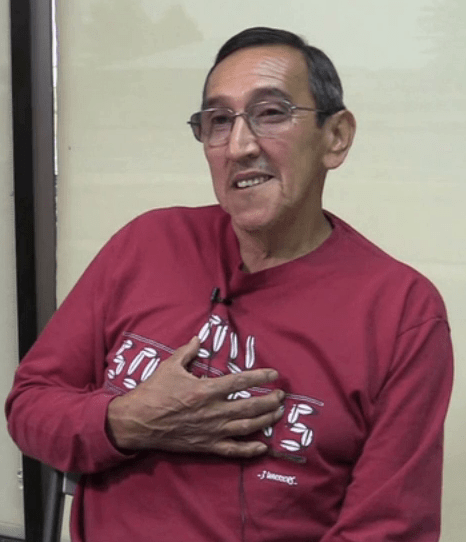
Image Metadata
|
Created: Thursday, May 11, 2023 - 10:30 |
||
Summary:
An interview with Muscogee (Creek) Nation citizen Roman Powell.Description:
An interview with Muscogee (Creek) Nation citizen Roman Powell. A downloadable transcript may be found by link: Roman Powell. This interview has been indexed through the Louie B. Nunn Center for Oral History Center's Oral History Metadata Synchronizer system at the University of Kentucky. For an indexed copy of the video, please follow the external link found in the bar on the right of this page.
Transcription:
The Muscogee (Creek) Nation
Historic and Cultural Preservation Department Oral History Program
“A Twenty-First Century Pandemic in Indian Country: The Resilience of the Muscogee (Creek) Nation Against Covid-19”
As Remembered by: Mr. Roman Powell
Interview by: Ms. Midge Dellinger
Date: November 14, 2022
Transcription: The Audio Transcription Company
Edited by: Ms. Midge Dellinger
MIDGE DELLINGER: This is Midge Dellinger, Oral Historian for the Muscogee (Creek) Nation. Today is November 14, 2022. And I’m at the Tulsa Creek Indian Community Center in Tulsa, Oklahoma, interviewing Muscogee citizen Mr. Roman Powell. I’m performing this interview on behalf of the Muscogee (Creek) Nation Historic and Cultural Preservation Department for the oral history project titled, “A Twenty-First Century Pandemic in Indian Country: The Resilience of the Muscogee (Creek) Nation against COVID-19.”
Mr. Powell, thank you so much for taking time out of your day today to be here and to do this interview with me. We’re going to start with some questions about your life and background. And I’d like to begin with what is your tribal town and clan?
ROMAN POWELL: My tribal town is Hickory Ground and my Clan is Bear. DELLINGER: And Mr. Powell, where were you born?
POWELL: I was born in Tahlequah, Oklahoma.
DELLINGER: Do you remember the hospital?
POWELL: No, I don’t. I think the hospital still stands, [00:01:00] but it’s a relic now. It was a Tahlequah Indian hospital, though, back in the ‘60s, ‘50s and ‘60s.
1
DELLINGER: Right. Now, who are your parents? Please tell me a little bit about each one of them.
POWELL: My father’s name was Arthur Powell. And my mother’s name was Dorothy Powell. They were both from around the Hickory Ground area, the Salem-Ryal area. And I guess with them, a lot of my family, both sides were involved with ceremonial ground. So, we had a connection to Hickory Ground, and also Arbeka. So, that’s where my family comes from that, it’s part of -- on my dad’s side, my grandmother was Bessie [00:02:00] Fife, and their father was Sam Fry. And I believe he was the medicine man for Hickory Ground. So, then my uncle, George Thompson, Jr., his father was Mekko for Arbeka at one time. And I guess he followed in his father’s footsteps and became Mekko of Hickory Ground, which I think he currently serves. And it’s been about forty-eight, fifty plus years. And on my mother’s side, that’s where our family was there. I remember my grandfather’s house, before he passed away, it was right there at the corner before you turn on the dirt road to go to Hickory Ground. There’s a little cemetery right there. And that’s where she was raised. And because of the times back then, and what [00:03:00] was expected of the females back at that time, her mother passed away at a young age. So, I think she said she was like, ten or eleven years old when she passed away. And her formal education was only about a fifth grade education because during that time, she had quit going to school to take care of her dad. And his name was Robert Scott. So, with that, that’s where she kind of, I guess, got into the deal of a homemaker, took care of him, made sure his clothes were washed, food was cooked, and took care of the house. So, that’s her life. And well, my parents, I guess you could say I’m a relocation baby,
2
because with that, when they were doing that, back in the early ‘60s, I was born in Tahlequah, Oklahoma, and I think it was probably almost a year that they were put [00:04:00] on the relocation program and got sent to Oakland, California, which is where I grew up for about the next ten, eleven years before we moved back to Henryetta, Oklahoma or back to my grandmother’s house there at Ryal, or Salem area. Due to economic conditions at that time, oil being down and they’d work a week, a couple of days, and go a month. So, that’s where I ended up being moved back to my grandmother’s, which where she raised me for the next three or four years. But my parents, growing up out in Oakland, it was a big city, and being like the only Indian student in the whole school. So, where I grew up, that was back at a time when you [00:05:00] had, I guess you would say, the hippies going on and San Francisco, all over. But I got to witness that as I was growing up, the Black Panthers, Hells Angels and that’s where I think you go back and I think back on it, looking to see how, I guess you would say gangs starting at that time, and everybody trying to, I guess, get their piece of the pie or standing up for something, but all the things you would see back in the news, when you look back at history, or old news clips, the fighting and the rioting that would go on some of those things. The school I went to was an elementary school, and I guess they would receive calls from the high school saying that the high school kids would be coming down and creating a riot or something at the elementary school, which seems ridiculous, but [00:06:00] I guess it was just a show of power, I guess you’d say, or for whatever reason. But we’d get out of school early and we’d have to watch ourselves going back home, because sometimes you would -- it was kind of rough growing up in a city like that, where you could get ganged up on or jumped on from a few individuals. So,
3
it was like, you kind of always had to watch your back, be aware of your surroundings and at a young age, instead of trying to grow up like nowadays, and enjoy being a kid, instead of having to watch your back or watch out for something. So, for me, it taught me to be more attentive of my surroundings, which has come in handy through my life, to see something coming, and in other people, [00:07:00] it’s like, “What?” And then, an incident would happen. I was like, “See there? I told you?” They’d say, “How did you know?” I’d say, “You could see it.” So, it taught me a lot. And it helped me to learn how to defend myself, too. Because the thing about it was, it was never a one-on-one thing. Even though being at elementary age you had to learn how to fight to protect yourself, and not be taken advantage of. And there were instances where I got taken advantage of being jumped by I guess you would say a group of guys, individuals, and you had to fight my way through that. And that reminds me, his name was Billy Williams. He’s one that I had one instance and after that we were classmates and buddies. And this happened at school. And then things that happened at school [00:08:00] would lead on to after school. So, what had happened, I’d gotten jumped or ganged up on, he saw, he came over, got me up off the ground, we stayed back to back and we fought all these guys and we beat them. So, there again, it’s like, you had to be careful going home because there was always repercussions. But that’s kind of the thing that would happen in some of these big schools back then. And that’s where you could look back, the relocation program that the government created, sometime, maybe that’s where it had effect on a lot of Indian families. You know, because not having other Indians around and the only other Indians that were around were, I think there was two families that were from Oklahoma. One just happened to be from Dewar Oklahoma, [00:09:00] one individual, but he was married to
4
a Sioux girl, and their son, and the other ones were Comanche, I believe. And another one was a family was Sioux family. So, they were from Pine Ridge, and the Comanche family was from around Lawton. So, somebody’s finding each other, they all hung out together, because there was nowhere for other Indians to go. There was nothing set up for them, they were just thrust into this, I guess you’d say, this white man’s world coming from small towns or reservations. I think it had a huge impact. And that’s why things today, I think, those children like my age that grew up seeing a lot of things and their families endured a lot of things, that’s why I think resilience came [00:10:00] in, because we’re still here. And the thing about it, I’ve often wondered because probably about four or five years ago, I had taken a trip out to San Francisco and I took my family out to where I grew up, just the last place that I remember. And as we drove around that area, I showed them the school that I went to, and the place that I stayed at, which was an apartment. So, during that time, as I was growing up, those ten, eleven years, we lived in apartments. There was nothing there geared for any Indian, whatever tribe, to show you or help you purchase a home. So, it was living in rentals, like an apartment or a duplex or something along those lines. Well, when I took them back to where I grew up, [00:11:00] they all said, “Let’s get out of here. Come on, let’s leave. Okay, that’s where you grew up. Come on, let’s go.” And I was just reminiscing. And as I was driving down the street real slow, which was a little short block, I was like, “What? What’s the matter? Why are you all afraid?” They said, “Look,” and the cars, there’s enough room for one car to go through because two cars were parked on each side of the street. But when you looked, there were bullet holes down in each and every one of those cars. So, I turned around, I told them, I said, “Well, that’s how it was. It’s just gotten worse.” You know, and that’s where they
5
were afraid, and I don’t blame them. But there again, it’s like, if you hadn’t been brought up, or seen any of those things, even though I was a young child I think that set me up so many years ahead, you know. [00:12:00] But for them to see that, because never being around something like that, and to see all those bullet holes, and I was like, “Oh, yeah, that’s just one of them things.” So, it was something that never really bothered me. Because growing up, I’d seen where people got shot, people got cut up, people got beat up on, all these things. I witnessed all that. So, some people get squeamish at the side of blood but it’s kind of like, I guess I learned to overcome and adapt to that growing up that way.
DELLINGER: And survive.
POWELL: And was able to survive, because that’s where I was reminiscing about. I just wonder if I’d still be here today if we would have lived there. And my thoughts have always gone back to, either I’d be in a gang, in prison, or dead. So, like I said, there weren’t very many Indians. So, when there was you just kind of latched on. [00:13:00] And throughout the city, we were in different areas. So, it was always going to go visit or they’d come visit. One thing that I think helped everyone cope, because California weather is constantly warm weather, nice days, foggy mornings, and nice days. So, on weekends, all these families, we’d all get together and their kids. And I think the park was called Woodward Park, it sat up above Oakland, and you could go up and -- set to the east of Oakland. So, when you went up, there’s all these parks and woods and things like that, and they’d had like barbecues and all get together and enjoy one another’s
6
company. And then all the kids could play together and everybody got along. You know, I so often wondered what happened to those that I [00:14:00] grew up with? May I have a drink?
DELLINGER: Yeah, go ahead. What did your mom and dad do, when you were in Oakland? Did they have occupations while they were there?
POWELL: My father did a relocation deal because they did help you go to school and learn a trade. So, what he learned to do is to become a welder. And once he became a welder, that’s where his employment started, or his education was into that, was welding. And they helped you get a job, which he did, temporarily, I think, until the place laid him off. And where he worked all the years that we were out there, it was Bethlehem Steel, it was a shipyard over in Frisco. So, there again, [00:15:00] just like here in Oklahoma the bigger cities or the bigger towns, you have to leave your small town to go and earn a living so you can support your family, it was no different out there. And his drive was from Oakland to San Francisco. And what he worked on was a night shift. So, he worked from like 3:00 to 11:00 and get home, like at midnight took thirty minutes to an hour to get home. So, that’s where he worked and what he did through the relocation. And that’s what sad about that, because I guess there again, it’s like the deal of, I guess you would say, the man’s world. You know, my father got to go to school, but there was nothing for the females, or the women that I know of. So, my mother was still basically the [00:16:00] homemaker. But because of times, and both of them needing to work to help support the family, and just like everything else she went to work, but she was more or
7
less like a, I guess you would say, manual labor. She got whatever job she could get. And I think hers was like working at a nursing home, in that area or that field. And then there’s one time she worked at a glass plant out there. And I think even a foundry, something along those lines. You know, so while she was out working, I’d be in school, because I was old enough. So, it was like a deal of her being able to work and help my father with the finances. And that’s basically what she done most of her life even coming back to Oklahoma. [00:17:00] And I think she worked at a nursing home and a foundry, and she worked at a glass plant. And then I think some of the women from in the area, I think in Henryetta, there was a place called G&H Decoy, she worked there with some of the women from Salem-Ryal area. So, there again, it was family and friends, they stayed together. And my father continued to work, be employed as a welder all the years. And that’s one thing he was proud of, his work history because it’s like most people they might take two hands to count all the jobs that they had, but that was something that he always tried to instill in me was that “you have a trade, you’ve got it made.” Nobody can take that away from you whatever field you want to go into. [00:18:00] And it was like getting your education which comes back to learning our language, and being Creek. I had no clue of what it was being Creek growing up out there. But there again, I was at a young age, sitting at the dinner table, whether it was breakfast, lunch or dinner. And my parents would be speaking fluently in front of me, and I guess it was because being a little kid, they didn’t want me to know what they were talking about. But as I grew, and I learned, I’d start asking, “Well, what did you say here?” And I would repeat what they said. And then I was told that they didn’t want to teach me the language at that time. They said, “When you get older, we’ll teach you or I’ll teach you, and first thing will be
8
the alphabet. Then after that we’ll work on the words and sentencing.” [00:19:00] So, I just kind of went along with it. And that’s kind of where I learned the alphabet. That was the first thing, he did show me that. But as far as speaking, the reason being that what they endured and grew up in that Salem and Ryal area, they had went to school at Yardeka, and they were punished for speaking their language. It comes back into that assimilation type thing. And that was sad. And a funny story that goes with that, being at their age, and I think some of it was, too, is they were different ages, anywhere from four or five up to twenty-one, and they were still going to school being in the fifth grade or eighth grade or whatever but it was teaching them to have to go to school, [00:20:00] never went to school in their lives. You know, so as far as the people in the area growing up, which I’m sure it was like that all over on reservations or Indian life was that they grew up learning their language, being able to speak. English was their second language but it’s like, they adapted. And there, again, shows their resilience, to be able to make it in this world, you know. So, at that time, the funny story is that they’re all related, they were all cousins that went to the school, everybody there was related in some way or another, either to their mothers or their fathers. And there was an instance that, I guess, somebody had brought cigarettes, and they were smoking cigarettes, and they got caught. They didn’t know who it was, but they got caught because you can smell the cigarette smoke. Well, some of them had nicknames they went by. [00:21:00] And it just so happened, my dad was in the lineup, I would say, and the teacher was going down the line saying, “Did you smoke? Who was it? Who brought them?” And they would say, “We did.” So, she’d line them up, bust their butt, and then go on down the line to each one of them, it was like three, or four ,or five of them. They were all saying, “We did it.”
9
When they got to the last individual, his nickname was “We.” And all of them were telling the truth. They said, “We did it.” And when they asked him he said, “I’m We.” So, there again it’s like -- but things of growing up through that, and because of those things, and the stories you hear out there are true. So, whether it’s your parents, your grandparents, whether you’re Creek, Sioux, whatever. They endured things that they shouldn’t have had to, [00:22:00] but it was all about assimilation, and what the federal government wanted Indians to be. They wanted them to become white people. And the thing about that is, like they washed their mouths out with soap. They made them take castor oil, just different things as punishments when they spoke their language. They threw them in a closet in their classroom and that’s why a lot of them ran away, and they ran back home. But the parents would say, “No, you need to go learn,” so they’d send them back. And everybody in their family, I guarantee you, has similar stories. They ran back home, they didn’t want to go back and learn for those reasons, because they were punished. It was unnecessary. But there again, having to do with the assimulation. So, they grew up in a time that helped them to survive. They endured. They were resilient. They overcame [00:23:00] and they adapted. So, that’s where I look at it today. And that still goes on today in the present, it still goes on. There’s still -- and it’s hard to believe in this day and age, there still is the way people look at Indians. And like I say, there again, doesn’t matter what tribe you are, being looked at as, yes we might be considered minorities. You know, that’s how they look at us, instead of looking as like the American Indian, which gets that stigma or stereotype they can’t make it, they’re not smart enough. You know, we’ve all heard it. You know what I’m talking about. And that’s the thing and that carries on. And it’s that’s what’s [00:24:00] still sad today, seeing those things.
10
DELLINGER: So, what I’d like take you, you came back, you left Oakland, you came back to Oklahoma, came back home to the Ryal-Salem area. And what high school did you graduate from?
POWELL: Graham High School, better known as 32. People that are in the area or went to Graham, that was kind of the thing, went to 32, that’s what Graham was, I guess, the Independent 32.
DELLINGER: Oh, I see like district 32?
POWELL: Yes.
DELLINGER: Okay. Okay. Well, then where did life take you after high school?
POWELL: After high school, I had thought about it, I’d signed up to go into the service. Went to take my ASVAB test, [00:25:00] was all already go, and it was just waiting to see which branch would call me first. Because a lot of you that grew up around the Ryal Salem area there’s only one way out to go to town -- well, basically, two ways to get out. But from where I live I would go up in the evenings and I would stand there up on the blacktop and I’d look to the west and that road led me to home. So, it’s like, my thoughts were at that age it was like, “Well, I can stay home.” If I look to the south, that road went for a ways. But then it dead-ended. I was like, “Well, okay, you can go so far.” But then,
11
the one to the east was a dirt road. And based on the same thing, it was a short road and dead-ended. And then I looked to the north, and that road is what [00:26:00] lead out of Salem and into Henryetta and into town, wherever you wanted to go. So, that was my rationale back then, being a teenager, and wanting to -- I guess the term that you hear about the service is wanted to see what I could see. So, that that was where I made my decision that I was going to go into service. And my thoughts were always I was going to go overseas, somewhere, just didn’t know when and how long. So, that’s where I made my decisions to do that. It was always late in the evening. And the thing about it is, yeah you don’t want to leave home, the comforts of home. But just like they stressed it’s like, going out there and trying to make your way in the world and try to do the best you can. It’s all you can do. That was my rationale in that.
DELLINGER: For joining the military.
POWELL: For joining the military. [00:27:00] Which I did. And I joined the United States Marines, hoo-rah. Like I said, I enlisted and it was for four years.
DELLINGER: What year did you enlist?
POWELL: It was in summer of ’79, as soon as I graduated. I had about a week and a half, two weeks, and then I was off to boot camp.
DELLINGER: Where was that?
12
POWELL: I went to San Diego, California, again. So, there’s two things about the Marines bootcamp. If you went to San Diego, you were called a Hollywood Marine. If you went to Camp Lejeune, you were looked at as like, that was in the swamps, because that was like in North Carolina, which in present day, you see where these commercials about if you were in that area?
DELLINGER: Yeah, as soon as you said that, I thought about the commercial.
POWELL: Yeah. And then with the bad water and this and that out there. So, I was considered a Hollywood Marine. You know, so maybe thank God for going to San Diego, because maybe if I went to [00:28:00] Camp Lejeune in North Carolina, I might have those things they’re talking about in those commercials.
DELLINGER: Yeah, those kind of health issues.
POWELL: Having those kind of health issues and stuff which one of the reasons was people didn’t want to go there because it was swamp like conditions in a sense. The heat was just like here in Oklahoma, the humidity is bad. But also, there was quicksand, and stuff like that. So, if you tried to run away from boot camp or go AWOL, you had to be careful, because you might not come back. Same thing for San Diego. It was hard to be going through training, because it was right next to the airport. You see all these planes coming and going, especially in the evenings. So, my thought was like, “Man, if I was on that plane I’d be going back home.” [00:29:00] But went through that. And that was just
13
the thing back then. And it was kind of a -- that’s what I said, Hollywood, but we were wearing sunglasses, and they would say that we didn’t endure as much as those Marines in North Carolina.
DELLINGER: Okay. You were pampered, is what they were trying to say. I doubt it, though.
POWELL: No, I don’t think we were pampered.
DELLINGER: So, I know you. You just talked about as a teenager, you would stand at these crossroads and you would think about where you could go and what you could see. And you did get to go overseas. Will you talk about that a little bit?
POWELL: Yes. And the thing about going overseas, (coughs) excuse me, was that you had to be enlisted for, I think it was four years, which I did enlist for four years. What a lot of people don’t know is like, it’s really six years [00:30:00] when you enlist, whether do you do three years or four, it’s basically six years, because after you do your tour of three or four years, you’re obligated for the remaining years, whether it’d be two or three. So, a lot of people don’t know that. So, if war were to break out during that time after you served your four years, that two more years, they could call me back in and I’d have to go in and like you said, going to war. So, a lot of people don’t realize that it’s really a term for six years “inactive.” And I was four years and I got to go to Yokosuka, Japan, which
14
was a naval base on mainland Japan, which was about a thirty-minute train ride from Tokyo, I think, south of Tokyo.
DELLINGER: Did you say to Jokuska? Say that word again.
POWELL: Yokosuka, Y-O-K-O-S-U-K-A.
DELLINGER: Okay, thank you. [00:31:00]
POWELL: And that was a naval base. And being that I had four years, you had to spend at least two, two and a half years overseas, or for an overseas duty like that. And like I said before, I knew I was going to go overseas, I wanted to go overseas, see different things, different cultures, things like that. And I just happened to get lucky enough to go to Japan. And the thing about it was, that was a Marine barracks. So, it was like, coming out of boot camp, I had gotten a set of what they call dress blues, where you see them have the white hat on, and slacks, and a dark black topcoat. So, that was an addition on that, which I thought, “Oh, wow, cool.” But it was a lot of snap and pop and those things about being on guard it’s kind of like the Marine barracks was there to protect that base. And during my tour over there, which like I said, I got to go overseas, I got to [00:32:00] see the culture over there, and how things are. And it was great to see that and it helped me grow because it was like looking at another culture. And the thing about it, though, the Japanese people they’re real respectful. Come to find out while I was there, Indians, that there was something about them that they admired and they had respect for coming
15
to find that out when you started visiting with them. And the thing about it was that other Americans or other Nationalities, I guess, you say whether they’re white, Black, Mexican, it seemed like it was different. But for the Indians, it was like, they were told, various ones, that respect was there because of what the Indians had went through and what they endured. But the Japanese looked at Americans, [00:33:00] and that’s why I had asked others, because since that happened, the bombing Hiroshima back in that time, what was the feeling like, towards Indians because of that? And they didn’t look at us as being responsible, they looked at the federal government and basically the white man because of what happened. And some of them would look at you, and you could walk down the street, and I’m not a tall guy, I’m like five-nine, but walking around in Tokyo and being able to see over the top of their heads because they’re a short people, you know? But it got me to see, and see how they do their traditions, and [00:34:00] it was just like any Indian tribe, we have our traditions and our culture. They do, too. They have their own ways and you know what it’s like going walking, I got off the train one time and just took off walking through the small town and the countryside. They had these small, I guess you would say, training their young ones. And I’ve seen little kids like five years old, up to high school age, or eighteen, I guess you would say, like their dojos, in a sense, more comparable to, and I stood at the front door watching and I was impressed by this little young one, I’ll say he was between five and seven years old, just guesstimating, but they were learning how to fight with staffs and protect themselves. And theirs were made out of bamboo. So, to see this little man going after it, he [00:35:00] was being taught, and to see what he could do with that staff, he was able to put even an older person down. And I mean, they literally were, it wasn’t just like a little tap. I mean, they
16
were full force. And that’s, I guess, how they learn. And I was just so impressed by seeing that. But that’s what they teach their young ones. So, those that are over there, wherever you go over there to visit, most of all of their people probably know how to -- they’ve been trained to fight, or protect themselves, more or less defense. So, there again, it was part of their culture, too. So, that was a good thing to witness. As long as it is, like their language, tried to pick up on a few things while I was there. It was like, “How do I get to the train?” [00:36:00] [Japanese language] Things like that, you know. “I’m lost.”
DELLINGER: Yeah, that would be an important one, I think.
POWELL: Those are the things you know, and it’s kind of like you do kind of learn to pick up a little bit of language so to kind of help you, if you were hungry. But the way they did things out there -- and I guess, being close to a naval base, some of the restaurants, and I’m seeing that here, you’re starting to see that here in the US whether they’re the Mexican side, or the Oriental they have plates out there, they’ve got a little casing out there, a glass front, and they’ve got their food, their plates, it’s like one through ten. So, now you’re starting to see that here, that, “Oh, I like that. Give me number two.” You know, so it’s kind of like...
DELLINGER: That’s all you have to do, is point.
POWELL: Point and say number two. It was like, okay, and you’d get your meal prepared. So, and that’s how it was over there, [00:37:00] because you couldn’t speak the
17
language and tell them what you wanted. And it’s just like some places here in Oklahoma or in Tulsa. You go in and they can’t speak English, they’re Spanish. And you can’t speak Spanish, so you have to look and point at something and you get your order.
DELLINGER: When you were in Japan, did you speak Muscogee to any of the people there? So they could hear your language?
POWELL: Yes, I did. And it’s like you said, it’s just like them because they would ask how you would say this, or how you’d say that, and I’d tell them. And there again, just like even Americans today, they look at Indians, as we’re on reservations, or we still live in teepees, we still ride horses. You talk to people on East Coast or West Coast, they still think that today. [00:38:00] And that’s how the Orientals were, the Japanese so you couldn’t converse with them because of the language barrier, but they would look at me and in their way, and they would ask, what am I? What are you? And I was like, I’m Indian. I’m Creek. And they would have this look, like they’d know I was different. They’d know I wasn’t a Spanish Mexican, or Puerto Rican. They couldn’t figure. So, it was like, going like this and (makes sound). And then they’d go, “Oh, [Japanese language].” I mean, they’d just get excited and some of them would come up and hug you. And that’s where you found out that they had a lot of respect for the American Indians. And there again, they didn’t see very many of them. And there again, it was kind of like that stereotype of, we live in teepees. And it was like, no, I live in a home just like you.
18
DELLINGER: [00:39:00] Well, yeah. Even what you just did there, what you had to do to state who you were, that’s -- wow.
POWELL: Right. And that’s the thing. And that was done more than once. I had to do that more than once because when you talk, and they looked at you different, and it’s just like, you know how Indians are, we’re the same way. You know, whether we go to Crow Reservation, or Kiowas, Navajo, they know we’re Indian but a different kind of Indian, but they don’t know what, so they know you’re Indian but they don’t know what. So, you know how we all kind of look at you, follow you around a bit and look at you, “I wonder what tribe they are.” That’s what they’re doing. You know, and you go up -- I’ve done that one time coming through [00:40:00] Albuquerque on a trip coming back home and stopped to get some lunch meats to have a little picnic, a snack before you hit the road again. But there was like a lot of Navajos in there. And just like with them, they had different -- just like a tribal town. They have different dominations to where, the way they call themselves. You know, they’re Navajo, but they have like, Laguna they have different names, just like the tribal towns. Well, I went up to one of them and said, “Hello.” And he was like, “Oh,” and that’s where it comes up, “Where you from?” “Oklahoma.” Oh, and that’s where they’ll guess, “Creek?” That’s the first words that’ll come out, “Are you Creek?” So, I guess that’s where there’s a lot of Creek men married to Navajos and a lot of Navajo men married to Creek women.
DELLINGER: Right. Now, are you able to talk about what you did [00:41:00] during your military service?
19
POWELL: While I was overseas, I was in a, what you would call a personnel clerk, started out as being on the guard, because that position, they had somebody there, and I guess due whatever comes through the military is like coming in and having to fill that position of the personnel clerk. But when I first got there, the billet was full. So, I ended up being on the guard, which means guard duty, and you had to go out and post, that’s when you allow people in and out of the barracks, there’s only one way in, one way out. So, it was a deal of watching, what they call guard duty. And it was like one day on, two or three days off, cause depending, you had three squads going. [00:42:00] You know, so that was the thing started off there, which wasn’t too bad, got adjusted to it. And then I got moved into personnel, which is where my billet was where the job that entails started out. And during that time, we didn’t have computers. So, their thing was the old Remington, and using that, and you couldn’t make mistakes on forms or paperwork. If you made a mistake, when you got to the end, you had to throw it away, and then start all over again. And also, I was working with the unit diary clerk to ensure that they got their pay and everything was right, whatever bonuses or whatever, they might have, anything financial. So, me and that unit diary clerk had to work together. And then, sometimes I filled in for him whenever he was on vacation or got to come home for a few days. So, I was doing those jobs. And the thing about it is the area I was [00:43:00] in, what they call Adjutant, which was my captain, and it was just a direct line to the colonel in charge of the Marine barracks. So, it was always a lot of, you had to know what you were doing and then you couldn’t just say, Oh, I made a mistake, or I’m sorry, you know? It wasn’t anything like that that’s where I learned, you did things and you did it right. You had to
20
so that’s where it kind of helped me in the rest of my life. And it’s things like that that you had to be on top of your game. And some of the things that had to do is like, my job was to ensure that you got your promotions, you got your entries, and to make sure you got your promotions, and to make sure you -- because there again, it all had to do with your pay, and the years that you’re in there. So, you had to always stay on top of that. Not only was I in charge of the ones in [00:44:00] mainland Japan, but it was like all through Japan, because we had different Marine bases all through, I guess you’d say, the Japan area. So, I was in charge of all that. And that was also with like, generals, lieutenant colonels, all the bigwigs. So, you had to be on your game because sometimes they would call you and then they’d want an answer and you couldn’t say, Oh I can pull a book out and give you an answer real quick. And just like they say if it’s something you don’t know, you will find out. But it doesn’t take you a day or two to find out, you drop everything and get that answer, especially if it’s an officer. You know, and the thing about it was, being in there, I got put on as like the base security clerk. So, [00:45:00] I had to do security clearances for all these officers, even some of the enlisted people, depending on their jobs. So, I had to fill out things like that, get it sent in and read everything. And since I was the base security, I got to see top secret documents, your eyes only, or even just the confidential stuff. I got them first thing in the morning, would read them, mark them up, and then pass it on to my captain, who it went on to where all the upper echelon got to see. And I did that for the years that I was over there. And sometimes I filled in as a travel clerk. So, people that were coming home for good or going on vacation, I had to fill in doing that sometimes. But the base security thing was something that later on when I got shipped back stateside [00:46:00] it was my last two
21
months, I guess you would say, when I was certain it was going to be in, that my next duty station after I left Japan was Barstow, California. There again in California, but that was out in the middle of the desert. And it’s hot during the summertime and cool in the wintertime. But any direction it was about two to two and a half hours, San Diego, LA or Vegas. I went to Vegas a lot. And San Diego. But you know, needless to say when I got transferred back and basically did the same jobs, but then, I got what they call meritorious mast, and it was getting promoted up to E4. And then, on top of that, [00:47:00] they were trying to get me to get an E5, which would have been a sergeant because of my time in also, but I was filling billets that were supposed to be filled by what they call gunnies, or tops. You know, these are a little bit higher staff NCOs, noncommissioned officers, you know. And the thing about it was I ended up being a security clerk, they took me out of the personnel part, and so I ended up becoming the base security clerk for Barstow as well as a discharge and re-enlistment clerk. So, I had to learn that job. And it was like, I don’t care where you go. I was like, even today in this world, whatever job you have, what they had was a turnover file. I don’t care which branch of service you go into, they have what they call a turnover file. So, the next person that comes in, this is how you -- it’s basically policies and procedures. This is how we do it. That’s why I was liked that song, [00:48:00] “This is how we do it,” but it comes to that. So, I could have been an infantryman, and I come to fill that billet. I go by what’s that, and that helps me get set, and then till you learn it, and then that’s just how it is in the service. That’s why everything functions so well. And as I said, yeah, you have some things that are good days and bad days depending on what’s going on. But for me, that was my last year and a half, I guess you’d say being in the service, that’s the job that I
22
did. And that’s supposed to be filled by, like I said, a staff NCO, which I wasn’t. But I learned a job, I picked it up. So, I was what they called a discharge reenlistment clerk. If you reenlisted, I got the paperwork ready for you. And with those re-enlistments, whether you reenlist for three years, four years, those came with bonuses per year. So, let’s say it was 10,000 [00:49:00] and you reenlisted for three years. So, you get a $30,000 bonus, plus you pick up a stripe, so you can pick up another stripe, which means increasing your pay. So, you get that. And then, you get a choice of duty station where you wanted to go. You get retrained. So, I had to get all that stuff ready for people. Then if they were getting discharged, just like when you leave a company, you retire from it. All these, your retirement pay, everything that you’re entitled, paid for your vacation time and yadda, yadda, yadda, everything that entails, finances, I had to get ready so that you could collect your check, you know once you left the service. But the main thing I always think about is like I was the base security clerk there also, which I was in Japan. [00:50:00] I did all these security clearances for all these upper echelon. And one of the -- he was a chief warrant officer, he was looking through my book, called me over, he sat right next to me, called me and I swung over, looked at him, he goes, How long you’ve been doing this discharge and reenlistment? I said, Probably about a year and a half. Okay, because they never got anybody to fill that billet. And if we’re in real world today out here, I should have been getting compensated for doing that job, which I was doing as an E4. Well now on to the next thing, but it was like the base security thing. He goes, How long you’ve been doing base security? I said, Ever since I got here, a year and a half. I see here in your record book you don’t have a security clearance. I was like, Yes, sir. And he goes, Why is that? [00:51:00] Nobody ever told me to do one on myself, or that I needed to
23
have one. He said, So, you’ve been basically doing this since you’ve been in the service. And even the same thing there, I saw top secret materials. I saw eyes only materials, confidential, whatever it may be, and marked them up just like I did when I was overseas. He goes, And you’ve been looking at all the top secret material? I said, Yes, sir. And he goes, And never had a security clearance? And I said, Yes, sir. And I just laughed. And he goes, Oh, my God, and you’re getting ready to go out? And I was like, Yes, sir. But I said, just like what I was told when overseas when I started, you keep it to yourself. So, there’s a lot of things that I’d seen that I knew before things would even happen. I kept to myself. And that’s the thing and I still carry those things today. You know, so that’s just kind of like, keep it [00:52:00] secret.
DELLINGER: Keep a big secret.
POWELL: You keep big secrets.
DELLINGER: Now, what age were you when you came out of the military? POWELL: I was twenty-one, I believe. I believe I was twenty-one.
DELLINGER: Gosh, so did all those things before you were twenty-one. POWELL: Right, yeah.
24
DELLINGER: Then you came out of the military. And I know you did some different things when you came out of the military. Will you talk a little bit about some of these careers and some of these things that you did?
POWELL: Yeah, whenever I got discharged and came back home the thing about it, you always think about home. No matter where you are, what you’re doing, whether you’re in a service, or you had to [00:53:00] move away for employment reasons, you always think about home. And for me, the thing about it was being involved with the ceremonial grounds or growing up around it, my thought was always looking back. Like on a Saturday night, because time wise, being overseas, we were so many hours ahead. So, I knew that they were going to be dancing that night, just wondered where. You could hear those songs going on and dancing. It’s what you kind of miss. Or your ground also, the people, your family. But needless to say, that’s kind of what I think helped me get through all that, knowing it’ll be there when I get back. So, whenever I got discharged I waited a while, like month or two and then I knew I needed to start looking for a job. So, I was applying like an administrative area. Every place I went to was saying I was overqualified. And I couldn’t even understand that.[00:54:00] And just like I think there was some government job like post office or whatever that I applied for, points wise I had because being in service, government, there again, it was like I was overqualified. Oh, which I forgot to mention, I did do a little job as a mail clerk moment when I was in Yokosuka. So, there again, I thought with that experience type thing they were saying I was overqualified. So, some of the things you hear -- and it’s weird. It just depends on how you look at life and things that being told that you’re overqualified, it’s almost like
25
you know, Indians---you could be the best welder out there or, [00:55:00] you know, accountant, whatever your position might be, but then to be told that you’re overqualified, me, I always kind of just let it go and in the back my mind always thought, is it because I’m Indian, a minority, can’t see me doing this job? Where I did it while I was in the service, but now here in the real world our civilian life, overqualified. That just sounds funny. And it just makes you think back about how minorities are looked at only certain ones. And the story is true, I think, as I’ve gotten older, it’s not what you know, but who you know. And that’s a sad thing in this world today, because it’s like, you could have all the letters you want in front of your name and behind your name, it doesn’t make a difference. If they don’t want you to be hired, you won’t be hired. And there again, is it because you’re Indian? Is [00:56:00] it because you’re a minority? You know, it’s just sad thing that that still goes on today. Getting back to where I was having to do, because of that being overqualified or underqualified, whatever, that I even was taking some classes on accounting and bookkeeping. And I passed. I was like, I don’t know, my scores, I guess you’d say 98, 99. And due to our traditions of a family member passing away, I didn’t go in and take my last test, which was like the big one to get your certificate or diploma or whatever it may be. And because I had a great-uncle pass away, and our deal was staying up with the family four days, taking care of things, doing what you need to do. Well, I didn’t get that because I went back and asked if I could test, [00:57:00] and I was too late, out of luck. So, I just chalked that up as an experience and went on. But it helped me. I had a little bit of insight on that. But there again it’s like, ended up just looking for anything I could find. So, I ended up working for a tree trimming outfit crew, got on that, worked for a few years doing that. And then I always
26
liked putting things together, or mechanically, working on something, put things together. So, I got into manufacturing, which led me into welding and machining. And I did take some schooling on being a welder, which as I said, I’m qualified for. But then when I was doing that job, there was some machining going on. They had the [00:58:00] CNC lathe, but I didn’t go to school for that. What I got trained on was OJT from an older gentleman that was working on, as you’d say, World War I, World War II engine lathe. He’s the one that trained me and showed me. And he was getting ready to retire. So, I picked up on his job after he showed me because they’d seen I was able to do it, and he started training me so I’d do that, then I’d weld or something, or I’d have to repair somebody else’s mistake. So, I always had to work harder than everybody else. And just how it’s always been for me. And that’s like I said, I’m used to it now, but doing those jobs and then, finally whenever me and a supervisor exchanged some words, I left the company because a previous coworker asked me to come work for him. So, I said yes. But the thing about when I first got out of the [00:59:00] service, I was going to apply with PSO or ONG. And I didn’t do it at the time because I was looking at trying to get something in and they weren’t hiring at the time, per se. So, that’s why I went the route I went. And in the end, I ended up applying with the PSO and got on. So, I finally retired from it, took an early retirement from PSO which is Public Service Company of Oklahoma. They call it American Electrical Power now, but during that time, I guess it was about fifteen, almost sixteen years that I had with them, took an early retirement because of technology and phasing things out to where nowadays when you look, they use a satellite to turn you off and on. Where [01:00:00] my job, I would still do the same thing, but it’s what they would call revenue protection. So, if you were stealing electric, and things like this, we
27
would come out, turn you off and you know, you’d have to pay your bills and things like that. That’s what my job was. So, that guy when you come home and you didn’t have your electric on, I was that guy. And there again, being in the military, being with this job, I learned to take everything and let it roll off, just like a duck, just like water, roll off you, because people were cussing you up and down, chewed me up left and right, tried to spit me out. And I could still stand there with a grin on my face, which by the way, got me in trouble once in the service.
DELLINGER: Oh, I bet.
POWELL: My little grin. So, I was pretty strong. I had [01:01:00] to do a little bit more exercise because of the little smirk I had. So, but it helped me during this PSO job because there people out there, the area that most people consider it to be bad that. They had pit bulls, Rottweilers, many pit bulls, that some of these people would let their dogs out on you. And they’re very aggressive. But I’ve earned a reputation of being crazy which makes me laugh because the platoon I was in, when I was going through boot camp, our saying was “crazy.” So, anything we did it was like crazy, crazy. So, it all came back around.
DELLINGER: Yeah, all came back around.
POWELL: So, and it’s just a funny little tidbit, but I earned a reputation of being crazy because I’d walk in with those dogs, or they would let them out on me. I’m a dog lover.
28
But the dogs, [01:02:00] you know, their intention was to hurt me. And the dog paid the price. Funny story, when I first started working, first day out somebody did that. They were stealing electric and I was closing things off. They let that dog out, their pit bull out on me. And I had made the mistake, I mean, I got a hold of the dog and it went running back in, the guy that let it out slammed his kitchen door. Now I’d made a mistake, because I had a not so much of a temper but it was like the adrenaline, and I was chasing after that dog and him when he shut the door. I basically hit the door, ended up in his kitchen, and you know, just given him a, Don’t ever do that to me again, blah, blah, blah thing. Well, I [01:03:00] went in the next day, we used to have to tell things what that happened and I was like, “Yeah, he did this, this and this to me. And I did this,” and he was like, “Roman, did you witnessed gas man doing that? Or the City of Tulsa waterman doing it? Like No, it was me. And about the third time I finally caught, because everybody’s laughing and I was like, Oh yes, it was the ONG guy I saw that happen to. But it was just like, started getting my blood boiling again and pumping, because it was like, I was just protecting myself. But there again, that mode of like I said, of what you grew up with, what you went through, it’s like protecting yourself, not letting anybody run over you. That still instills in me. So, it was that type of thing. And I guess that’s where I earned that reputation of being crazy because they would do those things and I would [01:04:00] fire back once I had enough. That’s how I look at today, I’ll give you one chance. I’ll give you two chances. We get to the third one and it’s my turn now and you’re not going to like it.
DELLINGER: Right, okay. Tell me about your family and life here in Tulsa, Oklahoma.
29
POWELL: Life is good. That’s all I can say, life is good. I’ve got a great family. And I call my wife and my daughter and granddaughter and great granddaughters, I call them my girls. And I’m real proud of them. You know, it’s like my Mekko has always said the women, yeah, they might be behind you but that’s what makes you stand out. Without them, I wouldn’t be who I am, too. So, I have to give a lot of credit to them. You know, it’s like for our grounds, [01:05:00] and I figure probably for the churches too, because the women do a lot of work. And as my Mekko has always said, the women are the backbone of the ground. You know, it’s yeah, the men take care of the inside, and things that need to be taken care of, but the women are the ones that take care of it, without that, on the outside we wouldn’t have those things. So, you have to give a lot of credit to women. You know, and I might seem cliche, but that’s what Creek women do. You know, it’s all part of tradition, whether you’re at the ceremonial ground, at your church, or at home and they take pride in that. I think every woman does. There again our hats off to them. And I agree with my Mekko on that. They’re the backbone.
DELLINGER: Will you share the name of your wife and talk just a little bit about her?
POWELL: Her name’s Pat Powell. Her maiden [01:06:00] name is Franks. And she comes from a family, they have some history. And they’re quiet about it. They keep it amongst themselves. They don’t put it out there. You know, some people would go out there and they’ll say No, I’m this, but they don’t do that. You know, there again, it’s just what they were told and how they were brought up. But just like her, the great-great
30
grandfather would have been Chitto Harjo. And you always hear that name, Chitto Harjo. You know, so that was her great, great grandfather. So, her mom, Susie Franks, her maiden name was Jacobs. So, that’s where it comes out of. And that’s where the family they lived around the Pierce area, just off of 40. And that’s where Chitto [01:07:00] Harjo lived, just a little ways from her mother’s place. So, there again the family has a lot of history. And they take pride in that. And you know, a lot of people will ask them things, and they get together and decide if they want to do things or not, because there has been some talk of some people wanting to remove his remains and bring him back here, closer to home. And they don’t want that because just like anything, where he’s at is where he stays, and all the family’s in agreement, because they know where he’s at. And I’ve visited that place, been three times now. And the mother, Susie, she took her daughters there. Then, she wanted her granddaughter to go, great granddaughter going down there, this is where it’s at and she would say “Grandpa”, that’s the thing about it and it was always in her [01:08:00] heart, you could see, and that pride, also the times they grew up in. And it comes back down to my generation, and probably the next generation because a lot of things of how we grew up was in a time that we weren’t -- how can I best say this? You should know in your heart, in yourself, that I love you. I don’t have to say it. By me being here and me doing things shows it. They didn’t get that when they were growing up. And it was deal they grew up in a time when times were hard. And it was rough. Everybody had to help. You might have got hurt, [01:09:00] hurt your leg or your hand or your arm. It was like, You okay? Yeah, sore. All right, come on, let’s go. They kind of instilled that, not hardness but, Hey, you’re all right, let’s go. We’ve got something we got to get done. They instilled that. And of course, you would get that
31
thing, if there was no blood, no sympathy type thing. That’s how they grew up. It was kind of hard, but it taught them, too, in their hearts that they still loved you. They did these things. You know, so, there again, it’s surviving, resilience. It comes back to those words again, that they had to do this to help you. It all has a purpose, [01:10:00] as you go on. Then you instill those in your children, they instill it in their children. So, that resilience still keeps going on through your generations. So, that’s where they grew up, in that time. Nowadays, you see where they fall down, oh, goodness. I do that to my great granddaughters now, or my great-great granddaughters. Are you okay? Although, pucv (grandpa), my hand, and it’s just like, oh, okay, rub it. Better? Yeah. Go run off. They just want that attention.
DELLINGER: Right. Will you share the names of your daughter, your granddaughter, and your great granddaughters?
POWELL: My daughter’s name is Summer Smith, and great granddaughter’s Meske Smith, and then my two little ones are Jenesis and Kinley. So, those are my girls.
DELLINGER: [01:11:00] So, it sounds like they all live close by, that you all are a very close-knit family and you see each other quite a bit?
POWELL: Yes, we do. We see each other quite a bit. And it’s like all families out there. And I know there are some out there that, because of distance, they’re not able to do that. But you know, on that side of it, we’re all pretty close and it’s just like my uncles,
32
everybody lived in different places or a little further away, but everybody called one another and they’d talk, see how you’re doing or when you saw one another. That’s where, like today, that’s what you see at the grounds. You know, it’s wintertime now so we won’t hardly see each other very much. But then, when we do, it’s just like, yesterday. So, we continue our talks and laugh and joke and tease and make fun of one another. That’s what we do. [01:12:00] You know, and it’s like, it’s all one big family. It’s just like this pandemic or the COVID, that’s where it changed a lot of things and affected all areas. Whether we realize it or not, it changed a lot of things of being around one another. You know, one of the things during the wintertime, we would always have bingos and food sales. Not only was it to raise funds for our grounds -- and even the churches would do the same thing. But just speaking on the grounds side of it, that was our time to get together again, and check on everybody, everybody’s doing okay, anybody need help, it’s those type of things. And COVID really affected a lot of people in that. And just like with that, not only was it things, [01:13:00] on the grounds side of it, but for all individuals, all Creek citizens, because that’s how we survive. That was part of our resilience. Because if something came up, a family would need help, they would have a bingo. Everybody came together to help that person so they could make money, generate funds, to use whatever they needed it for, whether it be paying a bill, whatever it may be. You know, we didn’t ask, they just knew you needed help. Everybody came in to help. You know, so that kind of went away. It was things like that. We were doing that thing, our grandparents did that. I remember my grandmother they were having bingos and they [01:14:00] used beans, but all our bingos were grocery bingos. You know, there was, it was a deal of helping somebody. And that’s where times have changed. I don’t
33
know if we’re modern now, because you see things going on, you hear things going on now, where they’re saying we can’t do that. You know, and you got another entity out there saying that we’re jeopardizing the Nation’s funds as far as like gambling, and that’s crazy. You know, there’s another thing just adding to it. You know, there again, we’ll survive. You know, we’ll make it. We always have and we always will, you know whether we get the help from the Nation or not, or this other entity, you know. But it’s created something and we’re working through it. And whether it be the grounds or churches or individuals, [01:15:00] but we’ll overcome, we can adapt, and we’ll still carry on. You know, but hopefully one day that thing can get reversed. And it’s like the use of this community building. You know, we can’t have bingos here. Well, at one time there again, because of COVID, we couldn’t have those things. So, I guess whenever it happened it’s kind of gotten to a point where it’s kind of settled in, knowing that we can’t do it, using these community buildings, which is what the intentions were for citizens to use, tribal towns, churches. So, that’s another sad thing so that’s things that need to be looked at that citizens, hopefully, can change in the future. But COVID affected a lot of ways, being able to be around one another. It affected my family in a sense that we were all kind of like, what they called on lockdown. We didn’t go anywhere, we stayed home. [01:16:00] You know, for little ones, that affects them because that socialism, to where you can’t talk to anybody, but we still called one another on the phone or things like that, but it wasn’t the same as all being together. You can be as careful as you want to be, but you never know. That one person, we had an individual come around to visit, they left, day later, they called back said I’m positive with COVID. And we’re like, Okay, we’ve got to go get tested. One thing I didn’t like was, well, like they’re saying, I guess the test
34
has gotten a little better, not really, but they shove that Q-tip up your nose, I was like, my feet and toes weren’t long enough, standing up on top of him but I didn’t like seeing my two great-great granddaughters having to go through that, you know. [01:17:00] And that same individual, twice. One time, we were positive. We stayed in, we did everything, got retested and we were clear. Same individual, again, came another time. It’s almost like maybe he had it and he was just trying to do that. I don’t know. But maybe he didn’t know any better. But anyway, we went through the whole thing, again, we were clear. So, it’s like, it set a lot of different guidelines for people. Not only did it affect your home life, your family life, it affected the churches, it affected the ceremonial grounds, even affected the Nation, affected these communities we had to shut down. And like with the Nation having to work from home, even individuals that don’t work for the Nation, their job, some got laid off because companies couldn’t pay them. So, you [01:18:00] had unemployment, trying to make it, trying to make it. But here again, people have survived. There again our elders had told us, somebody had told them and they passed it on to us, that one day we’ll see this. And I guess it’s one of those things. And granted, it’ll probably happen again, there’ll be something else that we won’t be expecting that, just like all these other diseases that affected everyone, not only Indians, but everyone, just like this pandemic, worldwide. We lost a lot of people because of it. And I think that’s the sad part. We lost a lot of family, friends to it. And I think all because didn’t take it serious. Thinking of looking at it as, [01:19:00] it’s just like having the flu, which in some cases it was. It was just like having the flu. And it’s like some people today that I know, they still don’t have their taste or their smell back. You know, so that was a lasting effect. I like pork chops. I hope that doesn’t ever happen to me because I will definitely
35
miss that flavor. You know, it’s things like that we joke about it now, but you know, it’s things we take for granted. And there again, it’s like, maybe it woke us up to quit taking things for granted. It’s just like our culture, our traditions, the ceremonial grounds, tribal towns, it affected us where we couldn’t take -- our ground, we decided not to not dance
or take medicine, to skip a year.
DELLINGER: Was that in 2020 then, the first year?
POWELL: I believe it was. And reason being [01:20:00] was we have some elders, and we have young ones too, but basically, it was for everybody, for everybody to stay safe. Because you didn’t know who you come into contact, we come into contact with everybody throughout the day, and whoever we meet, and then bringing it in. So, the best thought was like looking after everybody. Our Mekko said that we should take a break, and everybody agreed, because people were getting lost, we were losing people from it. So, it really affected our town. But the thing about it is, there’s options, you know. Every ground has options that you can either choose to do it, those that chose to do it, some of them did end up passing on the COVID to one another. They survived. Good thing. But what if it would have affected one of their [01:21:00] members? That’s how we looked at it. You know, and everybody’s different. And it’s kind of like, do you want to take that chance? You did, you caught it, you’re okay. But what if it would hit your mother, your grandmother, your grandfather, or somebody in your family and lost because of it, because underlying health issues they might not know, and that’s where it affects them and that led to them passing away? You know, but it’s things like that. But it’s just like a
36
deal, too, of take that chance and hope that we don’t get hit. But how many chances do you take before it does hit, and you do lose someone? That’s what I meant about it being taken for granted. Yeah, it was like having a cold. But when you talk to people that experienced it and survived, I know a few people that they were in the hospital like, two or three months. They survived. But they had to learn how to talk again. [01:22:00] They had to learn how to walk again. That’s how bad it affected that person. And there’s others that you hear, same thing. Now they have trouble. They weren’t asthmatic or having trouble with their breathing. Now they do. And they could have been healthy as a horse, but underlying issues, which is just like cancer. You hear the doctors saying, every one of us has a cancer cell inside of us. It’s dormant. But something you do kicks it in, and then it starts and then, bam, you have cancer. This is no different. You know, and that’s the only thing. But it’s airborne, wherever you come into contact. It’s just like getting a bad cold, but you’ve [01:23:00] still got to be careful. You know, we’re still having people catching COVID today. You know, we had a community member last week tested positive. So, it’s still out there. And they said another strain is coming, supposed to be worse than the first one we got. Okay we’ve got to have some things in place again. Hopefully, we get through it again, which I’m sure we will, we’ll survive again. But who knows what it will entail, how it will change us again? Hopefully, it’ll not be bad. But the thing about it is, it’s our younger ones too, because now you’re hearing -- and this is just my own personal opinion. They call it something else, today. It was like -- I don’t know. They’ve got some acronym for it. But it’s affecting young ones. They’re having trouble [01:24:00] breathing or their lungs, it’s affecting their lungs. They call it something else. But way back, a year or two ago, they were saying it was going to affect young ones,
37
basically, as part of COVID. They just put a different name on it. It’s still COVID, to me. That’s my own personal opinion. But now it’s affecting our young ones. It’s like, hopefully it doesn’t affect them to where they pass. That would be a sad time. You know, so there again, hopefully they don’t take it for granted. And if you do lose a young one, a hard thing to replace, hard thing for any parent. Doesn’t matter how old, either, it’d be one month up to sixty years old, you know. You’re parents, and you’re your parents’ [01:25:00] children. Yeah, hopefully we don’t see that.
DELLINGER: Do you remember in 2020, when we first started hearing about COVID 19, when it was first in this country, do you remember, like, the conversations that you had with your family, with Pat, with your daughter, granddaughter?
POWELL: Yes, and the thing about it was, we were, just like back then where everybody’s going, you were going to stay indoors. I mean, around your house, things like that. But still, you’d had to go out, because you still needed groceries, you still needed to pay bills, and granted, you can do those things online. But me and Pat, we’re like an old school thing. We do it in person. But it’s just like, with family it was like, we just have to -- [01:26:00] one of those things, you just have to bear down, stay inside, stay at home, go out when you had to, when you needed to, do what you need to and get back home, try to stay out of contact with people. And when you get out there, it was like that. But then, you had individuals, like I said, that took it for granted. You hear all the things of like, oh, that’s just the federal government doing and saying this, trying to create chaos or panic. Which, why did we lose so many people then? Now, I just wonder, those
38
families that lost somebody, and those comments they made or those thoughts they had, now you lost somebody and it affected your family. Now, what do you think? You think it was just all big hype? Surely, I would think it [01:27:00] would have changed your thinking on it, depending on who you lost, especially if it was a parent, grandparent, also. But then again, mother, father, all because you took it for granted. So, I think for our family, it was a thing of trying not to take it for granted. Try to protect ourselves as best we could. And just trying to be safe.
DELLINGER: A lot of people and a lot of families had -- well, they developed rituals, really, of safety measures of when they had to leave the home and when they came back to the home. Did you all go through anything like that? You’re grinning, and so, did you have a process that you went through when you left the house and came back maybe?
POWELL: [01:28:00] Sort of, kind of. Everything was gone from the shelf. You couldn’t buy Lysol, you couldn’t buy these things because everybody hoarded it. There should have been a thing where everybody should have been able to get it. This is America. You should be able to go into that store, they should keep it stocked. But there again, COVID affected these places that produce those things. So, there was shortage. And it’s kind of like, even down to the basic necessity of toilet paper. You know, we laugh and joke and think about it now, but it was like, Well, they didn’t have toilet paper back in the old days, so, okay. But that’s just a little humor there. But the thing about it is, a simple thing is that, or sanitizers. Even got to a deal with diapers. You know, we’ve gotten to society where I grew up just like you did, we had diapers, cloth diapers. [01:29:00] You washed
39
them and used them over again. We’ve got complacent in, I guess, present times of -- was it I guess you could call it a convenience, go to the store and you can buy some diapers, throw away, whatever, you know. And that’s the whole thing about some of this stuff. It’s all convenience. You know, just like I said, you could stay at home and you could work from home, like some places allowed, so you got your work done, or get your work done, then turn around it’s like being at home with your family, which is a good thing, you’re protecting. But like I said as far as rituals, if somebody came over to the house, we did find some things and we did have some put back, but when whenever we found it, we bought it and it was like spraying everything with Lysol or in the air. [01:30:00] I used so much sanitizer in the house, in the vehicles, that it was like (rubs hands) every time we went someplace, it was like, “Here.” I didn’t touch anybody, I didn’t touch anything, and then you sanitized. There again, convenience. Soap and water. But to see my youngest great granddaughter, it’s like school, it’s like wash your hands, they’d sing the song. You know, so it was good so she knows. They were saying those type of things. But like you said, everybody came up with their own routine. So, whatever work for you, try to be as safe as you can.
DELLINGER: In the early stages of the pandemic, what made you realize the severity of the virus? Was there any [01:31:00] particular thing that you remember that made you realize how serious the virus was?
DELLINGER: I guess for me, and there again personally, it was seeing people that you know, friends, family that did catch it, and what it put them through. That’s what woke
40
me up, I guess you could say, because it’s like, hey, this isn’t a joke. No, don’t take it for granted. This is a life taker. You know, and the sad thing about it is, you could die from the flu, catch the flu. It can make other complications if you have other underlying health issues. You know, a person could die from flu. It was like, well, I just talked to him yesterday. And those were stories that you heard from family and friends when it first started. “I just talked to him yesterday,” I said “Yeah, they [01:32:00] tested for COVID.” And there again, I’ve seen it from, I guess you would say, family, cousins that lived in the area that there was one instance that I remembered, and here again, how it affected everything we do, because it was a husband and wife. He tested positive, and like they were saying, stayed in his room, but his wife, then his wife became infected with it. Well, they’re both at home. Then, it affected him to where he had to be sent to the hospital, which at one time got lucky because there was a bed for him. Even hospitals were getting over around to where, you know, they might have shipped you to Arkansas because they didn’t have any beds here in Tulsa, or Oklahoma City, wherever close by. So, the way it affected those families and t[01:33:00] the stories that I’ve heard, and then knowing somebody that it actually happened to. Well, then, the wife caught it and it kind of lingered and lingered. Well, he got to come home. They said he was all right. He still had it. It affected his breathing. So, when he came home, she still had it. Well, there again, what he had, it affected his breathing even though he was cleared of it, it got to where it affected his lungs and couldn’t breathe. Well, he passed away. Well, she still had it. And it’s kind of like giving it back and forth to each other. You know, like I said, it was only COVID, as people looked at, bad cold, bad flu. Granted, but to see that it took her husband’s life, and then here’s the thing about it. That’s why I said it affected everything
41
we’ve [01:34:00] done, how we do things, because with his funeral, couldn’t have a funeral. The wife, because of having COVID she couldn’t go to the funeral home to get arrangements made for him, which even if she was cleared, if she went to the funeral home to make arrangements to have him buried and have a funeral, they were so backed up with other people that it could be a month or two or three. I said I think it took about between two and three months before she could have a funeral for him. To put him away and let him rest. So, there again, his body sat at the funeral home, or I guess you would say the morgue until time. Our deal, our tradition is [01:35:00] like, we get them buried within four days. Okay, because of money and the other thing, we’ve got to go to a funeral home, we’ve got to get him embalmed, there again, it’s other things that transpired, took place that affects us all. And just like that, not being able to have her funeral and put her mind to rest, or her family’s mind to rest. You couldn’t even do the churches, because some churches would, but then again, some of them wouldn’t. So, it got to a deal of, okay, now everything started doing these graveside services. And there, again, it affected the way we do things, whether it’s in a church, or you stay up with the body at home, whatever, it affected all those areas and all families. So, those that went through it, my heart goes out to them for that, what they had endure, what their families had to endure. But still yet, it comes back to the fact that it affected all these areas. [01:36:00] You couldn’t have a funeral. You couldn’t take them to church, if you wanted to go to church, it’s like some maybe even kept them at home when they were able to. But then you couldn’t have a funeral like people would want to have a funeral. It was graveside and just a few people. So, there again, it affected a lot of things. And it’s like, that’s where I’d have to say, for me, that’s what caught that. And I feel sorry for her, and
42
her family, what they had to go through, as well as all the other families that had to go through that, you know, that we didn’t take it serious enough. And like I said, it might get you, might not. Some things, we’re lucky.
DELLINGER: Yeah. Throughout these last few years with COVID, [01:37:00] what have been your thoughts, if you can share, about the vaccines and the boosters?
POWELL: I’ve had two. I’ve had the vaccine, I think it was the Moderna, I’ve taken it twice. I need to get a booster, was supposed to get a booster. I think they said you had to wait like six months, I think, four or six months, which I’m in time now. So, it’s getting that booster. And there again it’s what’s been put out there is like, it’s not going to help you, having these things. Well, it’s just like, we have to get these -- children have to get these immunizations, it was required back then. I went through it, you went through it, like I say, I’ve still got that little scar from when I got the one, whatever it was, measles or whatever. [01:38:00] Those things, and that was to help protect you because of things that happened in the past, being ready so it would at least kind of protect you and keep you from getting it. Granted, some people it did, some it didn’t. You know, everybody’s different and with the medicine out there. And just what they did with Moderna and, what was the one they have?
DELLINGER: The Pfizer?
43
POWELL: Yeah, Pfizer. They were able to come up with this stuff within so many months. Amazing how they can come up with something like this. And you know, we’re still dealing with people that have leukemia, cancer, all these different things, and yeah, there’s things, there’s treatments you can get, but they were able to come up with this in no time, which was a good thing. And there again, I think it’s up to people and their system. [01:39:00] You get those shots, and maybe that’s the thing that, why you’re still standing here, why we’re still able to have this conversation, to where other people, there again, take it for granted. I’m not going to do it because, I don’t know why people have gotten to this stigma of you know, it’s the government, and all these wild fetched things of, it’s not going to help you, it’s just the government trying to do something, which maybe it is. But those, if you start going back and looking at things, yeah, they got COVID, they ended up in the hospital, but they were out in no time. They had some effects, but the ones that didn’t get it, they’re no longer with us. That’s the difference. You know, and I think, something to protect you, help you, [01:40:00] it’s like they say, it’s either going to help you or kill you, one or the other. And it’s just like a gun, you can have a gun, you can use that to go and hunt, take care of yourself, feed yourself, or you might accidentally shoot yourself and then bam, you’re gone.
DELLINGER: Well, what are your thoughts about how Muscogee (Creek) Nation leadership has performed throughout the pandemic, especially in that first year, maybe the first two years, even? How do you think they did?
44
POWELL: Just like anything else, it was a first. And it’s just like everybody else, it was a first for everybody. And for them to basically, like they said, they shut down the Nation trying to keep all our people safe, which was a great idea, [01:41:00] you have to applaud them for that. They were trying to look out for the employees, and then putting things out there for like the communities to shut down, stay home, try to take care of yourself. There again, trying to do the best we can with something we never dealt with before. Now, I would think, since it’s gone past us, that I guess I’m thinking that they have some protocols in place now. And it’s just like at this community, that’s what I’d asked the board once before, “We had that, we went through it, we were shut down. Did you put any protocols in place if something like this happens again, or if another strain comes and we have to shut down?” And I’m sure the Nation has that in place now. And there again, it’s like, I know people were upset, citizens were upset because they [01:42:00] couldn’t get things done. I fell into that group. But what we’ve learned or what I think the Nation would have learned from it was like, yeah, they let everybody go home and they were supposed to work from home. That was the bad part about it. Some of them didn’t work from home. They were supposed to answer their phones, we still got questions. You’re still working eight hours a day, even though you’re working at home. Never did get any phone calls back, never could get a hold anybody. I think that’s what needs to be worked on and fine-tuned if this were ever to happen again, which I’m sure the Chief and Second Chief, the executive branch probably know this now, and coming up with a little bit better protocols to where trying to get something done, you can’t, because regardless, if you’re closed or not, you’ve still got [01:43:00] to take care of business. And it’s just like the military. And that’s what I compare it to. They didn’t shut down. They still had to get
45
things taken care of. So, that’s how I look at the Nation in comparison. 365, 24-7, still have to get things done. And it’s just like your National Council, should have been able to get to them because probably some of them were probably able to be at home too, because of work. They should have been on a phone calling, too, and getting things done. There again, it comes back to when somebody passed away, my girls helped with the funeral, and then trying to get a check cut for these grocery items, and this and that, and the way -- and this is just what I know from actually hearing it with my own ears because there was a family, she did lose somebody. They [01:44:00] were a Creek citizen. They were entitled to help, which they got some of the help, but they couldn’t get the groceries because they lived in Oklahoma City. And that’s where his place of residence was. And it was like, well, you can’t have a dinner, community building, church, all these things are shut down. So, just understand that. But this family has other family of another tribe because of the wife being of another tribe. They still wanted to get together and eat at their home as a family together even though couldn’t have that here how we normally do. And they didn’t get a check for that. And they all chipped in and done it themselves. There, again, families are resilient. You know, you do what you got to do in a time you got to do it. So, there again, that would probably be my only thing. That’s like one thing that needs to be looked at, as well as other [01:45:00] -- there’s all the things now, and I would think they’d have somebody looking at that, how they can improve and do a better job if that ever happens again. Because just like now, you can’t say that won’t ever happen. It happened once it can happen another time. And just other areas I’ve always commented about things, it’s happened once. It’s happened twice. It’s going to happen
46
again. What are you going to do? What does the Nation---What do we have to get in place? That’s a different story.
DELLINGER: Okay. (laughs) I’ll tell you what I want to do at this point. Before we go on with a couple more questions here, [01:46:00] I want to go back, because one, I want to make sure that I got something recorded. I can’t remember if you shared your mother’s name. Will you share your mother’s name?
POWELL: Dorothy Powell. Dorothy Jane Powell, her maiden name is Scott.
DELLINGER: Okay. Okay. And then, also today, during this interview, I wanted you, if you would, to share just a little bit of history about Oce Vpokv Ceremonial Ground. What you feel like you can.
POWELL: Well, I’ll just kind of keep it in general. I didn’t really talk to my Mekko to ask him if it’s all right to tell some things, but just things in general it’s like, we were one of the tribal towns that was moved from Alabama, [01:47:00] just like our Creek history. And as well as all the Creek citizens out there, they all belong to a tribal town at one time, because we all came from Alabama. All those families came from Alabama, so did mine. And that’s where Hickory Ground came from. We brought our fires with us and brought it here. That’s why it’s a living thing and you take care of it. Because when you hear about things, and when you hear tribal town members, or ceremonial ground members, talk about it, and take care of it, and watch over it, the same thing, you protect
47
it. But it was something that was given to us to take care of. So, with that, it was like a promise that was made way back. Don’t know when it took place. Like they say, we’ve been here since time immemorial. [01:48:00] Whenever this took place, and take care of it, that’s the job that is entrusted to us. That’s one of the main jobs that that’s entrusted to Mekko, to watch over that ground, take care of it, along with the help of his second chief and especially his medicine man, and his war chief, Tvstvnvke, that’s to watch over that ground, take care of it, take care of the people. That’s the difference to me. And just like you mentioned Creek Nation earlier. I always try to tell people this is just my perspective, as far as the grounds go. The grounds are set up differently. We fall under rule of Mekko. Some say they call it chief, but in actuality, it’s king. So, Mekko, he’s king. He’s king of that tribal town, which means you know, he’s [01:49:00] the leader of that tribal town. That’s his responsibility. He’s over that. Whereas like, you look at the Nation, the Nation has a chief, executive duties, he takes care of it. That’s what his job is, and it’s kind of like his is 24-7, 365, four years. My Mekko is a lifetime. That’s the difference, and the difference with tribal towns, the Nation, communities, wherever you belong, that’s the difference of a tribal town. That’s like, that’s where my ground it, that’s who I fall under, that’s who tells me what I need to do, what I can and can’t do. And that’s the difference between the Nation. And I’ve told some people that at the Nation, [01:50:00] whether it’s council or even chiefs. The thing about it is, I was like, “You can get mad all you want, jump up and down, you have things that says you can do that,” and it’s like, maybe they don’t like a decision that the chief has made. Well, they can jump up and down and overrule it, whereas with the tribal town, once Mekko said something, that’s it, it’s done. No more discussion. That’s the difference. And I always used this as an example. I said,
48
chief of the Nation, whoever it may be, presently it’s Chief Hill, he could tell me, “Go over here and do this to this person,” and he was like, “Smack them on the back of the head.” And it was like, yeah, he’s chief of the Nation, I was like, “But I have to go over and talk to my Mekko and say, ‘Chief wants me to do this.’” You know, and his first thing is going to be, “Why?” “He [01:51:00] didn’t tell me, he just told me to do it.” And he’s like, “No.” I go back to the chief, “Sorry, I can’t do it. Mekko didn’t approve it.” That’s the difference. And that’s where I was saying, living like that, that’s how, as a tribal town member, that’s how it’s supposed to be. You don’t question, you do it. And those things are in place for a reason. And I was like that when I was young. They told us, “Don’t do that.” Well. Okay, why? How come? Why? He says, we were told, you don’t ask why. They just tell you not to do it. And it was for a reason. And that’s what they said, “so that you don’t get hurt.” Now, there you go. That’s all you need to know. You don’t need to know anything else. That’s all you need to know. And go on. And then sometimes later on, you’ll see it. Because just like this COVID, [01:52:00] somebody will challenge it like they’re invincible. Something happens, not they get hurt, they get sick. They learned a lesson, you learned your lesson, “I’m not doing that again.” That’s what they mean about, they just said something will happen. I guess that’s how I can compare, it’s like the ground, and that’s the difference in being involved with it. You know, because it’s a promise that was made to take care of it, so, you try to take care of as best you can, during the times that you can and while you have the time on this earth to do it. And plus, you have to try to set examples to the best you can for your young ones coming behind you so that they keep that tradition going, they keep it alive. The fire is a living thing. So, that’s what we’ve [01:53:00] got to take care of and protect and keep
49
going. That’s why the language is important. That goes with it. You know, and then, doing our traditions. And it’s just the same thing with -- all of the grounds are the same way. And the thing about it is when you get away from that, that’s when things will happen. You know, it was told to do it a certain way. Your elders already told you. And they were doing it, showing you. Then once you start going away from it, doing something they told you not to do, it was said that you will -- it’s like you’re sacrificing or like a little kid, you’re playing with something that could hurt you. “Well, we’ll do it this way.” You start taking shortcuts, things will happen. That’s why you’ve got to walk [01:54:00] that straight line on it. And granted when it’s time, wintertime comes, that’s your time to do what you want to do. But you try to take care of yourself the best you can through those summer times, and when you’re inside with the medicine and with the ground. And there again, meeting on Sundays. You know, everybody has something more important to do. They can’t make it down. And that’s where, well, how come you didn’t tell us? You’re supposed to be there. We all come together. That’s when we check on one another. So, during the wintertime, that’s why I was saying, those bingo games and things of being together, making sure everybody’s all right, if somebody’s sick, well, maybe they need wood. They’re not able to get it. Guys get together and help, go out and cut wood for that person. Then, the women step in and said, “Hey, you [01:55:00] all doing that? We’ll pick something here, you all come in and eat afterwards.” It’s never before, I don’t know why. It’s always after you do the work you get fed. But that’s what I would say, like taking care of the grounds. And then, your members support whatever your chief says, your Mekko. That’s the part. And to me, it’s having that heart because it’s kind of like you’ll hear the terms, “I’ll die for that man. Whatever he wants me to do,
50
I’ll do.” You do it for that love, not only for him, but for your ground. And that’s just like your family, same thing. You do something, you do something to me? Fine. But you do something to my family? Now, that’s a different story. We’ve got an issue. We’ve got a problem now. How far are you willing to go? [01:56:00] I will go all the way. You better be willing to go all the way. That’s just what I -- that’s my own personal.
DELLINGER: Yeah, yeah. Well, thank you for sharing those things. Yeah, that’s fantastic. We’re winding down. We’re down to our last couple questions. And for future generations of Muscogee who may find themselves dealing with a health and economic crisis, such as the COVID-19 pandemic, and now of course, its lingering impacts, what words of advice do you have for them about surviving and living with such a catastrophic event?
POWELL: Depending on what the situation is, just like with the COVID deal, there was other diseases way before that. [01:57:00] And it was always saying to be careful, watch out for one another, take care of one another. That’s what all that stuff entailed. You always checked up on one another. That’s what’s gotten lost. And my advice would be to not take things for granted. And if they say to do this, then that might be what you need to do. And sometimes you might have to swallow your pride to do it because you might have been one, “I’m not doing that, I’m not doing this.” But I would always go back to, like what happened with this COVID. When you lose somebody that should you make you stop and think. And it’s like, “Well, I lost somebody because of this.” Whether it be a mother, father, brother, whatever, sister, that [01:58:00] should make you stop and
51
realize, well, there’s something here, I need to heed this warning and not take it for granted. And just try to do the best you can in the time that’s going on, whatever it may be. Because the thing about it is it’s like, we’ll survive it. We’ve survived. We survived this, we’re here now. It did change some things. But like I said, just like this interview, what it’s coming about and what it’s talking about, about being resilient, this is something that we’re going through in modern times, our forefathers, our ancestors, that’s why we’re here today. They endured a lot of things, they went through a lot of things, never thought they would, but they adapted, they overcame. And they sacrificed, and in a sense, they’re resilient. So, it’s [01:59:00] like you carrying that on, too. It might be a deal for right now and you have to put everything on pause. But rather do that than get out there and not be able to put it on pause. You have an opportunity. Just try to do the best that you can for right now because something will come in a good way. It’s just like now, we’re kind of through it, it’s still lingering, but now we’re out and we’re doing things. And it’s like, above all, your children. That’s going to be the thing, too, to take care of and watch out for them. If you don’t want to do it, at least make sure your children are, so that if something does happen to you, at least they’ll be able to go on and they’ll survive. You know, sometimes you have to sacrifice. If you don’t want to do it for yourself, you’re sacrificing that [02:00:00] at least so your kids can carry on, carry on your name, carry on your legacy. Because it’s like we do today, all these ones I didn’t realize it until they had the oak tree ceremony, and a list of all these ceremonial people that passed away. These were just ceremonial people. These were all our, I would say, upper echelon. These were all our Mekkos, our Henehv, our Heles-hayv, our Tvstvnvke. All these were men of position at the ground. And when you go back and see that, and
52
some of them, I think, because they’re gone because others didn’t heed the warning to be careful, watch out, now, there’s a lot of wisdom, a lot of advice that has passed on. We don’t get to go back and talk to them [02:01:00] again. So, those are the things you need to consider. Like I said, don’t worry about the grounds, the grounds will always be there. You can always go back and get it going again. Same thing, your churches, they’re still here. They had to shut down. It’s those type of things you’ve got to take to heart. And we’ll survive. That’s the key word. We will survive. We will be resilient.
DELLINGER: Very good. Thank you for that. In closing, is there anything else that you would like to say about your experiences with COVID-19?
POWELL: My experiences with COVID-19? I’ve tested once, positive. And with that, it left me with a little cough that still lingers today. [02:02:00] But I had another thing, I had strep throat. That left me with a cough. This just added to it. So, there again, when they talk about other issues that you have, hopefully, it’s just this little cough, and it’s nothing serious. I guess you could say I happened to be lucky. And granted, I’m thankful for that. There’s other people that aren’t so lucky. Some of them have heart troubles now. So, that’s the thing, this, for me, it wakes you up. And I’ve seen people pass because of it. One of those men that I was talking about earlier, he was a Mvheles-hayv, he had other issues, but this COVID was part of it [02:03:00] and that’s what got him. If it wasn’t for that, he’d still be here today. And I just feel for anybody that lost somebody. And that’s one thing they can’t take away from us. We’ll always have them up here and in here. And
53
they’re always with us. No one can ever take that from you. So, you’ve got to keep their memory alive.
DELLINGER: Yes. Yes. Okay. Well again, mvto. Thank you so much for taking the time to do this and sharing your experiences, your thoughts and your wisdom. It’s all been fantastic and you continue to take care.
POWELL: Cemeo, mvto hokte.
END OF INTERVIEW
54
Historic and Cultural Preservation Department Oral History Program
“A Twenty-First Century Pandemic in Indian Country: The Resilience of the Muscogee (Creek) Nation Against Covid-19”
As Remembered by: Mr. Roman Powell
Interview by: Ms. Midge Dellinger
Date: November 14, 2022
Transcription: The Audio Transcription Company
Edited by: Ms. Midge Dellinger
MIDGE DELLINGER: This is Midge Dellinger, Oral Historian for the Muscogee (Creek) Nation. Today is November 14, 2022. And I’m at the Tulsa Creek Indian Community Center in Tulsa, Oklahoma, interviewing Muscogee citizen Mr. Roman Powell. I’m performing this interview on behalf of the Muscogee (Creek) Nation Historic and Cultural Preservation Department for the oral history project titled, “A Twenty-First Century Pandemic in Indian Country: The Resilience of the Muscogee (Creek) Nation against COVID-19.”
Mr. Powell, thank you so much for taking time out of your day today to be here and to do this interview with me. We’re going to start with some questions about your life and background. And I’d like to begin with what is your tribal town and clan?
ROMAN POWELL: My tribal town is Hickory Ground and my Clan is Bear. DELLINGER: And Mr. Powell, where were you born?
POWELL: I was born in Tahlequah, Oklahoma.
DELLINGER: Do you remember the hospital?
POWELL: No, I don’t. I think the hospital still stands, [00:01:00] but it’s a relic now. It was a Tahlequah Indian hospital, though, back in the ‘60s, ‘50s and ‘60s.
1
DELLINGER: Right. Now, who are your parents? Please tell me a little bit about each one of them.
POWELL: My father’s name was Arthur Powell. And my mother’s name was Dorothy Powell. They were both from around the Hickory Ground area, the Salem-Ryal area. And I guess with them, a lot of my family, both sides were involved with ceremonial ground. So, we had a connection to Hickory Ground, and also Arbeka. So, that’s where my family comes from that, it’s part of -- on my dad’s side, my grandmother was Bessie [00:02:00] Fife, and their father was Sam Fry. And I believe he was the medicine man for Hickory Ground. So, then my uncle, George Thompson, Jr., his father was Mekko for Arbeka at one time. And I guess he followed in his father’s footsteps and became Mekko of Hickory Ground, which I think he currently serves. And it’s been about forty-eight, fifty plus years. And on my mother’s side, that’s where our family was there. I remember my grandfather’s house, before he passed away, it was right there at the corner before you turn on the dirt road to go to Hickory Ground. There’s a little cemetery right there. And that’s where she was raised. And because of the times back then, and what [00:03:00] was expected of the females back at that time, her mother passed away at a young age. So, I think she said she was like, ten or eleven years old when she passed away. And her formal education was only about a fifth grade education because during that time, she had quit going to school to take care of her dad. And his name was Robert Scott. So, with that, that’s where she kind of, I guess, got into the deal of a homemaker, took care of him, made sure his clothes were washed, food was cooked, and took care of the house. So, that’s her life. And well, my parents, I guess you could say I’m a relocation baby,
2
because with that, when they were doing that, back in the early ‘60s, I was born in Tahlequah, Oklahoma, and I think it was probably almost a year that they were put [00:04:00] on the relocation program and got sent to Oakland, California, which is where I grew up for about the next ten, eleven years before we moved back to Henryetta, Oklahoma or back to my grandmother’s house there at Ryal, or Salem area. Due to economic conditions at that time, oil being down and they’d work a week, a couple of days, and go a month. So, that’s where I ended up being moved back to my grandmother’s, which where she raised me for the next three or four years. But my parents, growing up out in Oakland, it was a big city, and being like the only Indian student in the whole school. So, where I grew up, that was back at a time when you [00:05:00] had, I guess you would say, the hippies going on and San Francisco, all over. But I got to witness that as I was growing up, the Black Panthers, Hells Angels and that’s where I think you go back and I think back on it, looking to see how, I guess you would say gangs starting at that time, and everybody trying to, I guess, get their piece of the pie or standing up for something, but all the things you would see back in the news, when you look back at history, or old news clips, the fighting and the rioting that would go on some of those things. The school I went to was an elementary school, and I guess they would receive calls from the high school saying that the high school kids would be coming down and creating a riot or something at the elementary school, which seems ridiculous, but [00:06:00] I guess it was just a show of power, I guess you’d say, or for whatever reason. But we’d get out of school early and we’d have to watch ourselves going back home, because sometimes you would -- it was kind of rough growing up in a city like that, where you could get ganged up on or jumped on from a few individuals. So,
3
it was like, you kind of always had to watch your back, be aware of your surroundings and at a young age, instead of trying to grow up like nowadays, and enjoy being a kid, instead of having to watch your back or watch out for something. So, for me, it taught me to be more attentive of my surroundings, which has come in handy through my life, to see something coming, and in other people, [00:07:00] it’s like, “What?” And then, an incident would happen. I was like, “See there? I told you?” They’d say, “How did you know?” I’d say, “You could see it.” So, it taught me a lot. And it helped me to learn how to defend myself, too. Because the thing about it was, it was never a one-on-one thing. Even though being at elementary age you had to learn how to fight to protect yourself, and not be taken advantage of. And there were instances where I got taken advantage of being jumped by I guess you would say a group of guys, individuals, and you had to fight my way through that. And that reminds me, his name was Billy Williams. He’s one that I had one instance and after that we were classmates and buddies. And this happened at school. And then things that happened at school [00:08:00] would lead on to after school. So, what had happened, I’d gotten jumped or ganged up on, he saw, he came over, got me up off the ground, we stayed back to back and we fought all these guys and we beat them. So, there again, it’s like, you had to be careful going home because there was always repercussions. But that’s kind of the thing that would happen in some of these big schools back then. And that’s where you could look back, the relocation program that the government created, sometime, maybe that’s where it had effect on a lot of Indian families. You know, because not having other Indians around and the only other Indians that were around were, I think there was two families that were from Oklahoma. One just happened to be from Dewar Oklahoma, [00:09:00] one individual, but he was married to
4
a Sioux girl, and their son, and the other ones were Comanche, I believe. And another one was a family was Sioux family. So, they were from Pine Ridge, and the Comanche family was from around Lawton. So, somebody’s finding each other, they all hung out together, because there was nowhere for other Indians to go. There was nothing set up for them, they were just thrust into this, I guess you’d say, this white man’s world coming from small towns or reservations. I think it had a huge impact. And that’s why things today, I think, those children like my age that grew up seeing a lot of things and their families endured a lot of things, that’s why I think resilience came [00:10:00] in, because we’re still here. And the thing about it, I’ve often wondered because probably about four or five years ago, I had taken a trip out to San Francisco and I took my family out to where I grew up, just the last place that I remember. And as we drove around that area, I showed them the school that I went to, and the place that I stayed at, which was an apartment. So, during that time, as I was growing up, those ten, eleven years, we lived in apartments. There was nothing there geared for any Indian, whatever tribe, to show you or help you purchase a home. So, it was living in rentals, like an apartment or a duplex or something along those lines. Well, when I took them back to where I grew up, [00:11:00] they all said, “Let’s get out of here. Come on, let’s leave. Okay, that’s where you grew up. Come on, let’s go.” And I was just reminiscing. And as I was driving down the street real slow, which was a little short block, I was like, “What? What’s the matter? Why are you all afraid?” They said, “Look,” and the cars, there’s enough room for one car to go through because two cars were parked on each side of the street. But when you looked, there were bullet holes down in each and every one of those cars. So, I turned around, I told them, I said, “Well, that’s how it was. It’s just gotten worse.” You know, and that’s where they
5
were afraid, and I don’t blame them. But there again, it’s like, if you hadn’t been brought up, or seen any of those things, even though I was a young child I think that set me up so many years ahead, you know. [00:12:00] But for them to see that, because never being around something like that, and to see all those bullet holes, and I was like, “Oh, yeah, that’s just one of them things.” So, it was something that never really bothered me. Because growing up, I’d seen where people got shot, people got cut up, people got beat up on, all these things. I witnessed all that. So, some people get squeamish at the side of blood but it’s kind of like, I guess I learned to overcome and adapt to that growing up that way.
DELLINGER: And survive.
POWELL: And was able to survive, because that’s where I was reminiscing about. I just wonder if I’d still be here today if we would have lived there. And my thoughts have always gone back to, either I’d be in a gang, in prison, or dead. So, like I said, there weren’t very many Indians. So, when there was you just kind of latched on. [00:13:00] And throughout the city, we were in different areas. So, it was always going to go visit or they’d come visit. One thing that I think helped everyone cope, because California weather is constantly warm weather, nice days, foggy mornings, and nice days. So, on weekends, all these families, we’d all get together and their kids. And I think the park was called Woodward Park, it sat up above Oakland, and you could go up and -- set to the east of Oakland. So, when you went up, there’s all these parks and woods and things like that, and they’d had like barbecues and all get together and enjoy one another’s
6
company. And then all the kids could play together and everybody got along. You know, I so often wondered what happened to those that I [00:14:00] grew up with? May I have a drink?
DELLINGER: Yeah, go ahead. What did your mom and dad do, when you were in Oakland? Did they have occupations while they were there?
POWELL: My father did a relocation deal because they did help you go to school and learn a trade. So, what he learned to do is to become a welder. And once he became a welder, that’s where his employment started, or his education was into that, was welding. And they helped you get a job, which he did, temporarily, I think, until the place laid him off. And where he worked all the years that we were out there, it was Bethlehem Steel, it was a shipyard over in Frisco. So, there again, [00:15:00] just like here in Oklahoma the bigger cities or the bigger towns, you have to leave your small town to go and earn a living so you can support your family, it was no different out there. And his drive was from Oakland to San Francisco. And what he worked on was a night shift. So, he worked from like 3:00 to 11:00 and get home, like at midnight took thirty minutes to an hour to get home. So, that’s where he worked and what he did through the relocation. And that’s what sad about that, because I guess there again, it’s like the deal of, I guess you would say, the man’s world. You know, my father got to go to school, but there was nothing for the females, or the women that I know of. So, my mother was still basically the [00:16:00] homemaker. But because of times, and both of them needing to work to help support the family, and just like everything else she went to work, but she was more or
7
less like a, I guess you would say, manual labor. She got whatever job she could get. And I think hers was like working at a nursing home, in that area or that field. And then there’s one time she worked at a glass plant out there. And I think even a foundry, something along those lines. You know, so while she was out working, I’d be in school, because I was old enough. So, it was like a deal of her being able to work and help my father with the finances. And that’s basically what she done most of her life even coming back to Oklahoma. [00:17:00] And I think she worked at a nursing home and a foundry, and she worked at a glass plant. And then I think some of the women from in the area, I think in Henryetta, there was a place called G&H Decoy, she worked there with some of the women from Salem-Ryal area. So, there again, it was family and friends, they stayed together. And my father continued to work, be employed as a welder all the years. And that’s one thing he was proud of, his work history because it’s like most people they might take two hands to count all the jobs that they had, but that was something that he always tried to instill in me was that “you have a trade, you’ve got it made.” Nobody can take that away from you whatever field you want to go into. [00:18:00] And it was like getting your education which comes back to learning our language, and being Creek. I had no clue of what it was being Creek growing up out there. But there again, I was at a young age, sitting at the dinner table, whether it was breakfast, lunch or dinner. And my parents would be speaking fluently in front of me, and I guess it was because being a little kid, they didn’t want me to know what they were talking about. But as I grew, and I learned, I’d start asking, “Well, what did you say here?” And I would repeat what they said. And then I was told that they didn’t want to teach me the language at that time. They said, “When you get older, we’ll teach you or I’ll teach you, and first thing will be
8
the alphabet. Then after that we’ll work on the words and sentencing.” [00:19:00] So, I just kind of went along with it. And that’s kind of where I learned the alphabet. That was the first thing, he did show me that. But as far as speaking, the reason being that what they endured and grew up in that Salem and Ryal area, they had went to school at Yardeka, and they were punished for speaking their language. It comes back into that assimilation type thing. And that was sad. And a funny story that goes with that, being at their age, and I think some of it was, too, is they were different ages, anywhere from four or five up to twenty-one, and they were still going to school being in the fifth grade or eighth grade or whatever but it was teaching them to have to go to school, [00:20:00] never went to school in their lives. You know, so as far as the people in the area growing up, which I’m sure it was like that all over on reservations or Indian life was that they grew up learning their language, being able to speak. English was their second language but it’s like, they adapted. And there, again, shows their resilience, to be able to make it in this world, you know. So, at that time, the funny story is that they’re all related, they were all cousins that went to the school, everybody there was related in some way or another, either to their mothers or their fathers. And there was an instance that, I guess, somebody had brought cigarettes, and they were smoking cigarettes, and they got caught. They didn’t know who it was, but they got caught because you can smell the cigarette smoke. Well, some of them had nicknames they went by. [00:21:00] And it just so happened, my dad was in the lineup, I would say, and the teacher was going down the line saying, “Did you smoke? Who was it? Who brought them?” And they would say, “We did.” So, she’d line them up, bust their butt, and then go on down the line to each one of them, it was like three, or four ,or five of them. They were all saying, “We did it.”
9
When they got to the last individual, his nickname was “We.” And all of them were telling the truth. They said, “We did it.” And when they asked him he said, “I’m We.” So, there again it’s like -- but things of growing up through that, and because of those things, and the stories you hear out there are true. So, whether it’s your parents, your grandparents, whether you’re Creek, Sioux, whatever. They endured things that they shouldn’t have had to, [00:22:00] but it was all about assimilation, and what the federal government wanted Indians to be. They wanted them to become white people. And the thing about that is, like they washed their mouths out with soap. They made them take castor oil, just different things as punishments when they spoke their language. They threw them in a closet in their classroom and that’s why a lot of them ran away, and they ran back home. But the parents would say, “No, you need to go learn,” so they’d send them back. And everybody in their family, I guarantee you, has similar stories. They ran back home, they didn’t want to go back and learn for those reasons, because they were punished. It was unnecessary. But there again, having to do with the assimulation. So, they grew up in a time that helped them to survive. They endured. They were resilient. They overcame [00:23:00] and they adapted. So, that’s where I look at it today. And that still goes on today in the present, it still goes on. There’s still -- and it’s hard to believe in this day and age, there still is the way people look at Indians. And like I say, there again, doesn’t matter what tribe you are, being looked at as, yes we might be considered minorities. You know, that’s how they look at us, instead of looking as like the American Indian, which gets that stigma or stereotype they can’t make it, they’re not smart enough. You know, we’ve all heard it. You know what I’m talking about. And that’s the thing and that carries on. And it’s that’s what’s [00:24:00] still sad today, seeing those things.
10
DELLINGER: So, what I’d like take you, you came back, you left Oakland, you came back to Oklahoma, came back home to the Ryal-Salem area. And what high school did you graduate from?
POWELL: Graham High School, better known as 32. People that are in the area or went to Graham, that was kind of the thing, went to 32, that’s what Graham was, I guess, the Independent 32.
DELLINGER: Oh, I see like district 32?
POWELL: Yes.
DELLINGER: Okay. Okay. Well, then where did life take you after high school?
POWELL: After high school, I had thought about it, I’d signed up to go into the service. Went to take my ASVAB test, [00:25:00] was all already go, and it was just waiting to see which branch would call me first. Because a lot of you that grew up around the Ryal Salem area there’s only one way out to go to town -- well, basically, two ways to get out. But from where I live I would go up in the evenings and I would stand there up on the blacktop and I’d look to the west and that road led me to home. So, it’s like, my thoughts were at that age it was like, “Well, I can stay home.” If I look to the south, that road went for a ways. But then it dead-ended. I was like, “Well, okay, you can go so far.” But then,
11
the one to the east was a dirt road. And based on the same thing, it was a short road and dead-ended. And then I looked to the north, and that road is what [00:26:00] lead out of Salem and into Henryetta and into town, wherever you wanted to go. So, that was my rationale back then, being a teenager, and wanting to -- I guess the term that you hear about the service is wanted to see what I could see. So, that that was where I made my decision that I was going to go into service. And my thoughts were always I was going to go overseas, somewhere, just didn’t know when and how long. So, that’s where I made my decisions to do that. It was always late in the evening. And the thing about it is, yeah you don’t want to leave home, the comforts of home. But just like they stressed it’s like, going out there and trying to make your way in the world and try to do the best you can. It’s all you can do. That was my rationale in that.
DELLINGER: For joining the military.
POWELL: For joining the military. [00:27:00] Which I did. And I joined the United States Marines, hoo-rah. Like I said, I enlisted and it was for four years.
DELLINGER: What year did you enlist?
POWELL: It was in summer of ’79, as soon as I graduated. I had about a week and a half, two weeks, and then I was off to boot camp.
DELLINGER: Where was that?
12
POWELL: I went to San Diego, California, again. So, there’s two things about the Marines bootcamp. If you went to San Diego, you were called a Hollywood Marine. If you went to Camp Lejeune, you were looked at as like, that was in the swamps, because that was like in North Carolina, which in present day, you see where these commercials about if you were in that area?
DELLINGER: Yeah, as soon as you said that, I thought about the commercial.
POWELL: Yeah. And then with the bad water and this and that out there. So, I was considered a Hollywood Marine. You know, so maybe thank God for going to San Diego, because maybe if I went to [00:28:00] Camp Lejeune in North Carolina, I might have those things they’re talking about in those commercials.
DELLINGER: Yeah, those kind of health issues.
POWELL: Having those kind of health issues and stuff which one of the reasons was people didn’t want to go there because it was swamp like conditions in a sense. The heat was just like here in Oklahoma, the humidity is bad. But also, there was quicksand, and stuff like that. So, if you tried to run away from boot camp or go AWOL, you had to be careful, because you might not come back. Same thing for San Diego. It was hard to be going through training, because it was right next to the airport. You see all these planes coming and going, especially in the evenings. So, my thought was like, “Man, if I was on that plane I’d be going back home.” [00:29:00] But went through that. And that was just
13
the thing back then. And it was kind of a -- that’s what I said, Hollywood, but we were wearing sunglasses, and they would say that we didn’t endure as much as those Marines in North Carolina.
DELLINGER: Okay. You were pampered, is what they were trying to say. I doubt it, though.
POWELL: No, I don’t think we were pampered.
DELLINGER: So, I know you. You just talked about as a teenager, you would stand at these crossroads and you would think about where you could go and what you could see. And you did get to go overseas. Will you talk about that a little bit?
POWELL: Yes. And the thing about going overseas, (coughs) excuse me, was that you had to be enlisted for, I think it was four years, which I did enlist for four years. What a lot of people don’t know is like, it’s really six years [00:30:00] when you enlist, whether do you do three years or four, it’s basically six years, because after you do your tour of three or four years, you’re obligated for the remaining years, whether it’d be two or three. So, a lot of people don’t know that. So, if war were to break out during that time after you served your four years, that two more years, they could call me back in and I’d have to go in and like you said, going to war. So, a lot of people don’t realize that it’s really a term for six years “inactive.” And I was four years and I got to go to Yokosuka, Japan, which
14
was a naval base on mainland Japan, which was about a thirty-minute train ride from Tokyo, I think, south of Tokyo.
DELLINGER: Did you say to Jokuska? Say that word again.
POWELL: Yokosuka, Y-O-K-O-S-U-K-A.
DELLINGER: Okay, thank you. [00:31:00]
POWELL: And that was a naval base. And being that I had four years, you had to spend at least two, two and a half years overseas, or for an overseas duty like that. And like I said before, I knew I was going to go overseas, I wanted to go overseas, see different things, different cultures, things like that. And I just happened to get lucky enough to go to Japan. And the thing about it was, that was a Marine barracks. So, it was like, coming out of boot camp, I had gotten a set of what they call dress blues, where you see them have the white hat on, and slacks, and a dark black topcoat. So, that was an addition on that, which I thought, “Oh, wow, cool.” But it was a lot of snap and pop and those things about being on guard it’s kind of like the Marine barracks was there to protect that base. And during my tour over there, which like I said, I got to go overseas, I got to [00:32:00] see the culture over there, and how things are. And it was great to see that and it helped me grow because it was like looking at another culture. And the thing about it, though, the Japanese people they’re real respectful. Come to find out while I was there, Indians, that there was something about them that they admired and they had respect for coming
15
to find that out when you started visiting with them. And the thing about it was that other Americans or other Nationalities, I guess, you say whether they’re white, Black, Mexican, it seemed like it was different. But for the Indians, it was like, they were told, various ones, that respect was there because of what the Indians had went through and what they endured. But the Japanese looked at Americans, [00:33:00] and that’s why I had asked others, because since that happened, the bombing Hiroshima back in that time, what was the feeling like, towards Indians because of that? And they didn’t look at us as being responsible, they looked at the federal government and basically the white man because of what happened. And some of them would look at you, and you could walk down the street, and I’m not a tall guy, I’m like five-nine, but walking around in Tokyo and being able to see over the top of their heads because they’re a short people, you know? But it got me to see, and see how they do their traditions, and [00:34:00] it was just like any Indian tribe, we have our traditions and our culture. They do, too. They have their own ways and you know what it’s like going walking, I got off the train one time and just took off walking through the small town and the countryside. They had these small, I guess you would say, training their young ones. And I’ve seen little kids like five years old, up to high school age, or eighteen, I guess you would say, like their dojos, in a sense, more comparable to, and I stood at the front door watching and I was impressed by this little young one, I’ll say he was between five and seven years old, just guesstimating, but they were learning how to fight with staffs and protect themselves. And theirs were made out of bamboo. So, to see this little man going after it, he [00:35:00] was being taught, and to see what he could do with that staff, he was able to put even an older person down. And I mean, they literally were, it wasn’t just like a little tap. I mean, they
16
were full force. And that’s, I guess, how they learn. And I was just so impressed by seeing that. But that’s what they teach their young ones. So, those that are over there, wherever you go over there to visit, most of all of their people probably know how to -- they’ve been trained to fight, or protect themselves, more or less defense. So, there again, it was part of their culture, too. So, that was a good thing to witness. As long as it is, like their language, tried to pick up on a few things while I was there. It was like, “How do I get to the train?” [00:36:00] [Japanese language] Things like that, you know. “I’m lost.”
DELLINGER: Yeah, that would be an important one, I think.
POWELL: Those are the things you know, and it’s kind of like you do kind of learn to pick up a little bit of language so to kind of help you, if you were hungry. But the way they did things out there -- and I guess, being close to a naval base, some of the restaurants, and I’m seeing that here, you’re starting to see that here in the US whether they’re the Mexican side, or the Oriental they have plates out there, they’ve got a little casing out there, a glass front, and they’ve got their food, their plates, it’s like one through ten. So, now you’re starting to see that here, that, “Oh, I like that. Give me number two.” You know, so it’s kind of like...
DELLINGER: That’s all you have to do, is point.
POWELL: Point and say number two. It was like, okay, and you’d get your meal prepared. So, and that’s how it was over there, [00:37:00] because you couldn’t speak the
17
language and tell them what you wanted. And it’s just like some places here in Oklahoma or in Tulsa. You go in and they can’t speak English, they’re Spanish. And you can’t speak Spanish, so you have to look and point at something and you get your order.
DELLINGER: When you were in Japan, did you speak Muscogee to any of the people there? So they could hear your language?
POWELL: Yes, I did. And it’s like you said, it’s just like them because they would ask how you would say this, or how you’d say that, and I’d tell them. And there again, just like even Americans today, they look at Indians, as we’re on reservations, or we still live in teepees, we still ride horses. You talk to people on East Coast or West Coast, they still think that today. [00:38:00] And that’s how the Orientals were, the Japanese so you couldn’t converse with them because of the language barrier, but they would look at me and in their way, and they would ask, what am I? What are you? And I was like, I’m Indian. I’m Creek. And they would have this look, like they’d know I was different. They’d know I wasn’t a Spanish Mexican, or Puerto Rican. They couldn’t figure. So, it was like, going like this and (makes sound). And then they’d go, “Oh, [Japanese language].” I mean, they’d just get excited and some of them would come up and hug you. And that’s where you found out that they had a lot of respect for the American Indians. And there again, they didn’t see very many of them. And there again, it was kind of like that stereotype of, we live in teepees. And it was like, no, I live in a home just like you.
18
DELLINGER: [00:39:00] Well, yeah. Even what you just did there, what you had to do to state who you were, that’s -- wow.
POWELL: Right. And that’s the thing. And that was done more than once. I had to do that more than once because when you talk, and they looked at you different, and it’s just like, you know how Indians are, we’re the same way. You know, whether we go to Crow Reservation, or Kiowas, Navajo, they know we’re Indian but a different kind of Indian, but they don’t know what, so they know you’re Indian but they don’t know what. So, you know how we all kind of look at you, follow you around a bit and look at you, “I wonder what tribe they are.” That’s what they’re doing. You know, and you go up -- I’ve done that one time coming through [00:40:00] Albuquerque on a trip coming back home and stopped to get some lunch meats to have a little picnic, a snack before you hit the road again. But there was like a lot of Navajos in there. And just like with them, they had different -- just like a tribal town. They have different dominations to where, the way they call themselves. You know, they’re Navajo, but they have like, Laguna they have different names, just like the tribal towns. Well, I went up to one of them and said, “Hello.” And he was like, “Oh,” and that’s where it comes up, “Where you from?” “Oklahoma.” Oh, and that’s where they’ll guess, “Creek?” That’s the first words that’ll come out, “Are you Creek?” So, I guess that’s where there’s a lot of Creek men married to Navajos and a lot of Navajo men married to Creek women.
DELLINGER: Right. Now, are you able to talk about what you did [00:41:00] during your military service?
19
POWELL: While I was overseas, I was in a, what you would call a personnel clerk, started out as being on the guard, because that position, they had somebody there, and I guess due whatever comes through the military is like coming in and having to fill that position of the personnel clerk. But when I first got there, the billet was full. So, I ended up being on the guard, which means guard duty, and you had to go out and post, that’s when you allow people in and out of the barracks, there’s only one way in, one way out. So, it was a deal of watching, what they call guard duty. And it was like one day on, two or three days off, cause depending, you had three squads going. [00:42:00] You know, so that was the thing started off there, which wasn’t too bad, got adjusted to it. And then I got moved into personnel, which is where my billet was where the job that entails started out. And during that time, we didn’t have computers. So, their thing was the old Remington, and using that, and you couldn’t make mistakes on forms or paperwork. If you made a mistake, when you got to the end, you had to throw it away, and then start all over again. And also, I was working with the unit diary clerk to ensure that they got their pay and everything was right, whatever bonuses or whatever, they might have, anything financial. So, me and that unit diary clerk had to work together. And then, sometimes I filled in for him whenever he was on vacation or got to come home for a few days. So, I was doing those jobs. And the thing about it is the area I was [00:43:00] in, what they call Adjutant, which was my captain, and it was just a direct line to the colonel in charge of the Marine barracks. So, it was always a lot of, you had to know what you were doing and then you couldn’t just say, Oh, I made a mistake, or I’m sorry, you know? It wasn’t anything like that that’s where I learned, you did things and you did it right. You had to
20
so that’s where it kind of helped me in the rest of my life. And it’s things like that that you had to be on top of your game. And some of the things that had to do is like, my job was to ensure that you got your promotions, you got your entries, and to make sure you got your promotions, and to make sure you -- because there again, it all had to do with your pay, and the years that you’re in there. So, you had to always stay on top of that. Not only was I in charge of the ones in [00:44:00] mainland Japan, but it was like all through Japan, because we had different Marine bases all through, I guess you’d say, the Japan area. So, I was in charge of all that. And that was also with like, generals, lieutenant colonels, all the bigwigs. So, you had to be on your game because sometimes they would call you and then they’d want an answer and you couldn’t say, Oh I can pull a book out and give you an answer real quick. And just like they say if it’s something you don’t know, you will find out. But it doesn’t take you a day or two to find out, you drop everything and get that answer, especially if it’s an officer. You know, and the thing about it was, being in there, I got put on as like the base security clerk. So, [00:45:00] I had to do security clearances for all these officers, even some of the enlisted people, depending on their jobs. So, I had to fill out things like that, get it sent in and read everything. And since I was the base security, I got to see top secret documents, your eyes only, or even just the confidential stuff. I got them first thing in the morning, would read them, mark them up, and then pass it on to my captain, who it went on to where all the upper echelon got to see. And I did that for the years that I was over there. And sometimes I filled in as a travel clerk. So, people that were coming home for good or going on vacation, I had to fill in doing that sometimes. But the base security thing was something that later on when I got shipped back stateside [00:46:00] it was my last two
21
months, I guess you would say, when I was certain it was going to be in, that my next duty station after I left Japan was Barstow, California. There again in California, but that was out in the middle of the desert. And it’s hot during the summertime and cool in the wintertime. But any direction it was about two to two and a half hours, San Diego, LA or Vegas. I went to Vegas a lot. And San Diego. But you know, needless to say when I got transferred back and basically did the same jobs, but then, I got what they call meritorious mast, and it was getting promoted up to E4. And then, on top of that, [00:47:00] they were trying to get me to get an E5, which would have been a sergeant because of my time in also, but I was filling billets that were supposed to be filled by what they call gunnies, or tops. You know, these are a little bit higher staff NCOs, noncommissioned officers, you know. And the thing about it was I ended up being a security clerk, they took me out of the personnel part, and so I ended up becoming the base security clerk for Barstow as well as a discharge and re-enlistment clerk. So, I had to learn that job. And it was like, I don’t care where you go. I was like, even today in this world, whatever job you have, what they had was a turnover file. I don’t care which branch of service you go into, they have what they call a turnover file. So, the next person that comes in, this is how you -- it’s basically policies and procedures. This is how we do it. That’s why I was liked that song, [00:48:00] “This is how we do it,” but it comes to that. So, I could have been an infantryman, and I come to fill that billet. I go by what’s that, and that helps me get set, and then till you learn it, and then that’s just how it is in the service. That’s why everything functions so well. And as I said, yeah, you have some things that are good days and bad days depending on what’s going on. But for me, that was my last year and a half, I guess you’d say being in the service, that’s the job that I
22
did. And that’s supposed to be filled by, like I said, a staff NCO, which I wasn’t. But I learned a job, I picked it up. So, I was what they called a discharge reenlistment clerk. If you reenlisted, I got the paperwork ready for you. And with those re-enlistments, whether you reenlist for three years, four years, those came with bonuses per year. So, let’s say it was 10,000 [00:49:00] and you reenlisted for three years. So, you get a $30,000 bonus, plus you pick up a stripe, so you can pick up another stripe, which means increasing your pay. So, you get that. And then, you get a choice of duty station where you wanted to go. You get retrained. So, I had to get all that stuff ready for people. Then if they were getting discharged, just like when you leave a company, you retire from it. All these, your retirement pay, everything that you’re entitled, paid for your vacation time and yadda, yadda, yadda, everything that entails, finances, I had to get ready so that you could collect your check, you know once you left the service. But the main thing I always think about is like I was the base security clerk there also, which I was in Japan. [00:50:00] I did all these security clearances for all these upper echelon. And one of the -- he was a chief warrant officer, he was looking through my book, called me over, he sat right next to me, called me and I swung over, looked at him, he goes, How long you’ve been doing this discharge and reenlistment? I said, Probably about a year and a half. Okay, because they never got anybody to fill that billet. And if we’re in real world today out here, I should have been getting compensated for doing that job, which I was doing as an E4. Well now on to the next thing, but it was like the base security thing. He goes, How long you’ve been doing base security? I said, Ever since I got here, a year and a half. I see here in your record book you don’t have a security clearance. I was like, Yes, sir. And he goes, Why is that? [00:51:00] Nobody ever told me to do one on myself, or that I needed to
23
have one. He said, So, you’ve been basically doing this since you’ve been in the service. And even the same thing there, I saw top secret materials. I saw eyes only materials, confidential, whatever it may be, and marked them up just like I did when I was overseas. He goes, And you’ve been looking at all the top secret material? I said, Yes, sir. And he goes, And never had a security clearance? And I said, Yes, sir. And I just laughed. And he goes, Oh, my God, and you’re getting ready to go out? And I was like, Yes, sir. But I said, just like what I was told when overseas when I started, you keep it to yourself. So, there’s a lot of things that I’d seen that I knew before things would even happen. I kept to myself. And that’s the thing and I still carry those things today. You know, so that’s just kind of like, keep it [00:52:00] secret.
DELLINGER: Keep a big secret.
POWELL: You keep big secrets.
DELLINGER: Now, what age were you when you came out of the military? POWELL: I was twenty-one, I believe. I believe I was twenty-one.
DELLINGER: Gosh, so did all those things before you were twenty-one. POWELL: Right, yeah.
24
DELLINGER: Then you came out of the military. And I know you did some different things when you came out of the military. Will you talk a little bit about some of these careers and some of these things that you did?
POWELL: Yeah, whenever I got discharged and came back home the thing about it, you always think about home. No matter where you are, what you’re doing, whether you’re in a service, or you had to [00:53:00] move away for employment reasons, you always think about home. And for me, the thing about it was being involved with the ceremonial grounds or growing up around it, my thought was always looking back. Like on a Saturday night, because time wise, being overseas, we were so many hours ahead. So, I knew that they were going to be dancing that night, just wondered where. You could hear those songs going on and dancing. It’s what you kind of miss. Or your ground also, the people, your family. But needless to say, that’s kind of what I think helped me get through all that, knowing it’ll be there when I get back. So, whenever I got discharged I waited a while, like month or two and then I knew I needed to start looking for a job. So, I was applying like an administrative area. Every place I went to was saying I was overqualified. And I couldn’t even understand that.[00:54:00] And just like I think there was some government job like post office or whatever that I applied for, points wise I had because being in service, government, there again, it was like I was overqualified. Oh, which I forgot to mention, I did do a little job as a mail clerk moment when I was in Yokosuka. So, there again, I thought with that experience type thing they were saying I was overqualified. So, some of the things you hear -- and it’s weird. It just depends on how you look at life and things that being told that you’re overqualified, it’s almost like
25
you know, Indians---you could be the best welder out there or, [00:55:00] you know, accountant, whatever your position might be, but then to be told that you’re overqualified, me, I always kind of just let it go and in the back my mind always thought, is it because I’m Indian, a minority, can’t see me doing this job? Where I did it while I was in the service, but now here in the real world our civilian life, overqualified. That just sounds funny. And it just makes you think back about how minorities are looked at only certain ones. And the story is true, I think, as I’ve gotten older, it’s not what you know, but who you know. And that’s a sad thing in this world today, because it’s like, you could have all the letters you want in front of your name and behind your name, it doesn’t make a difference. If they don’t want you to be hired, you won’t be hired. And there again, is it because you’re Indian? Is [00:56:00] it because you’re a minority? You know, it’s just sad thing that that still goes on today. Getting back to where I was having to do, because of that being overqualified or underqualified, whatever, that I even was taking some classes on accounting and bookkeeping. And I passed. I was like, I don’t know, my scores, I guess you’d say 98, 99. And due to our traditions of a family member passing away, I didn’t go in and take my last test, which was like the big one to get your certificate or diploma or whatever it may be. And because I had a great-uncle pass away, and our deal was staying up with the family four days, taking care of things, doing what you need to do. Well, I didn’t get that because I went back and asked if I could test, [00:57:00] and I was too late, out of luck. So, I just chalked that up as an experience and went on. But it helped me. I had a little bit of insight on that. But there again it’s like, ended up just looking for anything I could find. So, I ended up working for a tree trimming outfit crew, got on that, worked for a few years doing that. And then I always
26
liked putting things together, or mechanically, working on something, put things together. So, I got into manufacturing, which led me into welding and machining. And I did take some schooling on being a welder, which as I said, I’m qualified for. But then when I was doing that job, there was some machining going on. They had the [00:58:00] CNC lathe, but I didn’t go to school for that. What I got trained on was OJT from an older gentleman that was working on, as you’d say, World War I, World War II engine lathe. He’s the one that trained me and showed me. And he was getting ready to retire. So, I picked up on his job after he showed me because they’d seen I was able to do it, and he started training me so I’d do that, then I’d weld or something, or I’d have to repair somebody else’s mistake. So, I always had to work harder than everybody else. And just how it’s always been for me. And that’s like I said, I’m used to it now, but doing those jobs and then, finally whenever me and a supervisor exchanged some words, I left the company because a previous coworker asked me to come work for him. So, I said yes. But the thing about when I first got out of the [00:59:00] service, I was going to apply with PSO or ONG. And I didn’t do it at the time because I was looking at trying to get something in and they weren’t hiring at the time, per se. So, that’s why I went the route I went. And in the end, I ended up applying with the PSO and got on. So, I finally retired from it, took an early retirement from PSO which is Public Service Company of Oklahoma. They call it American Electrical Power now, but during that time, I guess it was about fifteen, almost sixteen years that I had with them, took an early retirement because of technology and phasing things out to where nowadays when you look, they use a satellite to turn you off and on. Where [01:00:00] my job, I would still do the same thing, but it’s what they would call revenue protection. So, if you were stealing electric, and things like this, we
27
would come out, turn you off and you know, you’d have to pay your bills and things like that. That’s what my job was. So, that guy when you come home and you didn’t have your electric on, I was that guy. And there again, being in the military, being with this job, I learned to take everything and let it roll off, just like a duck, just like water, roll off you, because people were cussing you up and down, chewed me up left and right, tried to spit me out. And I could still stand there with a grin on my face, which by the way, got me in trouble once in the service.
DELLINGER: Oh, I bet.
POWELL: My little grin. So, I was pretty strong. I had [01:01:00] to do a little bit more exercise because of the little smirk I had. So, but it helped me during this PSO job because there people out there, the area that most people consider it to be bad that. They had pit bulls, Rottweilers, many pit bulls, that some of these people would let their dogs out on you. And they’re very aggressive. But I’ve earned a reputation of being crazy which makes me laugh because the platoon I was in, when I was going through boot camp, our saying was “crazy.” So, anything we did it was like crazy, crazy. So, it all came back around.
DELLINGER: Yeah, all came back around.
POWELL: So, and it’s just a funny little tidbit, but I earned a reputation of being crazy because I’d walk in with those dogs, or they would let them out on me. I’m a dog lover.
28
But the dogs, [01:02:00] you know, their intention was to hurt me. And the dog paid the price. Funny story, when I first started working, first day out somebody did that. They were stealing electric and I was closing things off. They let that dog out, their pit bull out on me. And I had made the mistake, I mean, I got a hold of the dog and it went running back in, the guy that let it out slammed his kitchen door. Now I’d made a mistake, because I had a not so much of a temper but it was like the adrenaline, and I was chasing after that dog and him when he shut the door. I basically hit the door, ended up in his kitchen, and you know, just given him a, Don’t ever do that to me again, blah, blah, blah thing. Well, I [01:03:00] went in the next day, we used to have to tell things what that happened and I was like, “Yeah, he did this, this and this to me. And I did this,” and he was like, “Roman, did you witnessed gas man doing that? Or the City of Tulsa waterman doing it? Like No, it was me. And about the third time I finally caught, because everybody’s laughing and I was like, Oh yes, it was the ONG guy I saw that happen to. But it was just like, started getting my blood boiling again and pumping, because it was like, I was just protecting myself. But there again, that mode of like I said, of what you grew up with, what you went through, it’s like protecting yourself, not letting anybody run over you. That still instills in me. So, it was that type of thing. And I guess that’s where I earned that reputation of being crazy because they would do those things and I would [01:04:00] fire back once I had enough. That’s how I look at today, I’ll give you one chance. I’ll give you two chances. We get to the third one and it’s my turn now and you’re not going to like it.
DELLINGER: Right, okay. Tell me about your family and life here in Tulsa, Oklahoma.
29
POWELL: Life is good. That’s all I can say, life is good. I’ve got a great family. And I call my wife and my daughter and granddaughter and great granddaughters, I call them my girls. And I’m real proud of them. You know, it’s like my Mekko has always said the women, yeah, they might be behind you but that’s what makes you stand out. Without them, I wouldn’t be who I am, too. So, I have to give a lot of credit to them. You know, it’s like for our grounds, [01:05:00] and I figure probably for the churches too, because the women do a lot of work. And as my Mekko has always said, the women are the backbone of the ground. You know, it’s yeah, the men take care of the inside, and things that need to be taken care of, but the women are the ones that take care of it, without that, on the outside we wouldn’t have those things. So, you have to give a lot of credit to women. You know, and I might seem cliche, but that’s what Creek women do. You know, it’s all part of tradition, whether you’re at the ceremonial ground, at your church, or at home and they take pride in that. I think every woman does. There again our hats off to them. And I agree with my Mekko on that. They’re the backbone.
DELLINGER: Will you share the name of your wife and talk just a little bit about her?
POWELL: Her name’s Pat Powell. Her maiden [01:06:00] name is Franks. And she comes from a family, they have some history. And they’re quiet about it. They keep it amongst themselves. They don’t put it out there. You know, some people would go out there and they’ll say No, I’m this, but they don’t do that. You know, there again, it’s just what they were told and how they were brought up. But just like her, the great-great
30
grandfather would have been Chitto Harjo. And you always hear that name, Chitto Harjo. You know, so that was her great, great grandfather. So, her mom, Susie Franks, her maiden name was Jacobs. So, that’s where it comes out of. And that’s where the family they lived around the Pierce area, just off of 40. And that’s where Chitto [01:07:00] Harjo lived, just a little ways from her mother’s place. So, there again the family has a lot of history. And they take pride in that. And you know, a lot of people will ask them things, and they get together and decide if they want to do things or not, because there has been some talk of some people wanting to remove his remains and bring him back here, closer to home. And they don’t want that because just like anything, where he’s at is where he stays, and all the family’s in agreement, because they know where he’s at. And I’ve visited that place, been three times now. And the mother, Susie, she took her daughters there. Then, she wanted her granddaughter to go, great granddaughter going down there, this is where it’s at and she would say “Grandpa”, that’s the thing about it and it was always in her [01:08:00] heart, you could see, and that pride, also the times they grew up in. And it comes back down to my generation, and probably the next generation because a lot of things of how we grew up was in a time that we weren’t -- how can I best say this? You should know in your heart, in yourself, that I love you. I don’t have to say it. By me being here and me doing things shows it. They didn’t get that when they were growing up. And it was deal they grew up in a time when times were hard. And it was rough. Everybody had to help. You might have got hurt, [01:09:00] hurt your leg or your hand or your arm. It was like, You okay? Yeah, sore. All right, come on, let’s go. They kind of instilled that, not hardness but, Hey, you’re all right, let’s go. We’ve got something we got to get done. They instilled that. And of course, you would get that
31
thing, if there was no blood, no sympathy type thing. That’s how they grew up. It was kind of hard, but it taught them, too, in their hearts that they still loved you. They did these things. You know, so, there again, it’s surviving, resilience. It comes back to those words again, that they had to do this to help you. It all has a purpose, [01:10:00] as you go on. Then you instill those in your children, they instill it in their children. So, that resilience still keeps going on through your generations. So, that’s where they grew up, in that time. Nowadays, you see where they fall down, oh, goodness. I do that to my great granddaughters now, or my great-great granddaughters. Are you okay? Although, pucv (grandpa), my hand, and it’s just like, oh, okay, rub it. Better? Yeah. Go run off. They just want that attention.
DELLINGER: Right. Will you share the names of your daughter, your granddaughter, and your great granddaughters?
POWELL: My daughter’s name is Summer Smith, and great granddaughter’s Meske Smith, and then my two little ones are Jenesis and Kinley. So, those are my girls.
DELLINGER: [01:11:00] So, it sounds like they all live close by, that you all are a very close-knit family and you see each other quite a bit?
POWELL: Yes, we do. We see each other quite a bit. And it’s like all families out there. And I know there are some out there that, because of distance, they’re not able to do that. But you know, on that side of it, we’re all pretty close and it’s just like my uncles,
32
everybody lived in different places or a little further away, but everybody called one another and they’d talk, see how you’re doing or when you saw one another. That’s where, like today, that’s what you see at the grounds. You know, it’s wintertime now so we won’t hardly see each other very much. But then, when we do, it’s just like, yesterday. So, we continue our talks and laugh and joke and tease and make fun of one another. That’s what we do. [01:12:00] You know, and it’s like, it’s all one big family. It’s just like this pandemic or the COVID, that’s where it changed a lot of things and affected all areas. Whether we realize it or not, it changed a lot of things of being around one another. You know, one of the things during the wintertime, we would always have bingos and food sales. Not only was it to raise funds for our grounds -- and even the churches would do the same thing. But just speaking on the grounds side of it, that was our time to get together again, and check on everybody, everybody’s doing okay, anybody need help, it’s those type of things. And COVID really affected a lot of people in that. And just like with that, not only was it things, [01:13:00] on the grounds side of it, but for all individuals, all Creek citizens, because that’s how we survive. That was part of our resilience. Because if something came up, a family would need help, they would have a bingo. Everybody came together to help that person so they could make money, generate funds, to use whatever they needed it for, whether it be paying a bill, whatever it may be. You know, we didn’t ask, they just knew you needed help. Everybody came in to help. You know, so that kind of went away. It was things like that. We were doing that thing, our grandparents did that. I remember my grandmother they were having bingos and they [01:14:00] used beans, but all our bingos were grocery bingos. You know, there was, it was a deal of helping somebody. And that’s where times have changed. I don’t
33
know if we’re modern now, because you see things going on, you hear things going on now, where they’re saying we can’t do that. You know, and you got another entity out there saying that we’re jeopardizing the Nation’s funds as far as like gambling, and that’s crazy. You know, there’s another thing just adding to it. You know, there again, we’ll survive. You know, we’ll make it. We always have and we always will, you know whether we get the help from the Nation or not, or this other entity, you know. But it’s created something and we’re working through it. And whether it be the grounds or churches or individuals, [01:15:00] but we’ll overcome, we can adapt, and we’ll still carry on. You know, but hopefully one day that thing can get reversed. And it’s like the use of this community building. You know, we can’t have bingos here. Well, at one time there again, because of COVID, we couldn’t have those things. So, I guess whenever it happened it’s kind of gotten to a point where it’s kind of settled in, knowing that we can’t do it, using these community buildings, which is what the intentions were for citizens to use, tribal towns, churches. So, that’s another sad thing so that’s things that need to be looked at that citizens, hopefully, can change in the future. But COVID affected a lot of ways, being able to be around one another. It affected my family in a sense that we were all kind of like, what they called on lockdown. We didn’t go anywhere, we stayed home. [01:16:00] You know, for little ones, that affects them because that socialism, to where you can’t talk to anybody, but we still called one another on the phone or things like that, but it wasn’t the same as all being together. You can be as careful as you want to be, but you never know. That one person, we had an individual come around to visit, they left, day later, they called back said I’m positive with COVID. And we’re like, Okay, we’ve got to go get tested. One thing I didn’t like was, well, like they’re saying, I guess the test
34
has gotten a little better, not really, but they shove that Q-tip up your nose, I was like, my feet and toes weren’t long enough, standing up on top of him but I didn’t like seeing my two great-great granddaughters having to go through that, you know. [01:17:00] And that same individual, twice. One time, we were positive. We stayed in, we did everything, got retested and we were clear. Same individual, again, came another time. It’s almost like maybe he had it and he was just trying to do that. I don’t know. But maybe he didn’t know any better. But anyway, we went through the whole thing, again, we were clear. So, it’s like, it set a lot of different guidelines for people. Not only did it affect your home life, your family life, it affected the churches, it affected the ceremonial grounds, even affected the Nation, affected these communities we had to shut down. And like with the Nation having to work from home, even individuals that don’t work for the Nation, their job, some got laid off because companies couldn’t pay them. So, you [01:18:00] had unemployment, trying to make it, trying to make it. But here again, people have survived. There again our elders had told us, somebody had told them and they passed it on to us, that one day we’ll see this. And I guess it’s one of those things. And granted, it’ll probably happen again, there’ll be something else that we won’t be expecting that, just like all these other diseases that affected everyone, not only Indians, but everyone, just like this pandemic, worldwide. We lost a lot of people because of it. And I think that’s the sad part. We lost a lot of family, friends to it. And I think all because didn’t take it serious. Thinking of looking at it as, [01:19:00] it’s just like having the flu, which in some cases it was. It was just like having the flu. And it’s like some people today that I know, they still don’t have their taste or their smell back. You know, so that was a lasting effect. I like pork chops. I hope that doesn’t ever happen to me because I will definitely
35
miss that flavor. You know, it’s things like that we joke about it now, but you know, it’s things we take for granted. And there again, it’s like, maybe it woke us up to quit taking things for granted. It’s just like our culture, our traditions, the ceremonial grounds, tribal towns, it affected us where we couldn’t take -- our ground, we decided not to not dance
or take medicine, to skip a year.
DELLINGER: Was that in 2020 then, the first year?
POWELL: I believe it was. And reason being [01:20:00] was we have some elders, and we have young ones too, but basically, it was for everybody, for everybody to stay safe. Because you didn’t know who you come into contact, we come into contact with everybody throughout the day, and whoever we meet, and then bringing it in. So, the best thought was like looking after everybody. Our Mekko said that we should take a break, and everybody agreed, because people were getting lost, we were losing people from it. So, it really affected our town. But the thing about it is, there’s options, you know. Every ground has options that you can either choose to do it, those that chose to do it, some of them did end up passing on the COVID to one another. They survived. Good thing. But what if it would have affected one of their [01:21:00] members? That’s how we looked at it. You know, and everybody’s different. And it’s kind of like, do you want to take that chance? You did, you caught it, you’re okay. But what if it would hit your mother, your grandmother, your grandfather, or somebody in your family and lost because of it, because underlying health issues they might not know, and that’s where it affects them and that led to them passing away? You know, but it’s things like that. But it’s just like a
36
deal, too, of take that chance and hope that we don’t get hit. But how many chances do you take before it does hit, and you do lose someone? That’s what I meant about it being taken for granted. Yeah, it was like having a cold. But when you talk to people that experienced it and survived, I know a few people that they were in the hospital like, two or three months. They survived. But they had to learn how to talk again. [01:22:00] They had to learn how to walk again. That’s how bad it affected that person. And there’s others that you hear, same thing. Now they have trouble. They weren’t asthmatic or having trouble with their breathing. Now they do. And they could have been healthy as a horse, but underlying issues, which is just like cancer. You hear the doctors saying, every one of us has a cancer cell inside of us. It’s dormant. But something you do kicks it in, and then it starts and then, bam, you have cancer. This is no different. You know, and that’s the only thing. But it’s airborne, wherever you come into contact. It’s just like getting a bad cold, but you’ve [01:23:00] still got to be careful. You know, we’re still having people catching COVID today. You know, we had a community member last week tested positive. So, it’s still out there. And they said another strain is coming, supposed to be worse than the first one we got. Okay we’ve got to have some things in place again. Hopefully, we get through it again, which I’m sure we will, we’ll survive again. But who knows what it will entail, how it will change us again? Hopefully, it’ll not be bad. But the thing about it is, it’s our younger ones too, because now you’re hearing -- and this is just my own personal opinion. They call it something else, today. It was like -- I don’t know. They’ve got some acronym for it. But it’s affecting young ones. They’re having trouble [01:24:00] breathing or their lungs, it’s affecting their lungs. They call it something else. But way back, a year or two ago, they were saying it was going to affect young ones,
37
basically, as part of COVID. They just put a different name on it. It’s still COVID, to me. That’s my own personal opinion. But now it’s affecting our young ones. It’s like, hopefully it doesn’t affect them to where they pass. That would be a sad time. You know, so there again, hopefully they don’t take it for granted. And if you do lose a young one, a hard thing to replace, hard thing for any parent. Doesn’t matter how old, either, it’d be one month up to sixty years old, you know. You’re parents, and you’re your parents’ [01:25:00] children. Yeah, hopefully we don’t see that.
DELLINGER: Do you remember in 2020, when we first started hearing about COVID 19, when it was first in this country, do you remember, like, the conversations that you had with your family, with Pat, with your daughter, granddaughter?
POWELL: Yes, and the thing about it was, we were, just like back then where everybody’s going, you were going to stay indoors. I mean, around your house, things like that. But still, you’d had to go out, because you still needed groceries, you still needed to pay bills, and granted, you can do those things online. But me and Pat, we’re like an old school thing. We do it in person. But it’s just like, with family it was like, we just have to -- [01:26:00] one of those things, you just have to bear down, stay inside, stay at home, go out when you had to, when you needed to, do what you need to and get back home, try to stay out of contact with people. And when you get out there, it was like that. But then, you had individuals, like I said, that took it for granted. You hear all the things of like, oh, that’s just the federal government doing and saying this, trying to create chaos or panic. Which, why did we lose so many people then? Now, I just wonder, those
38
families that lost somebody, and those comments they made or those thoughts they had, now you lost somebody and it affected your family. Now, what do you think? You think it was just all big hype? Surely, I would think it [01:27:00] would have changed your thinking on it, depending on who you lost, especially if it was a parent, grandparent, also. But then again, mother, father, all because you took it for granted. So, I think for our family, it was a thing of trying not to take it for granted. Try to protect ourselves as best we could. And just trying to be safe.
DELLINGER: A lot of people and a lot of families had -- well, they developed rituals, really, of safety measures of when they had to leave the home and when they came back to the home. Did you all go through anything like that? You’re grinning, and so, did you have a process that you went through when you left the house and came back maybe?
POWELL: [01:28:00] Sort of, kind of. Everything was gone from the shelf. You couldn’t buy Lysol, you couldn’t buy these things because everybody hoarded it. There should have been a thing where everybody should have been able to get it. This is America. You should be able to go into that store, they should keep it stocked. But there again, COVID affected these places that produce those things. So, there was shortage. And it’s kind of like, even down to the basic necessity of toilet paper. You know, we laugh and joke and think about it now, but it was like, Well, they didn’t have toilet paper back in the old days, so, okay. But that’s just a little humor there. But the thing about it is, a simple thing is that, or sanitizers. Even got to a deal with diapers. You know, we’ve gotten to society where I grew up just like you did, we had diapers, cloth diapers. [01:29:00] You washed
39
them and used them over again. We’ve got complacent in, I guess, present times of -- was it I guess you could call it a convenience, go to the store and you can buy some diapers, throw away, whatever, you know. And that’s the whole thing about some of this stuff. It’s all convenience. You know, just like I said, you could stay at home and you could work from home, like some places allowed, so you got your work done, or get your work done, then turn around it’s like being at home with your family, which is a good thing, you’re protecting. But like I said as far as rituals, if somebody came over to the house, we did find some things and we did have some put back, but when whenever we found it, we bought it and it was like spraying everything with Lysol or in the air. [01:30:00] I used so much sanitizer in the house, in the vehicles, that it was like (rubs hands) every time we went someplace, it was like, “Here.” I didn’t touch anybody, I didn’t touch anything, and then you sanitized. There again, convenience. Soap and water. But to see my youngest great granddaughter, it’s like school, it’s like wash your hands, they’d sing the song. You know, so it was good so she knows. They were saying those type of things. But like you said, everybody came up with their own routine. So, whatever work for you, try to be as safe as you can.
DELLINGER: In the early stages of the pandemic, what made you realize the severity of the virus? Was there any [01:31:00] particular thing that you remember that made you realize how serious the virus was?
DELLINGER: I guess for me, and there again personally, it was seeing people that you know, friends, family that did catch it, and what it put them through. That’s what woke
40
me up, I guess you could say, because it’s like, hey, this isn’t a joke. No, don’t take it for granted. This is a life taker. You know, and the sad thing about it is, you could die from the flu, catch the flu. It can make other complications if you have other underlying health issues. You know, a person could die from flu. It was like, well, I just talked to him yesterday. And those were stories that you heard from family and friends when it first started. “I just talked to him yesterday,” I said “Yeah, they [01:32:00] tested for COVID.” And there again, I’ve seen it from, I guess you would say, family, cousins that lived in the area that there was one instance that I remembered, and here again, how it affected everything we do, because it was a husband and wife. He tested positive, and like they were saying, stayed in his room, but his wife, then his wife became infected with it. Well, they’re both at home. Then, it affected him to where he had to be sent to the hospital, which at one time got lucky because there was a bed for him. Even hospitals were getting over around to where, you know, they might have shipped you to Arkansas because they didn’t have any beds here in Tulsa, or Oklahoma City, wherever close by. So, the way it affected those families and t[01:33:00] the stories that I’ve heard, and then knowing somebody that it actually happened to. Well, then, the wife caught it and it kind of lingered and lingered. Well, he got to come home. They said he was all right. He still had it. It affected his breathing. So, when he came home, she still had it. Well, there again, what he had, it affected his breathing even though he was cleared of it, it got to where it affected his lungs and couldn’t breathe. Well, he passed away. Well, she still had it. And it’s kind of like giving it back and forth to each other. You know, like I said, it was only COVID, as people looked at, bad cold, bad flu. Granted, but to see that it took her husband’s life, and then here’s the thing about it. That’s why I said it affected everything
41
we’ve [01:34:00] done, how we do things, because with his funeral, couldn’t have a funeral. The wife, because of having COVID she couldn’t go to the funeral home to get arrangements made for him, which even if she was cleared, if she went to the funeral home to make arrangements to have him buried and have a funeral, they were so backed up with other people that it could be a month or two or three. I said I think it took about between two and three months before she could have a funeral for him. To put him away and let him rest. So, there again, his body sat at the funeral home, or I guess you would say the morgue until time. Our deal, our tradition is [01:35:00] like, we get them buried within four days. Okay, because of money and the other thing, we’ve got to go to a funeral home, we’ve got to get him embalmed, there again, it’s other things that transpired, took place that affects us all. And just like that, not being able to have her funeral and put her mind to rest, or her family’s mind to rest. You couldn’t even do the churches, because some churches would, but then again, some of them wouldn’t. So, it got to a deal of, okay, now everything started doing these graveside services. And there, again, it affected the way we do things, whether it’s in a church, or you stay up with the body at home, whatever, it affected all those areas and all families. So, those that went through it, my heart goes out to them for that, what they had endure, what their families had to endure. But still yet, it comes back to the fact that it affected all these areas. [01:36:00] You couldn’t have a funeral. You couldn’t take them to church, if you wanted to go to church, it’s like some maybe even kept them at home when they were able to. But then you couldn’t have a funeral like people would want to have a funeral. It was graveside and just a few people. So, there again, it affected a lot of things. And it’s like, that’s where I’d have to say, for me, that’s what caught that. And I feel sorry for her, and
42
her family, what they had to go through, as well as all the other families that had to go through that, you know, that we didn’t take it serious enough. And like I said, it might get you, might not. Some things, we’re lucky.
DELLINGER: Yeah. Throughout these last few years with COVID, [01:37:00] what have been your thoughts, if you can share, about the vaccines and the boosters?
POWELL: I’ve had two. I’ve had the vaccine, I think it was the Moderna, I’ve taken it twice. I need to get a booster, was supposed to get a booster. I think they said you had to wait like six months, I think, four or six months, which I’m in time now. So, it’s getting that booster. And there again it’s what’s been put out there is like, it’s not going to help you, having these things. Well, it’s just like, we have to get these -- children have to get these immunizations, it was required back then. I went through it, you went through it, like I say, I’ve still got that little scar from when I got the one, whatever it was, measles or whatever. [01:38:00] Those things, and that was to help protect you because of things that happened in the past, being ready so it would at least kind of protect you and keep you from getting it. Granted, some people it did, some it didn’t. You know, everybody’s different and with the medicine out there. And just what they did with Moderna and, what was the one they have?
DELLINGER: The Pfizer?
43
POWELL: Yeah, Pfizer. They were able to come up with this stuff within so many months. Amazing how they can come up with something like this. And you know, we’re still dealing with people that have leukemia, cancer, all these different things, and yeah, there’s things, there’s treatments you can get, but they were able to come up with this in no time, which was a good thing. And there again, I think it’s up to people and their system. [01:39:00] You get those shots, and maybe that’s the thing that, why you’re still standing here, why we’re still able to have this conversation, to where other people, there again, take it for granted. I’m not going to do it because, I don’t know why people have gotten to this stigma of you know, it’s the government, and all these wild fetched things of, it’s not going to help you, it’s just the government trying to do something, which maybe it is. But those, if you start going back and looking at things, yeah, they got COVID, they ended up in the hospital, but they were out in no time. They had some effects, but the ones that didn’t get it, they’re no longer with us. That’s the difference. You know, and I think, something to protect you, help you, [01:40:00] it’s like they say, it’s either going to help you or kill you, one or the other. And it’s just like a gun, you can have a gun, you can use that to go and hunt, take care of yourself, feed yourself, or you might accidentally shoot yourself and then bam, you’re gone.
DELLINGER: Well, what are your thoughts about how Muscogee (Creek) Nation leadership has performed throughout the pandemic, especially in that first year, maybe the first two years, even? How do you think they did?
44
POWELL: Just like anything else, it was a first. And it’s just like everybody else, it was a first for everybody. And for them to basically, like they said, they shut down the Nation trying to keep all our people safe, which was a great idea, [01:41:00] you have to applaud them for that. They were trying to look out for the employees, and then putting things out there for like the communities to shut down, stay home, try to take care of yourself. There again, trying to do the best we can with something we never dealt with before. Now, I would think, since it’s gone past us, that I guess I’m thinking that they have some protocols in place now. And it’s just like at this community, that’s what I’d asked the board once before, “We had that, we went through it, we were shut down. Did you put any protocols in place if something like this happens again, or if another strain comes and we have to shut down?” And I’m sure the Nation has that in place now. And there again, it’s like, I know people were upset, citizens were upset because they [01:42:00] couldn’t get things done. I fell into that group. But what we’ve learned or what I think the Nation would have learned from it was like, yeah, they let everybody go home and they were supposed to work from home. That was the bad part about it. Some of them didn’t work from home. They were supposed to answer their phones, we still got questions. You’re still working eight hours a day, even though you’re working at home. Never did get any phone calls back, never could get a hold anybody. I think that’s what needs to be worked on and fine-tuned if this were ever to happen again, which I’m sure the Chief and Second Chief, the executive branch probably know this now, and coming up with a little bit better protocols to where trying to get something done, you can’t, because regardless, if you’re closed or not, you’ve still got [01:43:00] to take care of business. And it’s just like the military. And that’s what I compare it to. They didn’t shut down. They still had to get
45
things taken care of. So, that’s how I look at the Nation in comparison. 365, 24-7, still have to get things done. And it’s just like your National Council, should have been able to get to them because probably some of them were probably able to be at home too, because of work. They should have been on a phone calling, too, and getting things done. There again, it comes back to when somebody passed away, my girls helped with the funeral, and then trying to get a check cut for these grocery items, and this and that, and the way -- and this is just what I know from actually hearing it with my own ears because there was a family, she did lose somebody. They [01:44:00] were a Creek citizen. They were entitled to help, which they got some of the help, but they couldn’t get the groceries because they lived in Oklahoma City. And that’s where his place of residence was. And it was like, well, you can’t have a dinner, community building, church, all these things are shut down. So, just understand that. But this family has other family of another tribe because of the wife being of another tribe. They still wanted to get together and eat at their home as a family together even though couldn’t have that here how we normally do. And they didn’t get a check for that. And they all chipped in and done it themselves. There, again, families are resilient. You know, you do what you got to do in a time you got to do it. So, there again, that would probably be my only thing. That’s like one thing that needs to be looked at, as well as other [01:45:00] -- there’s all the things now, and I would think they’d have somebody looking at that, how they can improve and do a better job if that ever happens again. Because just like now, you can’t say that won’t ever happen. It happened once it can happen another time. And just other areas I’ve always commented about things, it’s happened once. It’s happened twice. It’s going to happen
46
again. What are you going to do? What does the Nation---What do we have to get in place? That’s a different story.
DELLINGER: Okay. (laughs) I’ll tell you what I want to do at this point. Before we go on with a couple more questions here, [01:46:00] I want to go back, because one, I want to make sure that I got something recorded. I can’t remember if you shared your mother’s name. Will you share your mother’s name?
POWELL: Dorothy Powell. Dorothy Jane Powell, her maiden name is Scott.
DELLINGER: Okay. Okay. And then, also today, during this interview, I wanted you, if you would, to share just a little bit of history about Oce Vpokv Ceremonial Ground. What you feel like you can.
POWELL: Well, I’ll just kind of keep it in general. I didn’t really talk to my Mekko to ask him if it’s all right to tell some things, but just things in general it’s like, we were one of the tribal towns that was moved from Alabama, [01:47:00] just like our Creek history. And as well as all the Creek citizens out there, they all belong to a tribal town at one time, because we all came from Alabama. All those families came from Alabama, so did mine. And that’s where Hickory Ground came from. We brought our fires with us and brought it here. That’s why it’s a living thing and you take care of it. Because when you hear about things, and when you hear tribal town members, or ceremonial ground members, talk about it, and take care of it, and watch over it, the same thing, you protect
47
it. But it was something that was given to us to take care of. So, with that, it was like a promise that was made way back. Don’t know when it took place. Like they say, we’ve been here since time immemorial. [01:48:00] Whenever this took place, and take care of it, that’s the job that is entrusted to us. That’s one of the main jobs that that’s entrusted to Mekko, to watch over that ground, take care of it, along with the help of his second chief and especially his medicine man, and his war chief, Tvstvnvke, that’s to watch over that ground, take care of it, take care of the people. That’s the difference to me. And just like you mentioned Creek Nation earlier. I always try to tell people this is just my perspective, as far as the grounds go. The grounds are set up differently. We fall under rule of Mekko. Some say they call it chief, but in actuality, it’s king. So, Mekko, he’s king. He’s king of that tribal town, which means you know, he’s [01:49:00] the leader of that tribal town. That’s his responsibility. He’s over that. Whereas like, you look at the Nation, the Nation has a chief, executive duties, he takes care of it. That’s what his job is, and it’s kind of like his is 24-7, 365, four years. My Mekko is a lifetime. That’s the difference, and the difference with tribal towns, the Nation, communities, wherever you belong, that’s the difference of a tribal town. That’s like, that’s where my ground it, that’s who I fall under, that’s who tells me what I need to do, what I can and can’t do. And that’s the difference between the Nation. And I’ve told some people that at the Nation, [01:50:00] whether it’s council or even chiefs. The thing about it is, I was like, “You can get mad all you want, jump up and down, you have things that says you can do that,” and it’s like, maybe they don’t like a decision that the chief has made. Well, they can jump up and down and overrule it, whereas with the tribal town, once Mekko said something, that’s it, it’s done. No more discussion. That’s the difference. And I always used this as an example. I said,
48
chief of the Nation, whoever it may be, presently it’s Chief Hill, he could tell me, “Go over here and do this to this person,” and he was like, “Smack them on the back of the head.” And it was like, yeah, he’s chief of the Nation, I was like, “But I have to go over and talk to my Mekko and say, ‘Chief wants me to do this.’” You know, and his first thing is going to be, “Why?” “He [01:51:00] didn’t tell me, he just told me to do it.” And he’s like, “No.” I go back to the chief, “Sorry, I can’t do it. Mekko didn’t approve it.” That’s the difference. And that’s where I was saying, living like that, that’s how, as a tribal town member, that’s how it’s supposed to be. You don’t question, you do it. And those things are in place for a reason. And I was like that when I was young. They told us, “Don’t do that.” Well. Okay, why? How come? Why? He says, we were told, you don’t ask why. They just tell you not to do it. And it was for a reason. And that’s what they said, “so that you don’t get hurt.” Now, there you go. That’s all you need to know. You don’t need to know anything else. That’s all you need to know. And go on. And then sometimes later on, you’ll see it. Because just like this COVID, [01:52:00] somebody will challenge it like they’re invincible. Something happens, not they get hurt, they get sick. They learned a lesson, you learned your lesson, “I’m not doing that again.” That’s what they mean about, they just said something will happen. I guess that’s how I can compare, it’s like the ground, and that’s the difference in being involved with it. You know, because it’s a promise that was made to take care of it, so, you try to take care of as best you can, during the times that you can and while you have the time on this earth to do it. And plus, you have to try to set examples to the best you can for your young ones coming behind you so that they keep that tradition going, they keep it alive. The fire is a living thing. So, that’s what we’ve [01:53:00] got to take care of and protect and keep
49
going. That’s why the language is important. That goes with it. You know, and then, doing our traditions. And it’s just the same thing with -- all of the grounds are the same way. And the thing about it is when you get away from that, that’s when things will happen. You know, it was told to do it a certain way. Your elders already told you. And they were doing it, showing you. Then once you start going away from it, doing something they told you not to do, it was said that you will -- it’s like you’re sacrificing or like a little kid, you’re playing with something that could hurt you. “Well, we’ll do it this way.” You start taking shortcuts, things will happen. That’s why you’ve got to walk [01:54:00] that straight line on it. And granted when it’s time, wintertime comes, that’s your time to do what you want to do. But you try to take care of yourself the best you can through those summer times, and when you’re inside with the medicine and with the ground. And there again, meeting on Sundays. You know, everybody has something more important to do. They can’t make it down. And that’s where, well, how come you didn’t tell us? You’re supposed to be there. We all come together. That’s when we check on one another. So, during the wintertime, that’s why I was saying, those bingo games and things of being together, making sure everybody’s all right, if somebody’s sick, well, maybe they need wood. They’re not able to get it. Guys get together and help, go out and cut wood for that person. Then, the women step in and said, “Hey, you [01:55:00] all doing that? We’ll pick something here, you all come in and eat afterwards.” It’s never before, I don’t know why. It’s always after you do the work you get fed. But that’s what I would say, like taking care of the grounds. And then, your members support whatever your chief says, your Mekko. That’s the part. And to me, it’s having that heart because it’s kind of like you’ll hear the terms, “I’ll die for that man. Whatever he wants me to do,
50
I’ll do.” You do it for that love, not only for him, but for your ground. And that’s just like your family, same thing. You do something, you do something to me? Fine. But you do something to my family? Now, that’s a different story. We’ve got an issue. We’ve got a problem now. How far are you willing to go? [01:56:00] I will go all the way. You better be willing to go all the way. That’s just what I -- that’s my own personal.
DELLINGER: Yeah, yeah. Well, thank you for sharing those things. Yeah, that’s fantastic. We’re winding down. We’re down to our last couple questions. And for future generations of Muscogee who may find themselves dealing with a health and economic crisis, such as the COVID-19 pandemic, and now of course, its lingering impacts, what words of advice do you have for them about surviving and living with such a catastrophic event?
POWELL: Depending on what the situation is, just like with the COVID deal, there was other diseases way before that. [01:57:00] And it was always saying to be careful, watch out for one another, take care of one another. That’s what all that stuff entailed. You always checked up on one another. That’s what’s gotten lost. And my advice would be to not take things for granted. And if they say to do this, then that might be what you need to do. And sometimes you might have to swallow your pride to do it because you might have been one, “I’m not doing that, I’m not doing this.” But I would always go back to, like what happened with this COVID. When you lose somebody that should you make you stop and think. And it’s like, “Well, I lost somebody because of this.” Whether it be a mother, father, brother, whatever, sister, that [01:58:00] should make you stop and
51
realize, well, there’s something here, I need to heed this warning and not take it for granted. And just try to do the best you can in the time that’s going on, whatever it may be. Because the thing about it is it’s like, we’ll survive it. We’ve survived. We survived this, we’re here now. It did change some things. But like I said, just like this interview, what it’s coming about and what it’s talking about, about being resilient, this is something that we’re going through in modern times, our forefathers, our ancestors, that’s why we’re here today. They endured a lot of things, they went through a lot of things, never thought they would, but they adapted, they overcame. And they sacrificed, and in a sense, they’re resilient. So, it’s [01:59:00] like you carrying that on, too. It might be a deal for right now and you have to put everything on pause. But rather do that than get out there and not be able to put it on pause. You have an opportunity. Just try to do the best that you can for right now because something will come in a good way. It’s just like now, we’re kind of through it, it’s still lingering, but now we’re out and we’re doing things. And it’s like, above all, your children. That’s going to be the thing, too, to take care of and watch out for them. If you don’t want to do it, at least make sure your children are, so that if something does happen to you, at least they’ll be able to go on and they’ll survive. You know, sometimes you have to sacrifice. If you don’t want to do it for yourself, you’re sacrificing that [02:00:00] at least so your kids can carry on, carry on your name, carry on your legacy. Because it’s like we do today, all these ones I didn’t realize it until they had the oak tree ceremony, and a list of all these ceremonial people that passed away. These were just ceremonial people. These were all our, I would say, upper echelon. These were all our Mekkos, our Henehv, our Heles-hayv, our Tvstvnvke. All these were men of position at the ground. And when you go back and see that, and
52
some of them, I think, because they’re gone because others didn’t heed the warning to be careful, watch out, now, there’s a lot of wisdom, a lot of advice that has passed on. We don’t get to go back and talk to them [02:01:00] again. So, those are the things you need to consider. Like I said, don’t worry about the grounds, the grounds will always be there. You can always go back and get it going again. Same thing, your churches, they’re still here. They had to shut down. It’s those type of things you’ve got to take to heart. And we’ll survive. That’s the key word. We will survive. We will be resilient.
DELLINGER: Very good. Thank you for that. In closing, is there anything else that you would like to say about your experiences with COVID-19?
POWELL: My experiences with COVID-19? I’ve tested once, positive. And with that, it left me with a little cough that still lingers today. [02:02:00] But I had another thing, I had strep throat. That left me with a cough. This just added to it. So, there again, when they talk about other issues that you have, hopefully, it’s just this little cough, and it’s nothing serious. I guess you could say I happened to be lucky. And granted, I’m thankful for that. There’s other people that aren’t so lucky. Some of them have heart troubles now. So, that’s the thing, this, for me, it wakes you up. And I’ve seen people pass because of it. One of those men that I was talking about earlier, he was a Mvheles-hayv, he had other issues, but this COVID was part of it [02:03:00] and that’s what got him. If it wasn’t for that, he’d still be here today. And I just feel for anybody that lost somebody. And that’s one thing they can’t take away from us. We’ll always have them up here and in here. And
53
they’re always with us. No one can ever take that from you. So, you’ve got to keep their memory alive.
DELLINGER: Yes. Yes. Okay. Well again, mvto. Thank you so much for taking the time to do this and sharing your experiences, your thoughts and your wisdom. It’s all been fantastic and you continue to take care.
POWELL: Cemeo, mvto hokte.
END OF INTERVIEW
54
Community:
Category:
Collections:
Original Date Description:
November 14, 2022 Original Date:
2022 November 14thContributor:
Language:
EnglishRights:
All rights reserved by the Muscogee Creek Nation. Licensing Options:

Attribution-NonCommercial-NoDerivatives 4.0 International (CC BY-NC-ND 4.0)
Source:
Muscogee (Creek) Nation Library and ArchivesExternal Links:
Identifier:
2022MCN.17.006Type:
Format: