
- Genealogy
- Second Chief Del Beaver, Interview
Second Chief Del Beaver, Interview


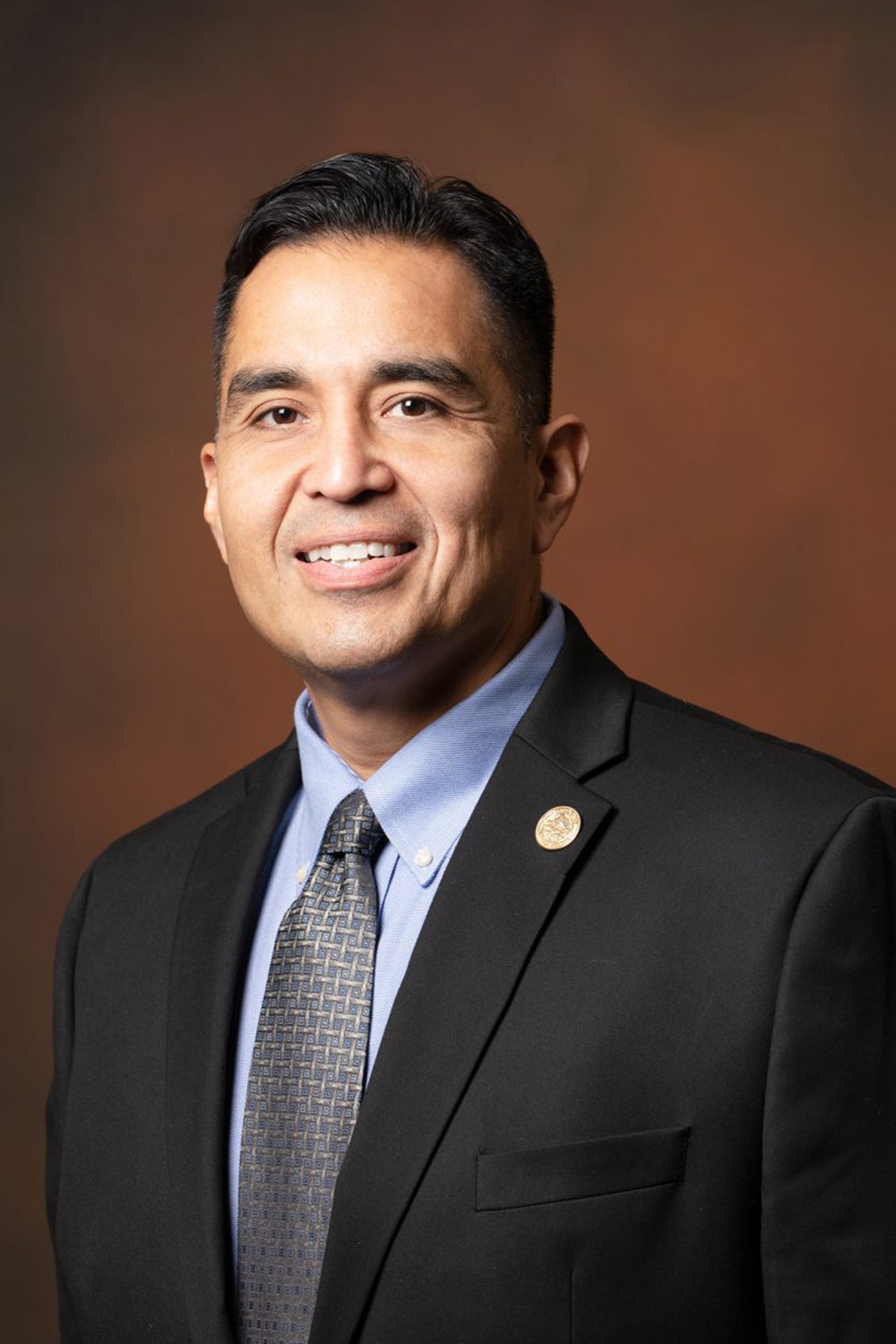
Image Metadata
|
Created: Wednesday, August 3, 2022 - 06:00 |
||
Summary:
An interview with Second Chief Del Beaver.Description:
An interview with Second Chief Del Beaver during the Covid 19 pandemic. A downloadable transcript may be found by link: Del Beaver. This interview has been indexed through the Louie B. Nunn Center for Oral History Center’s Oral History Metadata Synchronizer system at the University of Kentucky. For an indexed copy of the video, please follow the external link found in the bar on the right of this page.
Transcription:
The Muscogee (Creek) Nation
Historic and Cultural Preservation Department Oral History Program
“A Twenty-First Century Pandemic in Indian Country: The Resilience of the Muscogee (Creek) Nation Against Covid-19”
As Remembered by: Second Chief Del Beaver
Interview by: Ms. Midge Dellinger
Date: June 6, 2022
Transcription: The Audio Transcription Company
Edited by: Ms. Midge Dellinger
MIDGE DELLINGER: This is Midge Dellinger, oral historian for the Muscogee (Creek) Nation. Today is June 6, 2022, and I am in Okmulgee, Oklahoma, interviewing Mr. Del Beaver, Second Chief of the Muscogee (Creek) Nation. I’m performing this interview on behalf of the Muscogee (Creek) Nation Historic and Cultural Preservation Department for the oral history project titled “A Twenty-First Century Pandemic in Indian Country: The Resilience of the Muscogee (Creek) Nation Against COVID-19.” Second Chief Beaver, thank you so much for being here this morning to do this interview. We’re going to start out with some questions that pertain to your personal background. And so, let’s begin with what is your tribal town and clan?
DEL BEAVER: My tribal town is New Tulsa, and my clan is Aktvyakcvlke. That’s primarily a Seminole clan. I believe the Creek Nation also had the same clan, too, also. But my mom was Seminole, and so, it [00:01:00] roughly translates to “water animal.”
DELLINGER: And so, now, where were you born?
BEAVER: I was born in Tulsa; I think it was at Doctor’s Hospital. I don’t think it’s around anymore, but that’s where I was born, in Tulsa at the Doctor’s Hospital. That’s where my mom worked, actually. My mom was a CRNA, and so, that’s where she worked. That’s where I was born, in Tulsa, Oklahoma.
DELLINGER: Okay. Now, I’m going to have you talk a little bit about your folks, if you would just tell a little bit about each one of them.
1
BEAVER: Since we’re talking about my mom, I’ll start off with my mom. Mom is a Bruner. She is from down in the Lamar area, if people know where Lamar is at. It’s a community east of Holdenville. It’s just a small community. And really, she wasn’t really even born in Lamar, she lived [00:02:00] outside of Lamar. If you know how rural Lamar is, just think times that by ten. But we just call it down by the bottoms is where she grew up, that’s where the family land is. Middle Creek #1 is the closest church. That’s her church. And so, it’s in between Lamar and Carson area, and that’s where my mom grew up. And she grew up with, oh golly, I don’t know, five or six brothers and sisters, I believe, and they didn’t speak English growing up. She didn’t speak English until she was, I don’t know, seven or eight, something like that, until she went off to boarding school at Chilocco. But yeah, that’s where she grew up. And Mom, she went to college after she graduated, and [00:03:00] I believe she went to—I may be mistaken, but I think she went to Baylor at first, to get her nursing degree, and she finished up in Oklahoma City, and I believe that’s where she met my dad. She was going to nursing school, and then she’s been a CRNA. She retired a while back, but that was her whole career, just CRNA. Actually, I think three of her sisters were also nurses. And so, that was a good field to go into, I guess, at that time. And it still is a good field, but that was the opportunity that was affording them, was nursing. And that’s what they took advantage of, that nursing avenue. That’s, I guess, in a nutshell my mom’s upbringing. She was also a Creek Nation princess, so [00:04:00] we had that pageant this past weekend. I’m always reminded of that. She tells me some stories about her big talent was that she could speak Creek. She could speak Creek to all the judges, the ones that understood it. She has stories, I think she went to DC one time to be in a parade, and all sorts of stuff like that.
2
So, yeah. For somebody that grew up with no electricity, no running water, and didn’t speak English, she’s done quite a bit. I don’t want to go off on a tangent, but I understand how the boarding school issue has come to a head this past couple years, it seems like, and the term “historical trauma” has come about [00:05:00] and that’s a fairly recent term. I haven’t heard that term until the last five, six years, it seems like. I’m not saying there hasn’t been trauma or hasn’t been families affected by it, but I also know that you are also in control of your life. And so, to me, my mom is an example of, you can either let those things bring you down or you can fight through them. She’s been the one that hadn’t used that as an excuse. And maybe it just did the opposite. Maybe it propelled her to work harder and do those things. I can remember she worked. She was on call, a lot, I remember, when I was younger. And so, there’d be plenty of days where I’d wake up and be getting ready for school and she wouldn’t be there. She had a call in the middle of the night, “Hey, we’ve got an emergency, so you’ve got to come into work.” [00:06:00] Or coming home from school, she might not be there, she might be at work. But that’s just the work ethic that was instilled in us those days. We had to work. Nothing’s for free, you’ve got to work. So, both my parents instilled that into us. But that’s just a little bit about my mom. Her name, Marian Ruth (Bruner) Beaver. She’s a Bruner from down South.
DELLINGER: Did you say Ruth?
BEAVER: Yes, as a middle name.
3
DELLINGER: Do you still have your mom with you?
BEAVER: Yes.
DELLINGER: And what age is she, now?
BEAVER: I don’t even know, to be honest with you. Early eighties, I believe. I stopped asking a long time ago.
DELLINGER: And she probably quit telling a long time ago.
BEAVER: She did. She quit telling me. She just says, “Oh, I don’t need to know.” So, I don’t need to know, I don’t need to know.
DELLINGER: The church that your mom and her family attended, what denomination is that church?
BEAVER: Middle Creek #1 is a Baptist church. [00:07:00] It was one of those churches that was around before statehood and had the camp houses. It was just a really good church to go to, just out in the middle of the country, big trees all around. I remember just being able to go there, and all your cousins are there, and you’re just playing, and you have no running water, and I can remember that, distinctly, no running water, they had outhouses. They had a water spigot that everybody comes and fills up their pail of water.
4
And here’s the craziest part, everyone uses the same ladle, which is crazy, nowadays, right?
DELLINGER: Yes, absolutely.
BEAVER: It’s crazy to think of stuff like that. But that’s what you did back then, you know? So, it’s just the way it was. Those times are long gone. They’re long gone. [00:08:00] In the name of hygiene, I can understand that, but it’s just the way it was. That’s just the way we grew up. Our kids will never experience stuff like that. So, it’s good to have those types of memories where you just remember everybody washing their hands in the same bowl and drinking from the same ladle. It seems kind of gross nowadays, but it’s just what it was. It’s memories like that I’m fond of, back then. And telling ghost stories at the camp house, and daring our cousins to go, “Hey, go and sit in the back of the church. I dare you. I dare you to go sit.”
DELLINGER: After dark, right?
BEAVER: After dark, right. Nobody did it. No way. Not one of us was brave enough to go sit in the back of the church after dark. But stuff like that is what I remember. And good food. Always good food.
DELLINGER: Always good food, [00:09:00] yes.
5
BEAVER: They cooked over open fires, and I can remember my mom’s sister, her name is Kris, she actually still lived down in that area. She had a trailer home down there. I believe she was a teacher in Oklahoma City. During summertime, she would live down there at the trailer house on their allotted land. And so, we would spend, I don’t know, a couple weeks down there with her during summertime. And she had a big garden, and she had a big cast iron pot, it looked like a little cauldron, she cooked everything out of it. So, we’d have fresh new potatoes, and we’d go and catch—we’d call it the bottoms, and it’s just a creek, or tributary, and we’d go down there all day and fish, and catch channel cats like that long, and she’d clean them, and man, we’d have a feast that evening. Those were good times.
DELLINGER: Yeah, that sounds [00:10:00] great. What about your dad? BEAVER: Oh, my dad. Yeah.
DELLINGER: There’s a lot to tell about your dad.
BEAVER: A lot. A lot. We could probably spend all day talking about him. He grew up around here, in Morris area. Our family land out there is right off of 270 Road and Old Morris Highway. So, I live about a mile and a half from there. He had, I believe, ten siblings. He went to Morris, and he was a fairly decent football player. He was pretty good in athletics. Actually, the whole family was fairly good in sports. But he was able to get scholarships to different colleges. And I think he went to UCO, Murray State, I
6
believe, and then he went to Northeast Louisiana State. [00:11:00] And then, from there, he was drafted by the Packers and injury curtailed his pro career, but things happen for a reason. And so, that really drove him right into coaching, though. And so, that’s really where he made his mark, in coaching. His first job was at Jenks, and that was his last job. That’s really unheard of, nowadays, right?
DELLINGER: And how many years were in between that? How many years was he there?
BEAVER: At Jenks? Twenty-five years. And so, I believe he started in—it had to be in ’65, because I think he retired in 1990. And so, yeah. That’s just the kind of mindset growing up was that you don’t jump around, you stick to something, and especially when you know you’ve got a good situation, but you just fight through the tough times, [00:12:00] and you persevere, and you stick it out, and you work hard. And so, he was able to stay there, at Jenks, for twenty-five years. He was the football coach. I think when he started, it was a Class B school, and he drove the bus and everything, and then, when he retired, at that time, there wasn’t 6A. So, it was 5A when he retired. So, he saw it from the smallest of the schools to the biggest of the schools. He was able to see that growth there. And he taught math. He had a master’s in mathematics. Which was odd, because I’m horrible at math.
DELLINGER: You didn’t inherit that math gene?
7
BEAVER: I did not. I did not. But he taught math, and he taught Driver’s Ed at Jenks. And so, when you’re a coach, you fill in the gaps where needed. I don’t know if it’s that way now, but I just know back then, he just did what he had to do. He was the fill-in [00:13:00] coordinator at Jenks. He started that up at Jenks.
DELLINGER: He wore a lot of hats there.
BEAVER: He did. He did. And so, I think while he was a coach, he ran for council, he was on council. I can remember him telling me that, he was on council he didn’t know he got paid. That’s just something that you did. You had to give back. And then he’s Second Chief. At that time, it wasn’t really, I guess, considered maybe a full-time job, but he was Second Chief under Chief Cox, and then when he retired, he decided to go into tribal politics. And so, I think he was elected in ’94, I believe. Yeah, that sounds right. Yeah, he retired in 2002. And so, yeah. Elected in [00:14:00] ’94, I guess, and retired. He was on there for two terms. Retired in 2002. But he never really retired, you just do different stuff, really. And so, he was always active. Yeah. I guess he passed away in 2000—I’m not good with dates at all—’13, ’14, maybe ’15, somewhere around there.
DELLINGER: Do you remember how old you were when he passed away?
BEAVER: Oh, golly. I was probably around, maybe forty? Thirty? That’s always been an issue—not an issue, I just don’t remember dates that well. I don’t remember. I’m horrible with birthdays [00:15:00] and that type of stuff. I just don’t remember dates. I don’t know
8
why. It’s just always been that way. I just never really, I guess, put a big importance on dates. To me, it’s more about events, and experiencing things. I’m bad about taking pictures. Everybody’s always taking pictures of stuff, right? Or film it. And I just don’t do that. I don’t know why, I just never have. I’d rather just live in the moment, I guess, and just try to remember what’s going on than capture.
DELLINGER: Yeah. We all remember things differently, for sure.
BEAVER: We do. We do. But yeah, I think it was 2015, maybe, when he passed away. That would have put me at, yeah, around forty.
DELLINGER: Now, Second Chief, do you have any siblings?
BEAVER: Yes.
DELLINGER: Will you talk a little bit about them?
BEAVER: Yeah. I’ve got two older brothers. They’re twins. [00:16:00] They’re six years older than me. And they work for the Tribe. They both work for the Nation. I have an older sister, but she passed away about three years ago. But she was a couple years older than me. She actually worked for the Tribe, too.
DELLINGER: And what are your siblings’ names? Can you share their names?
9
BEAVER: Yeah, sure. My brothers are Brant, he’s the oldest, and Brent. And people that really know them well, they know them by Big and Little. So, when people tell me that they know my brothers, I say, “Well, how do you know them?” If they say, “Big and Little,” then it’s, “Oh, so you know them, know them.” But yeah, it’s Brant, and Brent, and my sister’s name is Robin. [00:17:00]
DELLINGER: I’m going to have you talk a little bit, if you will, about your grandparents. Would you share a little bit about them?
BEAVER: Yeah. In honesty, I don’t remember a whole lot about them. By the time I was born, my mom’s parents had already passed away. Their names were Whiney and Thomas Bruner. And then, my grandpa, my dad’s dad, he had already passed away. Or, he may have passed away in ’75, that’s when I was born. Maybe ’76, somewhere in there. So, I don’t remember him at all. His name was John. But my dad’s mom, her name was Della. That’s where I get my name. Her name’s Della Mae. She was a Fox, Della Mae Fox. She passed in ’87, somewhere around there. But I do remember, just like anything else, you go to your grandma’s house, and there [00:18:00] seems like there’s always a biscuit on the stove. And so, we’d always go there. Or, I’d come up here to the council meetings with my dad, and he’d drop me off at my grandma’s house, and I’d either have my fishing pole, or I have my rifle and I’d go out and just plink around until the meetings were done. I’d always go in, and she would be there, and there’d always be something to eat. And she always had a radio on. She didn’t watch TV that much, but she always had a
10
radio on. But there were certain times of the day, though, where she’d have her soap opera. She was invested in those soap operas. So, yeah. You didn’t mess with her; you didn’t try and call her whenever that soap opera was on. I don’t know what she even watched. But I do remember that. You could walk in and she wouldn’t even know you were there; she was so invested in that soap opera. But she didn’t speak English very well. I can [00:19:00] remember my grandma. She had the biggest dog in Okmulgee County. He was a big old black Lab. We just called him Dee-O-Gee, you know, D-O-G. But yeah, he got all her leftovers. I don’t think that dog had a drop of dog food in his entire life.
DELLINGER: When you say big, you mean overweight big?
BEAVER: Oh, overweight. Yeah. He was like a pig. He ate better than most people in Okmulgee County ever ate. But yeah, that’s what I remember about my grandma. She was just the perfect example of a grandma. You’d just go there, and she’d feed you, and make sure you were okay, and you could go off and out and about, go fishing, hunting, [00:20:00] she’d go, “Well, all right, be careful. I’ll be here when you get back.” She was just that type of person.
DELLINGER: So, even though your other grandparents were already deceased when you were born, do you know what they did? Did they have occupations?
11
BEAVER: You know, I do not know. I don’t know. I couldn’t even guess on my mom’s side. I don’t know. And my dad’s side, my dad’s dad, John, I know they had a farm. And they had oil wells. They grew up fairly well. They had a little bit of money, I guess. I don’t want to call it that, but from what I understand, yeah. They [00:21:00] had a farm.
DELLINGER: Now, your dad was at Jenks for twenty-five years. Is this where you grew up? Is this where you spent your childhood?
BEAVER: Absolutely. Uh-hm, yeah. I pretty much grew up in the same house, my entire young adult life, for as long as I can remember. I think when I was like one or two, we moved. The house I grew up in, I think we actually lived next door. And so, this house is a little bit bigger, so we’d just move from one house, really, to the next house, next door to it. I just remember one house growing up. And right across the street from Jenks, from the schools. And so, I never rode a school bus, I just walked to school, and walked right across the street. Kindergarten was, literally, right across the street. I’d [00:22:00] walk across the street, a parking lot, and then, there was the kindergarten. At that time, Jenks was K through twelve, right there, at that main campus. And now, that main campus is just high school, but back then, it was K through twelve. So, yeah. Middle school was right there, and elementary school was right there, and high school was right there. So, yeah. I could tell my grandkids, “I walked to school whether it was snowing, raining,” I literally did. But that’s just the way it was.
DELLINGER: So, what was your high school experience?
12
BEAVER: Oh, it was great. I see shows and people tell me they didn’t like high school. I understand that. It’s awkward, right? You’re going through an awkward phase. I can definitely understand that. But I loved it. I did. Especially at that time at [00:23:00] Jenks, if you played sports and you’re any good at it, things are afforded you. And so, we were pretty decent in football. I wrestled for a long time. I believe I quit in my sophomore year to focus on football. We were pretty good in football. We won State my senior year. We should have won it my junior year. It’s hard to categorize it, but I want to say there’s lots of leeway, maybe, if you’re maybe an athlete, or a football player, or somebody that was on the team, then you’re afforded, maybe, some leeway, which is a little dangerous for an eighteen-year-old to have. It kind of goes to your head a little bit, because you don’t know how to handle it. But [00:24:00] it is what it is, or it was what it was, I should say. But yeah, I loved it. Like I said, you’re seventeen, really, you’re sixteen, seventeen, or eighteen, and you start to experience these things, and you start getting some type of acknowledgement, you’re getting some type of praise, and you think you’re better than you probably really are. And so, to me, football was the sport that built you up, but also, at that time, was the one that had to tear you down, first though, and they built you up. And that’s what I loved about it, is one of the things where you work hard at it. And at Jenks, you don’t sit, you don’t rest on what you did last Friday night, because there’s always somebody willing [00:25:00] to take your spot and wants that spotlight. So, if you like that spotlight, then you’d better work hard for it. Like I said, who wouldn’t, at that age, enjoy the spotlight? I can’t even imagine what it’d be like, nowadays. I mean, it’s a totally different animal nowadays, with social media, and all this other stuff going on. It
13
was difficult. It wasn’t difficult, but I can just imagine how much more, I don’t know if dangerous is the right term, but I can see getting in a lot of trouble, if all that stuff existed back then. No cell phones and that type of stuff. And maybe that was the fun part about it, though. You didn’t worry about posting and taking pictures and all that stuff. You just lived. You lived for the moment, you lived to have fun, [00:26:00] and then maybe that’s why I had such a great time, is we just lived and we didn’t care about anything, except just having fun. So, yeah. High school was good. I wasn’t the best student in high school, though.
DELLINGER: That was going to be my next question.
BEAVER: That flows right into it, where I squarely admit I wasn’t the best student in high school. I was a good test-taker, so I think that’s what saved me. I wasn’t good at doing homework every single night and that type of stuff. But I was a good test taker. I knew the information, but I just wasn’t good at the day-to-day type of stuff. There were other things on my mind at that time. And I don’t like saying this, but this is just the truth: I was there to play football and to play sports, and I figured as long as I make that two-point, then I’m [00:27:00] good. But definitely, I wasn’t getting any academic scholarships, which nowadays, I wish I could have done something else. I wish I could have worked more on that part. I try to tell my kids that, now, is don’t be like me and just put everything on hold. Academics are very important. Very important. And they’ve seen that, and they’re a lot better students than I was. But yeah, I wasn’t the best student in the
14
world. Like I said, there were a lot of kids at Jenks, I had lots of friends, and there was lots of stuff to do. And yeah, I got a little sidetracked now and then.
DELLINGER: Now, did you play the same position that your dad played?
BEAVER: No, my dad was center. He played center, and on defense, he played linebacker. [00:28:00] And I was a left tackle. I was on the ends. And so, yeah, I didn’t play the same position.
DELLINGER: Well, where did life take you after high school?
BEAVER: After high school, I admit, I was a little lost. I didn’t have a whole lot of direction of what I wanted to do. To me, looking back, the great think about my parents were, they let me do what I wanted to do, which is good and bad, but they didn’t force me into any type of category. They didn’t force me to go there. They just said, “Hey, if you don’t go to school, you’re going to get a job.” So, I went to school. I started off at Tulsa Junior College. At that time, I was fairly burnt out on football, to be honest with you. [00:29:00] We had accomplished what we wanted to accomplish, and you get kind of lazy, too, and you don’t mind missing those morning workouts and all that type of stuff. So, I decided to go to Tulsa Junior College and just try to get my bearings, and get your, electives, not electives, what’s it called?
DELLINGER: Those basics.
15
BEAVER: Yeah, the basics out of the way. And I really didn’t do good there, because I was learning how to be a student. So, you really do. You have to learn how to be a student. I can’t remember how long I went there, maybe a year and a half or so, I went there. It took me a while to learn how to be a better student. But I distinctly remember talking to my advisor there, and I said, “I don’t want to major in anything that has a lot of math.” [00:30:00] And so, we were looking. We started talking about the environmental field. I distinctly remember sitting in her office, I said, “All right, that’s what I want.” She goes, “Well, you can transfer your credits to NSU, if that’s where you want to go.” I said, “All right, that’s what I’m going to do.” And so, from there on, I decided I was going to go into the environmental field, and it felt right to me. It felt like it’s something I really enjoy. And so, after about a year-and-a-half ago at TJC, I went to NSU. And that’s what I majored in, environmental management. And it was weird, because it seemed like when I moved away from home, that’s when I became—I guess maybe just the process of growing up. Nobody looked over my shoulder, all those sorts of things. Everything rested on me. And so, I became a better student there, and I graduated with honors. [00:31:00] And toward the end of my junior year, I started getting more involved in the Native American clubs. I even joined AISES, I joined the Native American Student Association there. So, my senior year, I was elected president and vice president for those clubs. And so, to me, it seemed like I was finding a rhythm. I was finding what I really wanted to do in life. And so, that was really when I made the decision that, after college, I just want to work for my tribe. That’s it. I just wanted to help my people. I wanted to work for my tribe, however that may be. So, when I graduated, actually, my senior year, I was able to
16
get a scholarship through the EPA, and that really helped out a lot, my scholarship. And then, [00:32:00] after I graduated, they called me up. I was waiting for an internship at the EPA. That’s what I really wanted to do, is work for the EPA. My two goals were either work for the EPA, or work for my tribe. And so, I got a call from the Department of the Interior and they asked me if I wanted to do an internship in Anchorage, for the BLM. And I was like, “Uh, maybe. It sounds like a great opportunity. Let me talk it over with my parents.” I was really waiting to see if EPA would call. And so, I called my parents, and my mom was like, “Do it. You’ll never get this opportunity again, just go do it.” And so, I hem-hawed around for a day or so and I called them back, said, “All right, I’ll do it.” And then, sure enough, like two days later, EPA calls me and says, “Do you want to intern for us in DC?” And oh, man. I thought about it, and I thought, “No, I committed to this already.” So, [00:33:00] that’s what you do. You don’t break your commitments. And so, I went to Anchorage my senior year in ’99, I believe, and spent a few weeks up there. Didn’t know a soul up there. I can remember my buddy saying, “How are you going to fly all the way up to Anchorage? You don’t know anybody.” I was like, that’s what you do. That’s just how it is. So, I spent ten weeks up there in Anchorage. I worked at the Campbell Tract. The Campbell Tract was a 640-acre tract of land they had that used to be an old airstrip, during World War I and II, and probably the Korean War, that they used. And so, it was cool because my job was, really, just to walk around the Campbell Tract and do surveys. It was a really easy job, but it was a job that, also, afforded me the opportunity to be—I hung around with different people, and they showed me how to do environmental assessments, and I did some little [00:34:00] USGA work. I did some pin placements. And at that time, they had those GPS units, and they
17
were just now coming out, those GPS units were, and so, I got to figure out how to work those GPS units. And they were like, “Plus or minus fifteen feet.” They weren’t down to inches like they are, now. So, that was really neat, just seeing the technology there. It was just coming about, back then. And I did some stream erosion surveys, and it was a good experience. It was a very good experience. Just being able to make friendships, and go out, they would go camping, people took me camping, and fishing, and it was just a good time.
DELLINGER: Yeah, that sounds like a great senior year.
BEAVER: Yeah, yeah, for a twenty-three-year-old, just [00:35:00] to be out on your own and doing what you want to do and having that luxury. It was pretty good. But after about ten weeks, I did get homesick. You just miss home and just being around people that you’re just familiar with. So, I came home. And I think, I want to say, maybe it was ’96 Dad was elected, because when I came home—I think that was an election year, was ’99, if I remember correct. But anyway, like I said, I’m not very good with dates and all that type of stuff. But came home, and Dad was the chief. I didn’t really want to work for the tribe at that time. I just didn’t want to deal with the whole nepotism issue. No matter how qualified you are, you can have all these degrees, [00:36:00] you can have more degrees and a monitor, you can have all the certifications, but still, people will say, “Oh, you only got this because of your dad,” and all this stuff. I didn’t want to deal with that. So, actually, I moved furniture for about six months while I was looking for a job. And so, after about six, seven months, I got on with the Cherokee Nation, their environmental
18
office. They have a pretty good pipeline with NSU in their environmental field. And so, I was able to go right in with them. While I was there, after about six months, I decided to get my masters while I was there. And there’s about four or five of us that were starting the master’s program at the time. It’s a lot easier whenever you have coworkers that are kind of helping you along, and helping you study, and setting the bar next to you. You don’t want to fail, but you don’t want to fail your coworkers, either. So, we all, there’s, like I said, about four or five of us went to the same master’s program at the same time. [00:37:00] And that was a pretty good experience, too. But I do appreciate what the Cherokee Nation has done for me, because they’re the ones that—I started working in grants, and it’s actually EPA. Cherokee Nation has three different environmental departments, and one of is called the Inter-Tribal Environmental Council. That’s where I started working. They’re a consortium of thirty-four tribes, I think. A lot of these tribes don’t have the capacity to do a lot of these grant projects and stuff like that, so the EPA would give ITEC a bunch of money to go out and help the smaller tribes with their programs. And so, that’s what I did. And so, I was kind of like a tribal liaison, a little bit. I was able to just go out to all these different tribes and just, “How can we help you? What do you need help with?” And whether [00:38:00] it’s water sampling, soil sampling, air sampling, I was able to get a diverse mix of training and experience. Actually, Superfund is what I started out in. They believed a lot in training. EPA gives you a lot of money to go train, and so, that’s what they believed in. So, I spent a lot of time just flying around the country getting trained up and just going to different places. One of my favorite places to go and tribes to visit is Ysleta del Sur Pueblo, I think, down in El Paso. That was really, really a neat experience. That’s the one that sticks out in my
19
mind, was going to see them and visit them. They’re right on the border. The first day we were there, they took us to the Mexico and US border, and when we were [00:39:00] there, the river was dried up in a certain area and they’re like, “We don’t go past the middle right there.” I thought they were joking. They’re like, “No, we’re serious. Don’t cross the middle of that river right there.” So, hey, all right. I don’t want to get thrown in the Mexican jail. But as soon as we got in our van and we’re taking off, half a mile later we’re getting pulled over by border agents.
DELLINGER: That can be scary.
BEAVER: Yeah. But they’re neat, you know? That’s the experiences that I like having. It’s stuff like that, those are the types of experiences I remember. I remember visiting the chairman. He was making bread for festival for his people, and he had a big wheelbarrow full of dough. He was just making that dough in that big wheelbarrow in his backyard. He had an adobe [00:40:00] oven, and he was baking that bread in there. He gave us a big old loaf of bread for us to take back. It was good. Some butter and honey on there. It was good. But yeah. And then, after about two years of that, I transferred over to their environmental protection division, and I did more NIPA stuff for housing. And so, I did that for about two and a half years. At that time, in the early 2000s, was when methamphetamine was bad. It still is, but it was at its height back then. So, I remember we had to develop a methamphetamine program because all these houses that were being given up because people were using, and they were making methamphetamine in these homes, so they whenever they got busted and it was an Indian home, they gave up that
20
home. And then we had to go in and assess the home, and at that time, it was unknown, like, what’s [00:41:00] the dangers of going back into these homes? Lots of dangers. And so, we really had to create this program from scratch, because it was new to the state, it was new to us, it was new to everybody in Oklahoma. But Oklahoma was the fourth or fifth worse state in the United States for methamphetamines per capita. I think California and Oregon, and maybe one or two other states was worse than Oklahoma. So, a lot of people don’t know that at the time. We had our fair share. So, I’m thankful I was able to be on the forefront of that. And so that afforded me a lot of opportunity to speak at different conferences, national conferences. So, I spoke coast to coast on different types of how tribes were combating this methamphetamine pandemic. [00:42:00] But during that time, also, I met my wife and so, we dated for a few years, then in 2005 decided to get married. She was actually working for Creek Nation Housing at that time. Then, she worked for IHS, I believe, and then we decided to get married, and so, she came to work for the tribe, and found a job at the environmental services doing the exact same thing I was doing at Cherokee Nation, so it was just a perfect fit. It was seamless. So, everything worked out. I’ve been here ever since.
DELLINGER: I know you’ve been saying all along you’re horrible with dates, but do you remember when you started that job, here?
BEAVER: Yes, I do. Actually, I remember because, let’s see, I started in ’05 here at the Nation, and so, today is my [00:43:00] seventeenth? Well, Saturday was my wedding anniversary. So, we got married on 06-04-05. I remember that, right? Six-four-five. I
21
better remember that one. So, we got married on a Saturday, and our anniversary is on a Saturday, and that Monday is when I started working. And so, today is my work anniversary when I started working at the Nation.
DELLINGER: And what was your job title when you came in, then?
BEAVER: It was Environmental Specialist, II. Today’s my work anniversary. I started working here in 2005, so seventeen years ago, here at the Nation.
DELLINGER: Very good. I’d like for you to talk a little bit about your life and family in Morris, your wife and your children.
BEAVER: Okay. My wife, Rhonda Kay Lowe is her maiden name. She’s from Holdenville area. Let’s see, she works for the health system. [00:44:00] She started working, actually, a little bit before I started working here, so she probably has—she’s worked for IHS, too, so she has close to twenty years’ experience in the health system. She has a couple sisters that live still by Holdenville. Like I said, we started dating in 2002 I think, somewhere around there. We were trying to add that up just the other day, like, “How long have we been together?” It’s going on twenty-one years, I think, in December. And so, we have three children, Isaiah, Olivia, and Addie. Isaiah, he goes to school at UCO, and he has a daughter and so, we have one granddaughter, Nyla. So, he’s finishing up. He’s a senior at UCO. We’ll see where life takes him. But it’s about life and [00:45:00] responsibilities. We’ll see where life takes him. I don’t worry about him a
22
whole lot because he has a pretty good head on his shoulders. He’s a lot better off than I was at that age. He’s the type of guy that dabbles in stocks, and he’s created a couple LLCs with his friends.
DELLINGER: He sounds driven, then.
BEAVER: He is. He’s very driven. Very driven. So yeah, we’ll see what life hands him. My middle daughter, she’ll be fourteen here in a couple months. She plays softball. That’s what she loves to do. She loves softball. That’s all we have time for, it seems like, work, church, and softball. [00:46:00] Which is fine.
DELLINGER: Yeah, those are three really good things.
BEAVER: It takes a lot of my time, but that’s fine. I don’t have any complains. Then, my youngest one, she’s seven. She just tags along. Wherever we go, she goes. She doesn’t mind, as long as we’ve got some juice and snacks along. But she’s playing T-ball. She’s trying that out. She likes to be like her big sister, you know. We’ll see how that works out. It’s fun being a parent. Up and downs. Sometimes you want to strangle your kids. At the same time, there’s nothing you wouldn’t do for them. And we have a granddaughter, Nyla, she’ll be two next month. Yeah, [00:47:00] that’s my family in a nutshell. We’re just trying to make it through these crazy times. That’s what I kind of worry about. I worry about how I was brought up, and the environment how I was brought up—not really the home environment, more the social environment. It’s just so vastly different
23
than what the kids are experiencing, now. That’s what really concerns me, is it’s just so different. We had crazy back in the day, but there’s crazy now, it’s really crazy. I don’t mean that in a bad way. There’s mental health issues that we can’t take lightly anymore.
When we were growing up, oh, you’ve got to tough it out. We don’t talk about stuff like that. Or, those types of things. Or you don’t talk about it openly, at [00:48:00] the very least. So, I think we have to really knock down that stigma of talking about, if you’re not okay, you’re not okay. It’s okay not to be okay. So, those are the things I have to learn to do better. I don’t want to say old school, but just learn that your kids can be hurting, even adults, especially. They can be hurting. You’ve got to take time for yourself and take time for other people, too, just to listen or get them help. It’s not always about taking some type of medicine or anything like that, but if you need it, you need it though, I’m not saying that’s a bad thing. I’m just saying that, a lot of time, it’s just about talking with the right person, and a professional, usually. And there’s nothing wrong with that. There’s nothing wrong with talking with [00:49:00] a professional. I’d much rather people talk with professionals than to be pent up and we see what happens when things blow up. To me, that’s the biggest concern I have, now, is that there’s just a lot of stuff in the world that you can’t explain. There’s no interest for why somebody did something. There’s probably a million different reasons somebody might do what they do. It’s hard to pinpoint one thing. But we’ve got to try, though. We’ve got to do things differently than the way I was growing up. It’s just a different world, now.
DELLINGER: When did you become an ordained Baptist minister?
24
BEAVER: I should [00:50:00] know this one. I want to say 2014, April 2014, I believe. DELLINGER: And what’s the church that you attend and pastor, today?
BEAVER: I’m an associate pastor at Native Stone Baptist Church. We’re just right outside of Sapulpa. We planted that church there about four years ago, I believe. For a while, we didn’t have a building to call our own. The church is about the people. That’s what makes up the church. We met in people’s living rooms; we met in fellowship halls. Wherever we could meet, that’s where we met. But we finally found a place outside of Sapulpa. We’ve been there for about four years, going on five years, I believe. We’re just a small—I say small. We’re just a church that—we’re about eighty percent Native American there, [00:51:00] about sixty-five percent Muscogee. But those are just numbers. We don’t care. Just show up, show up, and have service with us. We just want to get to know you and have some coffee, and maybe have a donut or two. That’s what we’re about. I started off, actually, when I was ordained, I was at New Beginnings Baptist Church. That’s where I started off. God calls you to different places. And so, to me, the best way to grow is, you’ve got to get out of your comfort zone, and experience new things. That’s the best way you’re going to grow. That’s what we were called to do, is just to go out and find a place where we can help and help each other. You know when you’re supposed to be somewhere. That’s [00:52:00] where we’re called to be, is Native Stone Baptist Church, and help them out. And so, we’ve been there about four years, now.
25
DELLINGER: At what point in your life did you aspire to become Second Chief of the Muscogee (Creek) Nation?
BEAVER: Oh, my goodness. That’s a good question. Well, in, let’s see, 2015, when they were having elections, I think ’16, ’17, ’18, ’19, yeah. So, 2015, and I distinctly remember this, I was at home and I was praying. And oh, man, I could just feel the urge was there, to run for council. And I had people ask me, [00:53:00] “Oh, are you going to follow in your dad’s footsteps? Are you going to do this?” “Do that?” I thought, “No, I’m completely content where I’m at.” I was director of environmental services, and I had good employees, everything was going great. I thought, “I’m at where I want to be.” And so, I distinctly remember, I had that feeling on my heart, “Hey, you need to go and run for this seat.” “This Okmulgee seat.” And so, I just kept on praying about that, like, “Are you sure?” And who am I to argue? So, I called Rhonda up, I said, “Hey, can I ask you something?” I said, “No, it’s not really an ask, I’ve got to let you know something.” And so, I told her what had happened, [00:54:00] and she’s like, “Don’t you know I’m pregnant? We’re having another child and you want to run for, of all things, a national council seat?” I was like, “I know, I know. But this is what I feel like God is leading me to do.” She’s like, “Well, who am I to argue with God?” So, that was my first step into the political world. And then after that four years was up, it’s the same thing. I’m not going to do anything major like that without going to the big man upstairs first. And so, same situation. And really, the whole process is about your faith and how much faith do you really have? Because when I ran for council, it was a big reduction in pay. Not that pay is everything, but when you’ve got another mouth to feed and you’ve got bills to pay,
26
[00:55:00] that’s a factor you have to take in. But when God says to do it, you do it. He said, “Don’t worry about anything else, I’ll take care of you.” And then, the second time around, running for Second Chief. I was seat A. And so, seat A and Chief and Second Chief run at the same time. And so, I had to give up my seat. It’s not like seat B, you can run for Chief or Second Chief, and if you don’t win, oh, I’ve still got a job for two more years. No, it’s either all or nothing. And so, it wasn’t taken lightly. But I know, just the fact that, hey, whatever happens, I’ll be all right. I’ll be okay. It’s not like I don’t have a skillset, and it’s not like I don’t bring anything to the table. [00:56:00] I just felt that sense of calmness, of, all right, this is what I need to do. And it’s not I need to be here, but I need to do the process. You’ve got to go through the process. Because the process is just as important as the end goal. So, the journey is not just about campaign literature and promising, it’s not about that. To me, it’s always about the previous four years, and really, the previous—well, since 2005, when I got here. I met a lot of people, and I’d been in a lot of people’s homes and helping them with their mold issues, with methamphetamine, with flooding issues, whatever it was, that was my job, was to help them. And it’s no different when I was on the council. My job was to listen, my job was to hold these community meetings, my job was to hear the people and their concerns, and to help them. And this position [00:57:00] is no different. My job is to come to work every single day, to listen to people, see where I can help, see where we can improve, and those types of things. So, my course was set a long time ago and for however long it may be, I’m okay with that, because I’m here to help. That’s what I’m here to do. When my time ends, my time ends. I’m okay with that. Like I said, I’ve never been about a paycheck, I’ve just been about making sure my family has a roof over their head, we’ve
27
got food on the table, and we’re happy, going to softball games. I’m not a materialistic type of person. It’s just, I was put here to help people and that’s what, as a minister, [00:58:00] very little is about preaching. A lot of it is you have to live it, first, and then proclaim. But you’ve got to help people, though, too. And when people need help, it’s about listening, and a lot of times, it’s a lot about just listening, making sure people are heard. That’s what people want. They want to be heard. Too many times, people are willing to just wait to talk. There’s a difference between listening and waiting to talk. So, you’ve got to be able to learn how to listen to people. And you learn a lot if you just sit, and just be quiet, and learn, and listen to people. You can make a lot of decisions by just listening to somebody. And that’s what I’m here to do. I’m forty-seven years old. I figure if God wants me to go a different way [00:59:00] or a different venue, if he wants me to change scenery, he’ll let me know. But for now, that’s where I’m at. I’m here to help. And wherever I’ll be, that’s what it’s going to be about. I’m here to help people. We’ll see. I’m a firm believer in that. My time here on earth is to help people.
DELLINGER: That’s great. Second Chief Beaver, what do you like to do in your free time?
BEAVER: I don’t have a whole lot of free time, but my free time is, I love watching softball. I love watching my daughter play softball. I love family time together. A lot of that is watching softball, but we do try to do, when the grandchild comes down, we’ll try to either cookout, something like that, [01:00:00] or just being able to stay home is something, too. But I used to golf a lot. You know I haven’t been able to golf a whole lot
28
these last few years. I think I’ve been able to golf maybe three times, maybe four, I think, the last couple years. I miss that. I love to fish. And to me, that’s my personal time, is fishing and mowing the lawn. That’s the only time I get where I’m really by myself. And so, every once in a while, I’ll take my youngest daughter fishing to introduce her to it. And she likes it, but she don’t like being hot, she don’t like the bugs. And so, I get it. I don’t blame her. I get it. But like I said, I live about a mile and a half from our allotted land. So, I can be home at 5:30 from work, and I can be fishing by 5:45. So, there’s days when I’ll come home, I can do my chores around [01:01:00] the house, I can mow, and by 7:00, I can be, “Well I’m going to go fishing.” “It’s time for me to go fish.” So, I bring my Air pods, pop them in and fish for an hour and so. I don’t even have to catch anything, that’s just my time where I can just relax and be away from everything. That’s with mowing, I just don’t have to worry about anything, just put my headphones on and just go mow for a while. But that’s what I like doing, that’s pretty much it. I like being outside. And softball is a big—the thing I like about softball, not only watching my daughter play, but I like the people, the parents that make up the team. Our team is probably, I don’t know, out of twelve girls, probably seven or eight [01:02:00] are Native, and most of those are Creek. So, it’s about being around people that you’re comfortable with, that you’re familiar with. And that’s what I enjoy, it’s just part of what I’ve grown accustomed to. And I see, out there, that, golly, it can get ugly sometimes at those games. And I’m thinking, “These are fourteen-year-old girls out here playing. They’re not playing for a World Championship. They’re not going to get a scholarship today. Let’s just calm down a little bit.” I find myself hollering every now and then, “Bad call.” But I don’t say it very loud. I don’t get mad. But it’s more about, you’ve got to try
29
to be that voice of encouragement. If we can voice our disgust, we can also voice our encouragement, [01:03:00] too. It’s much easier to do it that way. Let’s be that voice of encouragement and make sure that we don’t put any more unneeded pressure on these kids. Because that’s a lot of pressure. If you’ve taken all the things they have to go through, nowadays, that’s unneeded pressure that parents put on their kids. Let’s just encourage them to do their best. And if they don’t, and if bad things happen, hey, that’s okay, too. But we don’t need all this unadded pressure. To me, that’s something that parents put on them. It’s like, come on. It’s not like when we grew up. Let’s get that out of our heads. It’s not like the way we grew up. For goodness’ sake, these kids have to do gun drills at school. We had, what, fire drills, tornado drills, that was it?Now they’ve got to do these gun drills? My goodness. I couldn’t imagine [01:04:00] that, now. So, let’s get some perspective on things. It’s a softball game. Let’s try and have fun. So, yeah. And maybe that’s why I’m there, is to maybe help be that voice of encouragement.
DELLINGER: Yeah, I was just sitting here thinking that.
BEAVER: And I know we invest a lot of time and parents invest a lot of money in all these types of stuff, but still, that doesn’t give you a right to berate the ump and fight the other parents, and that type of stuff. Like, come on. We’ve got to be the voice of reason out there. We’re the adults out there.
DELLINGER: Yeah, exactly. We’re the adults, that’s right.
30
BEAVER: So, I don’t know. That’s what I enjoy. I enjoy seeing kids do well.
DELLINGER: Yes. Okay, I think we’re going to switch over now and [01:05:00] talk a little bit about COVID-19, and the pandemic. So, thank you so much for sharing all these things about your personal life. So, Second Chief Beaver, here in the United States, we are now three years into having COVID-19 in existence, but when in 2020 do you remember first hearing about the COVID-19 virus, and how did you first hear about it?
BEAVER: I can remember hearing about it, actually, before we took office. I think I remember back in, maybe, November or December of ’19, about some virus being in China, and I can remember it being the first case, I think it was an Oregon, I believe. And I wasn’t concerned about it, I just remember hearing about it, and I remember seeing it on the news. It wasn’t huge, but I do remember hearing about it. And I can [01:06:00] remember, I think we were going to DC, maybe February? It had to be February, because I think March is actually the first case in Oklahoma, maybe? But I can remember thinking, “Man, if this thing is that spreadable, highly transmissible,” I was thinking, “Shouldn’t DC have a case show up?” DC’s literally like the center of the world, right? You have all sorts of people coming in from all over the world there. I just remember thinking that. And then, it got progressively and progressively worse, and then, by March, we were really actively meeting, I think it was March, just about every other day, [01:07:00] or once a week about this virus, and the effects of it. But yeah, I distinctly remember it even before I took over, or took this office. I remember, beforehand, like in December, I think, November maybe, about it emerging in China.
31
DELLINGER: So, what was that like, beginning your administration, knowing that this deadly virus was rapidly spreading throughout the United States?
BEAVER: Oh, my goodness. Well, it didn’t really hit you until you started seeing—well, you really didn’t know what it was, right? You didn’t know, what does this mean? What does COVID-19 mean? And you saw it spread overseas, you saw it spread over in [01:08:00] China, and the steps that they were taking. In the back of your mind, you were really thinking, “Well, we’ll never get to that point here. Surely we’ll have something by the time it gets to the United States. We’ll have something developed.” And so, really, it moved so fast, it was hard to just sit back and think about it, because we were so reactive. You couldn’t get ahead of this thing. The only time we could get ahead, it seemed like, whenever we had to shut down. That was the biggest—a lot of thought went into that. It just wasn’t something that we did willy-nilly. This was after we had meetings with our health department every single day. Every single day, [01:09:00] Mr. Terry was in here. Rhonda had contacts with the CDC, so we were getting updates from the CDC, and we’re getting these reports coming out. It was stark. You just really, at that time, you couldn’t believe this is really happening here, this is something we’re really going to have to deal with right now, and people are dying from this thing. That was really the frightening part of this, is this just wasn’t a cold, right? This wasn’t something you’ll get for a few days and you’ll be okay. No, people were dying left and right from this. You saw what it did to New York City, and it really hit the East Coast worse, right? [01:10:00] And you could just see the map of everything turning red, and it just started creeping this way. And so,
32
you just had to start bracing for, okay, what’s this going to look like when it gets here? And it’s going to get here, what’s it going to look like? Those are the types of things we had to prepare for. PPE, and hand sanitizer, and then, you had people going crazy buying toilet paper, and so, if we’re going to shut down, what’s that going to look like? Who’s going to have to be here? We still have to have our health systems open. If our health system’s open, then they have to have daycare. You can’t just leave your children at home by themselves, so we have to have daycare. We still have to have a police force. We still have to have services. People still need services. How is that going to [01:11:00] look like? Can we do services from home? How are we going to do that? Because we never had to do that before. So, there’s all these new things that we had to develop, instantly. And I give credit where credit’s due, and that’s our staff. Our staff came up with all these plans, our staff came up with these ways to figure out how their employees can work from home and still provide services, and we had people that showed up every single day, no matter what it was, we had people here that knew that we still had to keep the buildings up, they couldn’t just be vacant for days at a time, you still had to go through there and make sure things are working. And so, we still had people here that came to work, every single day, no matter what was going on. And so, really, it’s those employees that really helped us survive. And it [01:12:00] seemed like it was eons ago when that happened. We met—Monday through Friday wasn’t enough. There was, lots of times, ten, twelve-hour days and I didn’t get home until ten o’clock, or I remember talking with the Chief and saying, “Chief, we’re probably going to meet Sunday, we’ve got to talk about this. We can’t wait until Monday to talk about it.” We had plenty of times where we had to come in here on Sundays, just so we could start working, “What’s
33
this week going to look like?” And it was difficult, but like I said, it was the employees that really pulled together and made this thing work. Like I said, it was all new. That was the tough part. We were making decisions that morning where we had to turn and pivot and make another decision that afternoon. It was just so rapid. And [01:13:00] not very many people know about stuff like that. There’s only like a few that knew exactly the decisions we had to make in the morning, we had to make a decision in the afternoon, and I don’t want to sound like it was—I’m not trying to be overzealous, but you felt like they were life and death decisions that you were making. And at the end of the day, we were talking, how can we keep people alive? And that’s a big question, right? And so, that’s why we had to do things that we had to do. There were CDC guidance, there were all these different things and information we’re taking in and trying to make the best decision for the nation.
DELLINGER: As Second Chief, was that a question that you ever [01:14:00] thought you would be dealing with? Usually doctors and nurses are dealing with that question, how are we going to keep these people alive?
BEAVER: No, not my wildest dreams did I think that that would be something I’d have to answer. People don’t know, in general, what a Second Chief does. I remember asking my dad, “Hey, what do you do as Second Chief?” And he said, “Whatever the Chief wants me to do.” All right, I can understand that. I can go with that. I think every Second Chief, they might have their own things that they want to do, accomplish while they’re Second Chief, or they may have their own duties that they do. I don’t know. A lot of
34
people just don’t know what we do. But my role, was to help, to help make these decisions. Because [01:15:00] not one person can make these types of decisions. I mean, we needed all the help we could get, all the input we could get. And then, everybody had to feel okay, “Okay, is this the direction we’re going to go? If you have input, let’s hear it. Now’s not the time to sit there and not say anything.” And so, that’s the way it was.
DELLINGER: What was that like for you, though, on a personal level, because your wife, being involved with the health system, and you guys would be in that all day, and then you’d go home at the end of the night, were you able to just shut that off between the two of you?
BEAVER: No. Unfortunately, you’d like to say that you kept work at work, but you can’t. At that time, you just couldn’t. [01:16:00] That year, 2020, was so difficult because we knew what was coming and you felt like you couldn’t do anything. You couldn’t prepare enough. And having my mom, of course, I want to see her, right? But at the same time, I want to keep her safe. And so, she was going to do what we said to do. If that meant, “Hey, you need to separate—don’t go to the Senior Citizens Nutrition Center,” that’s where she loved to go. And a lot of our elders, that’s maybe their only time interacting with other people. And so, when we shut that down, it’s not like, like I said, we did these things willy-nilly. I knew how much that meant to our elders. [01:17:00] I knew that. But that decision we have to make as what’s best for elders. We can’t have these centers open where they could potentially contract this virus. We can’t do that. And to tell people, “Hey, don’t go see your mom. Don’t go see your grandma. Keep them
35
safe.” This is pre-vaccine, so separate. You can text them, call them, but a lot of our elders, that’s not the way they do things. You go visit them. You have a cup of coffee with them. You talk to them. Maybe you eat with them. That’s what we do. And to know these things, though, and to know more than the average person would know, to be honest with you. Because we are getting that data every single day. We’re getting that data by the experts. [01:18:00] We’re having Zoom with the experts. And so, trying to relay that information to the people, we’re trying to keep them updated on everything. But when we go home, you can’t shut it off. You can’t shut it off. It’s impossible to shut off. And so, you really were immersed in it, and there’s no relief from it. No relief. Because one, it was impossible. Two, you really didn’t want to shut it off, because you care about the people. You care about everybody. A lot of my friends are elders. From churches, from everywhere I go, ceremonial ground people, a lot of my friends are elders. And so, the previous four years, being on the council, I’ve met a lot of people, I’ve created a lot [01:19:00] of friendships, and I care about these people. And so, those are the people that are on your mind when you’re at home. And those are the people that are calling you, too. And so, it was difficult, at best, to have—well, you didn’t have a normal life.
DELLINGER: Yeah. So, in saying that, how did you address the pandemic, and things like lockdowns, and shelter in place, which most of us have never even heard those terms or experienced it, how did you address those things with your children?
36
BEAVER: The little one, she just thought of it as just being home. She’s a homebody, so she didn’t care. A long as it’s near that TV, and everybody’s home, she’s fine. It [01:20:00] was the teenager that really had the difficult part with this, because that age, anyway—well, one, my daughter, she’s a social butterfly. So, being able to not be around people really was a change, a big change. And then, two, she’s going to a new school. She transferred from Morris to Preston. And so, that was, in itself, probably, a difficult situation, because you’re making new friends and all of a sudden, nope, you’re staying home. And so, you explain it, but you don’t know if they really understand why. You can explain anything, but do they understand why? I don’t think they really did. Most kids, I don’t think they understood why they had to do what they had to do. And so, [01:21:00] it was—yeah. Like I said, you try to, but do I think they knew? Probably not. They probably didn’t understand the deeper meaning of why we had to do what we had to do. I’m thankful that we came out through this, but we had our challenges. We had our difficulty. We weren’t immune, no pun intended, we had the same challenges, the same difficulties that everybody else had. No matter how much information we knew about it, everybody was susceptible. It just didn’t matter. The virus didn’t care.
DELLINGER: So, during the first year of the pandemic, while scientists and the medical profession were trying to figure out how we combat COVID-19, what were your personal safety measures to keep yourself free from virus, both [01:22:00] at home and then when you had to come to work?
37
BEAVER: One, at work, was we Zoomed. If there hadn’t been a Zoom, Zoom saved us. It really did. A lot of times, it was just me, Chief, and maybe a couple other people here in this office. Everybody else was home. We were the only three or four people in this whole building. And so, it was limiting who you were around. But obviously, you wear masks. Did they work? I don’t know. Did they help? Yeah, they helped. It did. But to me, it boiled down to the normal things you learned when you were three or four years old, right? Wash your hands, cover your mouth when you cough, or hand sanitizer, normal things that weren’t [01:23:00] new to you, it shouldn’t be new to you, you learned these things when you’re younger, but you just had to put them in play more often. And so, it was those types of things at work. But there’s no way in the world we could have come to work and not be around each other. And so, whoever was in this office, for a long time there, we were taking two or three tests a week, up the nose. And those aren’t fun tests. But in order to do our job, and to be safe, that’s what we had to do. So, you get used to them. Everybody got used to them. But just, “All right, be here at 8:30, take a test.” All right. It was difficult. And then, at home, even though you knew what you knew, [01:24:00] you try not to be like that at home, though. You wanted some semblance of normalcy at home. And so, we never told our kids to wear masks, those types of things. It was bad enough to tell, at that time, your five-year-old, to wear a mask when you had to go anywhere, if anything was open, “All right, we’ve got to mask up,” and they don’t understand why. And so, that was difficult. But we tried to have that sense of normalcy at home and try not to let them know exactly the direness of this thing. They don’t need to know that. So, it was difficult. But it’s amazing what you get used to, though, [01:25:00] too. It’s amazing. So, in doing that for a while, it just becomes second nature by the
38
wintertime, “Where’s my mask at?” You even have them in your pockets, I have my wallet, car keys, and cell phone, and so I just added my mask to that. You don’t go anywhere without a mask. And so, by the front door, we have a hanger for our jackets, now you just have one for your mask. Not a big deal.
DELLINGER: In the early days of the pandemic, what was the biggest challenge, or challenges, you faced in your effort to keep the nation in operation, but yet, keep employees and citizens safe?
BEAVER: Just what you said, the balance. Trying to decide, okay, [01:26:00] we need to keep this service going, but in order for this service to our citizens to keep on going, who do we need here at the office? Can they work from home? If they can’t work from home, well, one, why not? Just for our information, how come they can’t work from home? Is it because they have to physically push papers? Do they have to be here because they can’t access on the server? Why not? Because, one, I think we should be able to. I don’t think
we should have to do anything with paper. We should be at that point, now, where we’re passed that. But that’s kind of a sidebar. But if they had to be here, what do we need to do to keep them safe? Do we need to have more space? And Midge you’ve been [01:27:00] here for a while, you know space is limited.
DELLINGER: Yes, there is no space.
39
BEAVER: There is no space. And so, how do we create space? And so, in a very short term, how do we get more space? We can’t wait eighteen months for another building to be built. We can’t do it. So, that’s when we started looking at, okay, what properties do we have? What do we own? So thats when we started our sights set on Riverwalk. We’ve got some space up there, who do we need to move up there? Can they function out of Riverwalk? Can they provide the services? Do they have to be physically sitting at a desk? So, all these questions that we had to answer, just to provide one service. And so, we got pretty good at having a blueprint, these sets of questions for every different service. And so, [01:28:00] when the CARES funding came down, that’s one of the biggest things that drove us to it to build the Safe Space building, was that, hey, we just don’t have any space. If we needed to go and do this, then we don’t have any space, we don’t have any swing space, nothing. So, we’ve got to make sure that we have room. And even that’s full now. That could probably be three stories, to be honest with you. But that was the challenge, though, is that every time we needed to do something, we probably had about six or seven questions that need to be answered. And those questions just weren’t just yes or no. Well, we’ve got to do this, this, and this. Okay, in order to do this, then we’ve got to do A, B, and C for that. And so, it was a continual question, a continual, okay, we’ve got to do this now. We’ve got to do this. Oh, we don’t have enough hotspots. Where are we going to get this at? How are we going to pay [01:29:00] for it? It was just continually, little—they’re not even really roadblocks, but they’re just continually answering, coming up with solutions to answer just one question evolved into probably two dozen questions that we had to answer. And that’s really the thing that people don’t realize is that, and that’s why we had such long days in here. It’s just that we
40
had to continually make sure and answer and, overall, keep employees safe, but provide services. Those are two questions, but man, there was a lot involved in that. A lot involved in that. And then, you throw on top of that, well, McGirt, throw on top of McGirt happened in what, July? And then, [01:30:00] the CARES funding, here’s a quarter of a billion dollars, you’ve got six months to spend it with a skeleton staff. We’ve got to implement all these different things and nobody’s here.
DELLINGER: Those are challenges, for sure.
BEAVER: The worst part was, we’ve still got to provide meals for our citizens, our seniors. Not in person, but we can give them meals for the week or something like that. We’ve got to develop new things. Well, So-and-so gets COVID over there. They’re shut down for a month, or shut down for ten days, then the whole program has shut down because they’ve been exposed. Well, take that into account. There was just a lot of challenges, a lot of challenges. And for a while, there, we did a very good job. But [01:31:00] you’re not going to win against Mother Nature, and eventually, this virus, you just kind of felt like, well, we’re going to get it. We’re trying our best not to get it, but your thinking has to shift just a little bit to, how can we prevent from getting it to, what are we going to do when you get it? It’s a when, now.
DELLINGER: Yeah, not if, when?
41
BEAVER: Not if, but a when. So, after a while, that’s when we started shifting to that thinking. For a long time, you didn’t know what the effects were. Obviously, some people were dying, some people just had a cough, it affected everybody so differently. You couldn’t just predict how it would affect you. That was really scary. That was. That was the scary part. [01:32:00] We had to treat it like it was going to kill you, right?
DELLINGER: Yeah, absolutely.
BEAVER: That was really—I don’t want to say difficult, but it was hard for people to understand that, because you’d hear about, “Oh, I got it and there’s nothing wrong with me.” I got it in November.
DELLINGER: Yeah, I was going to ask you to talk about that.
BEAVER: Yeah. I can talk about it now if you want me.
DELLINGER: Yeah.
BEAVER: I’ll use us as an example. My daughter got it in November. So, when she got it, we said, “All right, you’re going to isolate. Stay in your room.” Which in itself is not the best remedy for anybody, because now studies are showing if you have to isolate, depression sits in, your anxiety levels [01:33:00] go up, you don’t know what’s going on, you don’t know what’s going to happen to you.
42
DELLINGER: And this was your teenage daughter?
BEAVER: Yes, this was my teenage daughter. And so, studies have shown that that happens with everybody. And so, she had it, then we had to quarantine. There’s a difference between quarantine and isolation. And so, we had to quarantine. And so, all four of us were at the house, and my daughter was isolated, and then, I think she got it on a Friday, and I can distinctly remember on a Wednesday, I believe, I was on a Zoom call, and all of a sudden, I started getting chills. And so, as soon as I got off that Zoom call, I called Sean Terry, I said, “Hey, I’ve got chills. I better get tested.” By 5:30 that afternoon, they said, “Yeah, you’ve got it. You’ve got to isolate.” And so, you’ve [01:34:00] just got to treat the symptoms at that time. And so, that’s all you can do. And my daughter, she was fine.
DELLINGER: Meaning asymptomatic?
BEAVER: Yeah, she was fairly—I can’t remember any symptoms she had. I think it was her friend that got it. And so, we said, “Well, you’re with her, so you’ve got to get tested.” And so, she came back positive, but like I said, she got it on Friday, by Tuesday or Monday, she believed she didn’t have it anymore. She wanted to go back to school. And that was kind of with me. I got it on Wednesday, I felt bad, I got chills and I remember isolating in my office, I’m waking up Thursday morning, I had a headache like I was dehydrated. By Thursday afternoon, I felt fine, and if I didn’t know I had it, and if I
43
didn’t test, I’d have just thought, “Oh, it was just allergies, it was a twenty-four-hour bug,” I would have gone [01:35:00] back to work if I didn’t know. And so, to me, that’s exactly how this things spreads, is people just felt bad for twenty-four hours, and no big deal, they weren’t having breathing problems, nothing, “Oh, I can go back to work,” but yet, they’re spreading the virus. And then, Rhonda got it just a few days after that. And she was the same way. She didn’t feel bad for about ten days, towards the end of her— well, after she got it, then we’re like, all right, no sense in isolating, now. Everybody just come out of the rooms. It’s here. And so, at the end of her ten days, she started getting a cough. It was just like a hacking cough that was persistent. And so, that was pretty serious, because we knew then, now, it’s about preventing her from going to the hospital. That’s [01:36:00] when everything started kicking in, you’ve got to protect your lungs, that type of stuff. But my five-year-old never got it. Never got a cough, nothing. And so, it’s just weird. The whole virus is just weird. But other than my cough, and—well, it wasn’t even a cough, it was just a headache. I had a little brain fog. I do remember that, having brain fog. But other than that, I think there is some residual effect, but nothing major. I just know there’s just something there. So, any time something goes wrong, or even like I misspell a couple words, I’m thinking, “Is this COVID-related?” You don’t know.
DELLINGER: You don’t know, yeah, because there is Long COVID.
BEAVER: Exactly. [01:37:00] And so, what I experienced, you can’t tell the next person that’s what they’re going to experience. You can’t. And you can’t say, “Oh, the
44
symptoms are this, this, and this.” There could be a dozen different symptoms. And the symptoms sound like the allergies. So, yeah. It was difficult, but it was also important that I didn’t want to get it, I didn’t want anybody to have it, but now I’m glad I did get it and was able to experience it without major side effects. But, I mean, maybe I’m glad I got it isn’t the correct term, but—[01:38:00]
DELLINGER: Well, you have some antibodies built up to it, now.
BEAVER: Yeah. I mean, I’ve been shot up, and I’ve had more shots than I can count. I’ve had the infusions and that type of thing. So, I’m fairly confident. And I got it last year. Chief was working in here one morning, he said, “We’re gearing up to go somewhere,” and he said, “Hey, do you want to get a test?” And I was like, “For what?” And he goes, “For COVID, just to see.” And I was like, “Sure, I don’t care.” And sure enough, I had it.
DELLINGER: So, you got it a second time?
BEAVER: I had it a second time. But I didn’t have any symptoms. It just happened, he just said, “You want to get a test?” And he wasn’t feeling bad, Chief wasn’t feeling bad or anything.
DELLINGER: Were you getting ready to be in the car together?
45
BEAVER: I can’t remember what we were doing. They were just in this office and I said, “Yeah, sure.” So, it came back positive and I said, “Are you sure?” So, they tested [01:39:00] me three times. And it came back positive. I said, “Well, what does that mean?” They said, “Well, quarantine for five days.” I said, “All right, I’ll see you all later.” So, I just stayed home and did all my meetings from Zoom. I didn’t feel bad, not at all. How do you account for that? You can’t just have everybody taking tests all the time. But just think about now. We have, I don’t know, eight hundred employees here on campus, something like that. If everybody took a test, I think we’d be surprised how many came back positive that aren’t feeling bad or nothing. So, that’s why it’s so important that we push this vaccine and push the boosters, and I understand that there’s reasons why they don’t want it, I understand that. I [01:40:00] understand the flip side of that, too. I’ve seen that. It’s not good.
DELLINGER: So, you still believe that, even though you’ve been vaccinated and boosted, and you got it a second time, that those preventive steps are still important.
BEAVER: Absolutely. Absolutely. I believe that if I didn’t have those things, then it would have been worse. The symptoms would have been worse. And with this virus, it goes from feeling bad to, oh, I’m in the hospital, oh, I’m on a ventilator, oh, I’m dead. I’ve seen it. I’ve had family members, that same line. They’re boosted up, and they had the vaccine, they’re boosted, but yet, they have underlying conditions. And that’s important, too, what [01:41:00] are your underlying conditions? Are you diabetic, have you had heart issues, do you smoke? What are you doing? So, I don’t have any
46
underlying conditions, so maybe that helped out. I think it did. But yeah, I’m one of those people that believe in the vaccine. I believe in being preventative. And maybe it’s for personal reasons. I’ve got kids. I want to see them grow up. I have a mom that’s an elder. I don’t want to give this virus to her. I have lots of friends that are elders, I don’t want to give anybody the virus. [01:42:00] And I’ve got to come to work. I’ve got to work. I wasn’t put here to not work or not do what I can do. If the vaccines and everything else meant I’m to be able to work and do what I need to do, then I’m going to get it. I’m not going to stay at home and not do anything. So, yeah. I was a believer. I’m a believer in the vaccine just because, from my position, I know what it did to people. It was so difficult, because when somebody passes away from this, especially back in the—we didn’t start seeing the deaths until probably the end of two-thousand-twenty, two thousand-twenty-one, and that’s when we started seeing the deaths, was winter, spring, [01:43:00] in two-thousand-twenty-one. But you couldn’t have a funeral that we’re used to. You couldn’t do it. You couldn’t say goodbye the way we’re used to saying goodbye. And there’s not that sense of closure. And even worse was, to me, is that you have that loved one that’s passing away that you know, when you know, you know. You know that their time is limited and they might have just a few more days, but if you’re not there by their side and they pass away alone, that’s traumatic. It is. And so, you take in all those factors of just the whole process of the end-of-life process, and the things that we have to do to get over grieving, and those types of things. And your world [01:44:00] just flips upside down. It’s traumatic, anyway, but then you can’t do the normal things that you need to do to help get you through that process. Now, I’ve had enough of that. I don’t
47
want to see it anymore. I don’t want to go back to that. Nobody wants to go back to that. So, I’ve had enough.
DELLINGER: We’re down to our last couple of questions. So, how do you hope future generations of Muscogee remember their ancestors, us, the ones who were first to negotiate the devastating impact of COVID-19?
BEAVER: One, I hope that the whole COVID timeline, the COVID narrative, isn’t politicized. This is not a political thing. It’s not a Republican-Democrat thing. This was for real. This was something that had a deep impact on our culture. [01:45:00] It had a deep impact on our people. It was another traumatic event that happened to us. I can’t speak for anybody else; I’m just speaking for what I’ve seen, and how it impacted the nation, that the severity of this virus was, it’s not something that we made up. It wasn’t something that’s just a political pawn. This was real. This was real. It was something we had to deal with like we’ve never, ever seen; that we’ve never, ever dealt with before. I guess it’s like the Spanish flu back in, what, the early 1900s. And so, I don’t want the severity of this lost. This [01:46:00] was something really, really major that we had to deal with, like we’ve never had to deal with before, since removal, since the Spanish flu, and those types of things. This was really up there. I don’t want this to be cheapened, but also, I don’t want this to be an excuse. I don’t like excuses. Bad things happen all the time. All the time, bad things happen. So, this is not an excuse for us to feel sorry for ourselves. It’s not an excuse for us to say, “Oh, well, we weren’t able to move forward, or we weren’t able to do this,” because we have to look for the positives from things, too.
48
You can’t just dwell on negatives. So, out of the positive of this is what I want people to realize, [01:47:00] is that we are a strong people. If we weren’t strong, we wouldn’t be here, flat out. Flat out. If we weren’t strong, we wouldn’t be here. Our ancestors didn’t do what they had to do just so we could fold up and cry, and cry about things. So, you have to look for opportunities. And so, the opportunities that we took were, one, we were deficient in, say, the IT department. We need to get that built back up. We were deficient in some resident infrastructure type deals. We had to get with the times. So, we used that opportunity to get up with the times. And we’re still not there yet, but we’re going to get there. We’re going to get there. We use this as a time to reflect, also, [01:48:00] what could we have done better? If this happens again in another ten years, how are they going to respond? They’re going to look to us and say, “What did they do back in two thousand-twenty?” So, we have to make sure that that’s set. And then, we had the McGirt, then we had the CARES fund, ARPA funding, we had the flooding like we’ve never seen before, we had a freeze, in two-thousand-twenty-one, in February. We had the coldest days on record. We’ve had some challenges. But like I said, that doesn’t give us an excuse to sit around and feel sorry for ourselves. People still have to live, we [01:49:00] still have a future, and so, we still have to build towards that future. Like I said, when these things happen it shows you where our weaknesses are. All right, I understand that, let’s fix them, let’s get strong in those areas. If we don’t fix those areas, then that’s on us. That’s on us. So, that’s what I would like the future generation to remember, is that whatever they face, they can do it. They can do it. It’s going to be scary, even if you don’t have the answer right there in front of you, find the answer. You can work it out. Just work out the answer. And you’re not alone. And you’re not alone.
49
We’ve got a lot of good people working for us. A lot of good people. And so, don’t ever think that you’re alone in this thing. And nobody’s that tough because they’re alone. Nobody. So, as a tribe, rely on the tribe. [01:50:00] We’re pretty resilient. We had meetings with other tribes, and we relied on each other, and we saw what other tribes are doing. And so, yeah. You have a pretty good network of people. And people are watching, especially, we’re one of the top five tribes in the United States, right? What we do, people are also watching. And so, we watch what other people are doing, we watch what the smaller tribes do. Sometimes it’s easier to implement things at a smaller level, but just because it’s smaller doesn’t mean it can’t work here. So, we were talking with other tribes around the nation, what they’re doing. And so, yeah. It seemed like we were all going on the right direction on these things. So, yeah. It wasn’t a one-man show, definitely, around here. But don’t get down. And definitely don’t use [01:51:00] this as an excuse. This is really an opportunity. And sometimes you don’t realize it until later, but yeah. We’ll be okay.
DELLINGER: All right. Thank you so much for those words of wisdom and encouragement. Is there anything else that you would like to say here today?
BEAVER: It’s been a very good learning experience for me. Even with all the ups and downs, the highs and lows, and the things that we’ve had to implement, things that we had to deal with, I can’t say that I wouldn’t trade it for anything in the world because I was here for a purpose. And I firmly believe I was [01:52:00] put here for a purpose, and
if it’s just to get through this, that’s fine with me. But—this allowed me to grow quite a
50
bit, to have experiences in your life that changes your outlook, and to have experiences in your life that changes who you are, that’s pretty deep. That’s pretty impressive, if something can happen in your life that changes who you are and the way you look at life, that’s pretty profound. And that doesn’t happen to everyone. I would hope somebody experiences that in their lifetime. But to have that happen, and to have an outlook now, and my [01:53:00] personal outlook is that, I know when things are important. I know what looks important. I know when people should get upset. I know when people should start being concerned. And it’s not over balls and strikes, it’s not over getting the wrong order at the restaurant. Those things are very, very minor. That’s not worth getting upset about. That’s not worth getting worked up about. So, it’s definitely made me look at things in a different perspective, for the better. And even with all the, I don’t want to say craziness, I don’t want to categorize it that way, but even with all the things going on in this world that are bad, there’s a lot of good people in this world, too. You can tend to focus [01:54:00] on the bad things, but don’t forget there’s a lot of good things going on in this world, too. And so, a lot of it is just shifting to what you’re going to focus on. It’s what’s important to you. I prefer doing good things and focusing on the good things. But that’s just the things that we can control. There’s things that we can’t control, there’s things that we can control. I can control what I want to do today. I can control how I treat people today. Those are things I can control. And so, if I can make somebody else’s day a little bit better, why wouldn’t I want to do that?
DELLINGER: Right. Right. Okay. Well, Second Chief Beaver, mvto, again, for your time here today, and your thoughts and your words, and you continue to take care.
51
BEAVER: I will. You, too. DELLINGER: Thank you. END OF INTERVIEW
52
Historic and Cultural Preservation Department Oral History Program
“A Twenty-First Century Pandemic in Indian Country: The Resilience of the Muscogee (Creek) Nation Against Covid-19”
As Remembered by: Second Chief Del Beaver
Interview by: Ms. Midge Dellinger
Date: June 6, 2022
Transcription: The Audio Transcription Company
Edited by: Ms. Midge Dellinger
MIDGE DELLINGER: This is Midge Dellinger, oral historian for the Muscogee (Creek) Nation. Today is June 6, 2022, and I am in Okmulgee, Oklahoma, interviewing Mr. Del Beaver, Second Chief of the Muscogee (Creek) Nation. I’m performing this interview on behalf of the Muscogee (Creek) Nation Historic and Cultural Preservation Department for the oral history project titled “A Twenty-First Century Pandemic in Indian Country: The Resilience of the Muscogee (Creek) Nation Against COVID-19.” Second Chief Beaver, thank you so much for being here this morning to do this interview. We’re going to start out with some questions that pertain to your personal background. And so, let’s begin with what is your tribal town and clan?
DEL BEAVER: My tribal town is New Tulsa, and my clan is Aktvyakcvlke. That’s primarily a Seminole clan. I believe the Creek Nation also had the same clan, too, also. But my mom was Seminole, and so, it [00:01:00] roughly translates to “water animal.”
DELLINGER: And so, now, where were you born?
BEAVER: I was born in Tulsa; I think it was at Doctor’s Hospital. I don’t think it’s around anymore, but that’s where I was born, in Tulsa at the Doctor’s Hospital. That’s where my mom worked, actually. My mom was a CRNA, and so, that’s where she worked. That’s where I was born, in Tulsa, Oklahoma.
DELLINGER: Okay. Now, I’m going to have you talk a little bit about your folks, if you would just tell a little bit about each one of them.
1
BEAVER: Since we’re talking about my mom, I’ll start off with my mom. Mom is a Bruner. She is from down in the Lamar area, if people know where Lamar is at. It’s a community east of Holdenville. It’s just a small community. And really, she wasn’t really even born in Lamar, she lived [00:02:00] outside of Lamar. If you know how rural Lamar is, just think times that by ten. But we just call it down by the bottoms is where she grew up, that’s where the family land is. Middle Creek #1 is the closest church. That’s her church. And so, it’s in between Lamar and Carson area, and that’s where my mom grew up. And she grew up with, oh golly, I don’t know, five or six brothers and sisters, I believe, and they didn’t speak English growing up. She didn’t speak English until she was, I don’t know, seven or eight, something like that, until she went off to boarding school at Chilocco. But yeah, that’s where she grew up. And Mom, she went to college after she graduated, and [00:03:00] I believe she went to—I may be mistaken, but I think she went to Baylor at first, to get her nursing degree, and she finished up in Oklahoma City, and I believe that’s where she met my dad. She was going to nursing school, and then she’s been a CRNA. She retired a while back, but that was her whole career, just CRNA. Actually, I think three of her sisters were also nurses. And so, that was a good field to go into, I guess, at that time. And it still is a good field, but that was the opportunity that was affording them, was nursing. And that’s what they took advantage of, that nursing avenue. That’s, I guess, in a nutshell my mom’s upbringing. She was also a Creek Nation princess, so [00:04:00] we had that pageant this past weekend. I’m always reminded of that. She tells me some stories about her big talent was that she could speak Creek. She could speak Creek to all the judges, the ones that understood it. She has stories, I think she went to DC one time to be in a parade, and all sorts of stuff like that.
2
So, yeah. For somebody that grew up with no electricity, no running water, and didn’t speak English, she’s done quite a bit. I don’t want to go off on a tangent, but I understand how the boarding school issue has come to a head this past couple years, it seems like, and the term “historical trauma” has come about [00:05:00] and that’s a fairly recent term. I haven’t heard that term until the last five, six years, it seems like. I’m not saying there hasn’t been trauma or hasn’t been families affected by it, but I also know that you are also in control of your life. And so, to me, my mom is an example of, you can either let those things bring you down or you can fight through them. She’s been the one that hadn’t used that as an excuse. And maybe it just did the opposite. Maybe it propelled her to work harder and do those things. I can remember she worked. She was on call, a lot, I remember, when I was younger. And so, there’d be plenty of days where I’d wake up and be getting ready for school and she wouldn’t be there. She had a call in the middle of the night, “Hey, we’ve got an emergency, so you’ve got to come into work.” [00:06:00] Or coming home from school, she might not be there, she might be at work. But that’s just the work ethic that was instilled in us those days. We had to work. Nothing’s for free, you’ve got to work. So, both my parents instilled that into us. But that’s just a little bit about my mom. Her name, Marian Ruth (Bruner) Beaver. She’s a Bruner from down South.
DELLINGER: Did you say Ruth?
BEAVER: Yes, as a middle name.
3
DELLINGER: Do you still have your mom with you?
BEAVER: Yes.
DELLINGER: And what age is she, now?
BEAVER: I don’t even know, to be honest with you. Early eighties, I believe. I stopped asking a long time ago.
DELLINGER: And she probably quit telling a long time ago.
BEAVER: She did. She quit telling me. She just says, “Oh, I don’t need to know.” So, I don’t need to know, I don’t need to know.
DELLINGER: The church that your mom and her family attended, what denomination is that church?
BEAVER: Middle Creek #1 is a Baptist church. [00:07:00] It was one of those churches that was around before statehood and had the camp houses. It was just a really good church to go to, just out in the middle of the country, big trees all around. I remember just being able to go there, and all your cousins are there, and you’re just playing, and you have no running water, and I can remember that, distinctly, no running water, they had outhouses. They had a water spigot that everybody comes and fills up their pail of water.
4
And here’s the craziest part, everyone uses the same ladle, which is crazy, nowadays, right?
DELLINGER: Yes, absolutely.
BEAVER: It’s crazy to think of stuff like that. But that’s what you did back then, you know? So, it’s just the way it was. Those times are long gone. They’re long gone. [00:08:00] In the name of hygiene, I can understand that, but it’s just the way it was. That’s just the way we grew up. Our kids will never experience stuff like that. So, it’s good to have those types of memories where you just remember everybody washing their hands in the same bowl and drinking from the same ladle. It seems kind of gross nowadays, but it’s just what it was. It’s memories like that I’m fond of, back then. And telling ghost stories at the camp house, and daring our cousins to go, “Hey, go and sit in the back of the church. I dare you. I dare you to go sit.”
DELLINGER: After dark, right?
BEAVER: After dark, right. Nobody did it. No way. Not one of us was brave enough to go sit in the back of the church after dark. But stuff like that is what I remember. And good food. Always good food.
DELLINGER: Always good food, [00:09:00] yes.
5
BEAVER: They cooked over open fires, and I can remember my mom’s sister, her name is Kris, she actually still lived down in that area. She had a trailer home down there. I believe she was a teacher in Oklahoma City. During summertime, she would live down there at the trailer house on their allotted land. And so, we would spend, I don’t know, a couple weeks down there with her during summertime. And she had a big garden, and she had a big cast iron pot, it looked like a little cauldron, she cooked everything out of it. So, we’d have fresh new potatoes, and we’d go and catch—we’d call it the bottoms, and it’s just a creek, or tributary, and we’d go down there all day and fish, and catch channel cats like that long, and she’d clean them, and man, we’d have a feast that evening. Those were good times.
DELLINGER: Yeah, that sounds [00:10:00] great. What about your dad? BEAVER: Oh, my dad. Yeah.
DELLINGER: There’s a lot to tell about your dad.
BEAVER: A lot. A lot. We could probably spend all day talking about him. He grew up around here, in Morris area. Our family land out there is right off of 270 Road and Old Morris Highway. So, I live about a mile and a half from there. He had, I believe, ten siblings. He went to Morris, and he was a fairly decent football player. He was pretty good in athletics. Actually, the whole family was fairly good in sports. But he was able to get scholarships to different colleges. And I think he went to UCO, Murray State, I
6
believe, and then he went to Northeast Louisiana State. [00:11:00] And then, from there, he was drafted by the Packers and injury curtailed his pro career, but things happen for a reason. And so, that really drove him right into coaching, though. And so, that’s really where he made his mark, in coaching. His first job was at Jenks, and that was his last job. That’s really unheard of, nowadays, right?
DELLINGER: And how many years were in between that? How many years was he there?
BEAVER: At Jenks? Twenty-five years. And so, I believe he started in—it had to be in ’65, because I think he retired in 1990. And so, yeah. That’s just the kind of mindset growing up was that you don’t jump around, you stick to something, and especially when you know you’ve got a good situation, but you just fight through the tough times, [00:12:00] and you persevere, and you stick it out, and you work hard. And so, he was able to stay there, at Jenks, for twenty-five years. He was the football coach. I think when he started, it was a Class B school, and he drove the bus and everything, and then, when he retired, at that time, there wasn’t 6A. So, it was 5A when he retired. So, he saw it from the smallest of the schools to the biggest of the schools. He was able to see that growth there. And he taught math. He had a master’s in mathematics. Which was odd, because I’m horrible at math.
DELLINGER: You didn’t inherit that math gene?
7
BEAVER: I did not. I did not. But he taught math, and he taught Driver’s Ed at Jenks. And so, when you’re a coach, you fill in the gaps where needed. I don’t know if it’s that way now, but I just know back then, he just did what he had to do. He was the fill-in [00:13:00] coordinator at Jenks. He started that up at Jenks.
DELLINGER: He wore a lot of hats there.
BEAVER: He did. He did. And so, I think while he was a coach, he ran for council, he was on council. I can remember him telling me that, he was on council he didn’t know he got paid. That’s just something that you did. You had to give back. And then he’s Second Chief. At that time, it wasn’t really, I guess, considered maybe a full-time job, but he was Second Chief under Chief Cox, and then when he retired, he decided to go into tribal politics. And so, I think he was elected in ’94, I believe. Yeah, that sounds right. Yeah, he retired in 2002. And so, yeah. Elected in [00:14:00] ’94, I guess, and retired. He was on there for two terms. Retired in 2002. But he never really retired, you just do different stuff, really. And so, he was always active. Yeah. I guess he passed away in 2000—I’m not good with dates at all—’13, ’14, maybe ’15, somewhere around there.
DELLINGER: Do you remember how old you were when he passed away?
BEAVER: Oh, golly. I was probably around, maybe forty? Thirty? That’s always been an issue—not an issue, I just don’t remember dates that well. I don’t remember. I’m horrible with birthdays [00:15:00] and that type of stuff. I just don’t remember dates. I don’t know
8
why. It’s just always been that way. I just never really, I guess, put a big importance on dates. To me, it’s more about events, and experiencing things. I’m bad about taking pictures. Everybody’s always taking pictures of stuff, right? Or film it. And I just don’t do that. I don’t know why, I just never have. I’d rather just live in the moment, I guess, and just try to remember what’s going on than capture.
DELLINGER: Yeah. We all remember things differently, for sure.
BEAVER: We do. We do. But yeah, I think it was 2015, maybe, when he passed away. That would have put me at, yeah, around forty.
DELLINGER: Now, Second Chief, do you have any siblings?
BEAVER: Yes.
DELLINGER: Will you talk a little bit about them?
BEAVER: Yeah. I’ve got two older brothers. They’re twins. [00:16:00] They’re six years older than me. And they work for the Tribe. They both work for the Nation. I have an older sister, but she passed away about three years ago. But she was a couple years older than me. She actually worked for the Tribe, too.
DELLINGER: And what are your siblings’ names? Can you share their names?
9
BEAVER: Yeah, sure. My brothers are Brant, he’s the oldest, and Brent. And people that really know them well, they know them by Big and Little. So, when people tell me that they know my brothers, I say, “Well, how do you know them?” If they say, “Big and Little,” then it’s, “Oh, so you know them, know them.” But yeah, it’s Brant, and Brent, and my sister’s name is Robin. [00:17:00]
DELLINGER: I’m going to have you talk a little bit, if you will, about your grandparents. Would you share a little bit about them?
BEAVER: Yeah. In honesty, I don’t remember a whole lot about them. By the time I was born, my mom’s parents had already passed away. Their names were Whiney and Thomas Bruner. And then, my grandpa, my dad’s dad, he had already passed away. Or, he may have passed away in ’75, that’s when I was born. Maybe ’76, somewhere in there. So, I don’t remember him at all. His name was John. But my dad’s mom, her name was Della. That’s where I get my name. Her name’s Della Mae. She was a Fox, Della Mae Fox. She passed in ’87, somewhere around there. But I do remember, just like anything else, you go to your grandma’s house, and there [00:18:00] seems like there’s always a biscuit on the stove. And so, we’d always go there. Or, I’d come up here to the council meetings with my dad, and he’d drop me off at my grandma’s house, and I’d either have my fishing pole, or I have my rifle and I’d go out and just plink around until the meetings were done. I’d always go in, and she would be there, and there’d always be something to eat. And she always had a radio on. She didn’t watch TV that much, but she always had a
10
radio on. But there were certain times of the day, though, where she’d have her soap opera. She was invested in those soap operas. So, yeah. You didn’t mess with her; you didn’t try and call her whenever that soap opera was on. I don’t know what she even watched. But I do remember that. You could walk in and she wouldn’t even know you were there; she was so invested in that soap opera. But she didn’t speak English very well. I can [00:19:00] remember my grandma. She had the biggest dog in Okmulgee County. He was a big old black Lab. We just called him Dee-O-Gee, you know, D-O-G. But yeah, he got all her leftovers. I don’t think that dog had a drop of dog food in his entire life.
DELLINGER: When you say big, you mean overweight big?
BEAVER: Oh, overweight. Yeah. He was like a pig. He ate better than most people in Okmulgee County ever ate. But yeah, that’s what I remember about my grandma. She was just the perfect example of a grandma. You’d just go there, and she’d feed you, and make sure you were okay, and you could go off and out and about, go fishing, hunting, [00:20:00] she’d go, “Well, all right, be careful. I’ll be here when you get back.” She was just that type of person.
DELLINGER: So, even though your other grandparents were already deceased when you were born, do you know what they did? Did they have occupations?
11
BEAVER: You know, I do not know. I don’t know. I couldn’t even guess on my mom’s side. I don’t know. And my dad’s side, my dad’s dad, John, I know they had a farm. And they had oil wells. They grew up fairly well. They had a little bit of money, I guess. I don’t want to call it that, but from what I understand, yeah. They [00:21:00] had a farm.
DELLINGER: Now, your dad was at Jenks for twenty-five years. Is this where you grew up? Is this where you spent your childhood?
BEAVER: Absolutely. Uh-hm, yeah. I pretty much grew up in the same house, my entire young adult life, for as long as I can remember. I think when I was like one or two, we moved. The house I grew up in, I think we actually lived next door. And so, this house is a little bit bigger, so we’d just move from one house, really, to the next house, next door to it. I just remember one house growing up. And right across the street from Jenks, from the schools. And so, I never rode a school bus, I just walked to school, and walked right across the street. Kindergarten was, literally, right across the street. I’d [00:22:00] walk across the street, a parking lot, and then, there was the kindergarten. At that time, Jenks was K through twelve, right there, at that main campus. And now, that main campus is just high school, but back then, it was K through twelve. So, yeah. Middle school was right there, and elementary school was right there, and high school was right there. So, yeah. I could tell my grandkids, “I walked to school whether it was snowing, raining,” I literally did. But that’s just the way it was.
DELLINGER: So, what was your high school experience?
12
BEAVER: Oh, it was great. I see shows and people tell me they didn’t like high school. I understand that. It’s awkward, right? You’re going through an awkward phase. I can definitely understand that. But I loved it. I did. Especially at that time at [00:23:00] Jenks, if you played sports and you’re any good at it, things are afforded you. And so, we were pretty decent in football. I wrestled for a long time. I believe I quit in my sophomore year to focus on football. We were pretty good in football. We won State my senior year. We should have won it my junior year. It’s hard to categorize it, but I want to say there’s lots of leeway, maybe, if you’re maybe an athlete, or a football player, or somebody that was on the team, then you’re afforded, maybe, some leeway, which is a little dangerous for an eighteen-year-old to have. It kind of goes to your head a little bit, because you don’t know how to handle it. But [00:24:00] it is what it is, or it was what it was, I should say. But yeah, I loved it. Like I said, you’re seventeen, really, you’re sixteen, seventeen, or eighteen, and you start to experience these things, and you start getting some type of acknowledgement, you’re getting some type of praise, and you think you’re better than you probably really are. And so, to me, football was the sport that built you up, but also, at that time, was the one that had to tear you down, first though, and they built you up. And that’s what I loved about it, is one of the things where you work hard at it. And at Jenks, you don’t sit, you don’t rest on what you did last Friday night, because there’s always somebody willing [00:25:00] to take your spot and wants that spotlight. So, if you like that spotlight, then you’d better work hard for it. Like I said, who wouldn’t, at that age, enjoy the spotlight? I can’t even imagine what it’d be like, nowadays. I mean, it’s a totally different animal nowadays, with social media, and all this other stuff going on. It
13
was difficult. It wasn’t difficult, but I can just imagine how much more, I don’t know if dangerous is the right term, but I can see getting in a lot of trouble, if all that stuff existed back then. No cell phones and that type of stuff. And maybe that was the fun part about it, though. You didn’t worry about posting and taking pictures and all that stuff. You just lived. You lived for the moment, you lived to have fun, [00:26:00] and then maybe that’s why I had such a great time, is we just lived and we didn’t care about anything, except just having fun. So, yeah. High school was good. I wasn’t the best student in high school, though.
DELLINGER: That was going to be my next question.
BEAVER: That flows right into it, where I squarely admit I wasn’t the best student in high school. I was a good test-taker, so I think that’s what saved me. I wasn’t good at doing homework every single night and that type of stuff. But I was a good test taker. I knew the information, but I just wasn’t good at the day-to-day type of stuff. There were other things on my mind at that time. And I don’t like saying this, but this is just the truth: I was there to play football and to play sports, and I figured as long as I make that two-point, then I’m [00:27:00] good. But definitely, I wasn’t getting any academic scholarships, which nowadays, I wish I could have done something else. I wish I could have worked more on that part. I try to tell my kids that, now, is don’t be like me and just put everything on hold. Academics are very important. Very important. And they’ve seen that, and they’re a lot better students than I was. But yeah, I wasn’t the best student in the
14
world. Like I said, there were a lot of kids at Jenks, I had lots of friends, and there was lots of stuff to do. And yeah, I got a little sidetracked now and then.
DELLINGER: Now, did you play the same position that your dad played?
BEAVER: No, my dad was center. He played center, and on defense, he played linebacker. [00:28:00] And I was a left tackle. I was on the ends. And so, yeah, I didn’t play the same position.
DELLINGER: Well, where did life take you after high school?
BEAVER: After high school, I admit, I was a little lost. I didn’t have a whole lot of direction of what I wanted to do. To me, looking back, the great think about my parents were, they let me do what I wanted to do, which is good and bad, but they didn’t force me into any type of category. They didn’t force me to go there. They just said, “Hey, if you don’t go to school, you’re going to get a job.” So, I went to school. I started off at Tulsa Junior College. At that time, I was fairly burnt out on football, to be honest with you. [00:29:00] We had accomplished what we wanted to accomplish, and you get kind of lazy, too, and you don’t mind missing those morning workouts and all that type of stuff. So, I decided to go to Tulsa Junior College and just try to get my bearings, and get your, electives, not electives, what’s it called?
DELLINGER: Those basics.
15
BEAVER: Yeah, the basics out of the way. And I really didn’t do good there, because I was learning how to be a student. So, you really do. You have to learn how to be a student. I can’t remember how long I went there, maybe a year and a half or so, I went there. It took me a while to learn how to be a better student. But I distinctly remember talking to my advisor there, and I said, “I don’t want to major in anything that has a lot of math.” [00:30:00] And so, we were looking. We started talking about the environmental field. I distinctly remember sitting in her office, I said, “All right, that’s what I want.” She goes, “Well, you can transfer your credits to NSU, if that’s where you want to go.” I said, “All right, that’s what I’m going to do.” And so, from there on, I decided I was going to go into the environmental field, and it felt right to me. It felt like it’s something I really enjoy. And so, after about a year-and-a-half ago at TJC, I went to NSU. And that’s what I majored in, environmental management. And it was weird, because it seemed like when I moved away from home, that’s when I became—I guess maybe just the process of growing up. Nobody looked over my shoulder, all those sorts of things. Everything rested on me. And so, I became a better student there, and I graduated with honors. [00:31:00] And toward the end of my junior year, I started getting more involved in the Native American clubs. I even joined AISES, I joined the Native American Student Association there. So, my senior year, I was elected president and vice president for those clubs. And so, to me, it seemed like I was finding a rhythm. I was finding what I really wanted to do in life. And so, that was really when I made the decision that, after college, I just want to work for my tribe. That’s it. I just wanted to help my people. I wanted to work for my tribe, however that may be. So, when I graduated, actually, my senior year, I was able to
16
get a scholarship through the EPA, and that really helped out a lot, my scholarship. And then, [00:32:00] after I graduated, they called me up. I was waiting for an internship at the EPA. That’s what I really wanted to do, is work for the EPA. My two goals were either work for the EPA, or work for my tribe. And so, I got a call from the Department of the Interior and they asked me if I wanted to do an internship in Anchorage, for the BLM. And I was like, “Uh, maybe. It sounds like a great opportunity. Let me talk it over with my parents.” I was really waiting to see if EPA would call. And so, I called my parents, and my mom was like, “Do it. You’ll never get this opportunity again, just go do it.” And so, I hem-hawed around for a day or so and I called them back, said, “All right, I’ll do it.” And then, sure enough, like two days later, EPA calls me and says, “Do you want to intern for us in DC?” And oh, man. I thought about it, and I thought, “No, I committed to this already.” So, [00:33:00] that’s what you do. You don’t break your commitments. And so, I went to Anchorage my senior year in ’99, I believe, and spent a few weeks up there. Didn’t know a soul up there. I can remember my buddy saying, “How are you going to fly all the way up to Anchorage? You don’t know anybody.” I was like, that’s what you do. That’s just how it is. So, I spent ten weeks up there in Anchorage. I worked at the Campbell Tract. The Campbell Tract was a 640-acre tract of land they had that used to be an old airstrip, during World War I and II, and probably the Korean War, that they used. And so, it was cool because my job was, really, just to walk around the Campbell Tract and do surveys. It was a really easy job, but it was a job that, also, afforded me the opportunity to be—I hung around with different people, and they showed me how to do environmental assessments, and I did some little [00:34:00] USGA work. I did some pin placements. And at that time, they had those GPS units, and they
17
were just now coming out, those GPS units were, and so, I got to figure out how to work those GPS units. And they were like, “Plus or minus fifteen feet.” They weren’t down to inches like they are, now. So, that was really neat, just seeing the technology there. It was just coming about, back then. And I did some stream erosion surveys, and it was a good experience. It was a very good experience. Just being able to make friendships, and go out, they would go camping, people took me camping, and fishing, and it was just a good time.
DELLINGER: Yeah, that sounds like a great senior year.
BEAVER: Yeah, yeah, for a twenty-three-year-old, just [00:35:00] to be out on your own and doing what you want to do and having that luxury. It was pretty good. But after about ten weeks, I did get homesick. You just miss home and just being around people that you’re just familiar with. So, I came home. And I think, I want to say, maybe it was ’96 Dad was elected, because when I came home—I think that was an election year, was ’99, if I remember correct. But anyway, like I said, I’m not very good with dates and all that type of stuff. But came home, and Dad was the chief. I didn’t really want to work for the tribe at that time. I just didn’t want to deal with the whole nepotism issue. No matter how qualified you are, you can have all these degrees, [00:36:00] you can have more degrees and a monitor, you can have all the certifications, but still, people will say, “Oh, you only got this because of your dad,” and all this stuff. I didn’t want to deal with that. So, actually, I moved furniture for about six months while I was looking for a job. And so, after about six, seven months, I got on with the Cherokee Nation, their environmental
18
office. They have a pretty good pipeline with NSU in their environmental field. And so, I was able to go right in with them. While I was there, after about six months, I decided to get my masters while I was there. And there’s about four or five of us that were starting the master’s program at the time. It’s a lot easier whenever you have coworkers that are kind of helping you along, and helping you study, and setting the bar next to you. You don’t want to fail, but you don’t want to fail your coworkers, either. So, we all, there’s, like I said, about four or five of us went to the same master’s program at the same time. [00:37:00] And that was a pretty good experience, too. But I do appreciate what the Cherokee Nation has done for me, because they’re the ones that—I started working in grants, and it’s actually EPA. Cherokee Nation has three different environmental departments, and one of is called the Inter-Tribal Environmental Council. That’s where I started working. They’re a consortium of thirty-four tribes, I think. A lot of these tribes don’t have the capacity to do a lot of these grant projects and stuff like that, so the EPA would give ITEC a bunch of money to go out and help the smaller tribes with their programs. And so, that’s what I did. And so, I was kind of like a tribal liaison, a little bit. I was able to just go out to all these different tribes and just, “How can we help you? What do you need help with?” And whether [00:38:00] it’s water sampling, soil sampling, air sampling, I was able to get a diverse mix of training and experience. Actually, Superfund is what I started out in. They believed a lot in training. EPA gives you a lot of money to go train, and so, that’s what they believed in. So, I spent a lot of time just flying around the country getting trained up and just going to different places. One of my favorite places to go and tribes to visit is Ysleta del Sur Pueblo, I think, down in El Paso. That was really, really a neat experience. That’s the one that sticks out in my
19
mind, was going to see them and visit them. They’re right on the border. The first day we were there, they took us to the Mexico and US border, and when we were [00:39:00] there, the river was dried up in a certain area and they’re like, “We don’t go past the middle right there.” I thought they were joking. They’re like, “No, we’re serious. Don’t cross the middle of that river right there.” So, hey, all right. I don’t want to get thrown in the Mexican jail. But as soon as we got in our van and we’re taking off, half a mile later we’re getting pulled over by border agents.
DELLINGER: That can be scary.
BEAVER: Yeah. But they’re neat, you know? That’s the experiences that I like having. It’s stuff like that, those are the types of experiences I remember. I remember visiting the chairman. He was making bread for festival for his people, and he had a big wheelbarrow full of dough. He was just making that dough in that big wheelbarrow in his backyard. He had an adobe [00:40:00] oven, and he was baking that bread in there. He gave us a big old loaf of bread for us to take back. It was good. Some butter and honey on there. It was good. But yeah. And then, after about two years of that, I transferred over to their environmental protection division, and I did more NIPA stuff for housing. And so, I did that for about two and a half years. At that time, in the early 2000s, was when methamphetamine was bad. It still is, but it was at its height back then. So, I remember we had to develop a methamphetamine program because all these houses that were being given up because people were using, and they were making methamphetamine in these homes, so they whenever they got busted and it was an Indian home, they gave up that
20
home. And then we had to go in and assess the home, and at that time, it was unknown, like, what’s [00:41:00] the dangers of going back into these homes? Lots of dangers. And so, we really had to create this program from scratch, because it was new to the state, it was new to us, it was new to everybody in Oklahoma. But Oklahoma was the fourth or fifth worse state in the United States for methamphetamines per capita. I think California and Oregon, and maybe one or two other states was worse than Oklahoma. So, a lot of people don’t know that at the time. We had our fair share. So, I’m thankful I was able to be on the forefront of that. And so that afforded me a lot of opportunity to speak at different conferences, national conferences. So, I spoke coast to coast on different types of how tribes were combating this methamphetamine pandemic. [00:42:00] But during that time, also, I met my wife and so, we dated for a few years, then in 2005 decided to get married. She was actually working for Creek Nation Housing at that time. Then, she worked for IHS, I believe, and then we decided to get married, and so, she came to work for the tribe, and found a job at the environmental services doing the exact same thing I was doing at Cherokee Nation, so it was just a perfect fit. It was seamless. So, everything worked out. I’ve been here ever since.
DELLINGER: I know you’ve been saying all along you’re horrible with dates, but do you remember when you started that job, here?
BEAVER: Yes, I do. Actually, I remember because, let’s see, I started in ’05 here at the Nation, and so, today is my [00:43:00] seventeenth? Well, Saturday was my wedding anniversary. So, we got married on 06-04-05. I remember that, right? Six-four-five. I
21
better remember that one. So, we got married on a Saturday, and our anniversary is on a Saturday, and that Monday is when I started working. And so, today is my work anniversary when I started working at the Nation.
DELLINGER: And what was your job title when you came in, then?
BEAVER: It was Environmental Specialist, II. Today’s my work anniversary. I started working here in 2005, so seventeen years ago, here at the Nation.
DELLINGER: Very good. I’d like for you to talk a little bit about your life and family in Morris, your wife and your children.
BEAVER: Okay. My wife, Rhonda Kay Lowe is her maiden name. She’s from Holdenville area. Let’s see, she works for the health system. [00:44:00] She started working, actually, a little bit before I started working here, so she probably has—she’s worked for IHS, too, so she has close to twenty years’ experience in the health system. She has a couple sisters that live still by Holdenville. Like I said, we started dating in 2002 I think, somewhere around there. We were trying to add that up just the other day, like, “How long have we been together?” It’s going on twenty-one years, I think, in December. And so, we have three children, Isaiah, Olivia, and Addie. Isaiah, he goes to school at UCO, and he has a daughter and so, we have one granddaughter, Nyla. So, he’s finishing up. He’s a senior at UCO. We’ll see where life takes him. But it’s about life and [00:45:00] responsibilities. We’ll see where life takes him. I don’t worry about him a
22
whole lot because he has a pretty good head on his shoulders. He’s a lot better off than I was at that age. He’s the type of guy that dabbles in stocks, and he’s created a couple LLCs with his friends.
DELLINGER: He sounds driven, then.
BEAVER: He is. He’s very driven. Very driven. So yeah, we’ll see what life hands him. My middle daughter, she’ll be fourteen here in a couple months. She plays softball. That’s what she loves to do. She loves softball. That’s all we have time for, it seems like, work, church, and softball. [00:46:00] Which is fine.
DELLINGER: Yeah, those are three really good things.
BEAVER: It takes a lot of my time, but that’s fine. I don’t have any complains. Then, my youngest one, she’s seven. She just tags along. Wherever we go, she goes. She doesn’t mind, as long as we’ve got some juice and snacks along. But she’s playing T-ball. She’s trying that out. She likes to be like her big sister, you know. We’ll see how that works out. It’s fun being a parent. Up and downs. Sometimes you want to strangle your kids. At the same time, there’s nothing you wouldn’t do for them. And we have a granddaughter, Nyla, she’ll be two next month. Yeah, [00:47:00] that’s my family in a nutshell. We’re just trying to make it through these crazy times. That’s what I kind of worry about. I worry about how I was brought up, and the environment how I was brought up—not really the home environment, more the social environment. It’s just so vastly different
23
than what the kids are experiencing, now. That’s what really concerns me, is it’s just so different. We had crazy back in the day, but there’s crazy now, it’s really crazy. I don’t mean that in a bad way. There’s mental health issues that we can’t take lightly anymore.
When we were growing up, oh, you’ve got to tough it out. We don’t talk about stuff like that. Or, those types of things. Or you don’t talk about it openly, at [00:48:00] the very least. So, I think we have to really knock down that stigma of talking about, if you’re not okay, you’re not okay. It’s okay not to be okay. So, those are the things I have to learn to do better. I don’t want to say old school, but just learn that your kids can be hurting, even adults, especially. They can be hurting. You’ve got to take time for yourself and take time for other people, too, just to listen or get them help. It’s not always about taking some type of medicine or anything like that, but if you need it, you need it though, I’m not saying that’s a bad thing. I’m just saying that, a lot of time, it’s just about talking with the right person, and a professional, usually. And there’s nothing wrong with that. There’s nothing wrong with talking with [00:49:00] a professional. I’d much rather people talk with professionals than to be pent up and we see what happens when things blow up. To me, that’s the biggest concern I have, now, is that there’s just a lot of stuff in the world that you can’t explain. There’s no interest for why somebody did something. There’s probably a million different reasons somebody might do what they do. It’s hard to pinpoint one thing. But we’ve got to try, though. We’ve got to do things differently than the way I was growing up. It’s just a different world, now.
DELLINGER: When did you become an ordained Baptist minister?
24
BEAVER: I should [00:50:00] know this one. I want to say 2014, April 2014, I believe. DELLINGER: And what’s the church that you attend and pastor, today?
BEAVER: I’m an associate pastor at Native Stone Baptist Church. We’re just right outside of Sapulpa. We planted that church there about four years ago, I believe. For a while, we didn’t have a building to call our own. The church is about the people. That’s what makes up the church. We met in people’s living rooms; we met in fellowship halls. Wherever we could meet, that’s where we met. But we finally found a place outside of Sapulpa. We’ve been there for about four years, going on five years, I believe. We’re just a small—I say small. We’re just a church that—we’re about eighty percent Native American there, [00:51:00] about sixty-five percent Muscogee. But those are just numbers. We don’t care. Just show up, show up, and have service with us. We just want to get to know you and have some coffee, and maybe have a donut or two. That’s what we’re about. I started off, actually, when I was ordained, I was at New Beginnings Baptist Church. That’s where I started off. God calls you to different places. And so, to me, the best way to grow is, you’ve got to get out of your comfort zone, and experience new things. That’s the best way you’re going to grow. That’s what we were called to do, is just to go out and find a place where we can help and help each other. You know when you’re supposed to be somewhere. That’s [00:52:00] where we’re called to be, is Native Stone Baptist Church, and help them out. And so, we’ve been there about four years, now.
25
DELLINGER: At what point in your life did you aspire to become Second Chief of the Muscogee (Creek) Nation?
BEAVER: Oh, my goodness. That’s a good question. Well, in, let’s see, 2015, when they were having elections, I think ’16, ’17, ’18, ’19, yeah. So, 2015, and I distinctly remember this, I was at home and I was praying. And oh, man, I could just feel the urge was there, to run for council. And I had people ask me, [00:53:00] “Oh, are you going to follow in your dad’s footsteps? Are you going to do this?” “Do that?” I thought, “No, I’m completely content where I’m at.” I was director of environmental services, and I had good employees, everything was going great. I thought, “I’m at where I want to be.” And so, I distinctly remember, I had that feeling on my heart, “Hey, you need to go and run for this seat.” “This Okmulgee seat.” And so, I just kept on praying about that, like, “Are you sure?” And who am I to argue? So, I called Rhonda up, I said, “Hey, can I ask you something?” I said, “No, it’s not really an ask, I’ve got to let you know something.” And so, I told her what had happened, [00:54:00] and she’s like, “Don’t you know I’m pregnant? We’re having another child and you want to run for, of all things, a national council seat?” I was like, “I know, I know. But this is what I feel like God is leading me to do.” She’s like, “Well, who am I to argue with God?” So, that was my first step into the political world. And then after that four years was up, it’s the same thing. I’m not going to do anything major like that without going to the big man upstairs first. And so, same situation. And really, the whole process is about your faith and how much faith do you really have? Because when I ran for council, it was a big reduction in pay. Not that pay is everything, but when you’ve got another mouth to feed and you’ve got bills to pay,
26
[00:55:00] that’s a factor you have to take in. But when God says to do it, you do it. He said, “Don’t worry about anything else, I’ll take care of you.” And then, the second time around, running for Second Chief. I was seat A. And so, seat A and Chief and Second Chief run at the same time. And so, I had to give up my seat. It’s not like seat B, you can run for Chief or Second Chief, and if you don’t win, oh, I’ve still got a job for two more years. No, it’s either all or nothing. And so, it wasn’t taken lightly. But I know, just the fact that, hey, whatever happens, I’ll be all right. I’ll be okay. It’s not like I don’t have a skillset, and it’s not like I don’t bring anything to the table. [00:56:00] I just felt that sense of calmness, of, all right, this is what I need to do. And it’s not I need to be here, but I need to do the process. You’ve got to go through the process. Because the process is just as important as the end goal. So, the journey is not just about campaign literature and promising, it’s not about that. To me, it’s always about the previous four years, and really, the previous—well, since 2005, when I got here. I met a lot of people, and I’d been in a lot of people’s homes and helping them with their mold issues, with methamphetamine, with flooding issues, whatever it was, that was my job, was to help them. And it’s no different when I was on the council. My job was to listen, my job was to hold these community meetings, my job was to hear the people and their concerns, and to help them. And this position [00:57:00] is no different. My job is to come to work every single day, to listen to people, see where I can help, see where we can improve, and those types of things. So, my course was set a long time ago and for however long it may be, I’m okay with that, because I’m here to help. That’s what I’m here to do. When my time ends, my time ends. I’m okay with that. Like I said, I’ve never been about a paycheck, I’ve just been about making sure my family has a roof over their head, we’ve
27
got food on the table, and we’re happy, going to softball games. I’m not a materialistic type of person. It’s just, I was put here to help people and that’s what, as a minister, [00:58:00] very little is about preaching. A lot of it is you have to live it, first, and then proclaim. But you’ve got to help people, though, too. And when people need help, it’s about listening, and a lot of times, it’s a lot about just listening, making sure people are heard. That’s what people want. They want to be heard. Too many times, people are willing to just wait to talk. There’s a difference between listening and waiting to talk. So, you’ve got to be able to learn how to listen to people. And you learn a lot if you just sit, and just be quiet, and learn, and listen to people. You can make a lot of decisions by just listening to somebody. And that’s what I’m here to do. I’m forty-seven years old. I figure if God wants me to go a different way [00:59:00] or a different venue, if he wants me to change scenery, he’ll let me know. But for now, that’s where I’m at. I’m here to help. And wherever I’ll be, that’s what it’s going to be about. I’m here to help people. We’ll see. I’m a firm believer in that. My time here on earth is to help people.
DELLINGER: That’s great. Second Chief Beaver, what do you like to do in your free time?
BEAVER: I don’t have a whole lot of free time, but my free time is, I love watching softball. I love watching my daughter play softball. I love family time together. A lot of that is watching softball, but we do try to do, when the grandchild comes down, we’ll try to either cookout, something like that, [01:00:00] or just being able to stay home is something, too. But I used to golf a lot. You know I haven’t been able to golf a whole lot
28
these last few years. I think I’ve been able to golf maybe three times, maybe four, I think, the last couple years. I miss that. I love to fish. And to me, that’s my personal time, is fishing and mowing the lawn. That’s the only time I get where I’m really by myself. And so, every once in a while, I’ll take my youngest daughter fishing to introduce her to it. And she likes it, but she don’t like being hot, she don’t like the bugs. And so, I get it. I don’t blame her. I get it. But like I said, I live about a mile and a half from our allotted land. So, I can be home at 5:30 from work, and I can be fishing by 5:45. So, there’s days when I’ll come home, I can do my chores around [01:01:00] the house, I can mow, and by 7:00, I can be, “Well I’m going to go fishing.” “It’s time for me to go fish.” So, I bring my Air pods, pop them in and fish for an hour and so. I don’t even have to catch anything, that’s just my time where I can just relax and be away from everything. That’s with mowing, I just don’t have to worry about anything, just put my headphones on and just go mow for a while. But that’s what I like doing, that’s pretty much it. I like being outside. And softball is a big—the thing I like about softball, not only watching my daughter play, but I like the people, the parents that make up the team. Our team is probably, I don’t know, out of twelve girls, probably seven or eight [01:02:00] are Native, and most of those are Creek. So, it’s about being around people that you’re comfortable with, that you’re familiar with. And that’s what I enjoy, it’s just part of what I’ve grown accustomed to. And I see, out there, that, golly, it can get ugly sometimes at those games. And I’m thinking, “These are fourteen-year-old girls out here playing. They’re not playing for a World Championship. They’re not going to get a scholarship today. Let’s just calm down a little bit.” I find myself hollering every now and then, “Bad call.” But I don’t say it very loud. I don’t get mad. But it’s more about, you’ve got to try
29
to be that voice of encouragement. If we can voice our disgust, we can also voice our encouragement, [01:03:00] too. It’s much easier to do it that way. Let’s be that voice of encouragement and make sure that we don’t put any more unneeded pressure on these kids. Because that’s a lot of pressure. If you’ve taken all the things they have to go through, nowadays, that’s unneeded pressure that parents put on their kids. Let’s just encourage them to do their best. And if they don’t, and if bad things happen, hey, that’s okay, too. But we don’t need all this unadded pressure. To me, that’s something that parents put on them. It’s like, come on. It’s not like when we grew up. Let’s get that out of our heads. It’s not like the way we grew up. For goodness’ sake, these kids have to do gun drills at school. We had, what, fire drills, tornado drills, that was it?Now they’ve got to do these gun drills? My goodness. I couldn’t imagine [01:04:00] that, now. So, let’s get some perspective on things. It’s a softball game. Let’s try and have fun. So, yeah. And maybe that’s why I’m there, is to maybe help be that voice of encouragement.
DELLINGER: Yeah, I was just sitting here thinking that.
BEAVER: And I know we invest a lot of time and parents invest a lot of money in all these types of stuff, but still, that doesn’t give you a right to berate the ump and fight the other parents, and that type of stuff. Like, come on. We’ve got to be the voice of reason out there. We’re the adults out there.
DELLINGER: Yeah, exactly. We’re the adults, that’s right.
30
BEAVER: So, I don’t know. That’s what I enjoy. I enjoy seeing kids do well.
DELLINGER: Yes. Okay, I think we’re going to switch over now and [01:05:00] talk a little bit about COVID-19, and the pandemic. So, thank you so much for sharing all these things about your personal life. So, Second Chief Beaver, here in the United States, we are now three years into having COVID-19 in existence, but when in 2020 do you remember first hearing about the COVID-19 virus, and how did you first hear about it?
BEAVER: I can remember hearing about it, actually, before we took office. I think I remember back in, maybe, November or December of ’19, about some virus being in China, and I can remember it being the first case, I think it was an Oregon, I believe. And I wasn’t concerned about it, I just remember hearing about it, and I remember seeing it on the news. It wasn’t huge, but I do remember hearing about it. And I can [01:06:00] remember, I think we were going to DC, maybe February? It had to be February, because I think March is actually the first case in Oklahoma, maybe? But I can remember thinking, “Man, if this thing is that spreadable, highly transmissible,” I was thinking, “Shouldn’t DC have a case show up?” DC’s literally like the center of the world, right? You have all sorts of people coming in from all over the world there. I just remember thinking that. And then, it got progressively and progressively worse, and then, by March, we were really actively meeting, I think it was March, just about every other day, [01:07:00] or once a week about this virus, and the effects of it. But yeah, I distinctly remember it even before I took over, or took this office. I remember, beforehand, like in December, I think, November maybe, about it emerging in China.
31
DELLINGER: So, what was that like, beginning your administration, knowing that this deadly virus was rapidly spreading throughout the United States?
BEAVER: Oh, my goodness. Well, it didn’t really hit you until you started seeing—well, you really didn’t know what it was, right? You didn’t know, what does this mean? What does COVID-19 mean? And you saw it spread overseas, you saw it spread over in [01:08:00] China, and the steps that they were taking. In the back of your mind, you were really thinking, “Well, we’ll never get to that point here. Surely we’ll have something by the time it gets to the United States. We’ll have something developed.” And so, really, it moved so fast, it was hard to just sit back and think about it, because we were so reactive. You couldn’t get ahead of this thing. The only time we could get ahead, it seemed like, whenever we had to shut down. That was the biggest—a lot of thought went into that. It just wasn’t something that we did willy-nilly. This was after we had meetings with our health department every single day. Every single day, [01:09:00] Mr. Terry was in here. Rhonda had contacts with the CDC, so we were getting updates from the CDC, and we’re getting these reports coming out. It was stark. You just really, at that time, you couldn’t believe this is really happening here, this is something we’re really going to have to deal with right now, and people are dying from this thing. That was really the frightening part of this, is this just wasn’t a cold, right? This wasn’t something you’ll get for a few days and you’ll be okay. No, people were dying left and right from this. You saw what it did to New York City, and it really hit the East Coast worse, right? [01:10:00] And you could just see the map of everything turning red, and it just started creeping this way. And so,
32
you just had to start bracing for, okay, what’s this going to look like when it gets here? And it’s going to get here, what’s it going to look like? Those are the types of things we had to prepare for. PPE, and hand sanitizer, and then, you had people going crazy buying toilet paper, and so, if we’re going to shut down, what’s that going to look like? Who’s going to have to be here? We still have to have our health systems open. If our health system’s open, then they have to have daycare. You can’t just leave your children at home by themselves, so we have to have daycare. We still have to have a police force. We still have to have services. People still need services. How is that going to [01:11:00] look like? Can we do services from home? How are we going to do that? Because we never had to do that before. So, there’s all these new things that we had to develop, instantly. And I give credit where credit’s due, and that’s our staff. Our staff came up with all these plans, our staff came up with these ways to figure out how their employees can work from home and still provide services, and we had people that showed up every single day, no matter what it was, we had people here that knew that we still had to keep the buildings up, they couldn’t just be vacant for days at a time, you still had to go through there and make sure things are working. And so, we still had people here that came to work, every single day, no matter what was going on. And so, really, it’s those employees that really helped us survive. And it [01:12:00] seemed like it was eons ago when that happened. We met—Monday through Friday wasn’t enough. There was, lots of times, ten, twelve-hour days and I didn’t get home until ten o’clock, or I remember talking with the Chief and saying, “Chief, we’re probably going to meet Sunday, we’ve got to talk about this. We can’t wait until Monday to talk about it.” We had plenty of times where we had to come in here on Sundays, just so we could start working, “What’s
33
this week going to look like?” And it was difficult, but like I said, it was the employees that really pulled together and made this thing work. Like I said, it was all new. That was the tough part. We were making decisions that morning where we had to turn and pivot and make another decision that afternoon. It was just so rapid. And [01:13:00] not very many people know about stuff like that. There’s only like a few that knew exactly the decisions we had to make in the morning, we had to make a decision in the afternoon, and I don’t want to sound like it was—I’m not trying to be overzealous, but you felt like they were life and death decisions that you were making. And at the end of the day, we were talking, how can we keep people alive? And that’s a big question, right? And so, that’s why we had to do things that we had to do. There were CDC guidance, there were all these different things and information we’re taking in and trying to make the best decision for the nation.
DELLINGER: As Second Chief, was that a question that you ever [01:14:00] thought you would be dealing with? Usually doctors and nurses are dealing with that question, how are we going to keep these people alive?
BEAVER: No, not my wildest dreams did I think that that would be something I’d have to answer. People don’t know, in general, what a Second Chief does. I remember asking my dad, “Hey, what do you do as Second Chief?” And he said, “Whatever the Chief wants me to do.” All right, I can understand that. I can go with that. I think every Second Chief, they might have their own things that they want to do, accomplish while they’re Second Chief, or they may have their own duties that they do. I don’t know. A lot of
34
people just don’t know what we do. But my role, was to help, to help make these decisions. Because [01:15:00] not one person can make these types of decisions. I mean, we needed all the help we could get, all the input we could get. And then, everybody had to feel okay, “Okay, is this the direction we’re going to go? If you have input, let’s hear it. Now’s not the time to sit there and not say anything.” And so, that’s the way it was.
DELLINGER: What was that like for you, though, on a personal level, because your wife, being involved with the health system, and you guys would be in that all day, and then you’d go home at the end of the night, were you able to just shut that off between the two of you?
BEAVER: No. Unfortunately, you’d like to say that you kept work at work, but you can’t. At that time, you just couldn’t. [01:16:00] That year, 2020, was so difficult because we knew what was coming and you felt like you couldn’t do anything. You couldn’t prepare enough. And having my mom, of course, I want to see her, right? But at the same time, I want to keep her safe. And so, she was going to do what we said to do. If that meant, “Hey, you need to separate—don’t go to the Senior Citizens Nutrition Center,” that’s where she loved to go. And a lot of our elders, that’s maybe their only time interacting with other people. And so, when we shut that down, it’s not like, like I said, we did these things willy-nilly. I knew how much that meant to our elders. [01:17:00] I knew that. But that decision we have to make as what’s best for elders. We can’t have these centers open where they could potentially contract this virus. We can’t do that. And to tell people, “Hey, don’t go see your mom. Don’t go see your grandma. Keep them
35
safe.” This is pre-vaccine, so separate. You can text them, call them, but a lot of our elders, that’s not the way they do things. You go visit them. You have a cup of coffee with them. You talk to them. Maybe you eat with them. That’s what we do. And to know these things, though, and to know more than the average person would know, to be honest with you. Because we are getting that data every single day. We’re getting that data by the experts. [01:18:00] We’re having Zoom with the experts. And so, trying to relay that information to the people, we’re trying to keep them updated on everything. But when we go home, you can’t shut it off. You can’t shut it off. It’s impossible to shut off. And so, you really were immersed in it, and there’s no relief from it. No relief. Because one, it was impossible. Two, you really didn’t want to shut it off, because you care about the people. You care about everybody. A lot of my friends are elders. From churches, from everywhere I go, ceremonial ground people, a lot of my friends are elders. And so, the previous four years, being on the council, I’ve met a lot of people, I’ve created a lot [01:19:00] of friendships, and I care about these people. And so, those are the people that are on your mind when you’re at home. And those are the people that are calling you, too. And so, it was difficult, at best, to have—well, you didn’t have a normal life.
DELLINGER: Yeah. So, in saying that, how did you address the pandemic, and things like lockdowns, and shelter in place, which most of us have never even heard those terms or experienced it, how did you address those things with your children?
36
BEAVER: The little one, she just thought of it as just being home. She’s a homebody, so she didn’t care. A long as it’s near that TV, and everybody’s home, she’s fine. It [01:20:00] was the teenager that really had the difficult part with this, because that age, anyway—well, one, my daughter, she’s a social butterfly. So, being able to not be around people really was a change, a big change. And then, two, she’s going to a new school. She transferred from Morris to Preston. And so, that was, in itself, probably, a difficult situation, because you’re making new friends and all of a sudden, nope, you’re staying home. And so, you explain it, but you don’t know if they really understand why. You can explain anything, but do they understand why? I don’t think they really did. Most kids, I don’t think they understood why they had to do what they had to do. And so, [01:21:00] it was—yeah. Like I said, you try to, but do I think they knew? Probably not. They probably didn’t understand the deeper meaning of why we had to do what we had to do. I’m thankful that we came out through this, but we had our challenges. We had our difficulty. We weren’t immune, no pun intended, we had the same challenges, the same difficulties that everybody else had. No matter how much information we knew about it, everybody was susceptible. It just didn’t matter. The virus didn’t care.
DELLINGER: So, during the first year of the pandemic, while scientists and the medical profession were trying to figure out how we combat COVID-19, what were your personal safety measures to keep yourself free from virus, both [01:22:00] at home and then when you had to come to work?
37
BEAVER: One, at work, was we Zoomed. If there hadn’t been a Zoom, Zoom saved us. It really did. A lot of times, it was just me, Chief, and maybe a couple other people here in this office. Everybody else was home. We were the only three or four people in this whole building. And so, it was limiting who you were around. But obviously, you wear masks. Did they work? I don’t know. Did they help? Yeah, they helped. It did. But to me, it boiled down to the normal things you learned when you were three or four years old, right? Wash your hands, cover your mouth when you cough, or hand sanitizer, normal things that weren’t [01:23:00] new to you, it shouldn’t be new to you, you learned these things when you’re younger, but you just had to put them in play more often. And so, it was those types of things at work. But there’s no way in the world we could have come to work and not be around each other. And so, whoever was in this office, for a long time there, we were taking two or three tests a week, up the nose. And those aren’t fun tests. But in order to do our job, and to be safe, that’s what we had to do. So, you get used to them. Everybody got used to them. But just, “All right, be here at 8:30, take a test.” All right. It was difficult. And then, at home, even though you knew what you knew, [01:24:00] you try not to be like that at home, though. You wanted some semblance of normalcy at home. And so, we never told our kids to wear masks, those types of things. It was bad enough to tell, at that time, your five-year-old, to wear a mask when you had to go anywhere, if anything was open, “All right, we’ve got to mask up,” and they don’t understand why. And so, that was difficult. But we tried to have that sense of normalcy at home and try not to let them know exactly the direness of this thing. They don’t need to know that. So, it was difficult. But it’s amazing what you get used to, though, [01:25:00] too. It’s amazing. So, in doing that for a while, it just becomes second nature by the
38
wintertime, “Where’s my mask at?” You even have them in your pockets, I have my wallet, car keys, and cell phone, and so I just added my mask to that. You don’t go anywhere without a mask. And so, by the front door, we have a hanger for our jackets, now you just have one for your mask. Not a big deal.
DELLINGER: In the early days of the pandemic, what was the biggest challenge, or challenges, you faced in your effort to keep the nation in operation, but yet, keep employees and citizens safe?
BEAVER: Just what you said, the balance. Trying to decide, okay, [01:26:00] we need to keep this service going, but in order for this service to our citizens to keep on going, who do we need here at the office? Can they work from home? If they can’t work from home, well, one, why not? Just for our information, how come they can’t work from home? Is it because they have to physically push papers? Do they have to be here because they can’t access on the server? Why not? Because, one, I think we should be able to. I don’t think
we should have to do anything with paper. We should be at that point, now, where we’re passed that. But that’s kind of a sidebar. But if they had to be here, what do we need to do to keep them safe? Do we need to have more space? And Midge you’ve been [01:27:00] here for a while, you know space is limited.
DELLINGER: Yes, there is no space.
39
BEAVER: There is no space. And so, how do we create space? And so, in a very short term, how do we get more space? We can’t wait eighteen months for another building to be built. We can’t do it. So, that’s when we started looking at, okay, what properties do we have? What do we own? So thats when we started our sights set on Riverwalk. We’ve got some space up there, who do we need to move up there? Can they function out of Riverwalk? Can they provide the services? Do they have to be physically sitting at a desk? So, all these questions that we had to answer, just to provide one service. And so, we got pretty good at having a blueprint, these sets of questions for every different service. And so, [01:28:00] when the CARES funding came down, that’s one of the biggest things that drove us to it to build the Safe Space building, was that, hey, we just don’t have any space. If we needed to go and do this, then we don’t have any space, we don’t have any swing space, nothing. So, we’ve got to make sure that we have room. And even that’s full now. That could probably be three stories, to be honest with you. But that was the challenge, though, is that every time we needed to do something, we probably had about six or seven questions that need to be answered. And those questions just weren’t just yes or no. Well, we’ve got to do this, this, and this. Okay, in order to do this, then we’ve got to do A, B, and C for that. And so, it was a continual question, a continual, okay, we’ve got to do this now. We’ve got to do this. Oh, we don’t have enough hotspots. Where are we going to get this at? How are we going to pay [01:29:00] for it? It was just continually, little—they’re not even really roadblocks, but they’re just continually answering, coming up with solutions to answer just one question evolved into probably two dozen questions that we had to answer. And that’s really the thing that people don’t realize is that, and that’s why we had such long days in here. It’s just that we
40
had to continually make sure and answer and, overall, keep employees safe, but provide services. Those are two questions, but man, there was a lot involved in that. A lot involved in that. And then, you throw on top of that, well, McGirt, throw on top of McGirt happened in what, July? And then, [01:30:00] the CARES funding, here’s a quarter of a billion dollars, you’ve got six months to spend it with a skeleton staff. We’ve got to implement all these different things and nobody’s here.
DELLINGER: Those are challenges, for sure.
BEAVER: The worst part was, we’ve still got to provide meals for our citizens, our seniors. Not in person, but we can give them meals for the week or something like that. We’ve got to develop new things. Well, So-and-so gets COVID over there. They’re shut down for a month, or shut down for ten days, then the whole program has shut down because they’ve been exposed. Well, take that into account. There was just a lot of challenges, a lot of challenges. And for a while, there, we did a very good job. But [01:31:00] you’re not going to win against Mother Nature, and eventually, this virus, you just kind of felt like, well, we’re going to get it. We’re trying our best not to get it, but your thinking has to shift just a little bit to, how can we prevent from getting it to, what are we going to do when you get it? It’s a when, now.
DELLINGER: Yeah, not if, when?
41
BEAVER: Not if, but a when. So, after a while, that’s when we started shifting to that thinking. For a long time, you didn’t know what the effects were. Obviously, some people were dying, some people just had a cough, it affected everybody so differently. You couldn’t just predict how it would affect you. That was really scary. That was. That was the scary part. [01:32:00] We had to treat it like it was going to kill you, right?
DELLINGER: Yeah, absolutely.
BEAVER: That was really—I don’t want to say difficult, but it was hard for people to understand that, because you’d hear about, “Oh, I got it and there’s nothing wrong with me.” I got it in November.
DELLINGER: Yeah, I was going to ask you to talk about that.
BEAVER: Yeah. I can talk about it now if you want me.
DELLINGER: Yeah.
BEAVER: I’ll use us as an example. My daughter got it in November. So, when she got it, we said, “All right, you’re going to isolate. Stay in your room.” Which in itself is not the best remedy for anybody, because now studies are showing if you have to isolate, depression sits in, your anxiety levels [01:33:00] go up, you don’t know what’s going on, you don’t know what’s going to happen to you.
42
DELLINGER: And this was your teenage daughter?
BEAVER: Yes, this was my teenage daughter. And so, studies have shown that that happens with everybody. And so, she had it, then we had to quarantine. There’s a difference between quarantine and isolation. And so, we had to quarantine. And so, all four of us were at the house, and my daughter was isolated, and then, I think she got it on a Friday, and I can distinctly remember on a Wednesday, I believe, I was on a Zoom call, and all of a sudden, I started getting chills. And so, as soon as I got off that Zoom call, I called Sean Terry, I said, “Hey, I’ve got chills. I better get tested.” By 5:30 that afternoon, they said, “Yeah, you’ve got it. You’ve got to isolate.” And so, you’ve [01:34:00] just got to treat the symptoms at that time. And so, that’s all you can do. And my daughter, she was fine.
DELLINGER: Meaning asymptomatic?
BEAVER: Yeah, she was fairly—I can’t remember any symptoms she had. I think it was her friend that got it. And so, we said, “Well, you’re with her, so you’ve got to get tested.” And so, she came back positive, but like I said, she got it on Friday, by Tuesday or Monday, she believed she didn’t have it anymore. She wanted to go back to school. And that was kind of with me. I got it on Wednesday, I felt bad, I got chills and I remember isolating in my office, I’m waking up Thursday morning, I had a headache like I was dehydrated. By Thursday afternoon, I felt fine, and if I didn’t know I had it, and if I
43
didn’t test, I’d have just thought, “Oh, it was just allergies, it was a twenty-four-hour bug,” I would have gone [01:35:00] back to work if I didn’t know. And so, to me, that’s exactly how this things spreads, is people just felt bad for twenty-four hours, and no big deal, they weren’t having breathing problems, nothing, “Oh, I can go back to work,” but yet, they’re spreading the virus. And then, Rhonda got it just a few days after that. And she was the same way. She didn’t feel bad for about ten days, towards the end of her— well, after she got it, then we’re like, all right, no sense in isolating, now. Everybody just come out of the rooms. It’s here. And so, at the end of her ten days, she started getting a cough. It was just like a hacking cough that was persistent. And so, that was pretty serious, because we knew then, now, it’s about preventing her from going to the hospital. That’s [01:36:00] when everything started kicking in, you’ve got to protect your lungs, that type of stuff. But my five-year-old never got it. Never got a cough, nothing. And so, it’s just weird. The whole virus is just weird. But other than my cough, and—well, it wasn’t even a cough, it was just a headache. I had a little brain fog. I do remember that, having brain fog. But other than that, I think there is some residual effect, but nothing major. I just know there’s just something there. So, any time something goes wrong, or even like I misspell a couple words, I’m thinking, “Is this COVID-related?” You don’t know.
DELLINGER: You don’t know, yeah, because there is Long COVID.
BEAVER: Exactly. [01:37:00] And so, what I experienced, you can’t tell the next person that’s what they’re going to experience. You can’t. And you can’t say, “Oh, the
44
symptoms are this, this, and this.” There could be a dozen different symptoms. And the symptoms sound like the allergies. So, yeah. It was difficult, but it was also important that I didn’t want to get it, I didn’t want anybody to have it, but now I’m glad I did get it and was able to experience it without major side effects. But, I mean, maybe I’m glad I got it isn’t the correct term, but—[01:38:00]
DELLINGER: Well, you have some antibodies built up to it, now.
BEAVER: Yeah. I mean, I’ve been shot up, and I’ve had more shots than I can count. I’ve had the infusions and that type of thing. So, I’m fairly confident. And I got it last year. Chief was working in here one morning, he said, “We’re gearing up to go somewhere,” and he said, “Hey, do you want to get a test?” And I was like, “For what?” And he goes, “For COVID, just to see.” And I was like, “Sure, I don’t care.” And sure enough, I had it.
DELLINGER: So, you got it a second time?
BEAVER: I had it a second time. But I didn’t have any symptoms. It just happened, he just said, “You want to get a test?” And he wasn’t feeling bad, Chief wasn’t feeling bad or anything.
DELLINGER: Were you getting ready to be in the car together?
45
BEAVER: I can’t remember what we were doing. They were just in this office and I said, “Yeah, sure.” So, it came back positive and I said, “Are you sure?” So, they tested [01:39:00] me three times. And it came back positive. I said, “Well, what does that mean?” They said, “Well, quarantine for five days.” I said, “All right, I’ll see you all later.” So, I just stayed home and did all my meetings from Zoom. I didn’t feel bad, not at all. How do you account for that? You can’t just have everybody taking tests all the time. But just think about now. We have, I don’t know, eight hundred employees here on campus, something like that. If everybody took a test, I think we’d be surprised how many came back positive that aren’t feeling bad or nothing. So, that’s why it’s so important that we push this vaccine and push the boosters, and I understand that there’s reasons why they don’t want it, I understand that. I [01:40:00] understand the flip side of that, too. I’ve seen that. It’s not good.
DELLINGER: So, you still believe that, even though you’ve been vaccinated and boosted, and you got it a second time, that those preventive steps are still important.
BEAVER: Absolutely. Absolutely. I believe that if I didn’t have those things, then it would have been worse. The symptoms would have been worse. And with this virus, it goes from feeling bad to, oh, I’m in the hospital, oh, I’m on a ventilator, oh, I’m dead. I’ve seen it. I’ve had family members, that same line. They’re boosted up, and they had the vaccine, they’re boosted, but yet, they have underlying conditions. And that’s important, too, what [01:41:00] are your underlying conditions? Are you diabetic, have you had heart issues, do you smoke? What are you doing? So, I don’t have any
46
underlying conditions, so maybe that helped out. I think it did. But yeah, I’m one of those people that believe in the vaccine. I believe in being preventative. And maybe it’s for personal reasons. I’ve got kids. I want to see them grow up. I have a mom that’s an elder. I don’t want to give this virus to her. I have lots of friends that are elders, I don’t want to give anybody the virus. [01:42:00] And I’ve got to come to work. I’ve got to work. I wasn’t put here to not work or not do what I can do. If the vaccines and everything else meant I’m to be able to work and do what I need to do, then I’m going to get it. I’m not going to stay at home and not do anything. So, yeah. I was a believer. I’m a believer in the vaccine just because, from my position, I know what it did to people. It was so difficult, because when somebody passes away from this, especially back in the—we didn’t start seeing the deaths until probably the end of two-thousand-twenty, two thousand-twenty-one, and that’s when we started seeing the deaths, was winter, spring, [01:43:00] in two-thousand-twenty-one. But you couldn’t have a funeral that we’re used to. You couldn’t do it. You couldn’t say goodbye the way we’re used to saying goodbye. And there’s not that sense of closure. And even worse was, to me, is that you have that loved one that’s passing away that you know, when you know, you know. You know that their time is limited and they might have just a few more days, but if you’re not there by their side and they pass away alone, that’s traumatic. It is. And so, you take in all those factors of just the whole process of the end-of-life process, and the things that we have to do to get over grieving, and those types of things. And your world [01:44:00] just flips upside down. It’s traumatic, anyway, but then you can’t do the normal things that you need to do to help get you through that process. Now, I’ve had enough of that. I don’t
47
want to see it anymore. I don’t want to go back to that. Nobody wants to go back to that. So, I’ve had enough.
DELLINGER: We’re down to our last couple of questions. So, how do you hope future generations of Muscogee remember their ancestors, us, the ones who were first to negotiate the devastating impact of COVID-19?
BEAVER: One, I hope that the whole COVID timeline, the COVID narrative, isn’t politicized. This is not a political thing. It’s not a Republican-Democrat thing. This was for real. This was something that had a deep impact on our culture. [01:45:00] It had a deep impact on our people. It was another traumatic event that happened to us. I can’t speak for anybody else; I’m just speaking for what I’ve seen, and how it impacted the nation, that the severity of this virus was, it’s not something that we made up. It wasn’t something that’s just a political pawn. This was real. This was real. It was something we had to deal with like we’ve never, ever seen; that we’ve never, ever dealt with before. I guess it’s like the Spanish flu back in, what, the early 1900s. And so, I don’t want the severity of this lost. This [01:46:00] was something really, really major that we had to deal with, like we’ve never had to deal with before, since removal, since the Spanish flu, and those types of things. This was really up there. I don’t want this to be cheapened, but also, I don’t want this to be an excuse. I don’t like excuses. Bad things happen all the time. All the time, bad things happen. So, this is not an excuse for us to feel sorry for ourselves. It’s not an excuse for us to say, “Oh, well, we weren’t able to move forward, or we weren’t able to do this,” because we have to look for the positives from things, too.
48
You can’t just dwell on negatives. So, out of the positive of this is what I want people to realize, [01:47:00] is that we are a strong people. If we weren’t strong, we wouldn’t be here, flat out. Flat out. If we weren’t strong, we wouldn’t be here. Our ancestors didn’t do what they had to do just so we could fold up and cry, and cry about things. So, you have to look for opportunities. And so, the opportunities that we took were, one, we were deficient in, say, the IT department. We need to get that built back up. We were deficient in some resident infrastructure type deals. We had to get with the times. So, we used that opportunity to get up with the times. And we’re still not there yet, but we’re going to get there. We’re going to get there. We use this as a time to reflect, also, [01:48:00] what could we have done better? If this happens again in another ten years, how are they going to respond? They’re going to look to us and say, “What did they do back in two thousand-twenty?” So, we have to make sure that that’s set. And then, we had the McGirt, then we had the CARES fund, ARPA funding, we had the flooding like we’ve never seen before, we had a freeze, in two-thousand-twenty-one, in February. We had the coldest days on record. We’ve had some challenges. But like I said, that doesn’t give us an excuse to sit around and feel sorry for ourselves. People still have to live, we [01:49:00] still have a future, and so, we still have to build towards that future. Like I said, when these things happen it shows you where our weaknesses are. All right, I understand that, let’s fix them, let’s get strong in those areas. If we don’t fix those areas, then that’s on us. That’s on us. So, that’s what I would like the future generation to remember, is that whatever they face, they can do it. They can do it. It’s going to be scary, even if you don’t have the answer right there in front of you, find the answer. You can work it out. Just work out the answer. And you’re not alone. And you’re not alone.
49
We’ve got a lot of good people working for us. A lot of good people. And so, don’t ever think that you’re alone in this thing. And nobody’s that tough because they’re alone. Nobody. So, as a tribe, rely on the tribe. [01:50:00] We’re pretty resilient. We had meetings with other tribes, and we relied on each other, and we saw what other tribes are doing. And so, yeah. You have a pretty good network of people. And people are watching, especially, we’re one of the top five tribes in the United States, right? What we do, people are also watching. And so, we watch what other people are doing, we watch what the smaller tribes do. Sometimes it’s easier to implement things at a smaller level, but just because it’s smaller doesn’t mean it can’t work here. So, we were talking with other tribes around the nation, what they’re doing. And so, yeah. It seemed like we were all going on the right direction on these things. So, yeah. It wasn’t a one-man show, definitely, around here. But don’t get down. And definitely don’t use [01:51:00] this as an excuse. This is really an opportunity. And sometimes you don’t realize it until later, but yeah. We’ll be okay.
DELLINGER: All right. Thank you so much for those words of wisdom and encouragement. Is there anything else that you would like to say here today?
BEAVER: It’s been a very good learning experience for me. Even with all the ups and downs, the highs and lows, and the things that we’ve had to implement, things that we had to deal with, I can’t say that I wouldn’t trade it for anything in the world because I was here for a purpose. And I firmly believe I was [01:52:00] put here for a purpose, and
if it’s just to get through this, that’s fine with me. But—this allowed me to grow quite a
50
bit, to have experiences in your life that changes your outlook, and to have experiences in your life that changes who you are, that’s pretty deep. That’s pretty impressive, if something can happen in your life that changes who you are and the way you look at life, that’s pretty profound. And that doesn’t happen to everyone. I would hope somebody experiences that in their lifetime. But to have that happen, and to have an outlook now, and my [01:53:00] personal outlook is that, I know when things are important. I know what looks important. I know when people should get upset. I know when people should start being concerned. And it’s not over balls and strikes, it’s not over getting the wrong order at the restaurant. Those things are very, very minor. That’s not worth getting upset about. That’s not worth getting worked up about. So, it’s definitely made me look at things in a different perspective, for the better. And even with all the, I don’t want to say craziness, I don’t want to categorize it that way, but even with all the things going on in this world that are bad, there’s a lot of good people in this world, too. You can tend to focus [01:54:00] on the bad things, but don’t forget there’s a lot of good things going on in this world, too. And so, a lot of it is just shifting to what you’re going to focus on. It’s what’s important to you. I prefer doing good things and focusing on the good things. But that’s just the things that we can control. There’s things that we can’t control, there’s things that we can control. I can control what I want to do today. I can control how I treat people today. Those are things I can control. And so, if I can make somebody else’s day a little bit better, why wouldn’t I want to do that?
DELLINGER: Right. Right. Okay. Well, Second Chief Beaver, mvto, again, for your time here today, and your thoughts and your words, and you continue to take care.
51
BEAVER: I will. You, too. DELLINGER: Thank you. END OF INTERVIEW
52
Community:
Category:
Collections:
Original Date Description:
June 6, 2022Original Date:
2022 June 6thContributor:
Language:
EnglishRights:
All rights retained by the Muscogee (Creek) Nation.Licensing Options:

Attribution-NonCommercial-NoDerivatives 4.0 International (CC BY-NC-ND 4.0)
Source:
Muscogee (Creek) Nation National Library and ArchivesExternal Links:
Identifier:
2022MCN.09.001Type:
Format: